Iowa Warranty Deed from Corporation to Corporation
Overview of this form
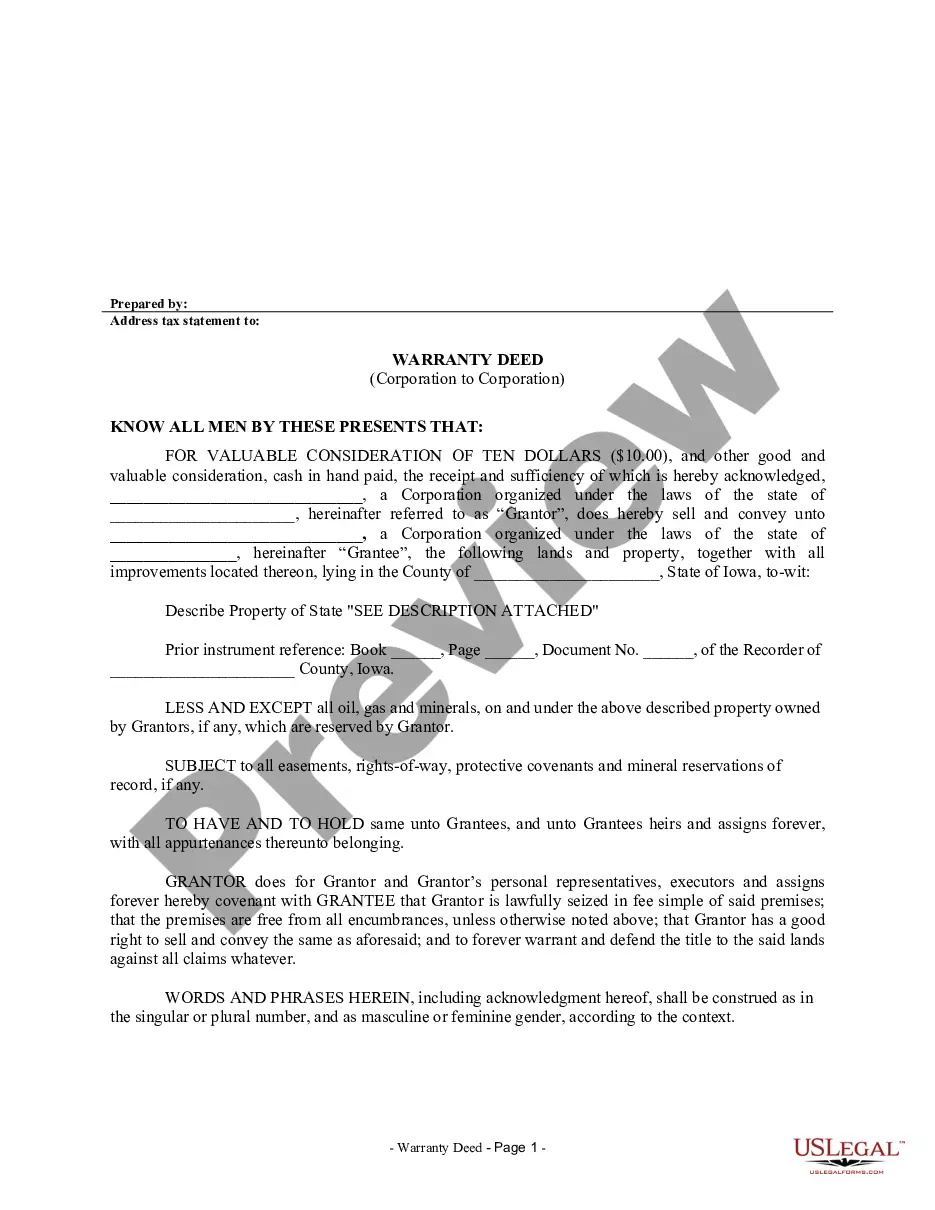
The Warranty Deed from Corporation to Corporation is a legal document used to transfer real property ownership from one corporation (the Grantor) to another corporation (the Grantee). Unlike typical warranty deeds used for individual transfers, this form specifically addresses corporate entities and ensures the property is conveyed with warranties against title defects, except for specific reservations like oil, gas, and minerals. This form is essential for corporate transactions involving real estate to confirm clear ownership and proper legal transfer.
Form components explained
- Grantor and Grantee Details: Information identifying the corporations involved in the transfer.
- Consideration Clause: A statement of the value exchanged, typically a nominal sum.
- Property Description: A detailed description of the property being conveyed.
- Reservations Clause: Specifies the oil, gas, and mineral rights retained by the Grantor.
- Covenant of Warranty: Assurance from the Grantor that they have the legal right to convey the property.
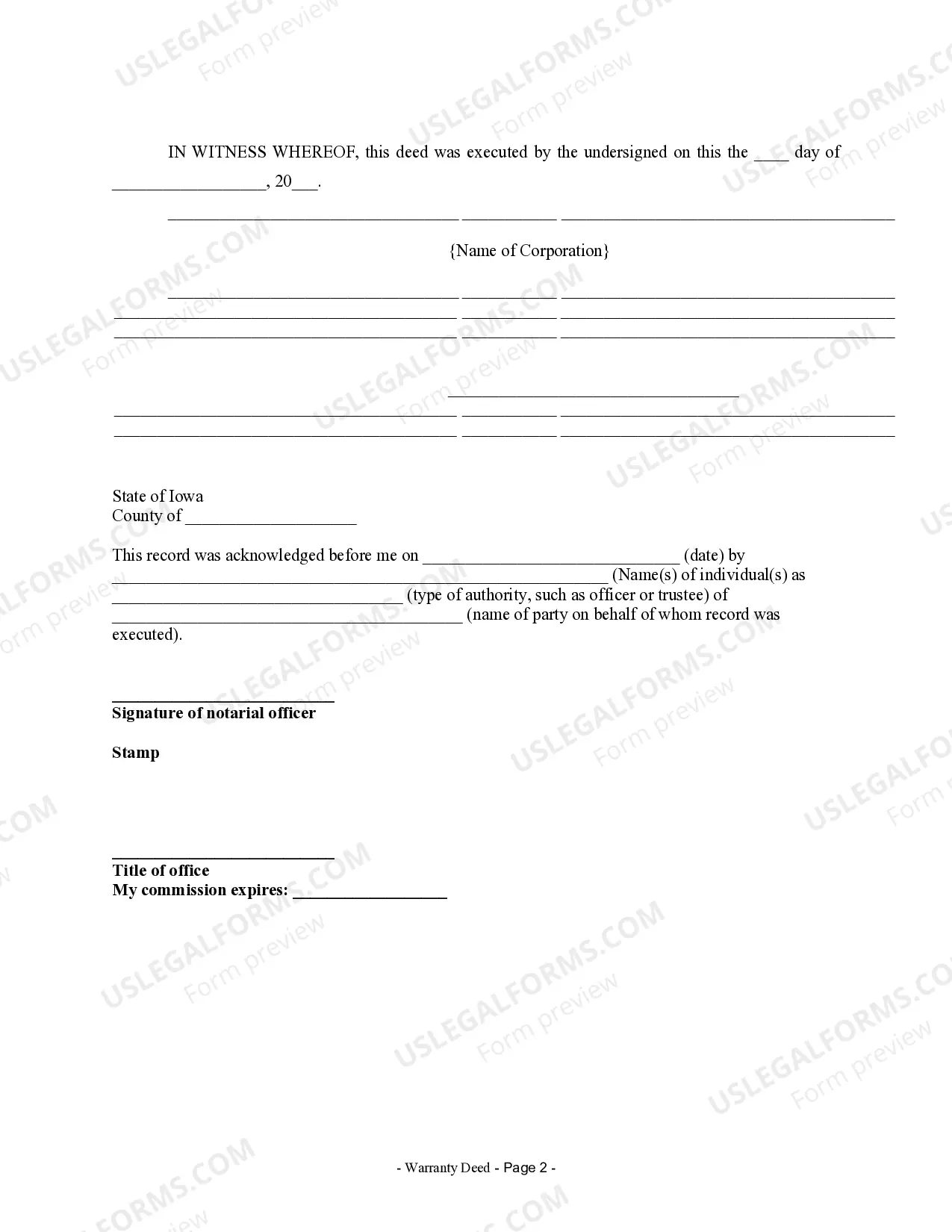
- Execution Section: Area for authorized representatives to sign and date the deed.



Situations where this form applies
This form should be used when a corporation is transferring property ownership to another corporation. Typical scenarios include business mergers, acquisitions of real estate, or property ownership changes due to corporate restructuring. It is crucial in commercial real estate transactions to establish clear title and limit future disputes over property rights.
Who this form is for
- Corporate officers responsible for property transactions.
- Legal representatives or attorneys of corporations involved in asset transfers.
- Companies engaging in mergers, acquisitions, or property sales.
How to prepare this document
- Identify the Grantor and Grantee corporations, including their legal names and state of incorporation.
- Specify the property by providing a complete description and any applicable references from previous deeds.
- State the consideration exchanged for the property, typically a nominal amount for legal purposes.
- Include any reservations related to oil, gas, and mineral rights as needed.
- Ensure authorized representatives sign the deed and enter their titles.
Notarization requirements for this form
This document requires notarization to meet legal standards. US Legal Forms provides secure online notarization powered by Notarize, allowing you to complete the process through a verified video call, available 24/7.
Get your form ready online
Our built-in tools help you complete, sign, share, and store your documents in one place.
Make edits, fill in missing information, and update formatting in US Legal Forms—just like you would in MS Word.
Download a copy, print it, send it by email, or mail it via USPS—whatever works best for your next step.
Sign and collect signatures with our SignNow integration. Send to multiple recipients, set reminders, and more. Go Premium to unlock E-Sign.
If this form requires notarization, complete it online through a secure video call—no need to meet a notary in person or wait for an appointment.
We protect your documents and personal data by following strict security and privacy standards.

Make edits, fill in missing information, and update formatting in US Legal Forms—just like you would in MS Word.

Download a copy, print it, send it by email, or mail it via USPS—whatever works best for your next step.

Sign and collect signatures with our SignNow integration. Send to multiple recipients, set reminders, and more. Go Premium to unlock E-Sign.

If this form requires notarization, complete it online through a secure video call—no need to meet a notary in person or wait for an appointment.

We protect your documents and personal data by following strict security and privacy standards.
Typical mistakes to avoid
- Failing to properly identify the Grantor or Grantee details.
- Omitting the property description or providing incorrect information.
- Neglecting to include required signatures or titles from authorized representatives.
- Not specifying reservations or exceptions related to mineral rights clearly.
Benefits of using this form online
- Quick and easy access to legal forms without the need for in-person visits to a lawyer.
- Editable templates that allow users to tailor the form to their specific needs.
- Reliable content crafted by licensed attorneys, ensuring legal compliance.
Looking for another form?
Form popularity
FAQ
Yes, you can sell a house that is held under a warranty deed. When you are ready to transfer ownership, an Iowa Warranty Deed from Corporation to Corporation allows for a smooth transaction. This type of deed reassures potential buyers that they will receive a clear title to the property. Ultimately, selling under a warranty deed can increase buyer confidence and expedite the sale process.
The safest type of deed is typically a warranty deed. When dealing with property transfers, an Iowa Warranty Deed from Corporation to Corporation provides robust protection to the buyer. This type of deed ensures that the title is clear and that there are no hidden claims against the property. It offers a guarantee against any future disputes over ownership, giving you peace of mind.
A warranty deed can present certain disadvantages. Firstly, the granter of the Iowa Warranty Deed from Corporation to Corporation guarantees title integrity; if any issues arise later, the corporation must address them. Additionally, this type of deed may not protect the corporation from existing liens, meaning financial obligations may still apply post-transfer. Finally, the process of drafting and executing such deeds can involve legal costs and administrative complexities.
To write a deed of conveyance, start by identifying the parties involved and providing a clear description of the property being transferred. Include terms specific to the Iowa Warranty Deed from Corporation to Corporation, listing any warranties or guarantees that apply. After drafting, ensure the document is signed by an authorized officer of the corporation, and then file it with the relevant county office. Following these steps ensures legality and clarity in the property transaction.
A corporation conveys real estate through a deed by drafting an Iowa Warranty Deed from Corporation to Corporation that complies with state laws. This deed must be signed by the corporation's authorized representative, including the corporation’s name and seal. Once signed, the deed is recorded in the county where the property is located, making the transfer official. Each step is vital for the integrity of the property transfer.
A corporation conveys real estate by executing an Iowa Warranty Deed from Corporation to Corporation. The deed must include essential details such as the property description and the names of the transferring and receiving corporations. Following the execution, the deed must be recorded with the county recorder’s office to provide public notice of the transfer. Proper documentation ensures a smooth transition of property ownership.
When a corporation transfers ownership of property, the Iowa Warranty Deed from Corporation to Corporation must be signed by an authorized officer of the corporation. This officer typically holds a position such as president or vice president. It is crucial for the corporation’s seal to be affixed to the deed as required by Iowa law. Proper execution ensures the deed is valid and legally binding.
Yes, you can sell a house with a special warranty deed in Texas. However, potential buyers will want to understand the implications of such a deed regarding liability for any claims on the property. If you’re engaging in transferring property with an Iowa Warranty Deed from Corporation to Corporation, ensuring that all legal requirements are met is essential for a successful transaction.
To fill out a warranty deed form, begin by entering the date, the names of the grantor and grantee, and a legal description of the property. Ensure you include relevant details regarding the transfer, particularly if you are utilizing an Iowa Warranty Deed from Corporation to Corporation. For assistance with this process, considering using platforms like US Legal Forms can simplify form completion and ensure compliance with local laws.
In Iowa, a quit claim deed allows the transfer of property without guaranteeing clear ownership. It is simple to execute and does not require the seller to affirm any title claims. When handling property transfers in Iowa, including an Iowa Warranty Deed from Corporation to Corporation, it’s essential to understand the differences between these deeds to ensure the right legal protections are in place.