Hawaii Last Will and Testament for Divorced Person Not Remarried with Adult and Minor Children
Understanding this form
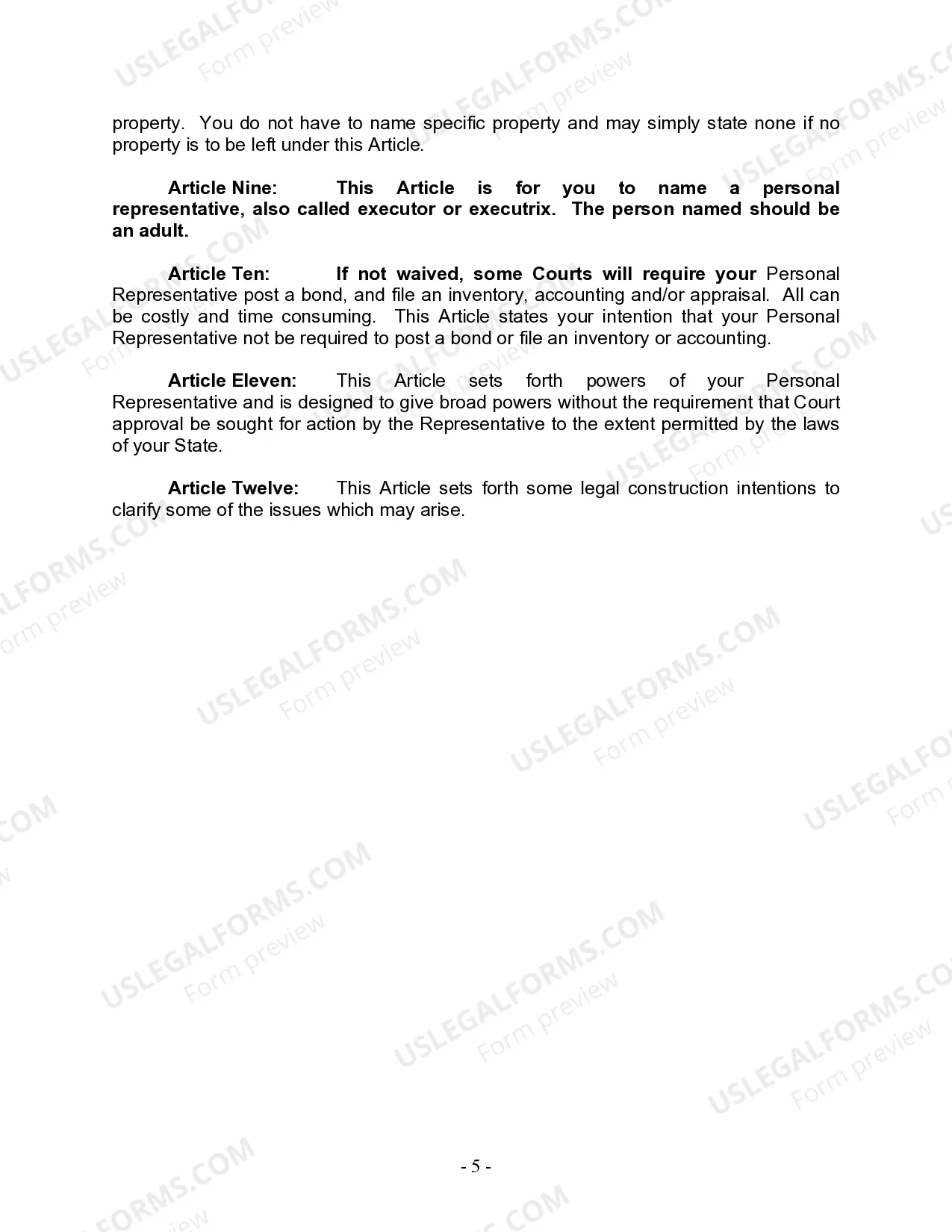
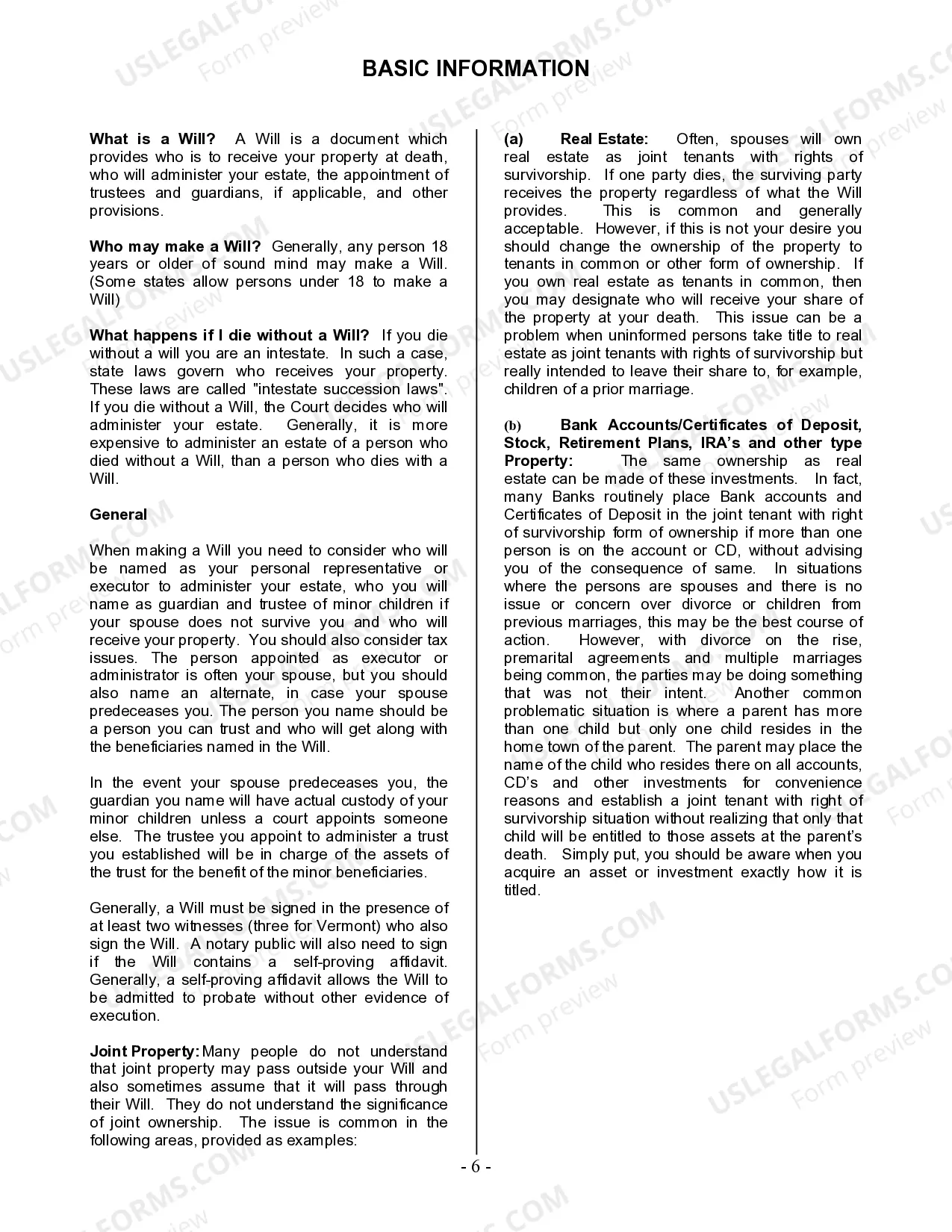
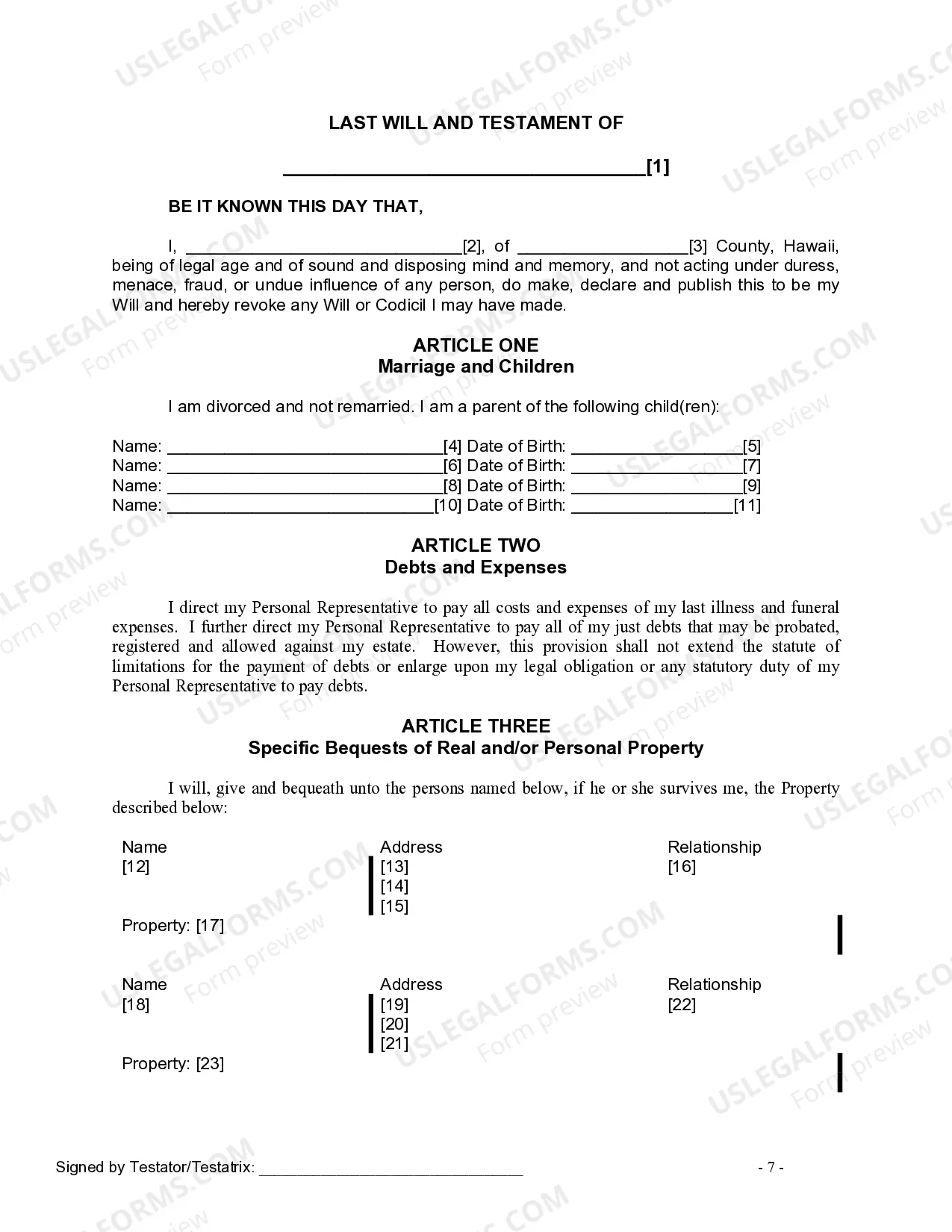
This Last Will and Testament is specifically designed for a divorced person who has not remarried and has both adult and minor children. The purpose of this document is to outline how your assets will be distributed after your death, appoint a personal representative to manage your estate, and establish trusts for any minor children. It differs from other wills by allowing for specific provisions related to divorced individuals and their descendants.
Main sections of this form
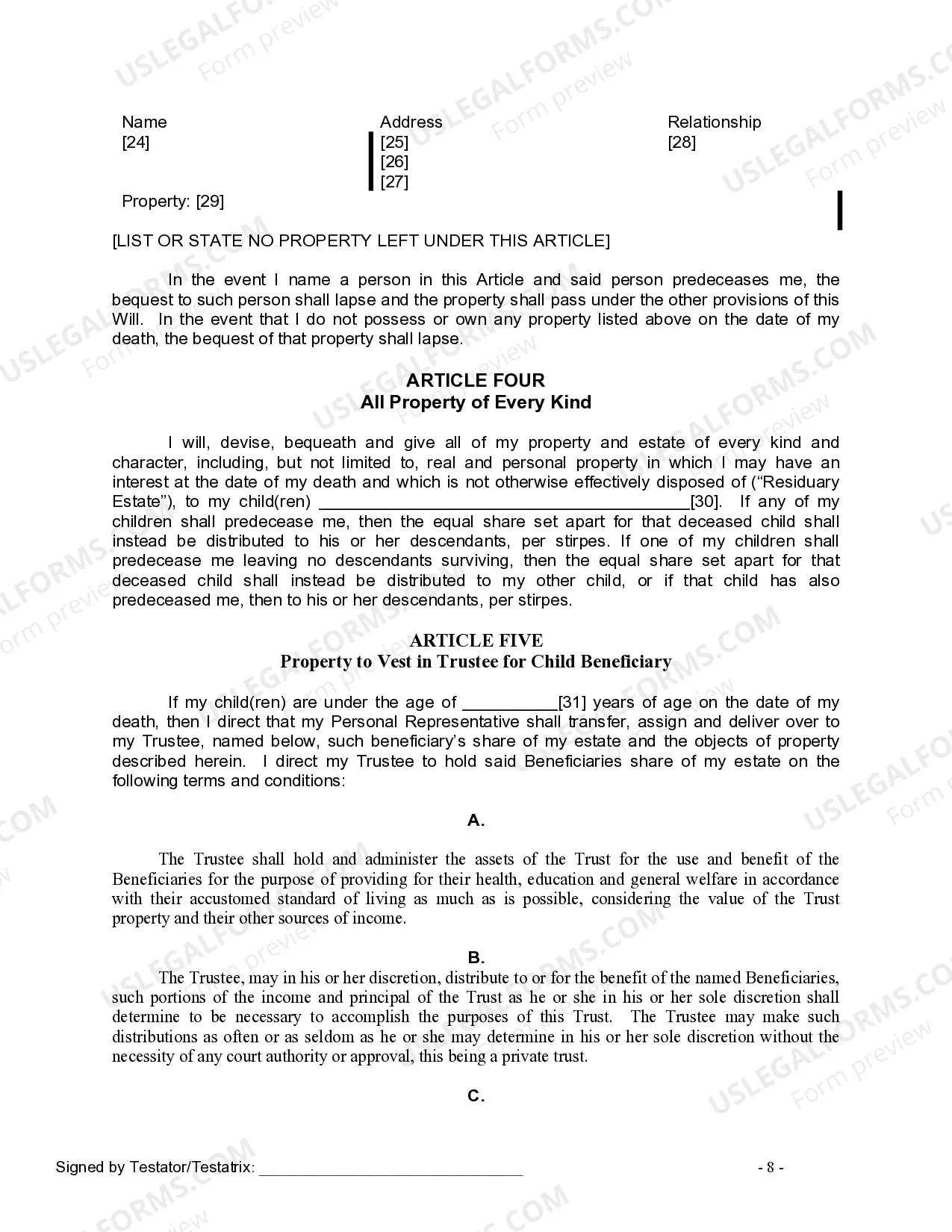
- Appointment of a personal representative (executor) to administer the estate.
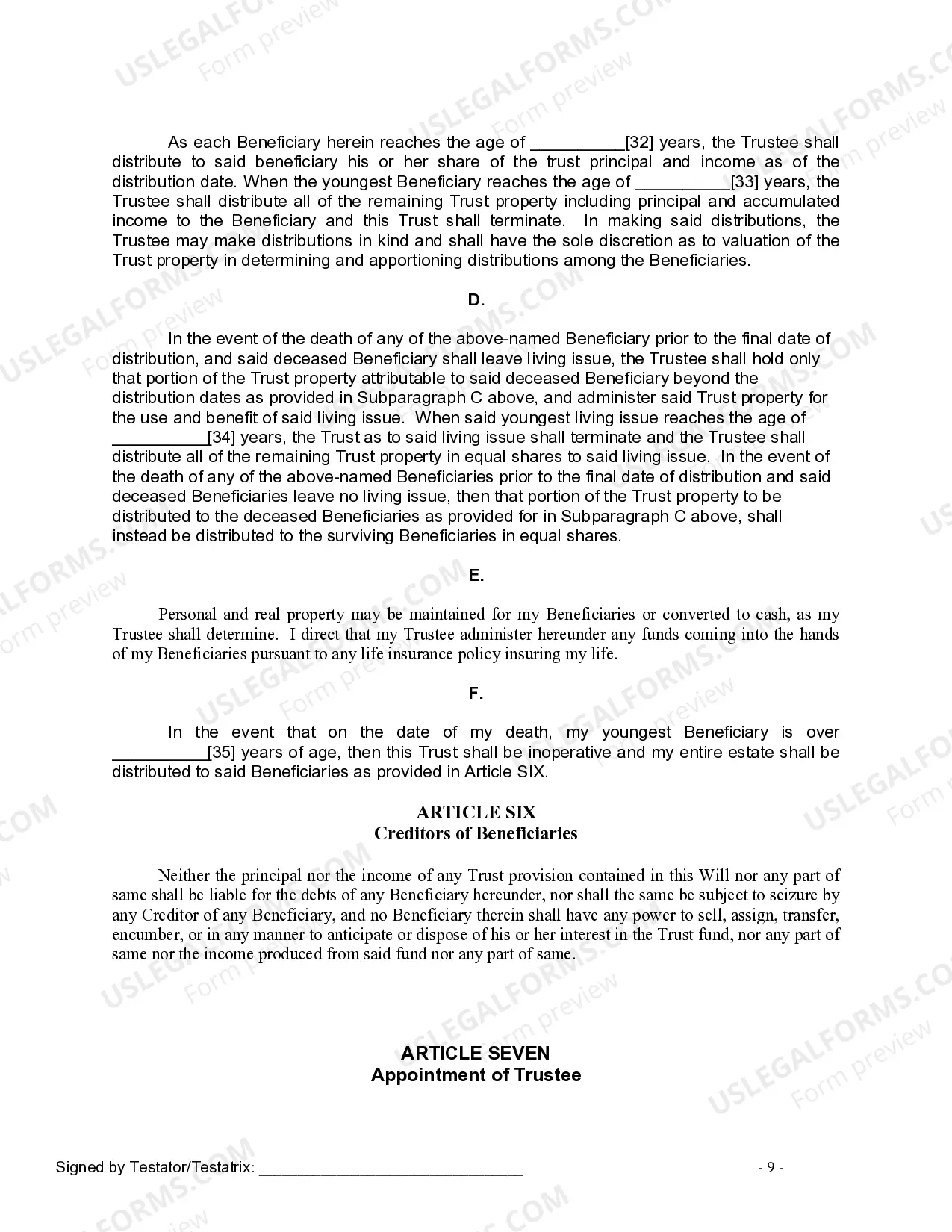
- Designation of beneficiaries, including specific property bequests and general distributions to children.
- Establishment of a trust for the benefit of minor children to manage their inheritance until they reach a specified age.
- Appointment of a guardian for minor children in the event of your death.
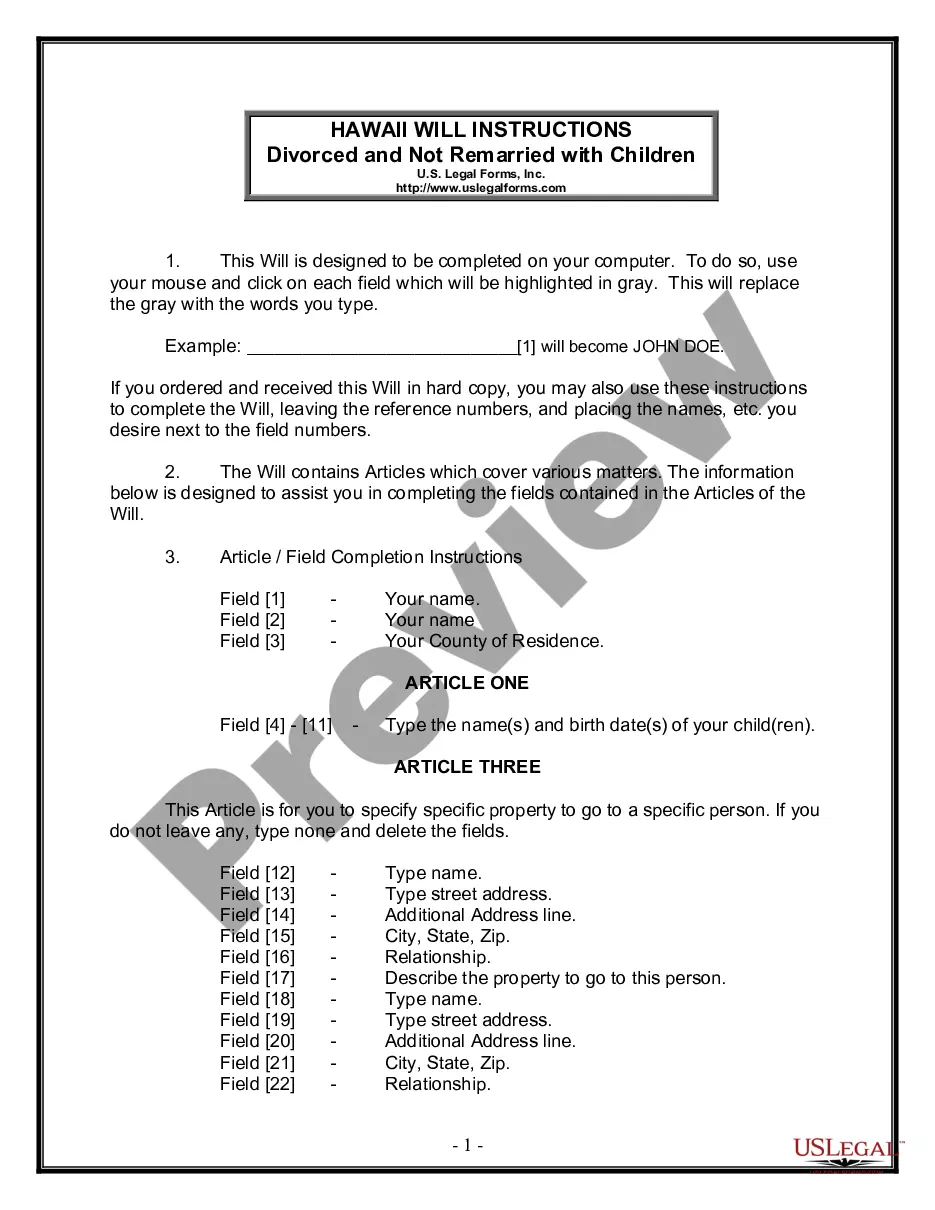
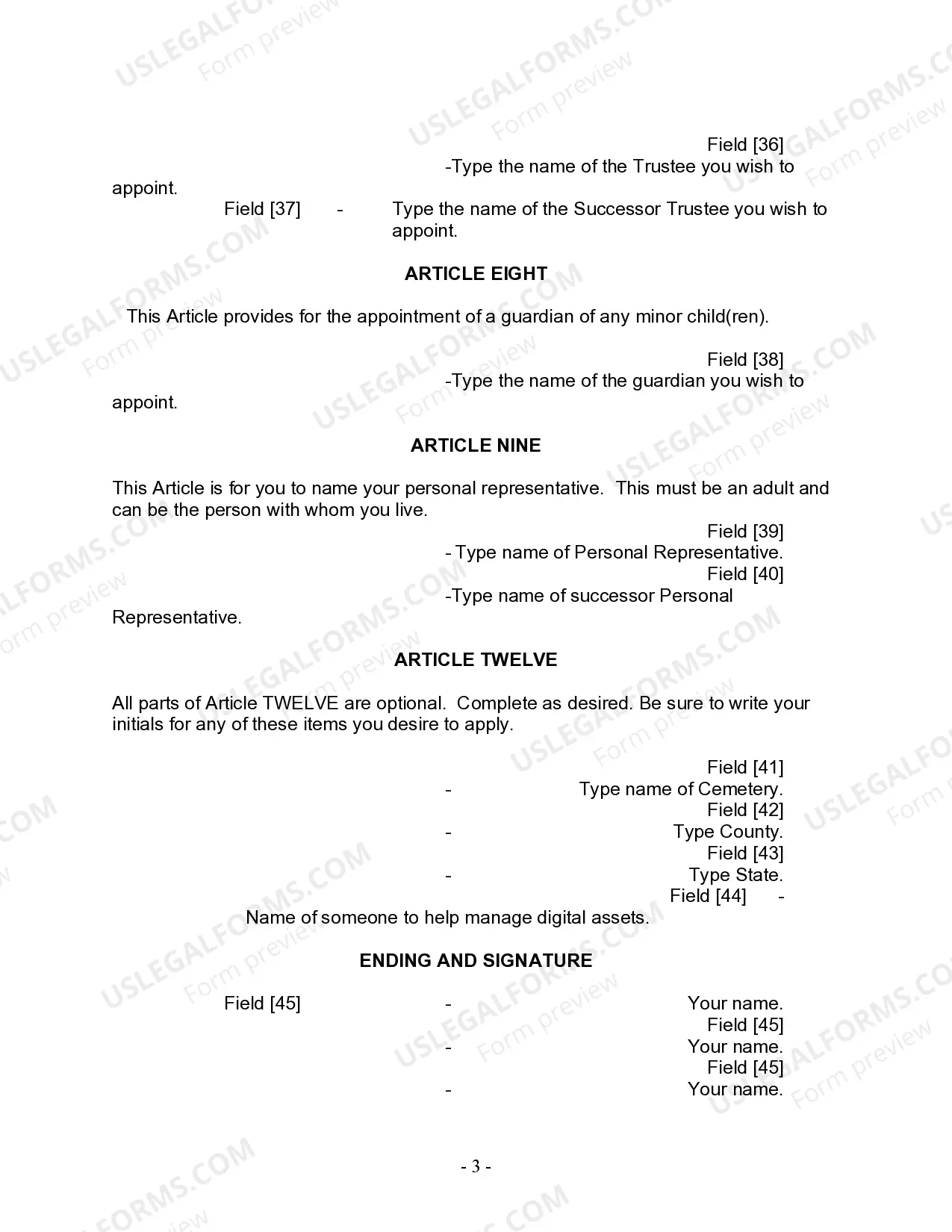
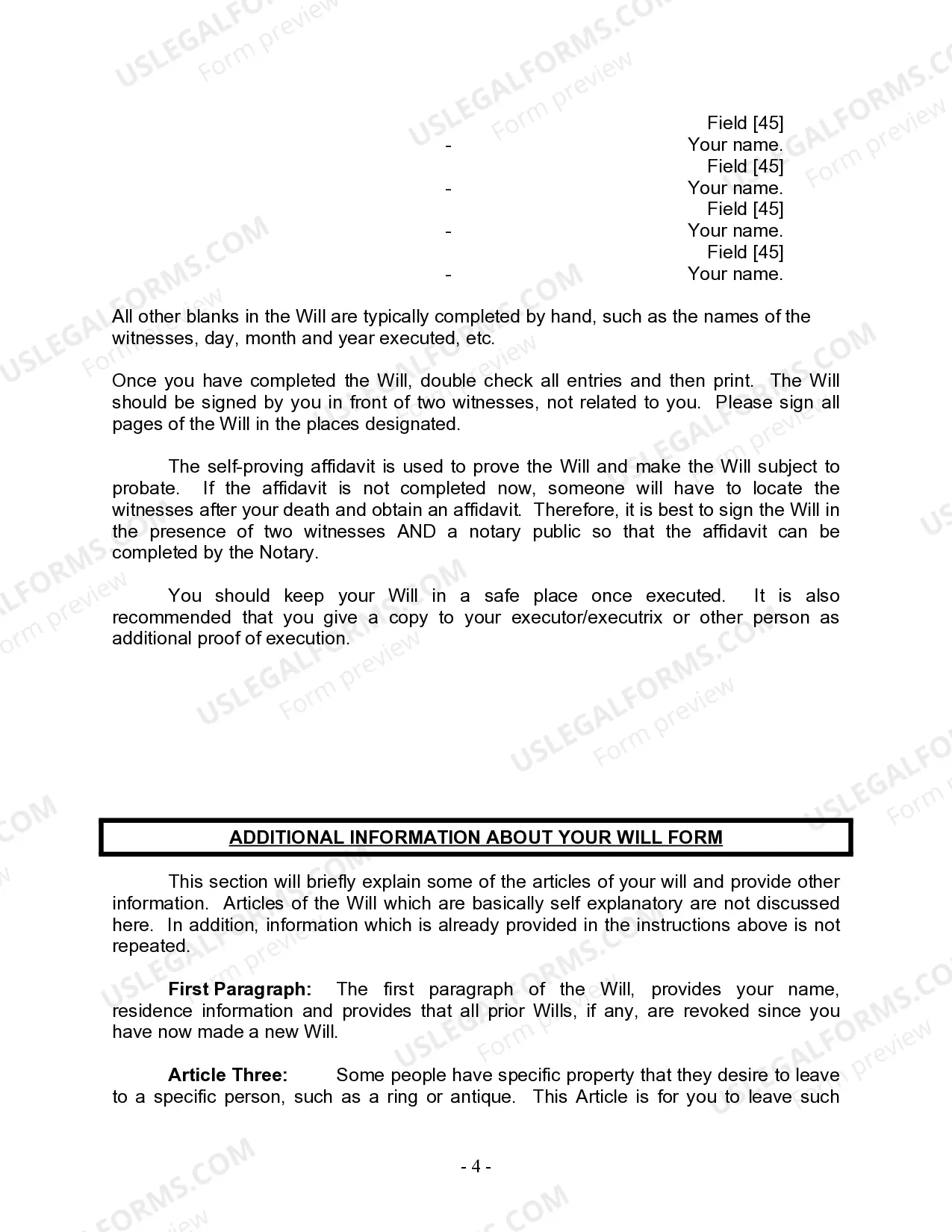
- Instructions for signing the will in front of witnesses and potentially a notary public to create a self-proving affidavit.





When to use this form
This form should be used when you are a divorced individual, have not remarried, and want to ensure that your property is distributed according to your wishes after you pass away. It is especially important if you have children, as it allows you to provide support and protection for both minor and adult children through specific bequests and trusts.
Intended users of this form
This legal form is intended for:
- Divorced individuals who are not remarried.
- Parents with both adult and minor children.
- Anyone looking to establish clear directives for the management and distribution of their estate after death.
How to complete this form
- Enter your full name and county of residence at the beginning of the document.
- List the names and birth dates of all your children in the specified sections.
- Designate specific property to be given to specific individuals or indicate 'none' if not applicable.
- Appoint a trustee for minor children and specify the age at which their inheritance will be distributed.
- Sign the will in front of two witnesses, ensuring they also sign in your presence.
Is notarization required?
To make this form legally binding, it must be notarized. Our online notarization service, powered by Notarize, lets you verify and sign documents remotely through an encrypted video session.
Get your form ready online
Our built-in tools help you complete, sign, share, and store your documents in one place.
Make edits, fill in missing information, and update formatting in US Legal Forms—just like you would in MS Word.
Download a copy, print it, send it by email, or mail it via USPS—whatever works best for your next step.
Sign and collect signatures with our SignNow integration. Send to multiple recipients, set reminders, and more. Go Premium to unlock E-Sign.
If this form requires notarization, complete it online through a secure video call—no need to meet a notary in person or wait for an appointment.
We protect your documents and personal data by following strict security and privacy standards.

Make edits, fill in missing information, and update formatting in US Legal Forms—just like you would in MS Word.

Download a copy, print it, send it by email, or mail it via USPS—whatever works best for your next step.

Sign and collect signatures with our SignNow integration. Send to multiple recipients, set reminders, and more. Go Premium to unlock E-Sign.

If this form requires notarization, complete it online through a secure video call—no need to meet a notary in person or wait for an appointment.

We protect your documents and personal data by following strict security and privacy standards.
Common mistakes to avoid
- Not having the will signed in the presence of the required number of witnesses.
- Failing to specify guardianship for minor children.
- Neglecting to update the will after significant life changes.
Benefits of using this form online
- Convenience of completing the will digitally at your own pace.
- Editable fields that allow for easy updates and modifications.
- Access to professionally drafted language developed by licensed attorneys.
Key takeaways
- The Last Will and Testament for a divorced person provides specific provisions for those with both adult and minor children.
- It is essential for ensuring your estate is handled according to your wishes after your passing.
- Proper completion and witnessing of the will are critical for its validity.
Looking for another form?

Form popularity
FAQ
Beneficiaries in Hawaii have the right to receive their inheritance as laid out in the Hawaii Last Will and Testament for Divorced Person Not Remarried with Adult and Minor Children. They can request a copy of the will after the death of the testator and challenge it in court if necessary. Beneficiaries also have the right to be informed about the estate's administration and any actions taken by the executor. By being aware of these rights, beneficiaries can ensure that their interests are protected during the distribution process.
To write a will in Hawaii, start by identifying your assets and deciding how you would like them distributed, especially when considering your children. You can prepare a Hawaii Last Will and Testament for Divorced Person Not Remarried with Adult and Minor Children using a template or by consulting an attorney. Ensure you sign the will in front of two witnesses, as this is a requirement in Hawaii. Always keep your will in a safe place and inform your beneficiaries about its location.
As mentioned earlier, a divorce can change the validity of certain provisions in your will. Without updating your Hawaii Last Will and Testament for Divorced Person Not Remarried with Adult and Minor Children, your former spouse might unexpectedly receive assets after your passing. Therefore, it's wise to revisit and revise your will in light of any significant changes in your personal relationships.
In Hawaii, a will does not override laws governing marital property, as community property principles often apply. However, a properly crafted Hawaii Last Will and Testament for Divorced Person Not Remarried with Adult and Minor Children can clarify your intentions regarding separate property. It's crucial to understand these distinctions to ensure your wishes are met in estate planning.
If you are not married and have no children, your next of kin would generally include your parents, siblings, or other relatives, depending on state laws. This situation emphasizes the importance of creating a Hawaii Last Will and Testament for Divorced Person Not Remarried with Adult and Minor Children to clearly define who inherits your assets. By specifying your wishes, you can prevent any confusion about your estate.
A divorce decree typically addresses the division of properties and assets, but it does not automatically change the ownership on a deed. Therefore, it is essential to update property deeds after your divorce. This ensures alignment with your Hawaii Last Will and Testament for Divorced Person Not Remarried with Adult and Minor Children, safeguarding your estate planning goals.
In Hawaii, a divorce can significantly alter the impact of a will. If you divorce, your former spouse may no longer inherit your estate as outlined in your Hawaii Last Will and Testament for Divorced Person Not Remarried with Adult and Minor Children. It is advisable to review and update your will to ensure that it reflects your current wishes and accurately addresses the needs of your children.
In Hawaii, you do not need to register your will for it to be valid; however, filing it with the court can benefit your heirs. Registering helps prevent disputes and provides a clear record of your intentions as outlined in your Hawaii Last Will and Testament for Divorced Persons Not Remarried with Adult and Minor Children. Consulting with uslegalforms can guide you through this process and ensure your will is properly handled.
For a will to be considered legal in Hawaii, it must meet certain criteria defined by state law. This includes your capacity to make a will, clear intent to distribute your assets, and proper execution with the required witnesses. Crafting a Hawaii Last Will and Testament for Divorced Persons Not Remarried with Adult and Minor Children necessitates understanding these legal aspects to ensure your document is enforceable in probate court.
Yes, you can write your own will in Hawaii and have it notarized, but there are specific requirements to meet. A valid Hawaii Last Will and Testament for Divorced Persons Not Remarried with Adult and Minor Children must be signed by you and witnessed by at least two others. Notarization helps but is not a substitute for the witnessing requirement, so make sure to follow through on both aspects for your will to hold up in court.