Hawaii Last Will and Testament for Single Person with No Children

What is this form?
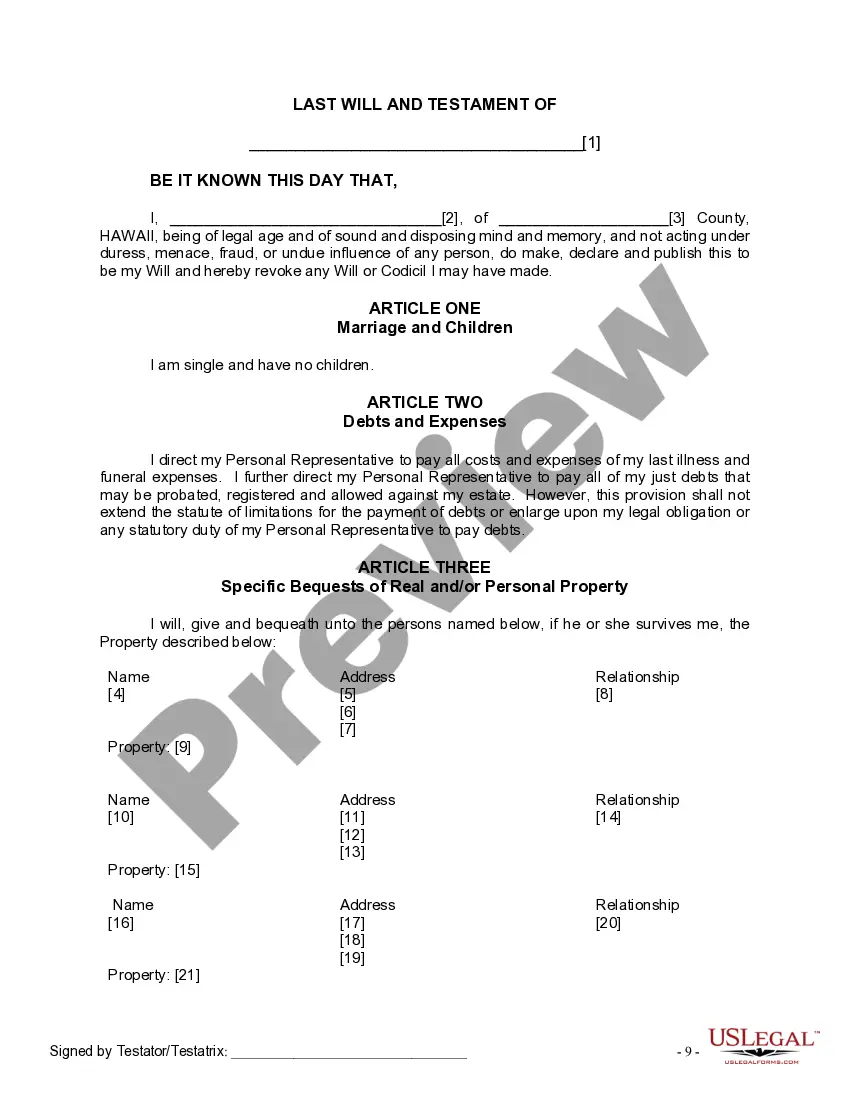
The Last Will and Testament for Single Person with No Children is a legal document that outlines how a single individual who has no children wishes to distribute their assets after death. This form allows the testator (the person creating the will) to appoint a Personal Representative, specify beneficiaries, and ensure their wishes are followed regarding property distribution and other final instructions. Unlike wills that cater to individuals with children, this form addresses the unique needs of a single person, ensuring a clear distribution of their estate without complications related to dependents.
Main sections of this form
- Identification of the testator, including legal age and mental soundness.
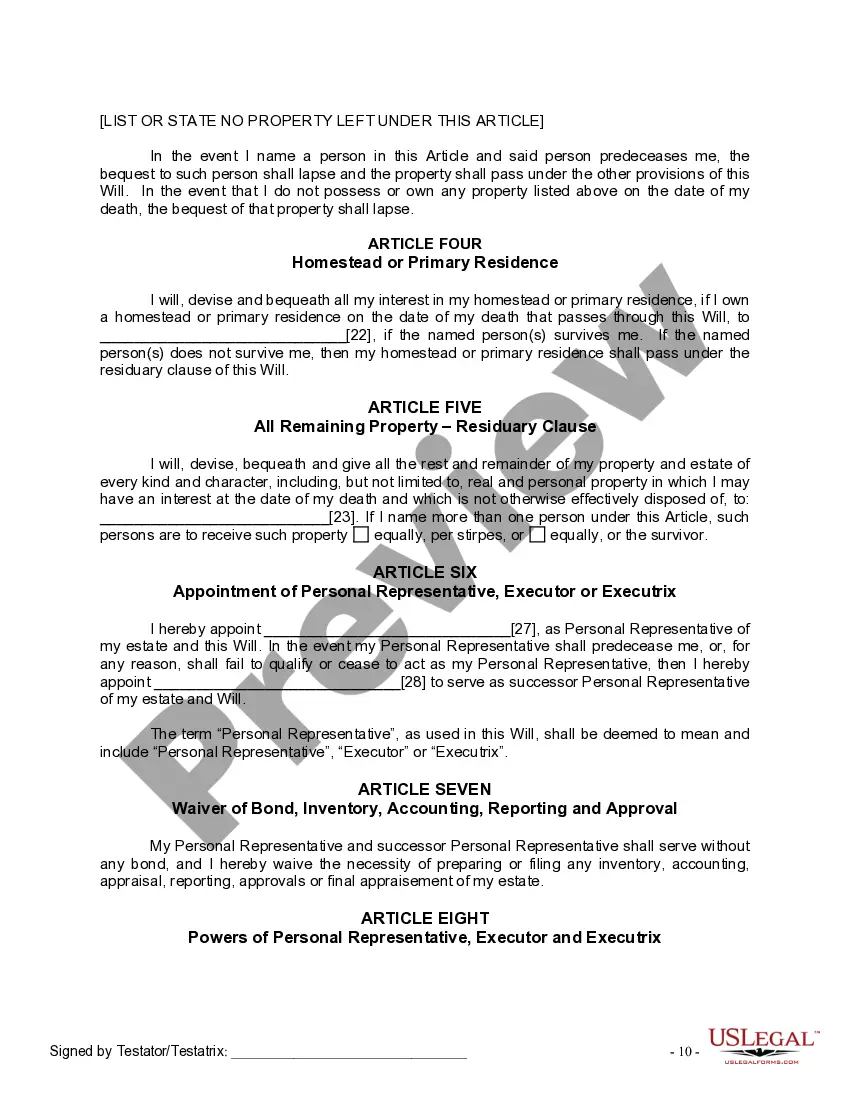
- Appointment of a Personal Representative to handle the estate.
- Clear instructions for the payment of debts and funeral expenses.
- Designation of specific bequests of property to named beneficiaries.
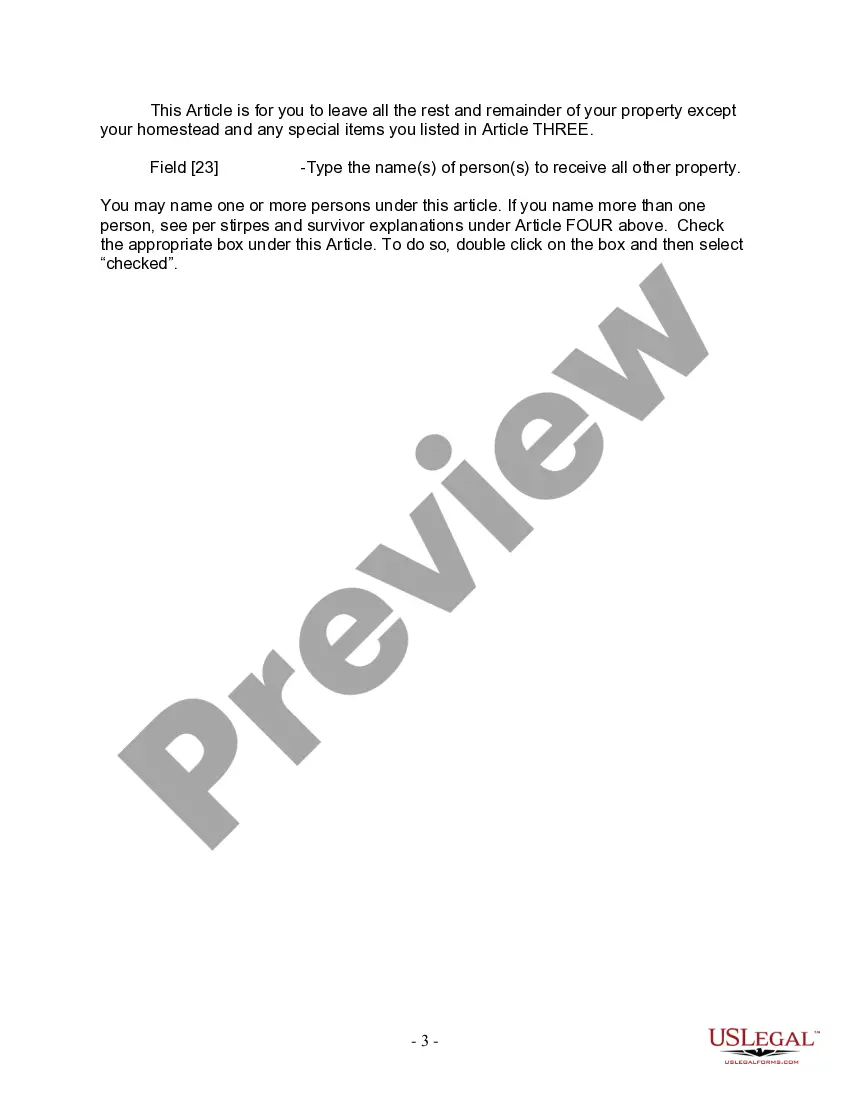
- A residuary clause for any remaining assets not specifically bequeathed.
- Requirements for the execution, including witness signatures and possible notarization.




Situations where this form applies
This Last Will and Testament is essential for a single individual without children who wishes to establish their wishes for asset distribution upon death. It is particularly useful if you want to ensure your chosen beneficiaries receive specified property and to clarify your final arrangements, such as funeral expenses and debts. Use this form to avoid potential disputes among relatives and ensure that your personal wishes are honored.
Intended users of this form
- Individuals who are single and do not have any children.
- Those who wish to clearly dictate the distribution of their estate posthumously.
- Anyone looking to minimize legal disputes regarding asset distribution.
- People wanting to appoint a Personal Representative for their estate management.
Steps to complete this form
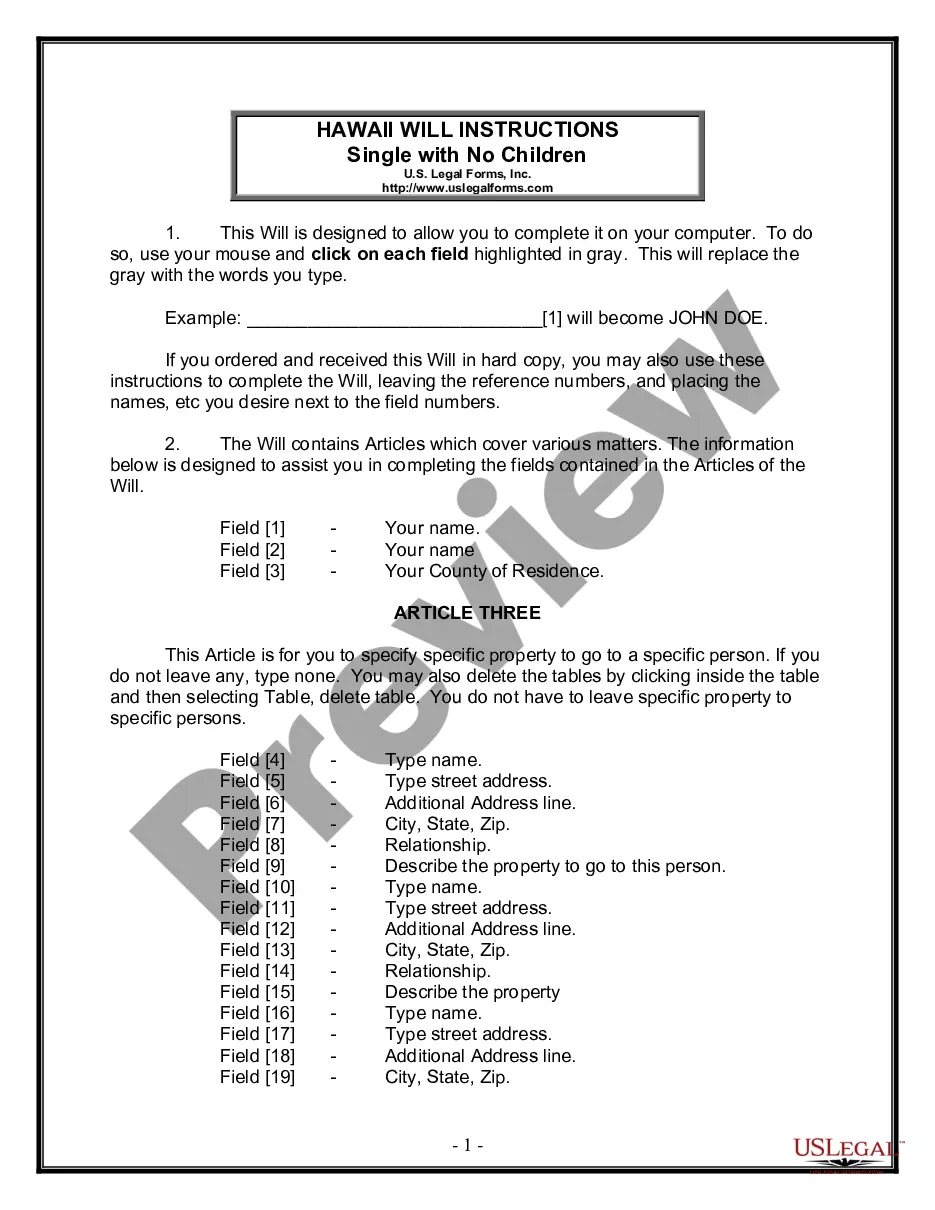
- Identify and enter your full name and county of residence.
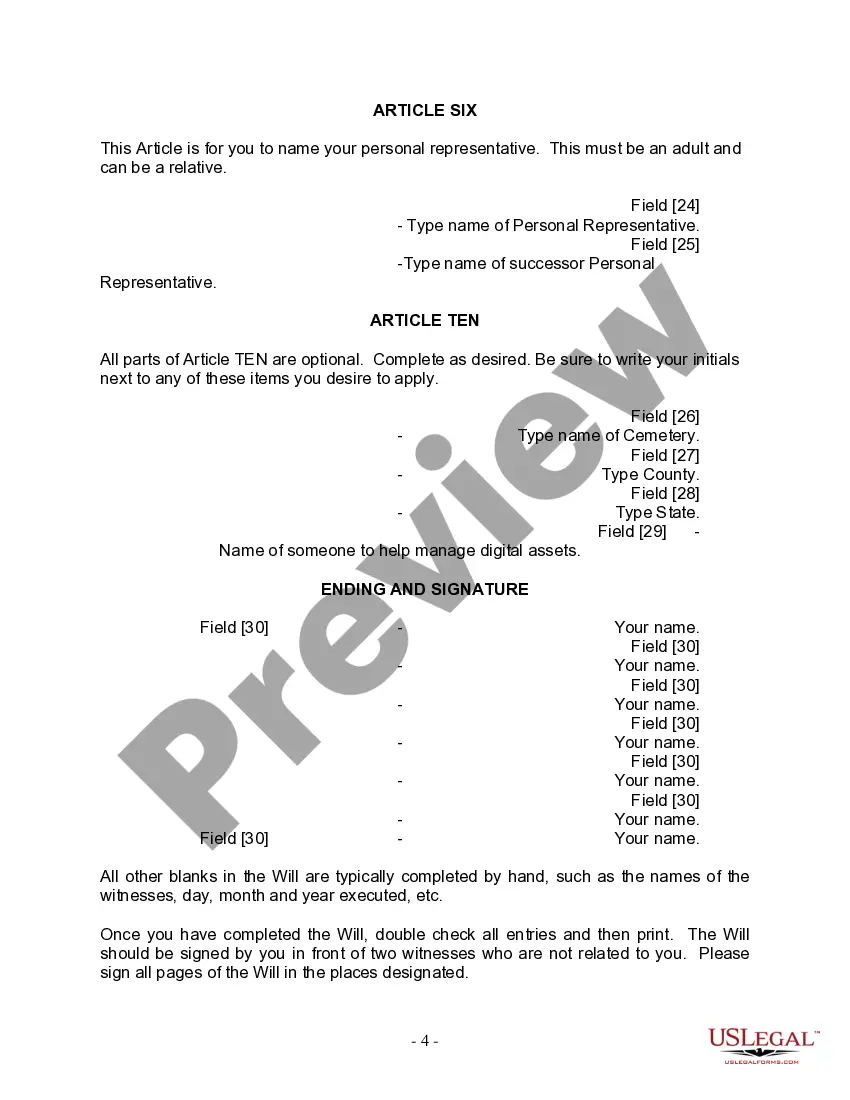
- Appoint a Personal Representative by providing their name.
- Specify your debts and funeral expenses you wish to be addressed.
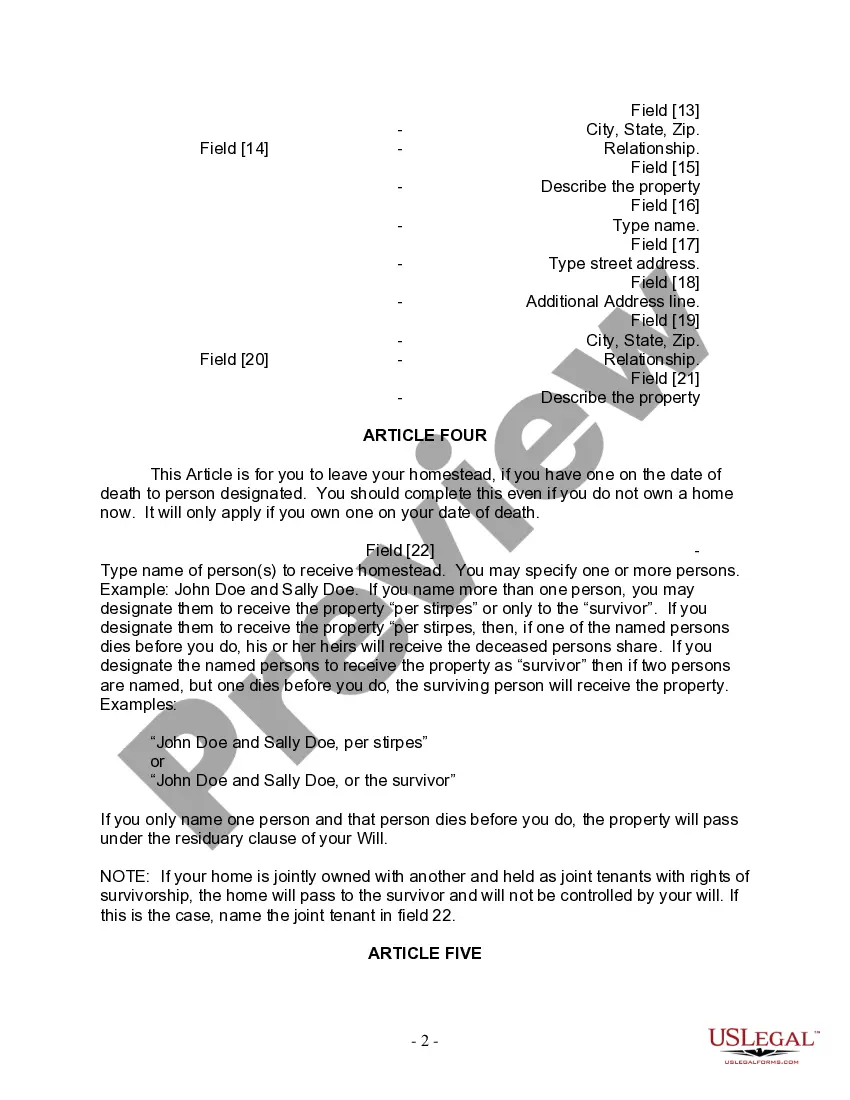
- Detail specific bequests by listing beneficiaries and the property they will receive.
- Sign the will in the presence of two disinterested witnesses who will also sign the document.
- Consider having the will notarized to strengthen its validity if required by your state law.
Notarization guidance
Yes, this form must be notarized to be legally valid in Hawaii. The notarization process provides an added layer of assurance that the will was signed voluntarily and without any undue influence. US Legal Forms offers integrated online notarization, allowing you to complete this step securely and conveniently from anywhere.
Get your form ready online
Our built-in tools help you complete, sign, share, and store your documents in one place.
Make edits, fill in missing information, and update formatting in US Legal Forms—just like you would in MS Word.
Download a copy, print it, send it by email, or mail it via USPS—whatever works best for your next step.
Sign and collect signatures with our SignNow integration. Send to multiple recipients, set reminders, and more. Go Premium to unlock E-Sign.
If this form requires notarization, complete it online through a secure video call—no need to meet a notary in person or wait for an appointment.
We protect your documents and personal data by following strict security and privacy standards.

Make edits, fill in missing information, and update formatting in US Legal Forms—just like you would in MS Word.

Download a copy, print it, send it by email, or mail it via USPS—whatever works best for your next step.

Sign and collect signatures with our SignNow integration. Send to multiple recipients, set reminders, and more. Go Premium to unlock E-Sign.

If this form requires notarization, complete it online through a secure video call—no need to meet a notary in person or wait for an appointment.

We protect your documents and personal data by following strict security and privacy standards.
Common mistakes
- Failing to sign the will or have it signed in the presence of witnesses.
- Not having disinterested witnesses as required by state law.
- Overlooking the need to update the will after significant life changes.
- Not specifying how debts and expenses will be handled, leading to potential confusion.
Why complete this form online
- Immediate access to a professionally drafted legal document.
- Convenience of editing the form to tailor it to your specific needs.
- Reliable templates that comply with state laws.
- Secure downloading for your records.
Key takeaways
- The Last Will and Testament for Single Person with No Children ensures your estate is distributed as you wish.
- This form is suitable for single individuals with no dependents.
- Proper execution, including witness signatures and notarization, is critical for validity.
- Online access to this form provides convenience and immediate usability.
Looking for another form?
Form popularity
FAQ
Creating a will is advisable for any adult, including those who are single. A Hawaii Last Will and Testament for Single Person with No Children helps you define how you wish for your estate to be handled upon your passing. This proactive step minimizes confusion and ensures that matters are settled according to your desires. With the right platform, like uslegalforms, you can easily create a will tailored to your specific needs.
Yes, having a will is essential even as a single person. A Hawaii Last Will and Testament for Single Person with No Children allows you to clearly state your wishes regarding your assets and personal belongings. This document ensures that your estate is distributed according to your preferences, preventing potential disputes among relatives or friends. Additionally, it provides peace of mind knowing that your intentions are documented.
In Minnesota, a will does not need to be notarized to be valid. However, having it notarized can simplify the probate process later on. For those in Hawaii looking for clear guidance, consider exploring resources like US Legal Forms to create a valid Hawaii Last Will and Testament for Single Person with No Children, ensuring it meets the necessary legal standards.
If you are a single person with no children, a will is still very important. This document allows you to designate how your assets will be distributed and who will manage your estate. A Hawaii Last Will and Testament for Single Person with No Children can be tailored to reflect your specific wishes and needs, providing clarity for your heirs.
You can write your own will in Hawaii, but it's important to follow the state's legal guidelines. This means you should ensure your will is signed and witnessed properly. Using resources like US Legal Forms can provide you with the necessary templates for a valid Hawaii Last Will and Testament for Single Person with No Children.
For a single person, a straightforward will is typically the best choice. This type of will clearly outlines how you want your assets to be managed and distributed after your death. Utilizing a template for a Hawaii Last Will and Testament for Single Person with No Children can simplify this process, ensuring it meets legal standards.
Yes, a single person should consider having a will. It allows you to specify how your assets will be distributed, provides clarity, and can help avoid disputes among family or friends. A well-drafted Hawaii Last Will and Testament for Single Person with No Children can ensure your wishes are honored.
To write a will for a single person, start by listing your assets and how you want them distributed. Next, designate an executor to carry out your wishes. Consider using a reliable resource, like US Legal Forms, to guide you in creating a valid Hawaii Last Will and Testament for Single Person with No Children.
Yes, you can write a will on a piece of paper, but it's essential to follow certain guidelines to ensure it's valid. Specifically, it should include your wishes regarding your assets after your passing. While a handwritten will can work, it's wise to use a template for a Hawaii Last Will and Testament for Single Person with No Children to ensure that it meets all legal requirements.
To ensure your Hawaii Last Will and Testament for Single Person with No Children is valid, you must meet several requirements. First, you must be at least 18 years old and of sound mind when creating your will. Second, your will must be in writing, either typed or handwritten. Finally, you need to have at least two witnesses sign the document to attest to your signature, ensuring the will reflects your true intentions.