Hawaii Mutual Wills containing Last Will and Testaments for Man and Woman living together not Married with No Children
Overview of this form
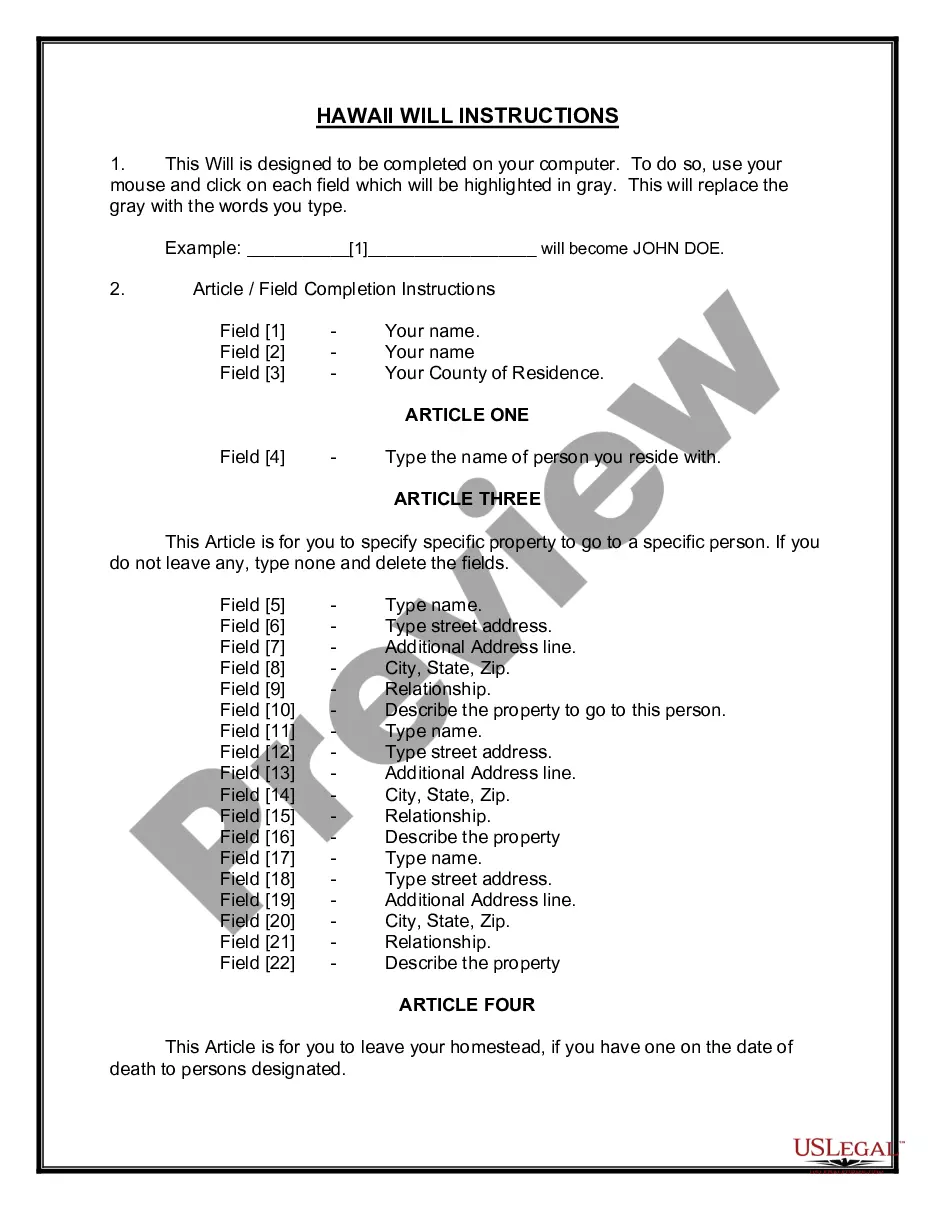
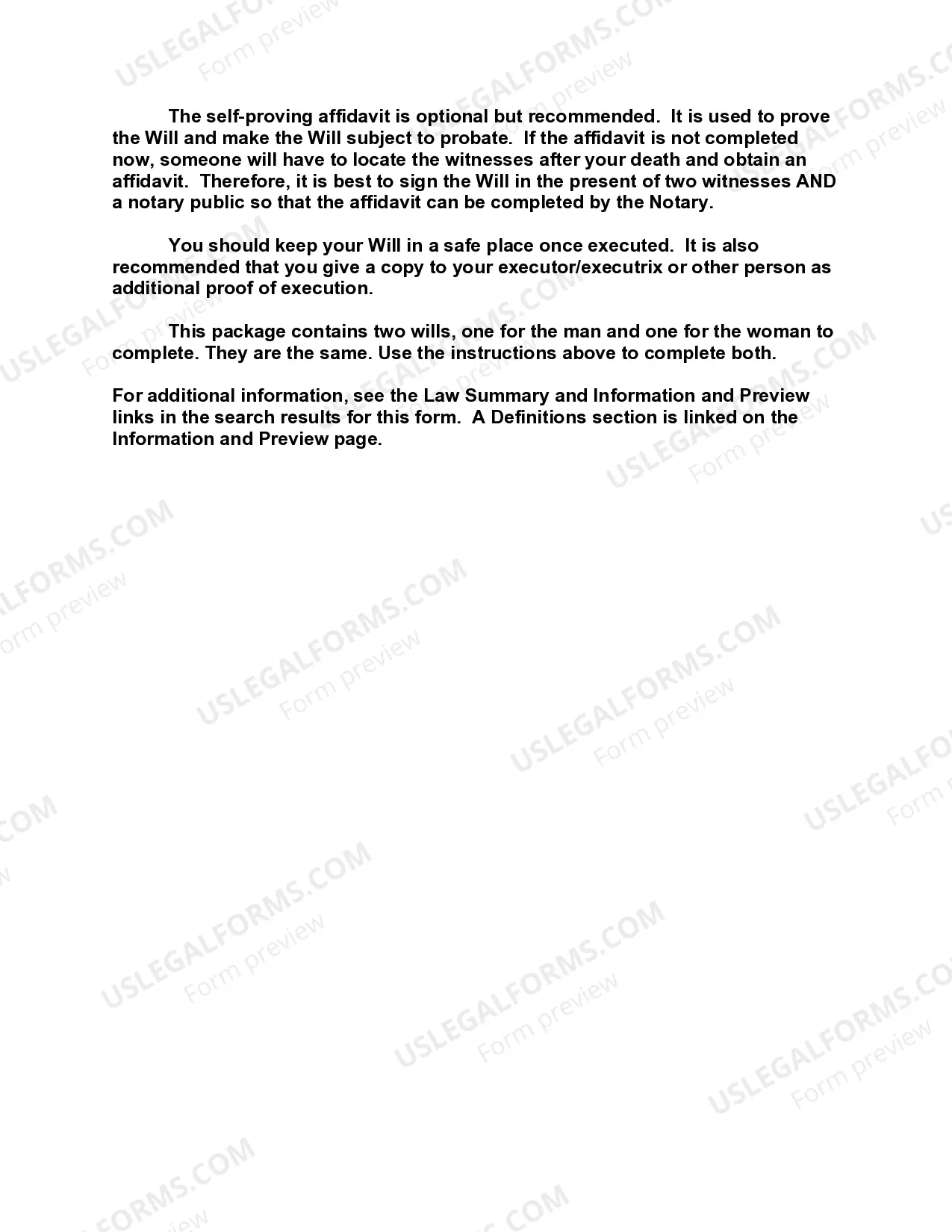
This Mutual Wills package contains two Last Will and Testament documents specifically designed for a man and woman living together who are not married and have no children. This form allows these individuals to create mutual wills, enabling them to inherit each other's property. Unlike standard wills that may not consider specific relationships, this form caters to cohabitating couples, providing tailored provisions outlining their wishes for asset distribution.
Form components explained
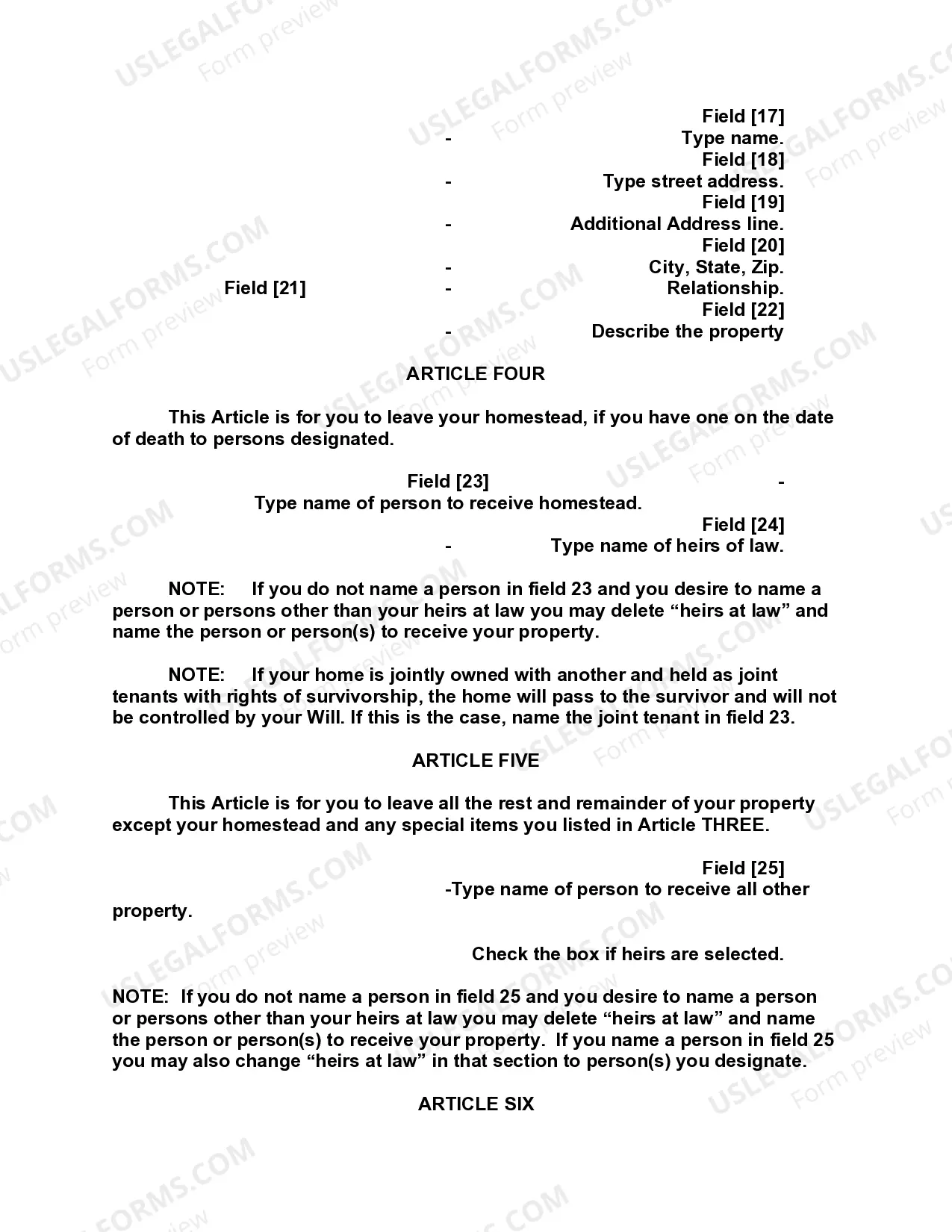
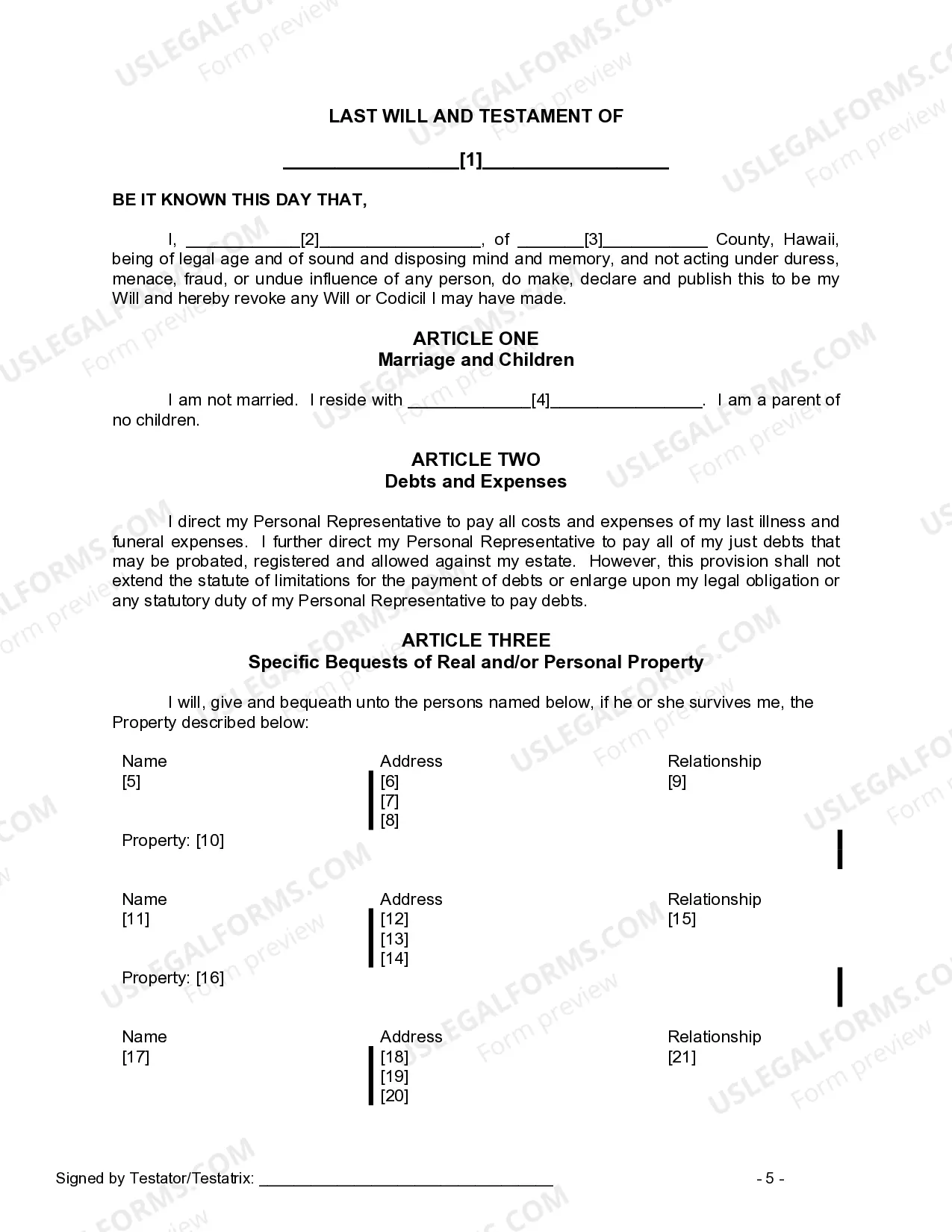
- Article One: Affirms the current relationship status and confirms no children.
- Debts and Expenses: Directs the personal representative to pay debts and last illness costs.
- Specific Bequests: Allows naming beneficiaries for specific assets.
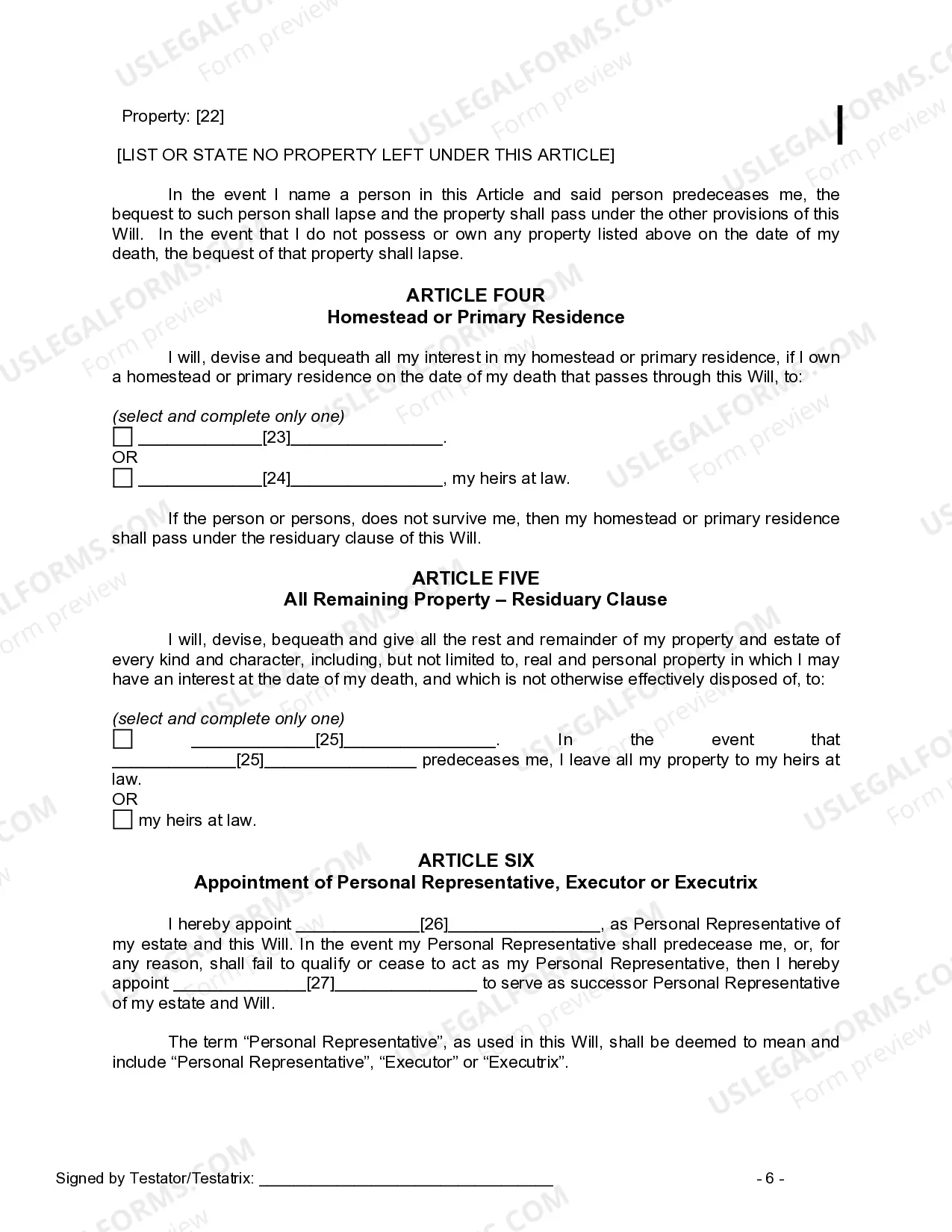
- Homestead Provision: Details the distribution of the primary residence.
- Residuary Clause: Addresses the distribution of remaining assets after specific bequests.
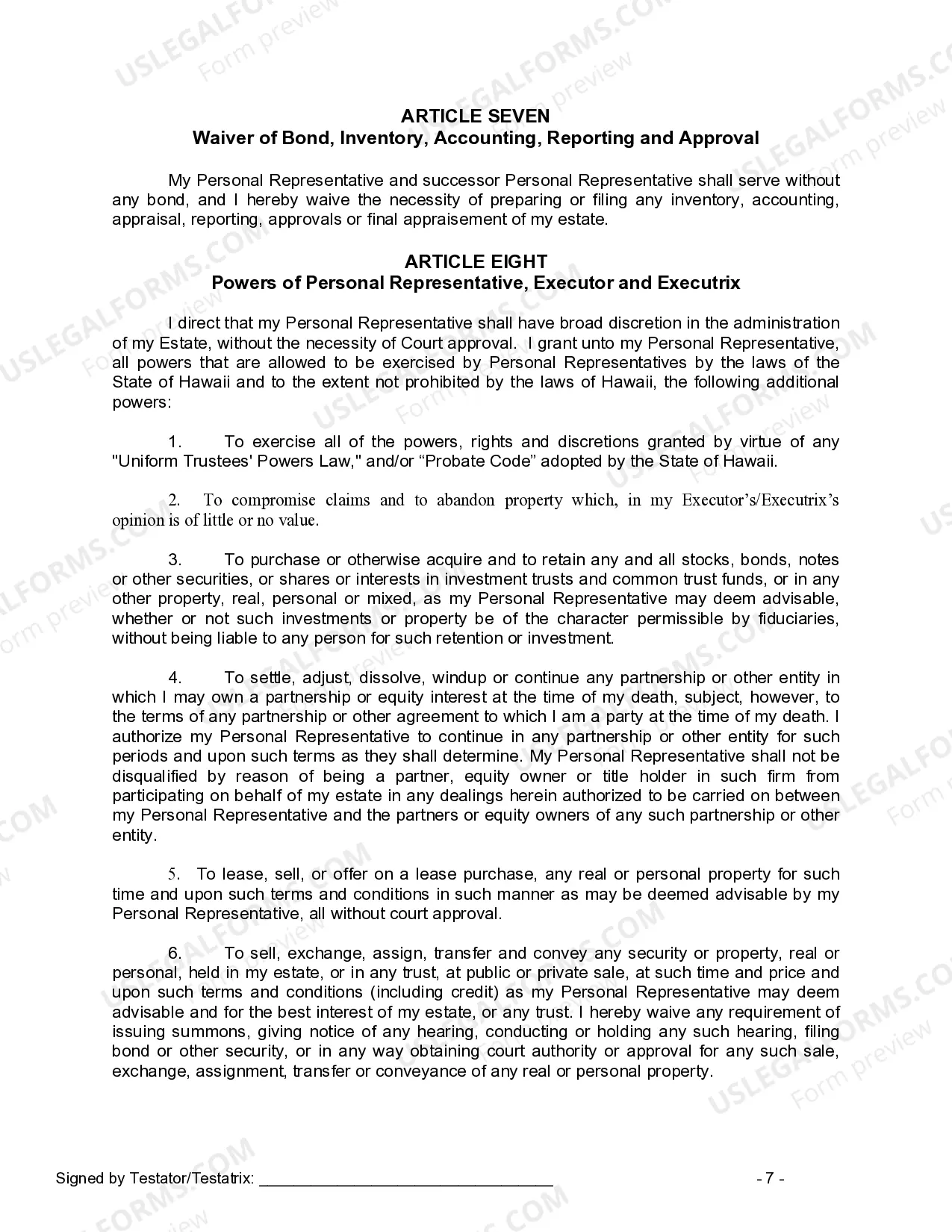
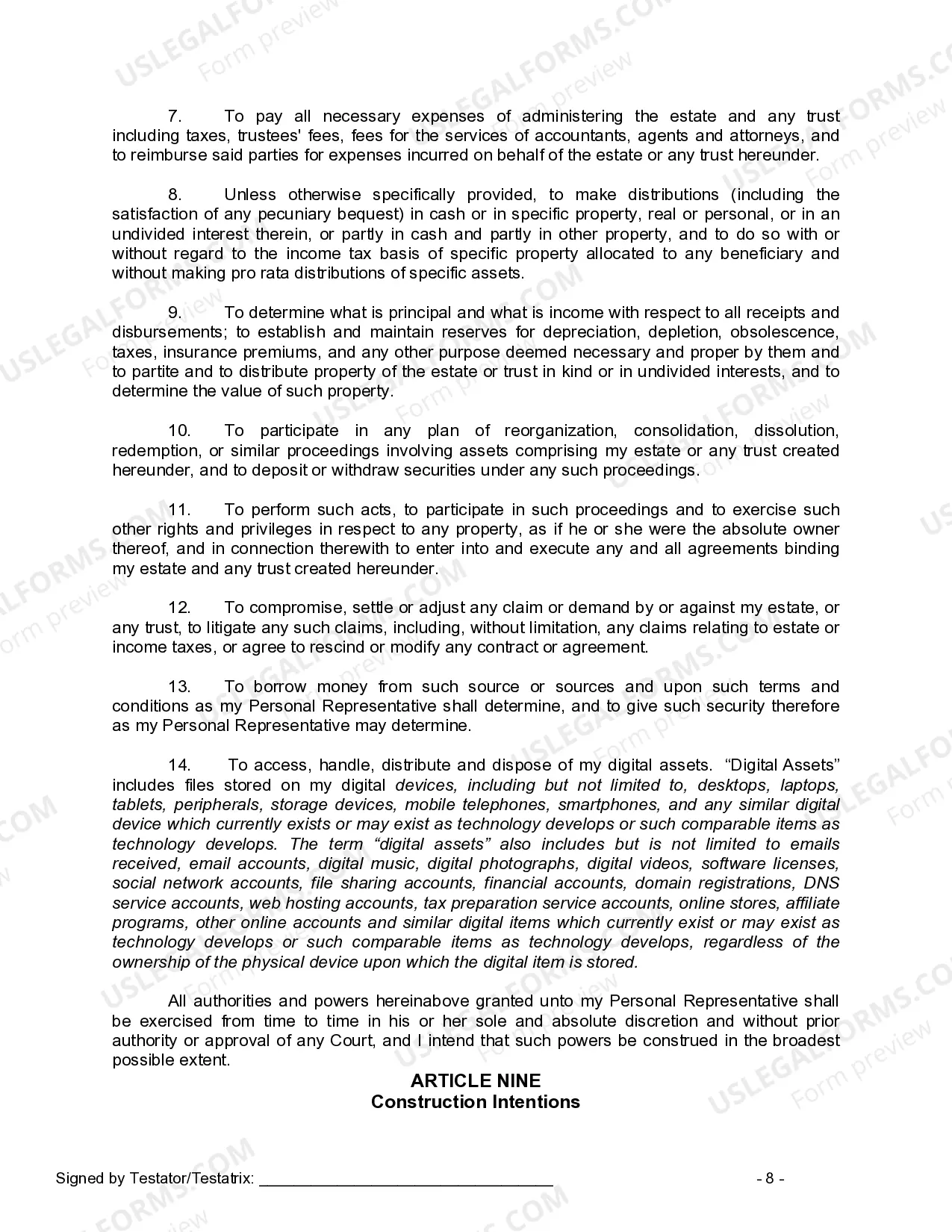
- Powers of Personal Representative: Grants broad authority for estate management without court approval.



When to use this form
Use this Mutual Wills package when a cohabitating couple who are not legally married wants to ensure that their assets are passed to each other in the event of death. This form is particularly suitable for situations where couples wish to have legally binding arrangements similar to those of married couples, specifically in states recognizing such provisions.
Who this form is for
- Cohabitating couples who are not married.
- Couples without children looking to outline their estate plans.
- Individuals wanting to establish mutual inheritance rights.
- Partners seeking to create legally binding wills that reflect their specific relationship dynamics.
Steps to complete this form
- Identify the parties: Fill in the names of the individuals creating the wills.
- Specify relationship details: Confirm the living arrangement and absence of children.
- Outline debts and expenses: Clearly denote how debts and final expenses should be administered.
- Name beneficiaries: List any specific beneficiaries for designated properties.
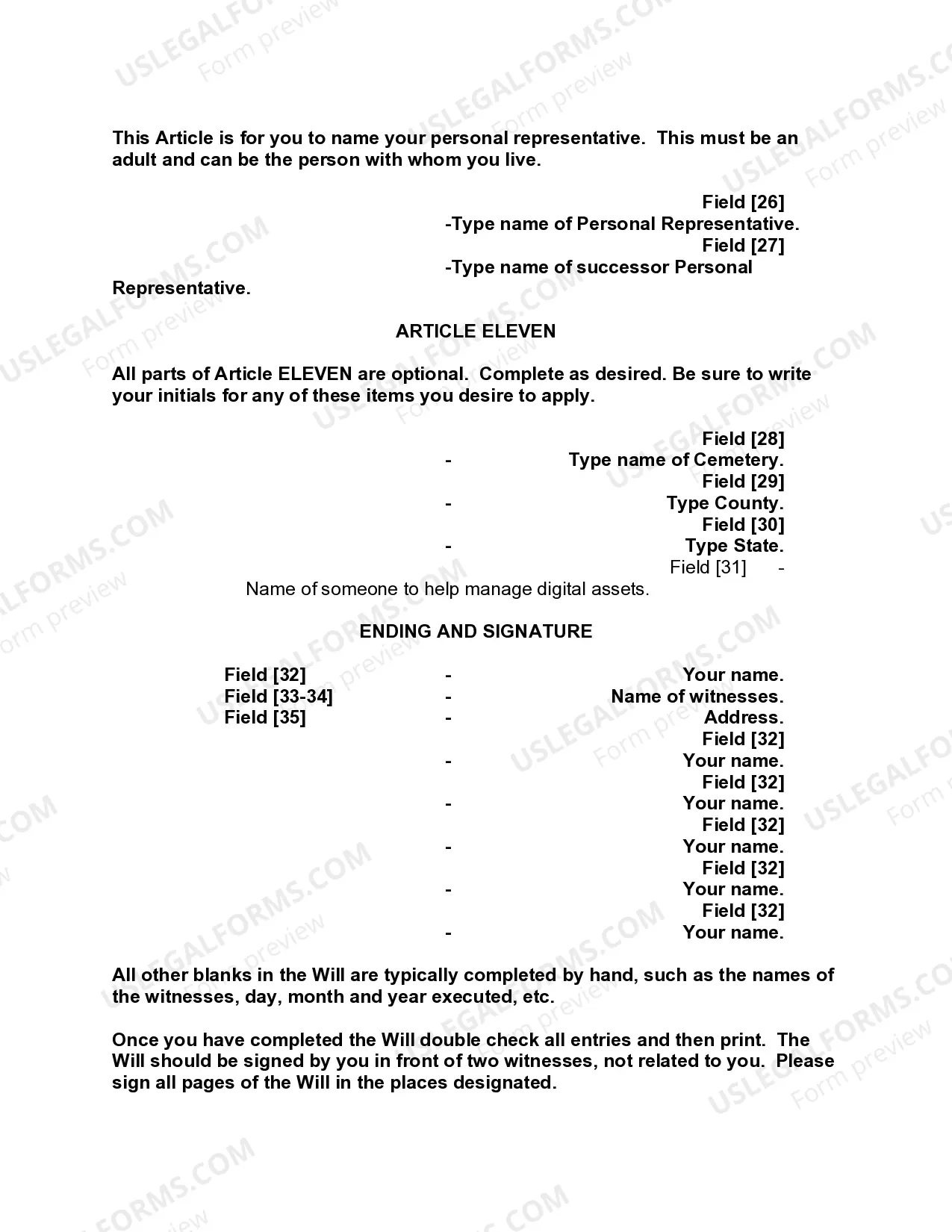
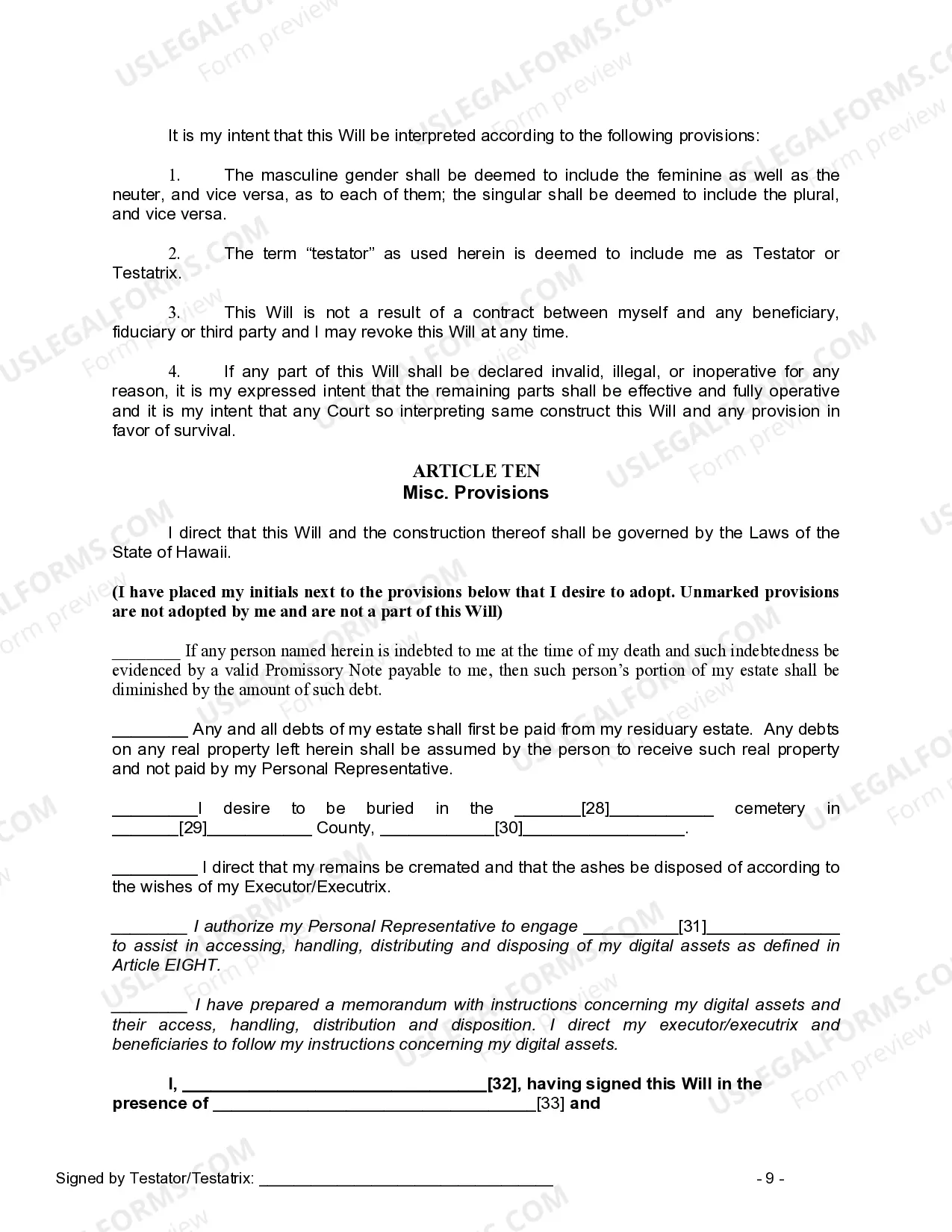
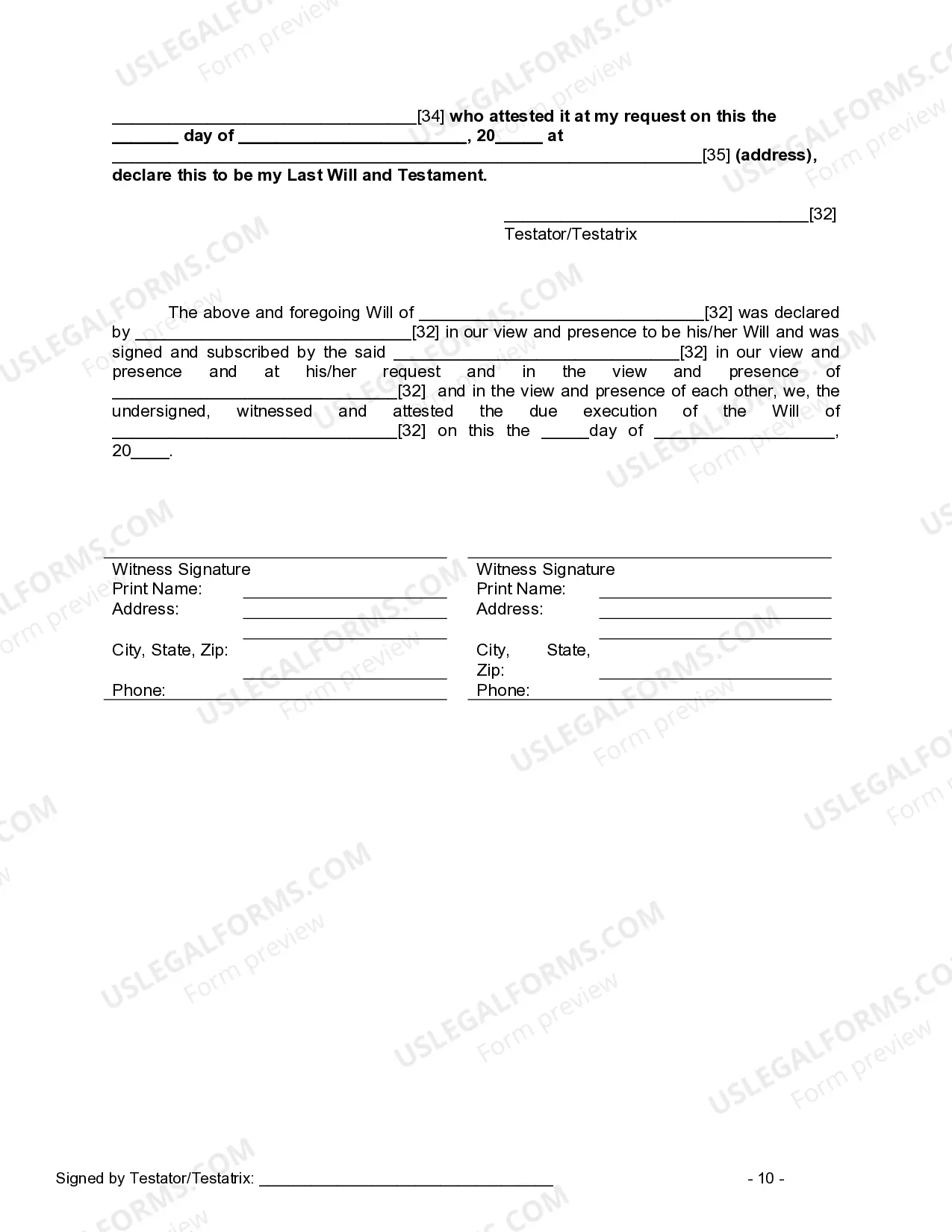
- Sign and witness: Ensure the wills are signed in the presence of two witnesses who are not beneficiaries.
- Consider notarization: If applicable, have the wills notarized to streamline the probate process.
Is notarization required?
Yes, this form must be notarized to be legally valid in the State of Hawaii. This ensures that the documents are properly executed and can be easily processed during probate. US Legal Forms provides integrated online notarization services for convenience, allowing you to complete the process securely and without the need for travel.
Get your form ready online
Our built-in tools help you complete, sign, share, and store your documents in one place.
Make edits, fill in missing information, and update formatting in US Legal Forms—just like you would in MS Word.
Download a copy, print it, send it by email, or mail it via USPS—whatever works best for your next step.
Sign and collect signatures with our SignNow integration. Send to multiple recipients, set reminders, and more. Go Premium to unlock E-Sign.
If this form requires notarization, complete it online through a secure video call—no need to meet a notary in person or wait for an appointment.
We protect your documents and personal data by following strict security and privacy standards.

Make edits, fill in missing information, and update formatting in US Legal Forms—just like you would in MS Word.

Download a copy, print it, send it by email, or mail it via USPS—whatever works best for your next step.

Sign and collect signatures with our SignNow integration. Send to multiple recipients, set reminders, and more. Go Premium to unlock E-Sign.

If this form requires notarization, complete it online through a secure video call—no need to meet a notary in person or wait for an appointment.

We protect your documents and personal data by following strict security and privacy standards.
Common mistakes to avoid
- Failing to have the wills signed in front of proper witnesses.
- Not including all assets in the specific bequests.
- Using outdated forms that do not comply with current laws.
- Neglecting to notarize the wills when required by state law.
Why use this form online
- Convenience of completing the forms from home at your own pace.
- Editability allows for customization to meet specific needs.
- Access to professionally drafted documents prepared by licensed attorneys.
- Instant availability for download upon completion.
Quick recap
- This form is specifically designed for unmarried couples without children.
- It provides a clear mutual agreement regarding property distribution upon death.
- Proper execution, including witness and notarization requirements, is crucial for the will's effectiveness.
Looking for another form?









Form popularity
FAQ
Separate wills can provide clarity and control for married couples, particularly when assets and personal wishes vary significantly. A separate will allows each partner to specify how their estate should be handled without influencing the other's decisions. Moreover, this approach can prevent potential misunderstandings down the line. For couples in Hawaii, adopting mutual wills containing Last Will and Testaments for Man and Woman living together not Married with No Children is a strong option that combines individual needs with mutual agreements.
Yes, married couples should each have their own wills to effectively express their individual desires for their estates. Each partner may have different assets, debts, or wishes for distribution that should be clearly outlined. Having separate wills allows for a tailored approach to estate planning, preventing potential conflicts over assets. Utilizing Hawaii Mutual Wills containing Last Will and Testaments for Man and Woman living together not Married with No Children can be an excellent alternative for those wanting a mutual approach.
A last will and testament does not automatically override a beneficiary designation. If you have named beneficiaries on accounts like life insurance or retirement plans, those designations take precedence over your will. Therefore, it's important to keep all estate planning documents aligned. Considering Hawaii Mutual Wills containing Last Will and Testaments for Man and Woman living together not Married with No Children can help ensure that your wishes are clearly stated and honored.
Married couples often wonder whether to create joint or separate wills. While joint wills are convenient, they may limit your ability to make changes as circumstances evolve. Separate wills provide individual control over your estate, allowing each partner to outline specific wishes regarding assets and personal items. For those in Hawaii, exploring mutual wills containing Last Will and Testaments for Man and Woman living together not Married with No Children can also provide clarity and protection.
Yes, in Hawaii, once a will is submitted for probate, it becomes a public record. This means that anyone can access the document after it has gone through the court. Understanding this aspect is essential when considering Hawaii Mutual Wills containing Last Will and Testaments for Man and Woman living together not Married with No Children, as it underscores the importance of privacy in your estate planning. You may want to consider additional strategies for asset protection in your plan.
You can make a will without your spouse being aware of it; however, open communication is vital for healthy relationships. With Hawaii Mutual Wills containing Last Will and Testaments for Man and Woman living together not Married with No Children, having a shared understanding can strengthen your estate plans. It's a good practice to involve your partner in discussions about wills and estate planning to align your goals.
Yes, a married man can create a will independently, without his wife’s consent or knowledge. In situations involving Hawaii Mutual Wills containing Last Will and Testaments for Man and Woman living together not Married with No Children, this type of will can help clarify the individual wishes of both partners. It's advisable to communicate these intentions clearly to avoid potential disputes later.
Certainly, you can create a will without your spouse. In the context of Hawaii Mutual Wills containing Last Will and Testaments for Man and Woman living together not Married with No Children, having a personal will allows you to outline your specific wishes regarding your assets. It’s important to consult resources like uslegalforms to ensure your will meets legal requirements and reflects your intent.
Yes, your marital status does not change upon your spouse's death; you remain legally married until the official conclusion of the estate process. In scenarios of Hawaii Mutual Wills containing Last Will and Testaments for Man and Woman living together not Married with No Children, understanding your rights and responsibilities as a surviving spouse is crucial. This knowledge can help you navigate asset distribution effectively.
Yes, your husband can remove you from his will at any time, as long as he is legally competent. In cases involving Hawaii Mutual Wills containing Last Will and Testaments for Man and Woman living together not Married with No Children, clear communication about intentions and changes can reduce confusion later. It’s essential to have discussions regarding estate planning to ensure that both partners are on the same page.