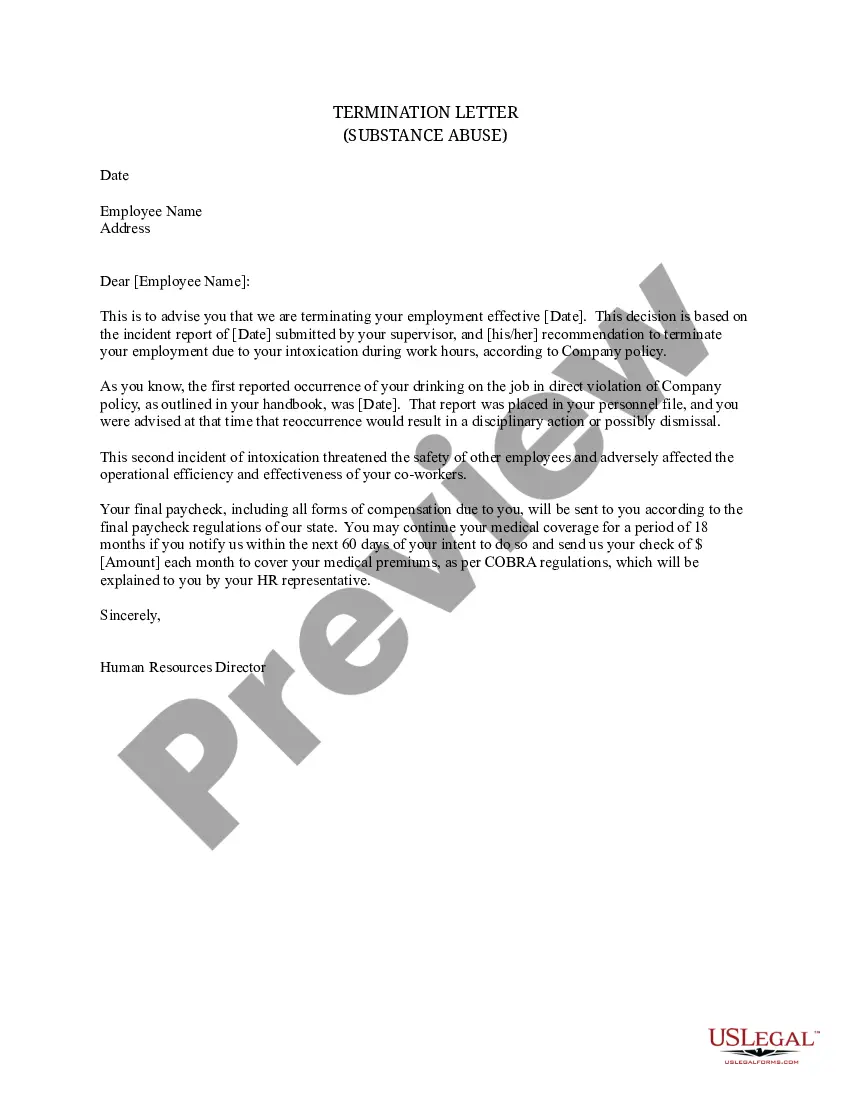
Wyoming Termination Letter (Substance Abuse)
Description
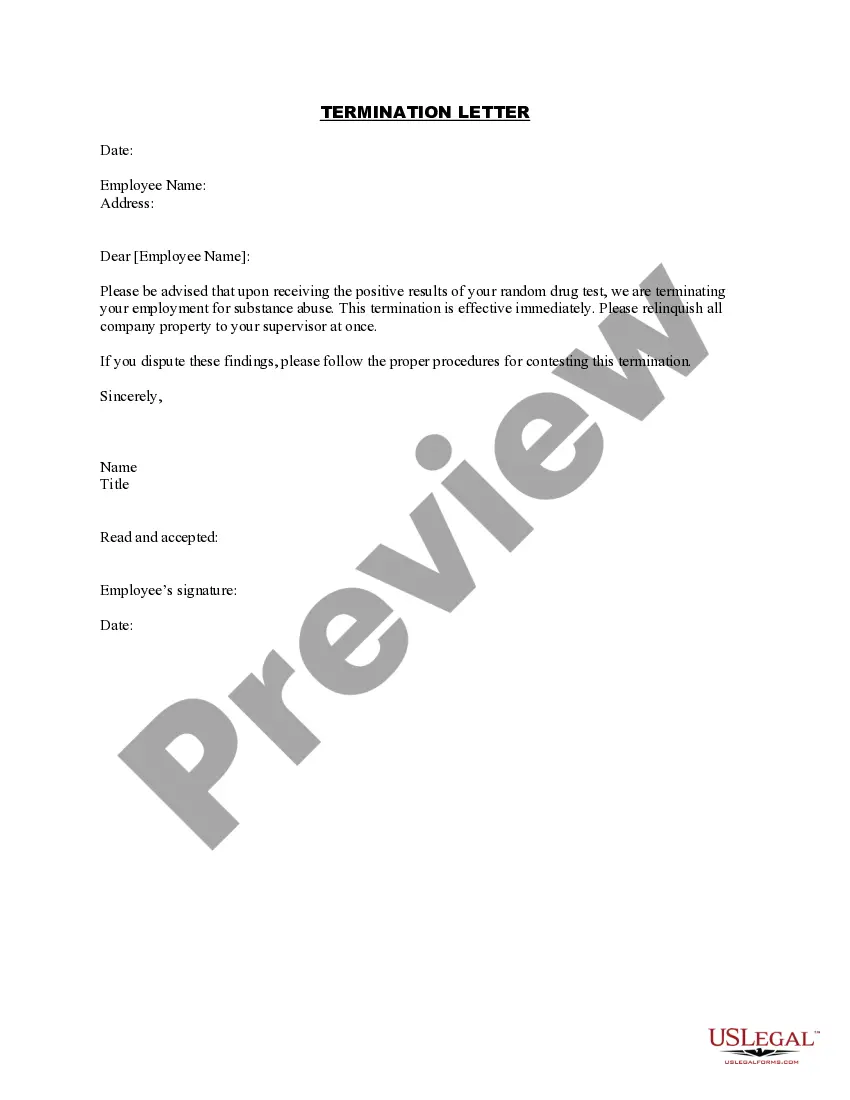
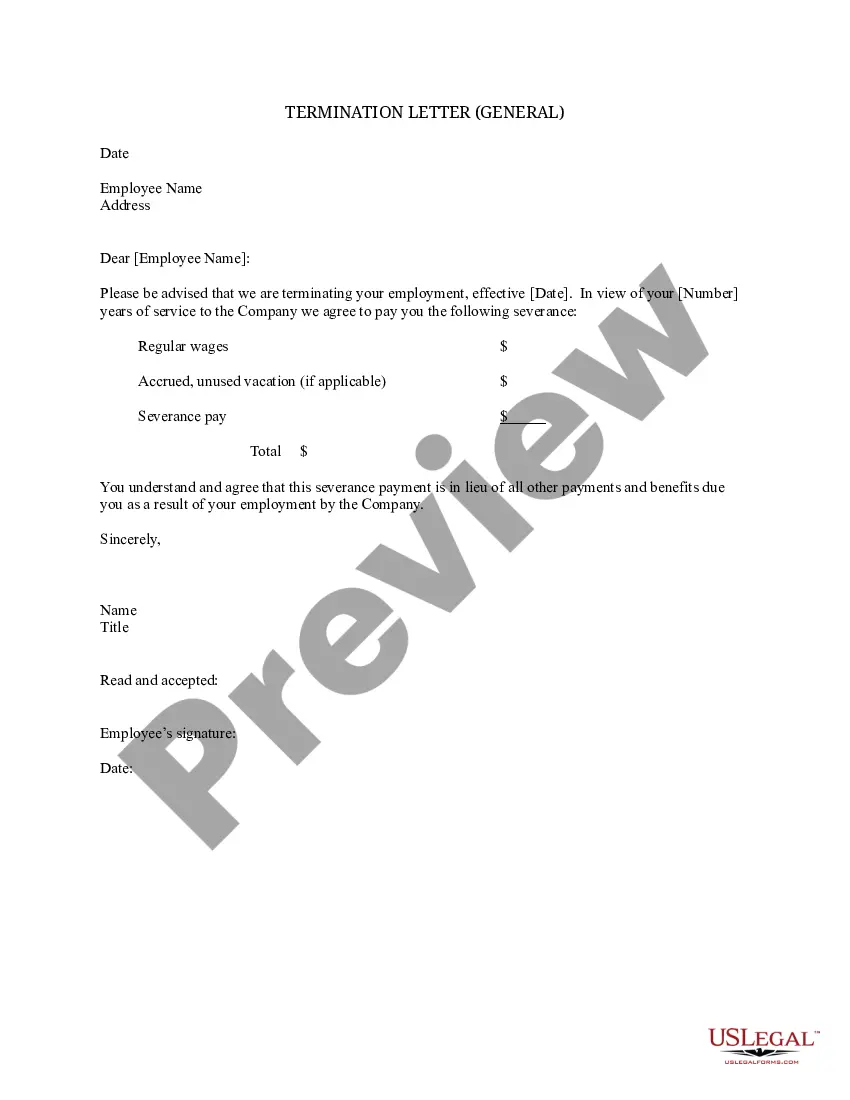
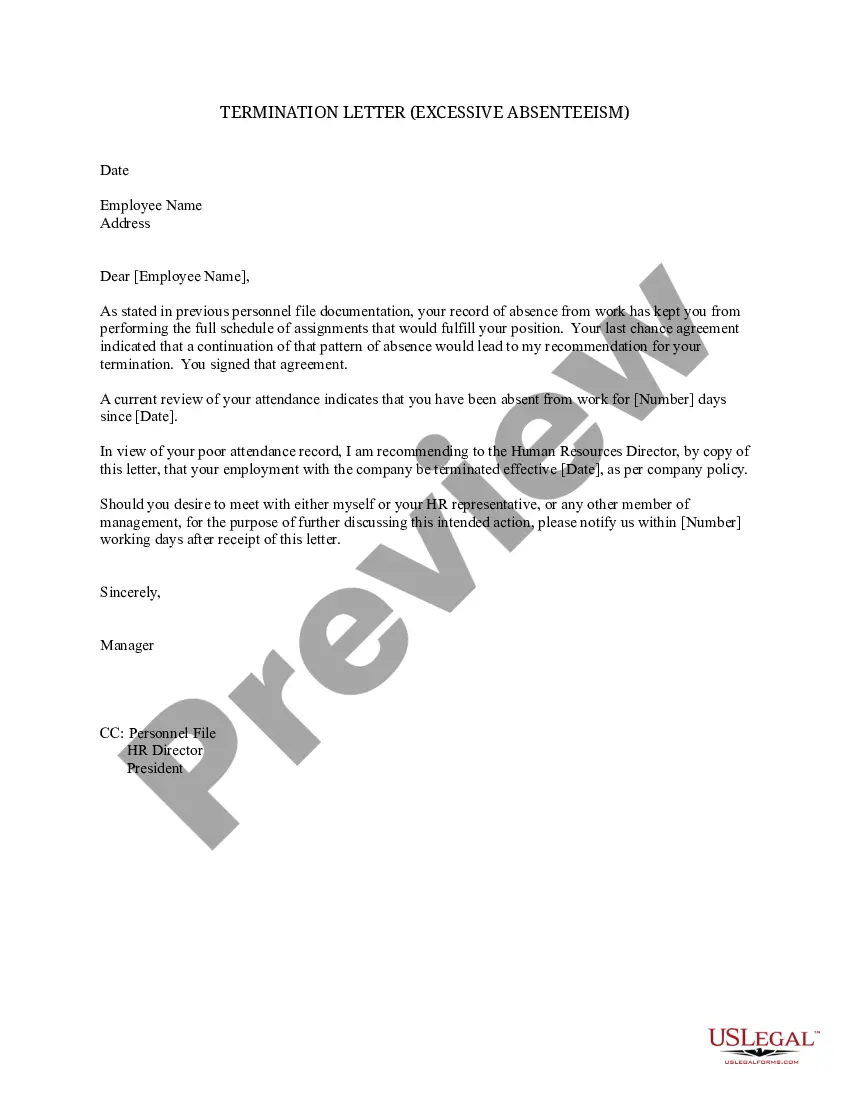



How to fill out Termination Letter (Substance Abuse)?
Are you presently located in the spot that you need documents for a possible business or individual you utilize nearly every day.
There are numerous legal document templates available online, but finding ones you can trust is challenging.
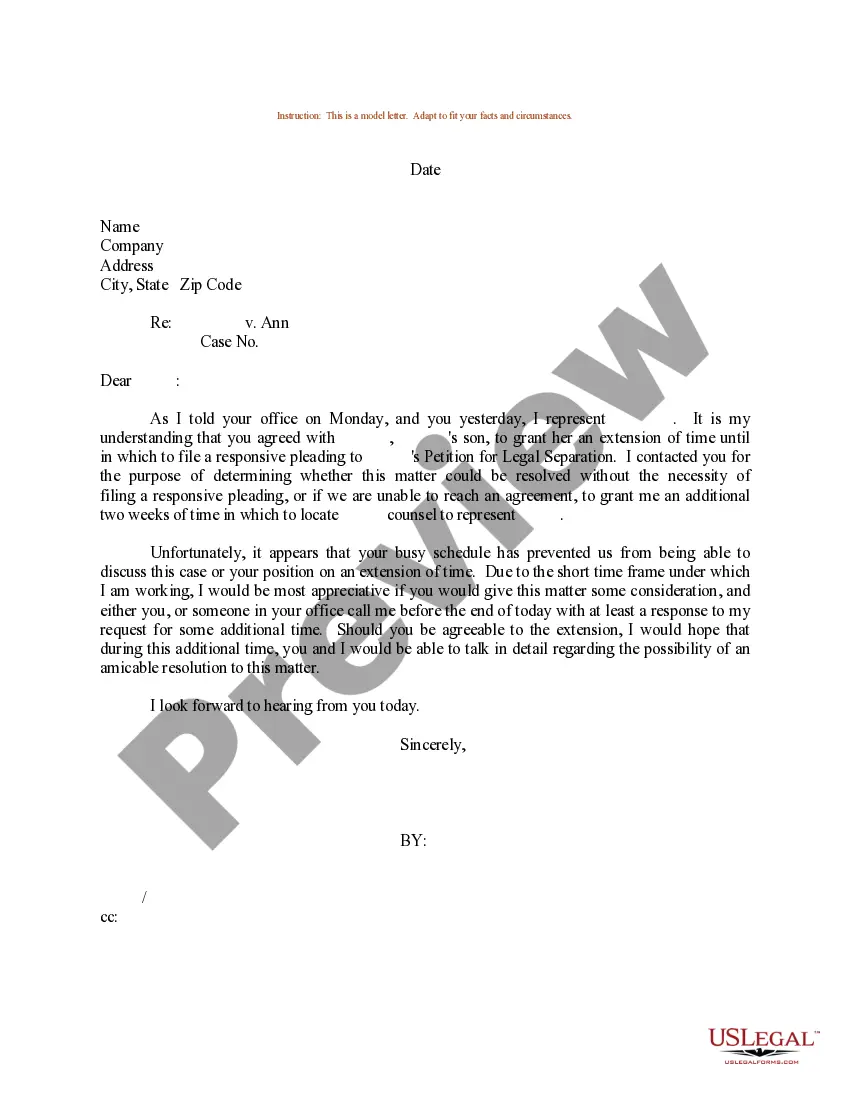
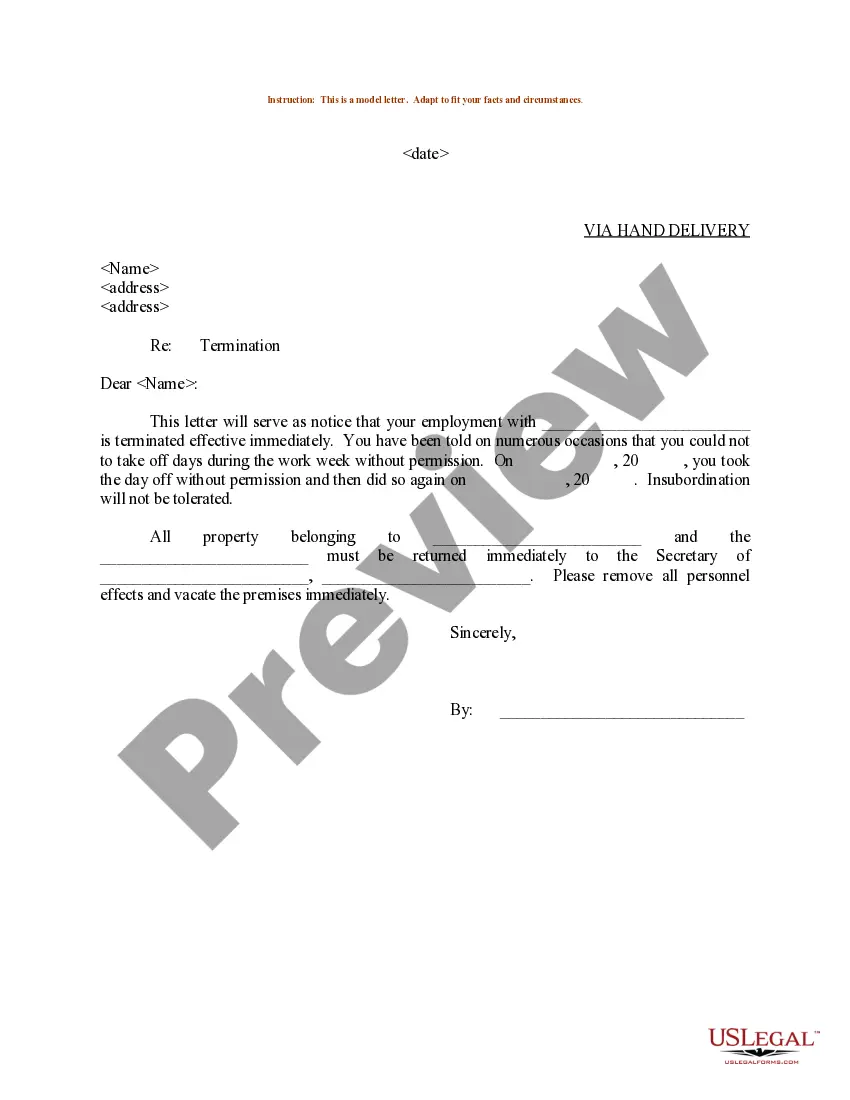
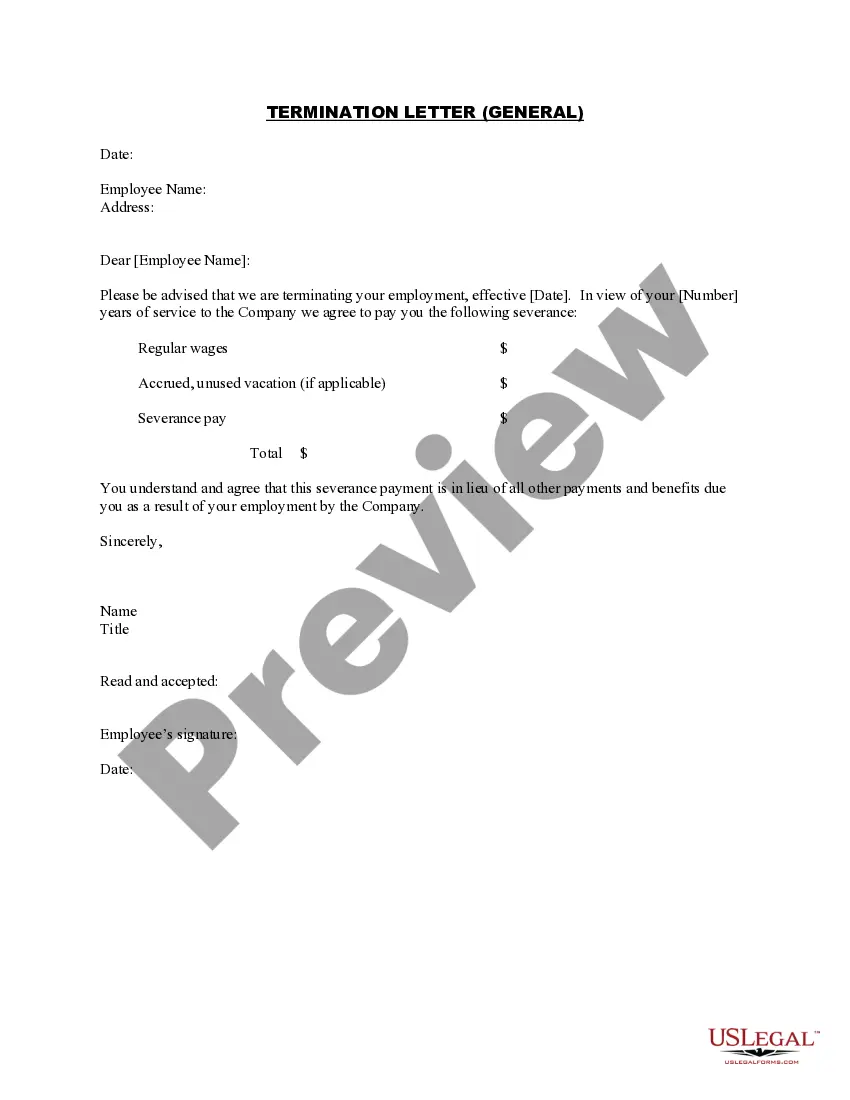
US Legal Forms offers thousands of form templates, including the Wyoming Termination Letter (Substance Abuse), which can be tailored to meet state and federal regulations.
Once you find the right form, click Get now.
Choose the payment plan you wish, fill out the necessary information to create your account, and complete your purchase using PayPal or a credit card.
- If you are already acquainted with the US Legal Forms website and possess an account, simply Log In.
- Then, you can download the Wyoming Termination Letter (Substance Abuse) template.
- If you do not have an account and wish to start using US Legal Forms, follow these steps.
- Find the form you need and ensure it is for the correct city/state.
- Use the Preview button to view the form.
- Read the information to confirm that you have selected the correct form.
- If the form is not what you are looking for, utilize the Search box to find the form that matches your needs.
Form popularity
FAQ
Are Substance Use Disorders Considered Disabilities? In short, yes. Diagnosable drug and alcohol addictions, or substance use disorders (SUDs), are considered disabilities under Section 504 of the Rehabilitation Act, the Americans with Disabilities Act (ADA), and Section 1557 of the Affordable Care Act.
While it is unlawful for an employer to fire an employee solely because he is an alcoholic, a company may fire a person for unacceptable behavior, such as a safety lapse, violation of company rules or repeated absence, even if the behavior is caused by alcoholism.
' " Current illegal drug use is not protected, but recovering addicts are protected under the ADA.
Is Addiction a Brain Disease? Many people associate addiction with substance use, physical deterioration, reckless behavior, and criminal activity. But addiction is a relapsing disorder that begins in the brain. Most people agree that addiction is a disease.
Addiction is considered to be a disability and, as such, an employee cannot be fired for being addicted to substances such as drugs or alcohol. In fact, employers are required to accommodate employees who suffer from addiction to the point of undue hardship.
Are Substance Use Disorders Considered Disabilities? In short, yes. Diagnosable drug and alcohol addictions, or substance use disorders (SUDs), are considered disabilities under Section 504 of the Rehabilitation Act, the Americans with Disabilities Act (ADA), and Section 1557 of the Affordable Care Act.
You may need to enlist the guidance of a professional to help you with this. In the US, your employer can discipline or fire you if your alcohol or drug use impairs your ability to do your job. However, employers cannot discipline or fire you simply because you tell them you have a substance problem.
Under the ADA, individuals who abuse alcohol may be considered disabled if the person is an alcoholic or a recovering alcoholic. Indeed, alcoholism can result in the fairly obvious impairment of major life activities such as walking, standing, and thinking.
This means that Wyoming employers who have a clear policy stating employees lose all accrued vacation upon termination of employment are no longer obligated to pay out accrued, unused vacation time upon termination.
Drug addiction, also called substance use disorder, is a disease that affects a person's brain and behavior and leads to an inability to control the use of a legal or illegal drug or medication.