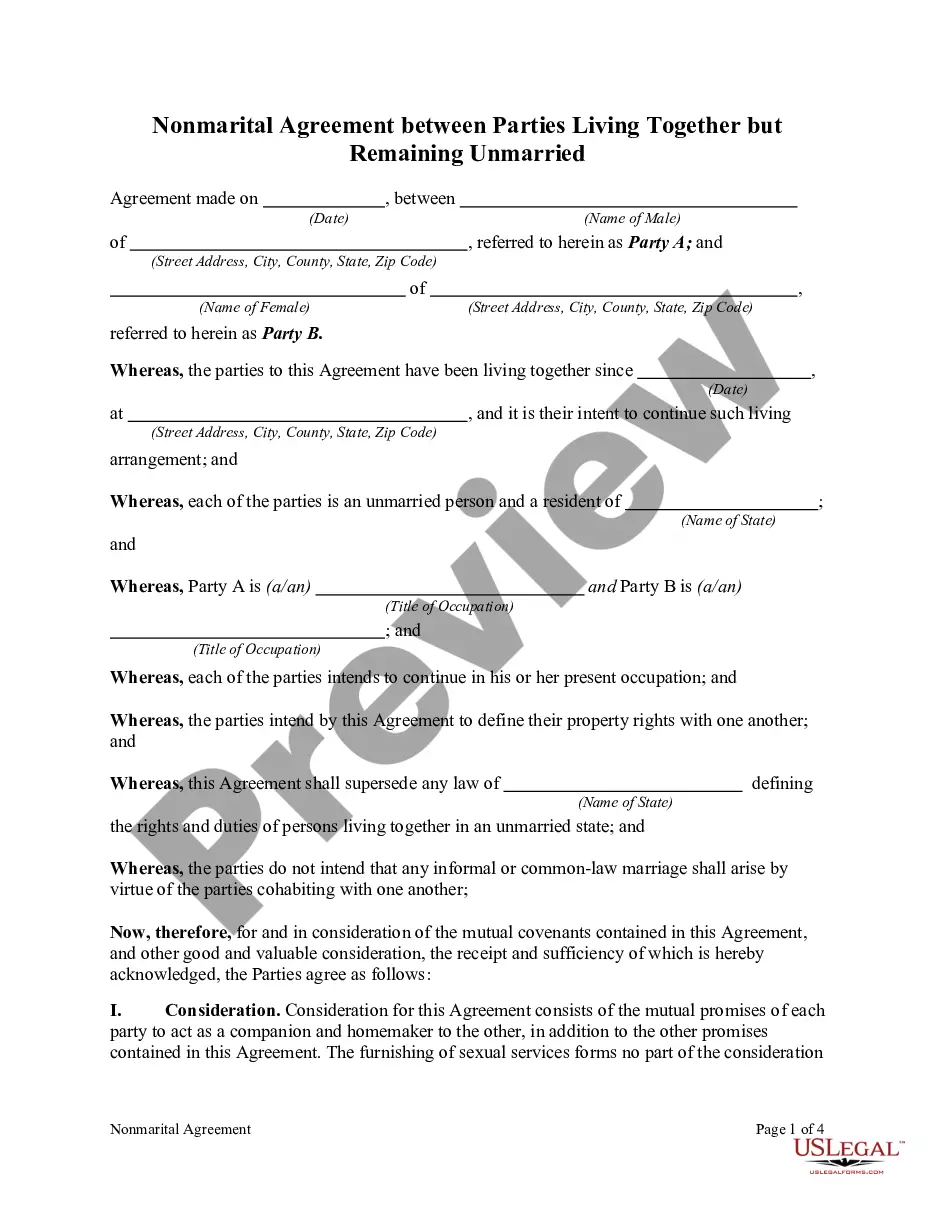
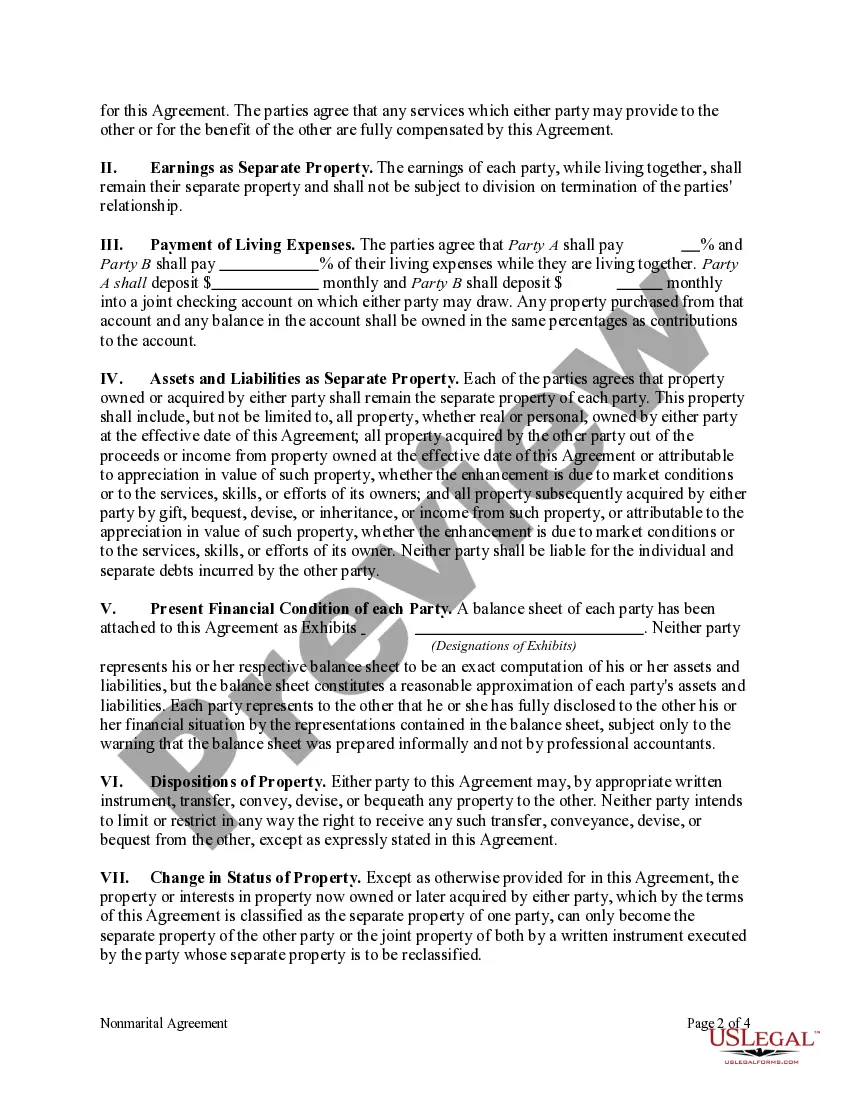
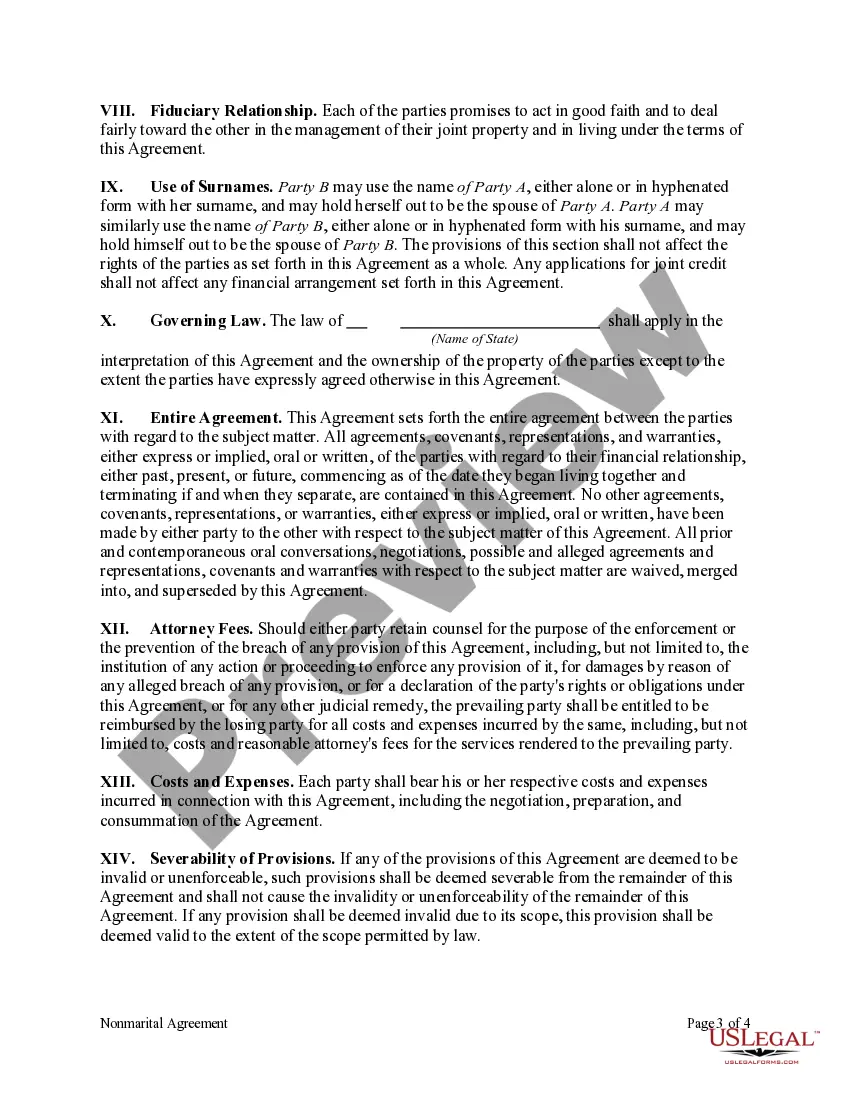
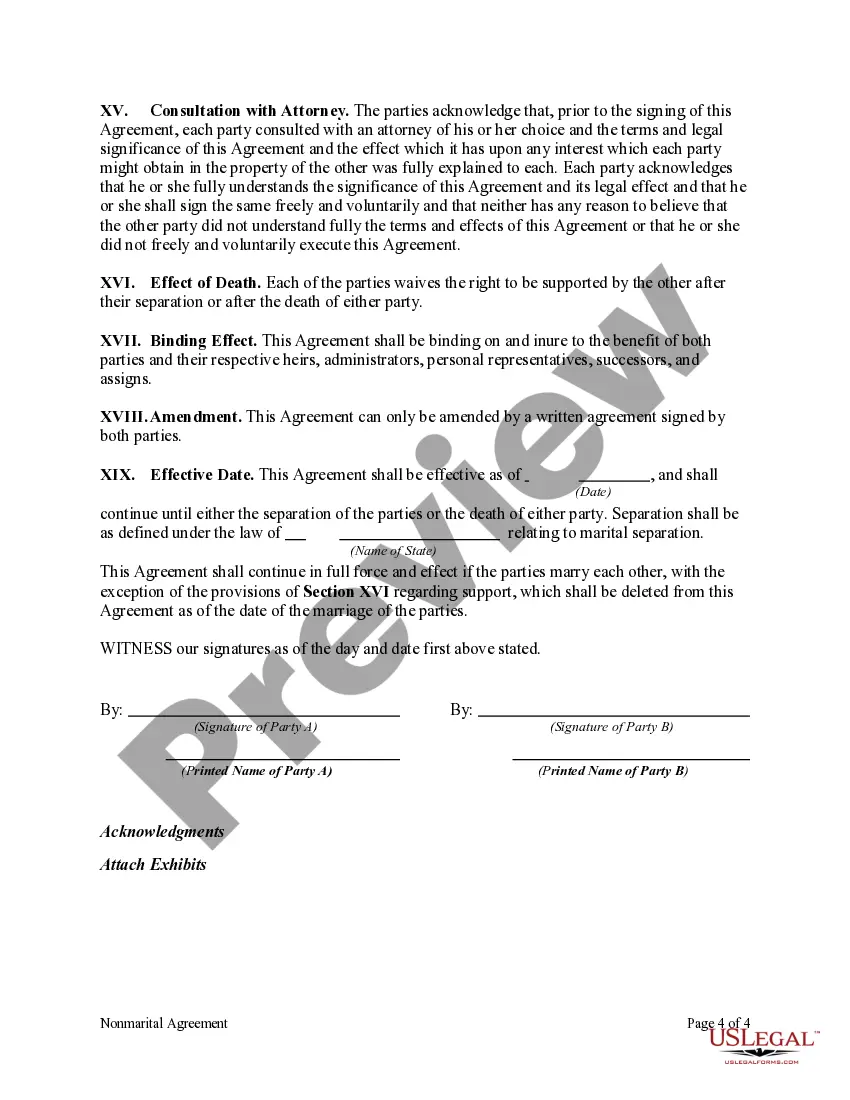
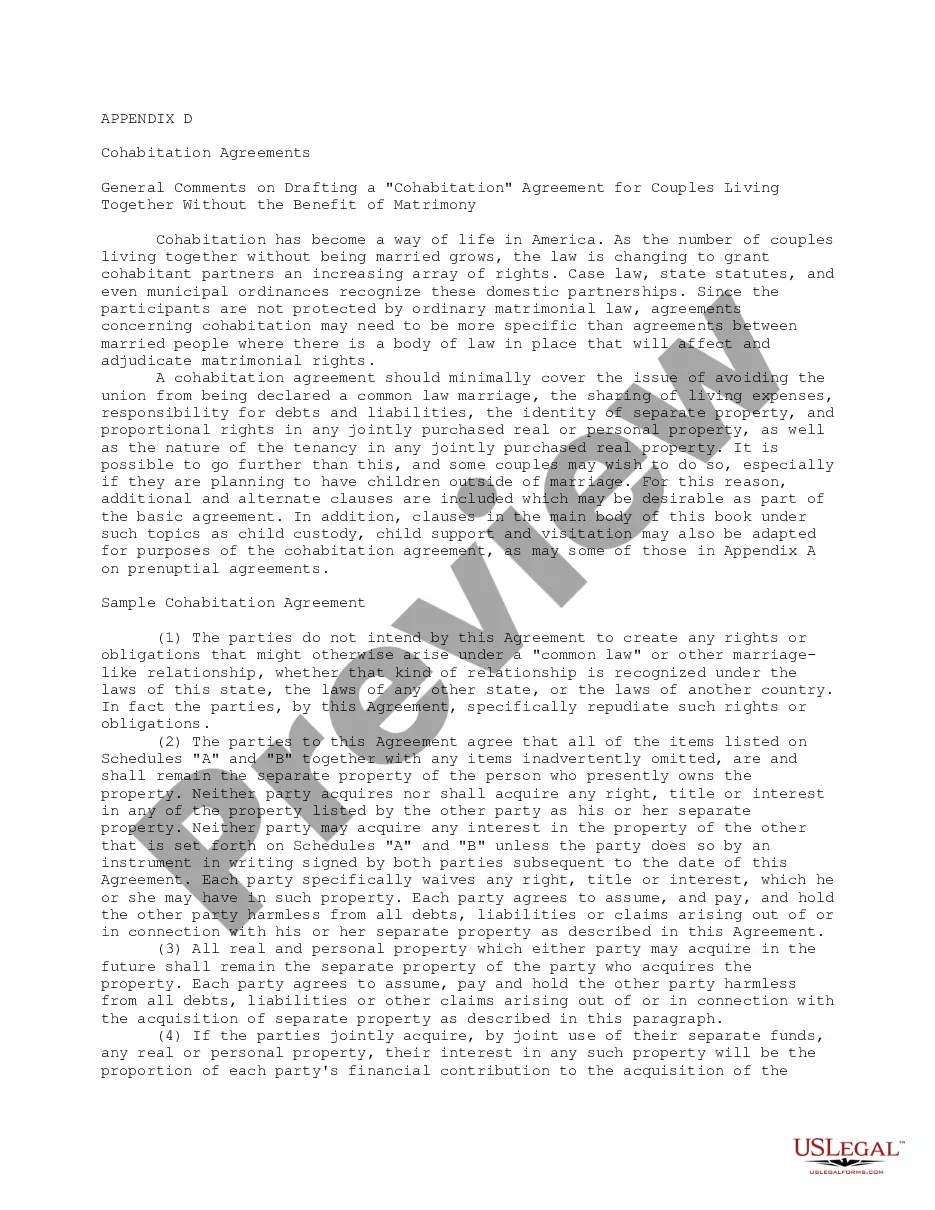
Wyoming Agreement Between Parties Living Together but Remaining Unmarried
Description
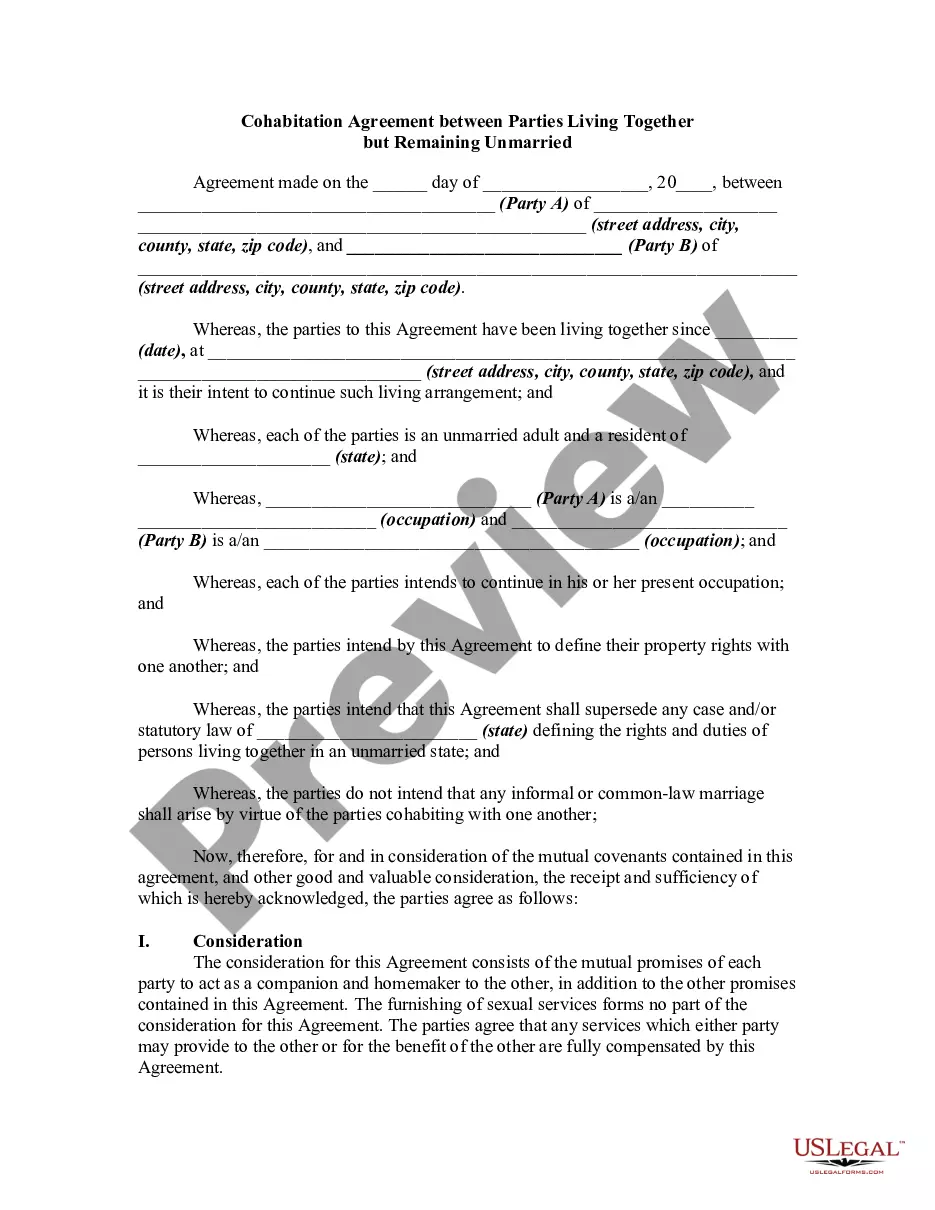
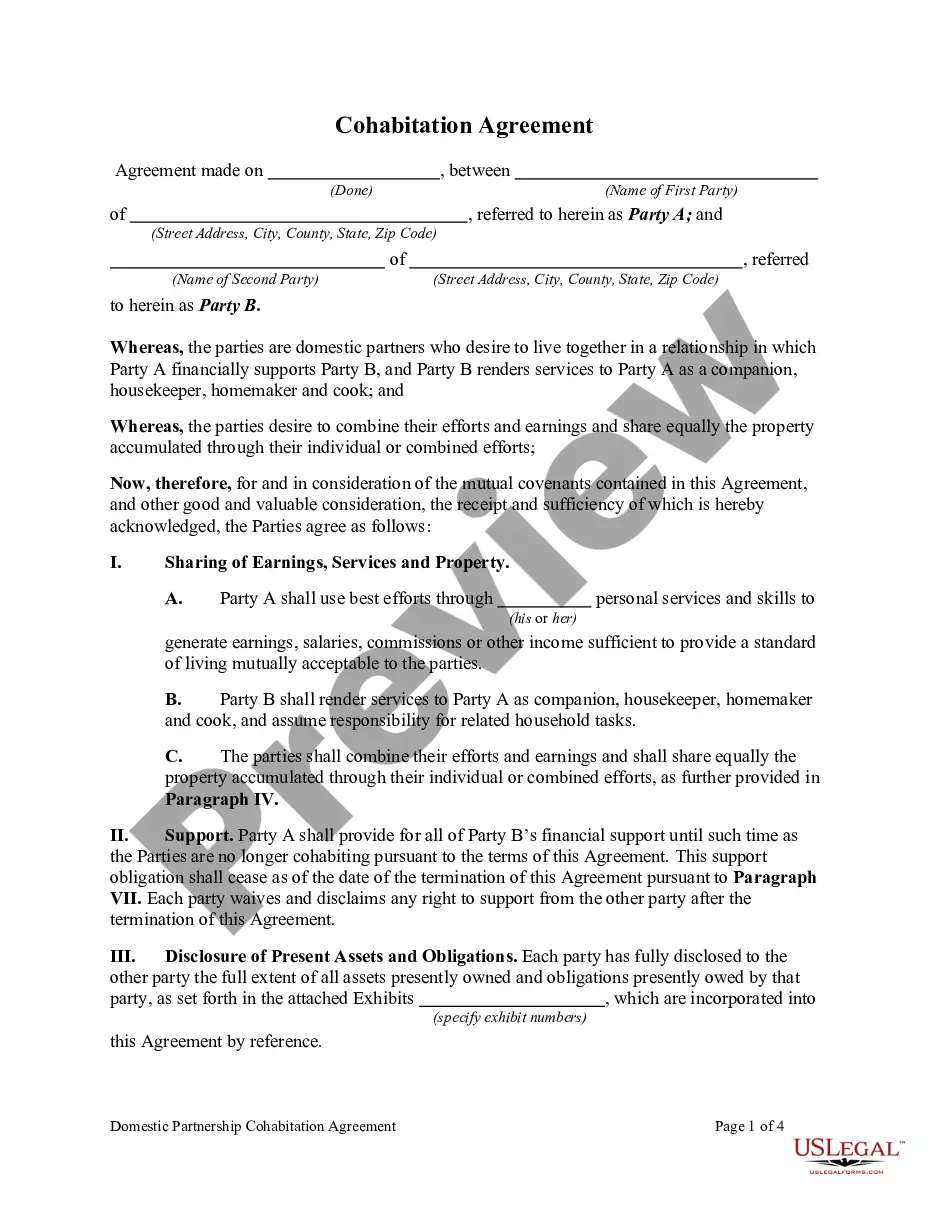
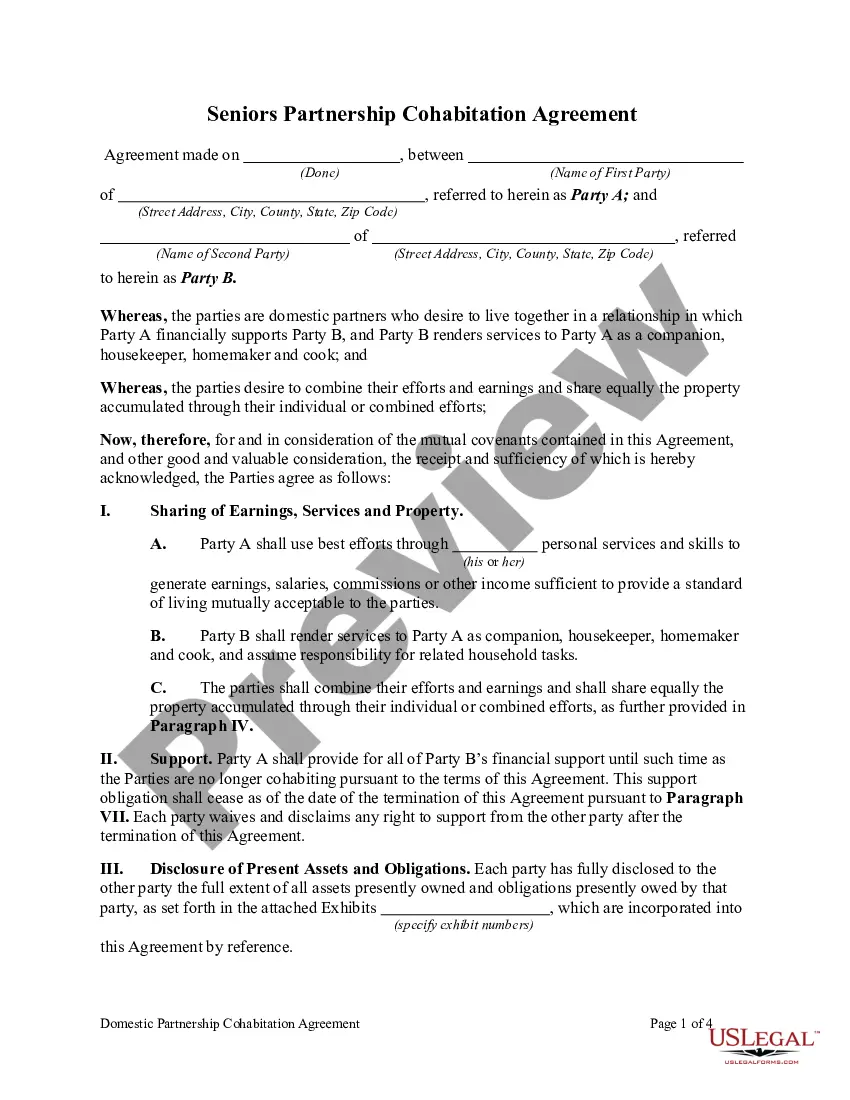
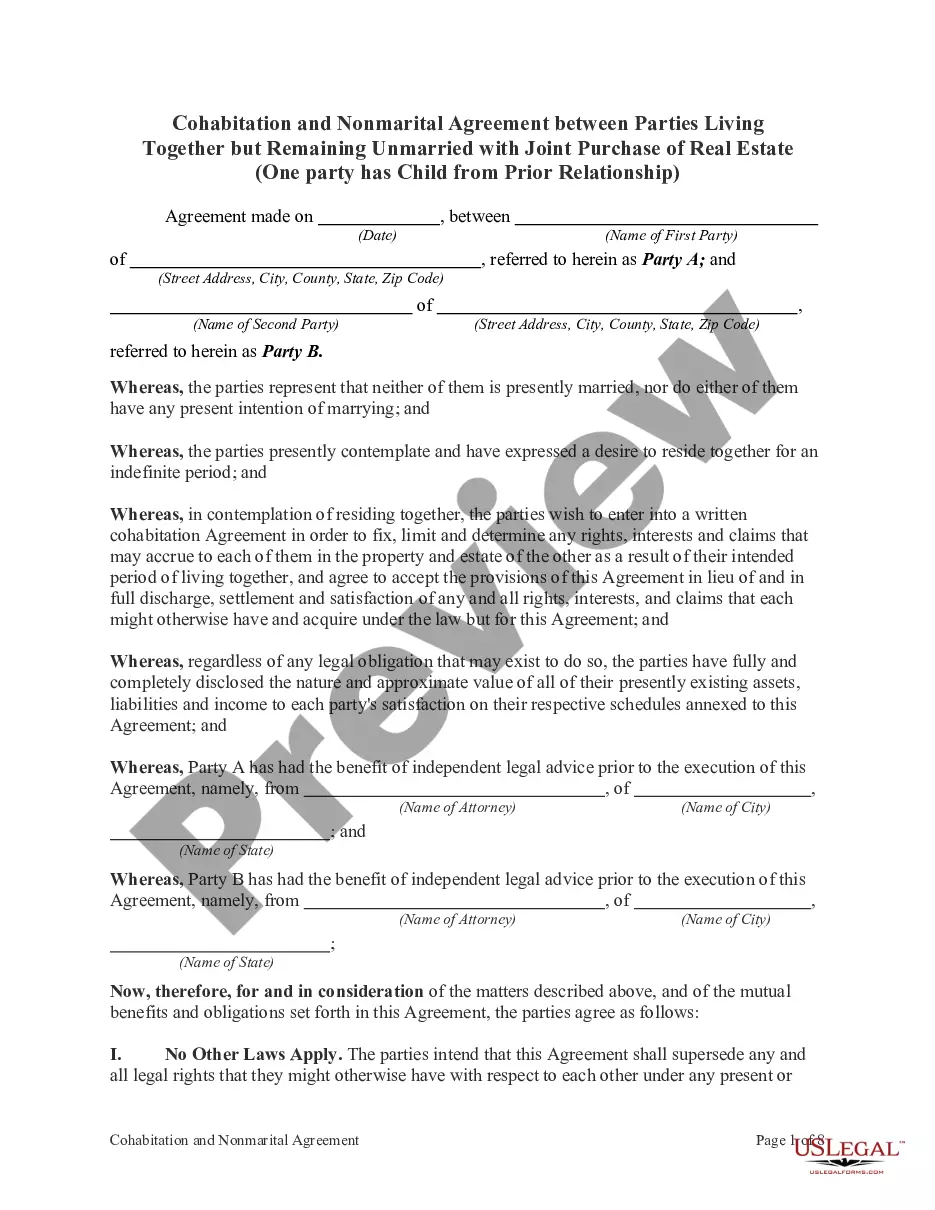
Get your form ready online
Our built-in tools help you complete, sign, share, and store your documents in one place.
Make edits, fill in missing information, and update formatting in US Legal Forms—just like you would in MS Word.
Download a copy, print it, send it by email, or mail it via USPS—whatever works best for your next step.
Sign and collect signatures with our SignNow integration. Send to multiple recipients, set reminders, and more. Go Premium to unlock E-Sign.
If this form requires notarization, complete it online through a secure video call—no need to meet a notary in person or wait for an appointment.
We protect your documents and personal data by following strict security and privacy standards.

Make edits, fill in missing information, and update formatting in US Legal Forms—just like you would in MS Word.

Download a copy, print it, send it by email, or mail it via USPS—whatever works best for your next step.

Sign and collect signatures with our SignNow integration. Send to multiple recipients, set reminders, and more. Go Premium to unlock E-Sign.

If this form requires notarization, complete it online through a secure video call—no need to meet a notary in person or wait for an appointment.

We protect your documents and personal data by following strict security and privacy standards.
Looking for another form?

How to fill out Agreement Between Parties Living Together But Remaining Unmarried?
If you need to complete, obtain, or generate official document templates, utilize US Legal Forms, the largest collection of legal forms available online.
Take advantage of the website's straightforward and user-friendly search function to find the documents you need.
A variety of templates for business and individual purposes are organized by categories and topics, or keywords.
Step 4. Once you have located the form you need, click the Get now button. Choose the pricing plan you prefer and enter your details to register for the account.
Step 5. Complete the transaction. You can use your Visa, MasterCard, or PayPal account to finalize the payment.
- Use US Legal Forms to effortlessly acquire the Wyoming Agreement Between Cohabitating Parties Who Remain Unmarried in just a few clicks.
- If you are an existing customer of US Legal Forms, Log In to your account and select the Download option to obtain the Wyoming Agreement Between Parties Living Together but Remaining Unmarried.
- You can also access forms you've previously downloaded from the My documents tab in your account.
- If you are using US Legal Forms for the first time, follow the instructions provided below.
- Step 1. Confirm you have selected the form for the correct state/territory.
- Step 2. Use the Review feature to examine the content of the form. Don’t forget to read the description.
- Step 3. If you are not satisfied with the form, utilize the Search bar at the top of the screen to find alternative versions of the legal form template.
Form popularity
FAQ
A domestic partner can be broadly defined as an unrelated and unmarried person who shares common living quarters with an employee and lives in a committed, intimate relationship that is not legally defined as marriage by the state in which the partners reside.
Cohabitation agreements are legally binding contracts, provided that they are drafted and executed properly, and are signed as a deed. It is therefore essential to obtain legal advice before preparing an agreement.
Is there common law marriage in Wyoming? No. Wyoming does not recognize common law marriages. The fact that you consider yourself married, or the fact that you have lived together for a certain number of years, does not mean that you will be considered married under Wyoming law.
Domestic partnerships have no federal guidelines, meaning that these relationships are not recognized by the federal government.
Living together without being married or being in a civil partnership means you do not have many rights around finances, property and children. Consider making a will and getting a cohabitation agreement to protect your interests.
Most states recognize cohabitation agreements and treat them as if they were ordinary contracts. This means that the agreement is legally binding and imposes a legal duty on each party to adhere to the terms of the agreement. Violations of cohabitation agreements can result in damages or other legal consequences.
A relationship contract is a document that gets written up and signed by (usually) two people within an intimate relationship. But, in truth, the contract is a catalyst for a very honest conversation. It isn't legally binding. It isn't a marital contract.
Yes. It is now legal to marry a same-sex partner in Wyoming. Wyoming will also recognize same-sex unions legally performed outside Wyoming.
Although there is no legal definition of living together, it generally means to live together as a couple without being married. Couples who live together are sometimes called common-law partners. This is just another way of saying a couple are living together.
Five states allow for civil unions: Colorado, Hawaii, Illinois, Vermont and New Jersey. California, District of Columbia, Maine, Nevada, Oregon, Washington and Wisconsin allow for domestic partnerships while Hawaii allows for a similar relationship known as reciprocal beneficiaries.