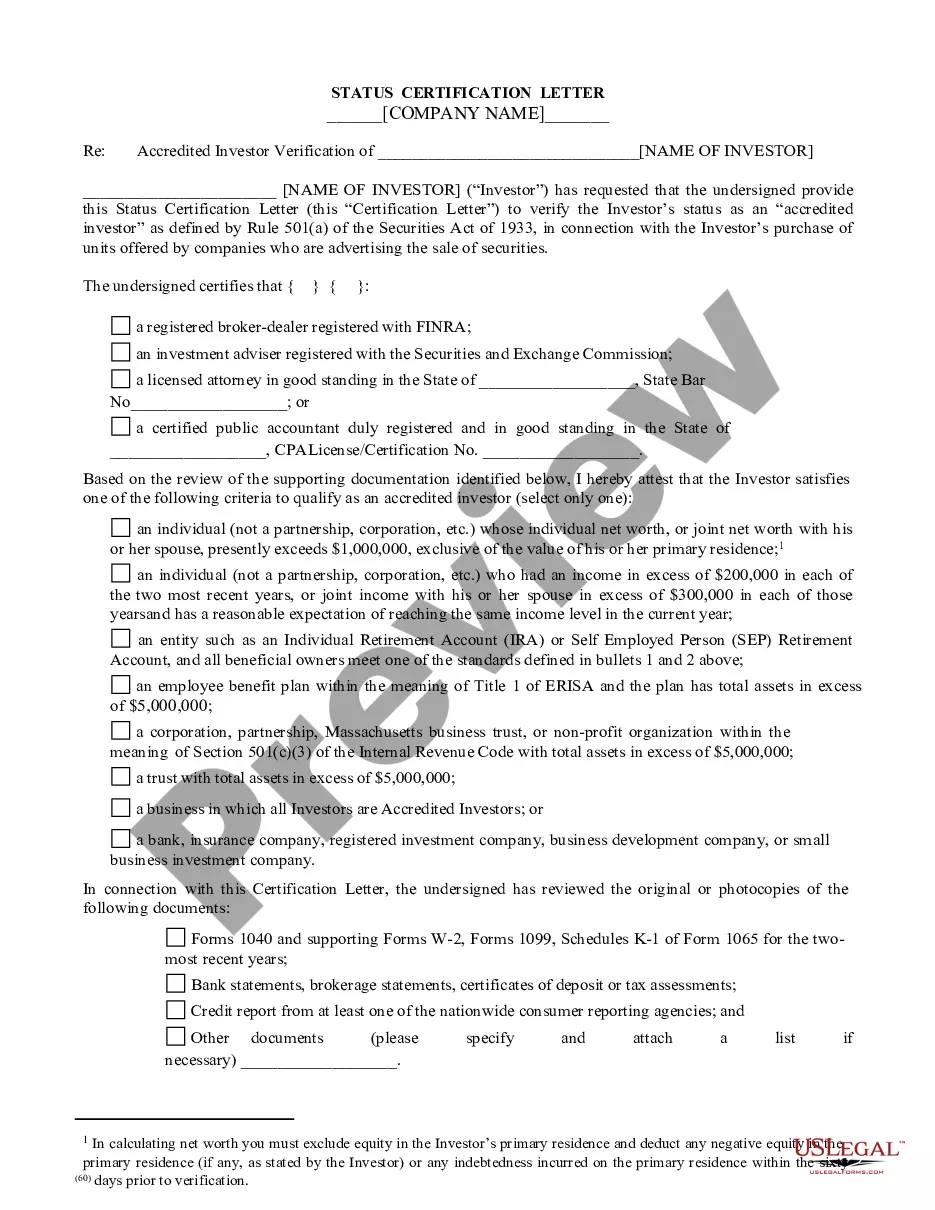
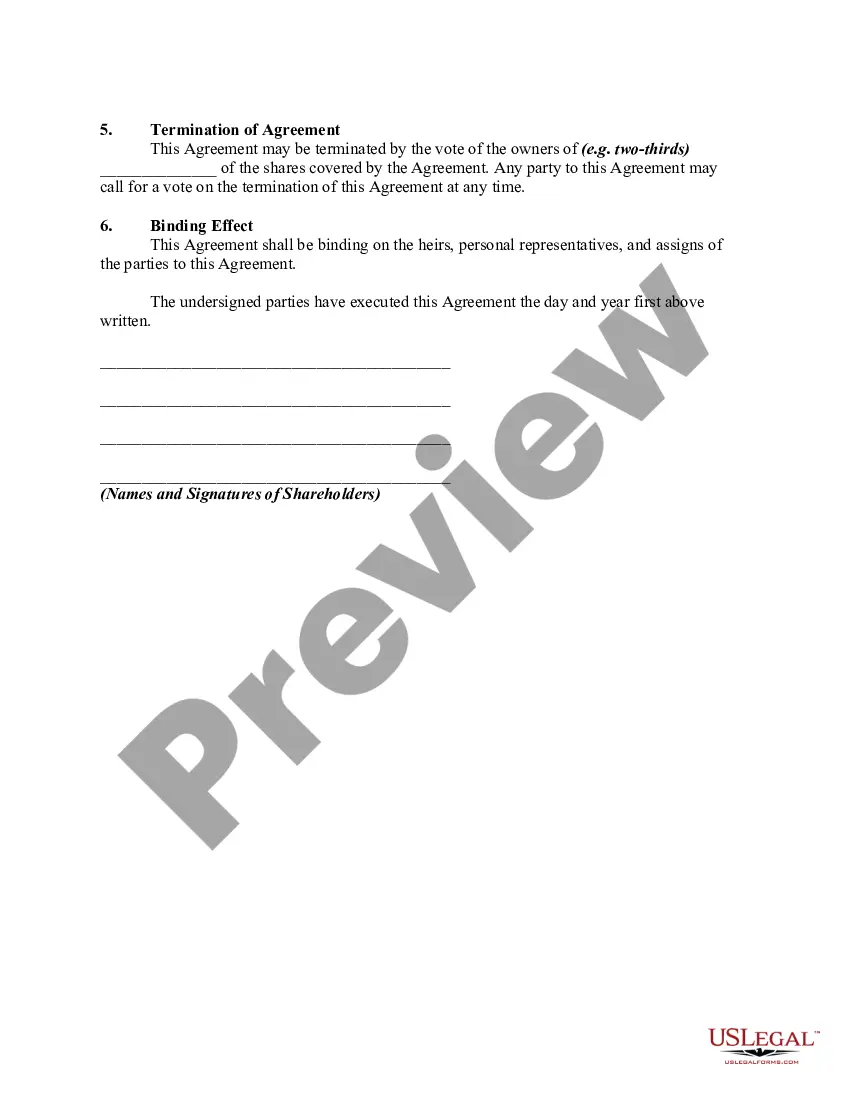
Wyoming Voting Agreement Among Stockholders to Elect Directors
Description
Get your form ready online
Our built-in tools help you complete, sign, share, and store your documents in one place.
Make edits, fill in missing information, and update formatting in US Legal Forms—just like you would in MS Word.
Download a copy, print it, send it by email, or mail it via USPS—whatever works best for your next step.
Sign and collect signatures with our SignNow integration. Send to multiple recipients, set reminders, and more. Go Premium to unlock E-Sign.
If this form requires notarization, complete it online through a secure video call—no need to meet a notary in person or wait for an appointment.
We protect your documents and personal data by following strict security and privacy standards.

Make edits, fill in missing information, and update formatting in US Legal Forms—just like you would in MS Word.

Download a copy, print it, send it by email, or mail it via USPS—whatever works best for your next step.

Sign and collect signatures with our SignNow integration. Send to multiple recipients, set reminders, and more. Go Premium to unlock E-Sign.

If this form requires notarization, complete it online through a secure video call—no need to meet a notary in person or wait for an appointment.

We protect your documents and personal data by following strict security and privacy standards.
Looking for another form?
How to fill out Voting Agreement Among Stockholders To Elect Directors?
Selecting the ideal legal document template can be quite a challenge.
Naturally, there are numerous templates accessible online, but how can you locate the legal document you require.
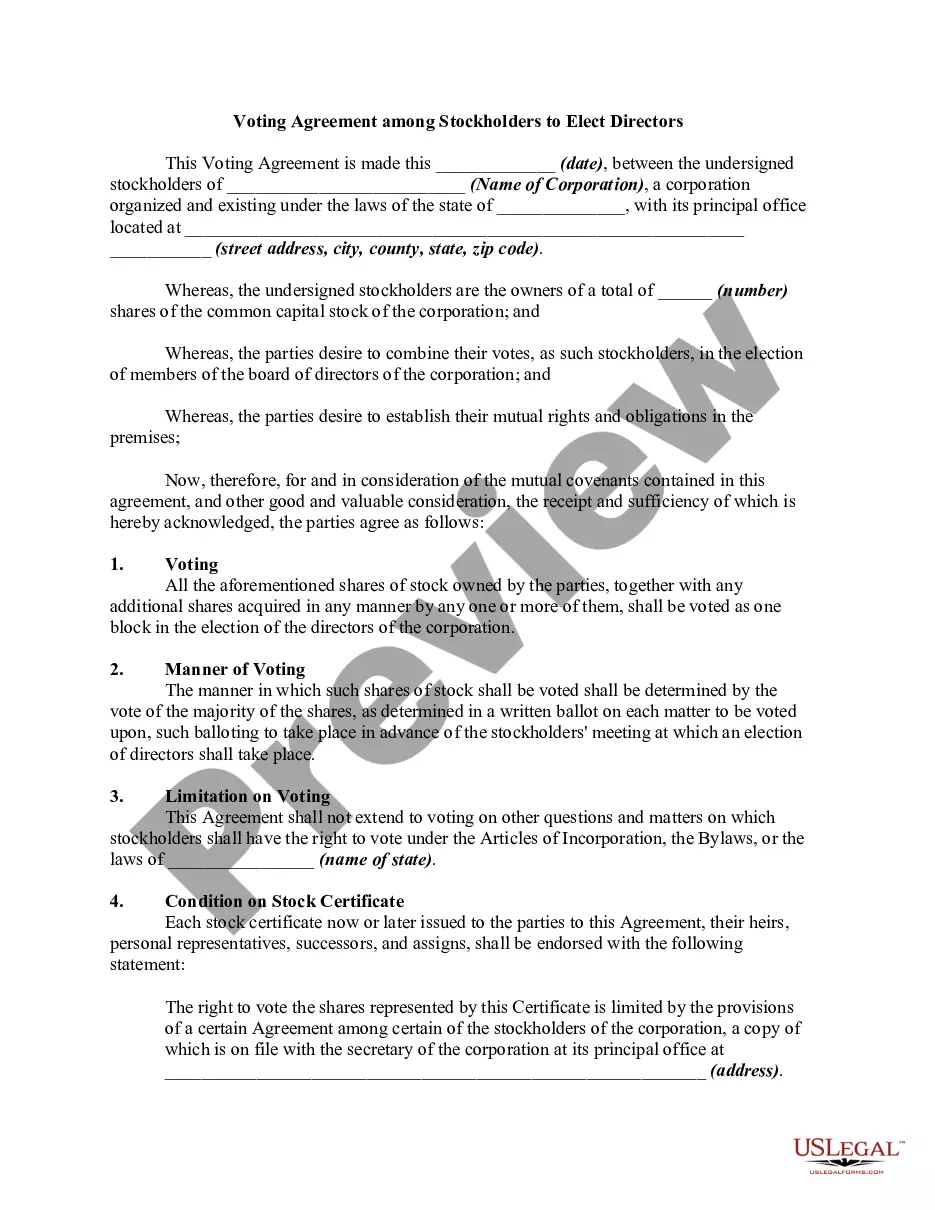
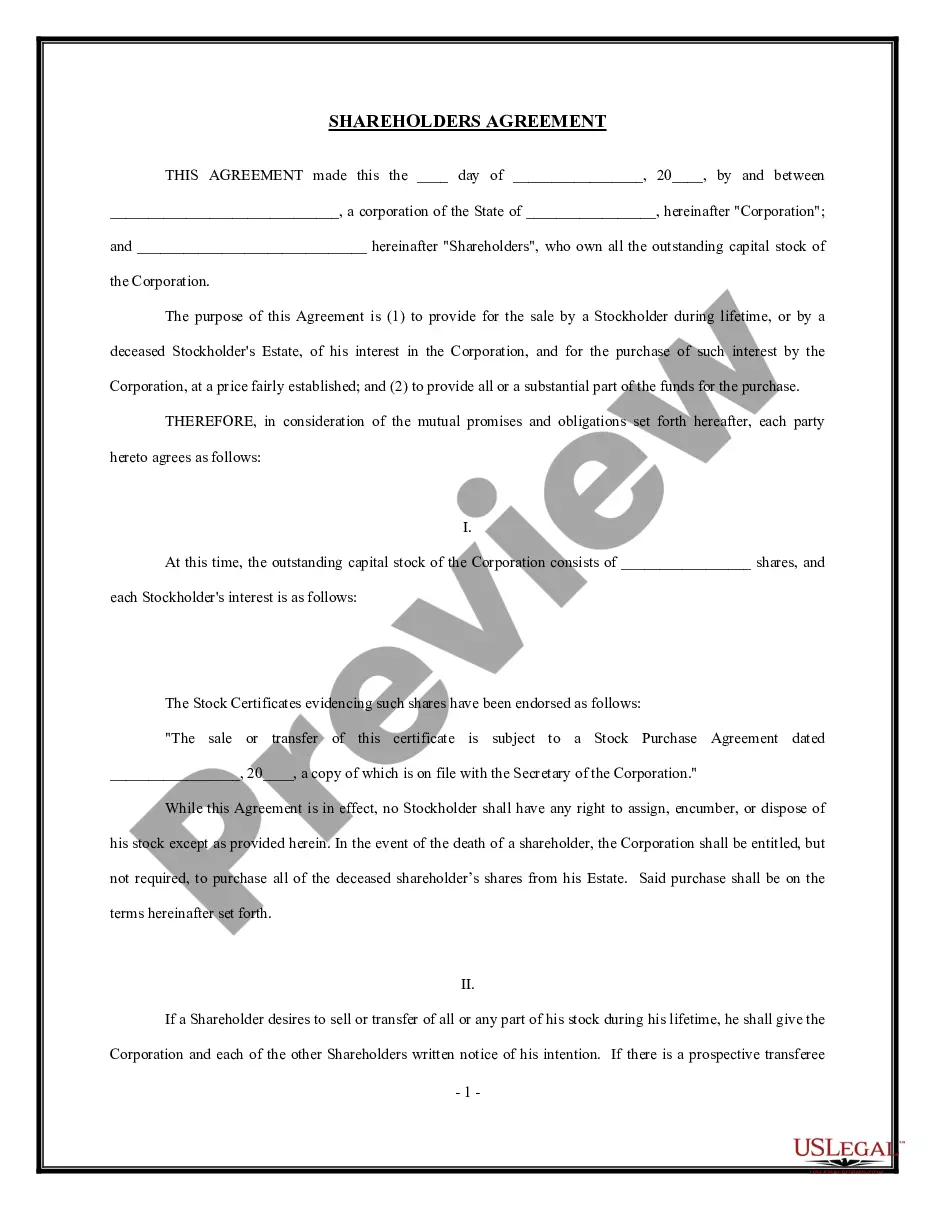
Utilize the US Legal Forms website. The service provides thousands of templates, such as the Wyoming Voting Agreement Among Stockholders to Elect Directors, that you can use for both business and personal needs.
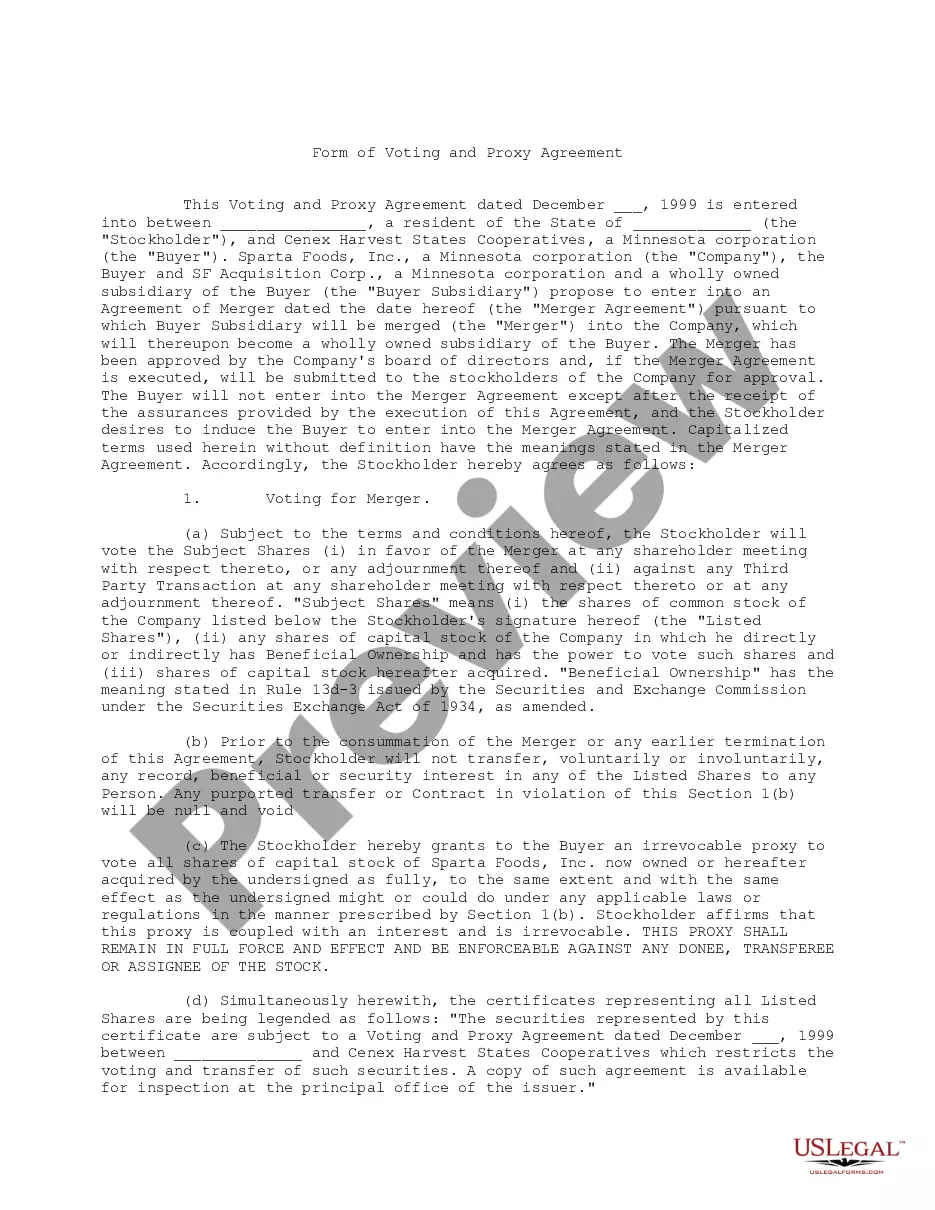
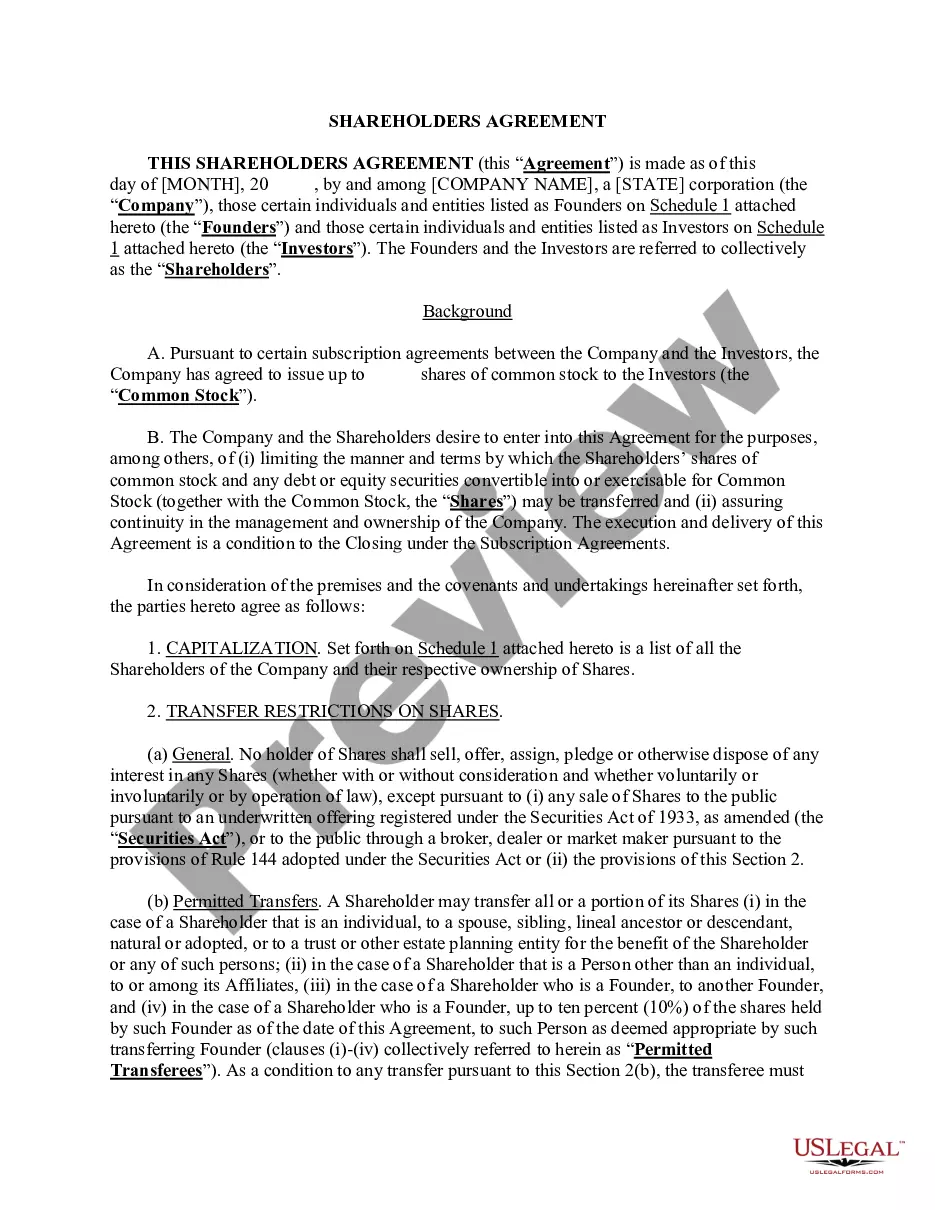
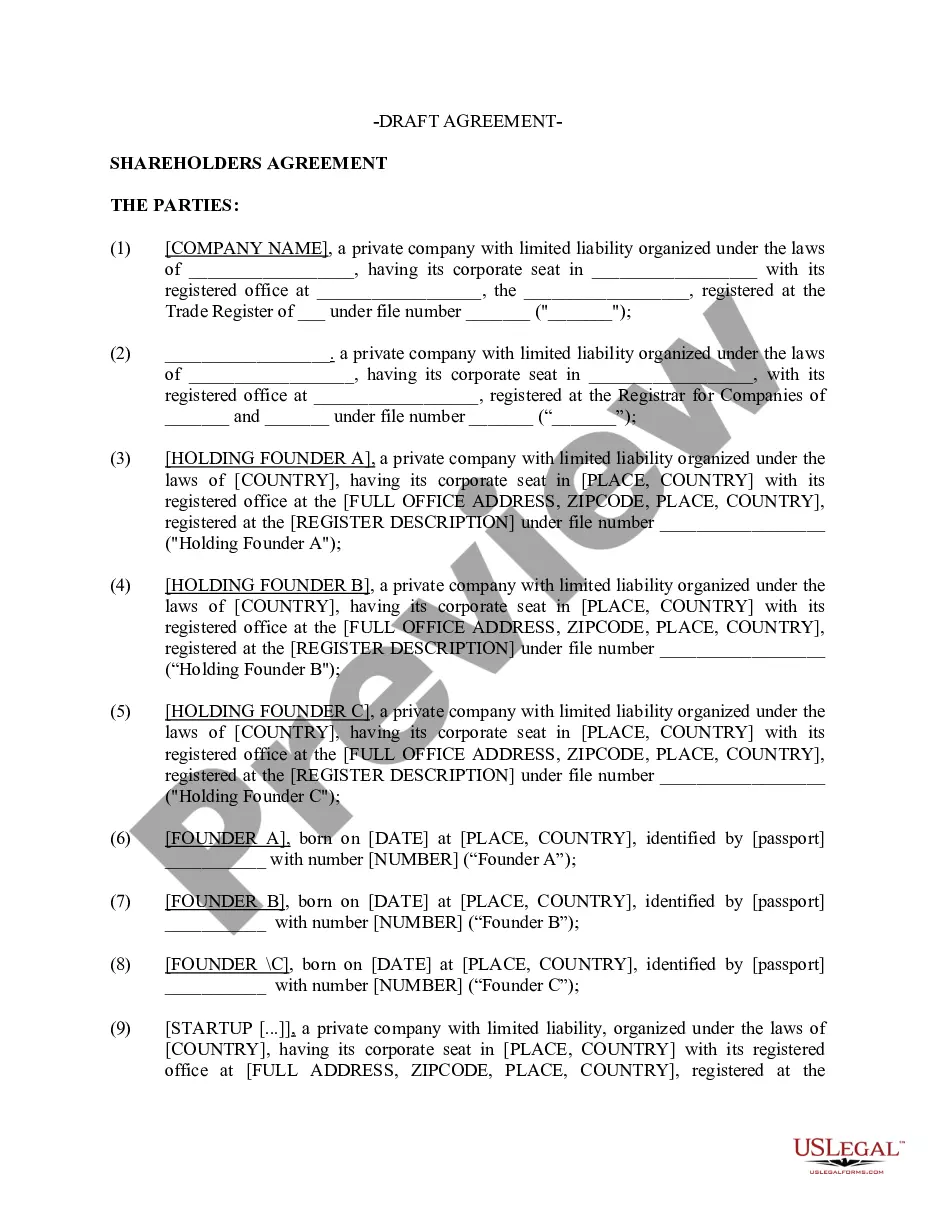
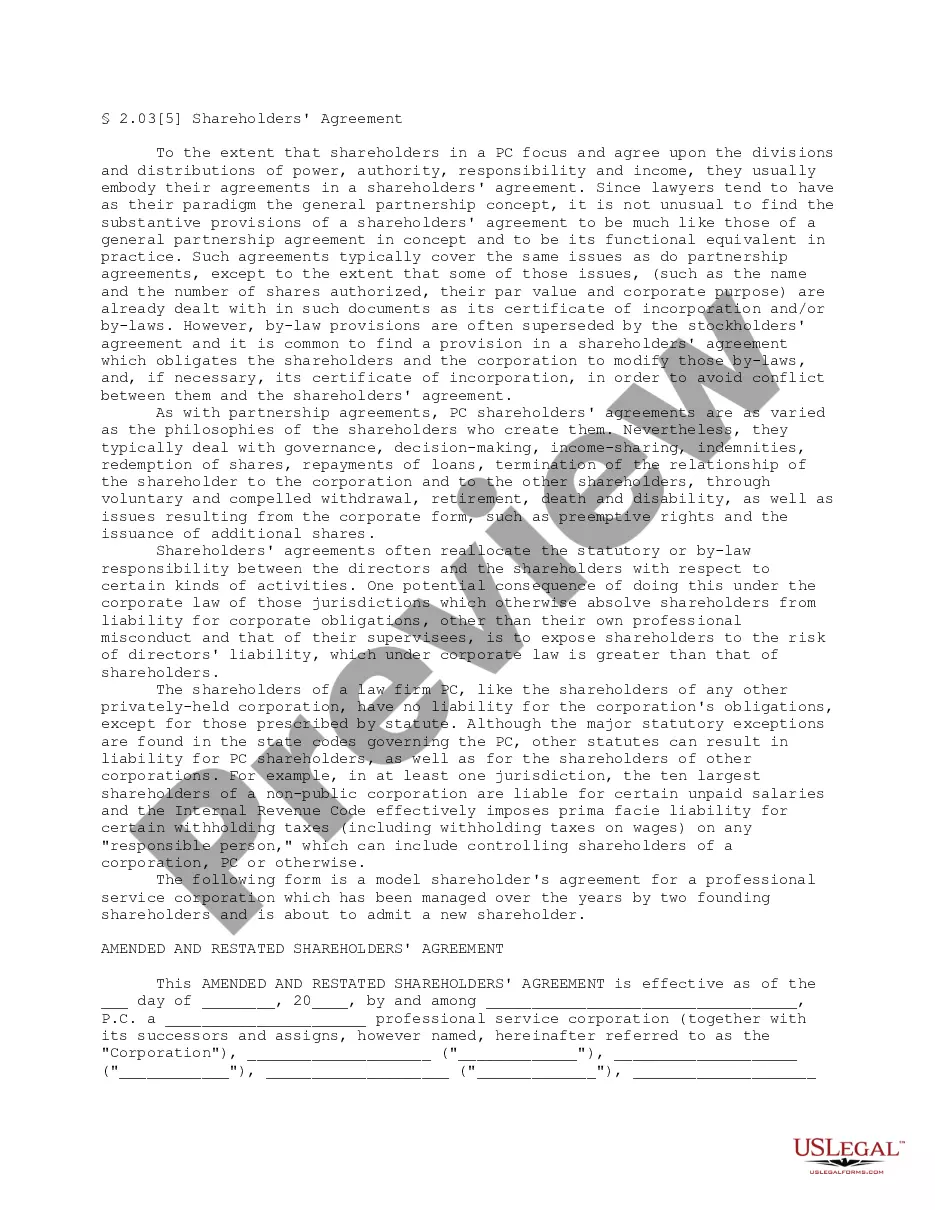
You can preview the form using the Preview option and review the form details to confirm it is suitable for you.
- All of the documents are verified by experts and meet federal and state requirements.
- If you are already registered, Log In to your account and click the Download button to retrieve the Wyoming Voting Agreement Among Stockholders to Elect Directors.
- Use your account to view the legal documents you have previously purchased.
- Navigate to the My documents section of your account and obtain another copy of the document you need.
- If you are a new user of US Legal Forms, here are simple instructions for you to follow.
- First, ensure you have selected the right document for your area/county.
Form popularity
FAQ
In order to provide transparency to stakeholders, including stockholders, investors, customers and the media, public companies hold elections to determine their board members. If the company is publicly traded, shareholders usually elect board members.
Shareholders typically have the right to vote in elections for the board of directors and on proposed operational alterations such as shifts of corporate aims and goals or fundamental structural changes.
Key Takeaways. Stockholder voting right allow shareholders of record in a company to vote on certain corporate actions, elect members to the board of directors, and approve issuing new securities or payment of dividends. Shareholders cast votes at a company's annual meeting.
Shareholders Elect Directors Articles of incorporation normally specify that shareholders shall elect directors. In practice, what usually happens is that a slate of one or more proposed directors is drawn up by the board of directors, then voted on by shareholders at the annual meeting.
This can be achieved by a vote at a general meeting or (in the case of a private company only) by getting agreement to a written resolution. A director who is also a shareholder can participate in the vote, even if he is one of the directors interested in the matter being authorised.
The board of directors of a public company is elected by shareholders. The board makes key decisions on issues such as mergers and dividends, hires senior managers, and sets their pay.
Typically, the Shareholders meet annually to elect the Directors and approve their actions; the Board of Directors meets annually or quarterly to review the Officers' actions and the Officers meet as often as necessary to run the entity.
The most important vote that shareholders of a corporation make is to elect the company's board of directors. A corporation must have a board and the members of the board of directors set the goals and provide guidance on how the company will be managed and run.