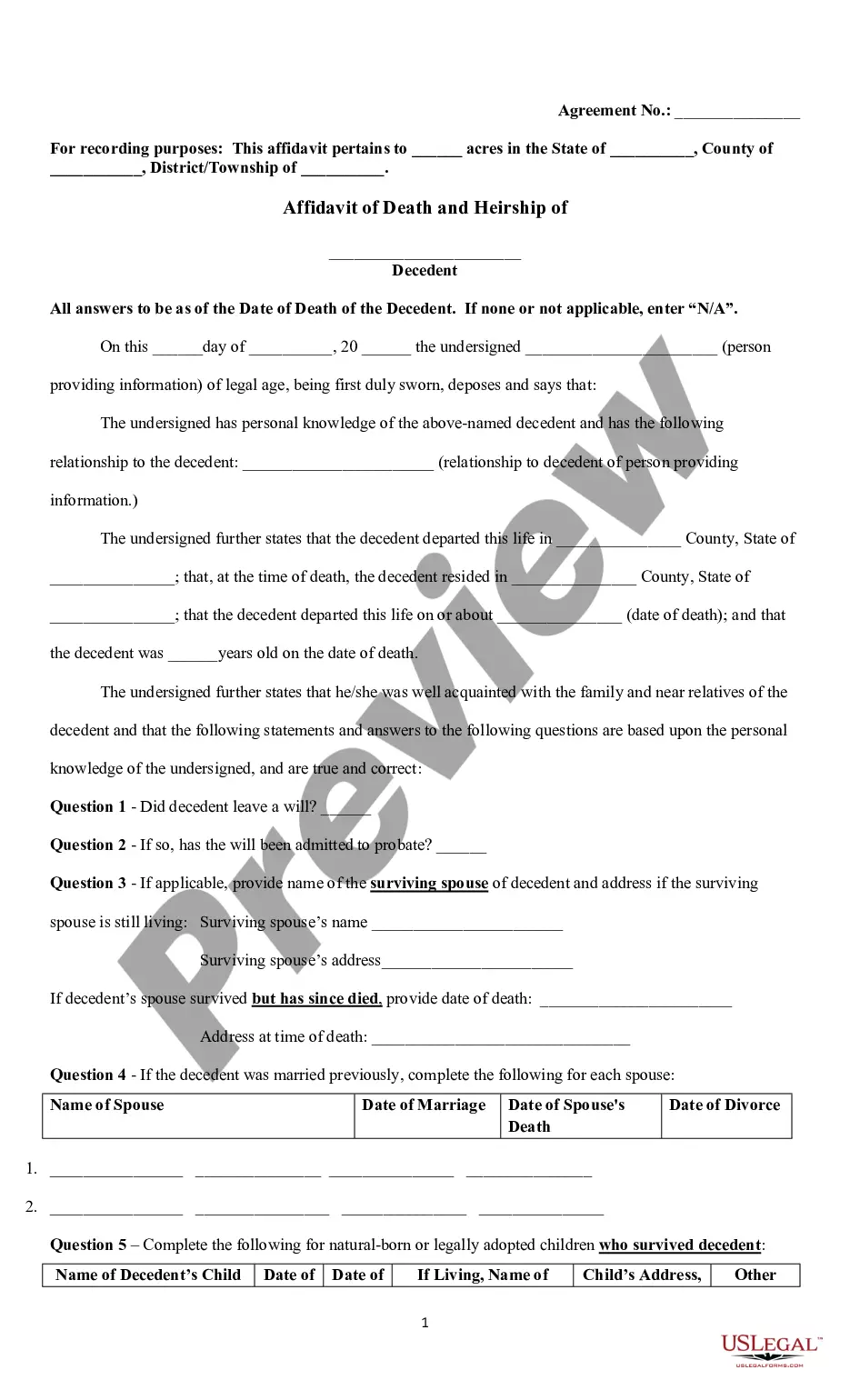
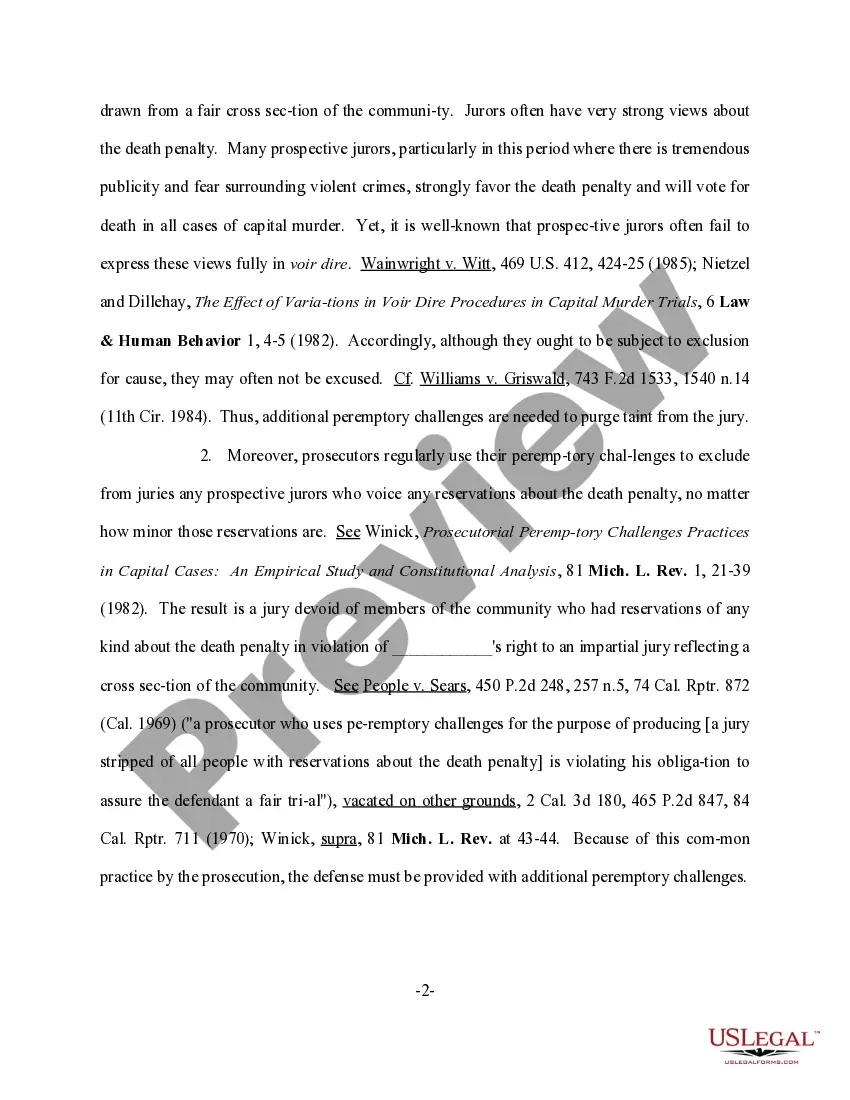
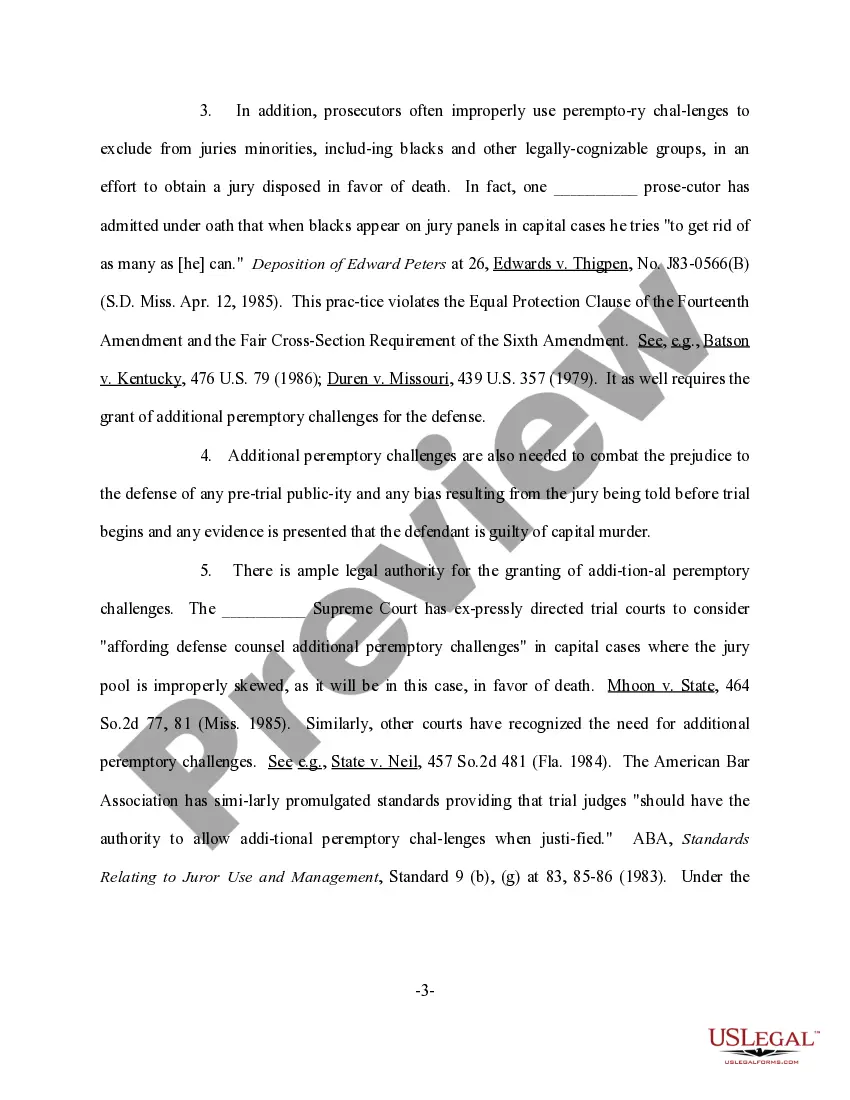
Wyoming Motion for Additional Peremptory Challenges
Description
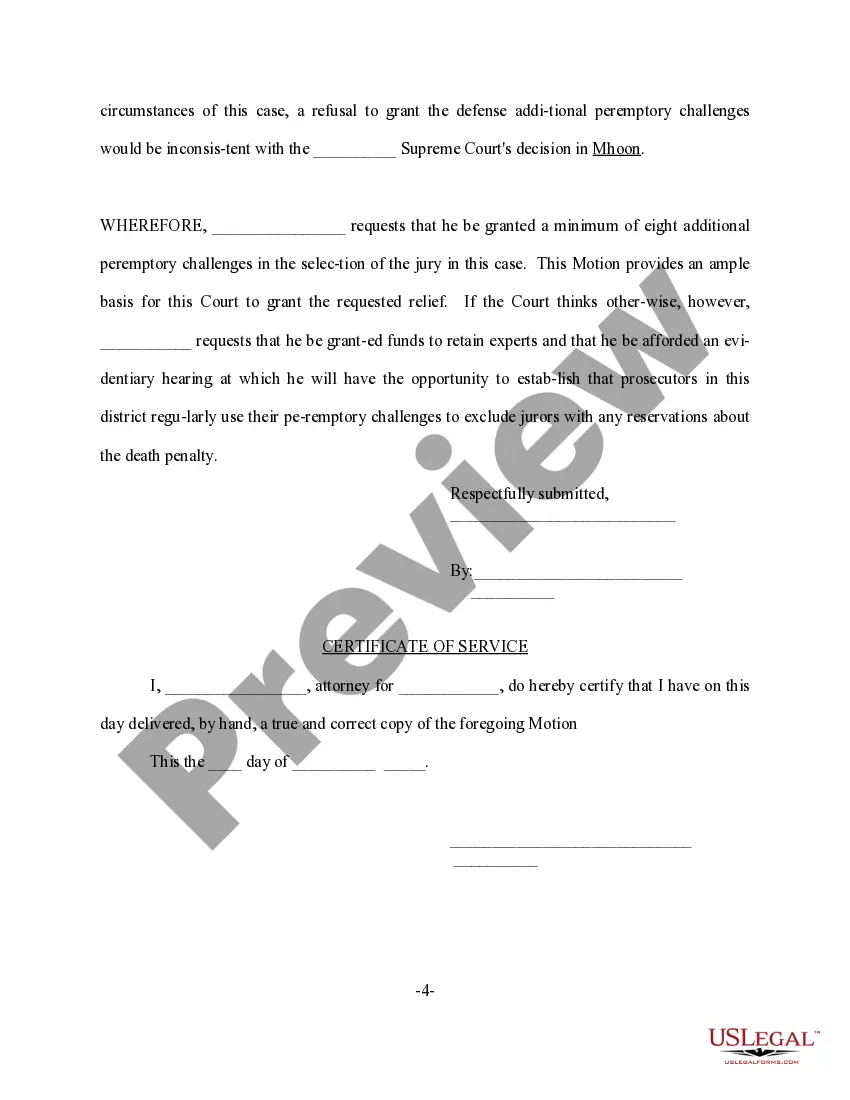
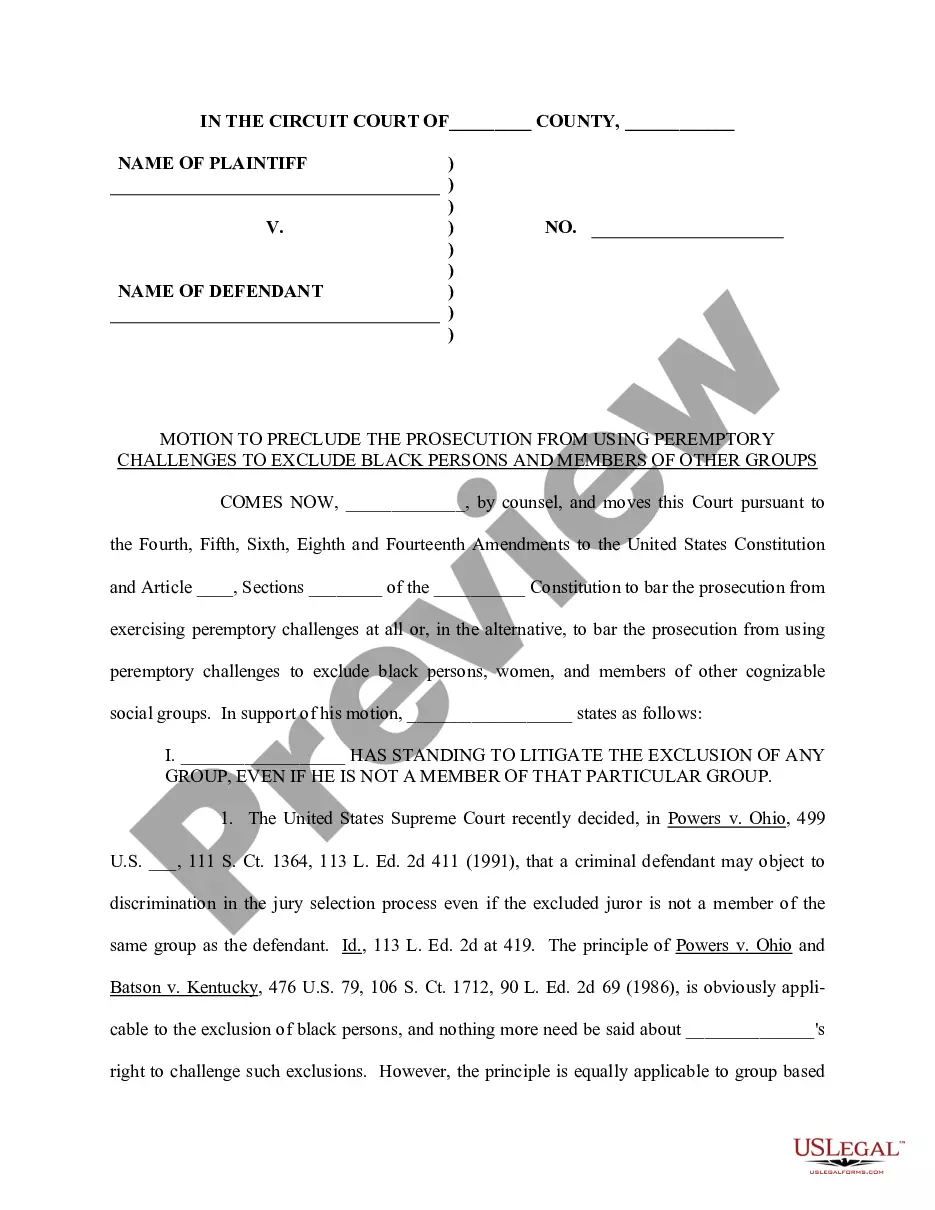
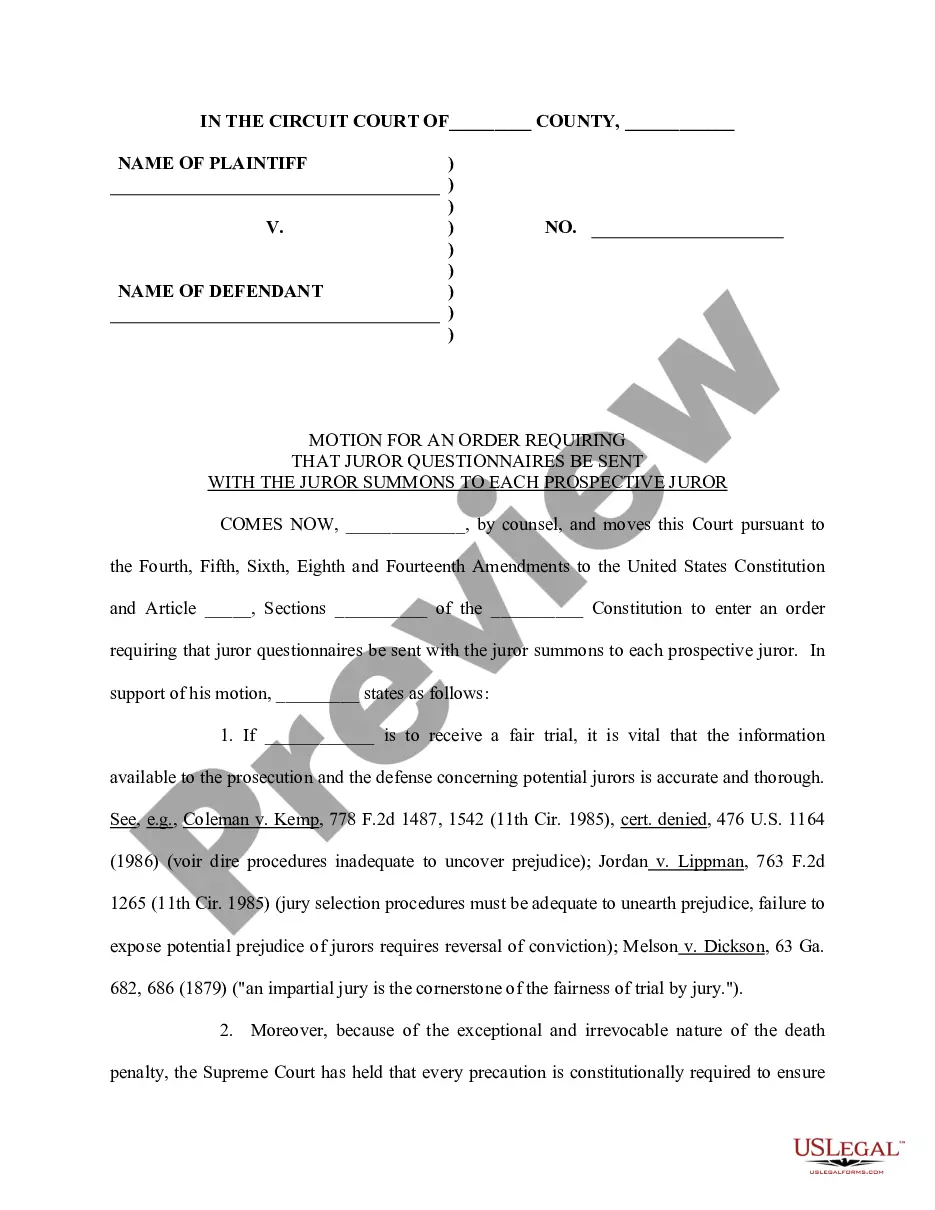
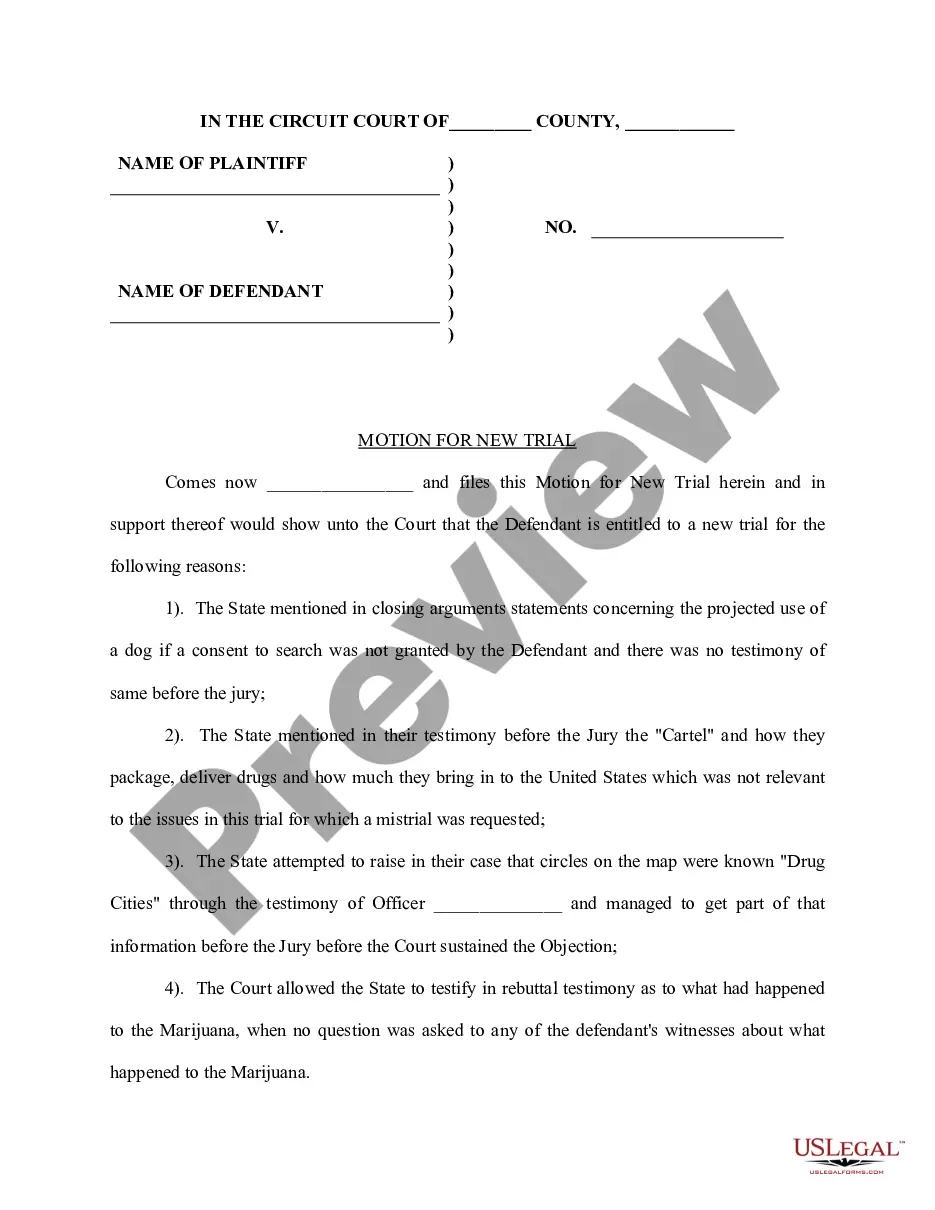
Get your form ready online
Our built-in tools help you complete, sign, share, and store your documents in one place.
Make edits, fill in missing information, and update formatting in US Legal Forms—just like you would in MS Word.
Download a copy, print it, send it by email, or mail it via USPS—whatever works best for your next step.
Sign and collect signatures with our SignNow integration. Send to multiple recipients, set reminders, and more. Go Premium to unlock E-Sign.
If this form requires notarization, complete it online through a secure video call—no need to meet a notary in person or wait for an appointment.
We protect your documents and personal data by following strict security and privacy standards.

Make edits, fill in missing information, and update formatting in US Legal Forms—just like you would in MS Word.

Download a copy, print it, send it by email, or mail it via USPS—whatever works best for your next step.

Sign and collect signatures with our SignNow integration. Send to multiple recipients, set reminders, and more. Go Premium to unlock E-Sign.

If this form requires notarization, complete it online through a secure video call—no need to meet a notary in person or wait for an appointment.

We protect your documents and personal data by following strict security and privacy standards.
Looking for another form?




How to fill out Motion For Additional Peremptory Challenges?
Are you currently in a situation where you need to access documents for either business or personal purposes nearly every day? There are numerous legal document templates available online, but finding ones you can trust is challenging. US Legal Forms provides a vast collection of form templates, such as the Wyoming Motion for Additional Peremptory Challenges, that are designed to meet federal and state requirements.
If you are already familiar with the US Legal Forms website and have an account, simply Log In. After that, you can download the Wyoming Motion for Additional Peremptory Challenges template.
If you do not have an account and wish to start using US Legal Forms, follow these instructions: Find the form you need and ensure it is for the correct city/county. Use the Review button to evaluate the form. Check the information to confirm you have selected the correct document. If the form is not what you are looking for, use the Search field to locate the form that meets your needs. If you find the right form, click Acquire now. Select the pricing plan you prefer, enter the required information to create your account, and pay for the transaction using your PayPal or credit card. Choose a convenient document format and download your copy.
Avoid altering or deleting any HTML tags. Only synonymize plain text outside of the HTML tags.
- Find all of the document templates you have purchased in the My documents list.
- You can obtain an additional copy of the Wyoming Motion for Additional Peremptory Challenges at any time, if needed.
- Just select the desired form to download or print the document template.
- Utilize US Legal Forms, one of the largest collections of legal forms, to save time and avoid errors.
- The service provides properly created legal document templates that can be used for a variety of purposes.
- Create your account on US Legal Forms and start making your life a bit easier.
Form popularity
FAQ
Please request excusals online from your Juror Homepage after completing the online questionnaire, or you may request an excusal by submitting your plans in writing to the court which summoned you. The court will do its best to accommodate your request.
The usual remedy for entrapment is a stay of proceedings under section 24 (one) and not merely an exclusion of evidence under section 24 (2).
The court on motion of a defendant or of its own motion shall order the entry of judgment of acquittal of one or more offenses charged in the indictment, information or citation after the evidence on either side is closed if the evidence is insufficient to sustain a conviction of such offense or offenses.
The preliminary hearing determines whether probable cause exists that a felony has been committed, and that the defendant probably committed it. If the court determines probable cause does exist, the case is ?bound over? to district court. If the court determines probable cause does not exist, the case is dismissed.
Entrapment law serves the purpose of ensuring that a defendant is not punished who, but for government encouragement, would not have committed an offense. Rivera v. State, 846 P. 2d 1, 4 (Wyo.
Rule 11 - Signing pleadings, motions, and other papers; representations to the court; sanctions (a) Signature. Every pleading, written motion, and other paper must be signed by at least one attorney of record in the attorney's name-or by a party personally if the party is unrepresented.
In Colorado law, entrapment is a defense to criminal charges where an individual committed an offense because they were induced to do so by law enforcement. If the police simply provide an opportunity for someone to create a crime, that may not be considered entrapment.
In Texas, entrapment is a legal defense to a crime. It absolves people of criminal liability when the police lured them into committing the offense. If the police conduct would have induced a reasonable law-abiding person to commit the crime, it can be entrapment.