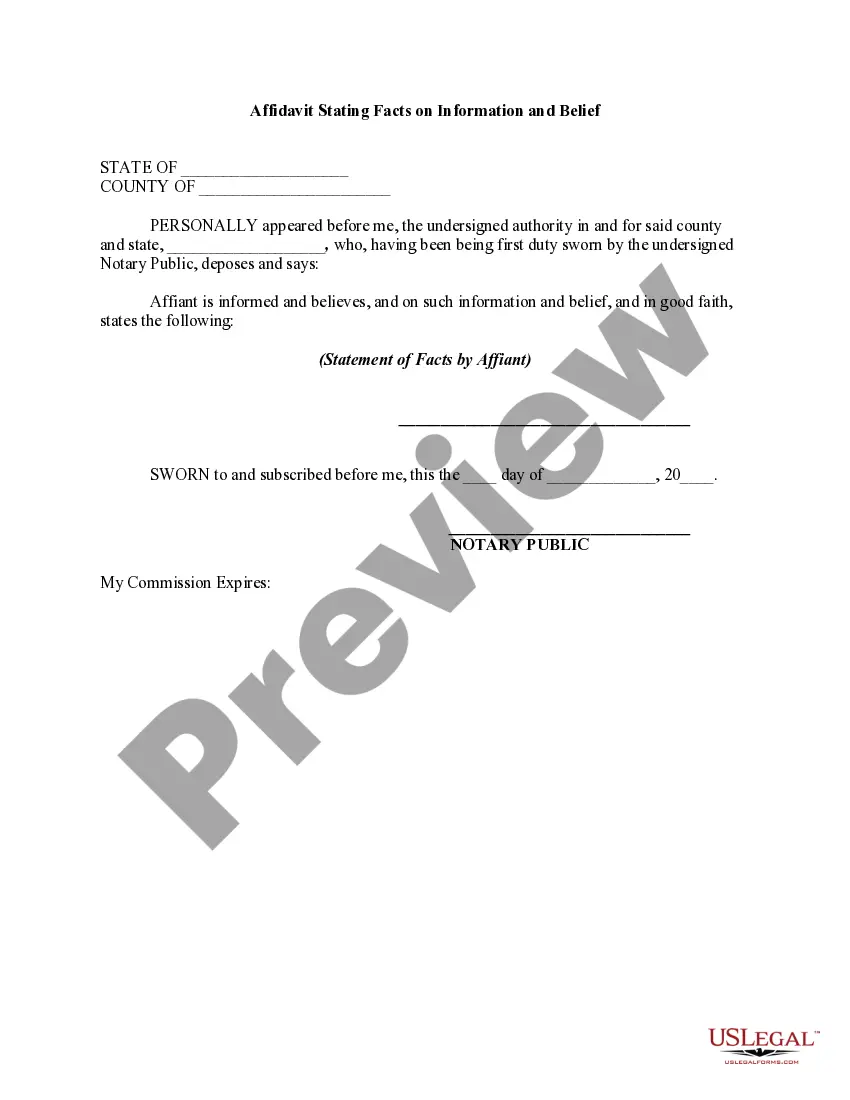
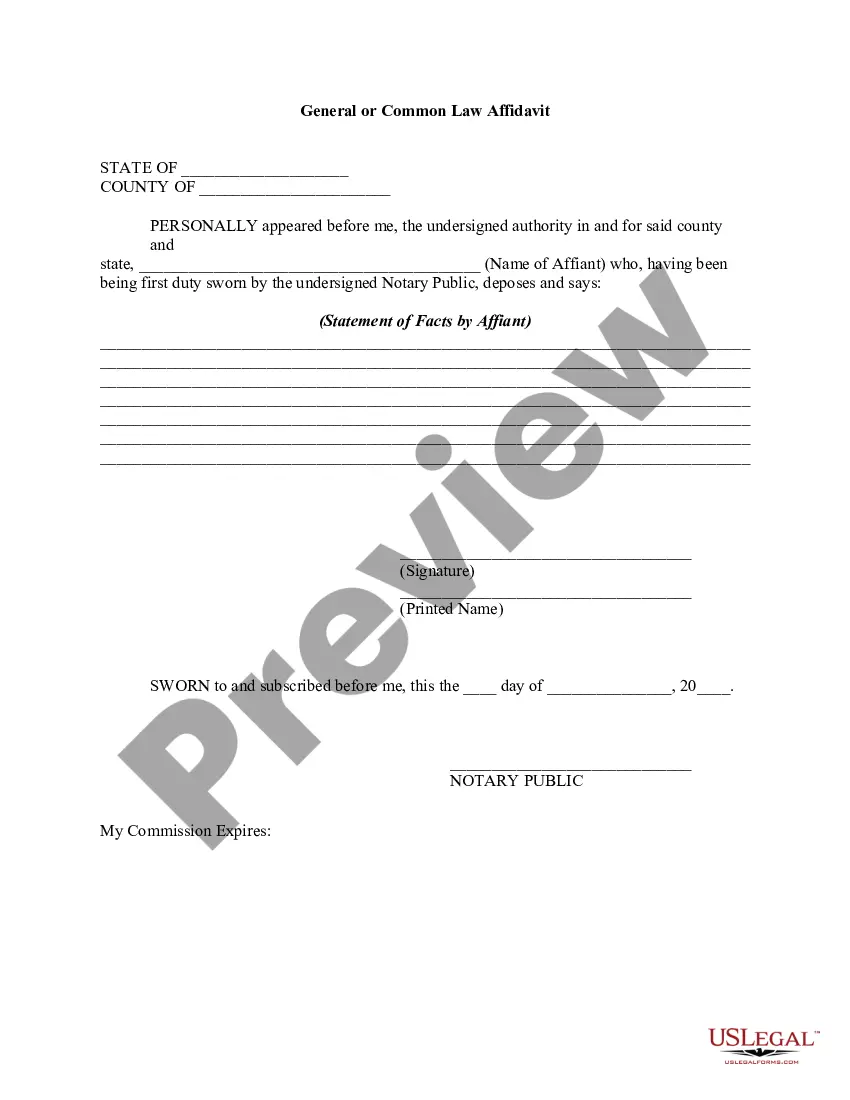
Wyoming Affidavit Stating Facts on Information and Belief
Description
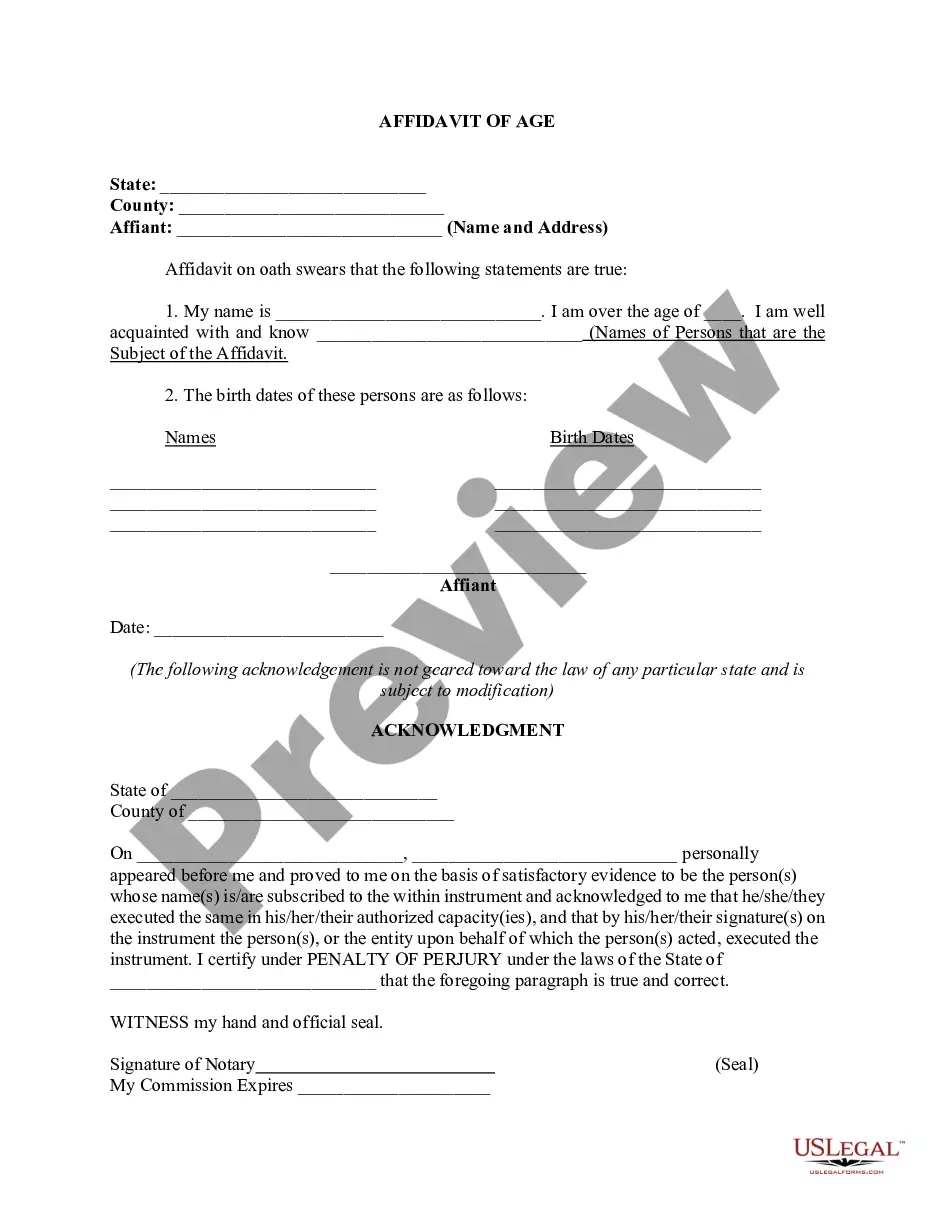
Get your form ready online
Our built-in tools help you complete, sign, share, and store your documents in one place.
Make edits, fill in missing information, and update formatting in US Legal Forms—just like you would in MS Word.
Download a copy, print it, send it by email, or mail it via USPS—whatever works best for your next step.
Sign and collect signatures with our SignNow integration. Send to multiple recipients, set reminders, and more. Go Premium to unlock E-Sign.
If this form requires notarization, complete it online through a secure video call—no need to meet a notary in person or wait for an appointment.
We protect your documents and personal data by following strict security and privacy standards.

Make edits, fill in missing information, and update formatting in US Legal Forms—just like you would in MS Word.

Download a copy, print it, send it by email, or mail it via USPS—whatever works best for your next step.

Sign and collect signatures with our SignNow integration. Send to multiple recipients, set reminders, and more. Go Premium to unlock E-Sign.

If this form requires notarization, complete it online through a secure video call—no need to meet a notary in person or wait for an appointment.

We protect your documents and personal data by following strict security and privacy standards.
Looking for another form?
How to fill out Affidavit Stating Facts On Information And Belief?
Locating the appropriate legal document template can be challenging. Clearly, there are numerous designs accessible online, but how can you find the legal form you require? Utilize the US Legal Forms website. This service offers a wide array of templates, including the Wyoming Affidavit Stating Facts on Information and Belief, which can be utilized for both business and personal purposes. All forms are reviewed by experts and meet federal and state requirements.
If you are already a member, Log In to your account and click the Download button to locate the Wyoming Affidavit Stating Facts on Information and Belief. Use your account to browse through the legal documents you have previously purchased. Navigate to the My documents section of your account to obtain another copy of the document you need.
If you are a new user of US Legal Forms, here are simple steps for you to follow: First, make sure you have selected the correct form for your city/county. You can review the form using the Review button and check the form description to confirm it is the right one for you. If the form does not meet your requirements, use the Search box to find the correct form. Once you are confident that the form is suitable, click on the Buy now button to acquire the form. Choose the pricing plan you desire and enter the necessary information. Create your account and pay for the order using your PayPal account or Visa or Mastercard. Select the file format and download the legal document template to your device. Complete, modify, print, and sign the acquired Wyoming Affidavit Stating Facts on Information and Belief.
Make the most of US Legal Forms to simplify your legal document needs and ensure compliance with the law.
- US Legal Forms is the largest repository of legal documents where you can find various document templates.
- Utilize the service to download professionally created documents that comply with state requirements.
- Ensure you have the right form for your specific legal needs.
- All forms are vetted for accuracy and legality.
- The process is straightforward and user-friendly.
- Access your previous purchases easily through your account.
Form popularity
FAQ
If you say that something is true to your knowledge or to the best of your knowledge, you mean that you believe it to be true but it is possible that you do not know all the facts. Alec never carried a gun to my knowledge. To the best of my knowledge, Gloria did not make these comments.
Rule 11 - Signing pleadings, motions, and other papers; representations to the court; sanctions (a) Signature. Every pleading, written motion, and other paper must be signed by at least one attorney of record in the attorney's name-or by a party personally if the party is unrepresented.
In all trials, the testimony of witnesses shall be taken orally in open court, unless otherwise provided by statute, or by these rules, by the Wyoming Rules of Evidence, or by other rules adopted by the Supreme Court of Wyoming.
Actual knowledge can be proven by direct or circumstantial evidence. Some examples of actual knowledge include when: A property owner testifies that he was aware of a broken stair or when maintenance records show that a company was aware of a hole in its parking lot.
The term ?to the best of my knowledge and belief? is used in affidavits and court documents to indicate that statements being made are not knowingly false.
The use of the term, "to the best of my knowledge and belief," recognizes it is impossible for any person to legitimately provide absolute assurances or guarantees. Individuals can only make assertions on what they know or have knowledge of, not to what they don't know.
Rule 4. Summons. Form. The summons shall be signed by the clerk, bear the seal of the court, identify the court and the parties, be directed to the defendant, and state the name and address of the plaintiff's attorney or, if unrepresented, of the plaintiff.
Affidavits can occur any time a formal promise is made, and they are often used as a form of documentation tied to a specific person in the proceedings. They are often used in court to serve as evidence toward a singular side in a dispute, or to affirm a claim that someone is making.