Wyoming Agreed Order Granting Additional Time to Plead
Description
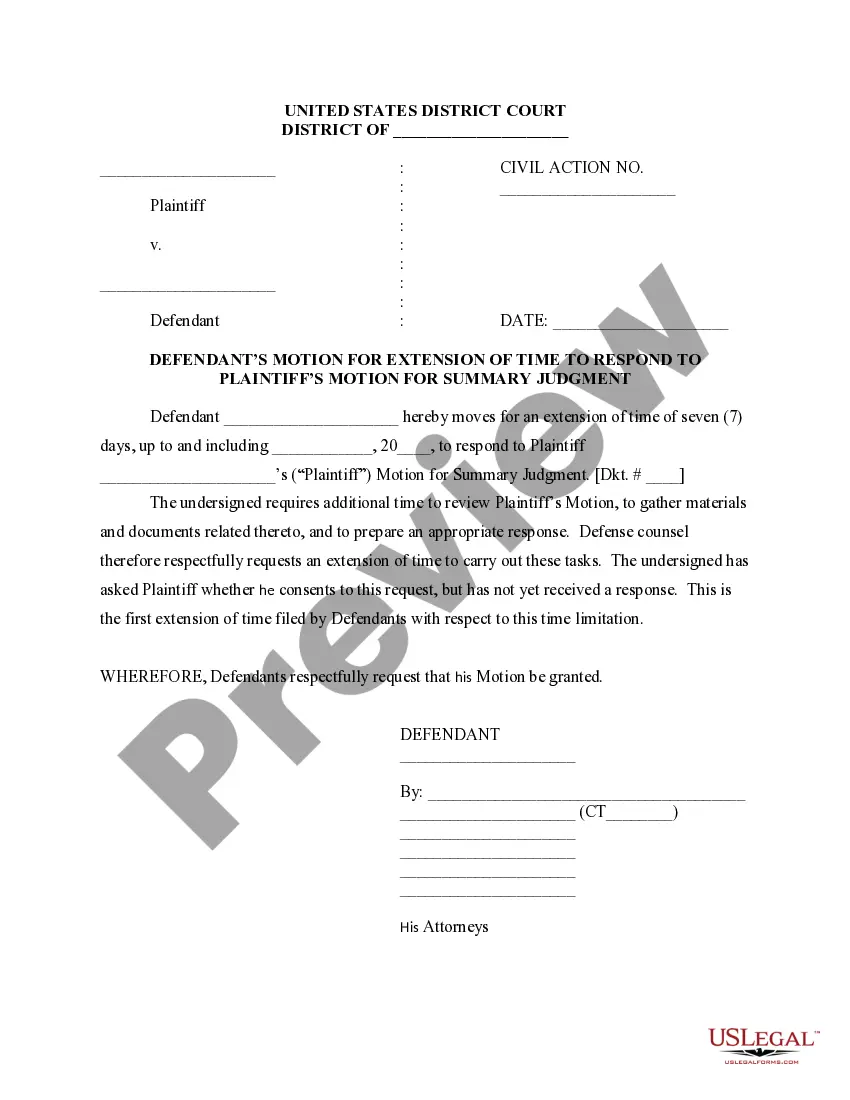
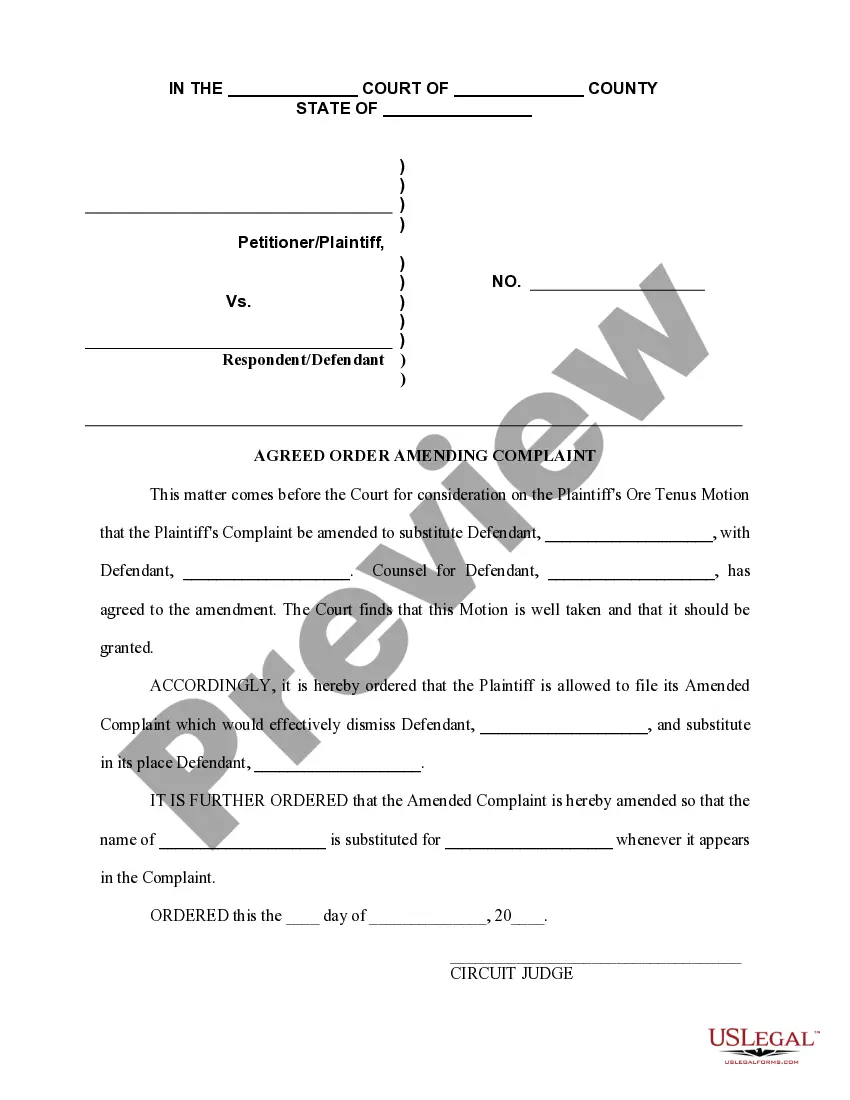

How to fill out Agreed Order Granting Additional Time To Plead?
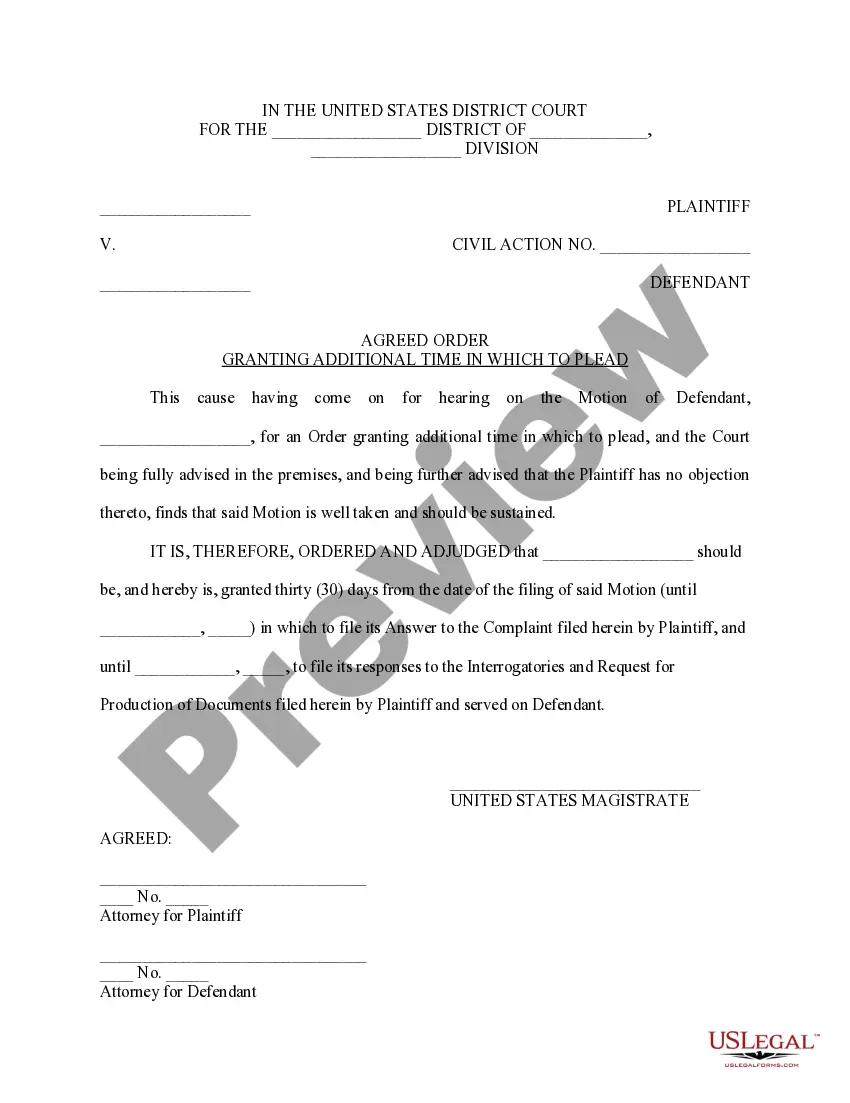
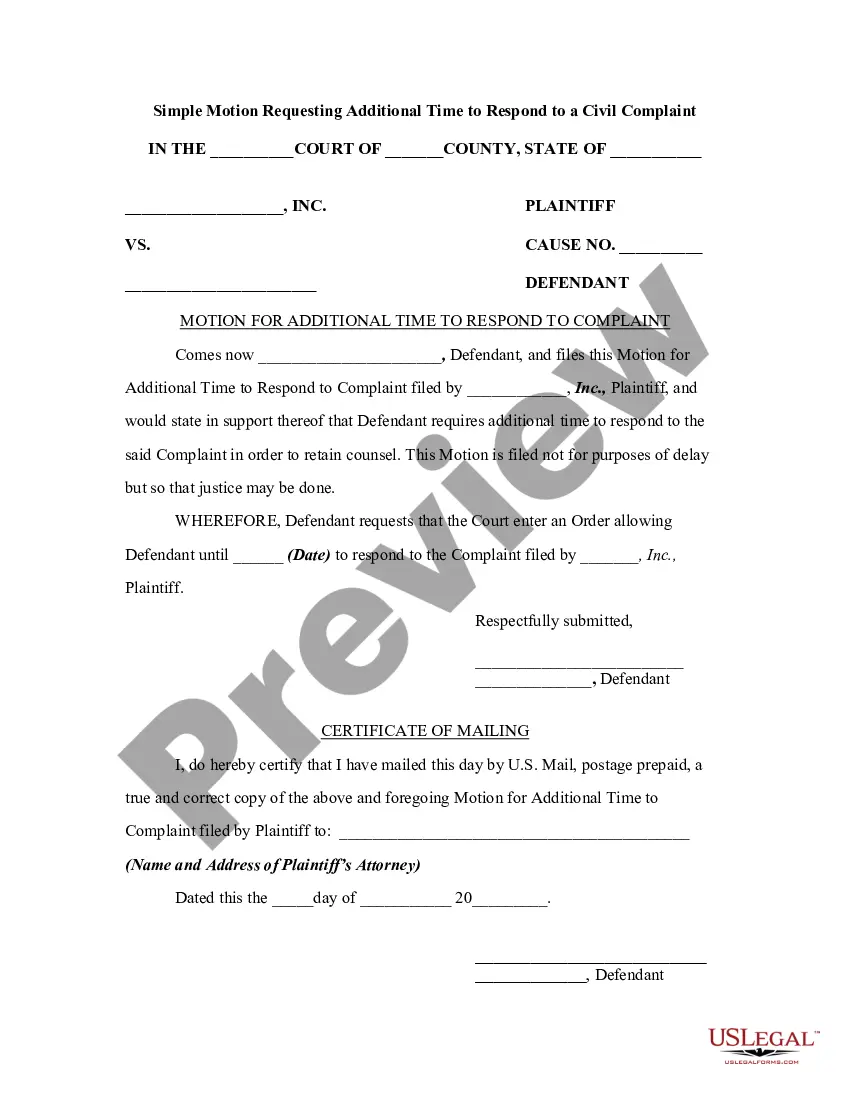
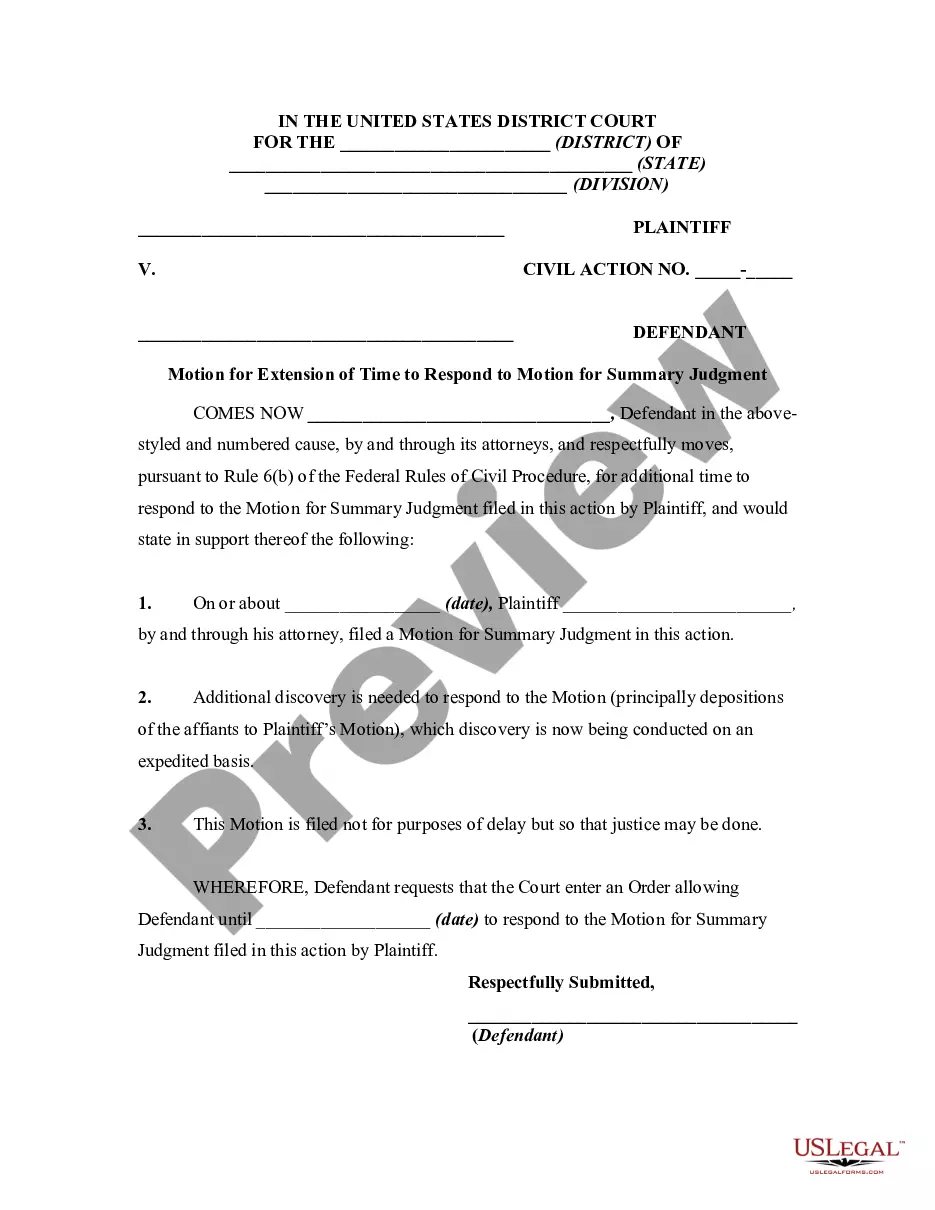
Are you in a situation where you frequently require documents for both business or personal reasons? There are numerous legal document templates accessible online, but locating reliable ones can be challenging. US Legal Forms offers thousands of form templates, including the Wyoming Agreed Order Granting Additional Time to Plead, which can be tailored to comply with federal and state regulations.
If you are already familiar with the US Legal Forms site and possess an account, simply Log In. After that, you can download the Wyoming Agreed Order Granting Additional Time to Plead template.
If you do not have an account and wish to start using US Legal Forms, follow these steps: Find the form you require and ensure it is for the correct jurisdiction. Utilize the Review button to examine the form. Read the description to confirm that you have selected the correct document. If the form is not what you are looking for, use the Search field to find the document that fits your needs and criteria. When you locate the appropriate form, click Buy now. Choose the pricing plan you prefer, fill in the required details to create your account, and pay for the order using your PayPal or credit card. Select a convenient document format and download your copy.
Avoid altering or deleting any HTML tags. Only synonymize plain text outside of the HTML tags.
- Access all the document templates you have purchased in the My documents menu.
- You can obtain an additional copy of the Wyoming Agreed Order Granting Additional Time to Plead anytime if needed.
- Just click the necessary form to download or print the document template.
- Utilize US Legal Forms, the most comprehensive collection of legal forms, to save time and avoid errors.
- The service provides professionally crafted legal document templates suitable for various purposes.
- Create your account on US Legal Forms and start simplifying your life.
Form popularity
FAQ
The 301 law in Wyoming refers to a specific statute governing certain civil procedures. It outlines requirements for legal filings and can impact how cases are managed in court. If you find yourself needing to file a Wyoming Agreed Order Granting Additional Time to Plead, understanding the implications of the 301 law can help you navigate the legal landscape more effectively.
Rule 8 of the Wyoming Rules of Civil Procedure addresses the general rules of pleading in civil cases. It requires parties to provide a clear and concise statement of their claims or defenses. Understanding this rule is essential when drafting a Wyoming Agreed Order Granting Additional Time to Plead, as it ensures that your legal documents are properly structured and compliant with court requirements.
A motion for continuance in Wyoming is a formal request to postpone a court hearing or trial. This motion can be crucial when a party needs more time to prepare their case or gather evidence. In situations where you require a Wyoming Agreed Order Granting Additional Time to Plead, this motion can serve as a vital tool to ensure you have adequate time for your legal preparations.
Rule 16 of the Wyoming Civil Procedure outlines the process for case management in civil litigation. It emphasizes the importance of scheduling, ensuring that all parties adhere to timelines and deadlines. This rule helps facilitate a smooth legal process, particularly when filing a Wyoming Agreed Order Granting Additional Time to Plead, which allows for extensions when necessary.
In all trials, the testimony of witnesses shall be taken orally in open court, unless otherwise provided by statute, or by these rules, by the Wyoming Rules of Evidence, or by other rules adopted by the Supreme Court of Wyoming.
Wyoming rule 41 (a) (1) reads: a notice of dismissal operates as an adjudication on the merits when filed by a plaintiff who has once dismissed in any court an action in which service was obtained, based on or including the same claim.
At any time more than 60 days after service of the complaint and at least 28 days before the date set for trial, any party may serve on an opposing party an offer to allow settlement or judgment on specified terms, with the costs then accrued.
The court on motion of a defendant may grant a new trial to that defendant if required in the interest of justice. If trial was by the court without a jury, the court, on motion of a defendant for a new trial, may vacate the judgment if entered, take additional testimony, and direct the entry of a new judgment.
Rule 60 - Relief from a judgment or order (a) Corrections Based on Clerical Mistakes; Oversights and Omissions. The court may correct a clerical mistake or a mistake arising from oversight or omission whenever one is found in a judgment, order, or other part of the record.
This rule freely authorizes the taking of depositions under the same circumstances and by the same methods whether for the purpose of discovery or for the purpose of obtaining evidence.