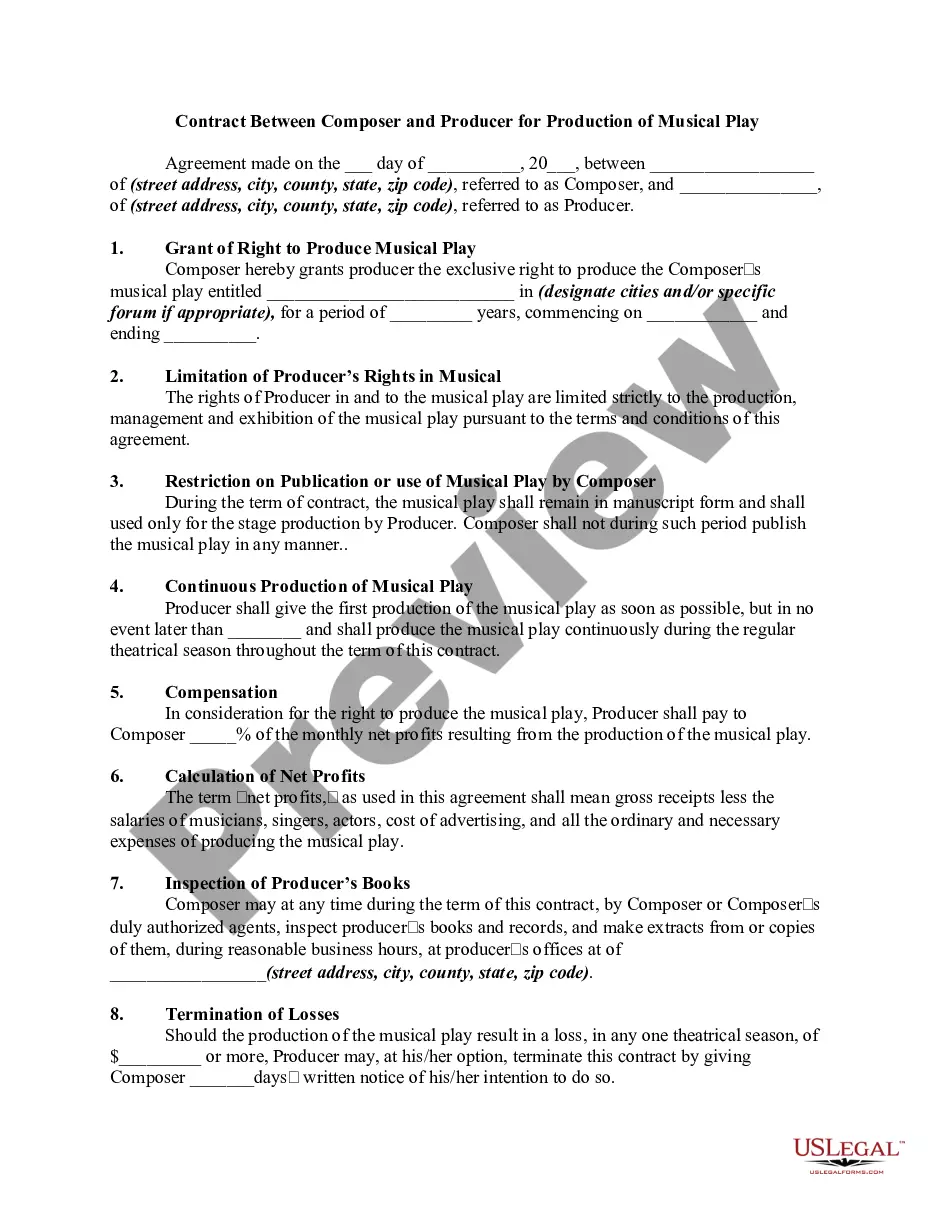
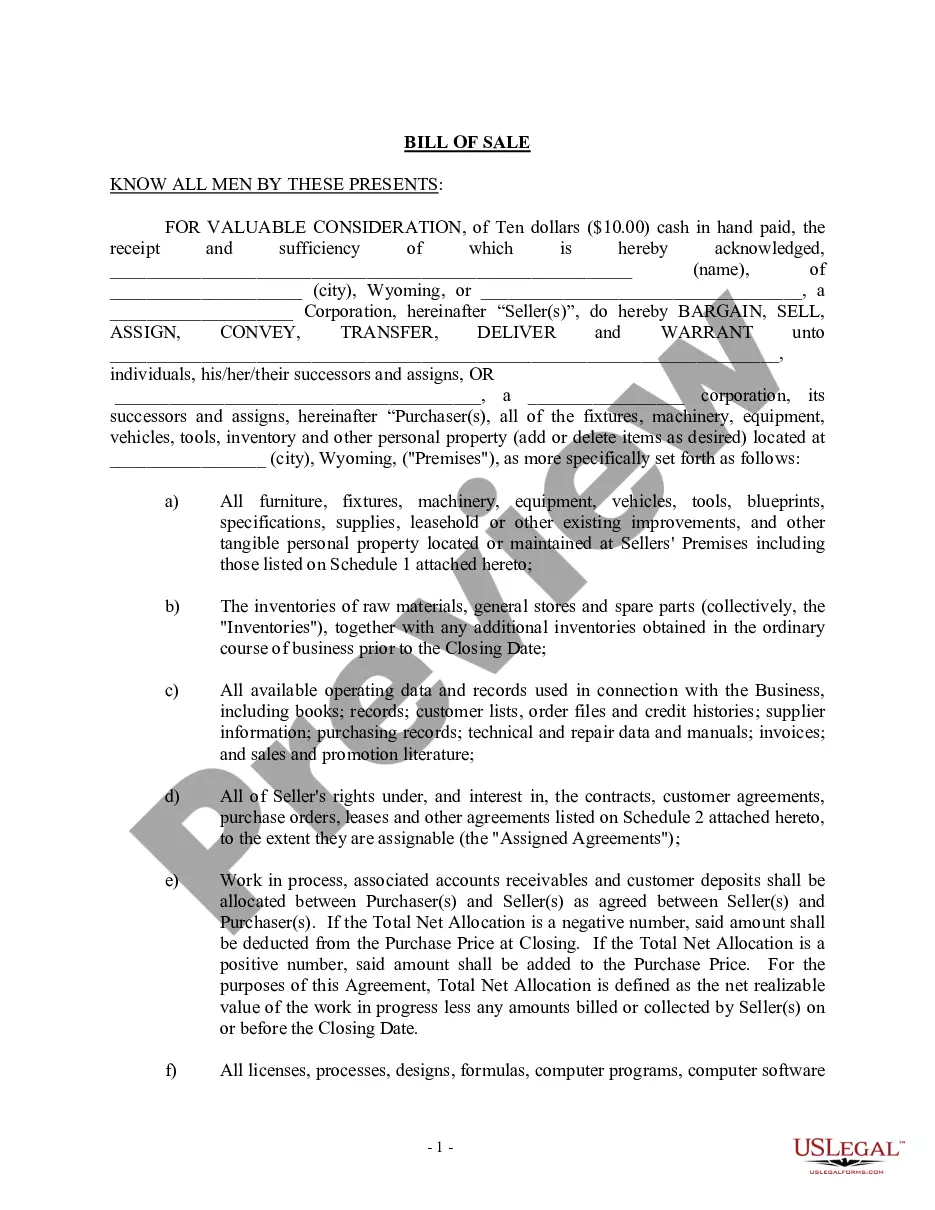
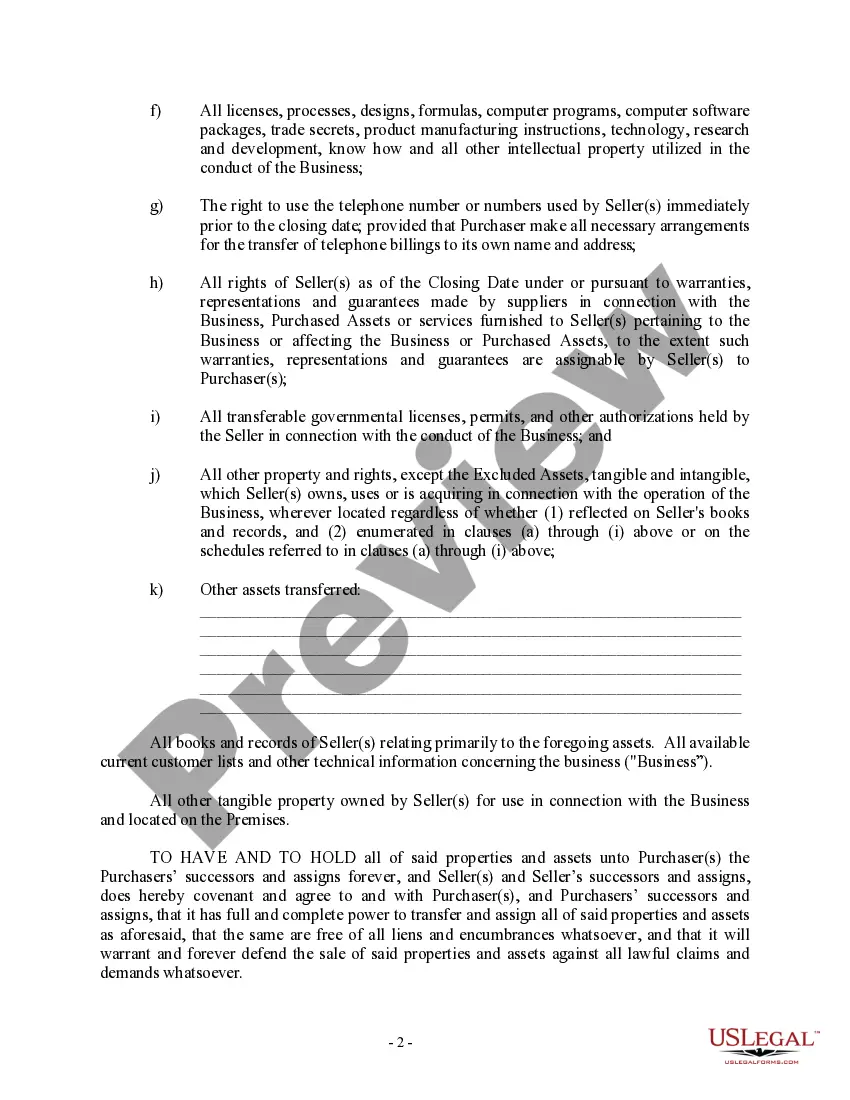
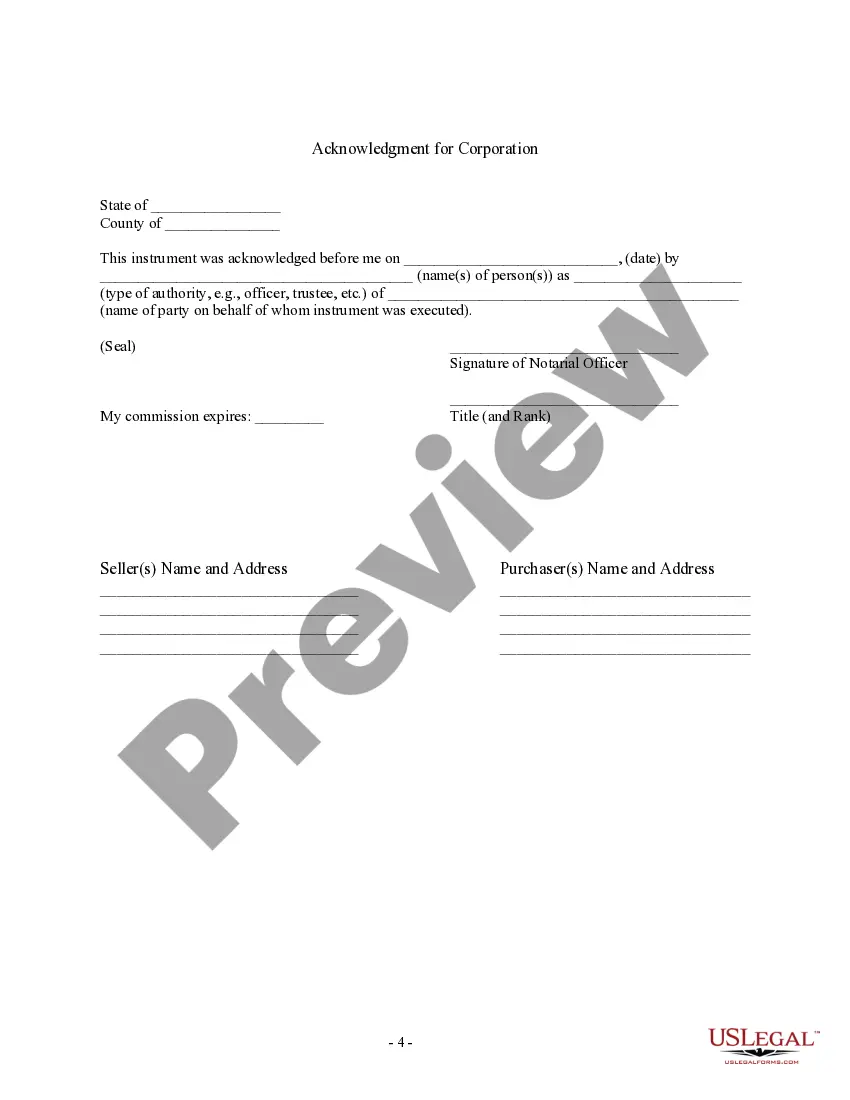
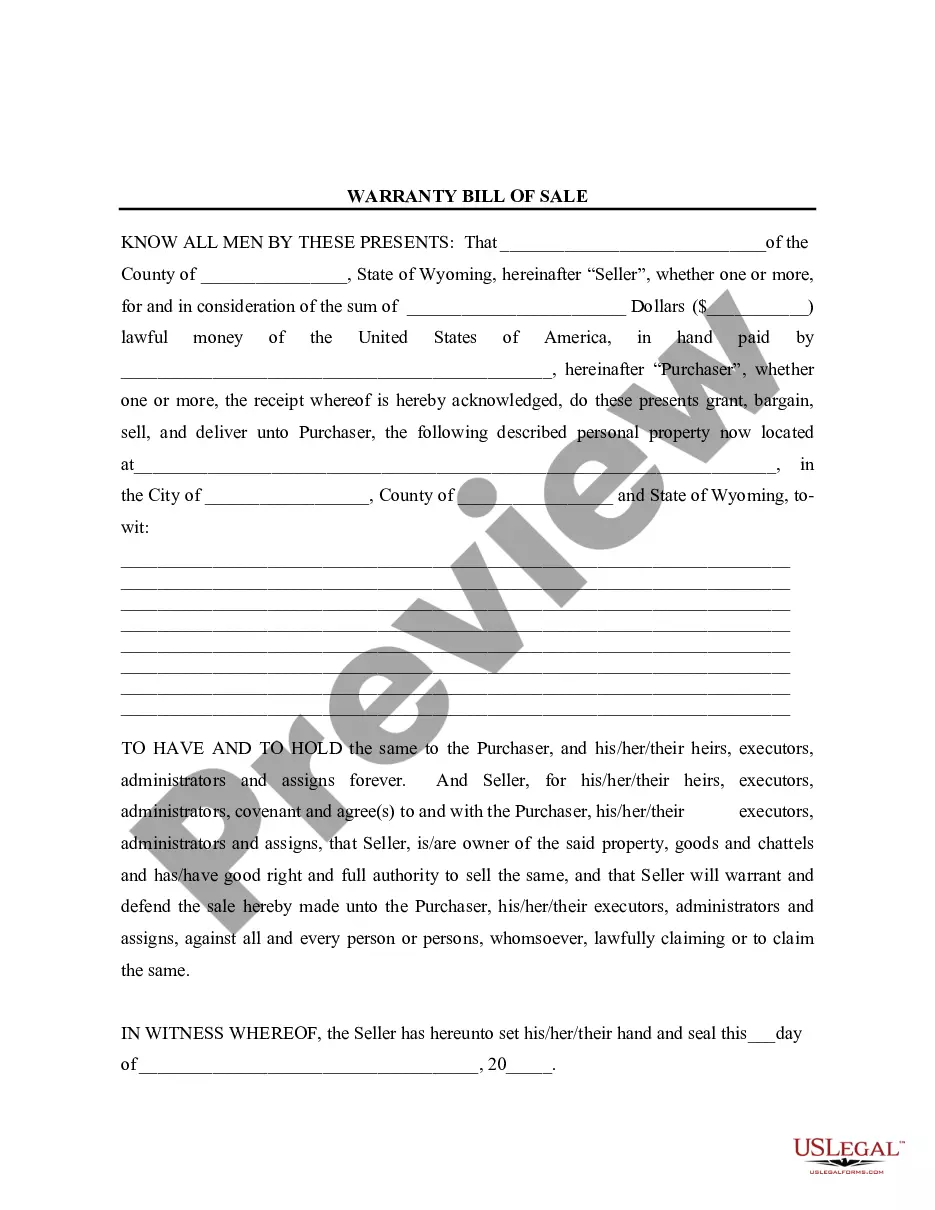
Bill of Sale in Connection with Sale of Business - Individual or Corporate Seller or Buyer. This bill of sale may include anything that is intangible but considered part of the business. These may be all licenses, processes, designs, formulas, computer programs, computer software packages, trade secrets, product manufacturing instructions etc.
Wyoming Bill of Sale in Connection with Sale of Business by Individual or Corporate Seller
Instant download
Description
Free preview
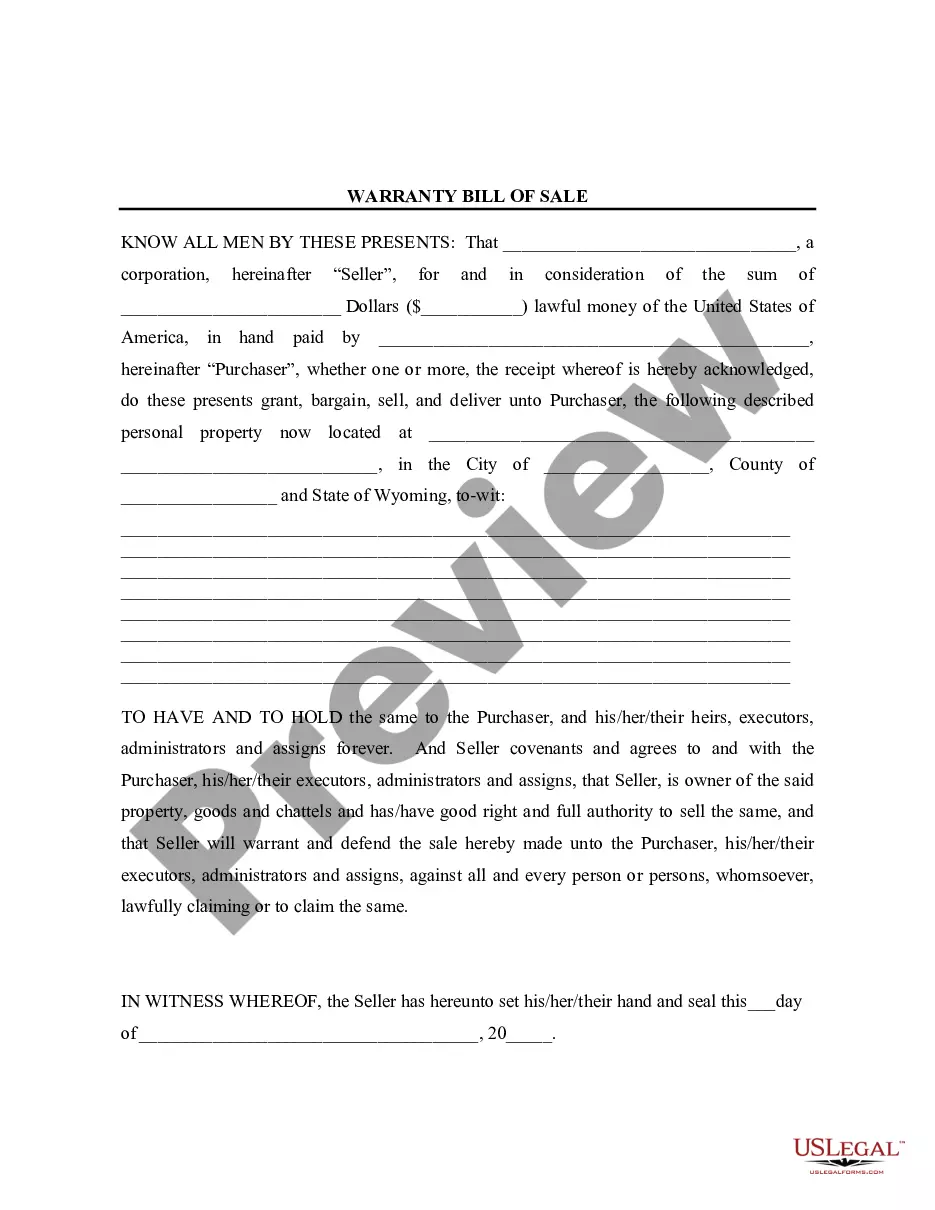
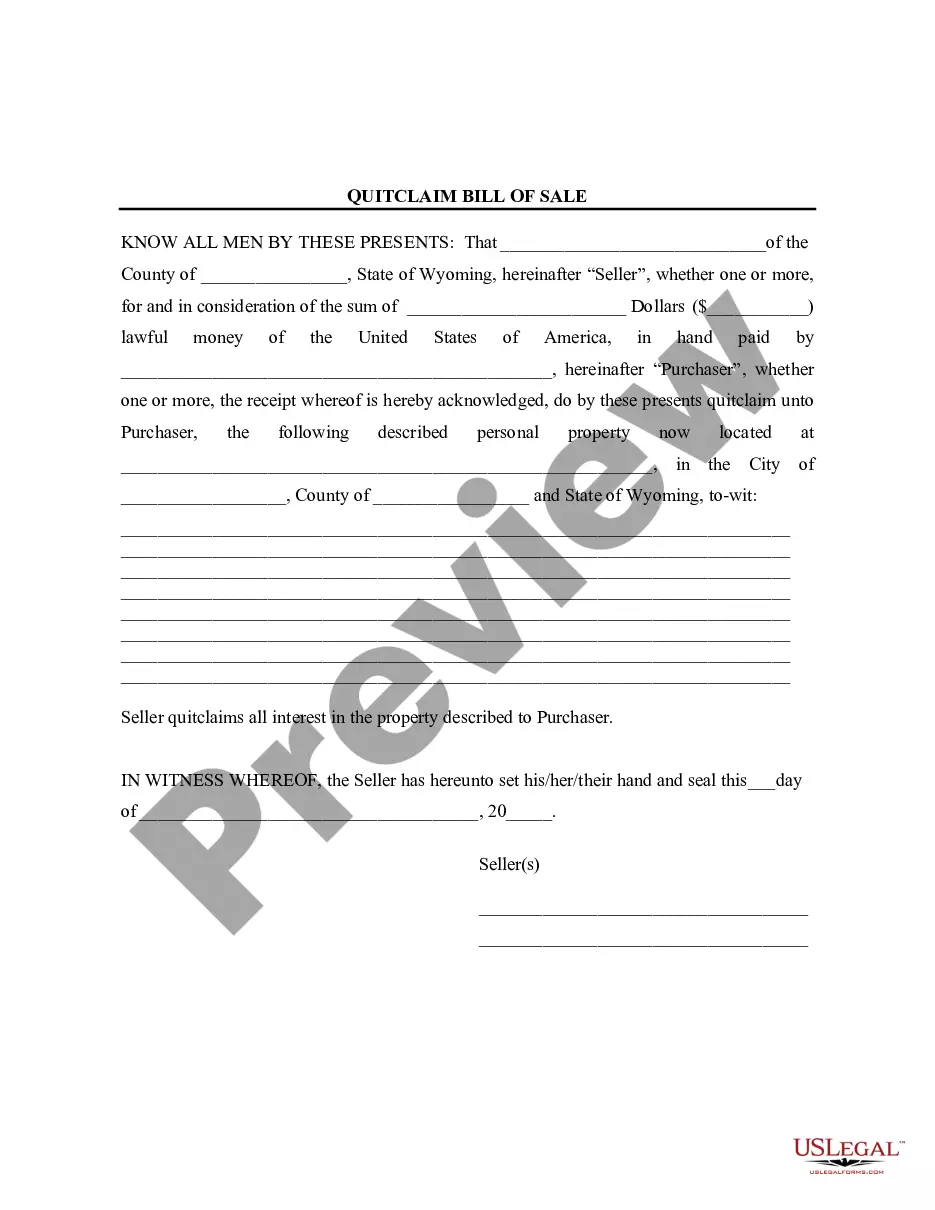
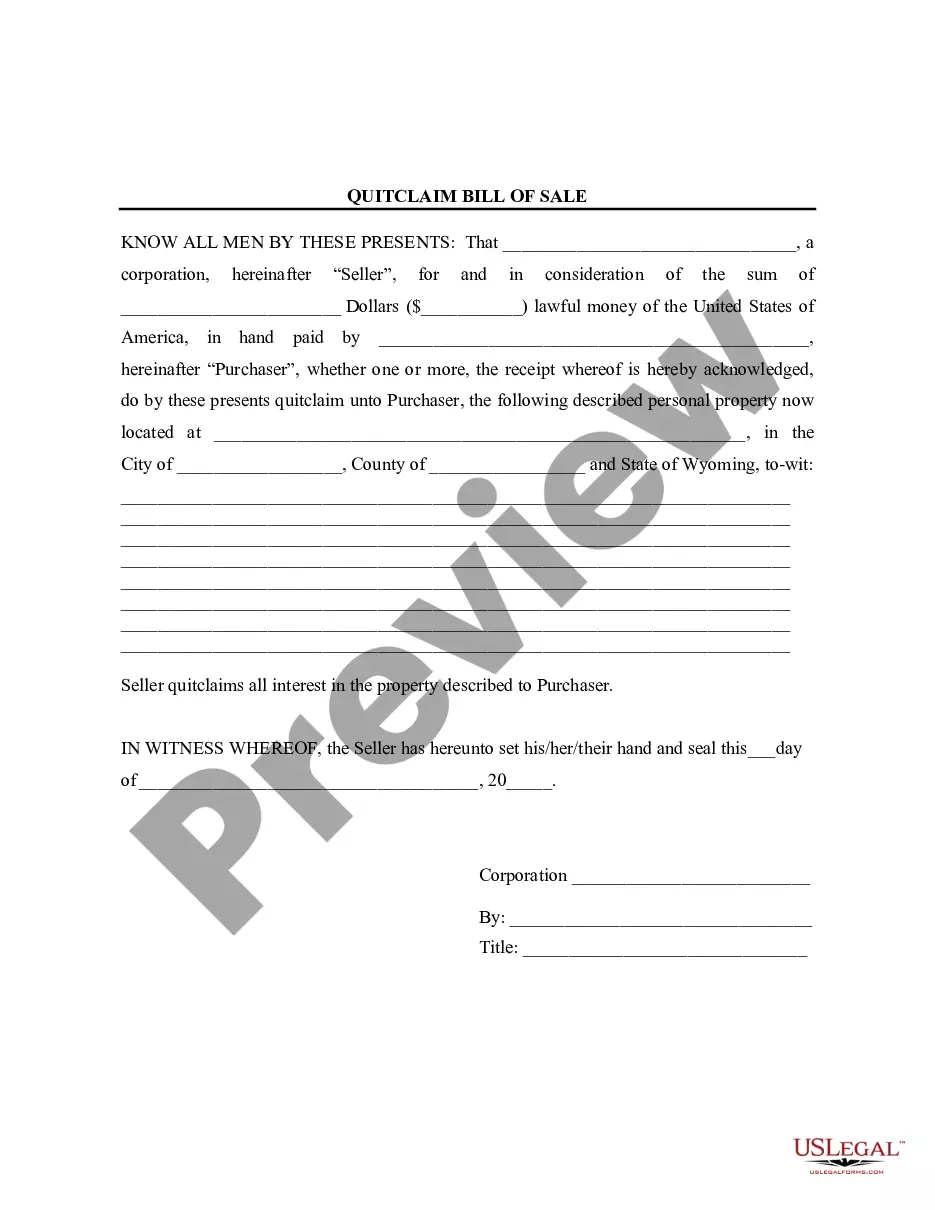




How to fill out Wyoming Bill Of Sale In Connection With Sale Of Business By Individual Or Corporate Seller?
Use US Legal Forms to get a printable Wyoming Bill of Sale in Connection with Sale of Business by Individual or Corporate Seller. Our court-admissible forms are drafted and regularly updated by professional attorneys. Our’s is the most complete Forms library on the internet and offers cost-effective and accurate samples for customers and lawyers, and SMBs. The templates are grouped into state-based categories and many of them might be previewed prior to being downloaded.
To download samples, users need to have a subscription and to log in to their account. Press Download next to any template you need and find it in My Forms.
For those who do not have a subscription, follow the following guidelines to quickly find and download Wyoming Bill of Sale in Connection with Sale of Business by Individual or Corporate Seller:
- Check out to ensure that you have the correct form in relation to the state it is needed in.
- Review the form by reading the description and by using the Preview feature.
- Click Buy Now if it’s the document you need.
- Generate your account and pay via PayPal or by card|credit card.
- Download the template to your device and feel free to reuse it many times.
- Make use of the Search engine if you want to find another document template.
US Legal Forms offers a large number of legal and tax samples and packages for business and personal needs, including Wyoming Bill of Sale in Connection with Sale of Business by Individual or Corporate Seller. Above three million users have already used our service successfully. Choose your subscription plan and get high-quality documents in just a few clicks.
Form popularity
FAQ
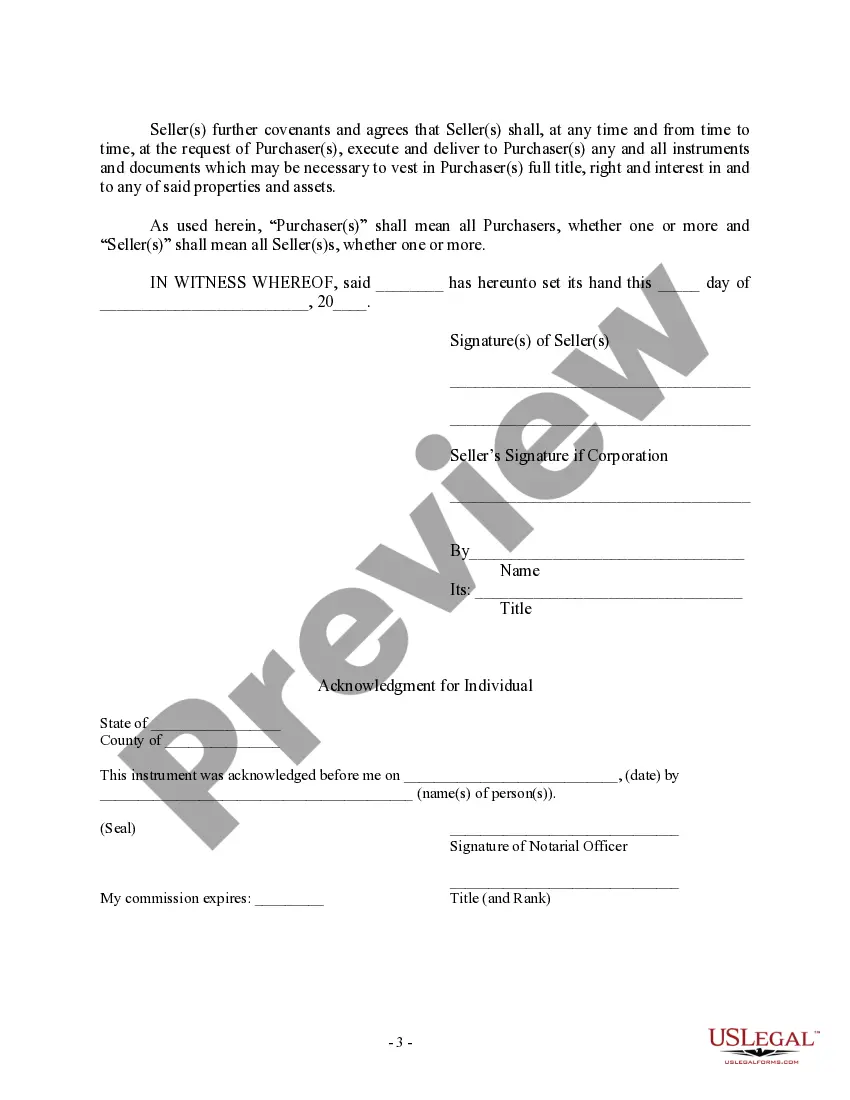
Typically, the Purchaser does not need to sign the Bill of Sale. However, some jurisdictions will require the Purchaser to sign the Bill of Sale for some or all forms of transactions. You should check your local laws to verify whether the Purchaser's signature is required for your specific sale.
In the State of Wyoming a Bill of Sale Form is required in any private vehicle transaction. Since Wyoming's vehicle services are handled by each county separately, check with your county treasurer's office to see if they provide a Bill of Sale Form and if they require the Bill of Sale you use to be notarized.
A vehicle may be operated by the new owner for 60 days when accompanied by a completed bill of sale, or 45 days with a title. If an out-of-state dealership issues a temporary for less than 60 days, a Wyoming resident can still legally drive with the paperwork for 60 days.
A bill of sale is a legal document that records the transfer of ownership of an asset to a second party in exchange for money.It protects both the buyer and the seller, should disagreements arise in the future.
Alabama. Arkansas. Colorado. Connecticut. Hawaii. Idaho. Maine. Nebraska.
Both the buyer and seller should receive copies of the bill of sale form. It's important for the buyer to keep the bill of sale with the title of the vehicle for registration and licensing purposes, if necessary. However, all parties should keep them for their own personal records.
Date of Sale. Buyer's name and address. Seller's name and address. Business name and details, which include: State of incorporation. Address of the business's main headquarters. Assets, shares, personal property and other interests included with the company.
The bill of sale, as a rule, is drafted by the seller and includes the details of the transaction. It protects both the buyer and the seller, should disagreements arise in the future.
Louisiana. Maryland. Nebraska. New Hampshire. West Virginia. Montana.