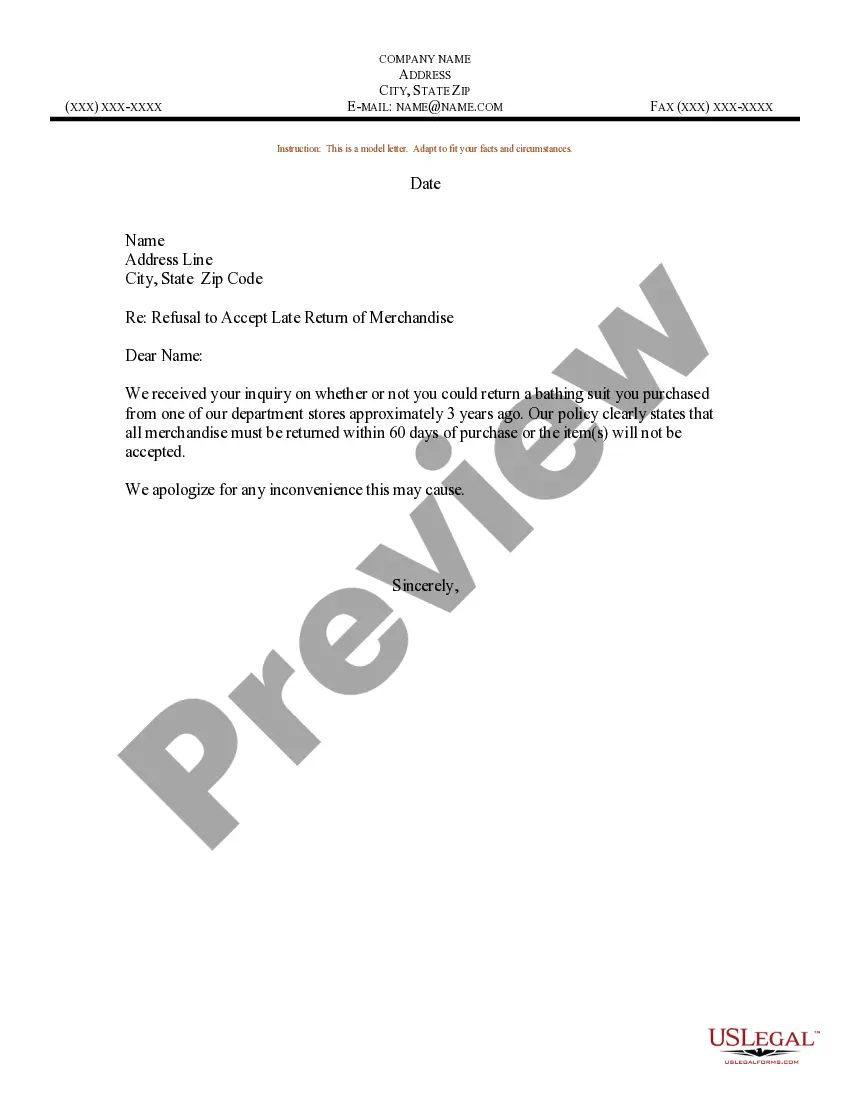
Wyoming Boarding Stable Agreement - Horse Equine Forms
Understanding this form
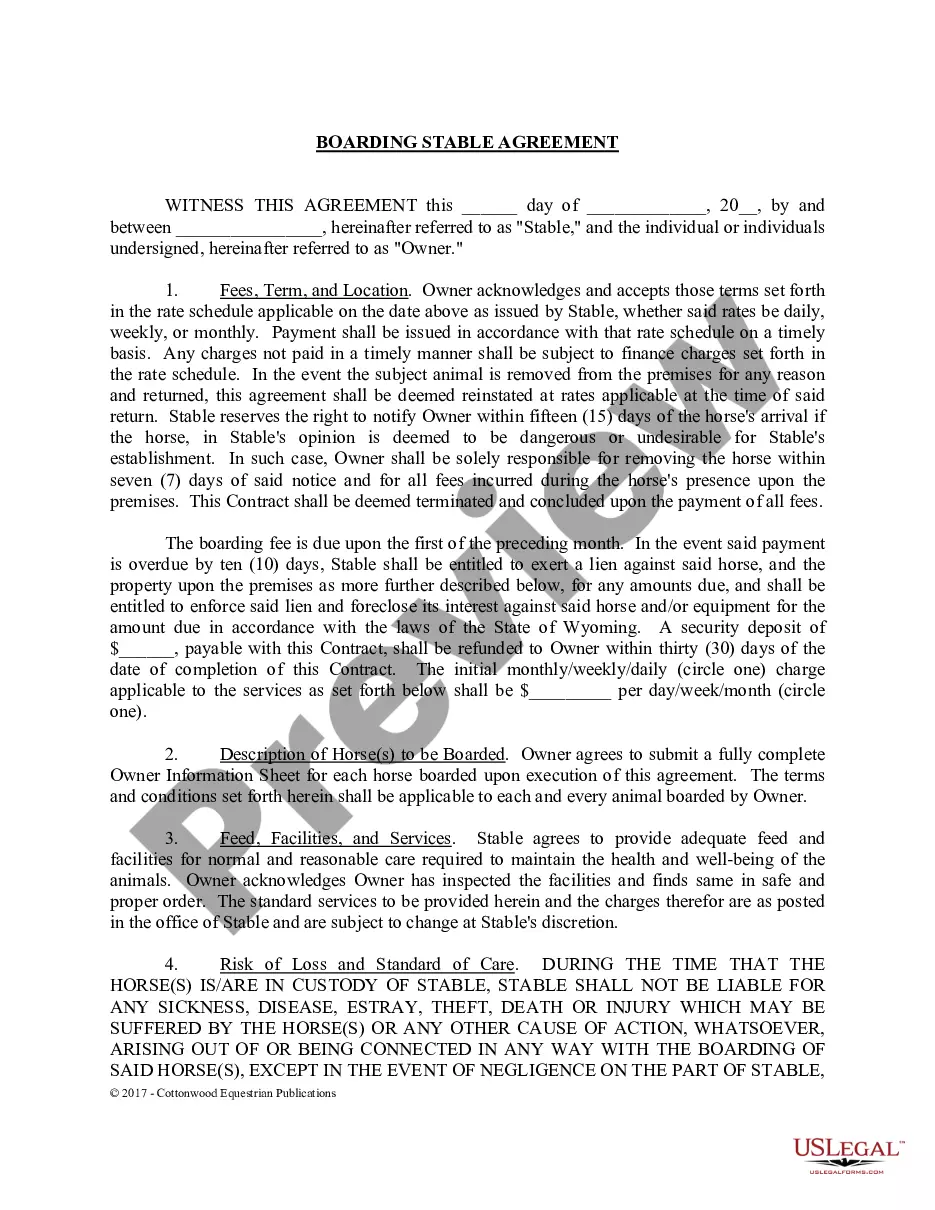
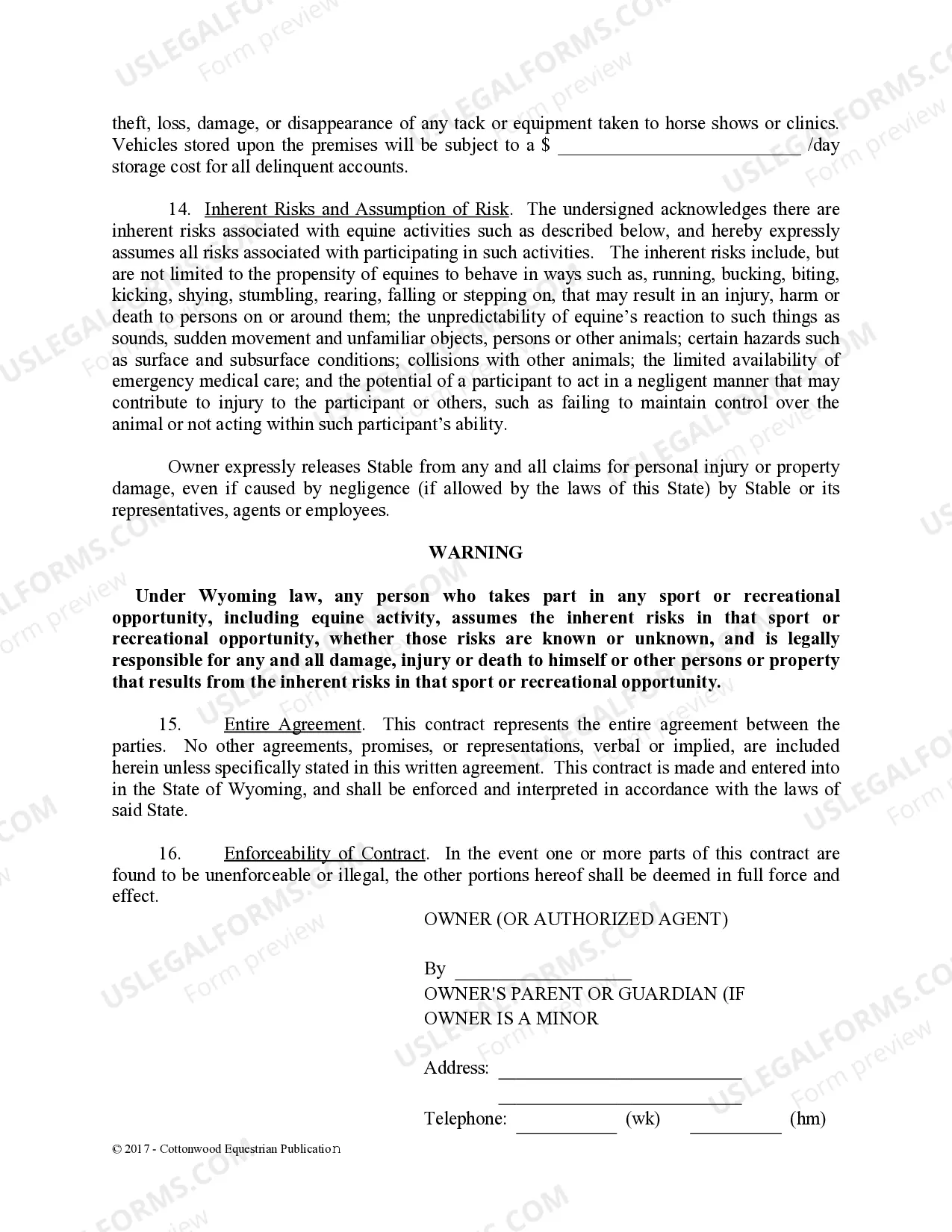
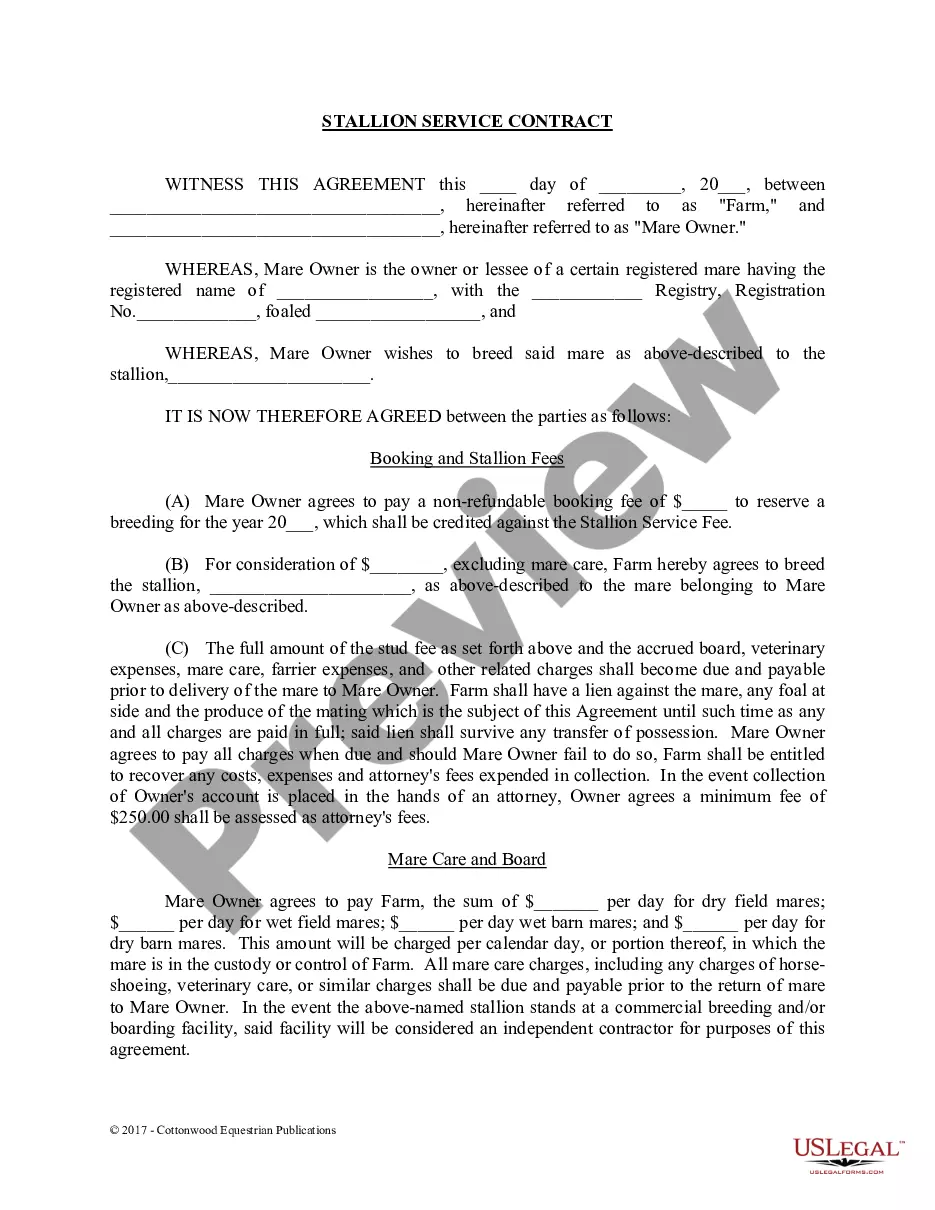
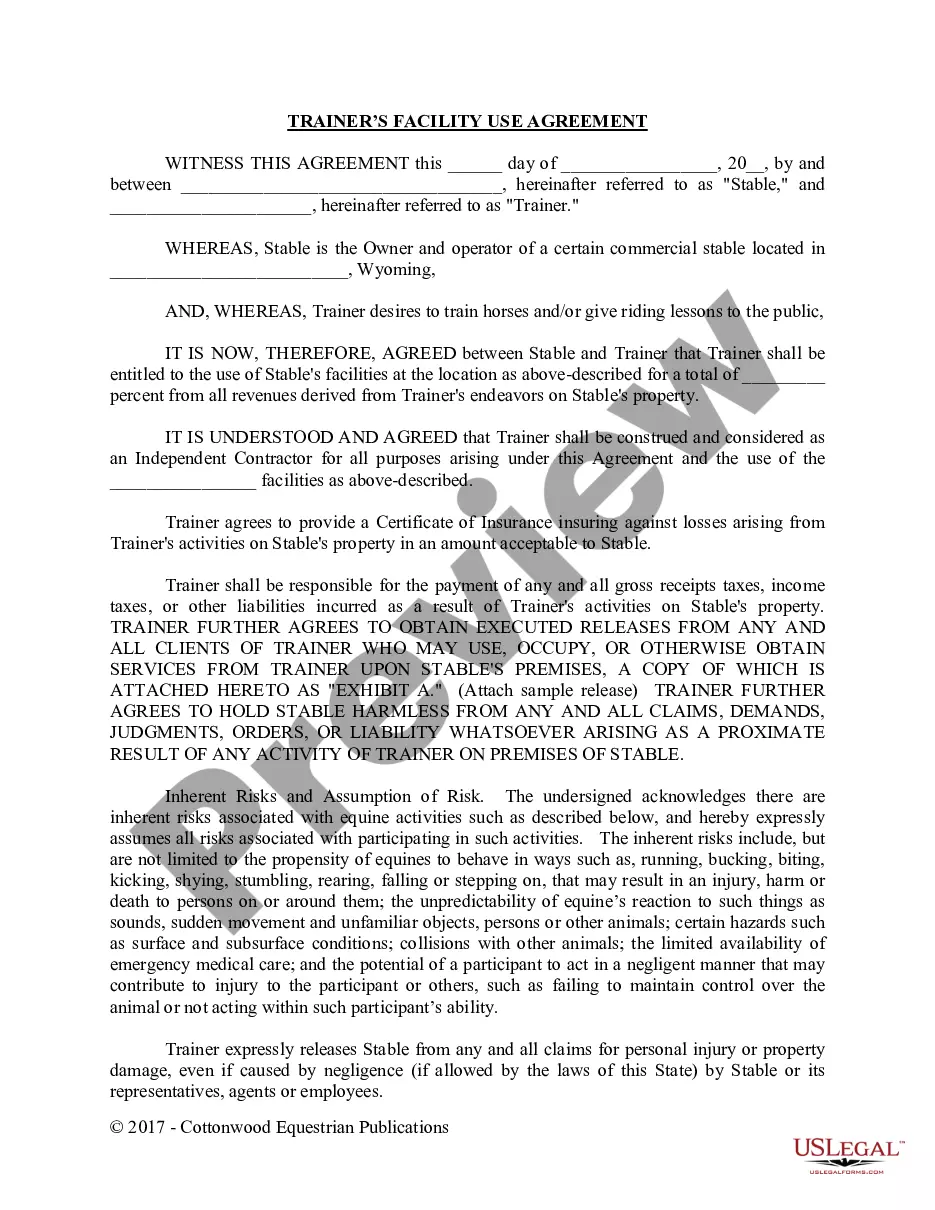
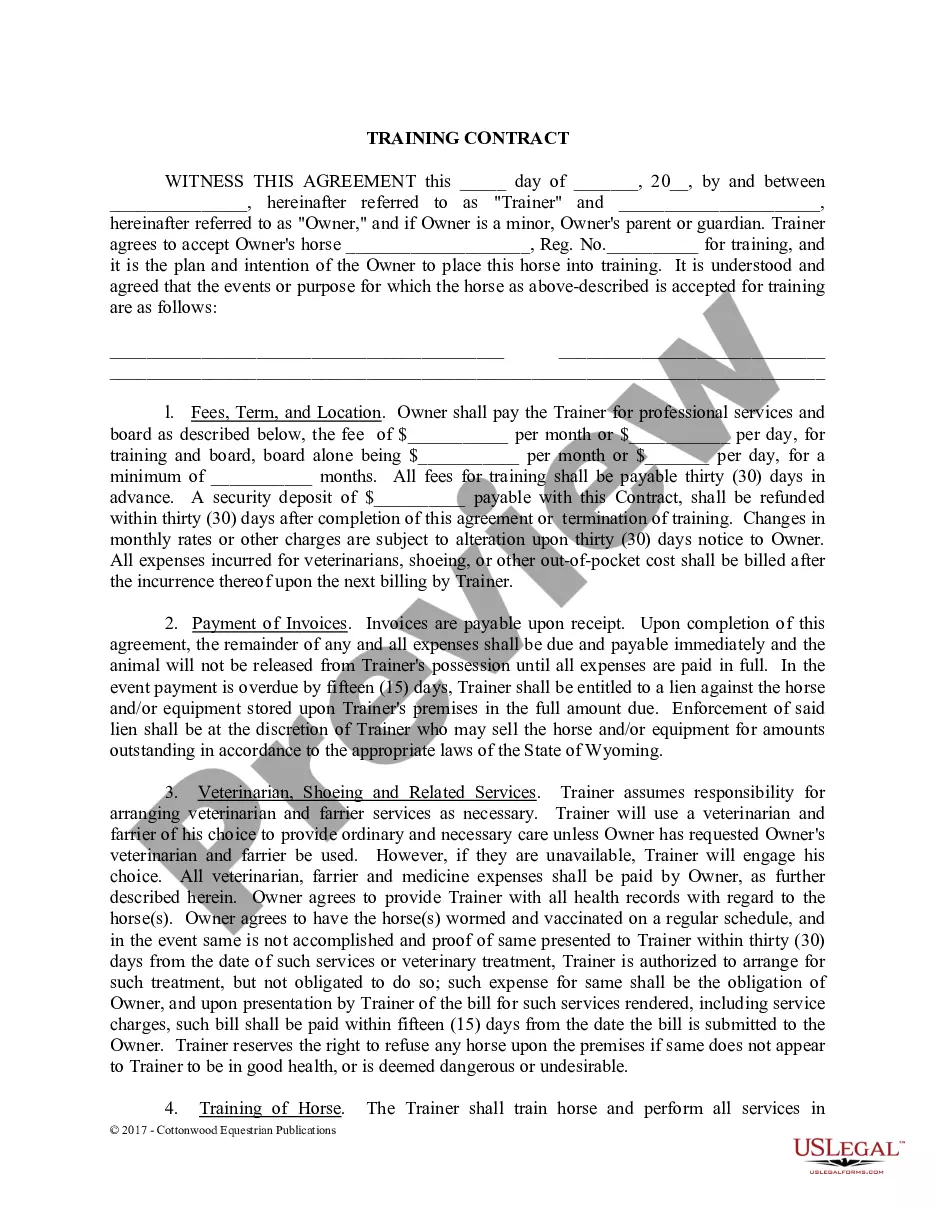
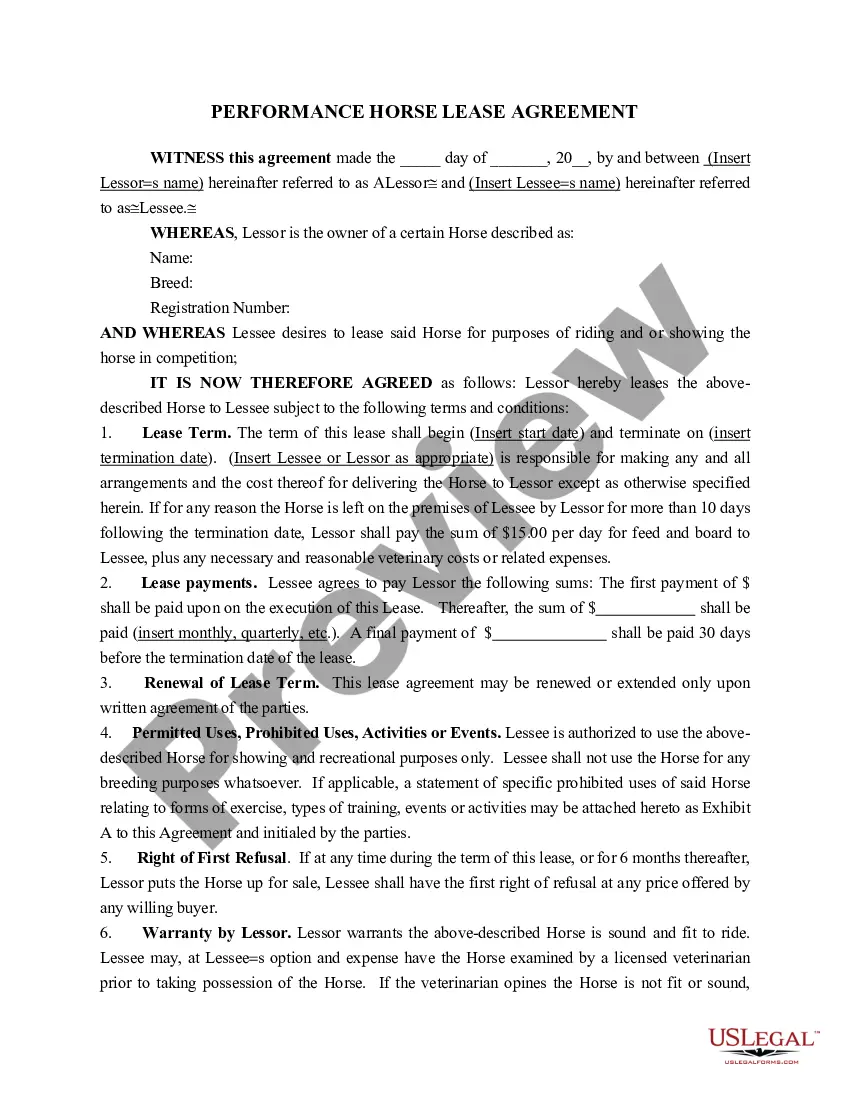
The Boarding Stable Agreement is a legal document that establishes a formal relationship between a stable owner and a horse owner. This agreement outlines terms related to boarding fees, services, liability, and care standards for horses. It is designed to protect both parties by clarifying responsibilities and ensuring proper care for the horses housed at the stable. Unlike informal arrangements, this written agreement provides a clear framework, minimizing potential misunderstandings or disputes.
What’s included in this form
- Fees, term, and location: Details regarding payment schedules, boarding rates, and the stable's right to lien.
- Description of horse(s): Information required about each horse being boarded.
- Feed, facilities, and services: Outlines the stable's obligations for the care and wellbeing of the horses.
- Risk of loss and standard of care: Specifies the liability of the stable for horses under its care.
- Emergency care: Procedures for veterinary care in cases of medical emergencies.
- Changes or termination of this agreement: Guidelines for modifying or ending the agreement.



Common use cases
This form is needed when a horse owner wants to board their horse at a stable. It is particularly useful when entering into a formal arrangement to ensure that both the horse owner and stable have a mutual understanding of care standards and financial obligations. This agreement is essential to protect the interests of both parties and provide clarity regarding roles and responsibilities.
Who can use this document
This form is intended for:
- Stable owners who require a standard agreement for boarding horses.
- Horse owners seeking a written contract that defines the terms of boarding their animals.
- Individuals or businesses involved in equine services looking for clear legal documentation.
How to complete this form
To properly complete this Boarding Stable Agreement, follow these steps:
- Identify the parties involved by entering the names of the stable and horse owner(s).
- Specify the fees, including the initial payment amount and the schedule for subsequent payments.
- Detail the description of each horse to be boarded, including any relevant health records.
- Review and accept the risk of loss and standard of care provisions to clarify liability.
- Sign and date the agreement to make it legally binding for all parties involved.
Notarization requirements for this form
This form does not typically require notarization unless specified by local law. It is essential to ensure that all parties have signed the agreement to make it valid and enforceable.
Get your form ready online
Our built-in tools help you complete, sign, share, and store your documents in one place.
Make edits, fill in missing information, and update formatting in US Legal Forms—just like you would in MS Word.
Download a copy, print it, send it by email, or mail it via USPS—whatever works best for your next step.
Sign and collect signatures with our SignNow integration. Send to multiple recipients, set reminders, and more. Go Premium to unlock E-Sign.
If this form requires notarization, complete it online through a secure video call—no need to meet a notary in person or wait for an appointment.
We protect your documents and personal data by following strict security and privacy standards.

Make edits, fill in missing information, and update formatting in US Legal Forms—just like you would in MS Word.

Download a copy, print it, send it by email, or mail it via USPS—whatever works best for your next step.

Sign and collect signatures with our SignNow integration. Send to multiple recipients, set reminders, and more. Go Premium to unlock E-Sign.

If this form requires notarization, complete it online through a secure video call—no need to meet a notary in person or wait for an appointment.

We protect your documents and personal data by following strict security and privacy standards.
Typical mistakes to avoid
- Failing to provide complete and accurate descriptions of the horses being boarded.
- Not fully understanding the fee schedule and payment terms before signing.
- Neglecting to disclose any known health issues or dangerous propensities of the horse.
- Overlooking the importance of emergency care provisions and contact information.
Benefits of completing this form online
- Convenience of having a legally sound document that can be easily downloaded and customized.
- Editability allows horse owners to specify terms that suit their needs and circumstances.
- Written agreements help prevent misunderstandings and disputes between parties.
- The agreement is legally enforceable under Wyoming law, which set the standards for such contracts.
- Both parties are expected to adhere to the agreed terms to avoid legal disputes.
- Failure to comply with the terms may result in the enforcement of lien rights or termination of the agreement.
Quick recap
- The Boarding Stable Agreement is crucial for formalizing the boarding relationship between horse owners and stables.
- This agreement protects the interests of both parties by clearly outlining terms and conditions.
- Understanding the risk and liability implications is vital for all involved.
Looking for another form?


Form popularity
FAQ
Full board will include all the necessities for the horse, plus a stall with full turn out to pasture. Full board does not require owners to visit their horses every day; instead, staff at the barn clean the stall, feed the horse, and bring him in/out of the pasture.
A social horse may become lonely in a large pasture, even if it has plenty of space, food, and care.Boarding also offers peace of mind to owners who want to know their horse will be cared for, even if the unexpected happens--even small things like a bad flu can keep you from giving your horse the care it needs.
If you have the space and facility to keep your equines at home, it's more cost effective and offers a number of advantages that boarding does not.Keeping a horse on full board offers owners virtually hassle-free maintenance. Full board includes, at the very least, feeding, stall cleaning and turnout.
Horse boarding is like rental housing for your horse.A horse can be housed in a barn with other horses and receive the care they need. Owners can visit their horse for riding, grooming, training, etc. Horse boarding services may vary based on the company and the price.
Self-care board is also known as rough board and it is basically DIY horse boarding. You are responsible for all your horses care, scheduling and finding horse professionals, getting everything your horse needs. This kind of boarding is often best for more experienced horse owners that have owned horses before.
Full board will include all the necessities for the horse, plus a stall with full turn out to pasture. Full board does not require owners to visit their horses every day; instead, staff at the barn clean the stall, feed the horse, and bring him in/out of the pasture.
Numbers Game. The reality is that boarding facilities operate on slim profit margins. By the time costs are considered for hay, grain, bedding, labor for feeding, cleaning stalls, doing turnout, etc., the board fees typically do not leave a lot left over, Sherrick-von Schiller said.
Numbers Game. The reality is that boarding facilities operate on slim profit margins. By the time costs are considered for hay, grain, bedding, labor for feeding, cleaning stalls, doing turnout, etc., the board fees typically do not leave a lot left over, Sherrick-von Schiller said.
The cost of boarding averages $400 to $500 per month but can go as high as $1,200 to $2,500 in metropolitan areas. Services such as mucking out stalls, feeding and turning out your horse to pasture may not be included in the price. For those lucky enough to own sufficient land, there are still costs to consider.