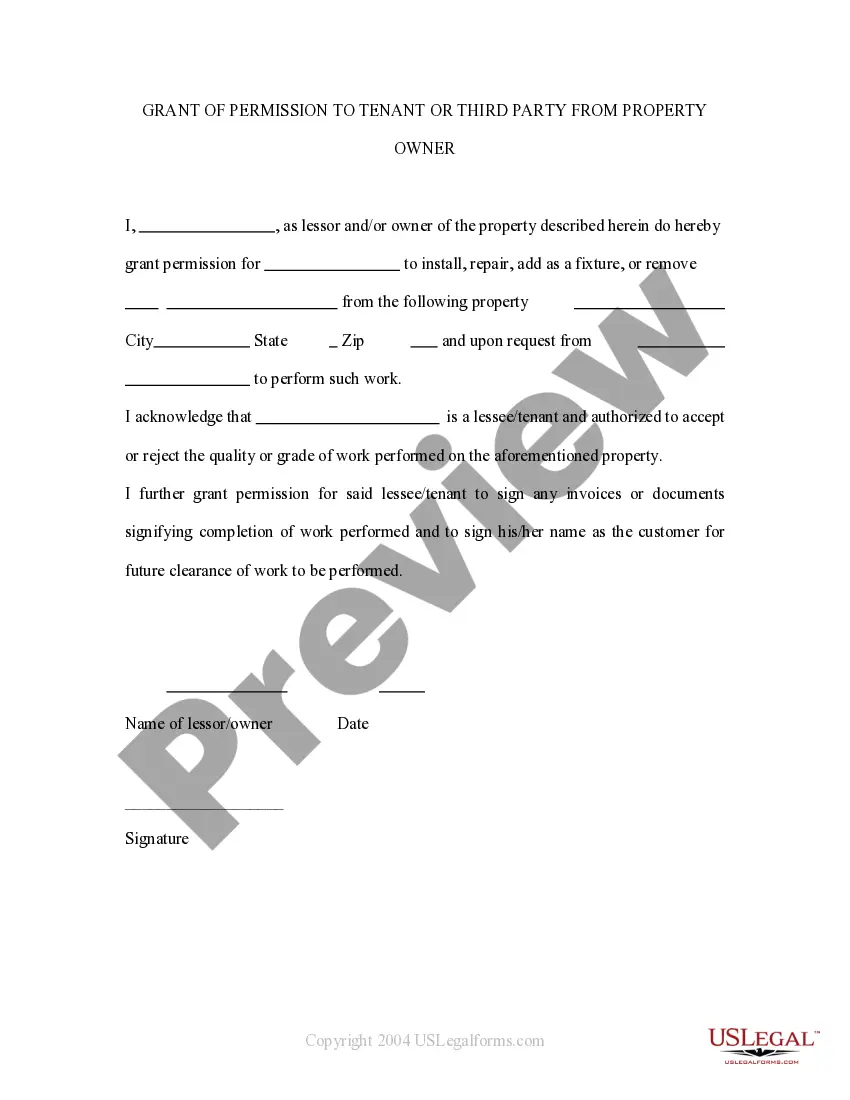
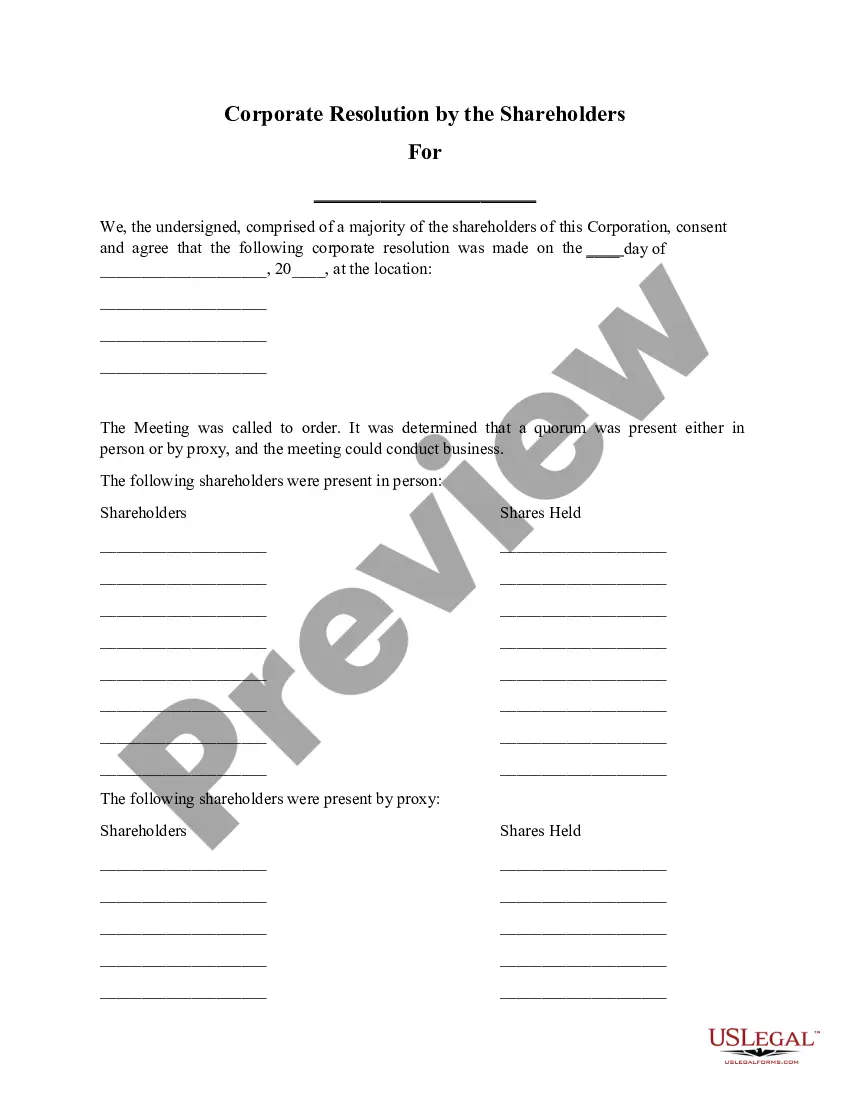
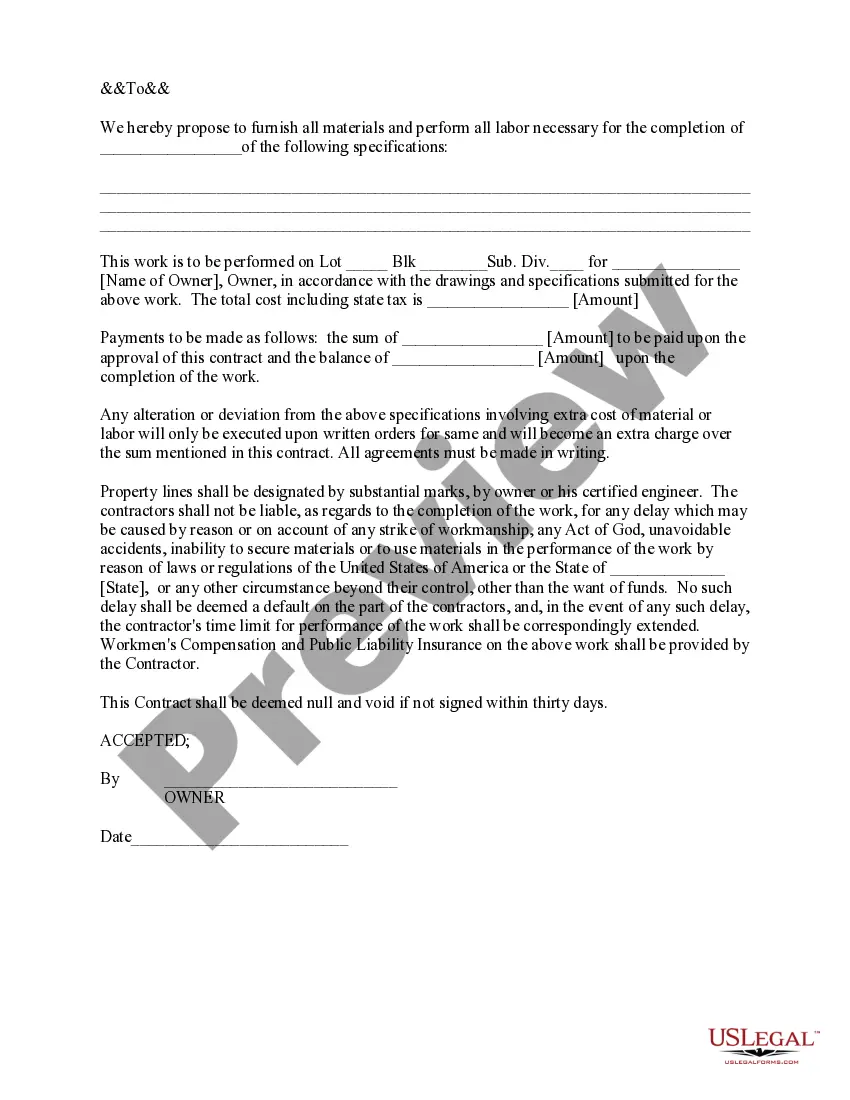
This is a grant of permission by a property owner to a third party to make repairs or install a fixture or cable television etc. on the property where the tenant lives
West Virginia Grant Of Permission To Tenant Or Third Party From Property Owner
Category:
State:
Multi-State
Control #:
US-PRM-30
Format:
Word;
Rich Text
Instant download
Description
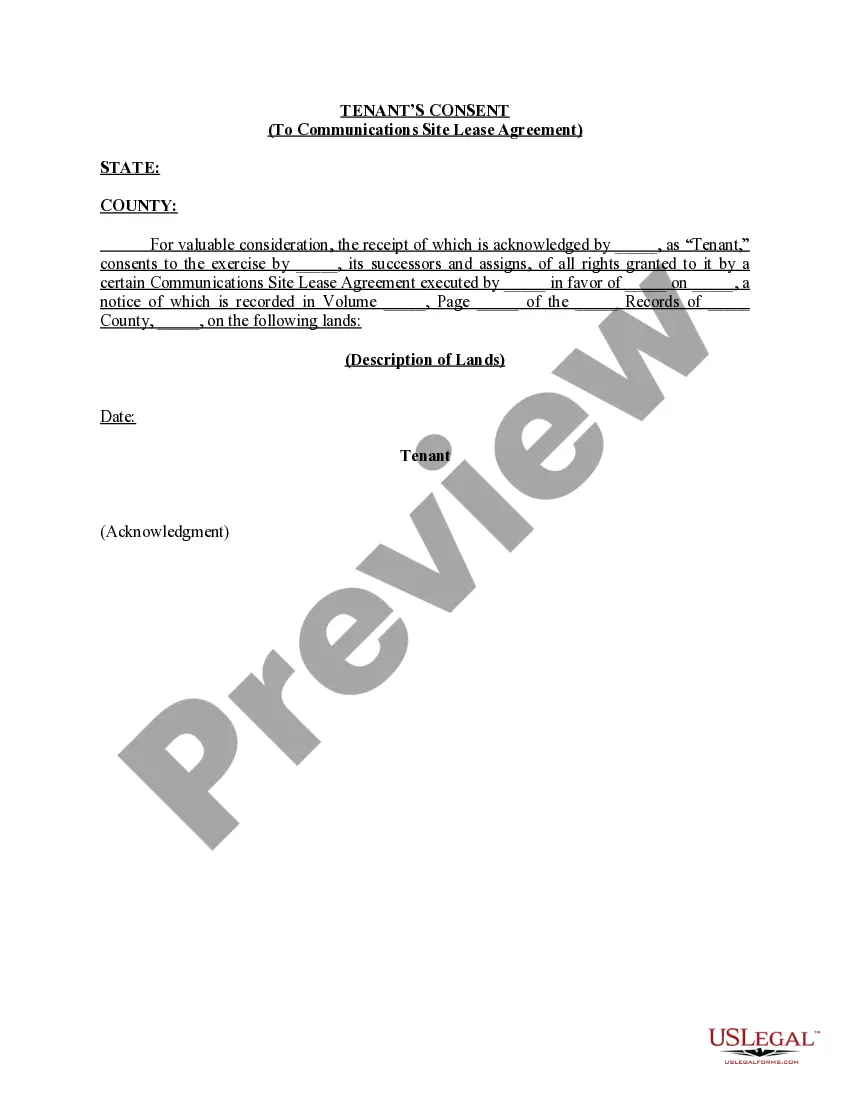
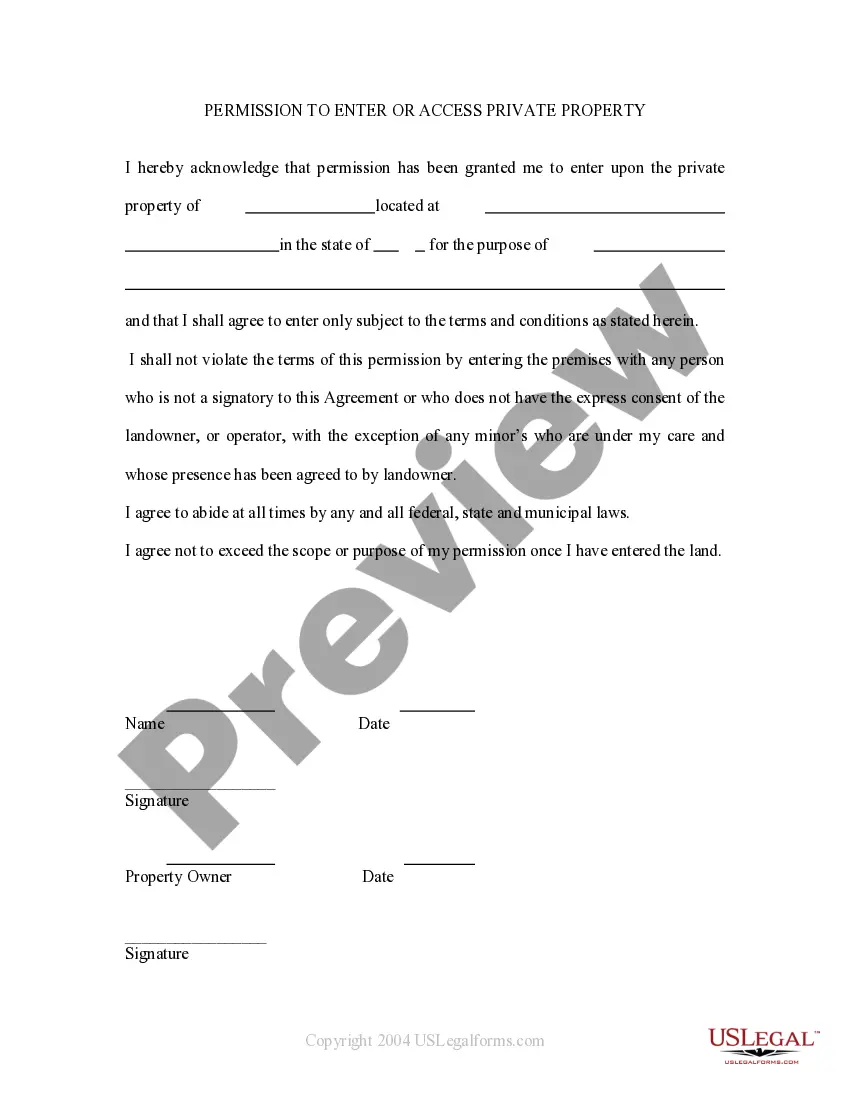
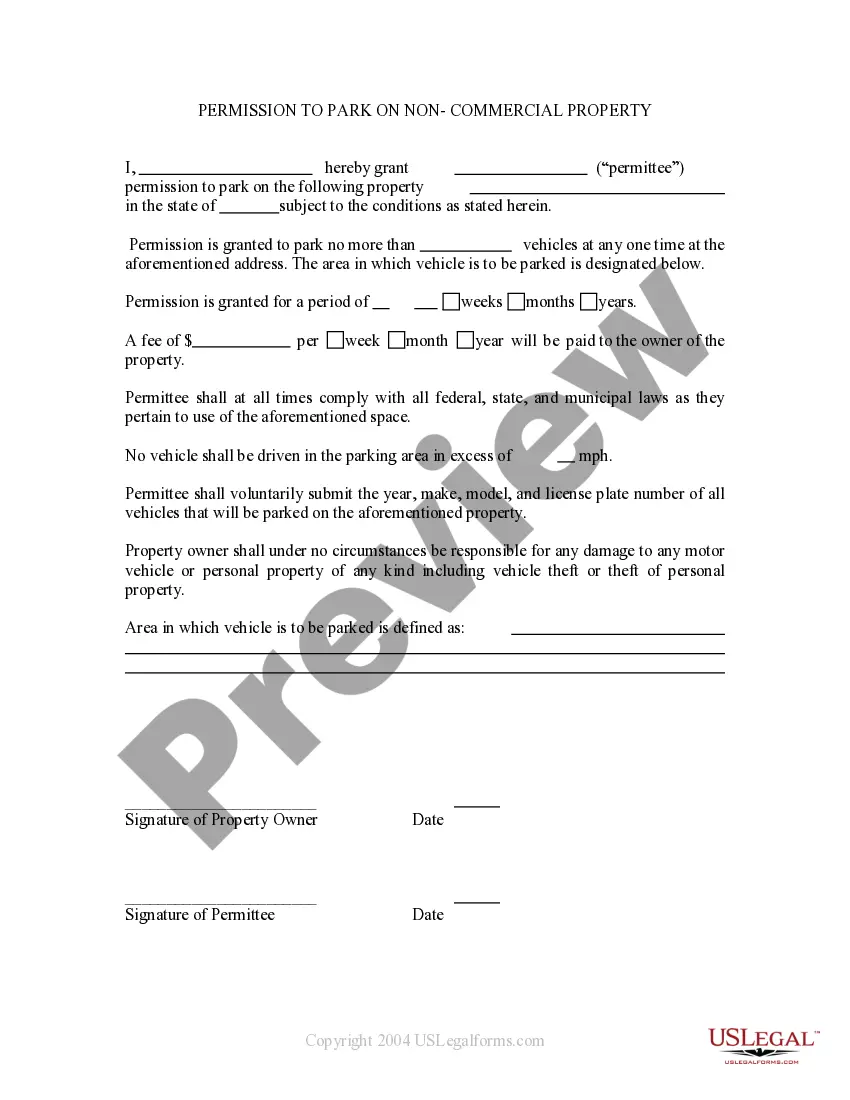

How to fill out Grant Of Permission To Tenant Or Third Party From Property Owner?
If you need to complete, obtain, or print legal document templates, utilize US Legal Forms, the largest repository of legal forms available online. Take advantage of the site's straightforward and convenient search feature to find the documents you need. Numerous templates for business and personal purposes are categorized by types and states, or keywords. Use US Legal Forms to acquire the West Virginia Grant Of Permission To Tenant Or Third Party From Property Owner within a few clicks.
If you are already a US Legal Forms user, sign in to your account and then click the Download option to access the West Virginia Grant Of Permission To Tenant Or Third Party From Property Owner. You can also view forms you previously obtained in the My documents section of your account.
If you are using US Legal Forms for the first time, follow the steps below: Step 1. Ensure you have selected the form for the correct city/state. Step 2. Utilize the Preview mode to review the content of the form. Be sure to read the description. Step 3. If you are not satisfied with the form, use the Search area at the top of the screen to find alternative versions of the legal form template. Step 4. Once you have found the form you need, select the Buy now option. Choose the pricing plan you prefer and enter your details to register for an account. Step 5. Complete the payment. You can use your Visa or MasterCard or PayPal account to finalize the transaction. Step 6. Choose the format of the legal form and download it to your device. Step 7. Complete, modify, and print or sign the West Virginia Grant Of Permission To Tenant Or Third Party From Property Owner.
- Every legal document template you purchase is yours forever.
- You will have access to each form you obtained in your account.
- Click on the My documents section and select a form to print or download again.
- Complete and download, and print the West Virginia Grant Of Permission To Tenant Or Third Party From Property Owner using US Legal Forms.
- There are thousands of professional and state-specific forms you can use for your business or personal needs.
Form popularity
FAQ
In West Virginia, to claim adverse possession, you must meet five specific requirements. First, you need continuous and uninterrupted possession of the property for at least ten years. Second, your possession must be actual, meaning you physically occupy the land. Third, your possession should be open and notorious, so it is visible to others. Fourth, it must be hostile, indicating that you occupy the property without the owner's permission. Lastly, your possession should be exclusive, meaning you do not share control with others. Understanding these requirements can help clarify the role of a West Virginia Grant Of Permission To Tenant Or Third Party From Property Owner in such situations.
To register a tenant in private property, you should first draft a rental agreement that includes terms of the lease, rent amount, and duration. After both parties sign the agreement, it's a good idea to keep a copy for your records. Additionally, if you wish to formalize the arrangement further, consider obtaining a West Virginia Grant Of Permission To Tenant Or Third Party From Property Owner. This document can clarify permissions and responsibilities for all parties involved.
When writing a letter to grant someone permission to act on your behalf, start with a formal greeting and state your full name and contact information. Clearly outline the specific actions you are allowing them to take, and mention any relevant details that pertain to the West Virginia Grant Of Permission To Tenant Or Third Party From Property Owner. Ensure you sign and date the letter to make it official. This letter provides clarity and protects both parties involved in the arrangement.
In West Virginia, landlords generally cannot enter a rental property without the tenant's permission, except in emergencies. The law requires landlords to provide reasonable notice before entering, typically 24 hours, unless there is an immediate threat to safety or property. Understanding the West Virginia Grant Of Permission To Tenant Or Third Party From Property Owner can help both landlords and tenants navigate these situations effectively. It's essential to communicate clearly to maintain a positive landlord-tenant relationship.
To write a letter of permission to a tenant, begin with a clear and concise introduction that states your intent. Include specific details such as the tenant's name, property address, and the permission being granted. Make sure to include any conditions or limitations related to the West Virginia Grant Of Permission To Tenant Or Third Party From Property Owner. Finally, sign and date the letter to formalize your consent.
Yes, you can be removed from a property even if there is no written lease in West Virginia. Landlords can still initiate eviction proceedings based on state laws, typically requiring proper notice. A West Virginia Grant Of Permission To Tenant Or Third Party From Property Owner can help clarify your rights and prevent sudden eviction. Always communicate with your landlord to understand your situation better.
Yes, a landlord in West Virginia can grant a license rather than a formal tenancy agreement. A license allows a tenant or third party to use the property under specific conditions outlined by the property owner. This arrangement can be beneficial when a West Virginia Grant Of Permission To Tenant Or Third Party From Property Owner is established, allowing for clear expectations and responsibilities.
Renters in West Virginia have several important rights, including the right to a habitable living space, the right to privacy, and the right to receive notice before eviction. They also have the right to request a West Virginia Grant Of Permission To Tenant Or Third Party From Property Owner, which can provide additional protections or permissions. Familiarizing yourself with these rights can empower you as a tenant.
Evicting a tenant without a formal tenancy agreement in West Virginia can be challenging. You must still provide the tenant with a notice of eviction, typically a 30-day notice, depending on the circumstances. If the tenant refuses to leave, you may need to file for eviction in court. Utilizing a West Virginia Grant Of Permission To Tenant Or Third Party From Property Owner can help clarify expectations and prevent misunderstandings.
The consent law in West Virginia governs the permissions required for various actions, including landlord-tenant relationships. In many cases, a West Virginia Grant Of Permission To Tenant Or Third Party From Property Owner can establish clear guidelines on what tenants may or may not do on the property. Understanding this law helps prevent disputes and ensures that both parties know their rights and obligations.