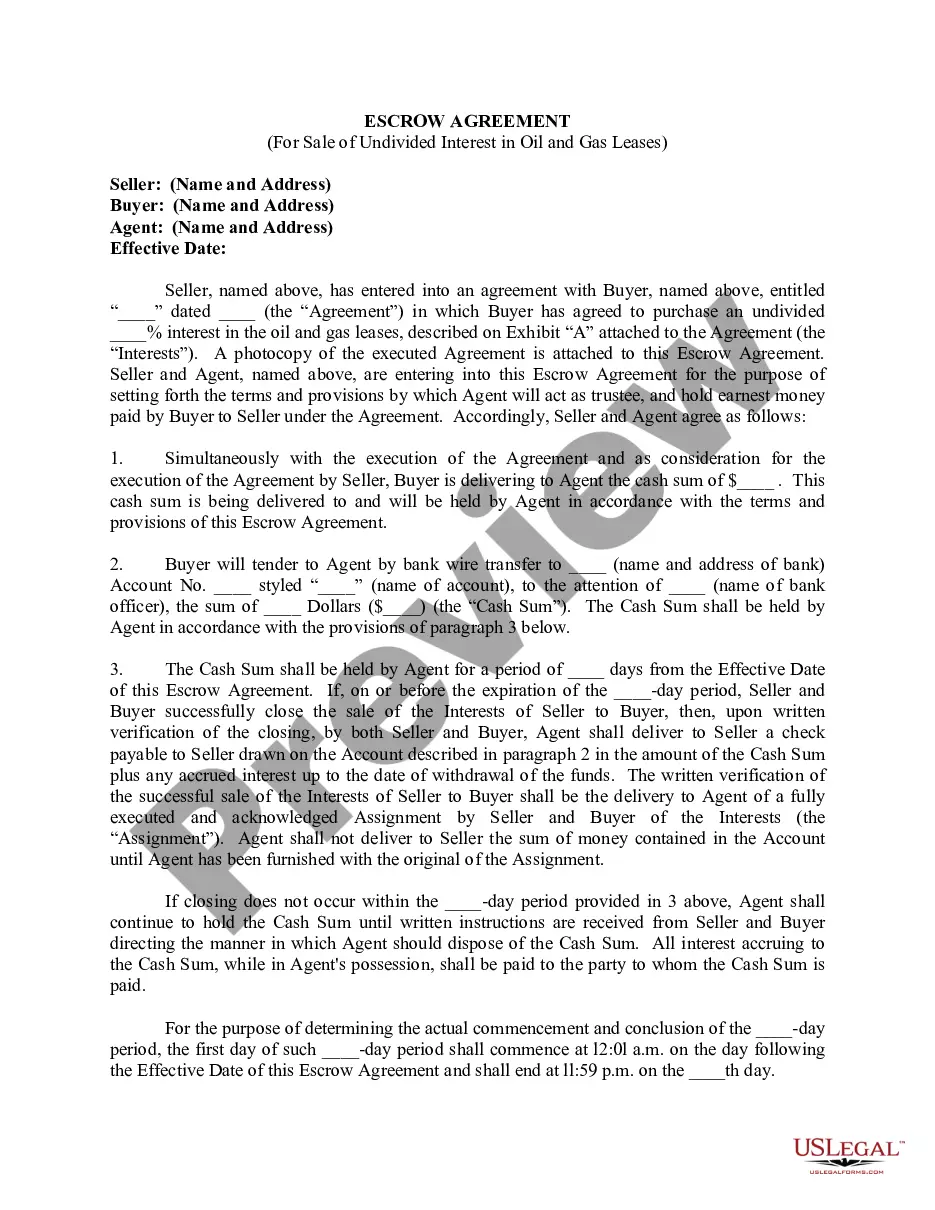
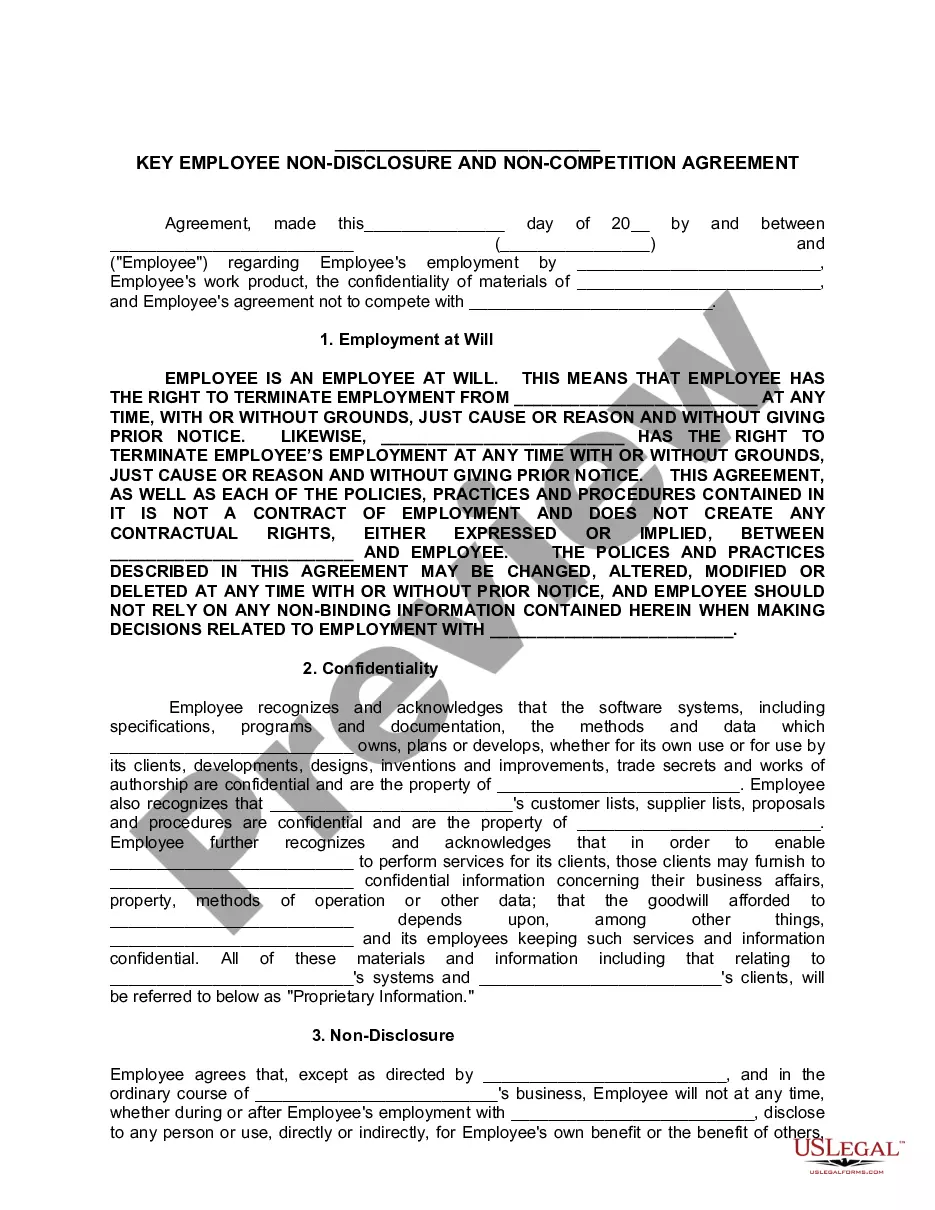
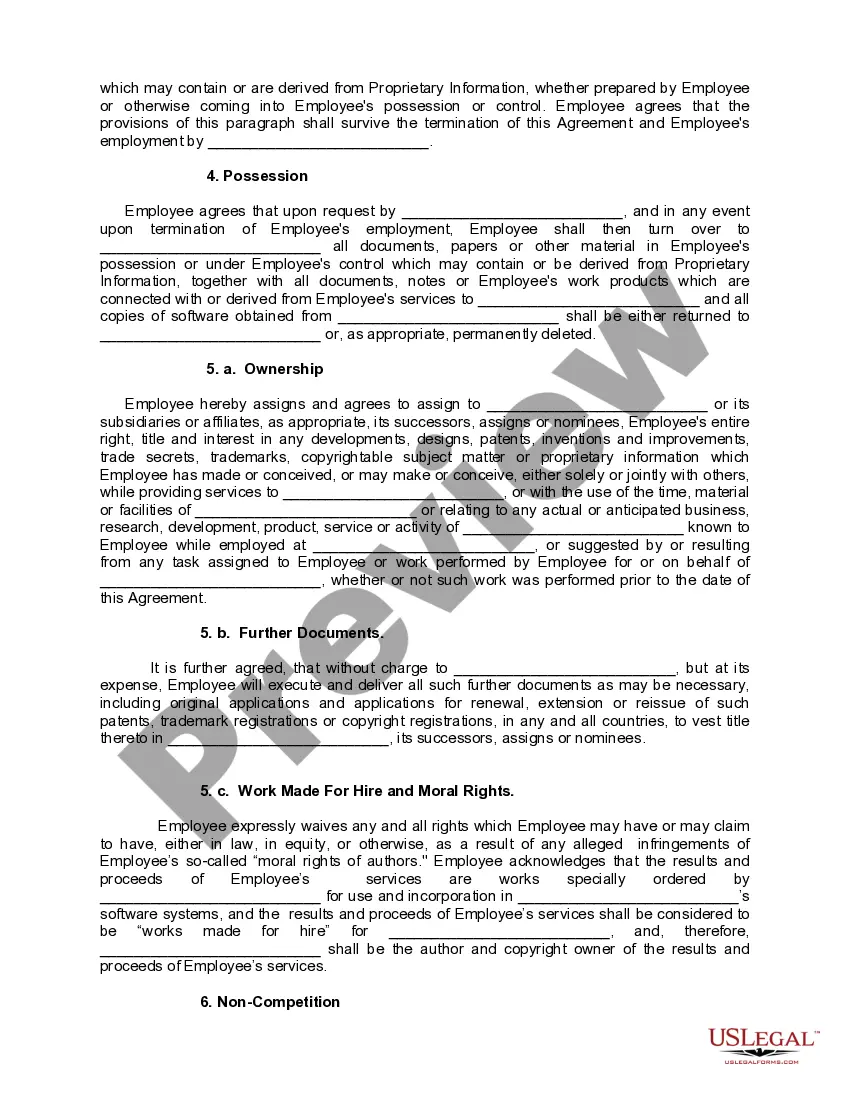
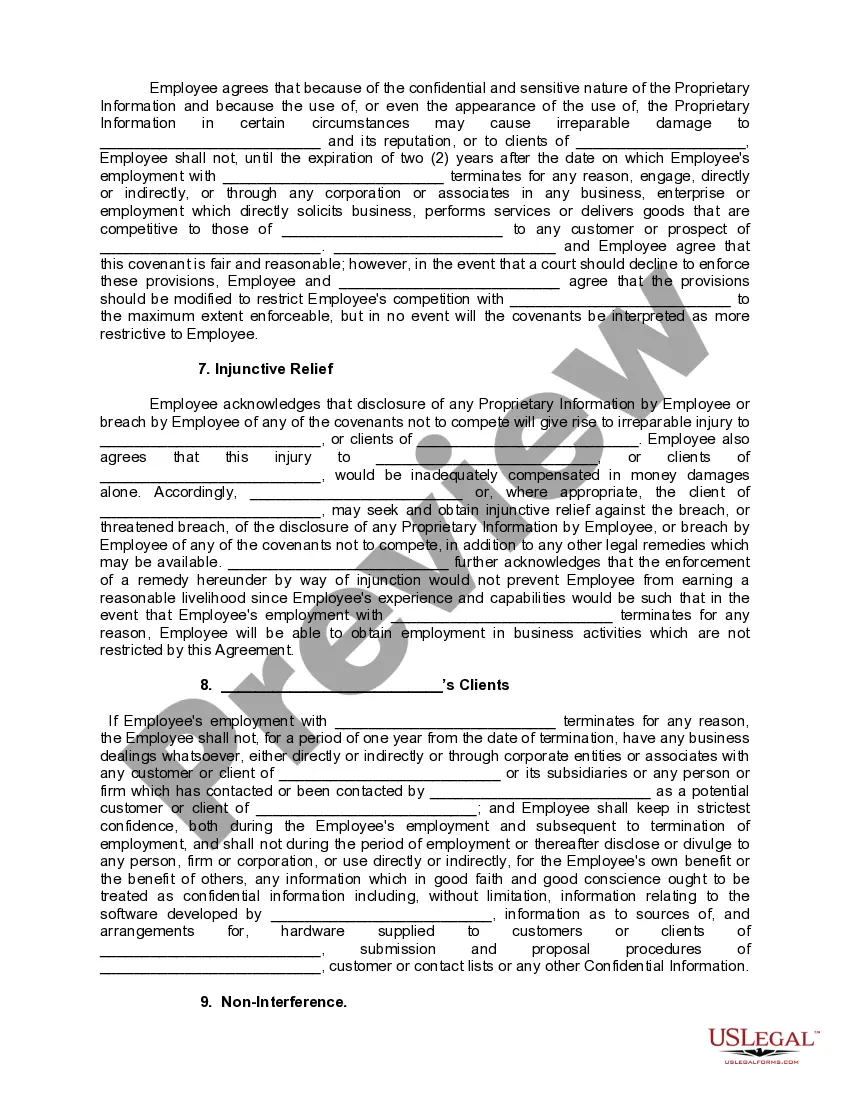
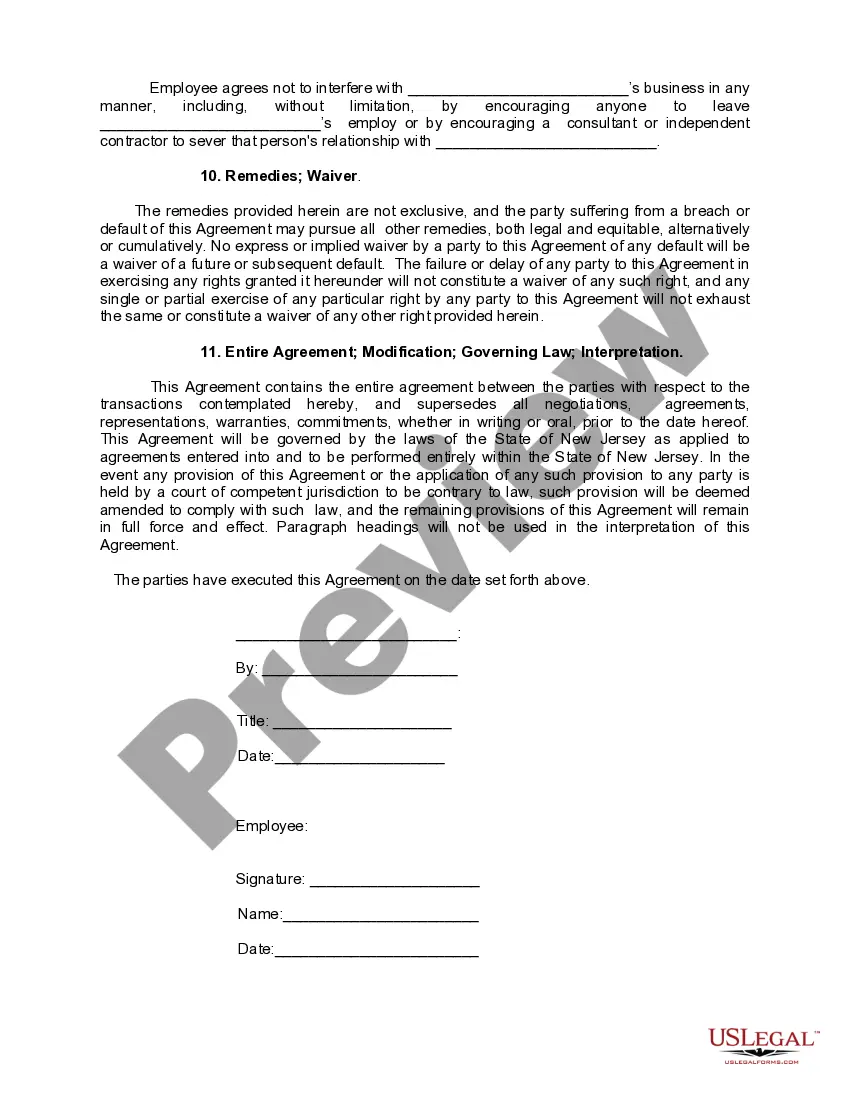
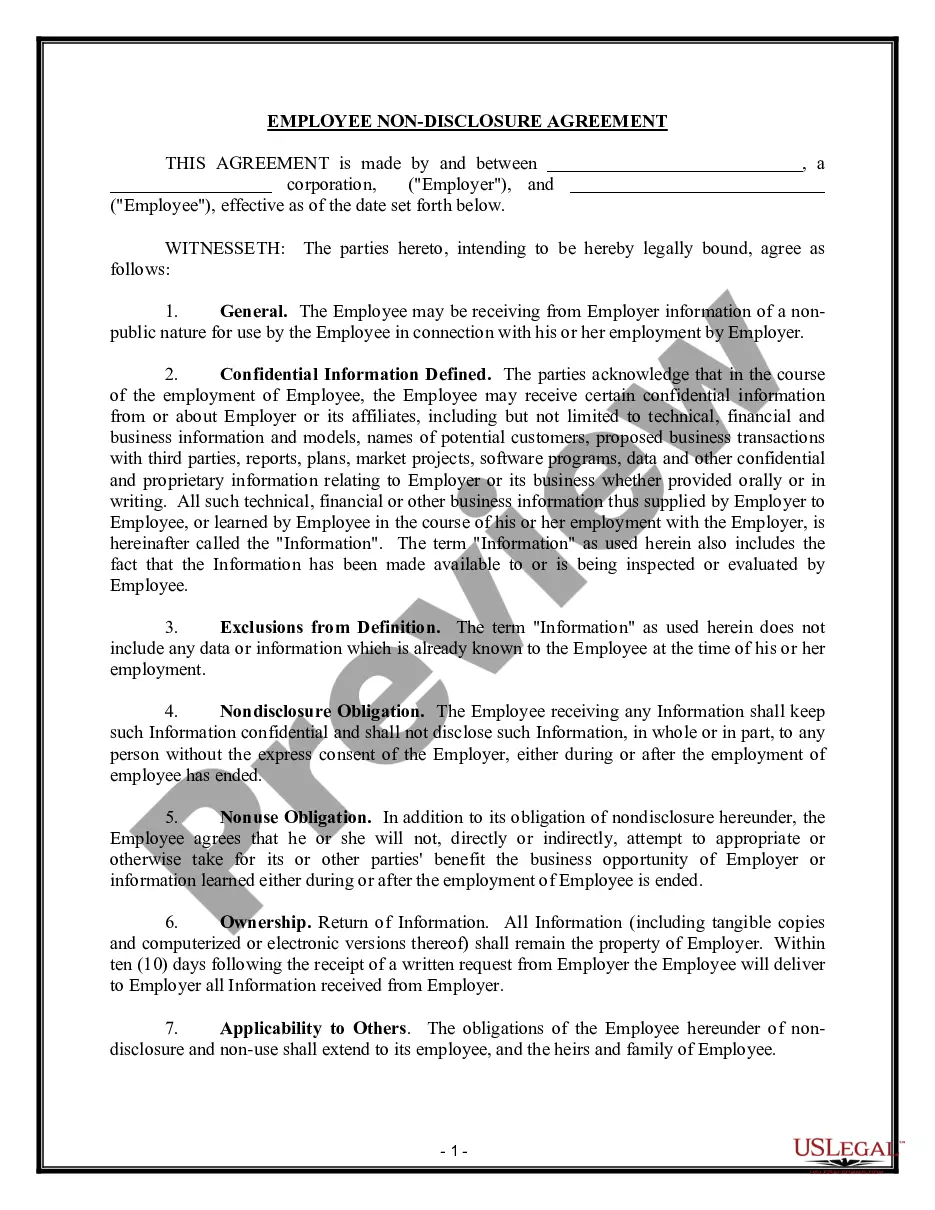
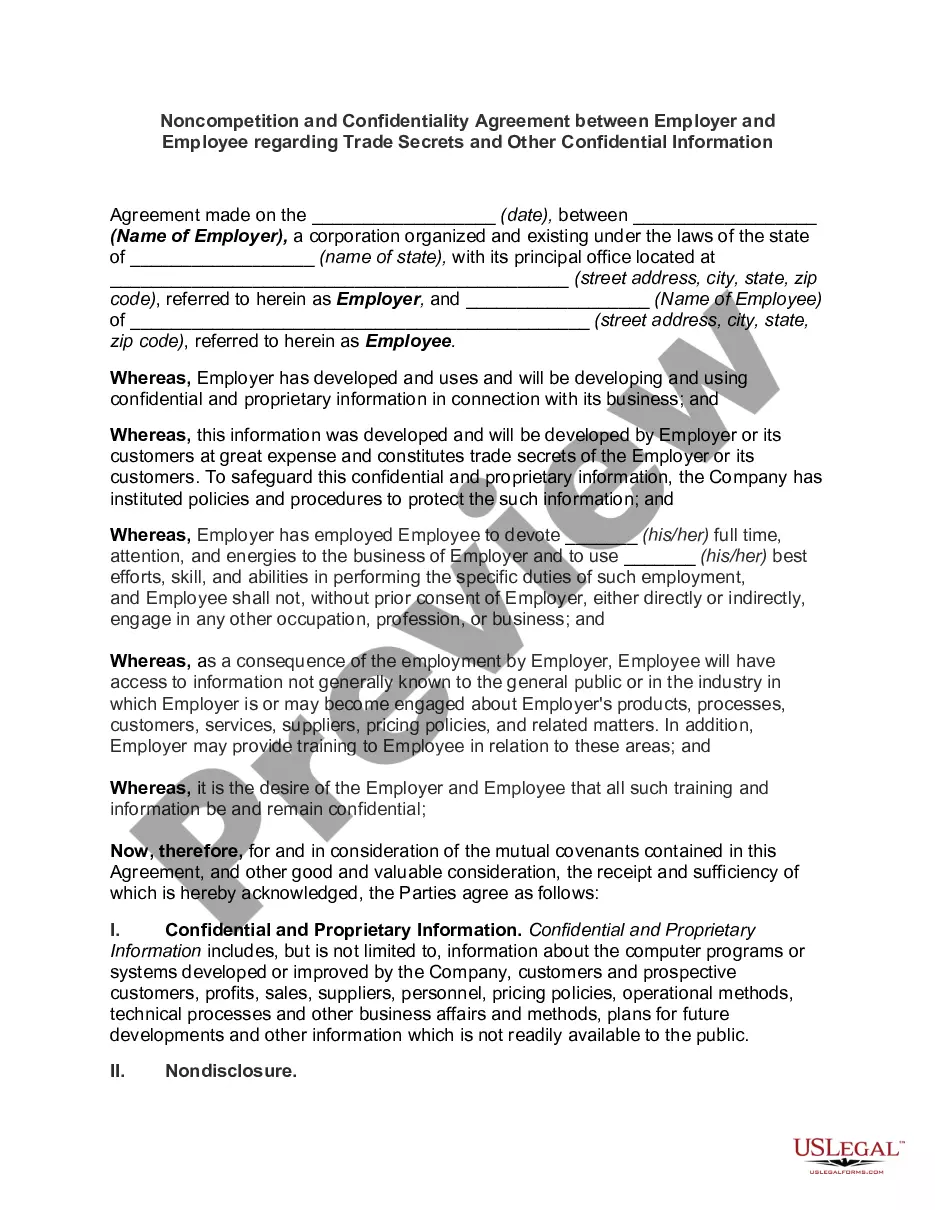
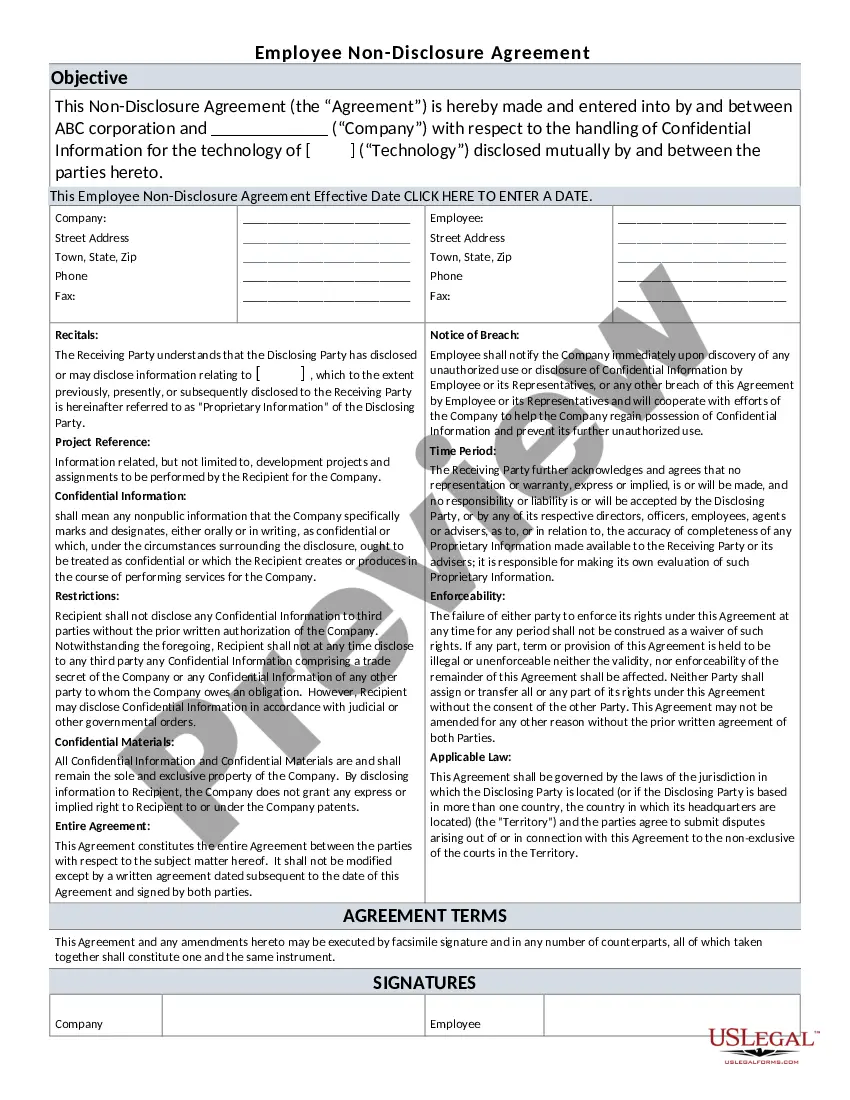
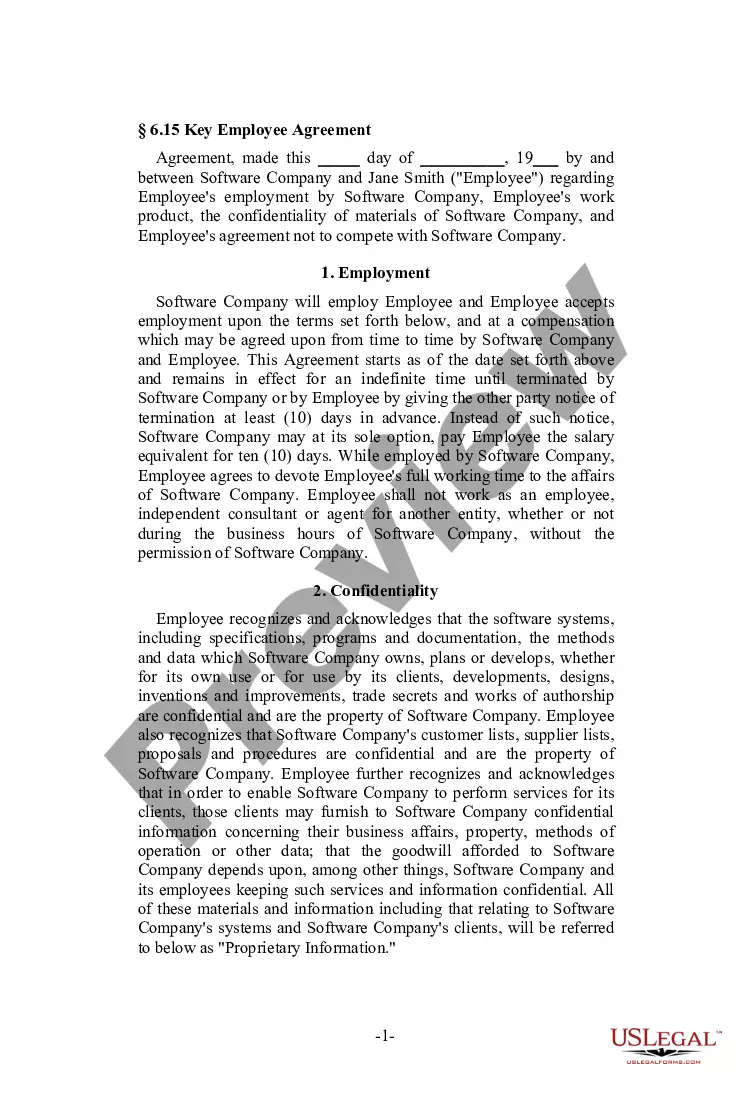
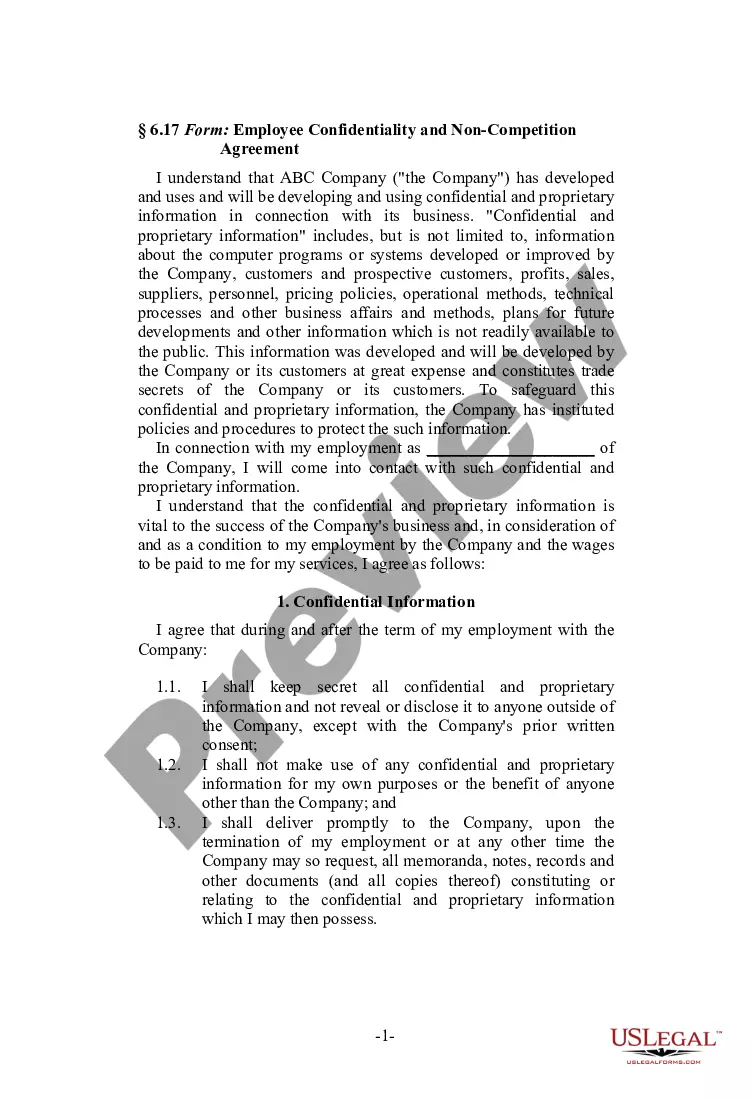
This form is a Key Employee Non-Disclosure and Non-Competition Agreement. The form provides that this is an employment at will and the employee has the right to terminate his/her employment at any time. The employee also agrees to keep all information obtained as a result of his/her employment confidential. The employee will not interfere with the employer's business in any manner, including, encouraging anyone to leave the employer's company or by encouraging a consultant to sever the relationship with the employer.
West Virginia Key Employee Nondisclosure and Noncompetition Agreement
Category:
State:
Multi-State
Control #:
US-KWP-0038
Format:
Word;
Rich Text
Instant download
Description
Free preview
How to fill out Key Employee Nondisclosure And Noncompetition Agreement?
Locating the appropriate legitimate document template can be a challenge. Naturally, there are many designs accessible on the web, but how can you find the authentic form you need? Utilize the US Legal Forms website. The service offers numerous templates, such as the West Virginia Key Employee Nondisclosure and Noncompetition Agreement, which you can utilize for business and personal purposes. All of the forms are reviewed by professionals and comply with state and federal regulations.
If you are already registered, Log In to your account and click the Obtain button to download the West Virginia Key Employee Nondisclosure and Noncompetition Agreement. Use your account to access the legal forms you have acquired previously. Navigate to the My documents section of your account and retrieve an additional copy of the document you require.
If you are a new user of US Legal Forms, here are simple instructions for you to follow: First, ensure you have selected the correct form for your area/region. You can review the form using the Preview button and read the form description to confirm this is the right one for you. If the form does not meet your needs, use the Search field to find the correct form. When you are confident that the form is accurate, select the Buy now button to acquire the form. Choose the pricing plan you prefer and fill in the required information. Create your account and complete the transaction using your PayPal account or credit card. Select the file format and download the legal document template for your device. Finally, complete, edit, print, and sign the acquired West Virginia Key Employee Nondisclosure and Noncompetition Agreement.
By utilizing US Legal Forms, you can simplify the process of obtaining legal documents tailored to your needs.
- US Legal Forms is the largest repository of legal forms where you can find numerous document templates.
- Take advantage of the service to obtain professionally-crafted papers that conform to state requirements.
- Ensure compliance with regulations.
- Easily access previously acquired forms.
- Navigate the platform with user-friendly features.
- Secure your documents with proper formatting.
Form popularity
FAQ
No, not all non-compete agreements are banned. However, recent legislation has changed the landscape regarding their enforceability, especially in states like West Virginia. It is important to understand the specific regulations that apply to your situation. Consulting resources like US Legal Forms can provide guidance on how to craft a compliant West Virginia Key Employee Nondisclosure and Noncompetition Agreement.
To write a solid non-compete agreement, start by clearly defining the terms. Specify the duration of the agreement, the geographic area it covers, and the scope of the restricted activities. Remember to ensure it aligns with the laws in West Virginia, as this can affect its enforceability. Using a template from US Legal Forms can simplify this process and help you create a comprehensive West Virginia Key Employee Nondisclosure and Noncompetition Agreement.
In West Virginia, a non-compete agreement is a legal contract that prevents employees from engaging in business activities that compete with their former employer after leaving the company. This agreement is typically part of the West Virginia Key Employee Nondisclosure and Noncompetition Agreement, which aims to protect proprietary information and business strategies. The enforceability of these agreements can depend on factors like duration, geographic scope, and reasonableness. It's essential to consult legal experts to ensure your non-compete agreement aligns with state laws and effectively safeguards your business.
Disclosure Agreement (NDA) and a noncompete agreement serve different purposes, although they often appear together in the West Virginia Key Employee Nondisclosure and Noncompetition Agreement. An NDA protects confidential information, ensuring that employees do not share sensitive business data. In contrast, a noncompete agreement restricts employees from working for competitors or starting similar businesses after leaving a job. Understanding the distinctions between these agreements is crucial for protecting your business interests.
Non-competes can hold up in court if they are reasonable and serve a legitimate business purpose. The enforceability of the West Virginia Key Employee Nondisclosure and Noncompetition Agreement is often determined by the specific terms and the context in which it was signed. Courts will evaluate the fairness of the restrictions and the interests of both the employer and employee.
Yes, non-competes are still legal in West Virginia, provided they meet the criteria for enforceability. The West Virginia Key Employee Nondisclosure and Noncompetition Agreement must protect legitimate business interests without imposing undue hardship on employees. It's crucial for employers to draft these agreements carefully to ensure they comply with state laws.
Yes, non-disclosure agreements (NDAs) are generally enforceable for employees as long as they are reasonable and not overly broad. The West Virginia Key Employee Nondisclosure and Noncompetition Agreement serves to protect sensitive company information from being disclosed. Courts typically uphold NDAs that clearly outline the information considered confidential and the obligations of the employee.
To write a non-disclosure agreement for an employee, clearly define what constitutes confidential information. Include obligations for the employee, duration of confidentiality, and consequences for breaches. Utilizing a template like the West Virginia Key Employee Nondisclosure and Noncompetition Agreement from uslegalforms can streamline this process and ensure compliance with legal standards.
To legally get out of a non-compete, you may negotiate with your employer for a release or modification of the agreement. If the West Virginia Key Employee Nondisclosure and Noncompetition Agreement is found to be overly restrictive or lacking consideration, you can challenge its enforceability in court. Seeking legal advice can also help you understand your options and rights related to the agreement.
compete clause in a nondisclosure agreement prevents an employee from working for competitors or starting a competing business for a specified time after leaving a company. This clause is often included in the West Virginia Key Employee Nondisclosure and Noncompetition Agreement to safeguard proprietary information and trade secrets. It ensures that employees do not use what they learned at one job against their former employer.