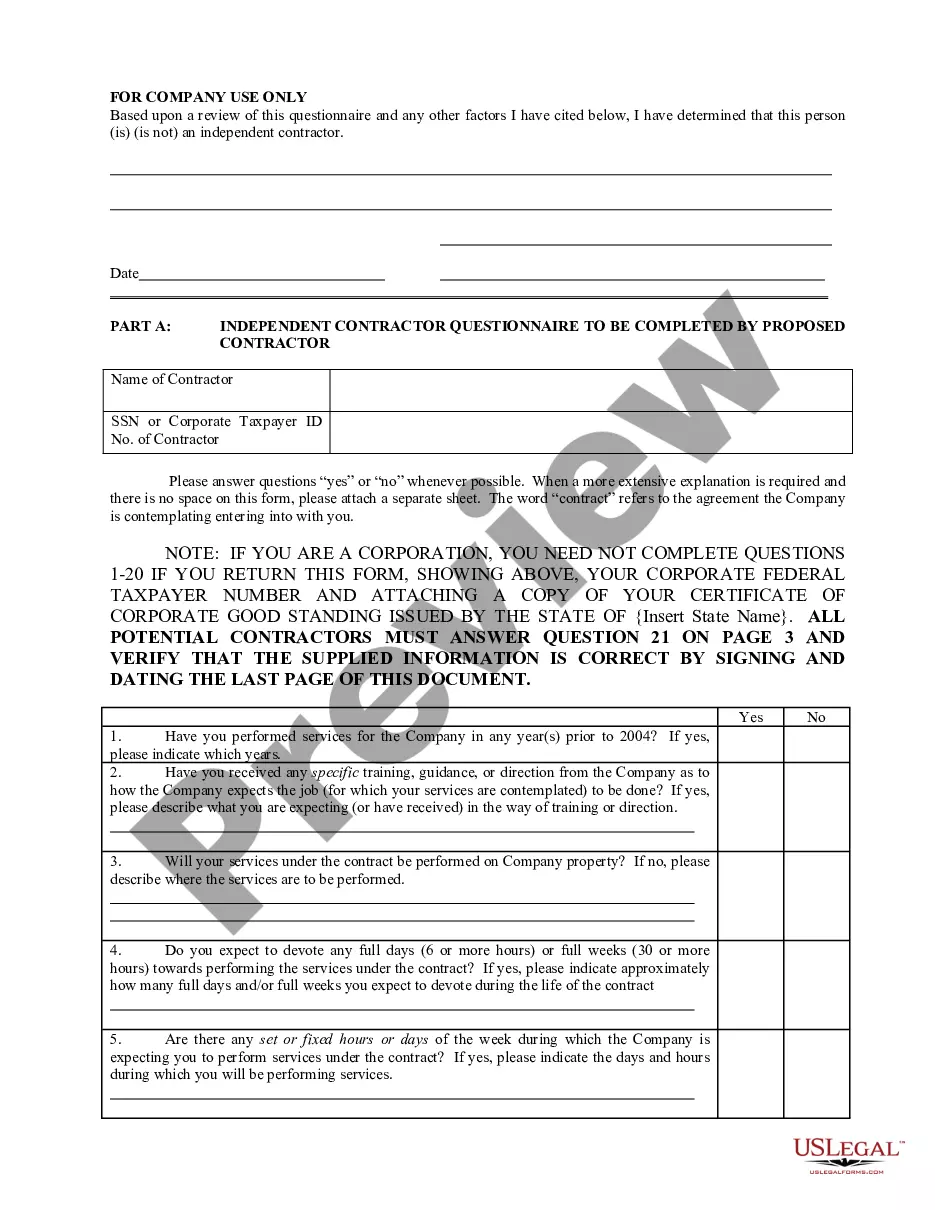
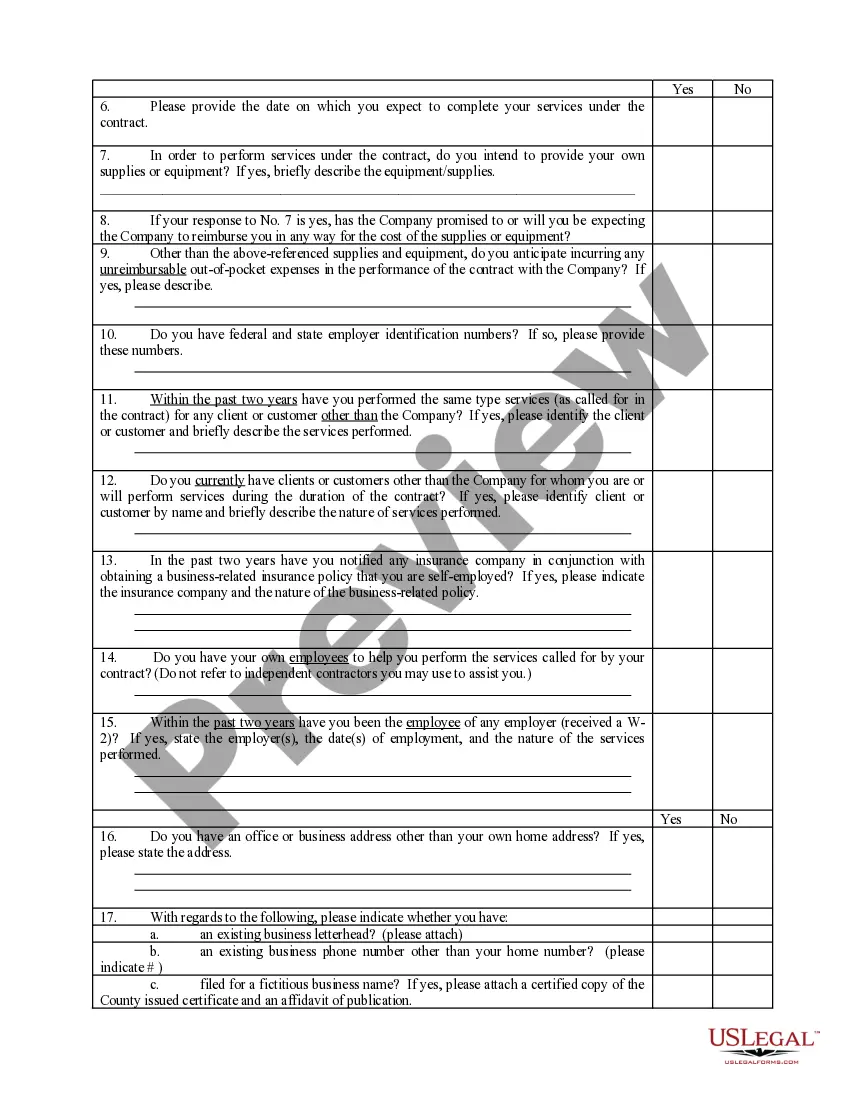
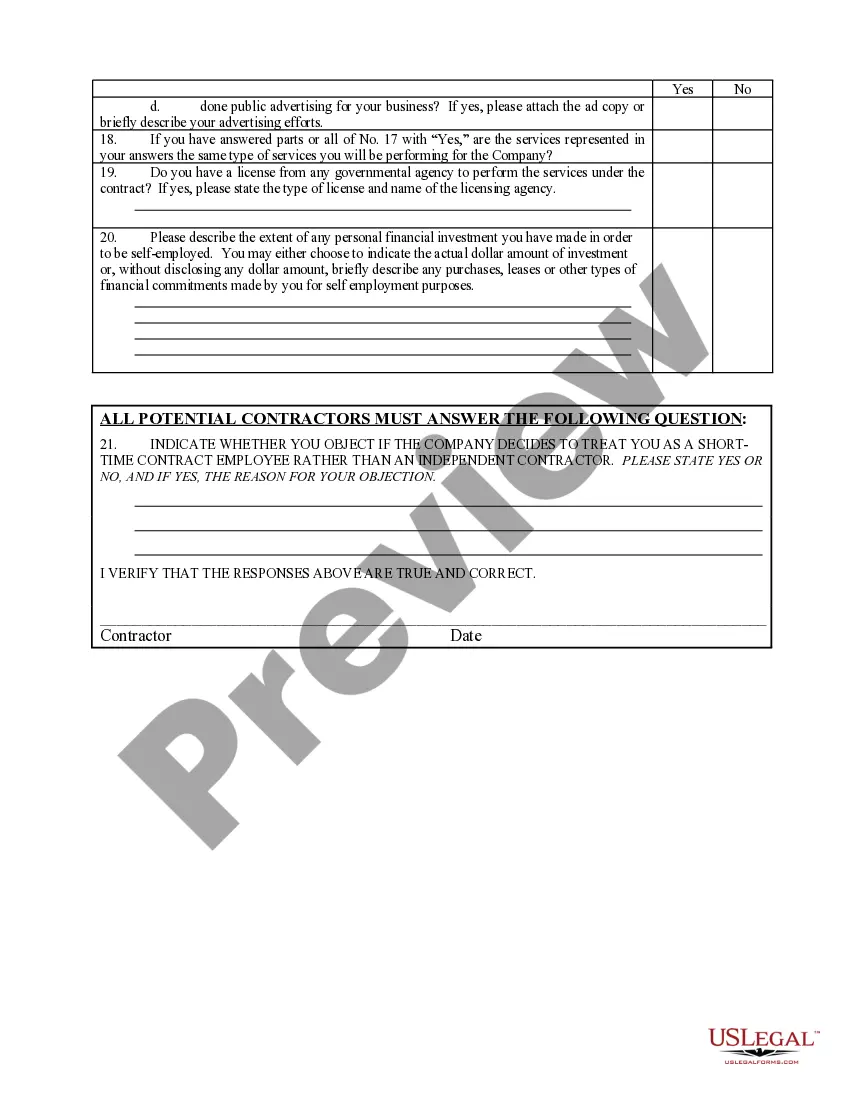
West Virginia Self-Employed Independent Contractor Questionnaire
Description
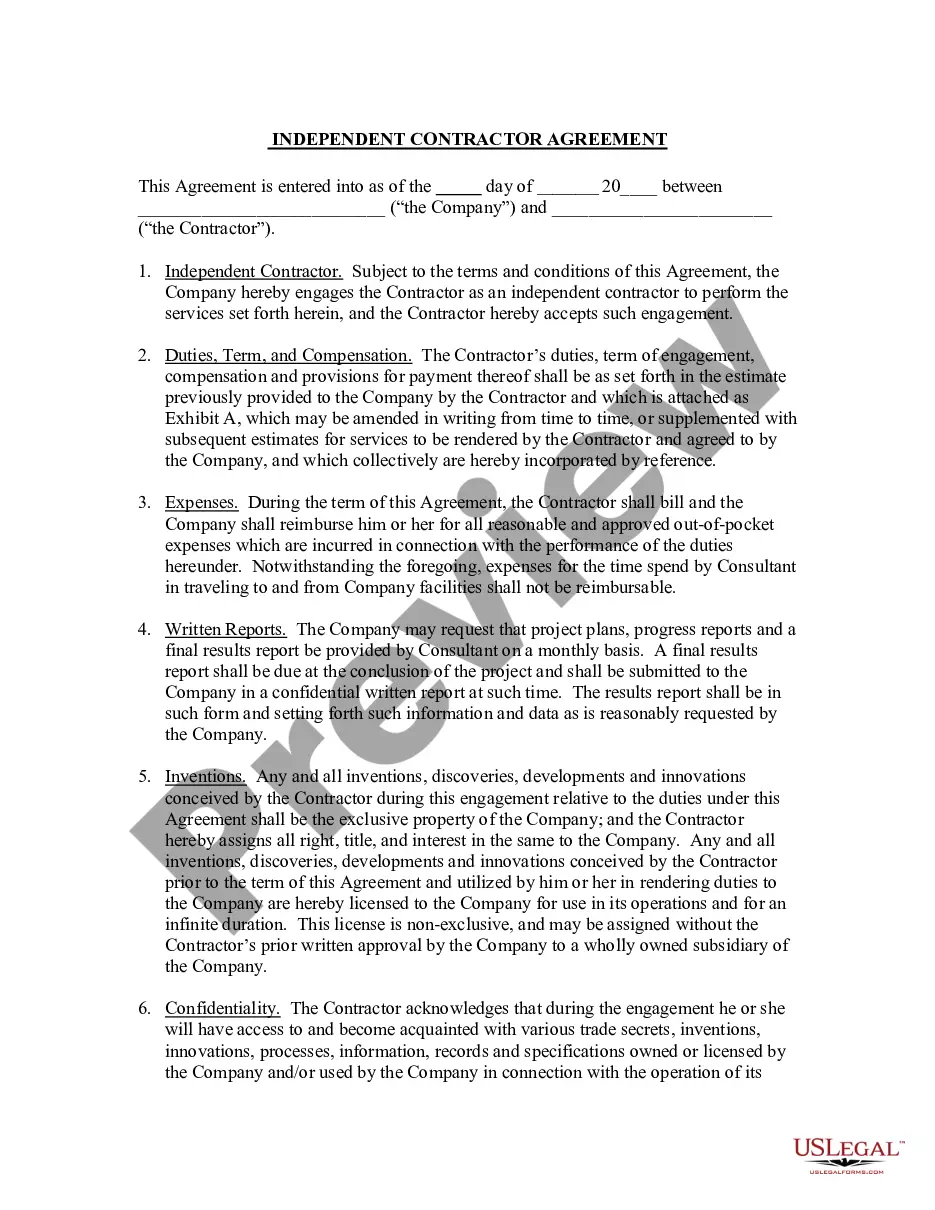
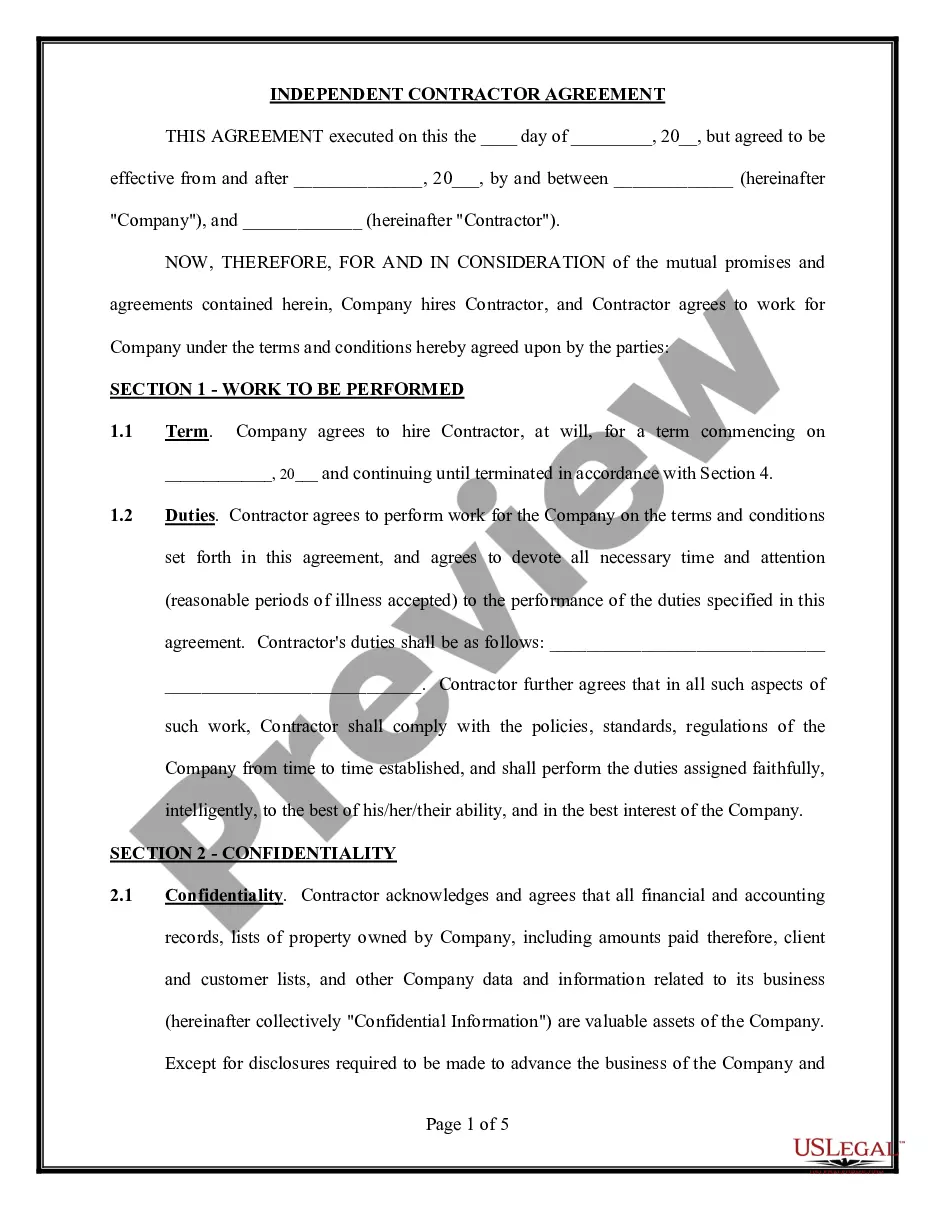
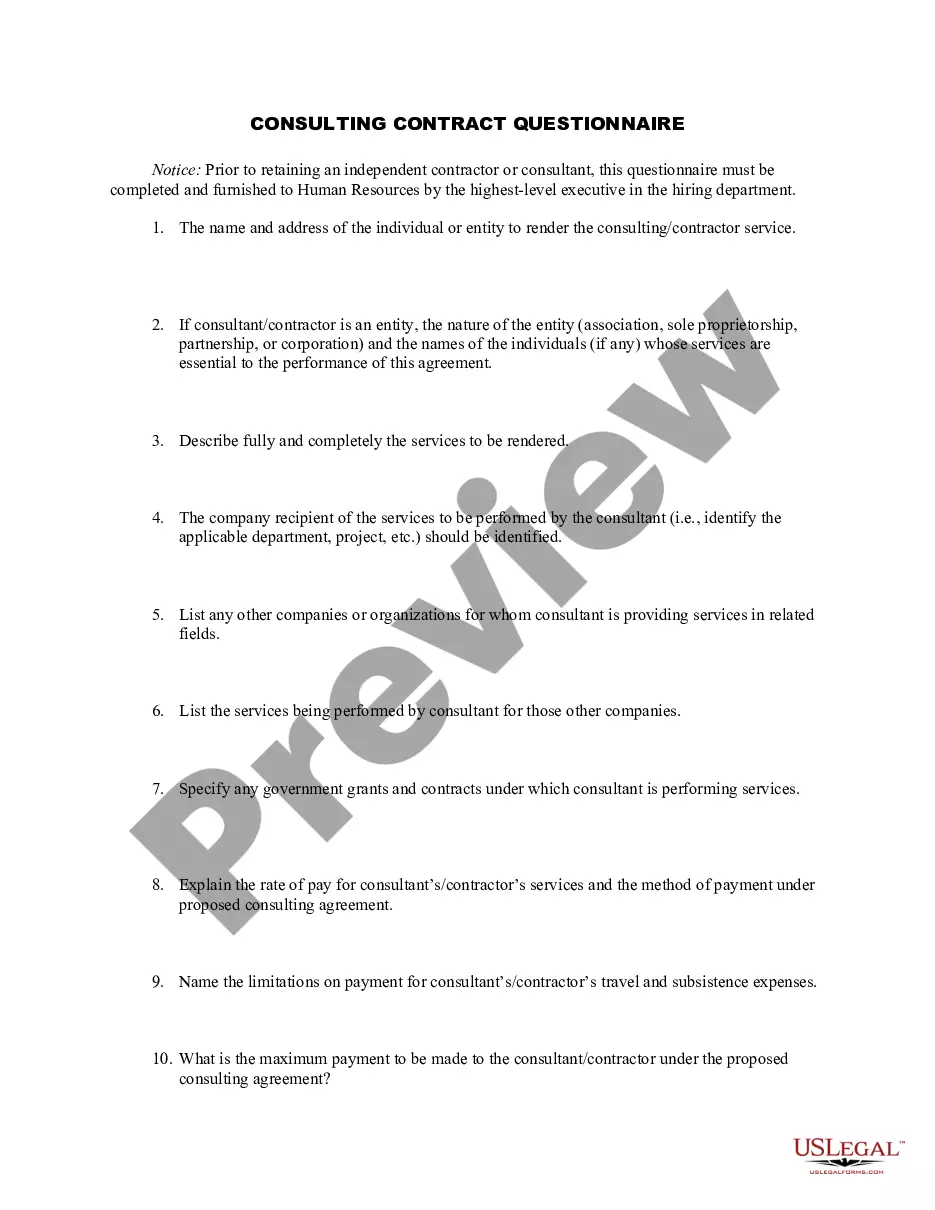
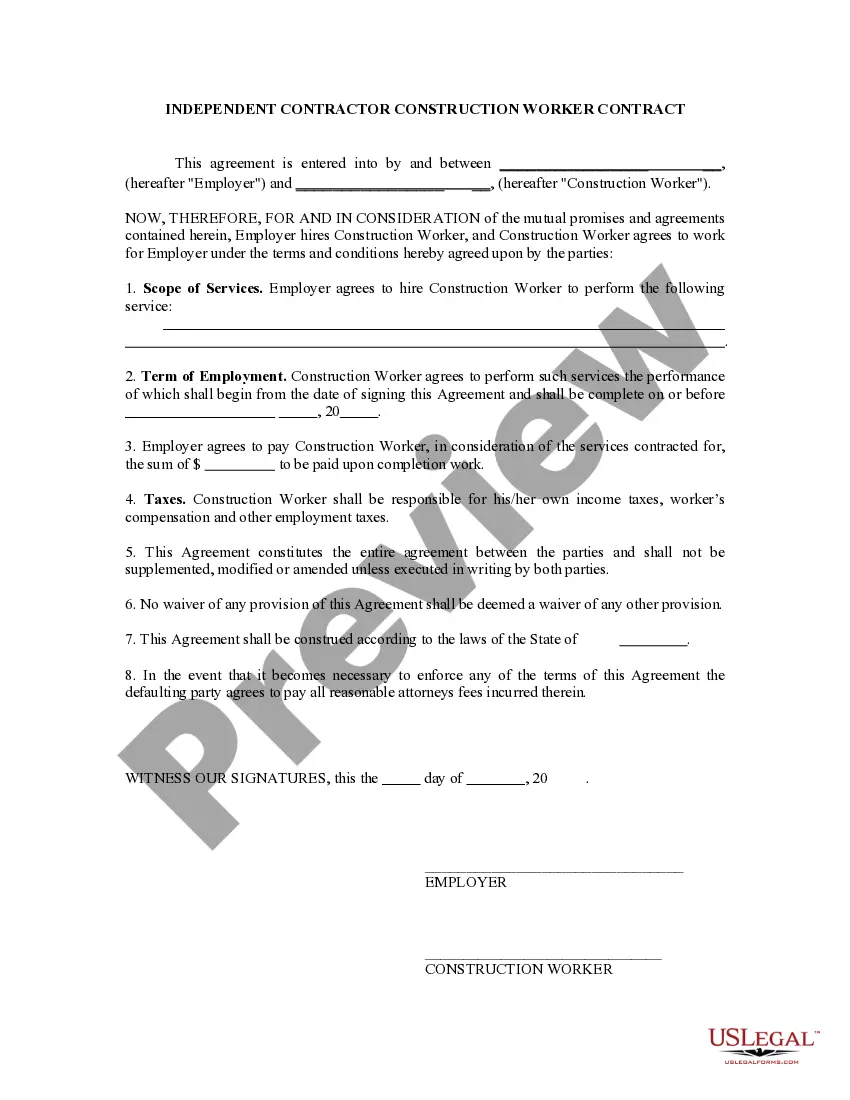
Get your form ready online
Our built-in tools help you complete, sign, share, and store your documents in one place.
Make edits, fill in missing information, and update formatting in US Legal Forms—just like you would in MS Word.
Download a copy, print it, send it by email, or mail it via USPS—whatever works best for your next step.
Sign and collect signatures with our SignNow integration. Send to multiple recipients, set reminders, and more. Go Premium to unlock E-Sign.
If this form requires notarization, complete it online through a secure video call—no need to meet a notary in person or wait for an appointment.
We protect your documents and personal data by following strict security and privacy standards.

Make edits, fill in missing information, and update formatting in US Legal Forms—just like you would in MS Word.

Download a copy, print it, send it by email, or mail it via USPS—whatever works best for your next step.

Sign and collect signatures with our SignNow integration. Send to multiple recipients, set reminders, and more. Go Premium to unlock E-Sign.

If this form requires notarization, complete it online through a secure video call—no need to meet a notary in person or wait for an appointment.

We protect your documents and personal data by following strict security and privacy standards.
Looking for another form?

How to fill out Self-Employed Independent Contractor Questionnaire?
Have you ever found yourself in a situation where you require documentation for either business or personal matters nearly every day? There are numerous legal document templates accessible online, yet finding reliable ones can be challenging.
US Legal Forms offers a vast collection of templates, including the West Virginia Self-Employed Independent Contractor Questionnaire, which can be completed to satisfy federal and state regulations.
If you are already acquainted with the US Legal Forms website and possess an account, simply Log In. Afterward, you can download the West Virginia Self-Employed Independent Contractor Questionnaire template.
- Obtain the form you require and ensure it is for the correct location/state.
- Utilize the Preview button to review the document.
- Check the description to confirm you have selected the appropriate form.
- If the document is not what you are seeking, use the Lookup field to find the form that meets your requirements.
- Once you find the correct document, click Get now.
- Select the pricing plan you prefer, fill out the necessary information to create your account, and pay for the order using your PayPal or credit card.
- Choose a convenient file format and download your copy.
Form popularity
FAQ
In West Virginia, the self-employment tax is calculated based on your net earnings from self-employment. As you fill out the West Virginia Self-Employed Independent Contractor Questionnaire, include all income from freelance work. This tax helps fund Social Security and Medicare, ensuring you receive benefits in the future.
Becoming an independent contractor is one of the many ways to be classified as self-employed. By definition, an independent contractor provides work or services on a contractual basis, whereas, self-employment is simply the act of earning money without operating within an employee-employer relationship.
Simply put, being an independent contractor is one way to be self-employed. Being self-employed means that you earn money but don't work as an employee for someone else.
Paying yourself as an independent contractor Independent contractor pay allows your business the opportunity to stay on budget for projects rather than hire via a third party. As an independent contractor, you will need to pay self-employment taxes on your wages. You will file a W-9 with the LLC.
Remember that an independent contractor is considered to be self-employed, so in effect, you are running your own one-person business. Any income that you earn as an independent contractor must be reported on Schedule C. You'll then pay income taxes on the total profit.
The general rule is that an individual is an independent contractor if the payer has the right to control or direct only the result of the work and not what will be done and how it will be done. If you are an independent contractor, then you are self-employed.
A 1099 employee is a US self-employed worker that reports their income to the IRS on a 1099 tax form. Freelancers, gig workers, and independent contractors are all considered 1099 employees.
Becoming an independent contractor is one of the many ways to be classified as self-employed. By definition, an independent contractor provides work or services on a contractual basis, whereas, self-employment is simply the act of earning money without operating within an employee-employer relationship.
To set yourself up as a self-employed taxpayer with the IRS, you simply start paying estimated taxes (on Form 1040-ES, Estimated Tax for Individuals) and file Schedule C, Profit or Loss From Business, and Schedule SE, Self-Employment Tax, with your Form 1040 tax return each April.
Specifically, a person shall be classified as an independent contractor if there is a written contract between the principal and the individual that states the principal's intent to engage the services of the person as an independent contractor and contains acknowledgments that the person understands: (1) they are