West Virginia Declaration of Covenants, Conditions, and Restrictions of Homeowners' Association Including Powers and Duties
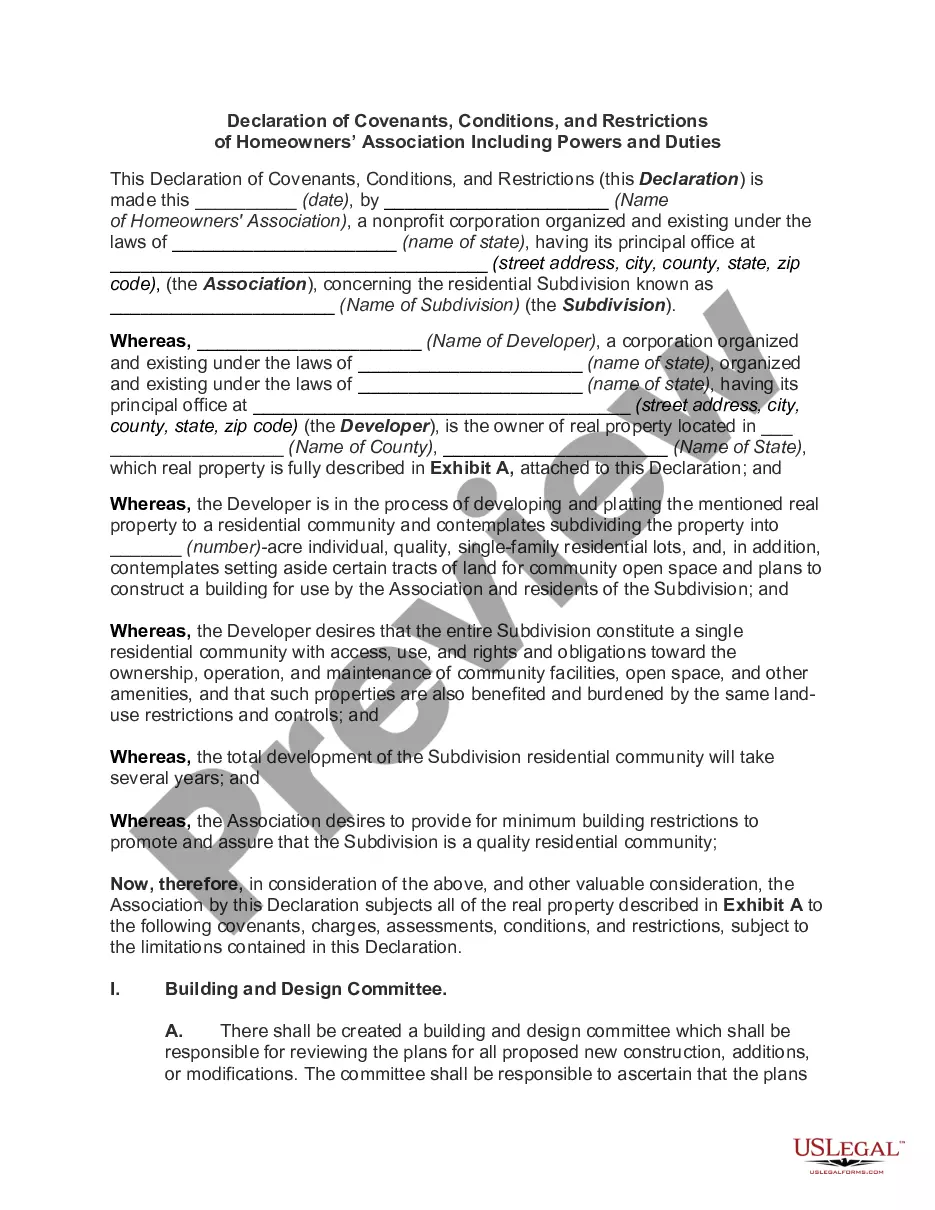
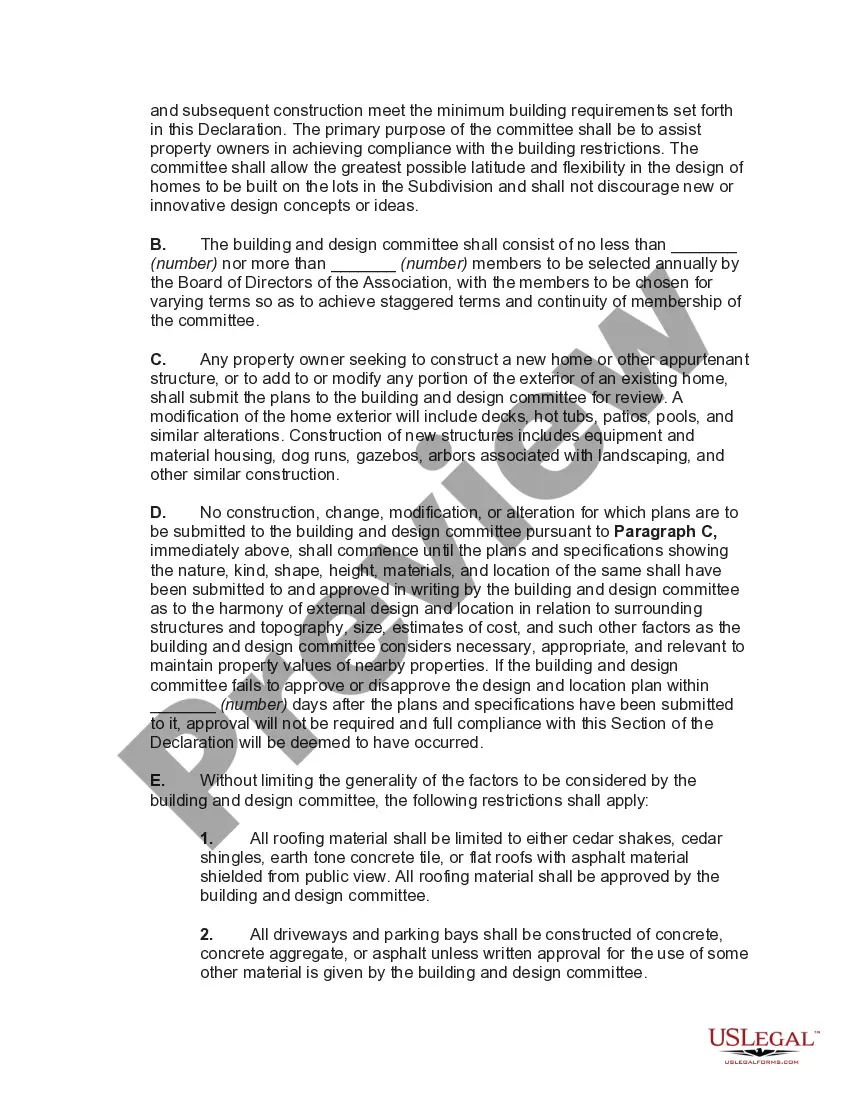
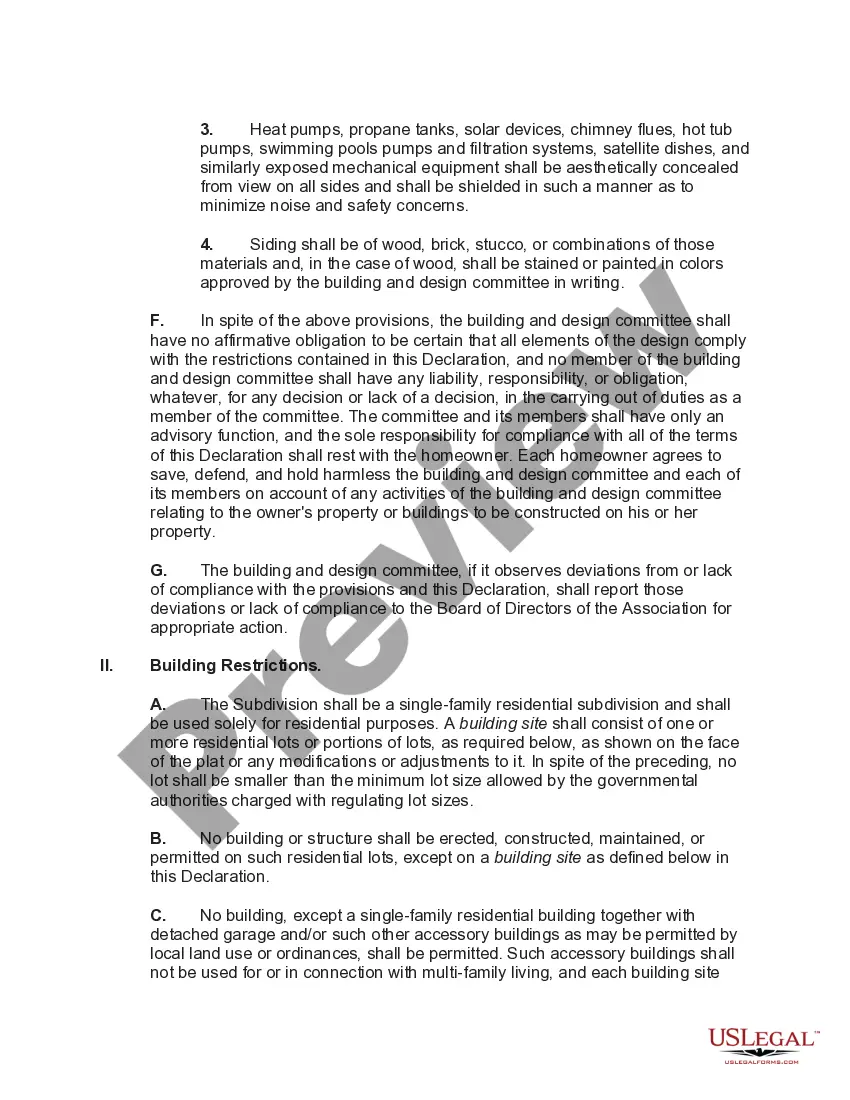
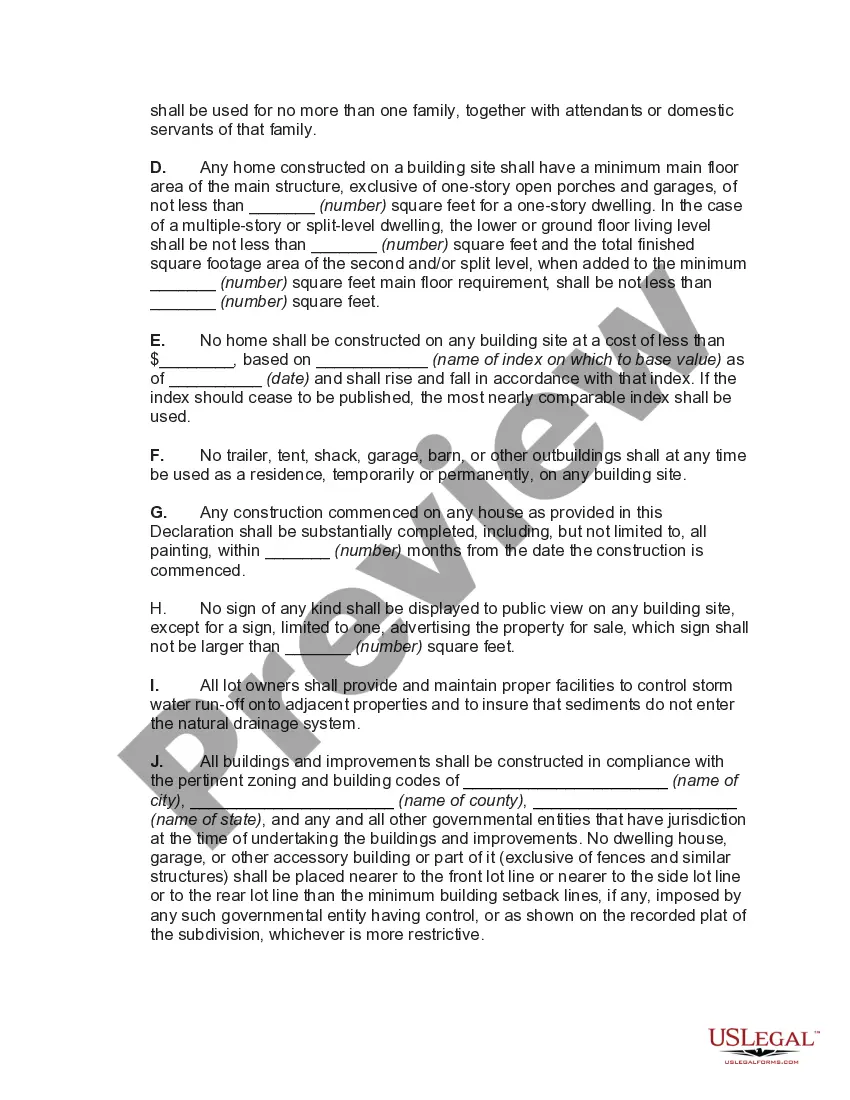
Description


Get your form ready online
Our built-in tools help you complete, sign, share, and store your documents in one place.
Make edits, fill in missing information, and update formatting in US Legal Forms—just like you would in MS Word.
Download a copy, print it, send it by email, or mail it via USPS—whatever works best for your next step.
Sign and collect signatures with our SignNow integration. Send to multiple recipients, set reminders, and more. Go Premium to unlock E-Sign.
If this form requires notarization, complete it online through a secure video call—no need to meet a notary in person or wait for an appointment.
We protect your documents and personal data by following strict security and privacy standards.

Make edits, fill in missing information, and update formatting in US Legal Forms—just like you would in MS Word.

Download a copy, print it, send it by email, or mail it via USPS—whatever works best for your next step.

Sign and collect signatures with our SignNow integration. Send to multiple recipients, set reminders, and more. Go Premium to unlock E-Sign.

If this form requires notarization, complete it online through a secure video call—no need to meet a notary in person or wait for an appointment.

We protect your documents and personal data by following strict security and privacy standards.
Looking for another form?

How to fill out Declaration Of Covenants, Conditions, And Restrictions Of Homeowners' Association Including Powers And Duties?
Are you in a circumstance where you need documents for potential business or specific purposes almost all the time.
There are numerous legal document templates accessible online, but finding reliable ones can be challenging.
US Legal Forms provides a vast selection of form templates, such as the West Virginia Declaration of Covenants, Conditions, and Restrictions of Homeowners’ Association Including Powers and Duties, that are designed to comply with state and federal regulations.
After obtaining the appropriate form, click Purchase now.
Choose the pricing plan you want, complete the required information to create your account, and process the order using your PayPal or credit card.
- If you are already familiar with the US Legal Forms website and have an account, simply Log In.
- Then, you can download the West Virginia Declaration of Covenants, Conditions, and Restrictions of Homeowners’ Association Including Powers and Duties template.
- If you do not possess an account and want to start using US Legal Forms, follow these steps.
- Find the form you need and ensure it is for the correct city/county.
- Utilize the Preview button to view the form.
- Review the description to confirm that you have selected the correct form.
- If the form is not what you’re looking for, use the Lookup section to find the form that meets your needs.
Form popularity
FAQ
According to Virginia's former Attorney General Richard Cullen and his September 30, 2014 AG Opinion, the restriction imposed by § 15.2-109 on a locality's authority to regulate the display of political campaign signs on private property does not apply to private homeowners' associations. In other words, private
The Virginia Real Estate Cooperative Act regulates cooperative ownership in the state. You can find it under Title 55.1, Chapter 21 of the Code of Virginia.
Call an association meeting and ask for a vote on dissolving the HOA. If approved, have the agreeing members sign the termination agreement. Settle any debts, dispose of assets belonging to the HOA, and file the necessary documentation with the SOS to complete the dissolution.
Common Interest Community Board Virginia Department of Professional and Occupational Regulation.
To check the corporation status of a Virginia association, visit the Virginia Secretary of the Commonwealth. Virginia Common Interest Communities (Title 54.1 Professions and Occupations, Chapter 23.3). Establishes the Common Interest Community Board and Ombudsman and sets manager licensing requirements.
Fortunately, you can, with the help of an attorney. You should be aware of the following: The law may be on your side. HOA members have certain rights under the Virginia Property Owners' Association Act and the Virginia Condominium Owners' Association Act.
In many jurisdictions, depending on applicable state law, the standard rule is that 80 percent of the members of the community must vote in favor of dissolving the HOA. This is typically the case, unless the HOA documents state otherwise or provide for a different rule.
Not every neighborhood requires membership in an HOA; some are voluntary. If you buy a home in a neighborhood with a voluntary HOA, you have the choice to opt out, but that means missing out on some of the benefits your neighbors enjoy through HOA membership such as beach access or snow removal.
Inconsistent, Arbitrary, or Capricious Enforcement. Even a validly enacted, substantively sound covenant can be nonetheless unenforceable if the HOA's enforcement is procedurally improper, or is conducted inconsistently or for an inappropriate purpose.
Amendments must be recorded in the county, or counties, in which the community is located to become valid. If desired, a common interest community can be terminated with an 80% vote from association members. A larger percentage may be required by the declaration.