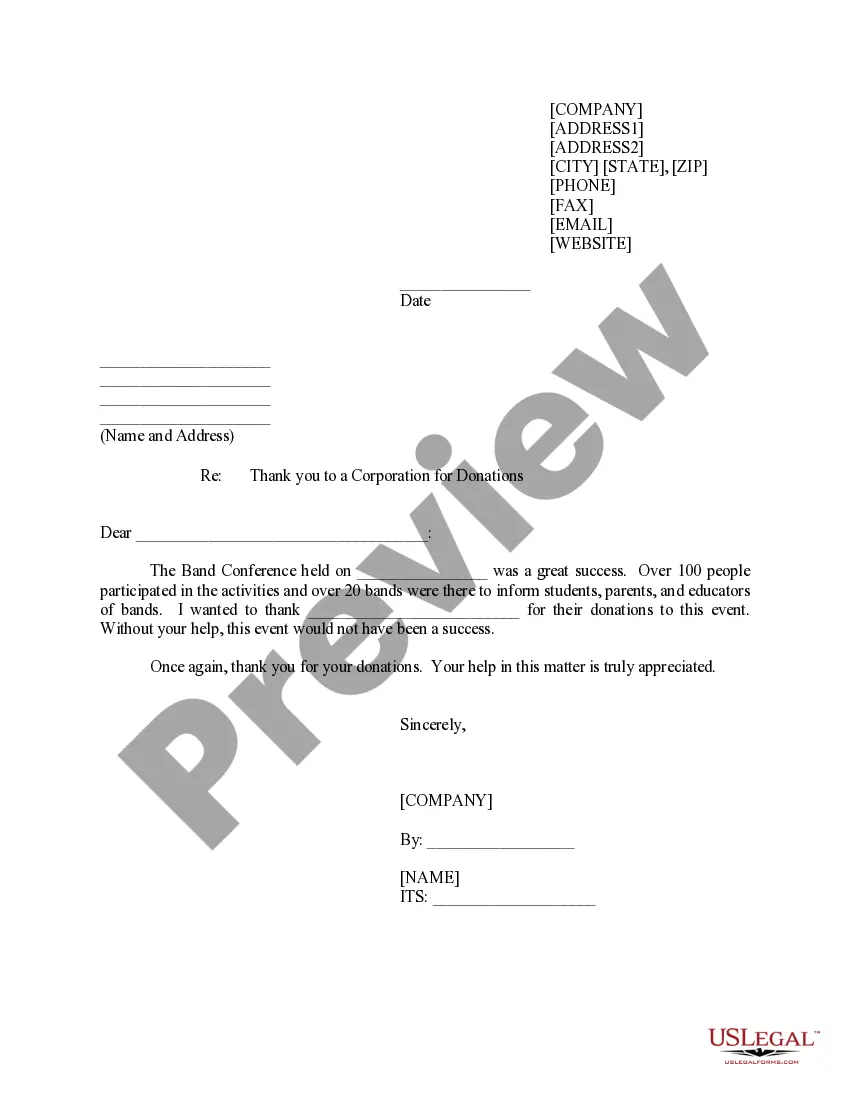
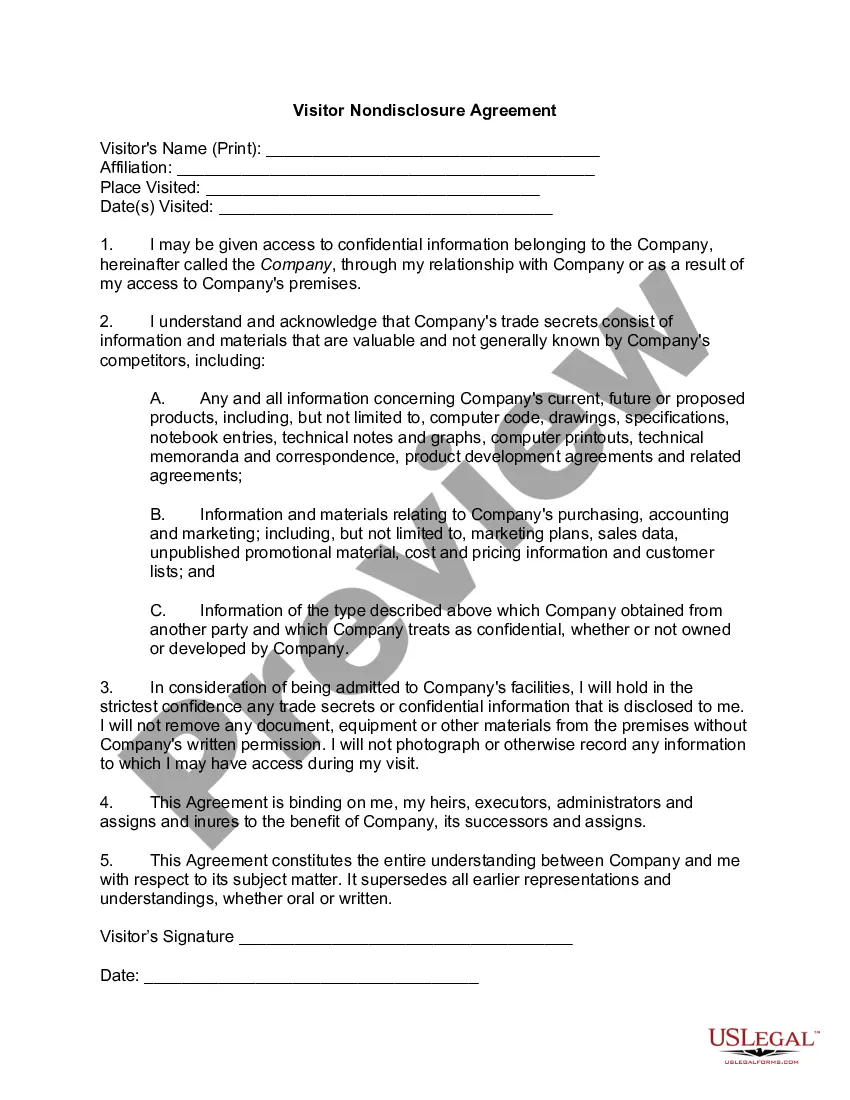
West Virginia Visitor Nondisclosure Agreement
Description
Get your form ready online
Our built-in tools help you complete, sign, share, and store your documents in one place.
Make edits, fill in missing information, and update formatting in US Legal Forms—just like you would in MS Word.
Download a copy, print it, send it by email, or mail it via USPS—whatever works best for your next step.
Sign and collect signatures with our SignNow integration. Send to multiple recipients, set reminders, and more. Go Premium to unlock E-Sign.
If this form requires notarization, complete it online through a secure video call—no need to meet a notary in person or wait for an appointment.
We protect your documents and personal data by following strict security and privacy standards.

Make edits, fill in missing information, and update formatting in US Legal Forms—just like you would in MS Word.

Download a copy, print it, send it by email, or mail it via USPS—whatever works best for your next step.

Sign and collect signatures with our SignNow integration. Send to multiple recipients, set reminders, and more. Go Premium to unlock E-Sign.

If this form requires notarization, complete it online through a secure video call—no need to meet a notary in person or wait for an appointment.

We protect your documents and personal data by following strict security and privacy standards.
Looking for another form?



How to fill out Visitor Nondisclosure Agreement?
If you intend to completely, retrieve, or print authentic document templates, utilize US Legal Forms, the leading collection of official forms, which can be accessed online.
Employ the site's straightforward and user-friendly search feature to locate the documents you require. A variety of templates for business and personal purposes are categorized by types and states, or keywords.
Utilize US Legal Forms to obtain the West Virginia Visitor Nondisclosure Agreement in just a few clicks.
Every official document template you purchase is yours permanently. You can access each form you saved in your account. Select the My documents section and choose a form to print or download again.
Engage and download, and print the West Virginia Visitor Nondisclosure Agreement with US Legal Forms. There are numerous professional and state-specific forms available to meet your business or personal needs.
- If you are currently a US Legal Forms user, sign in to your account and click on the Download button to obtain the West Virginia Visitor Nondisclosure Agreement.
- You can also access forms you previously stored in the My documents section of your account.
- If you are using US Legal Forms for the first time, follow the steps outlined below.
- Step 1. Ensure you have selected the form for the correct city/state.
- Step 2. Use the Review feature to scrutinize the form's content. Remember to read the description.
- Step 3. If you are not content with the form, utilize the Search box at the top of the screen to find alternate versions of the official form template.
- Step 4. Once you have located the form you need, click the Get now button. Choose the pricing plan you prefer and provide your details to register for an account.
- Step 5. Process the transaction. You may use your credit card or PayPal account to finalize the purchase.
- Step 6. Select the format of the official form and download it to your device.
- Step 7. Complete, modify and print or sign the West Virginia Visitor Nondisclosure Agreement.
Form popularity
FAQ
NDA refers to a Non-Disclosure Agreement, while MDNA is often mistakenly used instead of the Mutual Non-Disclosure Agreement (MNDA). While both serve the purpose of protecting sensitive information, NDAs usually involve one party and an MDNA involves mutual terms from both parties. When considering these agreements, ensure you choose the right type, such as a West Virginia Visitor Nondisclosure Agreement, to meet your confidentiality needs.
The main difference between an NDA and an MNDA lies in the direction of confidentiality. An NDA typically protects the information of one party, while an MNDA ensures that both parties safeguard each other's sensitive data. If you plan to share information with another entity, consider using a West Virginia Visitor Nondisclosure Agreement to cover all bases effectively.
MNDA stands for Mutual Non-Disclosure Agreement, which is a specific type of NDA. Unlike a standard NDA, an MNDA involves both parties agreeing to protect each other's confidential information. This bilateral approach is particularly beneficial in business dealings where information sharing occurs, ensuring the protection of both parties’ interests with respect to the West Virginia Visitor Nondisclosure Agreement.
Yes, you can create your own West Virginia Visitor Nondisclosure Agreement, but careful attention to detail is essential. You should ensure that the agreement includes all necessary elements, such as confidentiality clauses and the duration of the agreement. Additionally, utilizing resources like US Legal Forms can help you draft a legally sound document tailored to your specific needs.
To fill in an NDA, like the West Virginia Visitor Nondisclosure Agreement, start by inputting the names of the parties involved and specifying the nature of the confidential information. Clearly outline the obligations of each party and the duration of the agreement. If you need help, US Legal Forms provides easy-to-use templates and resources that can assist you in completing an NDA accurately and efficiently.
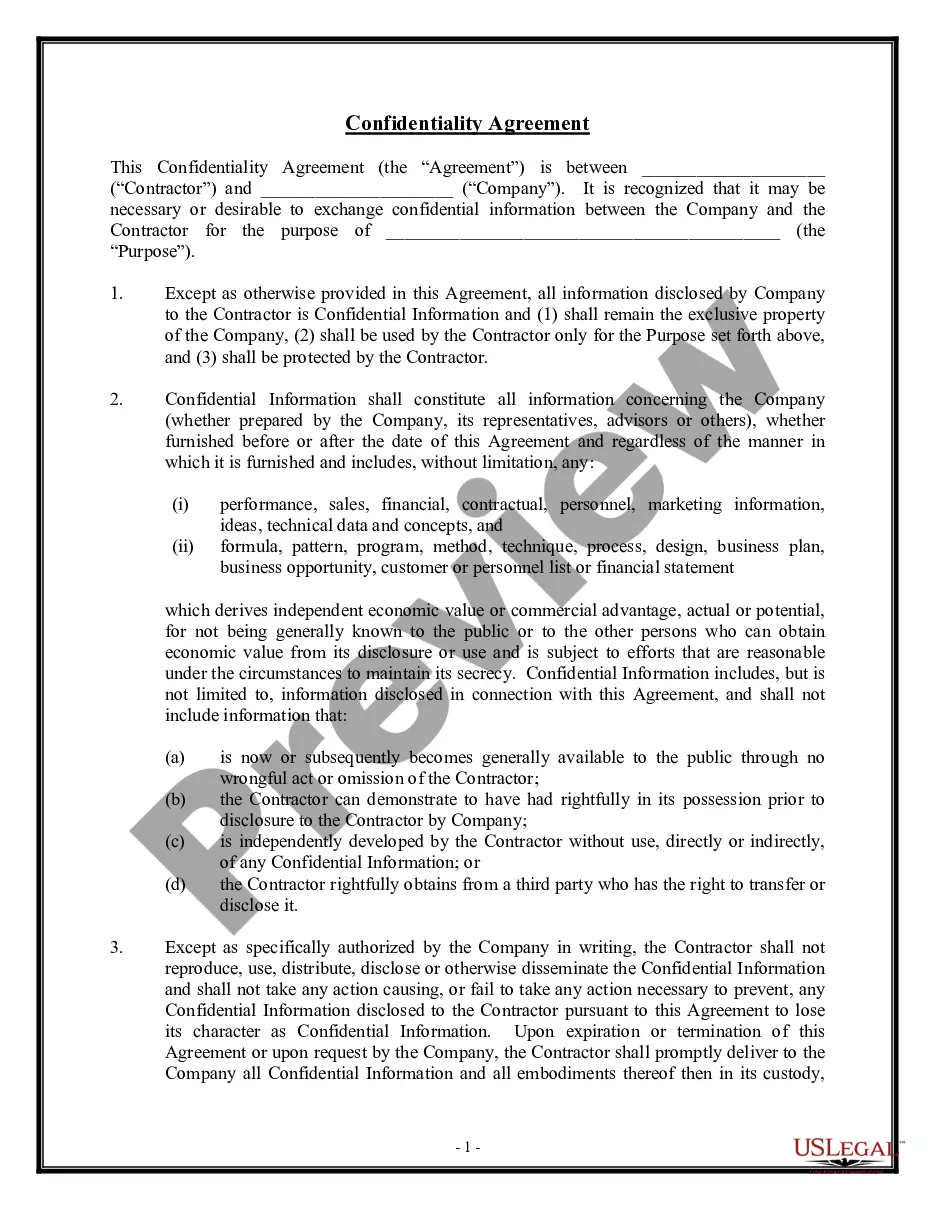
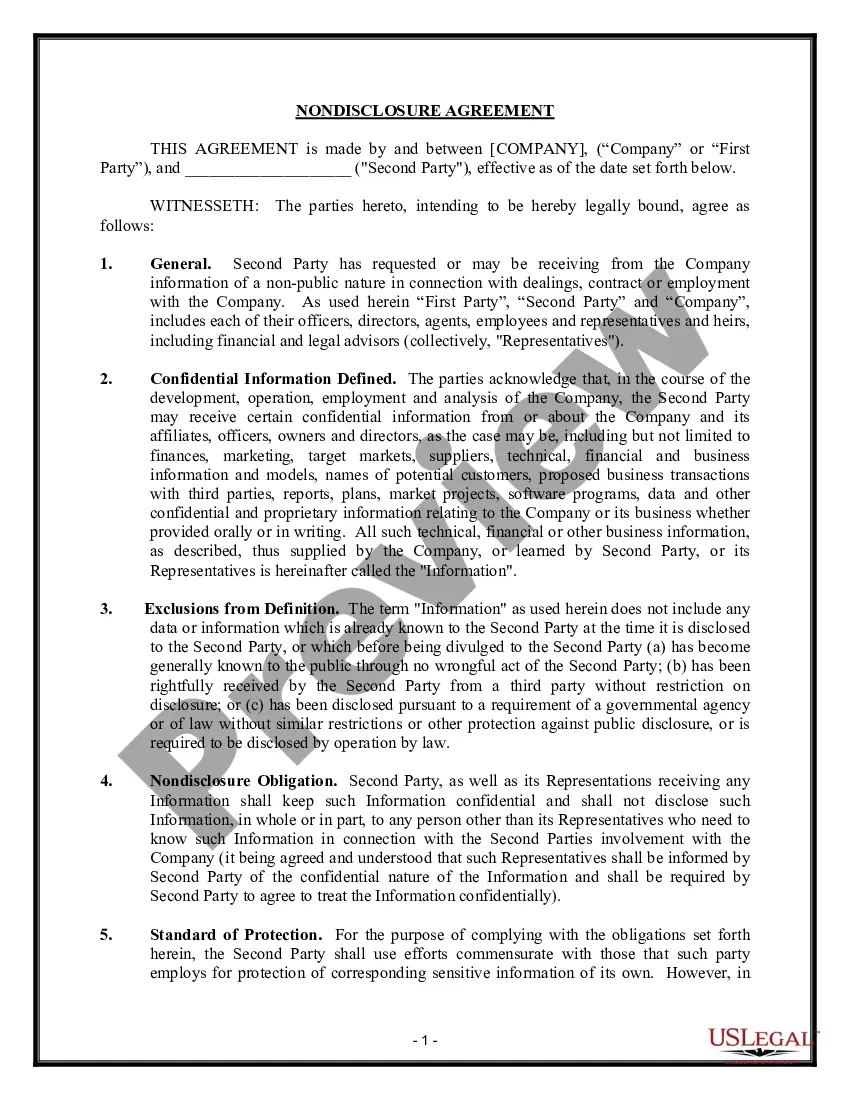
Filling out a nondisclosure agreement, including a West Virginia Visitor Nondisclosure Agreement, involves providing essential information about the parties involved, defining confidential information, and outlining the terms of the agreement. It's important to thoroughly review each section to ensure clarity and comprehension. Consider using an online template to guide you, as this can streamline the process and ensure you include all necessary details.
Yes, you can write your own non-disclosure agreement, including a West Virginia Visitor Nondisclosure Agreement. However, it's crucial to ensure that the document covers all necessary legal aspects effectively. Using a template can simplify this process and help you avoid missing key components that protect your interests. If you're unsure, consider utilizing a trusted platform like US Legal Forms for professionally crafted agreements.
The three common types of nondisclosure agreements include unilateral, bilateral, and multilateral NDAs. A unilateral NDA provides confidentiality to one party, typically protecting sensitive information from being disclosed. A bilateral NDA, on the other hand, requires both parties to share and protect each other's confidential information. Lastly, a multilateral NDA involves three or more parties, facilitating the sharing of proprietary information within the group. Utilizing a West Virginia Visitor Nondisclosure Agreement can effectively outline the terms and protect the interests of everyone involved.
An example of a violation of a West Virginia Visitor Nondisclosure Agreement occurs when an employee shares confidential business information with a third party without authorization. For instance, if an employee reveals proprietary trade secrets or sensitive client lists to a competitor, this action breaches the agreement. It is crucial to understand that such violations can lead to serious legal consequences. Protecting your information with a West Virginia Visitor Nondisclosure Agreement can help prevent these issues.
Disclosure Agreement (NDA) is a legal contract preventing parties from sharing confidential information. A Mutual NonDisclosure Agreement (MNDA), on the other hand, is a reciprocal agreement wherein both parties agree to protect each other's confidential data. Understanding these differences is vital if you are sharing sensitive information in West Virginia. Using a West Virginia Visitor Nondisclosure Agreement can offer clarity on your rights and obligations.