West Virginia Petition for Forfeiture
Description
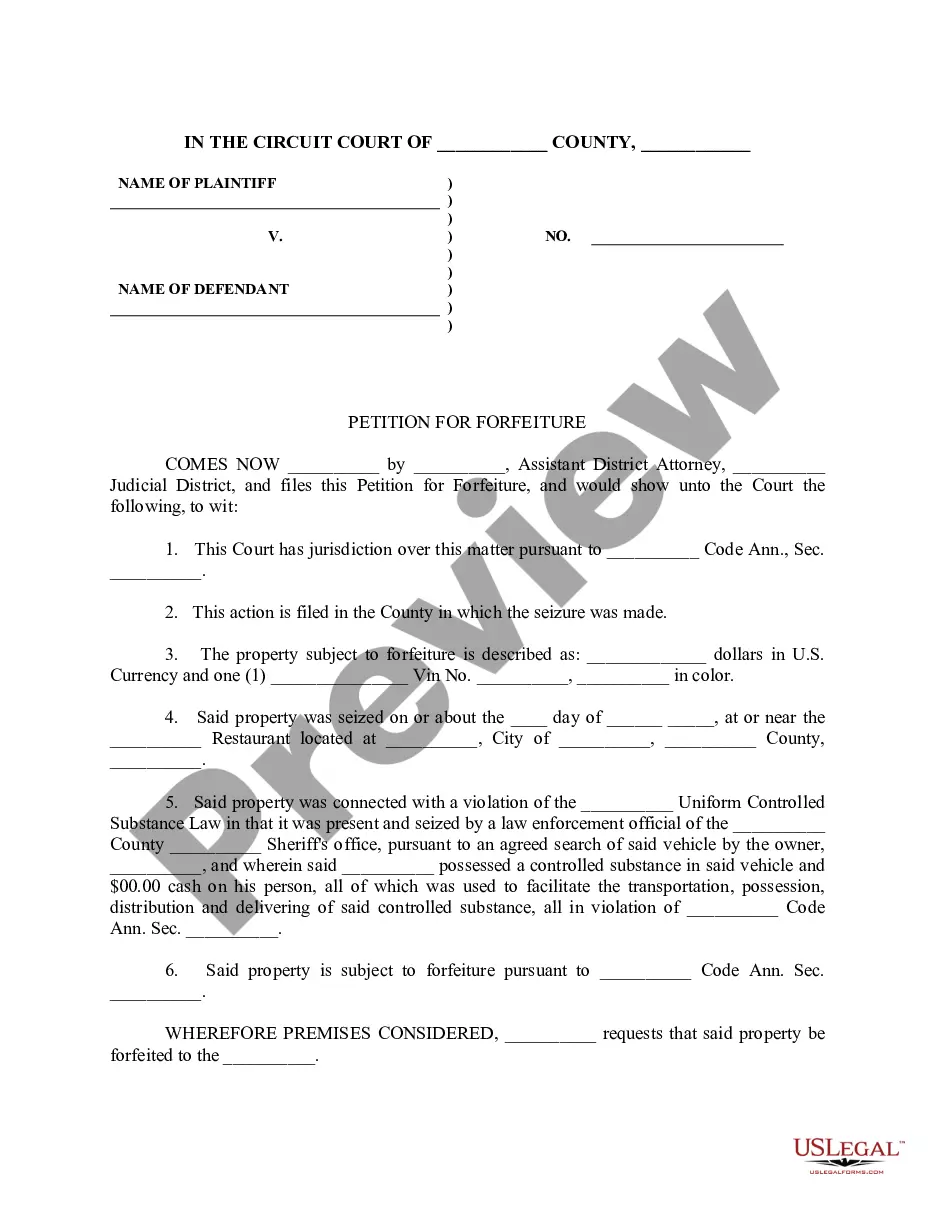

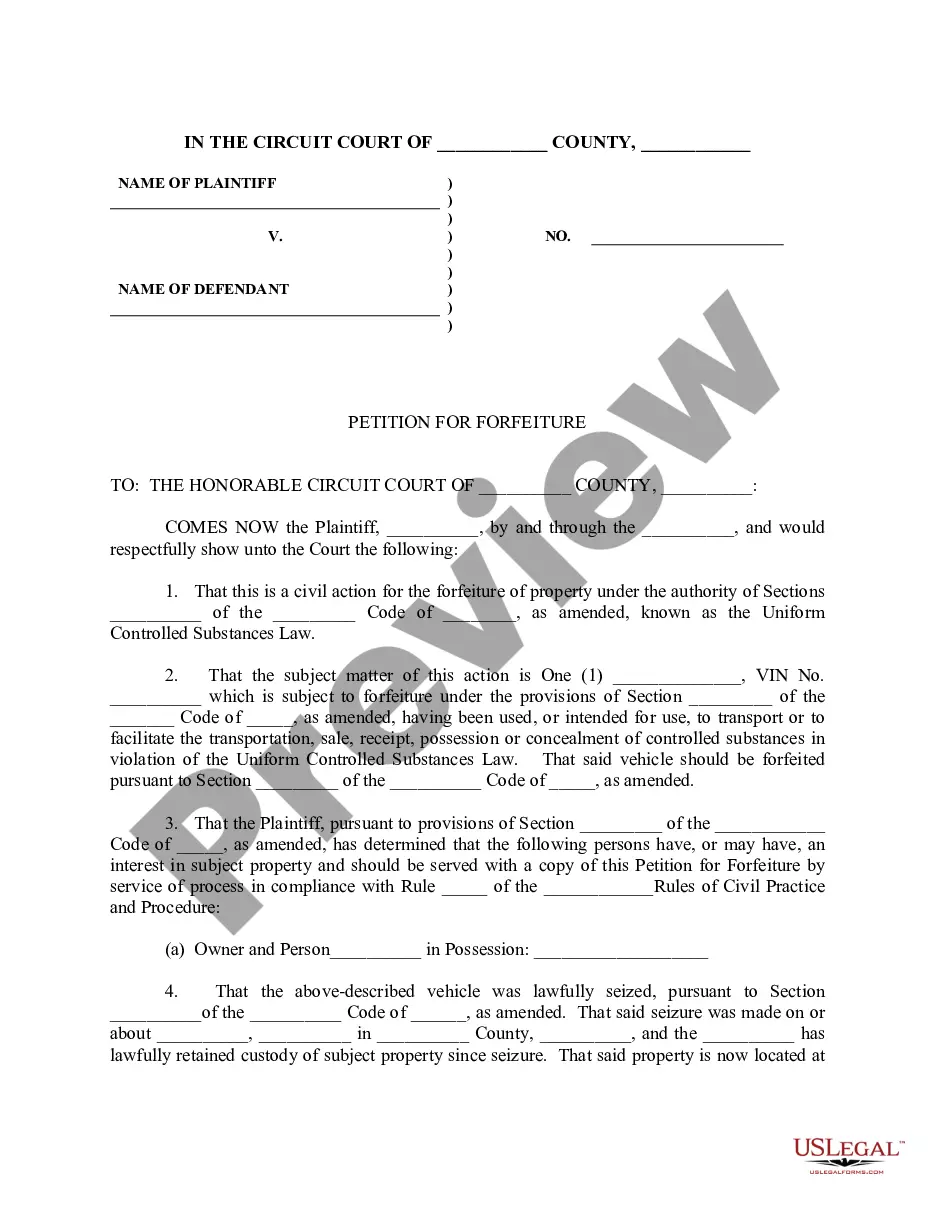
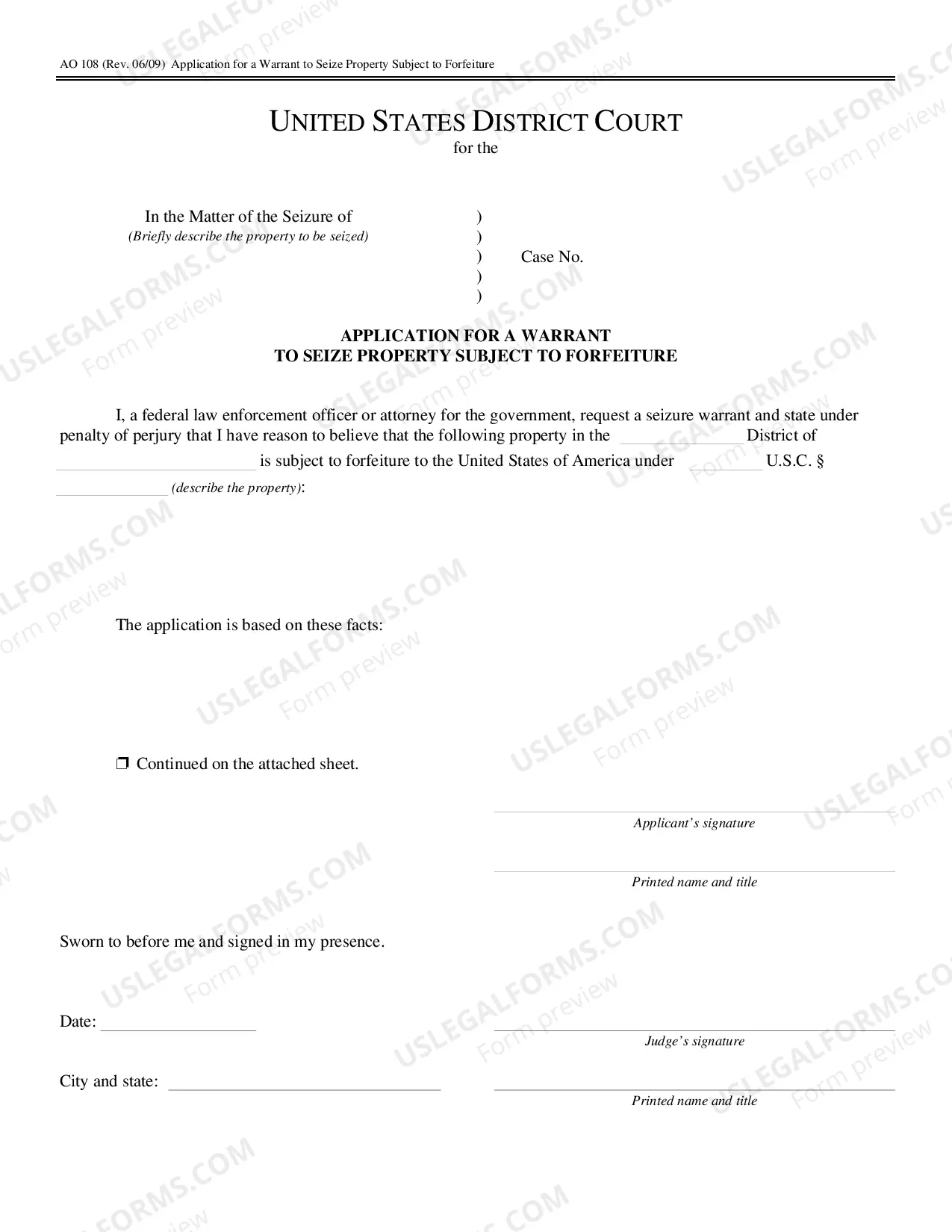
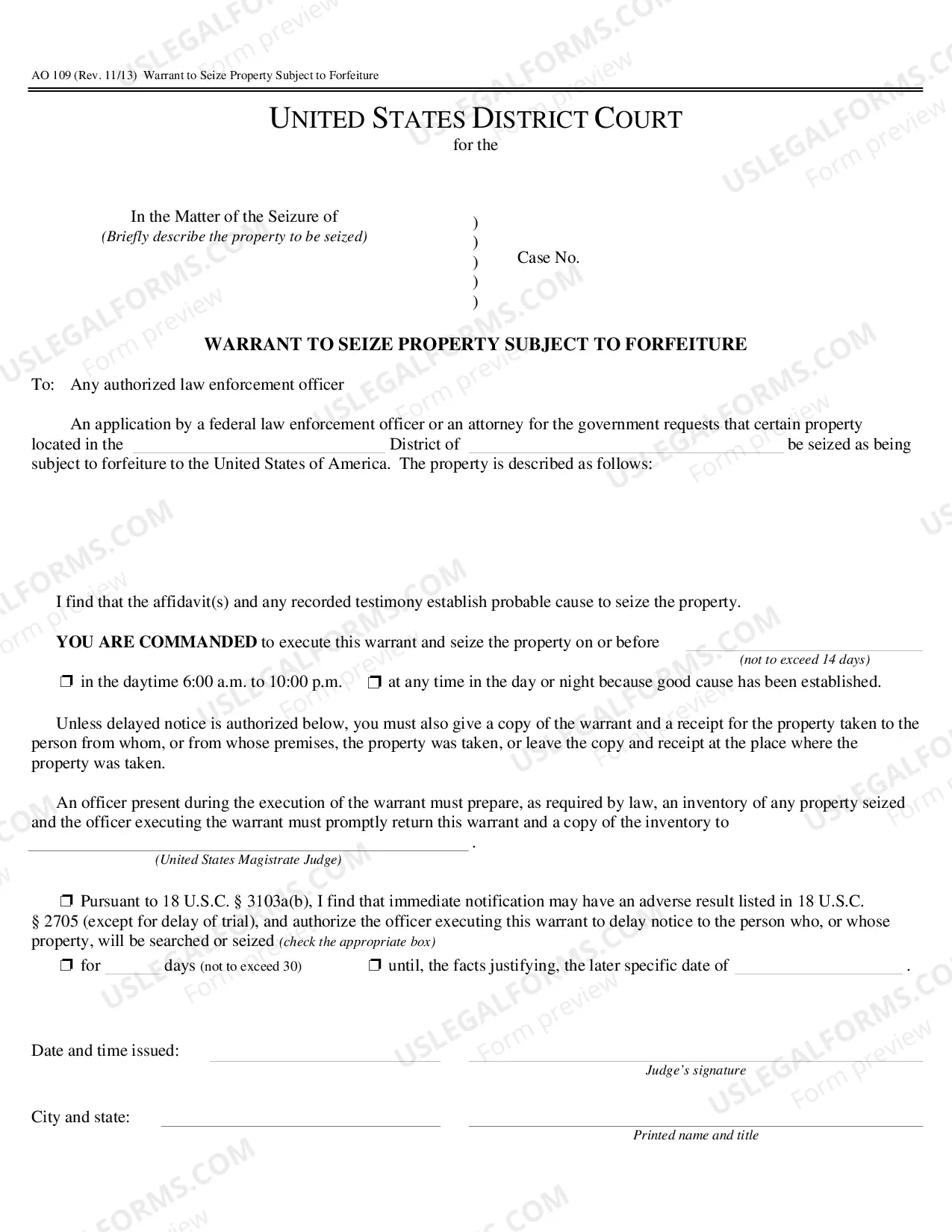
Get your form ready online
Our built-in tools help you complete, sign, share, and store your documents in one place.
Make edits, fill in missing information, and update formatting in US Legal Forms—just like you would in MS Word.
Download a copy, print it, send it by email, or mail it via USPS—whatever works best for your next step.
Sign and collect signatures with our SignNow integration. Send to multiple recipients, set reminders, and more. Go Premium to unlock E-Sign.
If this form requires notarization, complete it online through a secure video call—no need to meet a notary in person or wait for an appointment.
We protect your documents and personal data by following strict security and privacy standards.

Make edits, fill in missing information, and update formatting in US Legal Forms—just like you would in MS Word.

Download a copy, print it, send it by email, or mail it via USPS—whatever works best for your next step.

Sign and collect signatures with our SignNow integration. Send to multiple recipients, set reminders, and more. Go Premium to unlock E-Sign.

If this form requires notarization, complete it online through a secure video call—no need to meet a notary in person or wait for an appointment.

We protect your documents and personal data by following strict security and privacy standards.
Looking for another form?
How to fill out Petition For Forfeiture?
Are you in a situation where you need documents for business or personal reasons almost daily.
There are numerous legal document templates accessible online, but locating ones you can rely on is not easy.
US Legal Forms offers a vast collection of document templates, including the West Virginia Petition for Forfeiture, which can be filled out to satisfy state and federal regulations.
Retrieve all the document templates you have purchased in the My documents section. You can download another copy of the West Virginia Petition for Forfeiture at any time, if needed. Just click on the desired form to download or print the document template.
Utilize US Legal Forms, the most extensive collection of legal forms, to save time and avoid errors. The service provides professionally crafted legal document templates that you can use for various purposes. Create your account on US Legal Forms and start making your life a bit easier.
- If you are already familiar with the US Legal Forms website and have an account, simply Log In.
- Then, you can download the West Virginia Petition for Forfeiture template.
- If you do not have an account and want to start using US Legal Forms, follow these steps.
- Locate the form you need and ensure it is for the correct state/region.
- Use the Preview button to examine the form.
- Review the summary to confirm that you have chosen the correct form.
- If the form is not what you are looking for, utilize the Search field to find the form that meets your needs and requirements.
- Once you find the appropriate form, click Get now.
- Choose the pricing plan you prefer, fill in the necessary details to set up your account, and complete the purchase using your PayPal or credit card.
- Select a suitable file format and download your copy.
Form popularity
FAQ
A forfeiture by wrongdoing is defined under the Federal Rules of Evidence, as a statement made by a declarant that normally qualifies as hearsay and would therefore not be admissible can be admitted under the forfeiture by wrongdoing exception to the hearsay rule.
Forfeiture is broadly defined as the loss of property for failing to obey the law, and that property is generally lost to the state. A person may have a vested interest in property to be forfeit in two ways: In personum jurisdiction and in rem jurisdiction.
Criminal forfeiture is an action brought as a part of the criminal prosecution of a defendant. It is an in personam (against the person) action and requires that the government indict (charge) the property used or derived from the crime along with the defendant.
The laws of Virginia allow law enforcement to seize money, property, and vehicles allegedly connected with terrorism (19.2-386.15); prostitution (19.2-386.16); transporting stolen property (19.2-386.16); money laundering (19.2-386.19); illegal gambling (19.2-386.30); exploitation of children (19.2-386.31, 19.2-386.32); ...
Controlled substances which are seized or come into the possession of the state, the owners of which are unknown, are contraband and shall be summarily forfeited to the state upon the seizure of the controlled substances.
§982. Criminal forfeiture. (a)(1) The court, in imposing sentence on a person convicted of an offense in violation of section 1956, 1957, or 1960 of this title, shall order that the person forfeit to the United States any property, real or personal, involved in such offense, or any property traceable to such property.
What Is the Statute of Limitations in WV? For most types of civil cases, the statute of limitations in West Virginia is two years. Most misdemeanor criminal charges must be filed within a year, while felonies have no statute of limitations.
Civil forfeiture allows the government (typically the police) to seize ? and then keep or sell ? any property that is allegedly involved in a crime or illegal activity. Owners need not ever be arrested or convicted of a crime for their cash, cars, or even real estate to be taken away permanently by the government.