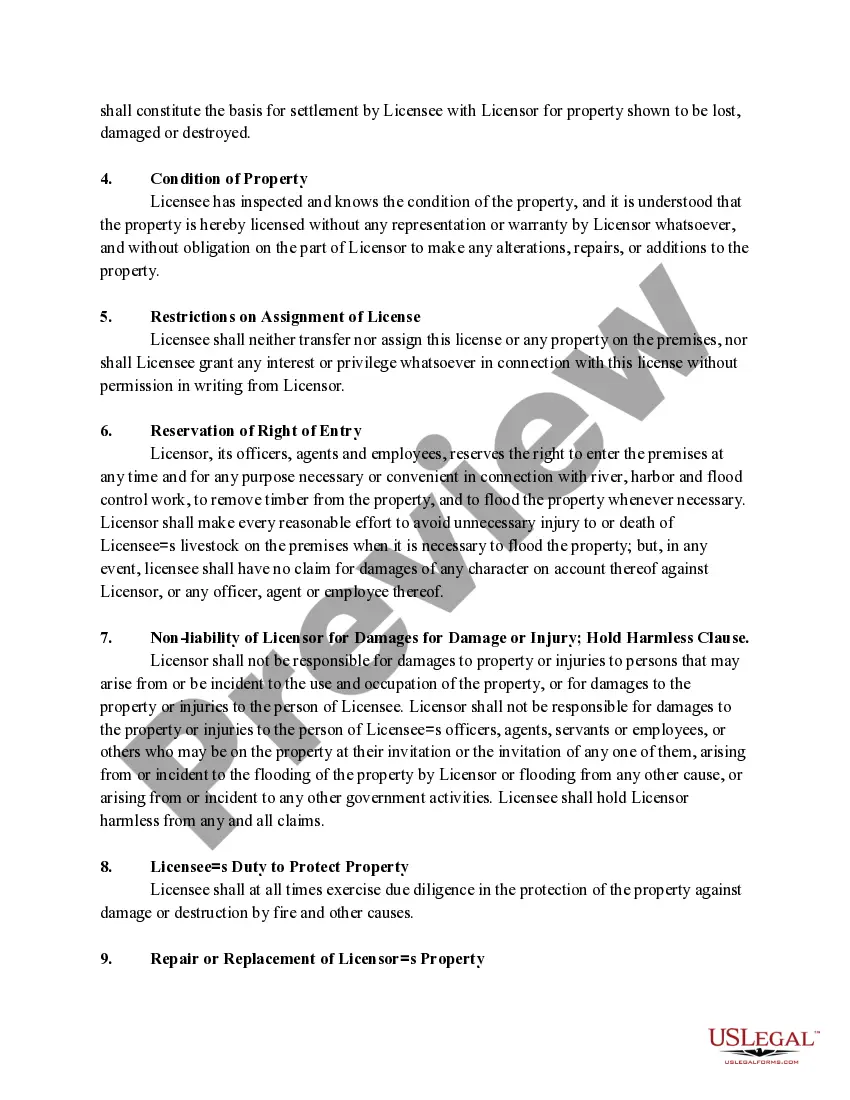
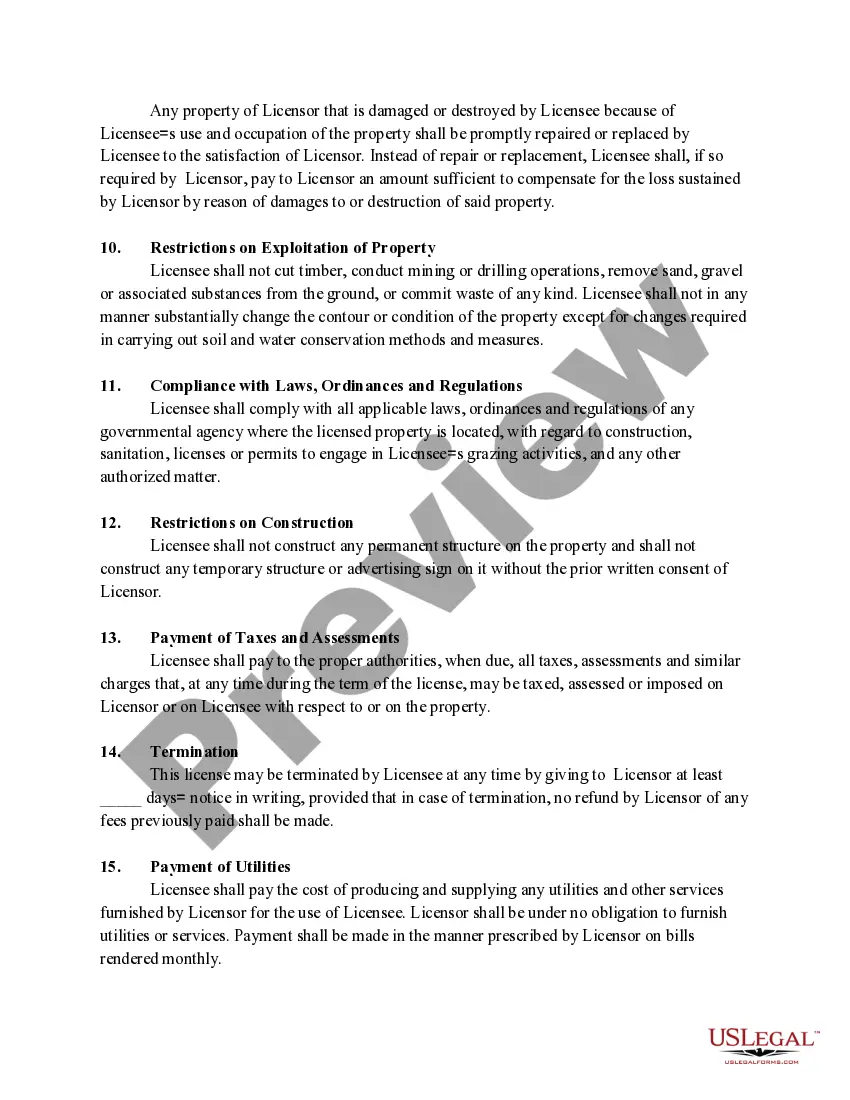
West Virginia License Agreement for Grazing on Private Lands
Description
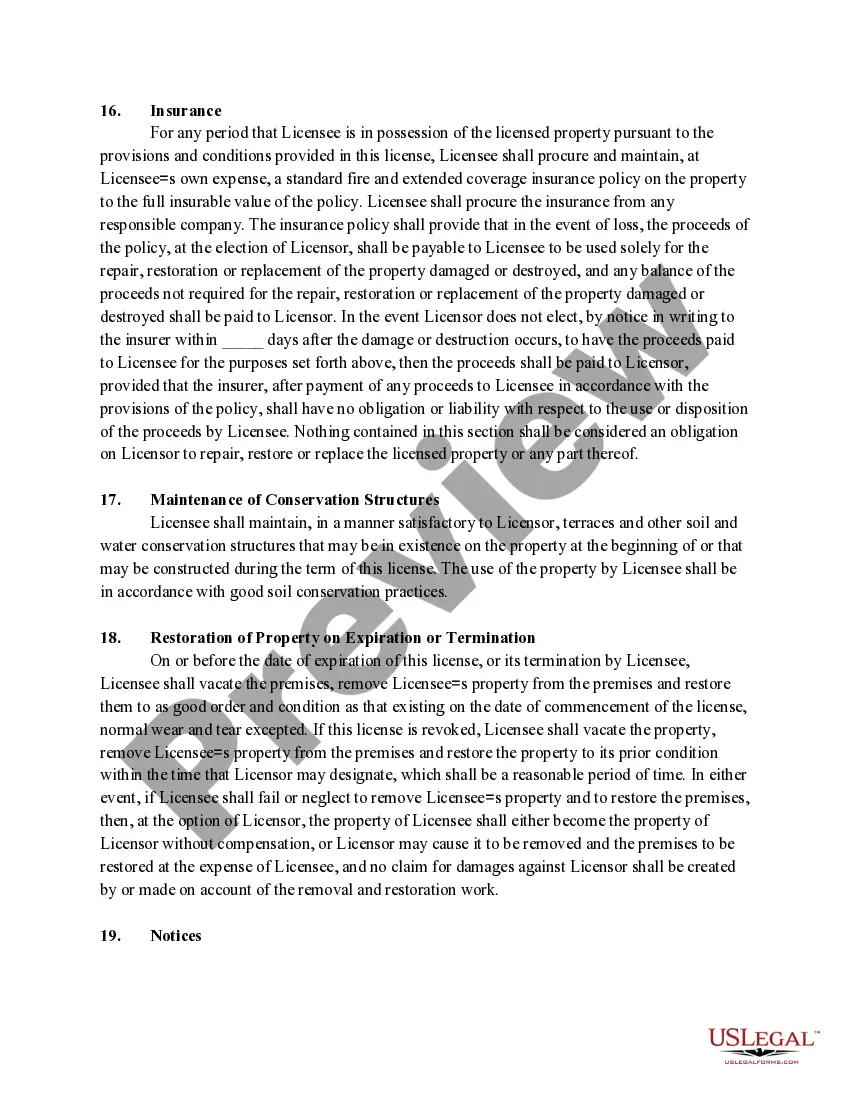
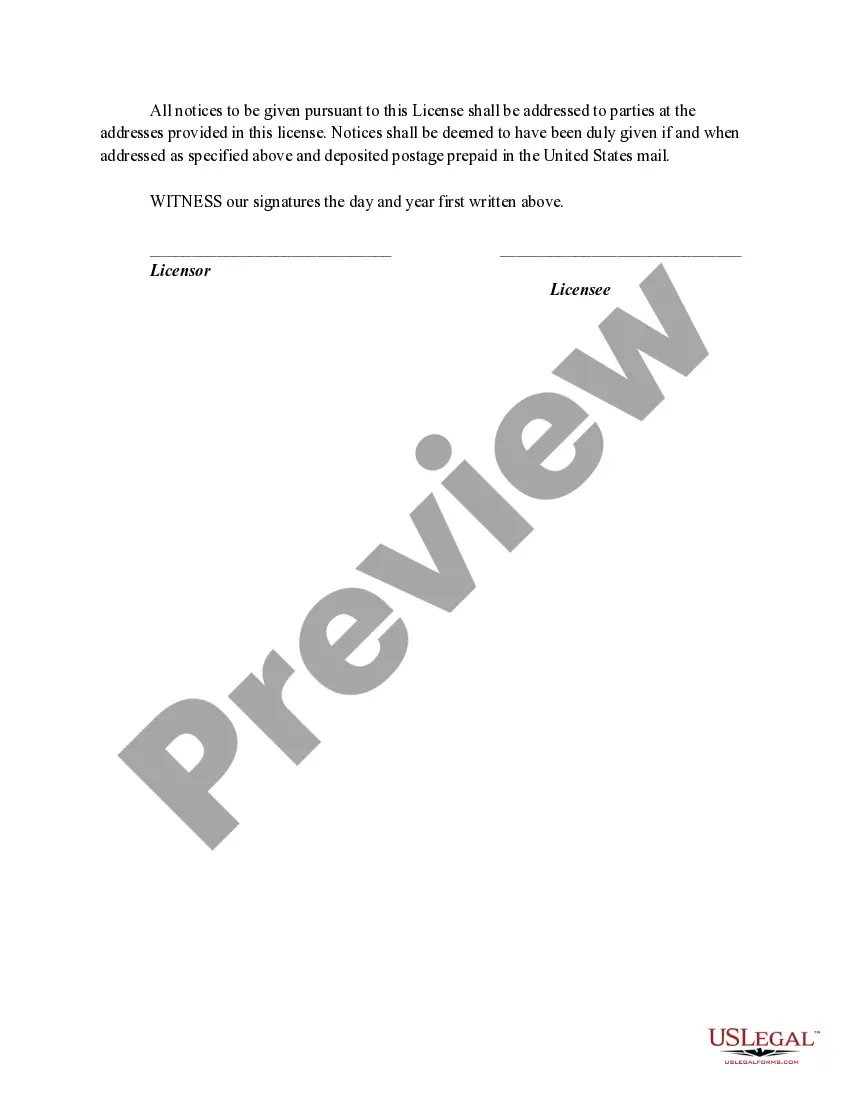

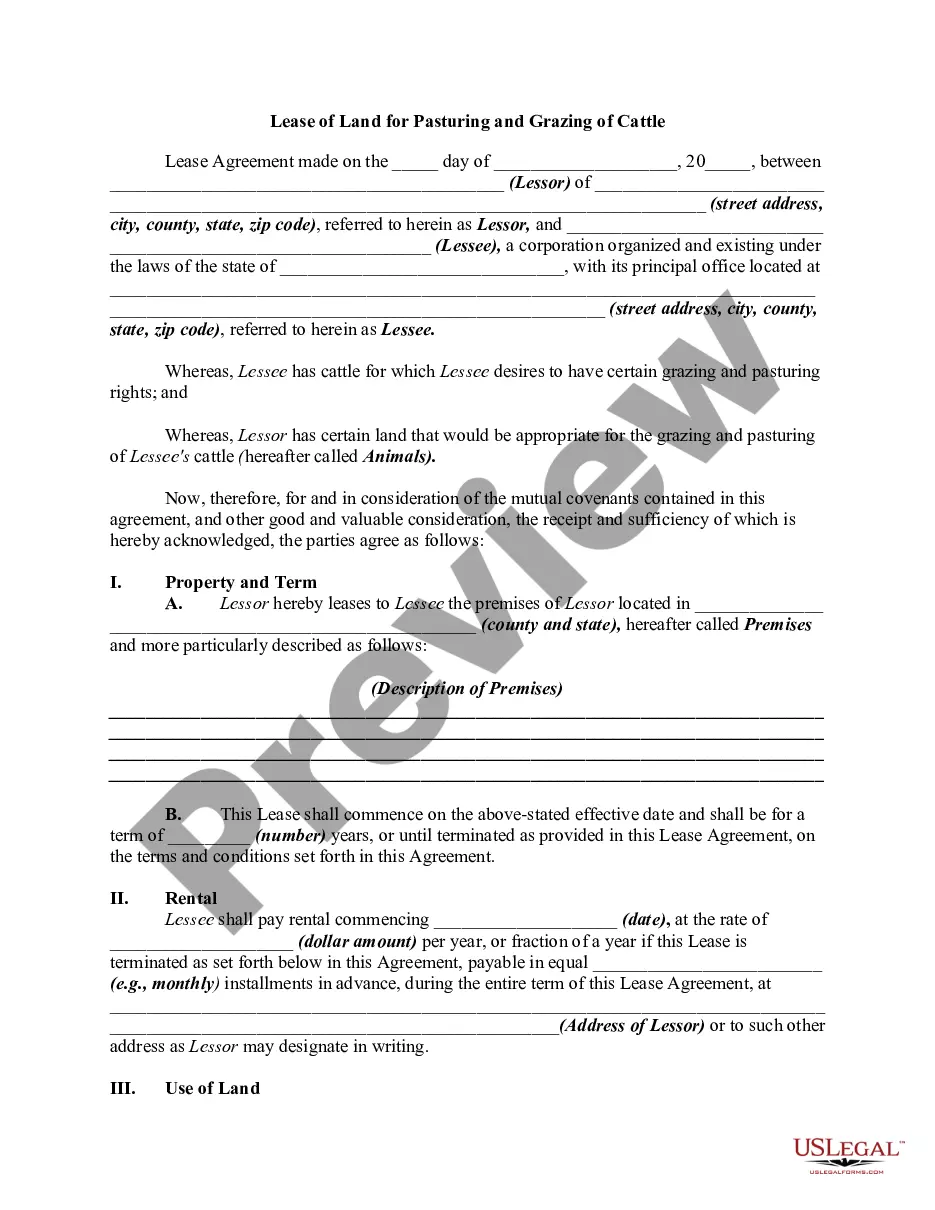
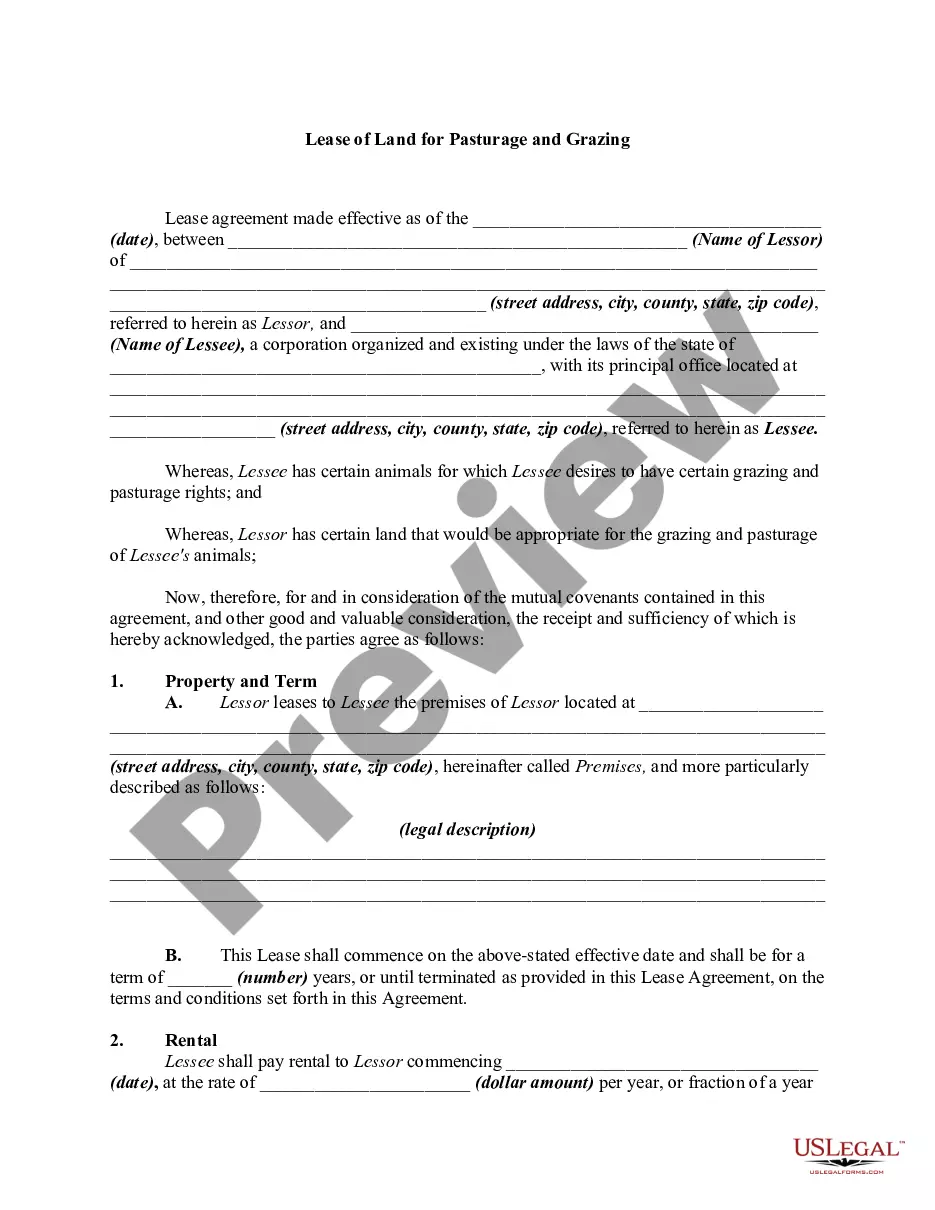
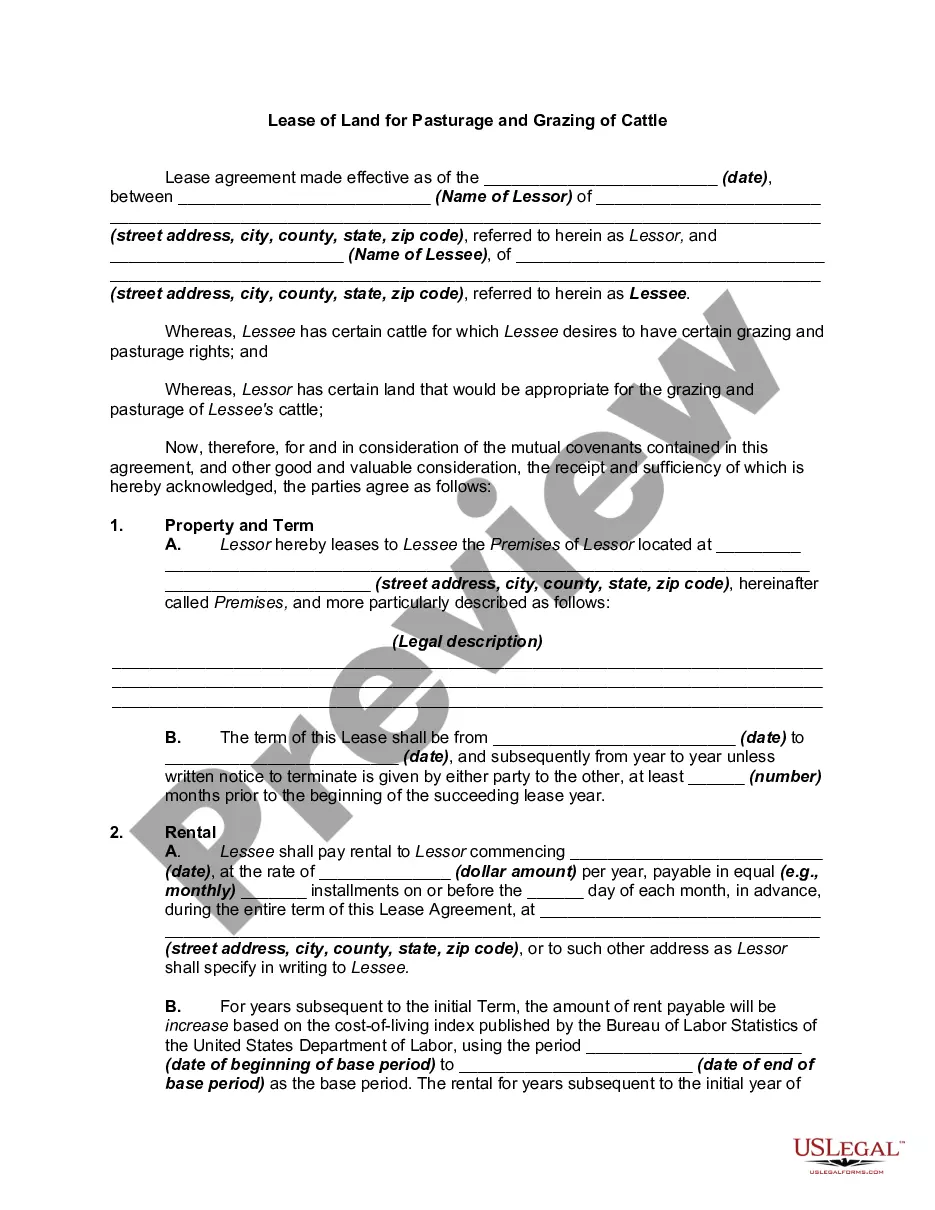
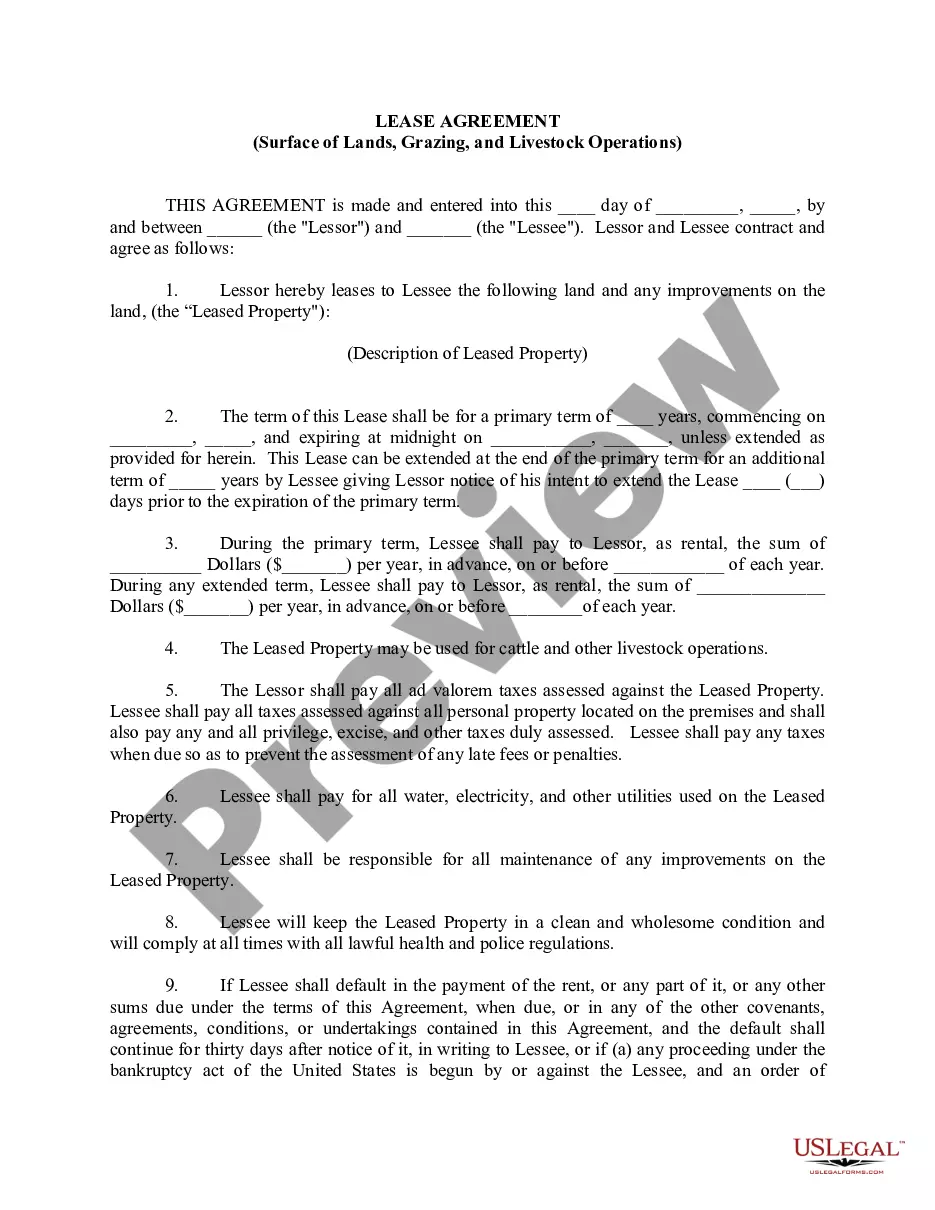
How to fill out License Agreement For Grazing On Private Lands?
If you need to finalize, save, or print legal document templates, utilize US Legal Forms, the largest collection of legal forms available online.
Take advantage of the site's straightforward and uncomplicated search to locate the documents you require.
Numerous templates for business and personal purposes are categorized by type and state, or by keywords.
Step 5. Complete the payment process. You may use your Visa or MasterCard or PayPal account to finalize the payment.
Step 6. Choose the format of the legal document and download it to your device.
- Utilize US Legal Forms to access the West Virginia License Agreement for Grazing on Private Lands with just a few clicks.
- If you are already a US Legal Forms user, Log In to your account and click on the Download button to obtain the West Virginia License Agreement for Grazing on Private Lands.
- You can also access forms you previously downloaded in the My documents section of your account.
- If you are using US Legal Forms for the first time, refer to the guidelines below.
- Step 1. Ensure you have chosen the form for the correct region/state.
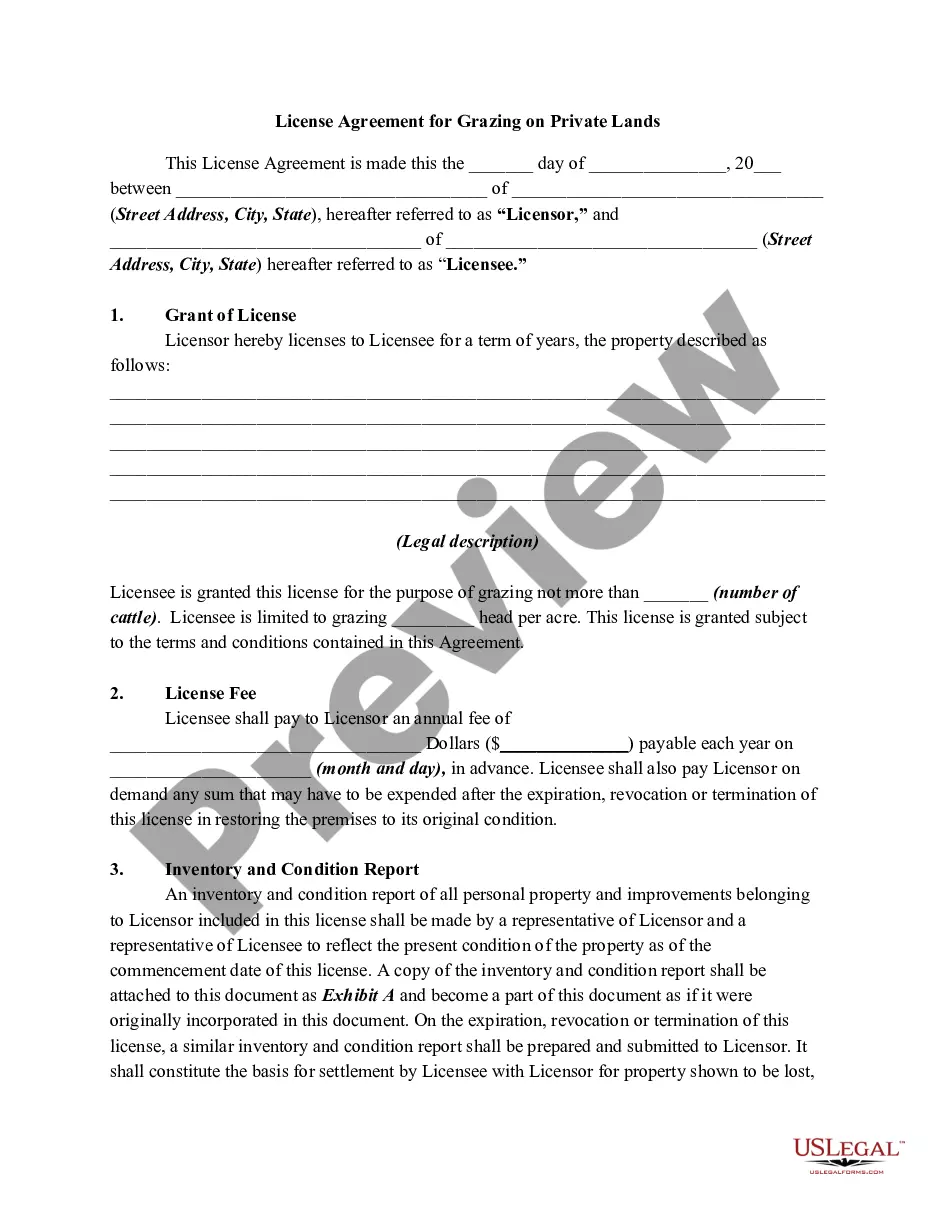
- Step 2. Use the Preview option to review the document's content. Do not overlook the details.
- Step 3. If you are unsatisfied with the template, use the Search field at the top of the screen to find other versions of the legal document template.
- Step 4. After locating the desired form, click the Get now button. Select your preferred pricing plan and enter your information to register for an account.
Form popularity
FAQ
West Virginia Code 19 18 3 pertains to the rights and responsibilities related to land use, including specific guidelines for agricultural operations. Understanding this code is beneficial when drafting a West Virginia License Agreement for Grazing on Private Lands. It helps ensure that both parties are aware of their legal obligations, thereby facilitating a smoother grazing experience.
In West Virginia, landowners are encouraged to post no trespassing signs to legally protect their property. This is particularly important if you plan to establish a West Virginia License Agreement for Grazing on Private Lands, as it informs others of your land's use and boundaries. Proper signage can help avoid disputes and clarify access rights regarding grazing activities.
The conspiracy code in West Virginia is found under West Virginia Code 61-10-31. This law addresses various forms of conspiracy, including those related to agricultural fraud or trespass. Being aware of this code is important when entering a West Virginia License Agreement for Grazing on Private Lands, as it helps safeguard your rights and interests against unlawful practices.
West Virginia has several area codes that cover different regions, including 304 and 681. These codes are essential for communication, especially when dealing with agricultural agreements and services. When you engage in a West Virginia License Agreement for Grazing on Private Lands, knowing the area code can assist in contacting local agencies or services relevant to your agreement.
To classify land as agricultural in West Virginia, landowners must demonstrate that the land is actively used for agricultural production. This often involves submitting specific documentation and possibly undergoing an assessment by local authorities. A proper classification can be beneficial when securing a West Virginia License Agreement for Grazing on Private Lands, as it often leads to favorable terms and tax benefits.
West Virginia Code 19 20 13 outlines specific provisions related to agricultural practices, including grazing agreements. It serves as a legal framework for landowners and tenants engaging in grazing on private lands. Understanding this code is crucial for anyone entering into a West Virginia License Agreement for Grazing on Private Lands, as it provides essential guidelines to ensure compliance with state laws.
In West Virginia, the ownership of creeks can vary depending on their location. Generally, property owners have rights to the creek running through or adjacent to their land. If you are using a creek for agricultural practices, securing a West Virginia License Agreement for Grazing on Private Lands can help clarify your rights regarding water use and access. This step is crucial for ensuring that your operations are legally compliant and sustainable.
The Ohio River is considered a navigable waterway, which means it is subject to federal regulations. While the State of West Virginia does control certain aspects of the river adjacent to its borders, ownership rights can be complex. When planning grazing operations near the river, consider a West Virginia License Agreement for Grazing on Private Lands to ensure compliance with both state and federal regulations. This agreement will clarify your rights and obligations.
In West Virginia, the ownership of river water is typically governed by the principle of 'riparian rights.' This means that landowners adjacent to a river have certain rights to use the water. When engaging in activities related to grazing, a West Virginia License Agreement for Grazing on Private Lands can clarify your rights regarding water usage on the land you are using. Understanding these regulations is crucial for anyone managing livestock.
Most of the land in West Virginia is privately owned, with a significant portion held by individuals and families for agricultural and recreational use. Additionally, a minority of the land is owned by government entities. If you are considering using land for grazing, a West Virginia License Agreement for Grazing on Private Lands can facilitate your access to private properties while adhering to legal regulations. This agreement is essential for establishing clear use rights.