A party wall is a wall located on or at the division line between adjoining premises and used by adjoining landowners in the construction or maintenance of improvements on their respective properties. Generally, each owner of adjoining lands on which a party wall stands owns the part of the wall that stands on the owner's land and has an easement on the other part. Party wall interests are dependent on the terms of an agreement between the adjoining landowners. Unless the party wall agreement provides otherwise, the duration of the adjoining owners interests in the wall ordinarily continue as long as the wall stands. Party wall easements are terminated on the accidental destruction of the wall and, under some circumstances, on substantial changes in conditions of the neighborhood. The terms of the party wall agreement can provide for termination under other circumstances.
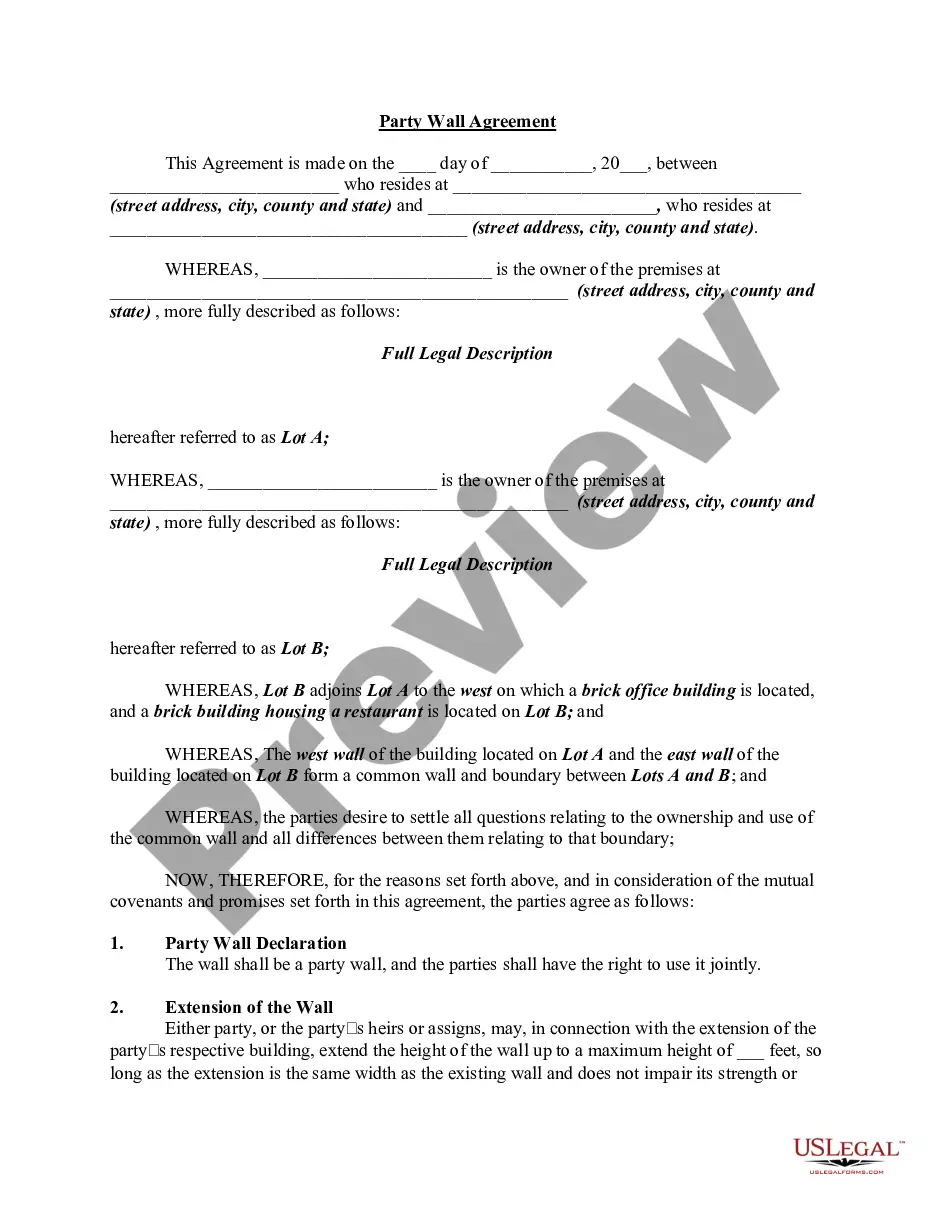
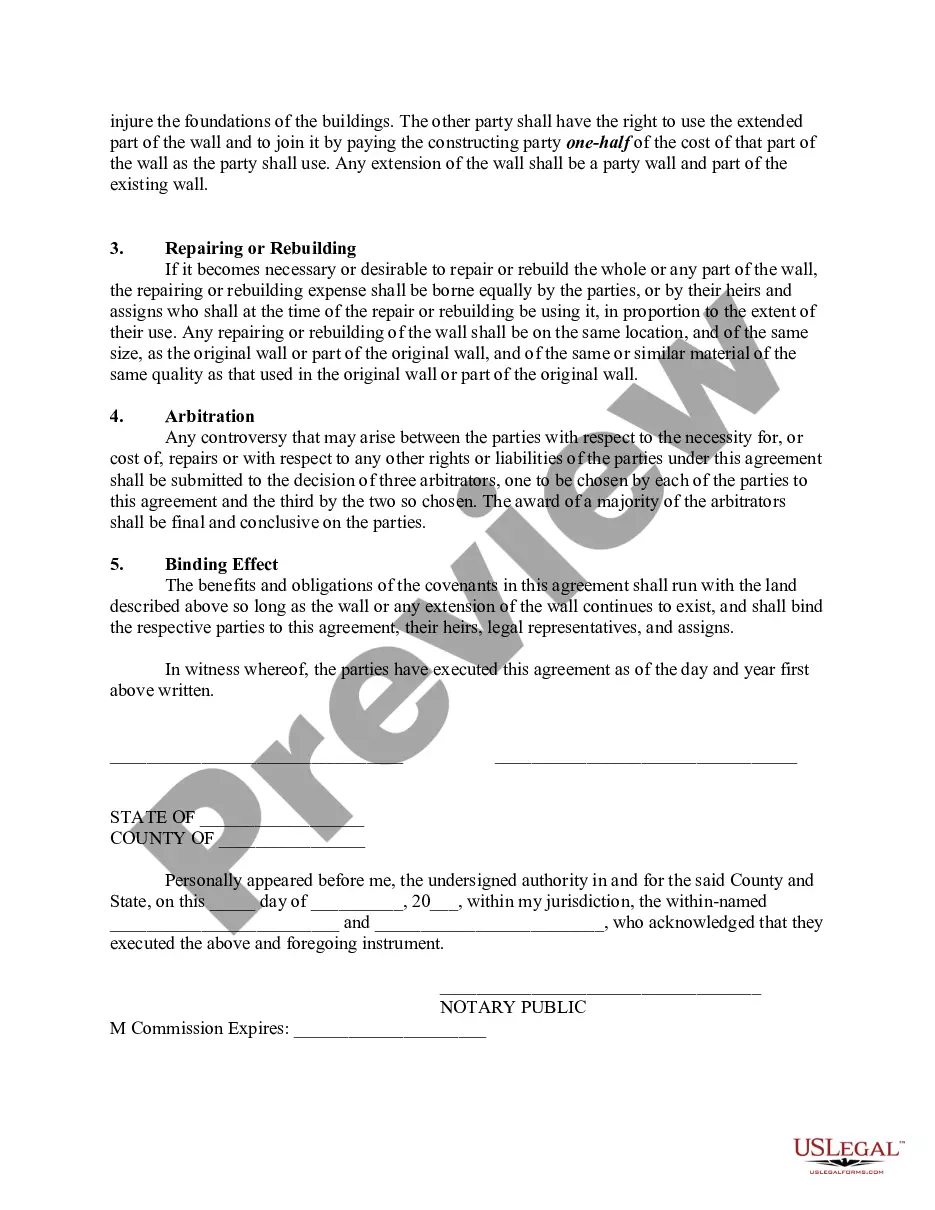
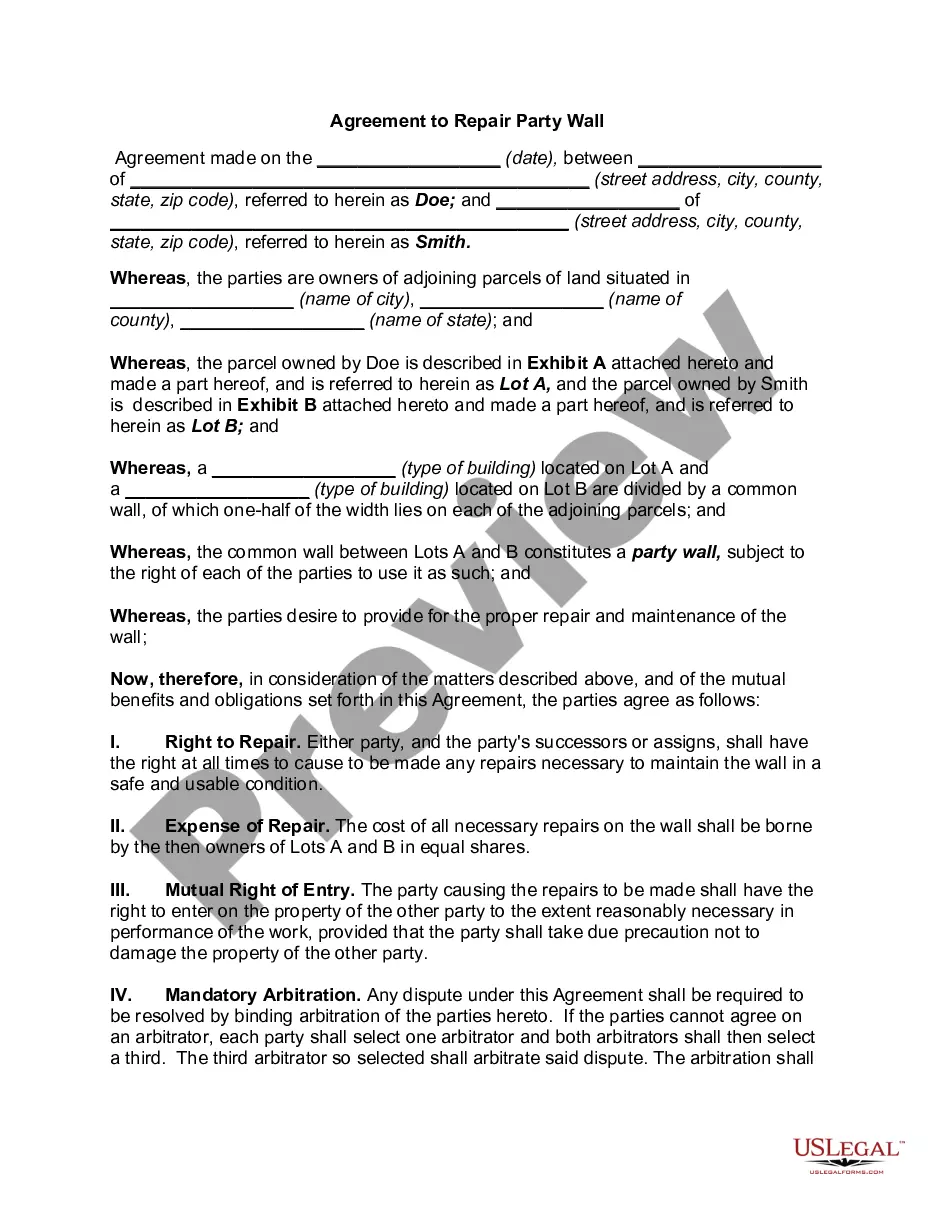
Since a party wall easement is an interest in land, it may be created by express deed drawn and executed with the same formalities as any other deed to real estate, or by a deed provision granting or reserving party wall interests. A contract, or provision in a contract, may also operate to create party wall interests. The following form is a general form establishing a party wall.
West Virginia Party Wall Agreement
165 downloads
Description
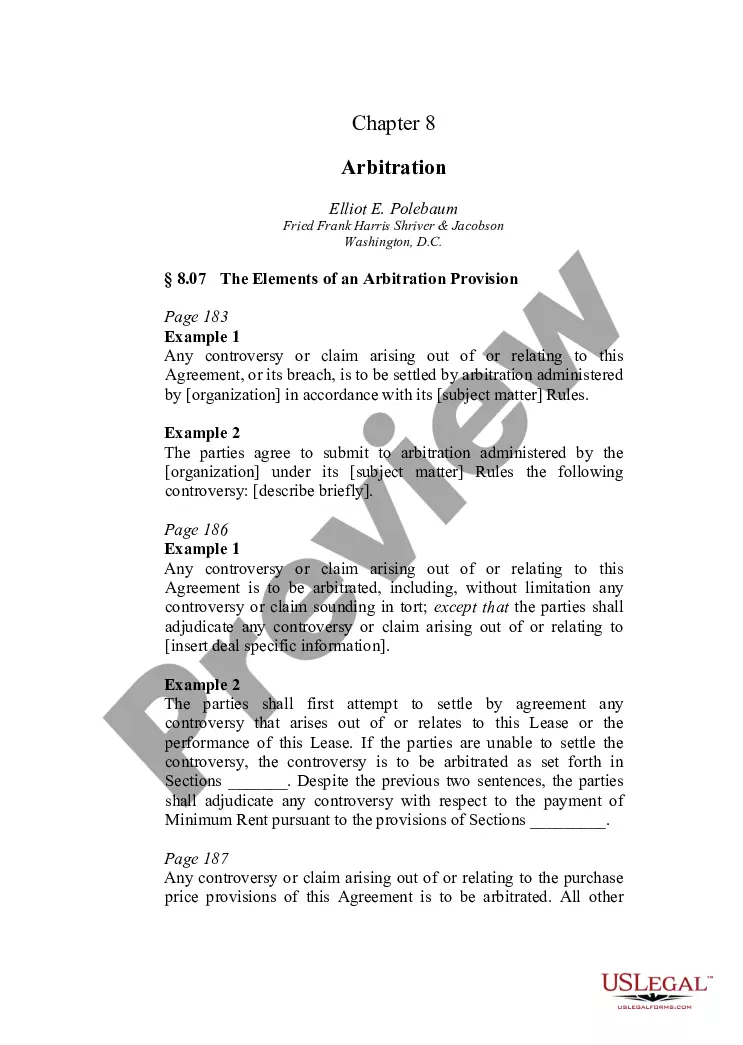
Free preview
Get your form ready online
Our built-in tools help you complete, sign, share, and store your documents in one place.
Built-in online Word editor
Make edits, fill in missing information, and update formatting in US Legal Forms—just like you would in MS Word.
Export easily
Download a copy, print it, send it by email, or mail it via USPS—whatever works best for your next step.
E-sign your document
Sign and collect signatures with our SignNow integration. Send to multiple recipients, set reminders, and more. Go Premium to unlock E-Sign.
Notarize online 24/7
If this form requires notarization, complete it online through a secure video call—no need to meet a notary in person or wait for an appointment.
Store your document securely
We protect your documents and personal data by following strict security and privacy standards.

Make edits, fill in missing information, and update formatting in US Legal Forms—just like you would in MS Word.

Download a copy, print it, send it by email, or mail it via USPS—whatever works best for your next step.

Sign and collect signatures with our SignNow integration. Send to multiple recipients, set reminders, and more. Go Premium to unlock E-Sign.

If this form requires notarization, complete it online through a secure video call—no need to meet a notary in person or wait for an appointment.

We protect your documents and personal data by following strict security and privacy standards.
Looking for another form?
How to fill out Party Wall Agreement?
Selecting the finest legitimate document template can be challenging.
Of course, there are numerous templates available online, but how do you find the legal document you need.
Make use of the US Legal Forms website. This service provides an extensive array of templates, such as the West Virginia Party Wall Agreement, that can be utilized for both business and personal purposes.
First, ensure you have selected the correct document for your city/state. You can preview the document using the Preview button and review the document details to confirm it is suitable for you.
- All forms are verified by professionals and comply with state and federal regulations.
- If you are already registered, Log In to your account and then click the Download button to access the West Virginia Party Wall Agreement.
- Use your account to review the legal papers you have previously purchased.
- Visit the My documents tab in your account to obtain another copy of the document you need.
- If you’re a new user of US Legal Forms, follow these simple instructions.
Form popularity
FAQ
Can I drill into a party wall without consent? Drilling into a party wall, to fix shelves or pictures is normally considered minor work that is not covered by the Party Wall etc.
If you're planning to carry out work to a wall, floor or ceiling that is shared between you and the owners of another property, then you may need to seek permission of the other owners. A law called the Party Wall etc Act 1996 applies if the work you carry out could disrupt or change a neighbouring property.
Party wall in American Englisha wall separating and common to two buildings or properties: each owner has a partial right in its use.
A boundary wall will normally be built with all of its piers on one side only of the wall, so as to keep the whole of the wall on its owner's land. A party fence wall may have its piers protruding from both sides of the wall.
A perimeter wall can also be called a boundary wall.
A wall is also a Party Wall if it stands wholly on one owners' land, but is used by two or more owners to separate their buildings. Floors or walls between flats are 'party structures'.
A party wall (occasionally parti-wall or parting wall, also known as common wall or as a demising wall) is a dividing partition between two adjoining buildings that is shared by the occupants of each residence or business.
The Party Wall Act is not a vehicle to try and thwart your neighbour's plans and prevent the proposed work going ahead. The time for objecting to any work is at planning stage where you can have your say and the local planning authority will either grant permission or refuse to.
Can I drill into a party wall without consent? Drilling into a party wall, to fix shelves or pictures is normally considered minor work that is not covered by the Party Wall etc.
It's a legal requirement for you to fulfil your obligation to Adjoining Owners if the work you wish to undertake is covered by the Act. It's worth double-checking with an experienced party wall surveyor whether this applies to the work your planning before you start.