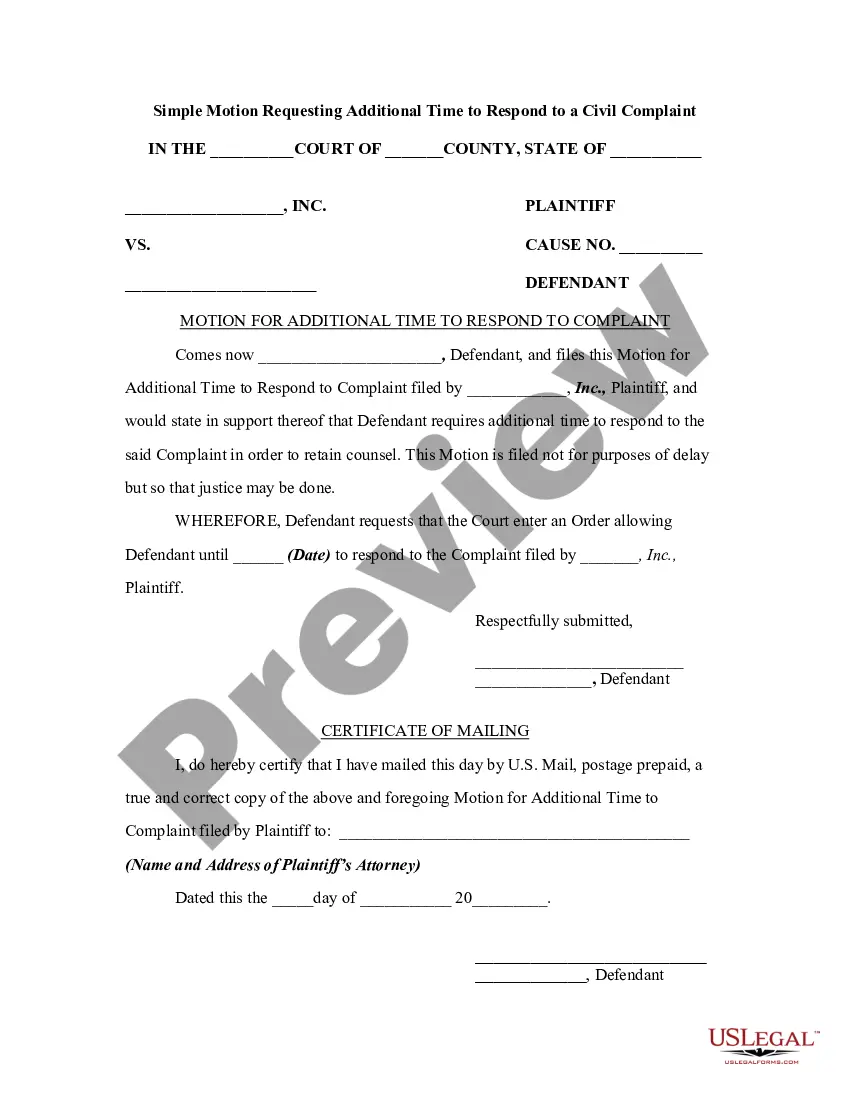
West Virginia Agreed Order Granting Additional Time to Plead
Description
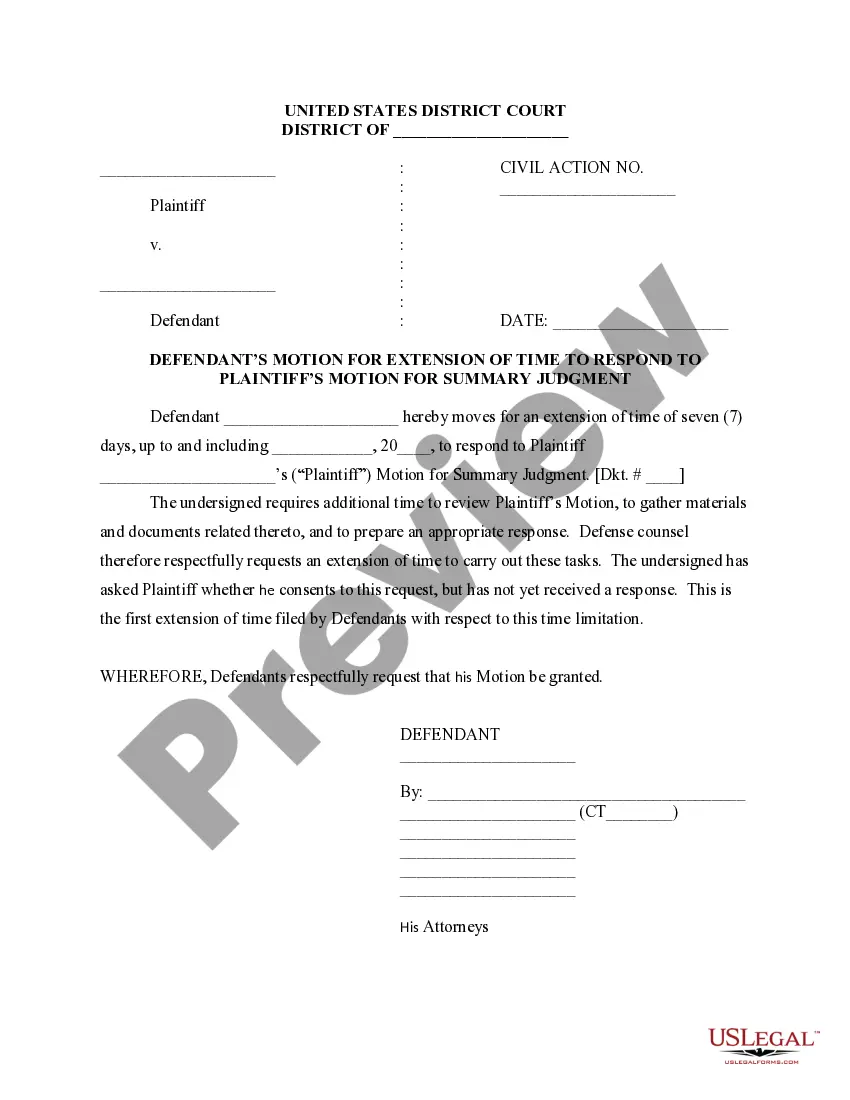


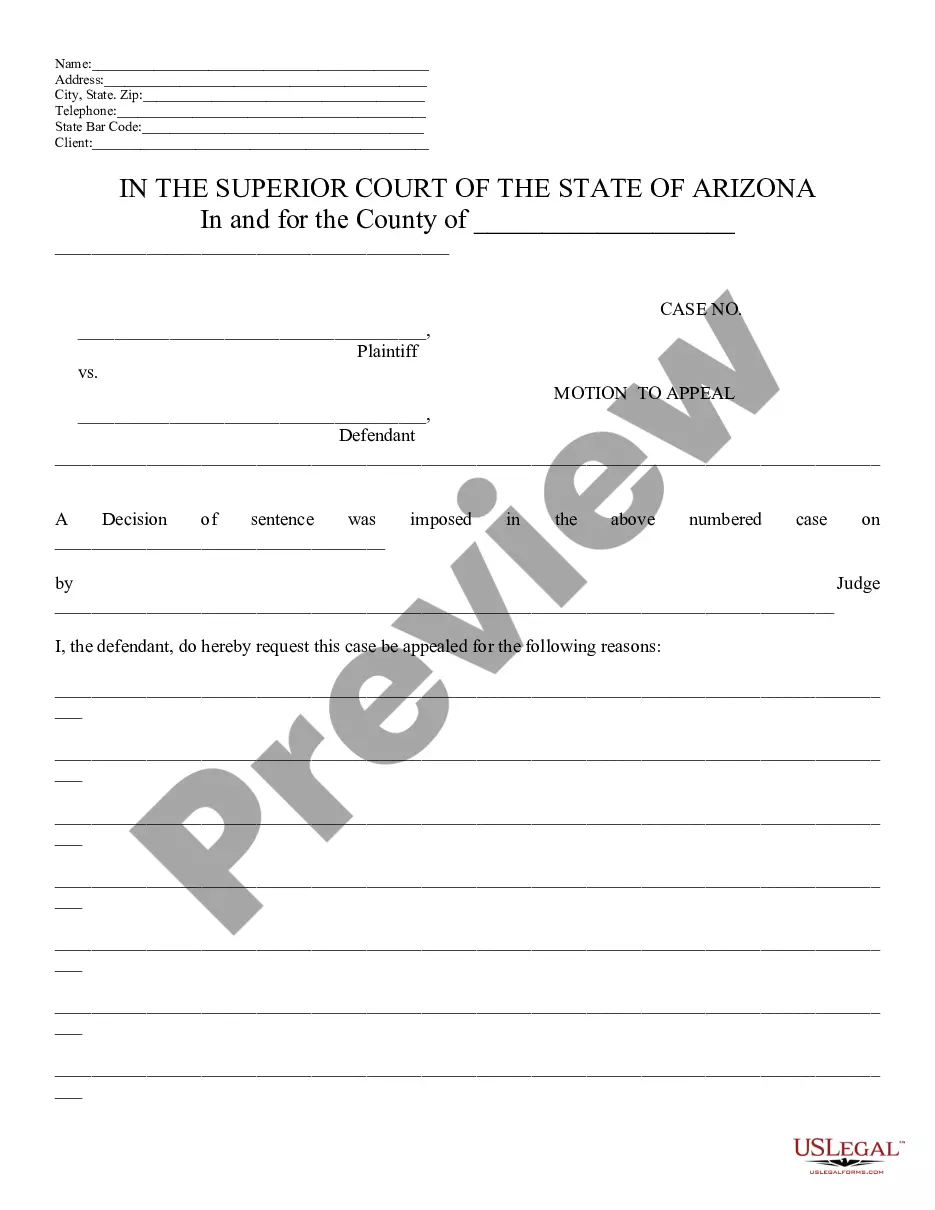
How to fill out Agreed Order Granting Additional Time To Plead?
It is feasible to allocate time online attempting to locate the legal document template that meets the federal and state standards you require.
US Legal Forms offers thousands of legal forms that are reviewed by experts. You can easily download or print the West Virginia Agreed Order Granting Additional Time to Plead from our service.
If you already have a US Legal Forms account, you may Log In and then click the Download button. Subsequently, you may fill out, modify, print, or sign the West Virginia Agreed Order Granting Additional Time to Plead. Each legal document template you purchase is yours permanently. To obtain another copy of any purchased form, go to the My documents tab and click the corresponding button.
Complete the transaction. You can use your credit card or PayPal account to pay for the legal document. Choose the format of the document and download it to your device. Make modifications to your document if necessary. You can fill out, edit, sign, and print the West Virginia Agreed Order Granting Additional Time to Plead. Obtain and print thousands of document templates using the US Legal Forms website, which provides the largest collection of legal forms. Utilize professional and state-specific templates to address your business or personal needs.
- If you are using the US Legal Forms website for the first time, follow the simple instructions below.
- First, ensure that you have selected the correct document template for the county/town of your choice.
- Review the form description to confirm you have chosen the appropriate form.
- If available, use the Preview button to view the document template as well.
- If you wish to find another version of the form, utilize the Search field to locate the template that meets your needs and specifications.
- Once you have found the template you need, click Get now to proceed.
- Select the pricing plan you need, enter your details, and register for an account on US Legal Forms.
Form popularity
FAQ
The 3 term rule in West Virginia refers to a timeline for responding to legal pleadings. Specifically, it requires a party to file an answer within three terms of court after being served with a complaint. If you need more time to prepare your response, you can request a West Virginia Agreed Order Granting Additional Time to Plead. This order allows you to extend your deadline and ensures that you have the opportunity to present your case adequately.
In West Virginia, rule 11 emphasizes the responsibility of attorneys and parties to file documents that reflect good faith and legal validity. It discourages frivolous litigation while promoting accountability in legal proceedings. When pursuing an Agreed Order Granting Additional Time to Plead, understanding the specifics of West Virginia's rule 11 can help ensure that your actions are compliant and appropriately justified.
Rule 11 requires attorneys and parties to certify that their filings are not for an improper purpose, are warranted by existing law, and have a reasonable basis in fact. This certification ensures that all legal documents uphold the integrity of the judicial process. Obtaining an Agreed Order Granting Additional Time to Plead may involve demonstrating compliance with these requirements to the court.
Simply put, rule 11 requires that all pleadings, motions, and other papers filed with the court are well-grounded in fact and law. It aims to prevent frivolous claims or defenses from wasting the court's time. When parties seek an Agreed Order Granting Additional Time to Plead, they must ensure that their submissions adhere to rule 11's standards to avoid potential penalties.
At a rule 11 hearing, the court assesses whether the parties have complied with the rules of civil procedure, particularly focusing on the integrity of pleadings and motions. The judge may discuss possible sanctions for noncompliance and encourage parties to agree on terms, such as an Agreed Order Granting Additional Time to Plead. This hearing serves as an opportunity for resolution and clarification of each party's intentions.
Rule 45 of the West Virginia Rules of Civil Procedure addresses the issuance of subpoenas for the production of documents and witnesses. It allows parties to request documents or compel witnesses to appear in court. Understanding this rule can be crucial when seeking an Agreed Order Granting Additional Time to Plead, as it outlines how to properly summon necessary evidence or testimony.
Rule 41 - Search and seizure (a)Authority to issue warrant. - Upon the request of a law enforcement officer or an attorney for the state, a search warrant authorized by this rule may be issued by a magistrate or a judge of a circuit court within the county wherein the property or person sought is located.
Every such subpoena and subpoena duces tecum shall be served at least five days before the return date thereof, either by personal service made by any person over eighteen years of age or by registered or certified mail, but a return acknowledgment signed by the person to whom the subpoena or subpoena duces tecum is ...
Disclosure rules for civil litigation in United States federal courts generally do not require third-parties to create documents or other information that do not already exist.Federal Rule of Civil Procedure 45 allows parties in civil litigation to issue subpoenas to non-parties, who must i) produce documents as they ...