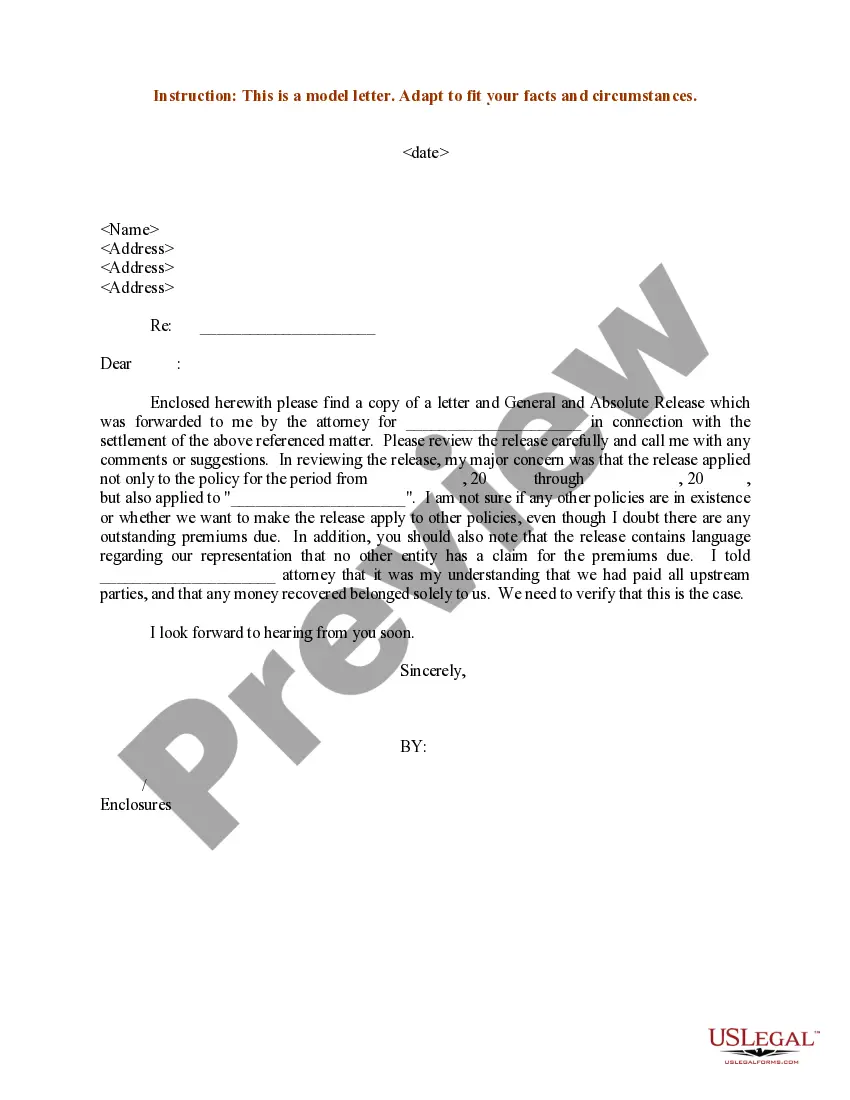
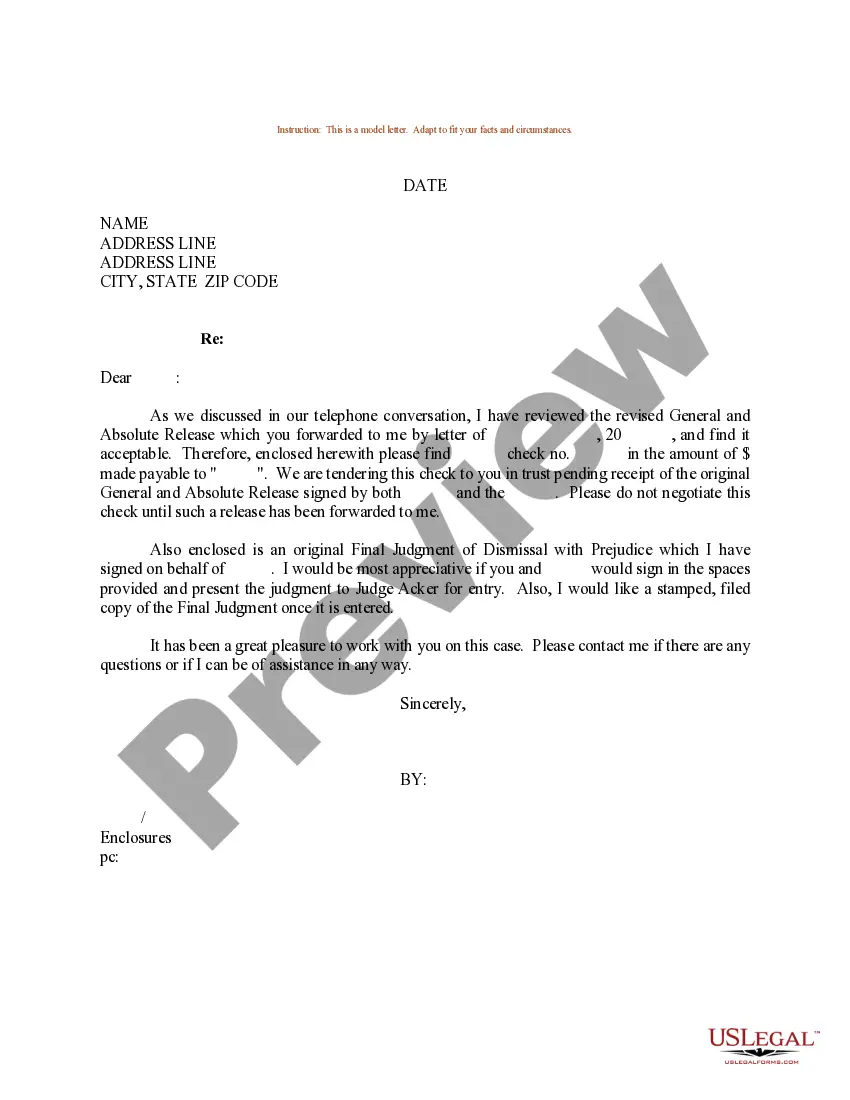
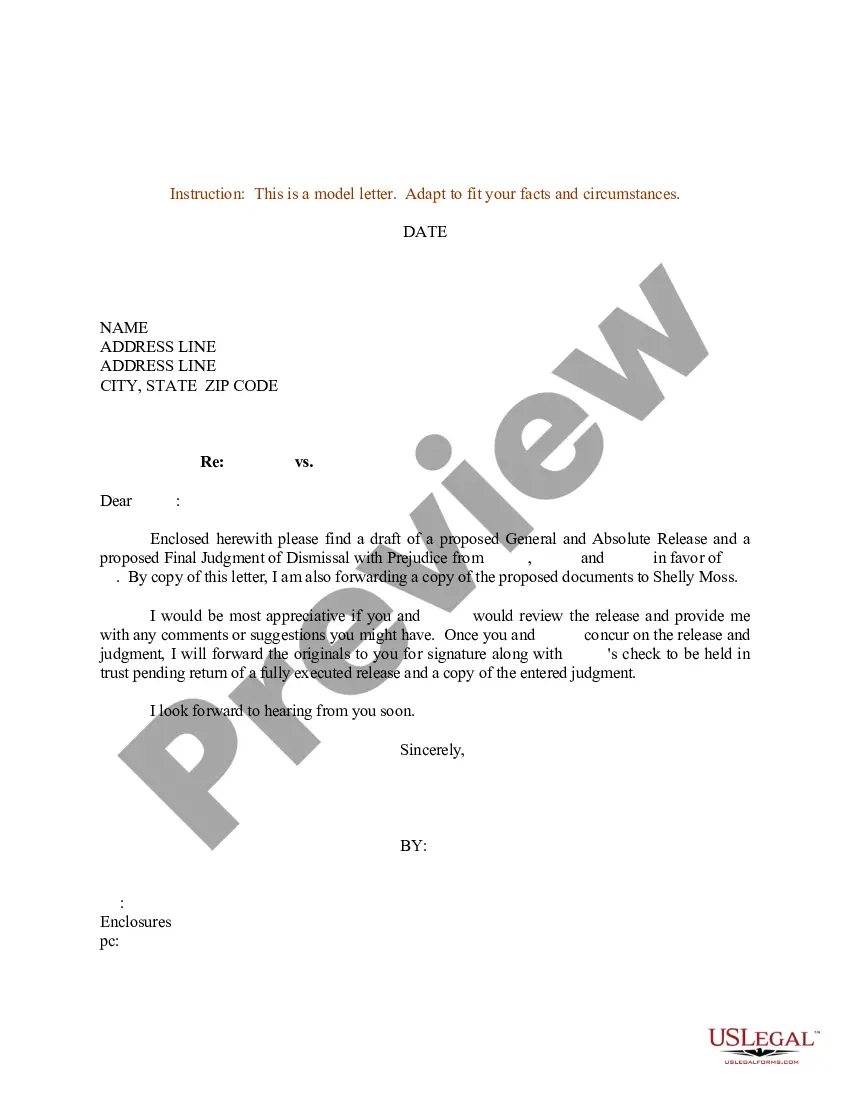
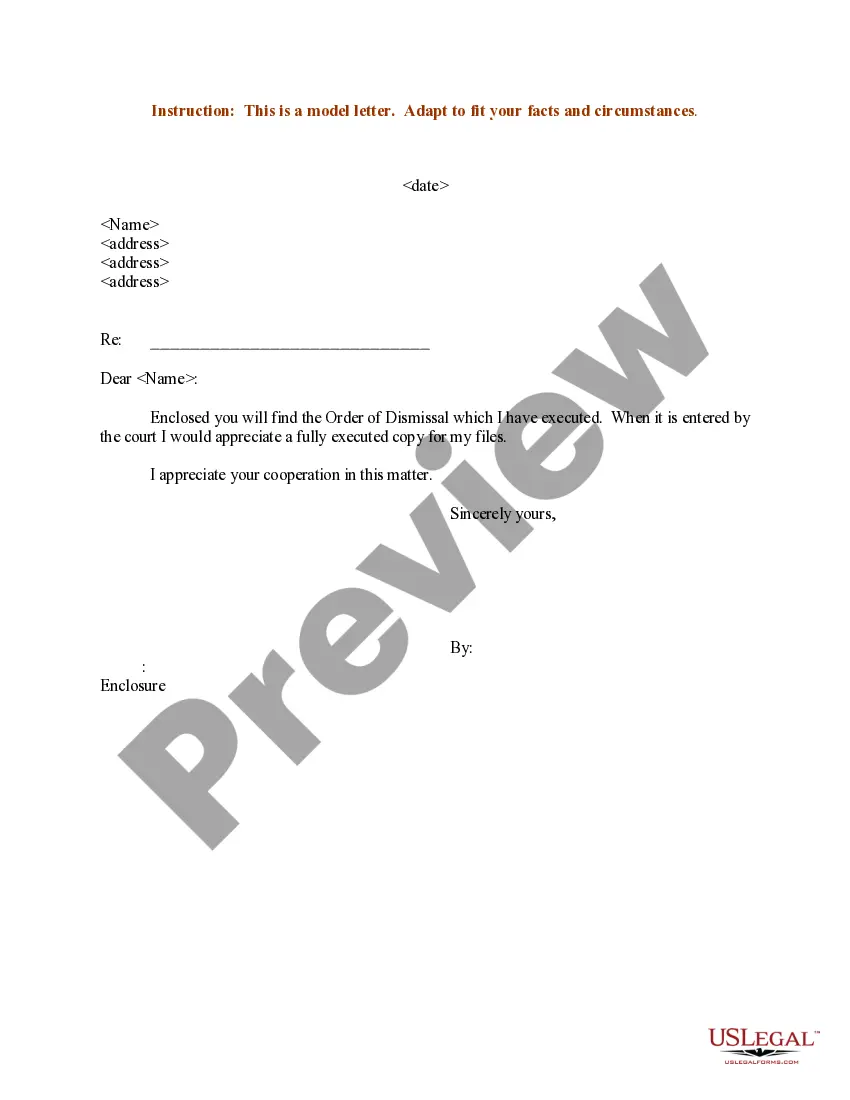
This form is a sample letter in Word format covering the subject matter of the title of the form.
West Virginia Sample Letter for General and Absolute Release and Final Judgment of Dismissal with Prejudice
Category:
State:
Multi-State
Control #:
US-0013LTR
Format:
Word;
Rich Text
Instant download
Description

Get your form ready online
Our built-in tools help you complete, sign, share, and store your documents in one place.
Built-in online Word editor
Make edits, fill in missing information, and update formatting in US Legal Forms—just like you would in MS Word.
Export easily
Download a copy, print it, send it by email, or mail it via USPS—whatever works best for your next step.
E-sign your document
Sign and collect signatures with our SignNow integration. Send to multiple recipients, set reminders, and more. Go Premium to unlock E-Sign.
Notarize online 24/7
If this form requires notarization, complete it online through a secure video call—no need to meet a notary in person or wait for an appointment.
Store your document securely
We protect your documents and personal data by following strict security and privacy standards.
Make edits, fill in missing information, and update formatting in US Legal Forms—just like you would in MS Word.
Download a copy, print it, send it by email, or mail it via USPS—whatever works best for your next step.
Sign and collect signatures with our SignNow integration. Send to multiple recipients, set reminders, and more. Go Premium to unlock E-Sign.

If this form requires notarization, complete it online through a secure video call—no need to meet a notary in person or wait for an appointment.
We protect your documents and personal data by following strict security and privacy standards.
Looking for another form?


How to fill out Sample Letter For General And Absolute Release And Final Judgment Of Dismissal With Prejudice?
If you need to complete, download, or print lawful document templates, utilize US Legal Forms, the largest collection of legal forms available online.
Take advantage of the site’s simple and user-friendly search to locate the documents you require.
Numerous templates for business and personal purposes are categorized by groups and states or keywords.
Step 4. Once you have found the form you need, click on the Get now button. Choose the pricing plan you prefer and enter your details to register for an account.
Step 5. Process the transaction. You can use your credit card or PayPal account to complete the transaction.
- Use US Legal Forms to find the West Virginia Sample Letter for General and Absolute Release and Final Judgment of Dismissal with Prejudice in just a few clicks.
- If you are already a US Legal Forms user, Log In to your account and click the Obtain button to acquire the West Virginia Sample Letter for General and Absolute Release and Final Judgment of Dismissal with Prejudice.
- You can also access forms you previously downloaded in the My documents tab of your account.
- If you are using US Legal Forms for the first time, follow the steps below.
- Step 1. Ensure you have chosen the form for the correct city/state.
- Step 2. Use the Review option to examine the form’s content. Don’t forget to read the description.
- Step 3. If you are not satisfied with the form, use the Search field at the top of the screen to find other variations of the legal form template.
Form popularity
FAQ
Yes, a dismissal with prejudice is classified as a judgment because it finalizes the case and prevents any future claims on the same matter. This type of judgment carries significant legal weight, impacting the parties involved. It is essential to be aware of this when navigating legal processes. A West Virginia Sample Letter for General and Absolute Release and Final Judgment of Dismissal with Prejudice can help clarify this distinction.
A final judgment is a court decision that resolves the disputes between the parties involved, leaving no further actions necessary regarding the case. It signifies the end of the litigation process, whether the case was dismissed or resulted in a verdict. Understanding what constitutes a final judgment is crucial, especially when dealing with documents like a West Virginia Sample Letter for General and Absolute Release and Final Judgment of Dismissal with Prejudice.
A stipulation of dismissal with prejudice indicates that both parties have agreed to end the case and that it cannot be reopened. This agreement is often written into a formal document, ensuring that all parties understand the finality of the decision. It is a significant step in the legal process, and using a West Virginia Sample Letter for General and Absolute Release and Final Judgment of Dismissal with Prejudice can guide the drafting of this stipulation.
Whether it is better to be dismissed with or without prejudice depends on the specific circumstances of the case. A dismissal with prejudice provides closure but eliminates the chance to refile, while a dismissal without prejudice keeps options open for future action. It's essential to evaluate the situation carefully. Utilizing a West Virginia Sample Letter for General and Absolute Release and Final Judgment of Dismissal with Prejudice can provide clarity on the process.
Yes, a dismissal with prejudice is considered a final judgment. It concludes the case and prevents any future claims regarding the same issue. This finality can significantly impact the parties involved, making it vital to understand the implications. A West Virginia Sample Letter for General and Absolute Release and Final Judgment of Dismissal with Prejudice can help illustrate this concept effectively.
The key difference lies in the ability to refile the case. A dismissal with prejudice prevents the plaintiff from bringing the same claim again, while a dismissal without prejudice allows for potential refiling. This distinction is important for individuals considering their legal options. To ensure clarity in legal matters, consider using a West Virginia Sample Letter for General and Absolute Release and Final Judgment of Dismissal with Prejudice.
A case may get dismissed with prejudice for various reasons, such as failure to comply with court orders or lack of evidence. This type of dismissal signifies that the court has determined the case is no longer viable. It is essential to follow legal procedures carefully, and using a West Virginia Sample Letter for General and Absolute Release and Final Judgment of Dismissal with Prejudice can aid in navigating these complexities.
In the Philippines, a dismissal with prejudice bars a party from bringing the same claim again in the future. This means that the case is considered resolved, and the party cannot refile. On the other hand, a dismissal without prejudice allows for the possibility of refiling the case later. Understanding these distinctions is crucial, especially when utilizing a West Virginia Sample Letter for General and Absolute Release and Final Judgment of Dismissal with Prejudice.