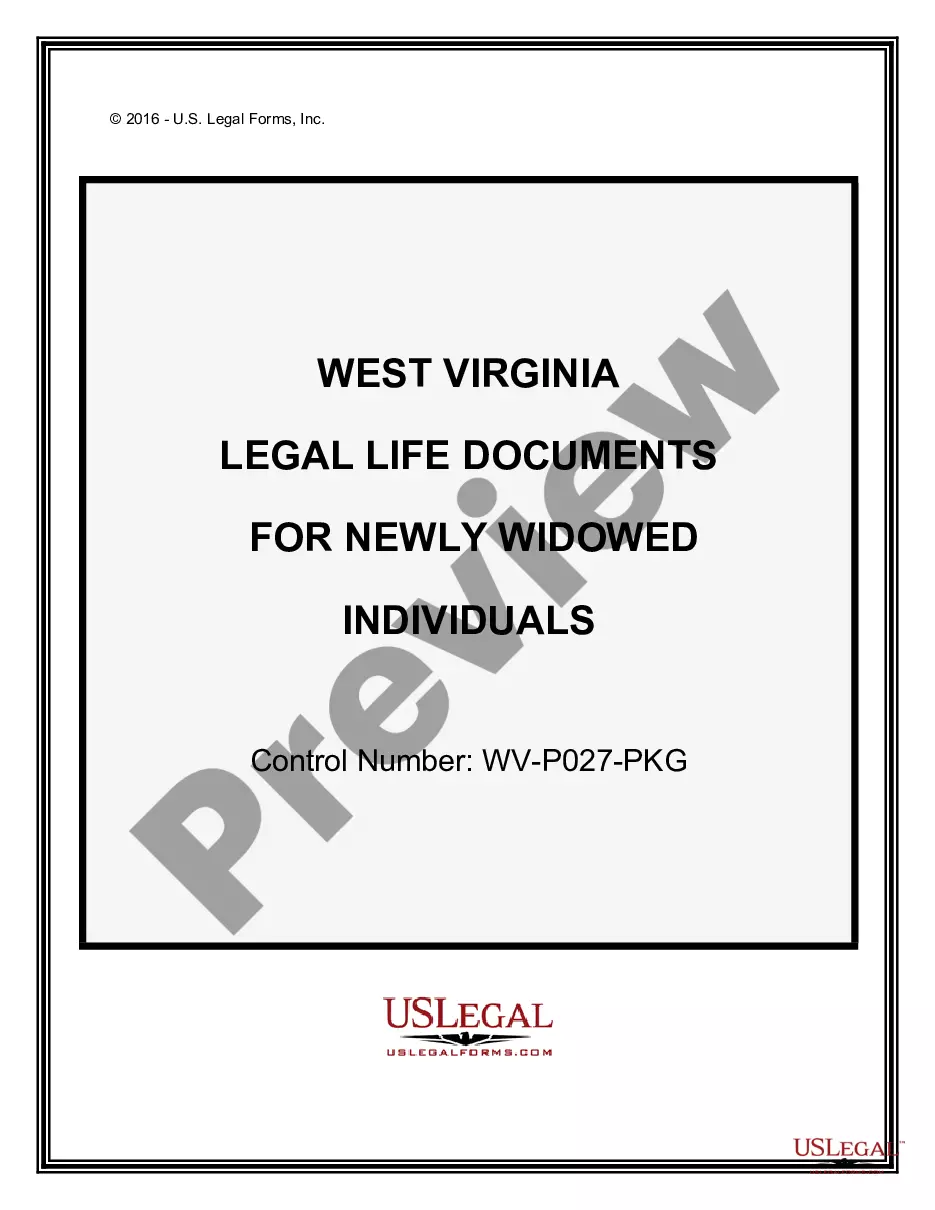
West Virginia Newly Divorced Individuals Package
What this form package covers
The West Virginia Newly Divorced Individuals Package is designed to help individuals who have recently gone through a divorce to organize their legal life. This package includes a set of essential legal documents that cater to the specific needs of newly divorced individuals, ensuring compliance with state laws. It simplifies the process of updating your legal documents, helping you move forward after divorce.
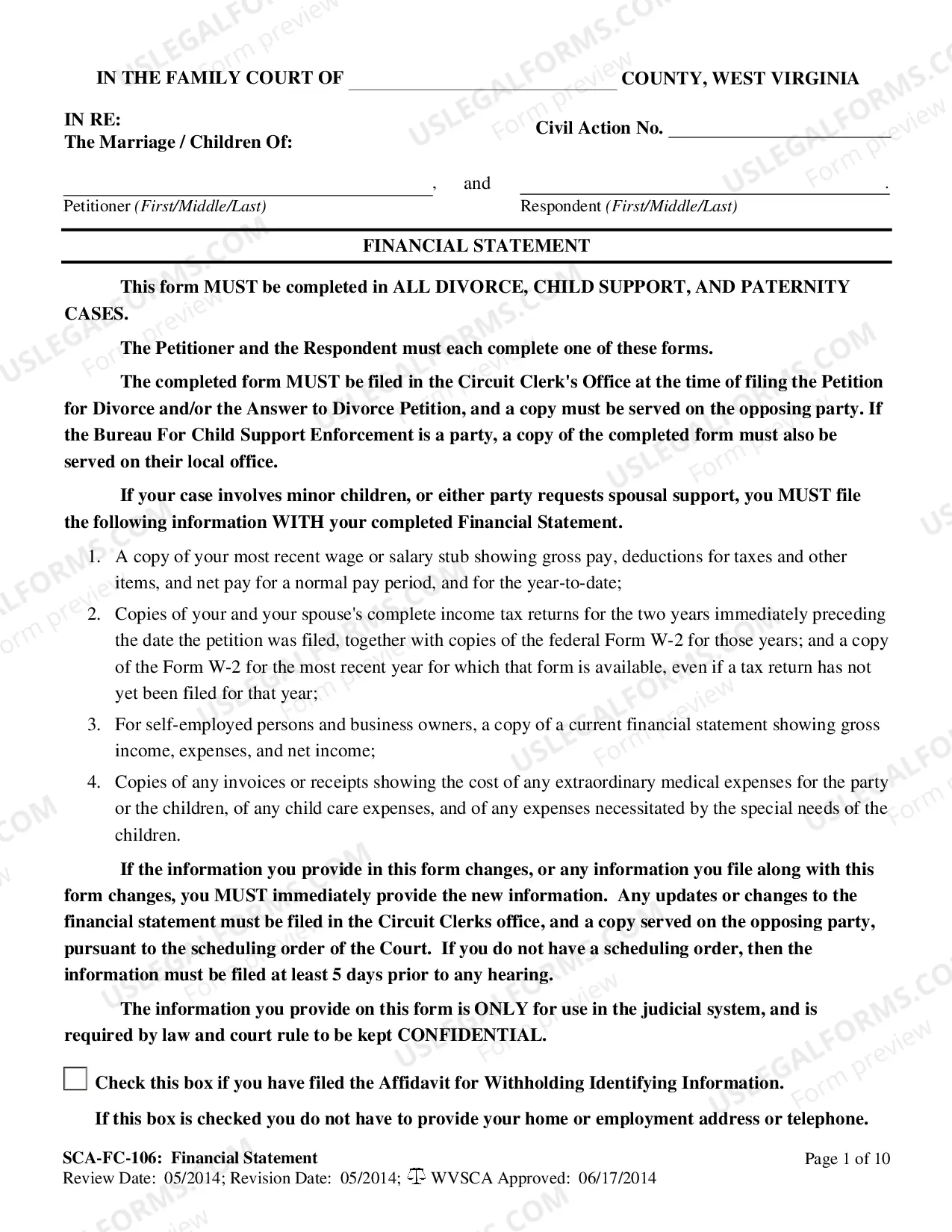
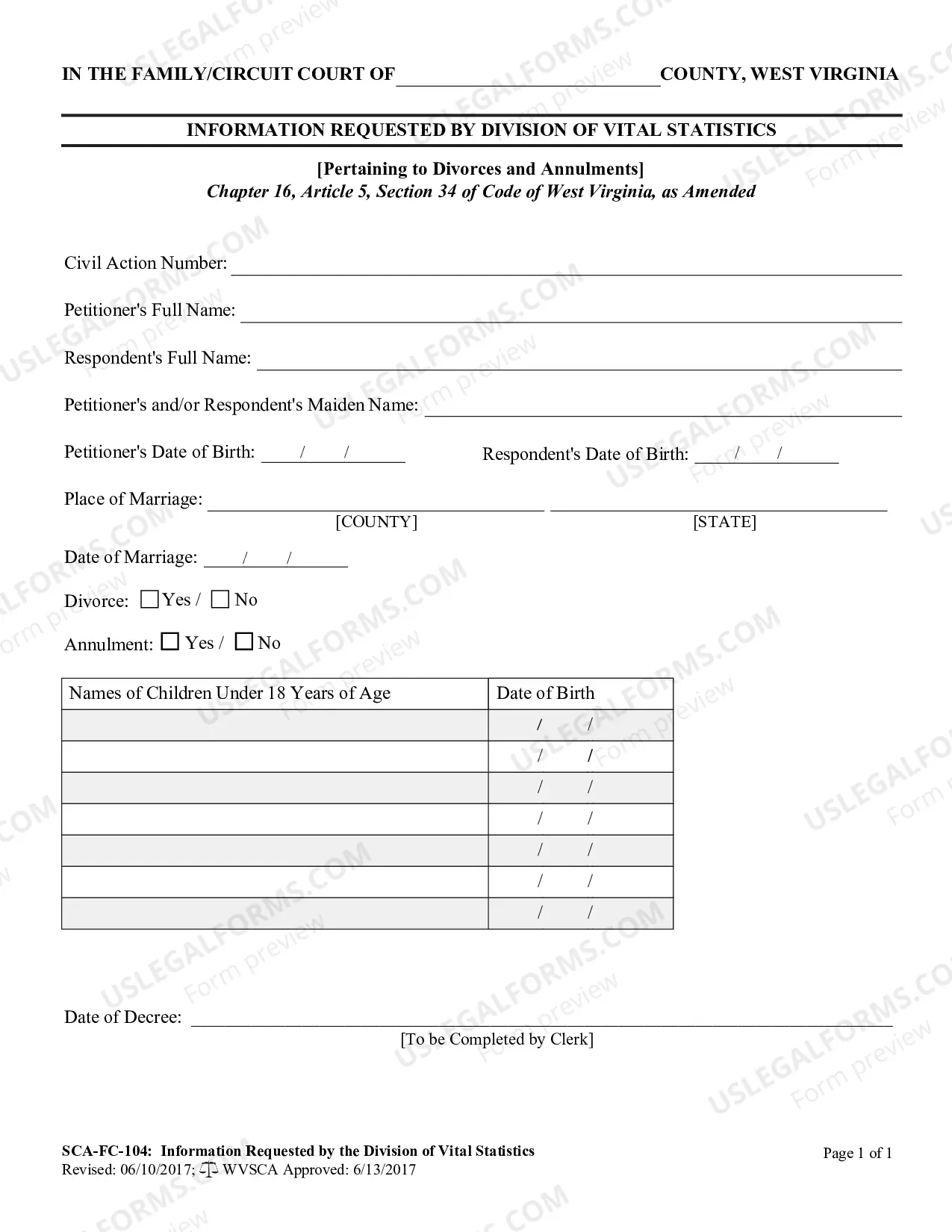
Documents contained in this package
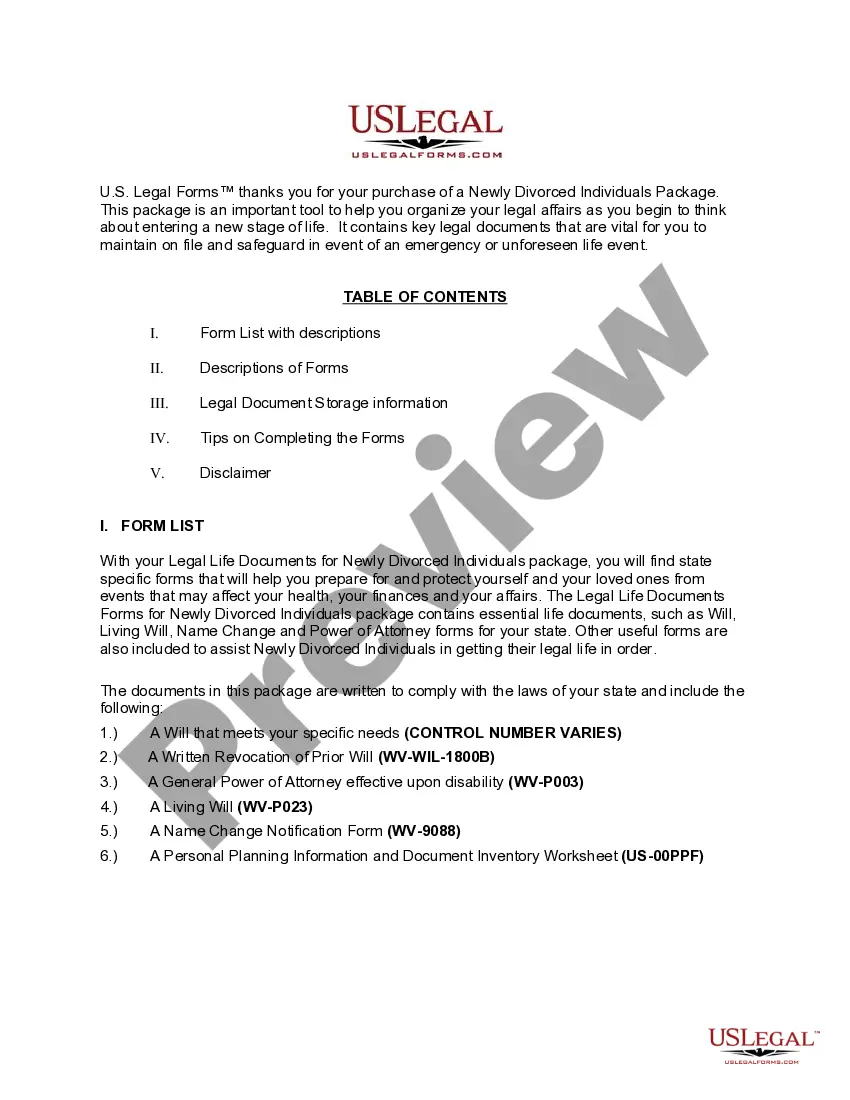
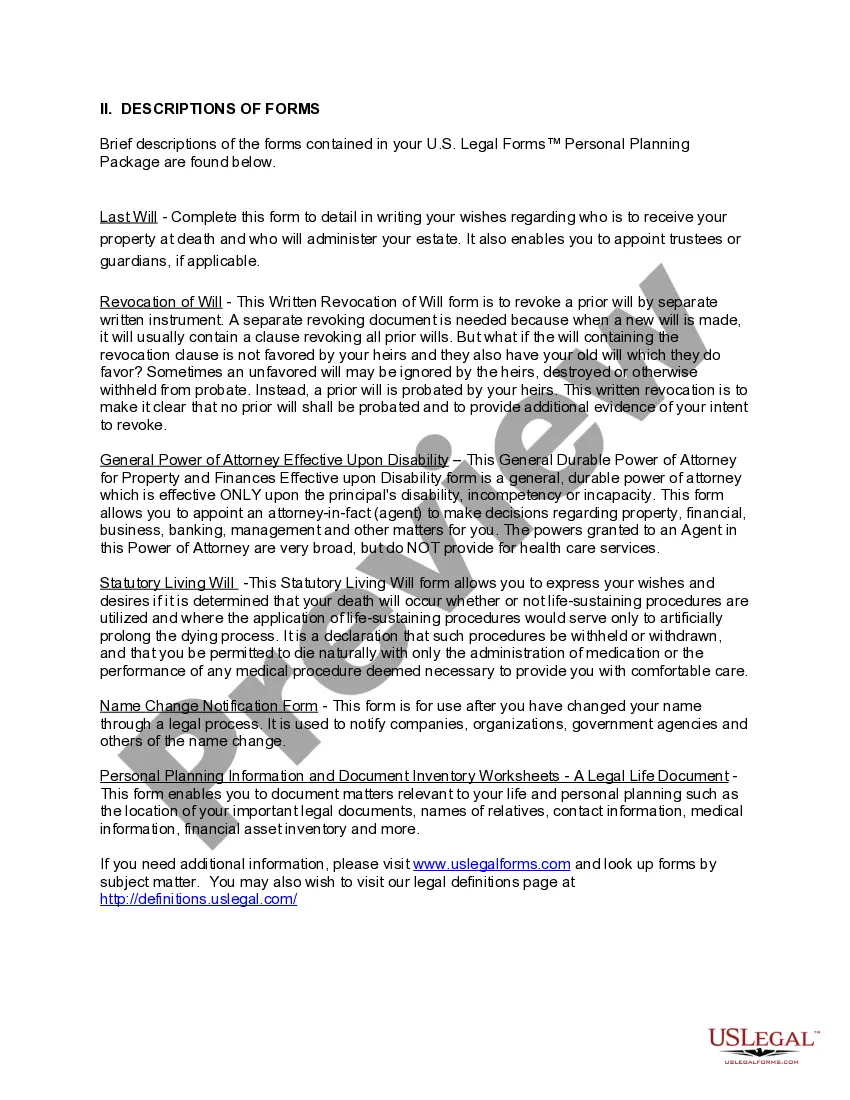
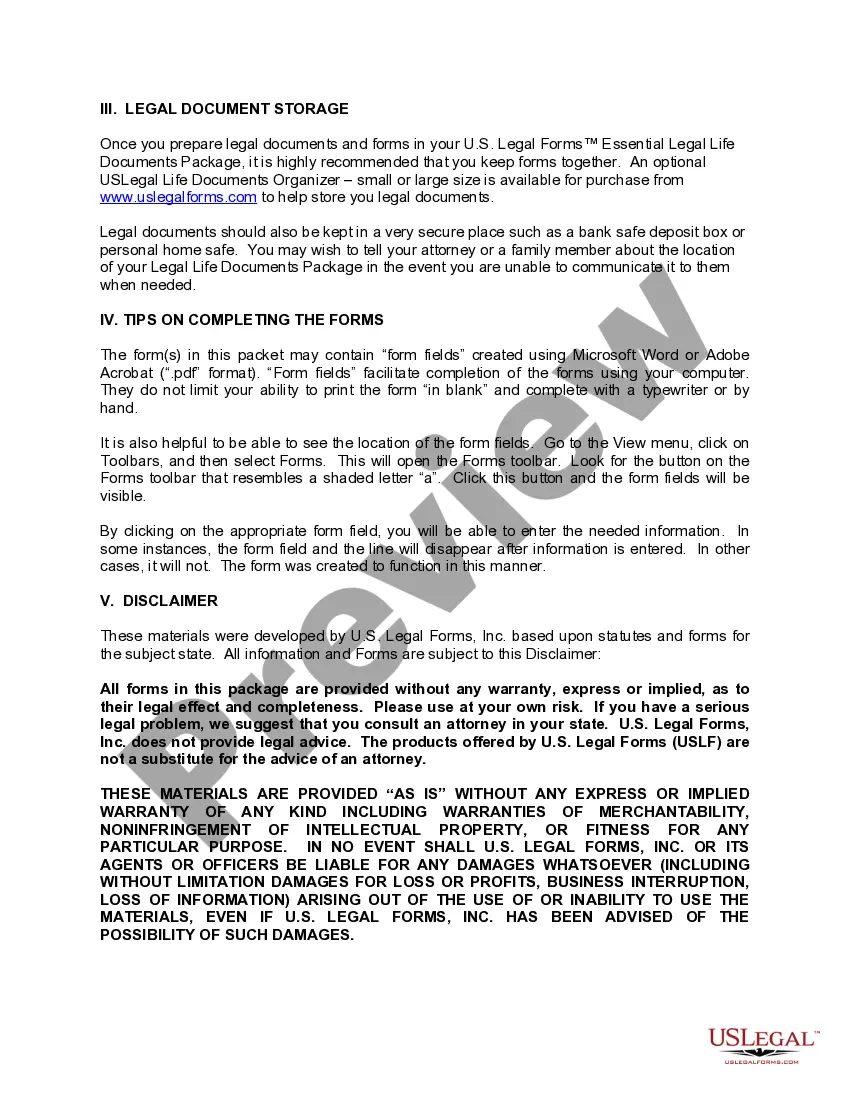
- Last Will and Testament
- Name Change Notification Form
- General Durable Power of Attorney for Property and Finances or Financial Effective upon Disability
- Statutory Medical Power of Attorney and Living Will
- Written Revocation of Will
- Personal Planning Information and Document Inventory Worksheets - A Legal Life Document
Common use cases
This form package is useful in the following scenarios:
- After finalizing your divorce and needing to update your estate planning documents.
- If you want to revoke any previous wills that no longer reflect your wishes.
- When you want to establish a power of attorney for financial matters in case of disability.
- To ensure your healthcare wishes are documented after a significant life change.
- If you are legally changing your name and need to notify relevant parties.
Who this form package is for
- Individuals in West Virginia who have recently divorced.
- Persons looking to organize their legal affairs post-divorce.
- Anyone needing specific legal documents addressed to their current personal situation.
- Individuals who have minimal legal experience but want to manage their legal documents effectively.
How to complete these forms
- Review each included form carefully to understand its purpose.
- Fill out the forms using the provided fields or by hand, ensuring all information is accurate.
- Sign the documents as required, paying attention to any witness or notarization needs.
- Store the completed forms securely, either in a personal safe or a safe deposit box.
- Notify any relevant parties, such as family members or your attorney, of the location of your legal documents.
Notarization details for included forms
Forms in this package typically do not require notarization unless required by local law. However, it is always a good practice to check the requirements for each form to ensure they are legally valid in West Virginia.
Get your form ready online
Our built-in tools help you complete, sign, share, and store your documents in one place.
Make edits, fill in missing information, and update formatting in US Legal Forms—just like you would in MS Word.
Download a copy, print it, send it by email, or mail it via USPS—whatever works best for your next step.
Sign and collect signatures with our SignNow integration. Send to multiple recipients, set reminders, and more. Go Premium to unlock E-Sign.
If this form requires notarization, complete it online through a secure video call—no need to meet a notary in person or wait for an appointment.
We protect your documents and personal data by following strict security and privacy standards.

Make edits, fill in missing information, and update formatting in US Legal Forms—just like you would in MS Word.

Download a copy, print it, send it by email, or mail it via USPS—whatever works best for your next step.

Sign and collect signatures with our SignNow integration. Send to multiple recipients, set reminders, and more. Go Premium to unlock E-Sign.

If this form requires notarization, complete it online through a secure video call—no need to meet a notary in person or wait for an appointment.

We protect your documents and personal data by following strict security and privacy standards.
Avoid these common issues
- Failing to revoke the previous will, leading to potential confusion regarding your wishes.
- Omitting crucial information in the forms, which may render them ineffective.
- Neglecting the need for signatures or witnesses on crucial documents.
- Forgetting to notify relevant parties of a name change, leading to complications.
Why complete this package online
- Convenient access to legally drafted documents tailored to individual situations.
- Easy editing and completion of forms on a computer or device, enhancing accuracy.
- Time-saving as it simplifies the organization of legal documents post-divorce.
- Cost-effective, allowing you to save compared to purchasing each form separately.
Main things to remember
- The West Virginia Newly Divorced Individuals Package provides essential legal documents tailored for recently divorced individuals.
- It includes crucial forms such as a Will, a Power of Attorney, and a Living Will.
- This package is specifically aligned with West Virginia laws, ensuring legal validity.
- Following the provided steps will help ensure all forms are completed correctly.
Looking for another form?

Form popularity
FAQ
West Virginia Divorce Overview In West Virginia, a divorce can be completed on average in a minimum of 360 days, with court fees of $135.00. The state has divorce residency requirements that require the spouse filing for the divorce to have lived in West Virginia for a minimum of twelve months.
While divorce laws vary by state, here are the basic steps: First, you must meet the residency requirements of the state in which you wish to file. Second, you must have grounds (a legally acceptable reason) to end your marriage. Third, you must file divorce papers and have copies sent to your spouse.
In some cases it can affect Custody allocation. In some cases it can affect marital versus separate property. But there is no separation requirement before divorce EXCEPT for divorces on One Year Separation.
Property Division in West Virginia When a couple divorces in West Virginia, the court will divide the marital property based on equitable distribution. Equitable division does not have to be equal, but the court must start by presuming that all the marital property will be split equally between the spouses.
In deciding whether to award alimony, the court does not consider the genders of the spouses, but does weigh 20 statutory factors, which include: The length of the marriage. The age and health of the parties. Each party's education level and ability to earn income.
West Virginia is NOT a community property state, which means that marital property is not automatically divided 50/50 between the spouses in a divorce case.Factors such as one spouse's economic misconduct may also be considered.
How long does a divorce take in West Virginia? Once the divorce paperwork has been filed in court, it usually takes 30 to 90 days for a divorce to be final. The start to finish time of the divorce may vary depending on the caseload of the court and the availability of judges to sign the final Decree of Divorce.
In West Virginia, any property that belonged to only one spouse before marriage is considered separate property, as is any gift or inheritance received by one spouse. Any property acquired or earned during the marriage is marital property, regardless of which spouse earned or acquired it.