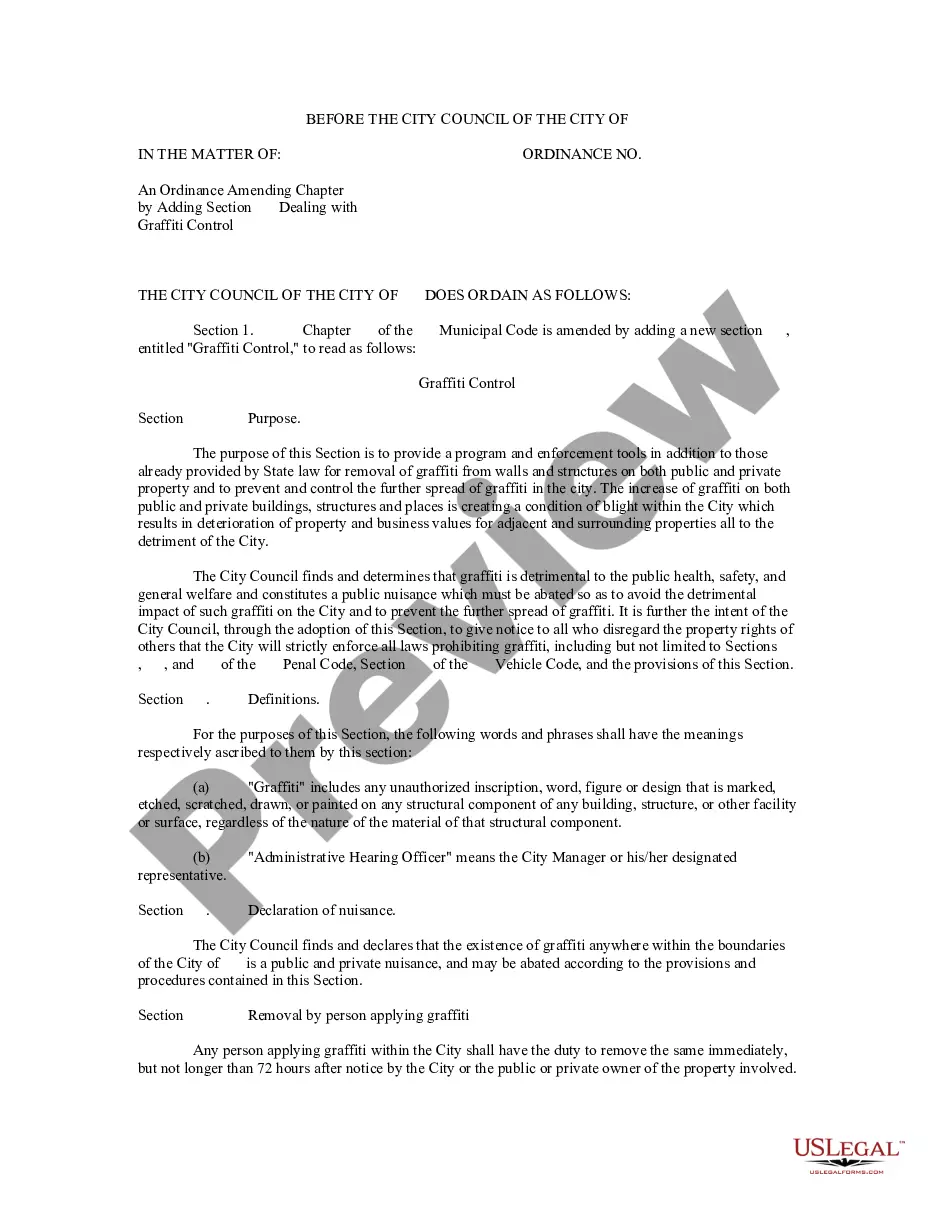
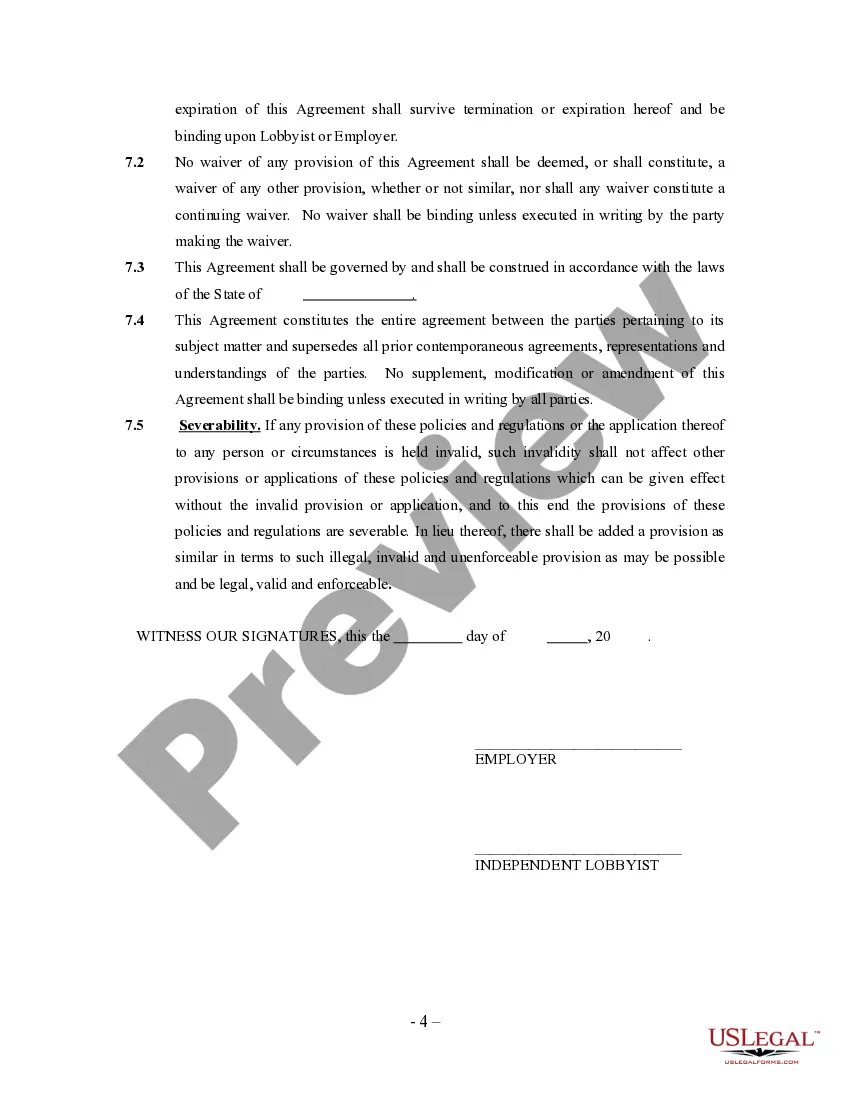
Employer hires a lobbyist as an independent contractor to provide lobbying services as specified in the contract.
Wisconsin Lobbyist Agreement - Self-Employed Independent Contractor
State:
Multi-State
Control #:
US-INDC-206
Format:
Word;
Rich Text
Instant download
Description
Free preview
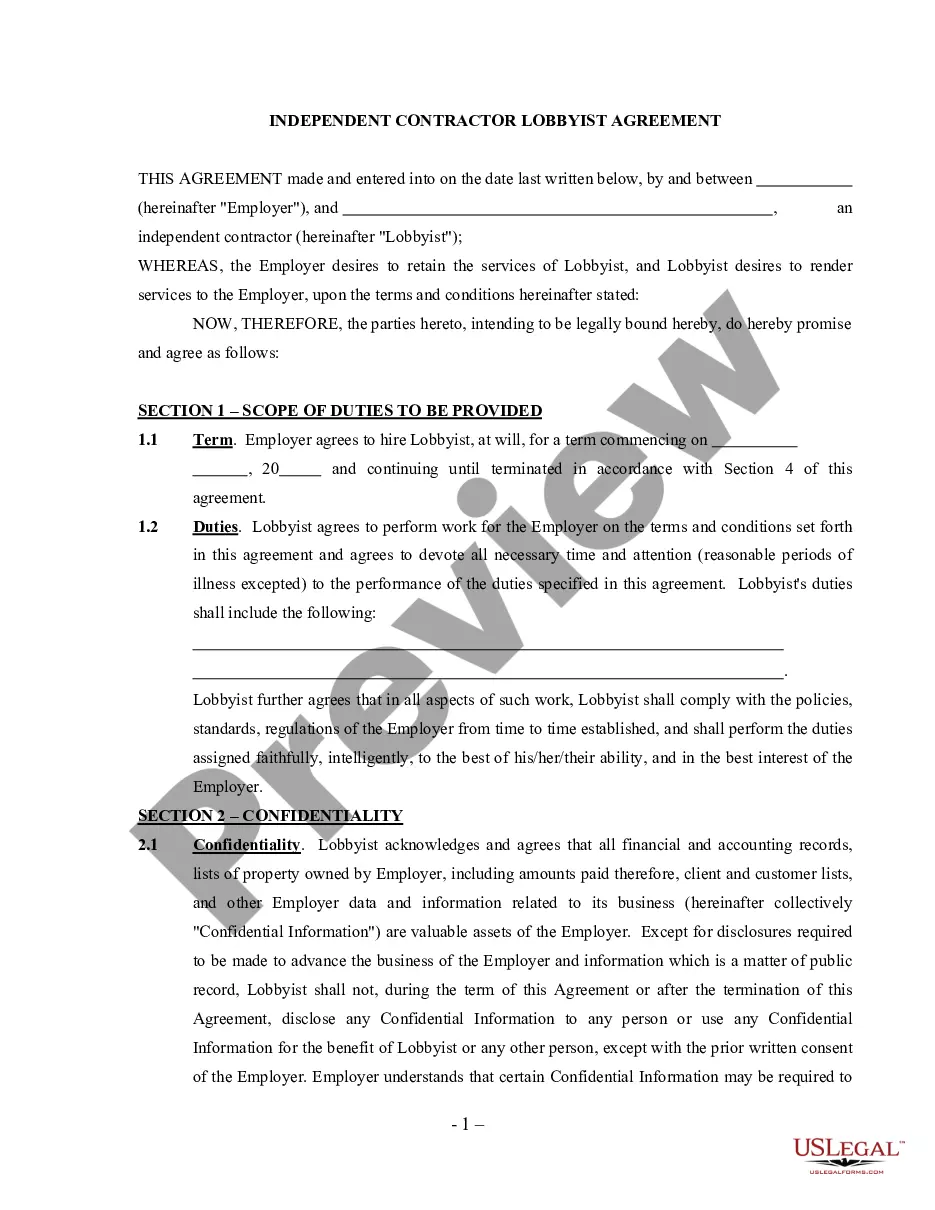
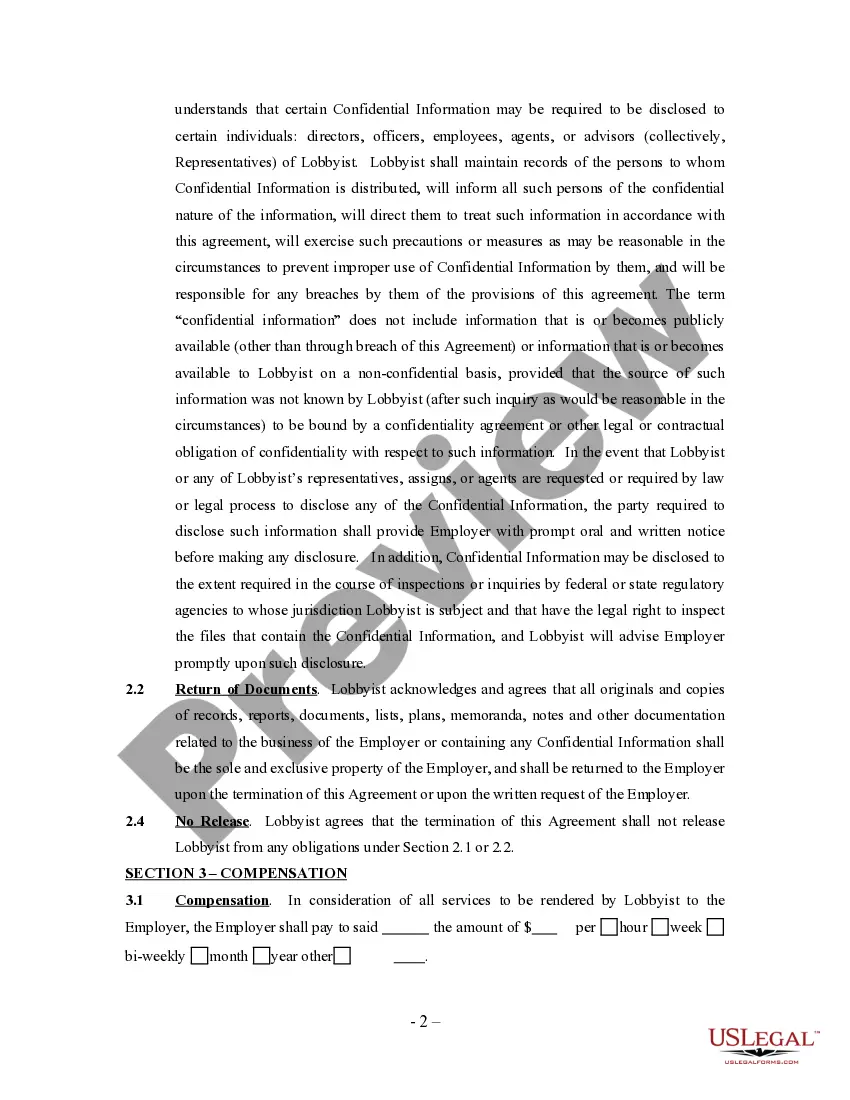
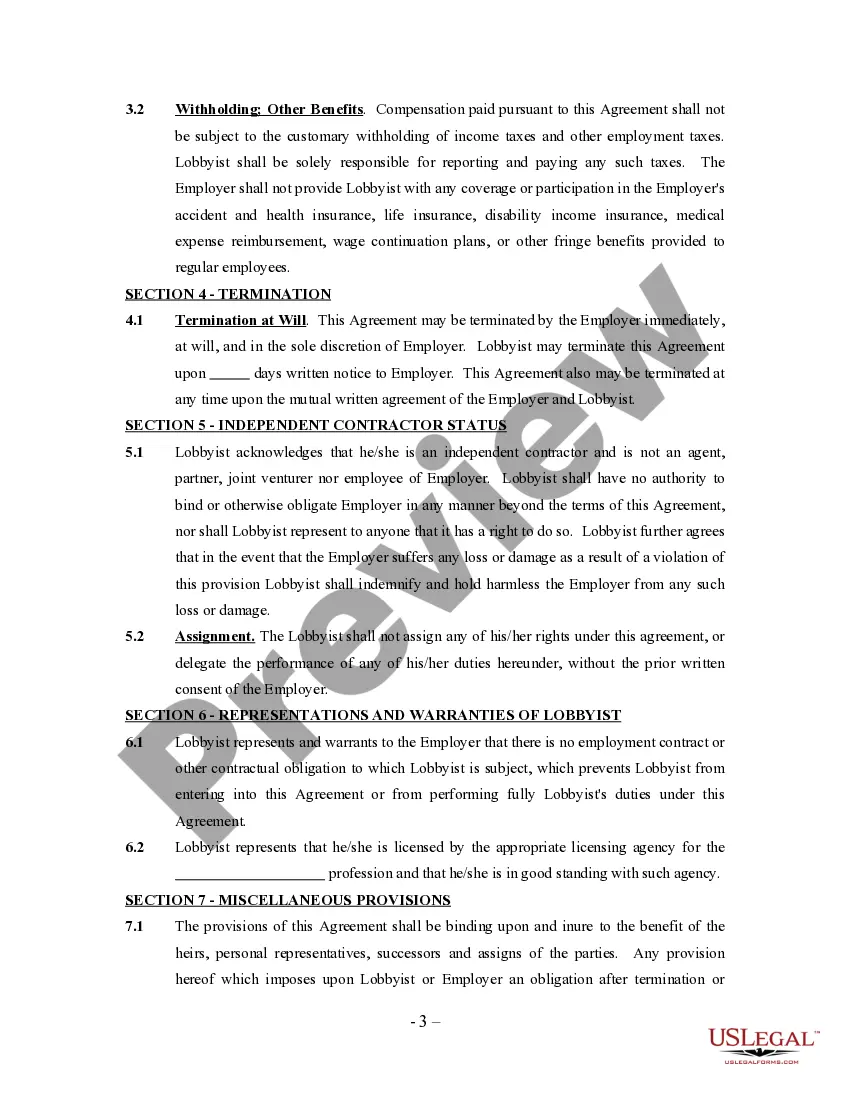
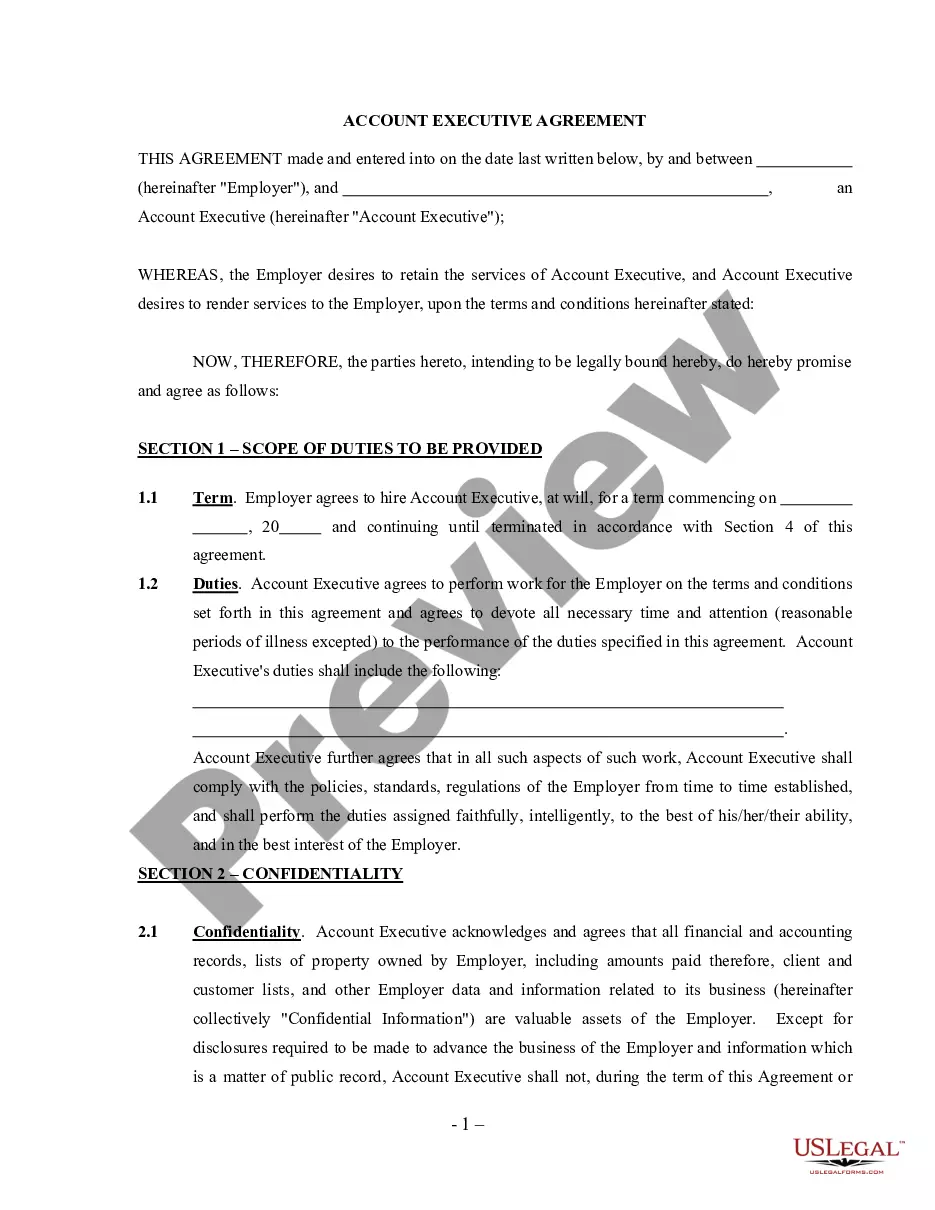

How to fill out Lobbyist Agreement - Self-Employed Independent Contractor?
If you desire to finalize, obtain, or print sanctioned document templates, utilize US Legal Forms, the primary collection of legal forms available online.
Take advantage of the site’s straightforward and user-friendly search to find the documents you need.
Various templates for business and personal purposes are organized by categories and states, or keywords.
Step 4. Once you have found the form you need, select the Buy Now option. Choose the pricing plan you prefer and provide your credentials to register for an account.
Step 5. Process the payment. You can use your credit card or PayPal account to complete the transaction.
- Utilize US Legal Forms to locate the Wisconsin Lobbyist Agreement - Self-Employed Independent Contractor in just a few clicks.
- If you are already a US Legal Forms user, Log In to your account and then click the Download button to obtain the Wisconsin Lobbyist Agreement - Self-Employed Independent Contractor.
- You can also access forms you previously saved in the My documents tab of your account.
- If you are using US Legal Forms for the first time, follow the instructions below.
- Step 1. Ensure you have selected the form for the correct city/state.
- Step 2. Use the Preview option to review the form’s content. Don’t forget to read the summary.
- Step 3. If you are not satisfied with the form, use the Search field at the top of the screen to find other versions of the legal form template.
Form popularity
FAQ
Many lobbyists operate as self-employed independent contractors, giving them the flexibility to choose their clients and projects. Being self-employed often requires a solid understanding of legal agreements to protect their interests and obligations. A Wisconsin Lobbyist Agreement - Self-Employed Independent Contractor serves as a valuable tool to outline these details and ensure professional integrity.
Yes, lobbyists must register to comply with state and federal laws. Registration often involves disclosing their clients, the issues they advocate for, and any compensation they receive. Proper registration is crucial for maintaining transparency and accountability in lobbying efforts, especially when operating under a Wisconsin Lobbyist Agreement - Self-Employed Independent Contractor.
Lobbyists can be employed in various ways, including by law firms, advocacy groups, corporations, and as self-employed individuals. Many lobbyists operate as independent contractors, which requires a thorough understanding of legal agreements. A Wisconsin Lobbyist Agreement - Self-Employed Independent Contractor can help clarify responsibilities and ensure compliance with state regulations.
The four types of lobbying include grassroots lobbying, direct lobbying, electoral lobbying, and information lobbying. Grassroots lobbying involves mobilizing public support to influence decision-makers. Direct lobbying focuses on communication with lawmakers, while electoral lobbying aims to influence the outcomes of elections. Understanding these types is essential for creating a Wisconsin Lobbyist Agreement - Self-Employed Independent Contractor.
The independent contractor agreement in Wisconsin is a specialized contract that clarifies the roles, responsibilities, and expectations of the contractor and the client. This agreement can address specific areas like payment terms, project deadlines, and termination conditions. For self-employed independent contractors engaging in lobbying activities, having a well-structured Wisconsin Lobbyist Agreement - Self-Employed Independent Contractor is essential to comply with state laws and outline the scope of your lobbying efforts. Utilizing platforms like uslegalforms can simplify the process of drafting such agreements.
Legal requirements for independent contractors vary by state but generally include having a valid tax identification number, obtaining necessary licenses, and ensuring compliance with local regulations. It's essential to distinguish yourself from employees, particularly regarding tax obligations and benefits. For self-employed independent contractors in Wisconsin, understanding these requirements is vital for crafting a comprehensive Wisconsin Lobbyist Agreement - Self-Employed Independent Contractor. Ensuring compliance minimizes risks and enhances your business reputation.
The 20 percent rule for lobbying refers to the limit on how much time independent contractors can spend on lobbying activities in relation to their overall work time. According to this guideline, if more than 20 percent of your time is dedicated to lobbying, you may need to register as a lobbyist. Understanding this rule is crucial for self-employed independent contractors who are navigating the landscape of political influence in Wisconsin. It's important to incorporate this knowledge into your Wisconsin Lobbyist Agreement - Self-Employed Independent Contractor.
A basic independent contractor agreement is a legal document that outlines the terms of the working relationship between a client and a self-employed individual. This agreement covers the responsibilities, payment terms, and deadlines that both parties should adhere to. By understanding this contract, you can ensure clarity and legally protect your interests as a self-employed independent contractor in Wisconsin. It often serves as a preliminary step toward a more specific Wisconsin Lobbyist Agreement - Self-Employed Independent Contractor.