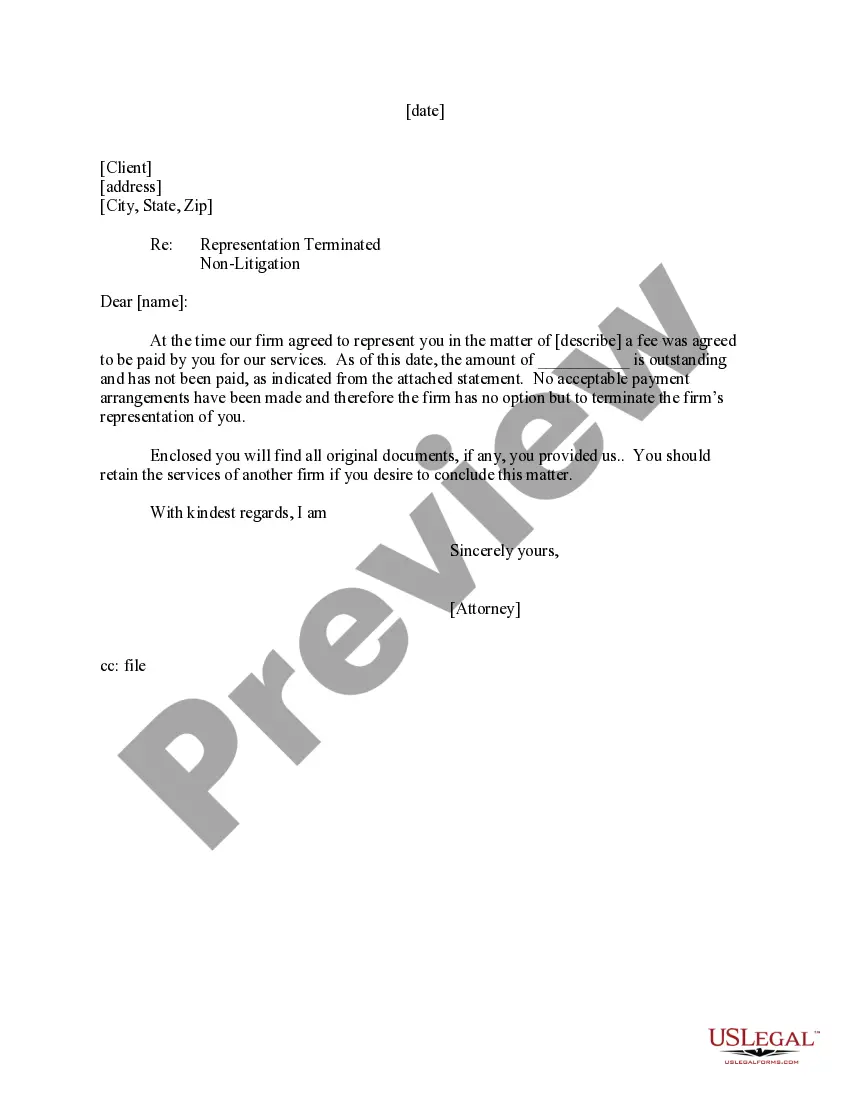
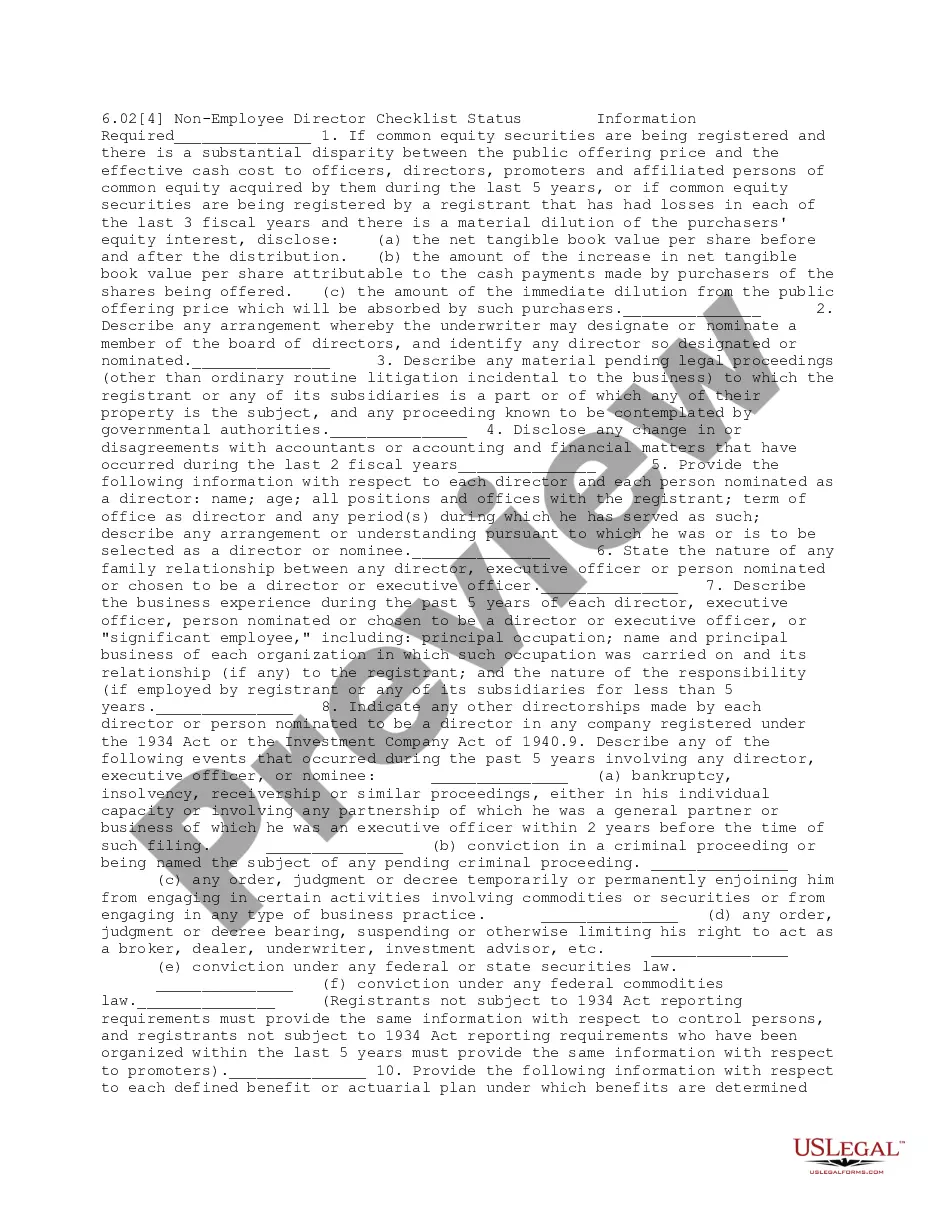
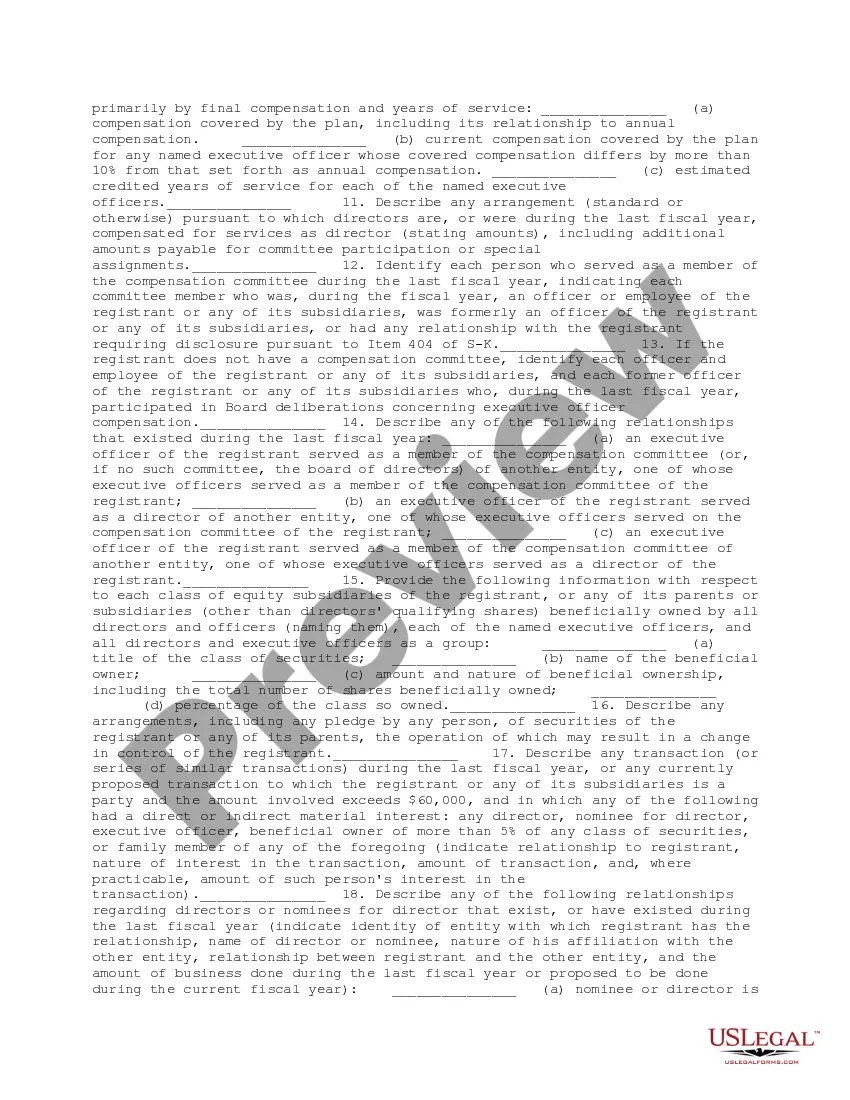
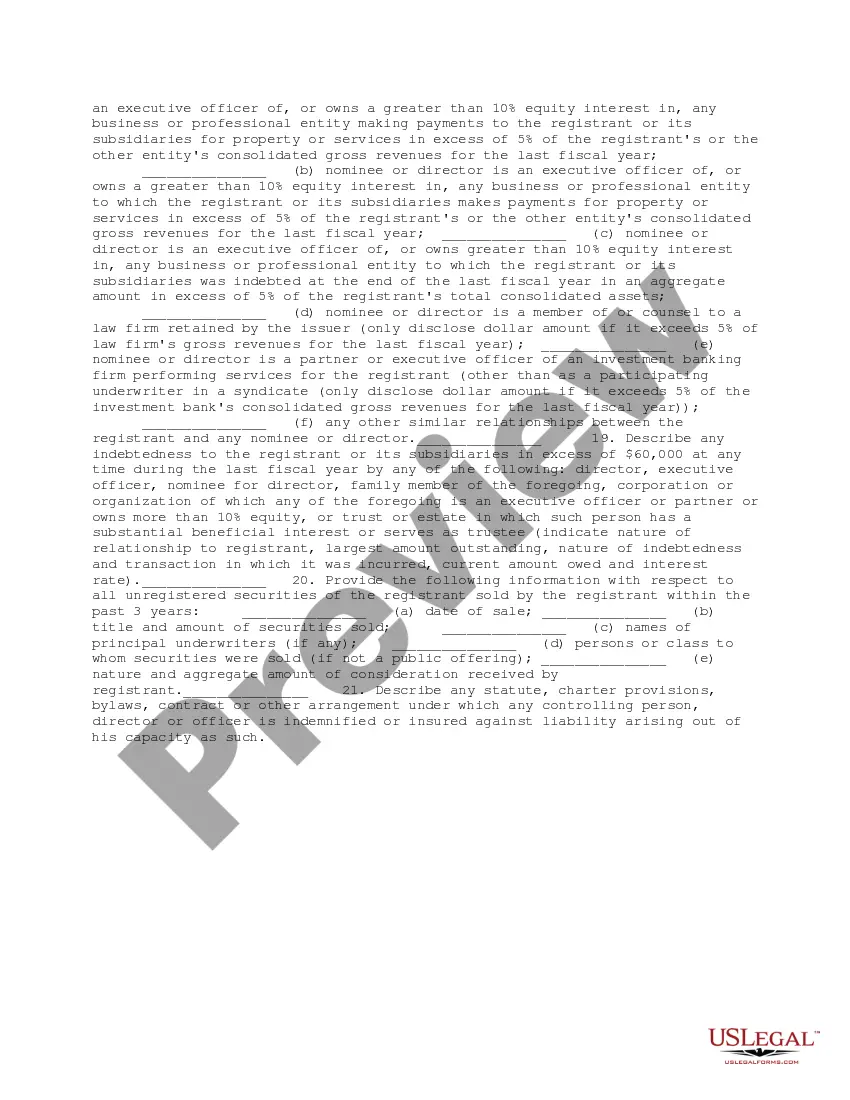
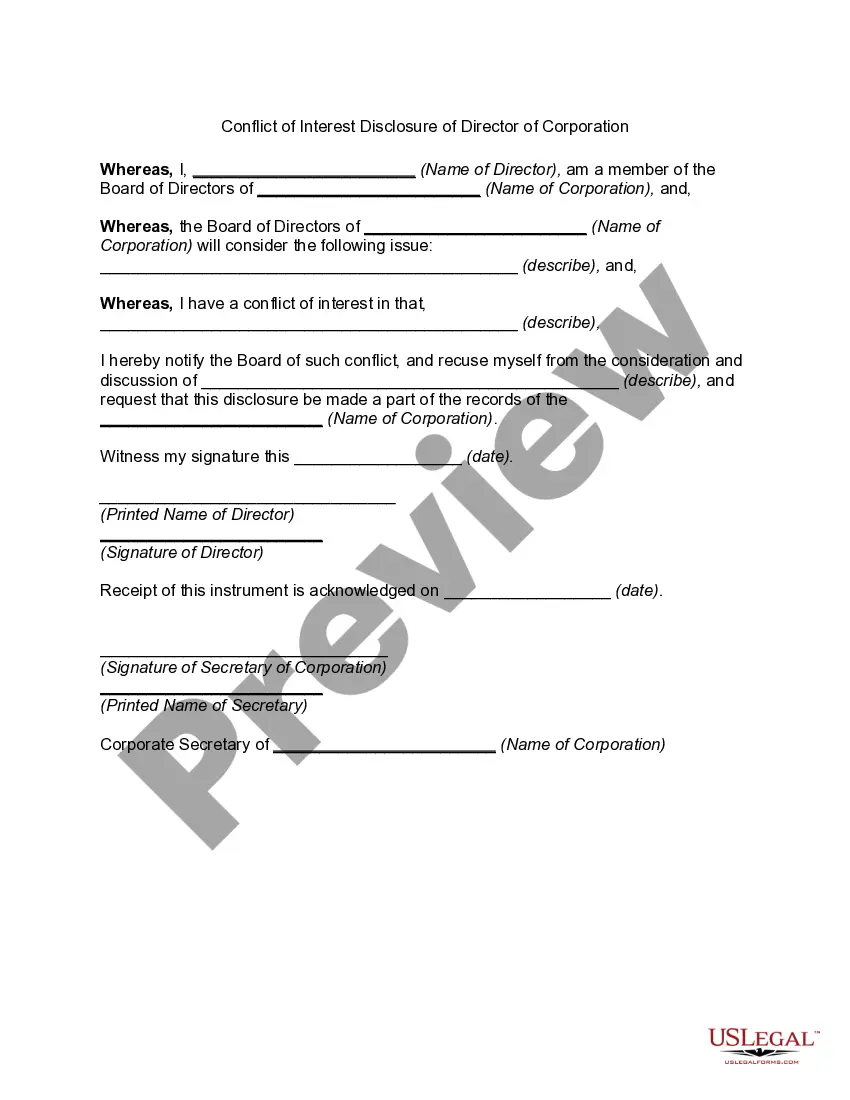
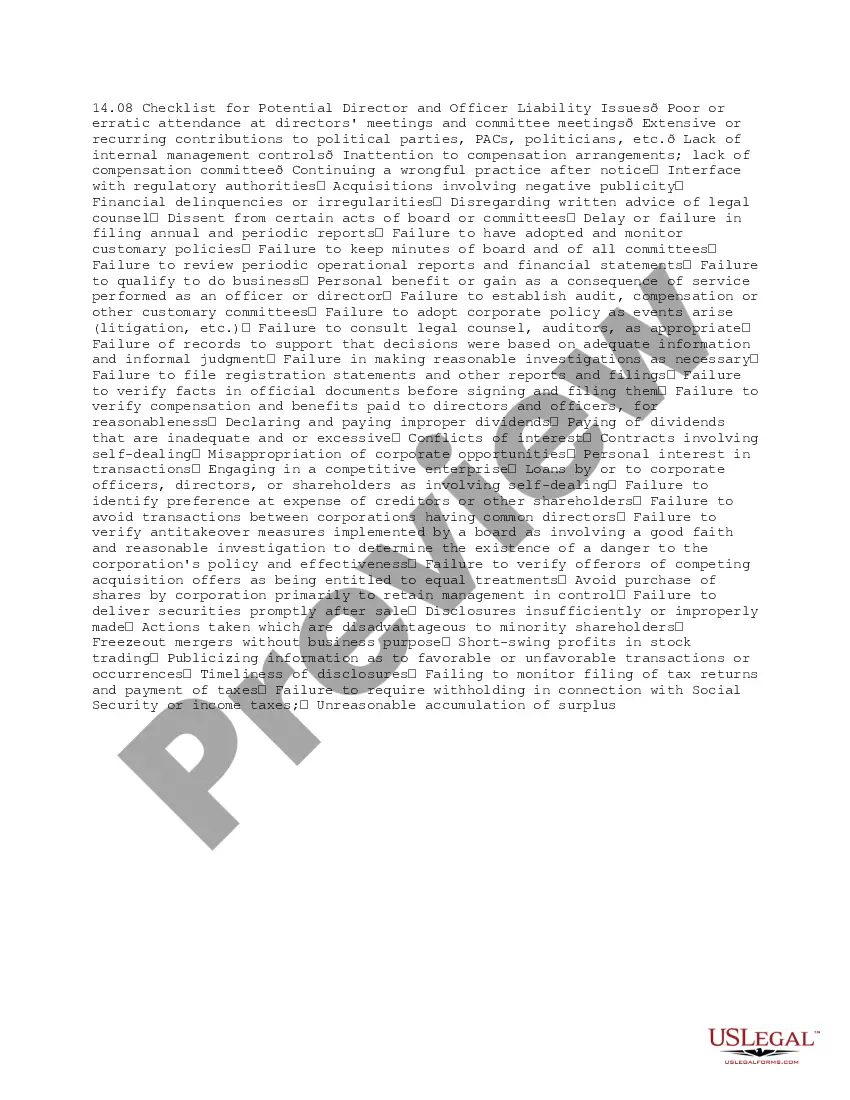
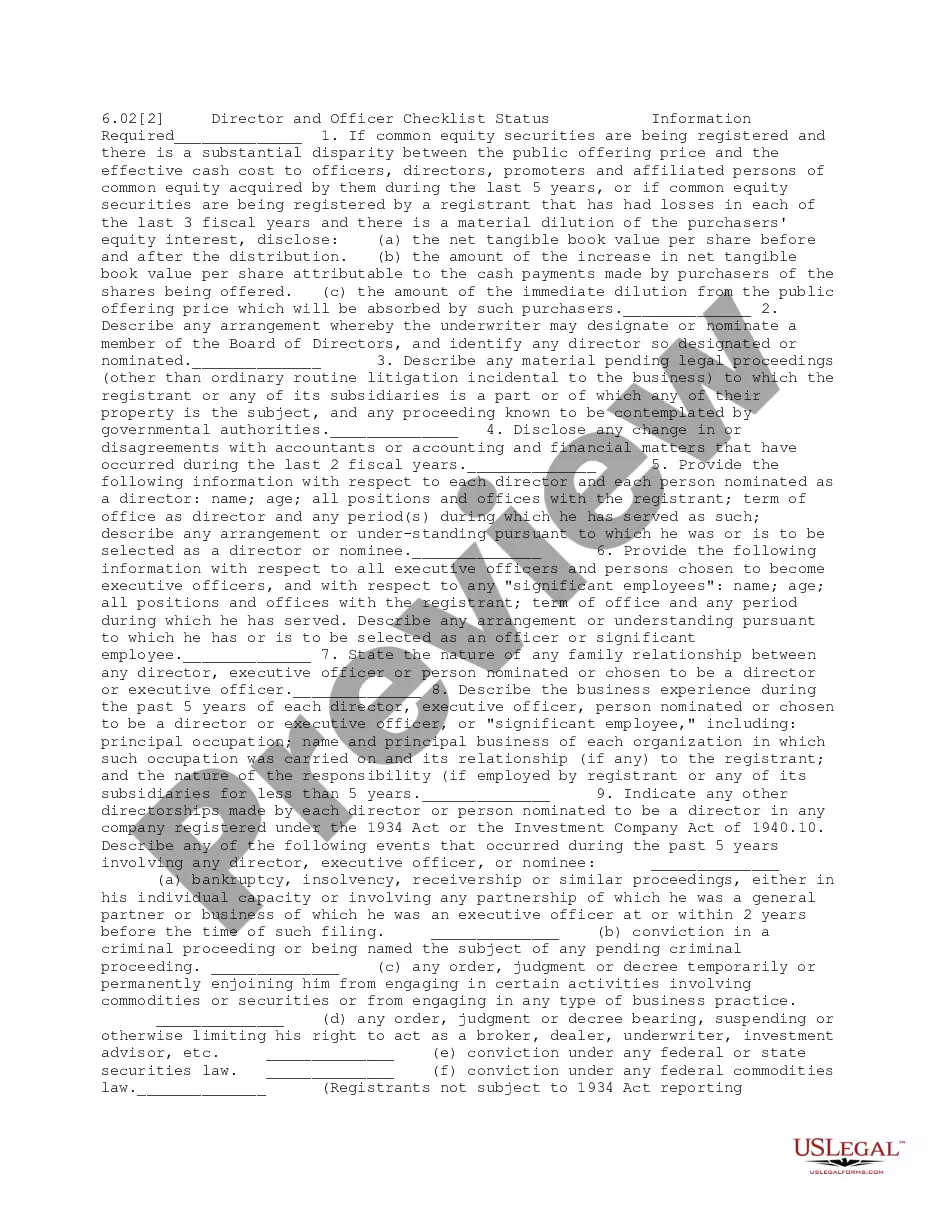
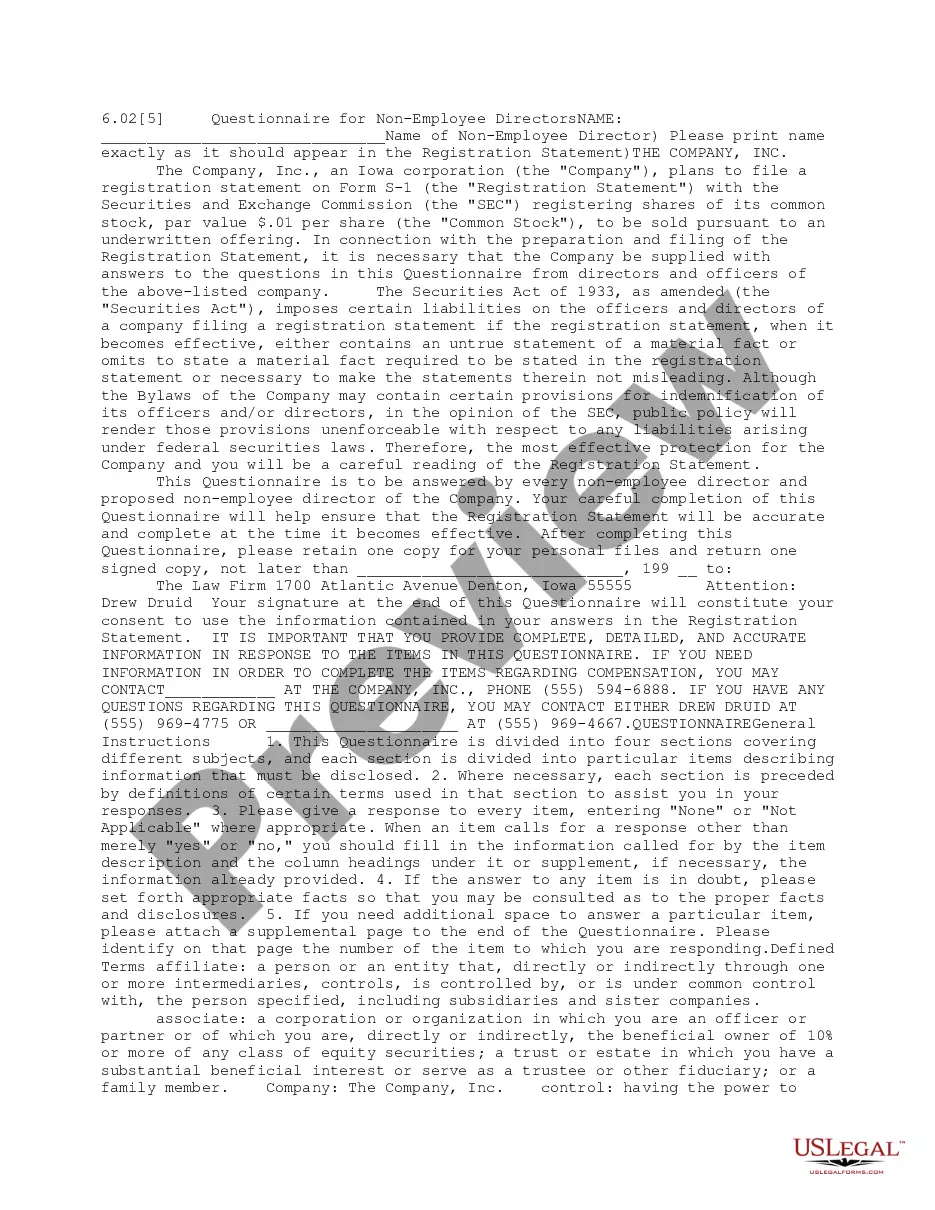
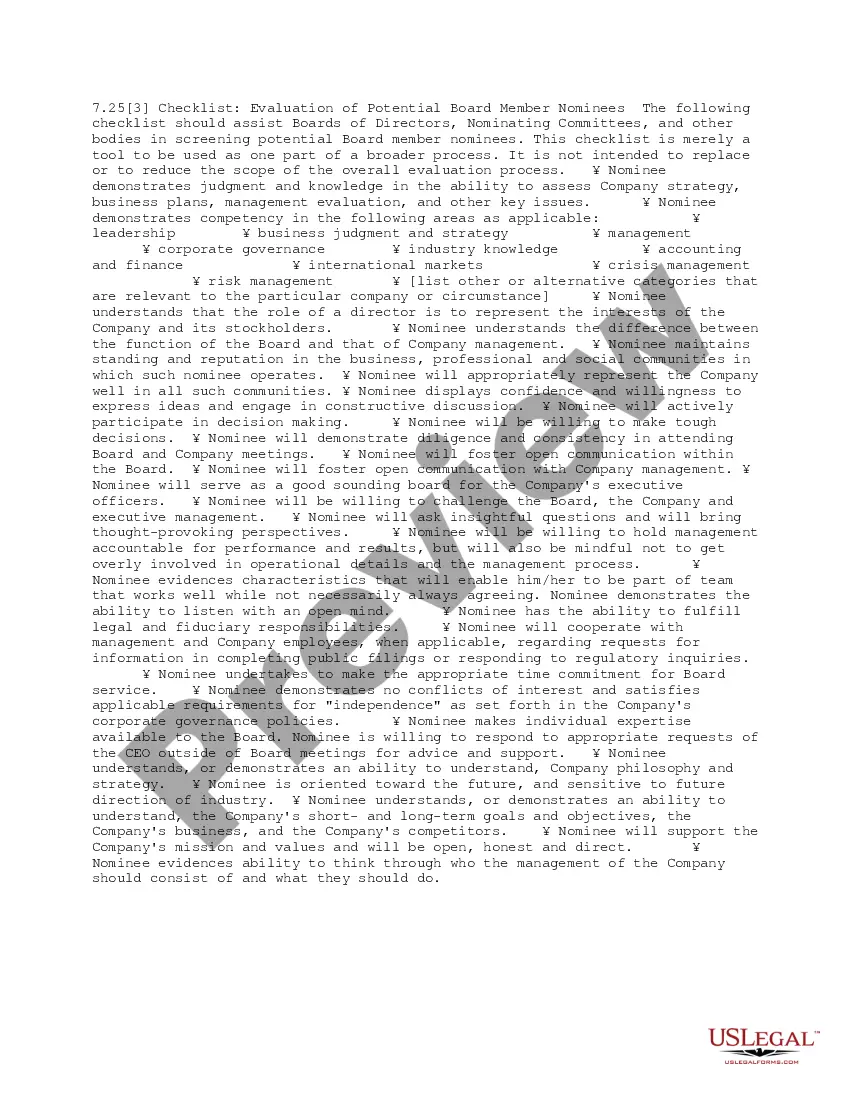
This form is a due diligence checklist that outlines information pertinent to non-employee directors in a business transaction.
Wisconsin Nonemployee Director Checklist
Category:
State:
Multi-State
Control #:
US-DD06024
Format:
Word;
PDF;
Rich Text
Instant download
Description
Free preview
Get your form ready online
Our built-in tools help you complete, sign, share, and store your documents in one place.
Built-in online Word editor
Make edits, fill in missing information, and update formatting in US Legal Forms—just like you would in MS Word.
Export easily
Download a copy, print it, send it by email, or mail it via USPS—whatever works best for your next step.
E-sign your document
Sign and collect signatures with our SignNow integration. Send to multiple recipients, set reminders, and more. Go Premium to unlock E-Sign.
Notarize online 24/7
If this form requires notarization, complete it online through a secure video call—no need to meet a notary in person or wait for an appointment.
Store your document securely
We protect your documents and personal data by following strict security and privacy standards.

Make edits, fill in missing information, and update formatting in US Legal Forms—just like you would in MS Word.

Download a copy, print it, send it by email, or mail it via USPS—whatever works best for your next step.

Sign and collect signatures with our SignNow integration. Send to multiple recipients, set reminders, and more. Go Premium to unlock E-Sign.

If this form requires notarization, complete it online through a secure video call—no need to meet a notary in person or wait for an appointment.

We protect your documents and personal data by following strict security and privacy standards.
Looking for another form?




How to fill out Nonemployee Director Checklist?
Selecting the most suitable legal document format can be challenging.
Clearly, there are numerous templates accessible online, but how can you find the legal form you require.
Utilize the US Legal Forms website. The service provides thousands of templates, including the Wisconsin Nonemployee Director Checklist, which can be utilized for business and personal needs.
First, ensure that you have selected the correct form for your locality. You can browse the form using the Review button and check the form details to confirm it is the correct one for you.
- All of the forms are reviewed by professionals and comply with federal and state regulations.
- If you are currently registered, Log In to your account and click the Download button to obtain the Wisconsin Nonemployee Director Checklist.
- Use your account to browse through the legal forms you have previously purchased.
- Visit the My documents tab in your account to acquire another copy of the document you need.
- If you are a new user of US Legal Forms, here are simple instructions for you to follow.
Form popularity
FAQ
The primary difference between a 1099 and a W-2 lies in the nature of employment. A W-2 is used for employees, reporting wages and tax withholdings, while a 1099 is typically issued to independent contractors, reporting income without tax withholdings. Understanding this difference is crucial for compliance and financial planning. You can refer to the Wisconsin Nonemployee Director Checklist for insights on how to handle both situations.
You may have looked in Box 7 of Form 1099-MISC to see how much a business or client reported that they paid you. Now, that information comes from Form 1099-NEC starting in tax year 2020. However, you can still use Form 1099-MISC for reporting nonemployee compensation for tax years prior to 2020.
Yes, as a director, your fees are not considered employee wages or a salary (W-2). Instead, the IRS considers you to be an independent contractor and your income is reported on Form 1099-MISC in Box 7 (Nonemployee Compensation) and this is what you will use when you file your 1040.
On the self-employment tax issue, the IRS ruled in 1972, that director fees are self-employment income subject to self-employment tax.
You must report directors' fees and other remuneration, including payments made after retirement, on Form 1099-NEC in the year paid.
Wisconsin requires 1099-NEC filing. Recommended filing method: Combined Federal State Filing Program (CFSFP). Scenario 2: Wisconsin requires 1099-NEC filing, if there were Wisconsin state taxes withheld. Recommended filing method: Electronic.
As of 2020, box 7 is used to indicate the payer made direct sales of $5,000 or more of consumer products to a buyer. These products are generally direct sales of a product intended to be resold. There are numerous situations this applies to, but the best illustration of using box 7 is multi-level marketing companies.
NEC The NEC is part of the Combined Federal and State program for tax year 2021. If your state participates in this program, you likely have no additional requirements to submit files to your state; however, it is your responsibility to be fully cognizant of your state's rules.
Companies must report directors' fees and other remuneration, including payments made after retirement, in box 1 on Form 1099-NEC in the year paid.
Payers may use either box 2 on Form 1099-NEC or box 7 on Form 1099-MISC to report any sales totaling $5,000 or more of consumer products for resale, on a buy-sell, a deposit-commission, or any other basis.