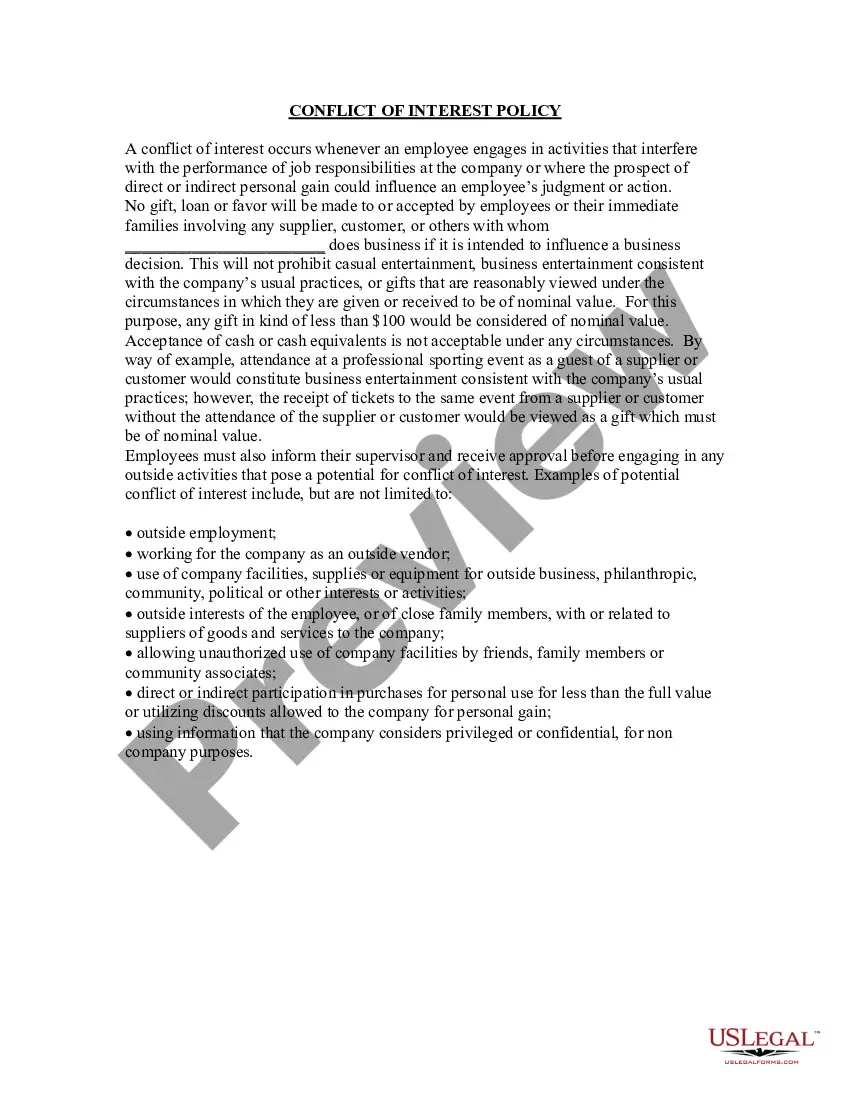
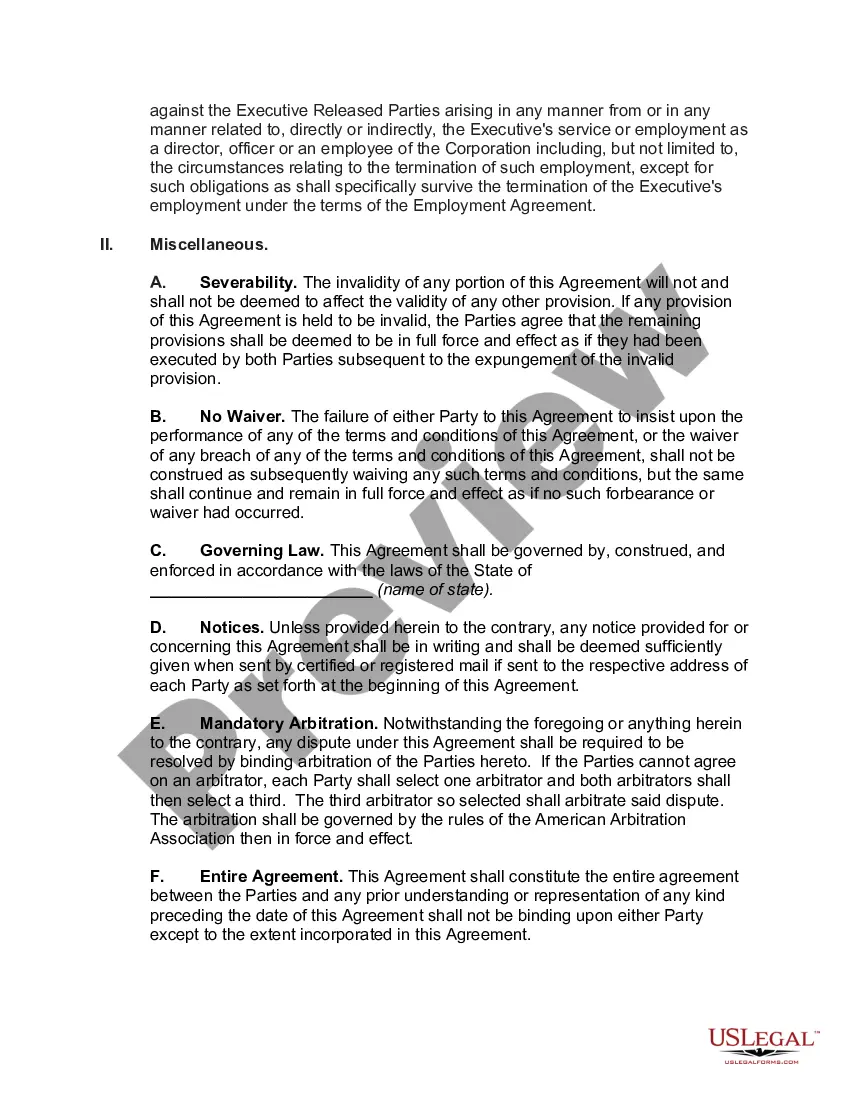
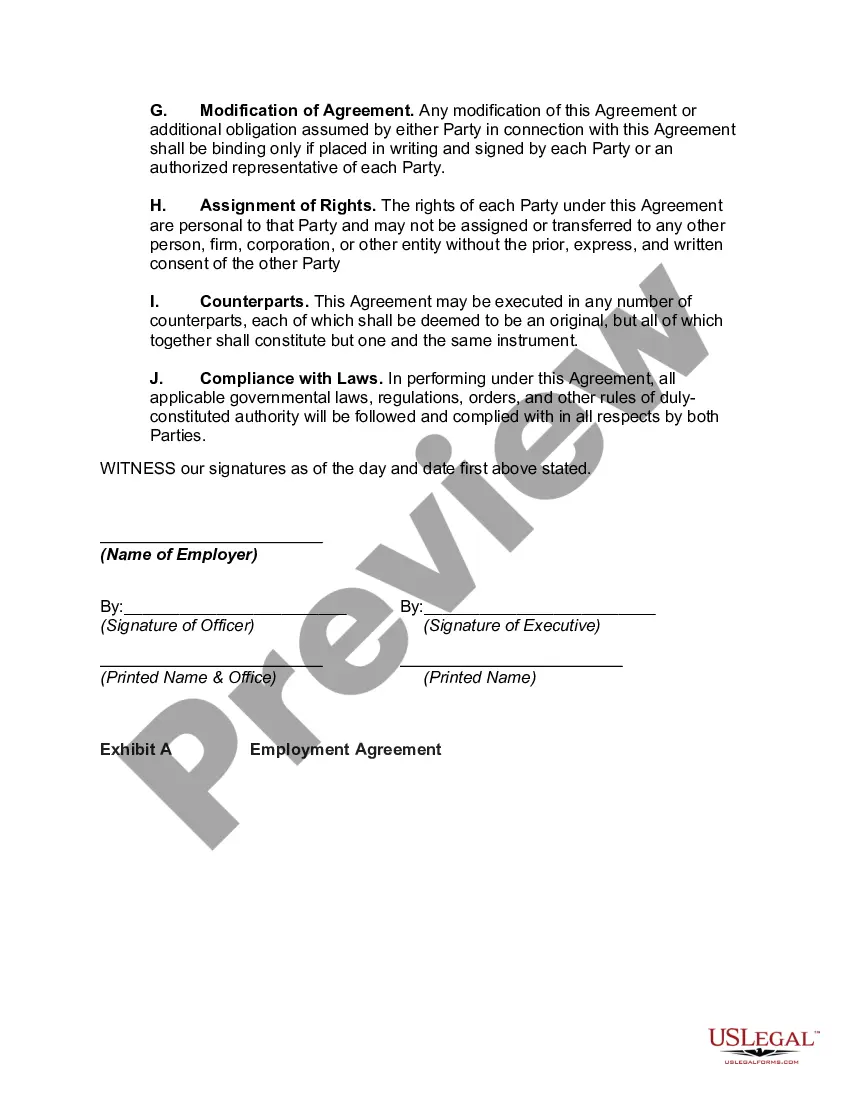
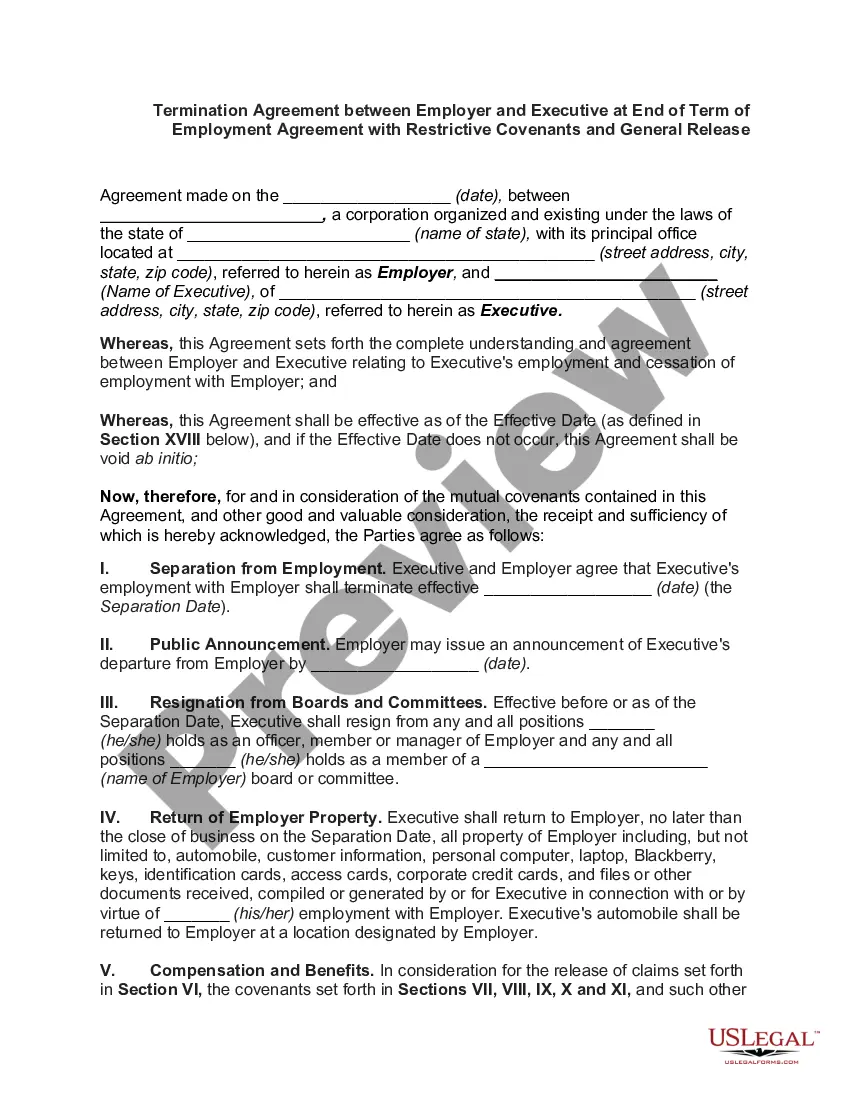
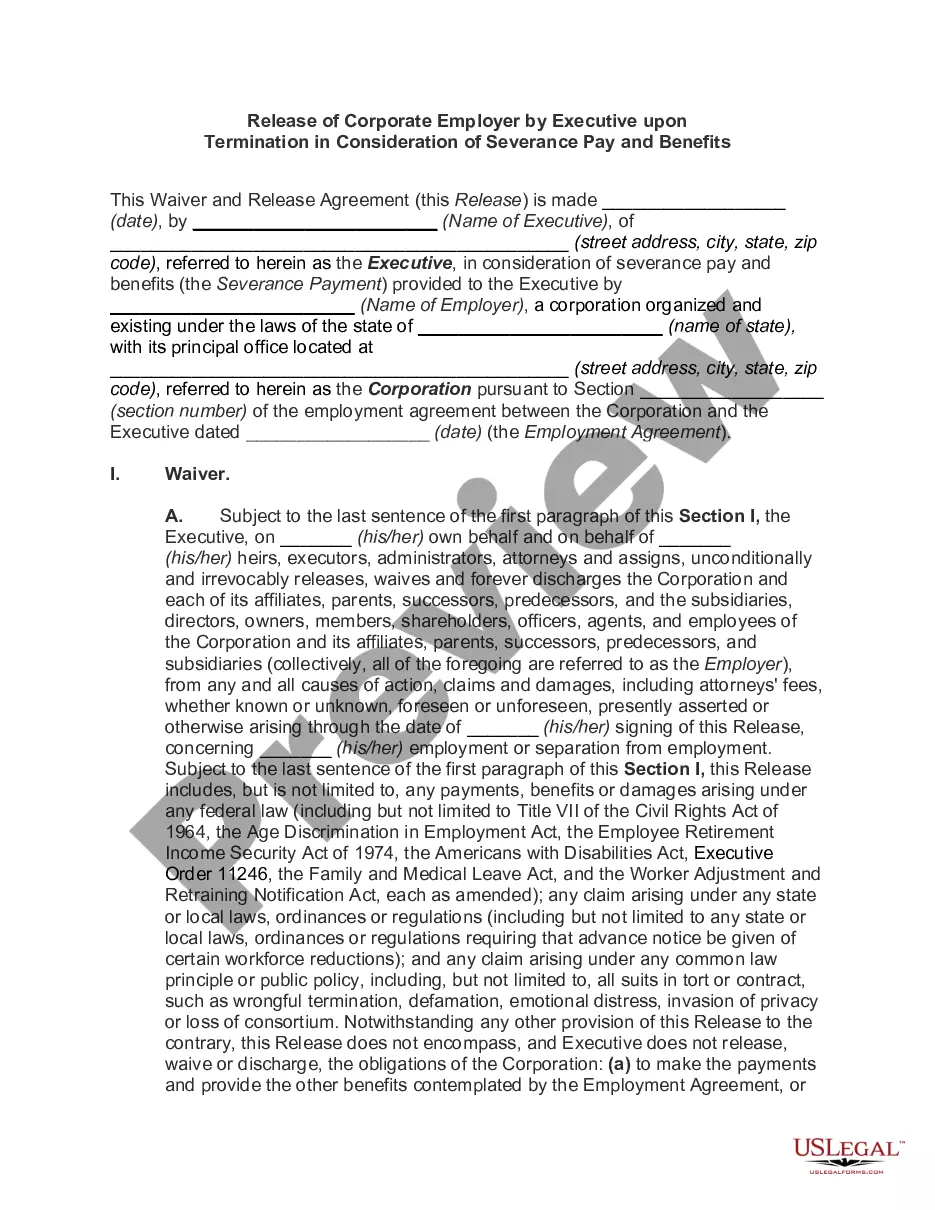
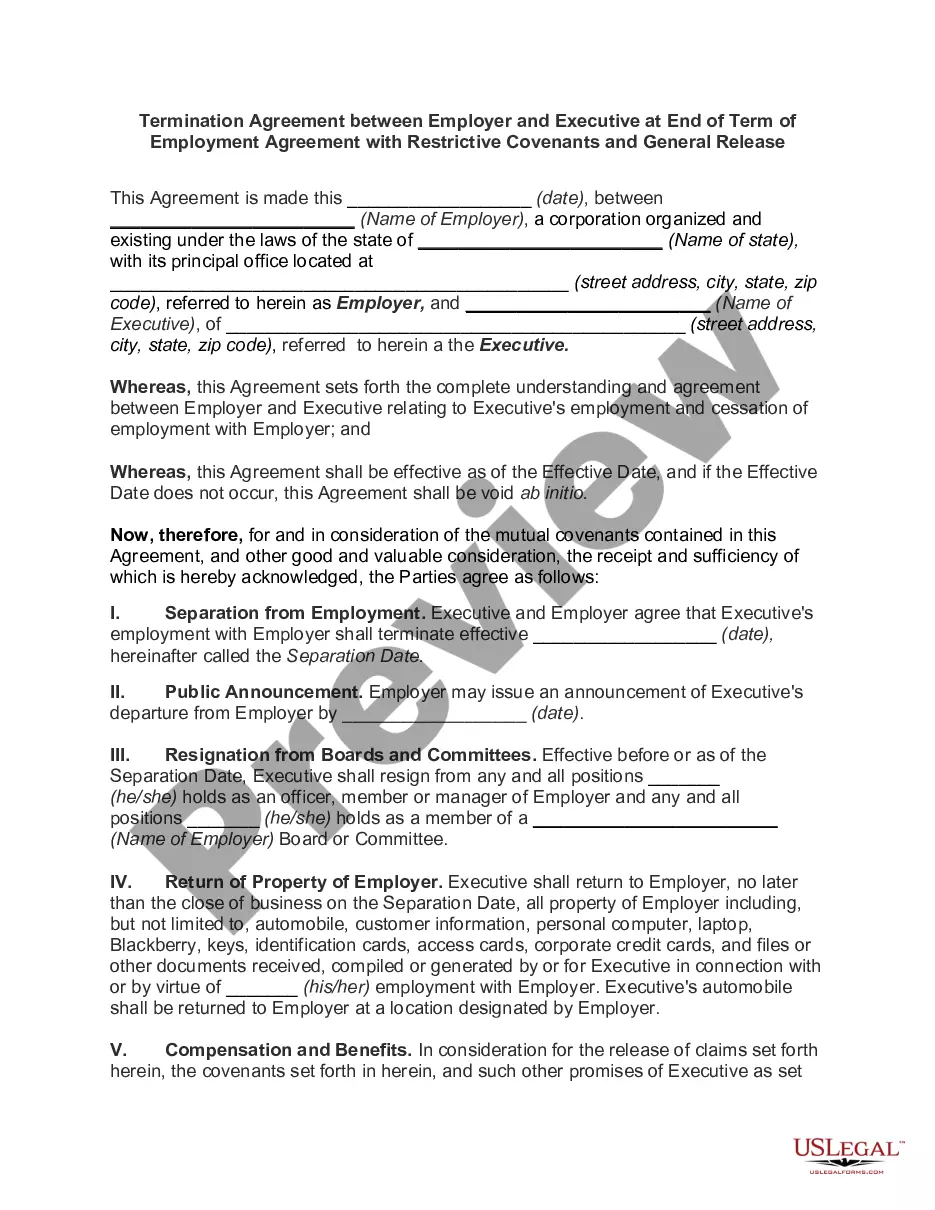
Wisconsin Mutual Release Agreement between Corporate Employer and Executive upon Termination of Employment
Description

Get your form ready online
Our built-in tools help you complete, sign, share, and store your documents in one place.
Make edits, fill in missing information, and update formatting in US Legal Forms—just like you would in MS Word.
Download a copy, print it, send it by email, or mail it via USPS—whatever works best for your next step.
Sign and collect signatures with our SignNow integration. Send to multiple recipients, set reminders, and more. Go Premium to unlock E-Sign.
If this form requires notarization, complete it online through a secure video call—no need to meet a notary in person or wait for an appointment.
We protect your documents and personal data by following strict security and privacy standards.

Make edits, fill in missing information, and update formatting in US Legal Forms—just like you would in MS Word.

Download a copy, print it, send it by email, or mail it via USPS—whatever works best for your next step.

Sign and collect signatures with our SignNow integration. Send to multiple recipients, set reminders, and more. Go Premium to unlock E-Sign.

If this form requires notarization, complete it online through a secure video call—no need to meet a notary in person or wait for an appointment.

We protect your documents and personal data by following strict security and privacy standards.
Looking for another form?






How to fill out Mutual Release Agreement Between Corporate Employer And Executive Upon Termination Of Employment?
You might invest hours online attempting to locate the legal document format that complies with the state and federal requirements you require.
US Legal Forms provides a vast array of legal templates that are assessed by experts.
You can download or print the Wisconsin Mutual Release Agreement between Corporate Employer and Executive upon Termination of Employment from my service.
To discover another version of the form, utilize the Lookup field to find the format that meets your needs and requirements.
- If you possess a US Legal Forms account, you can Log In and click on the Obtain button.
- Afterward, you can complete, modify, print, or sign the Wisconsin Mutual Release Agreement between Corporate Employer and Executive upon Termination of Employment.
- Each legal document format you acquire is yours indefinitely.
- To obtain an additional copy of any purchased template, access the My documents tab and click on the appropriate button.
- If you are visiting the US Legal Forms website for the first time, follow the simple instructions below.
- Firstly, ensure you have selected the correct document format for your chosen county/city.
- Examine the template details to confirm you have selected the accurate form.
Form popularity
FAQ
If both parties agree to waive the right to hold each other legally responsible for injuries, losses, and damages, it is a mutual release agreement. A Release of Liability Form is also known as a: Liability waiver form. Release of liability waiver.
Severance contracts that contain a release of all claims against an employer in exchange for severance pay or other benefits are legal, enforceable, and binding.
A mutual agreement is a binding contract between two or more parties and can cover any contingency. The difference between a mutual agreement and a settlement not creating a trust, is determined by the operative words, ie "mutually agrees" or "settles".
A mutual release agreement occurs between two parties that are involved in a legal dispute. By agreeing to mutually release, each party agrees to give up any claims against the other. This includes known claims as well as those that aren't yet known.
Termination By Mutual Agreement: Termination by mutual agreement covers situations where both the employer and employee consent to a separation. Examples include contract employees at the end of their agreement, retirement, and forced resignation.
After a contract is terminated, the parties to the contract do not have any future obligations to each other. However, one or both parties might be liable for breach of the terms of the contract prior to termination.
The landlord and tenant can mutually agree to end the lease at any point. This agreement is called a mutual termination. The mutual termination is a negotiated agreement, and it can end the lease on whatever terms are agreeable to both parties.
For example: Mary has offered her used car to John for a price of $10,000 and they have reached a mutual agreement. This means that Mary and John have mutually agreed on the terms and conditions relating to the sale of Mary's car to John.
A mutual release is a document designed to be signed by both the buyers and sellers to cancel an agreement of purchase and sale. When executed, this document cancels the agreement and releases all parties from any future liabilities or claims.
A common feature of a deed of release is a mutual release. It involves both parties agreeing to release each other from all: future claims; demands; debts; or.