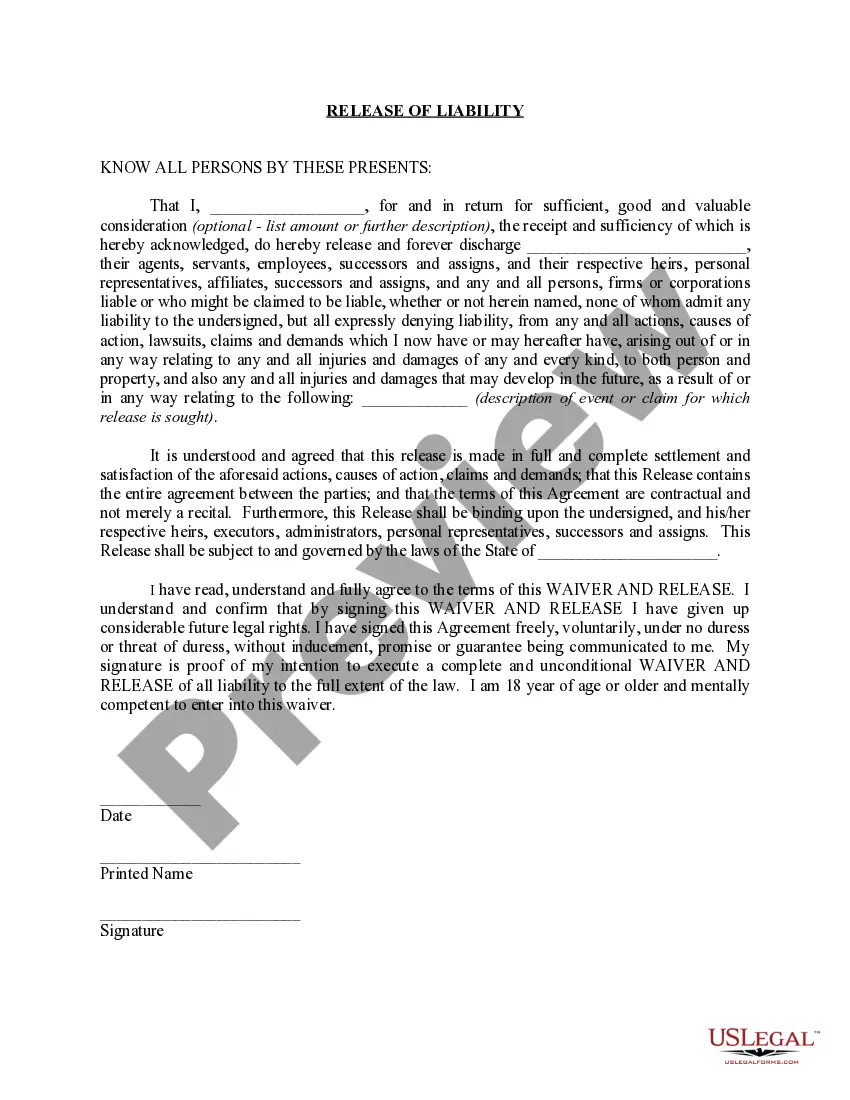
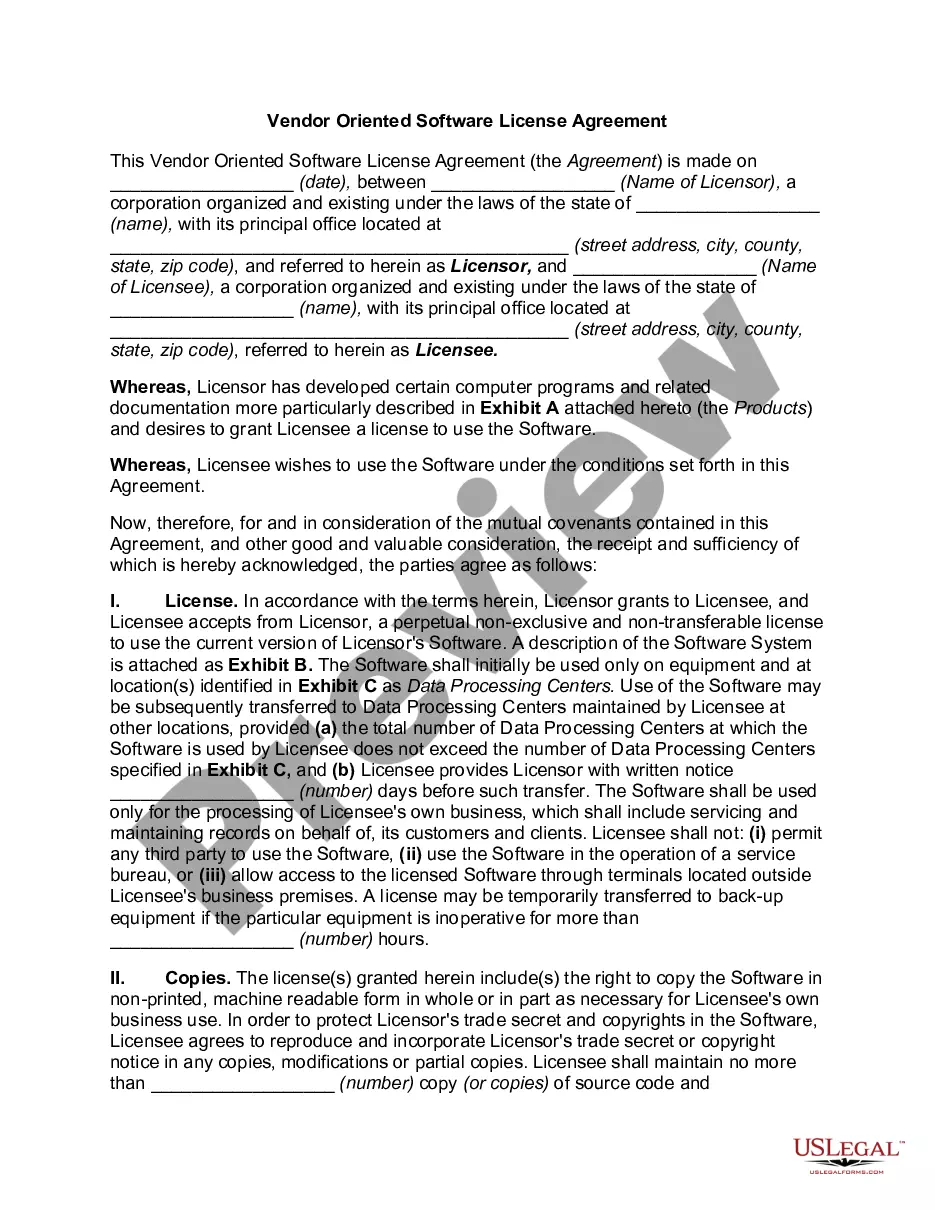
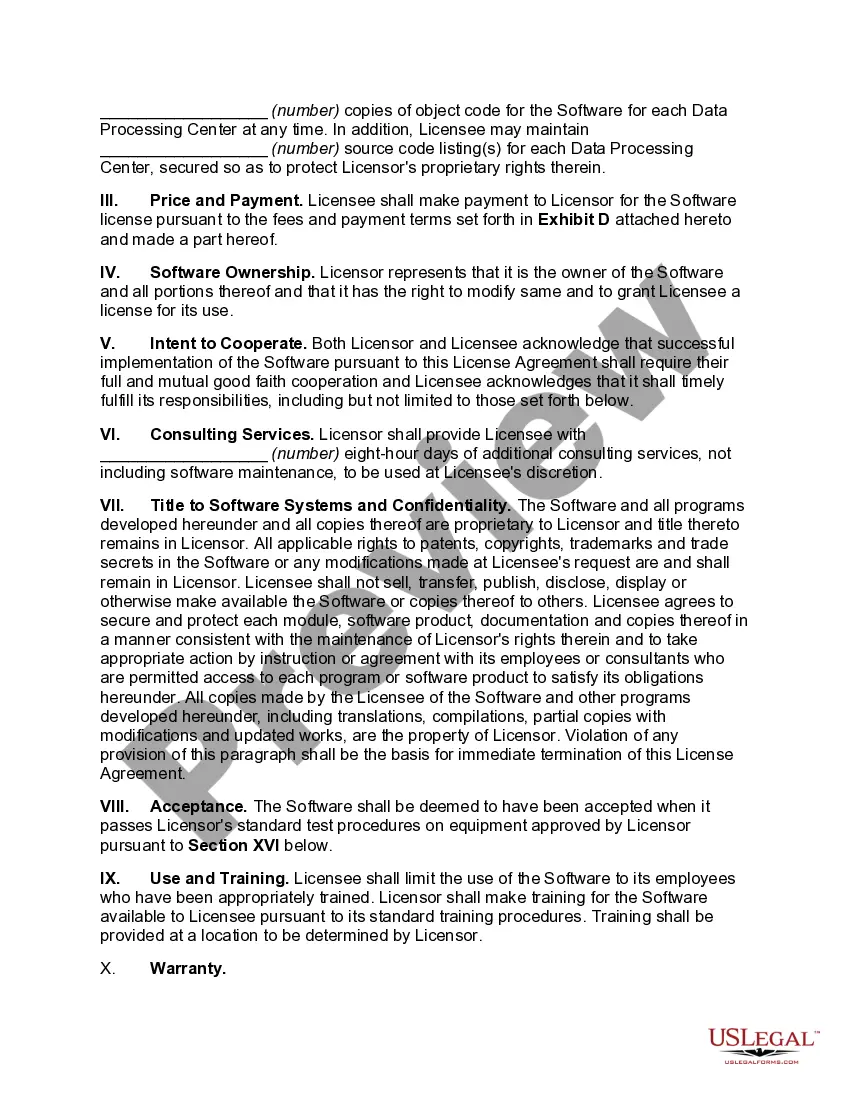
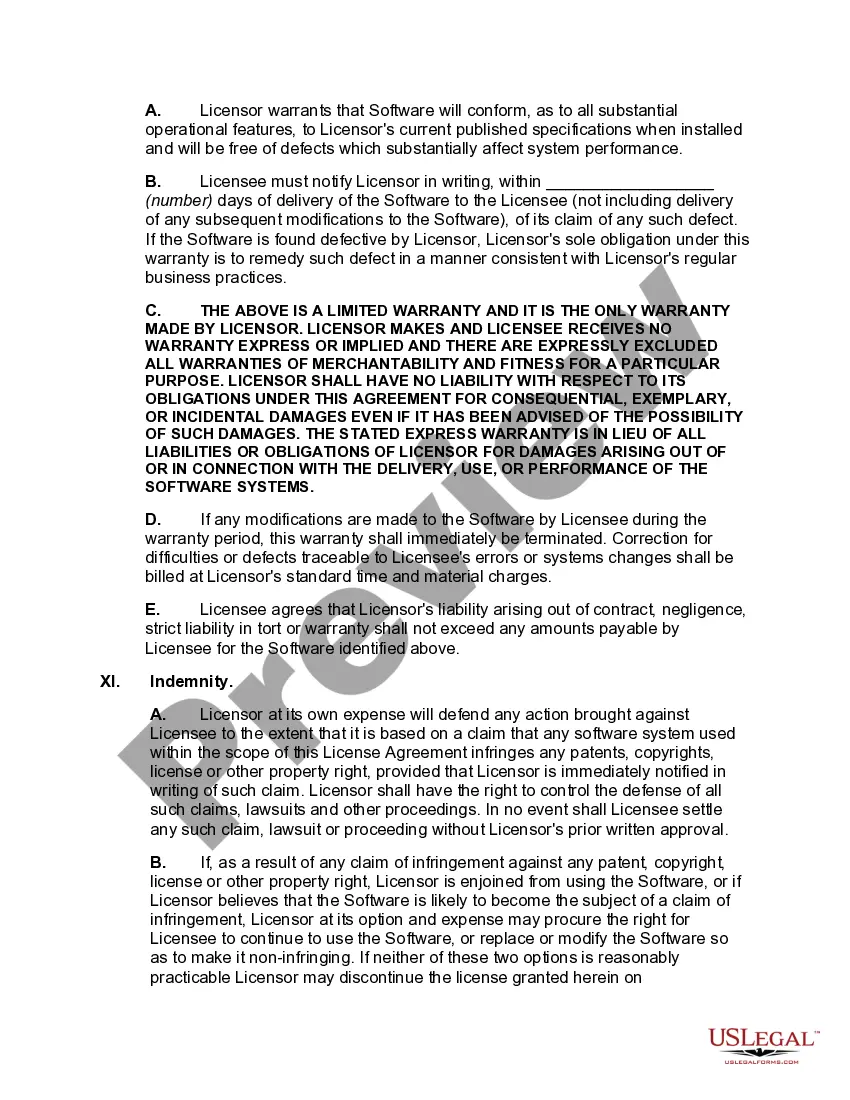
Wisconsin Vendor Oriented Software License Agreement
Description
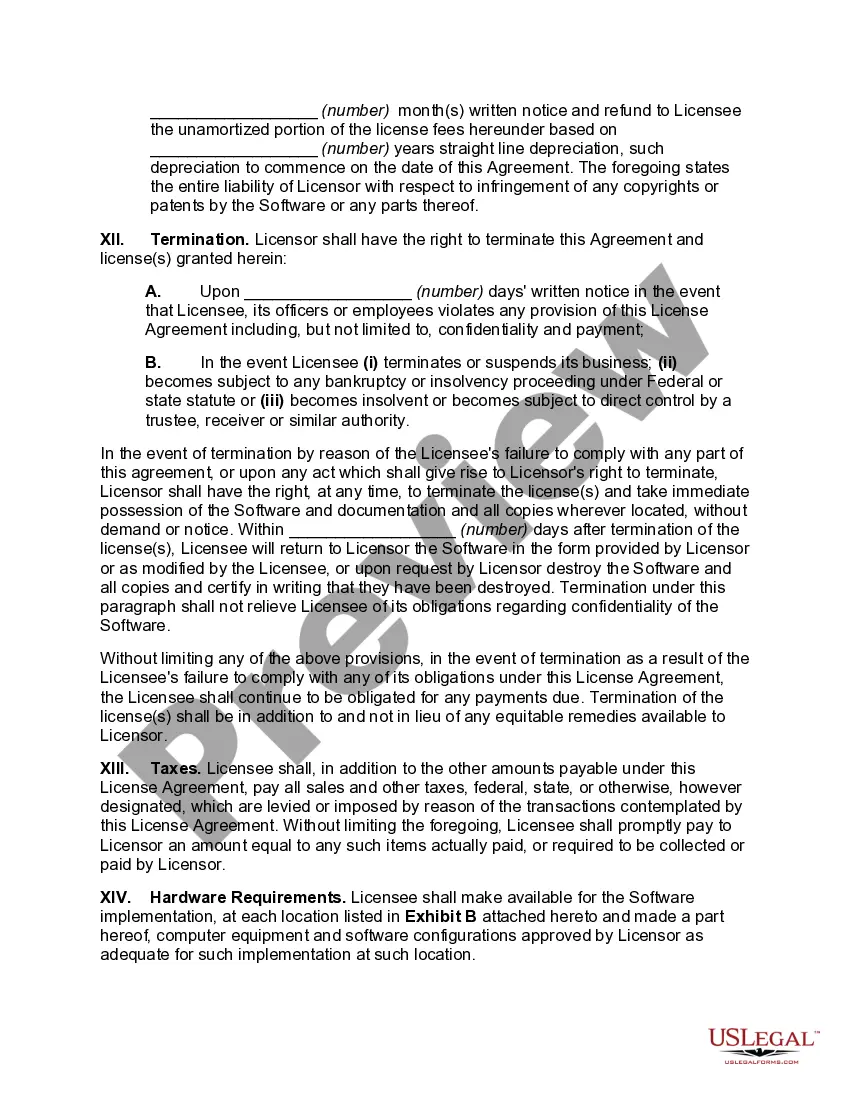
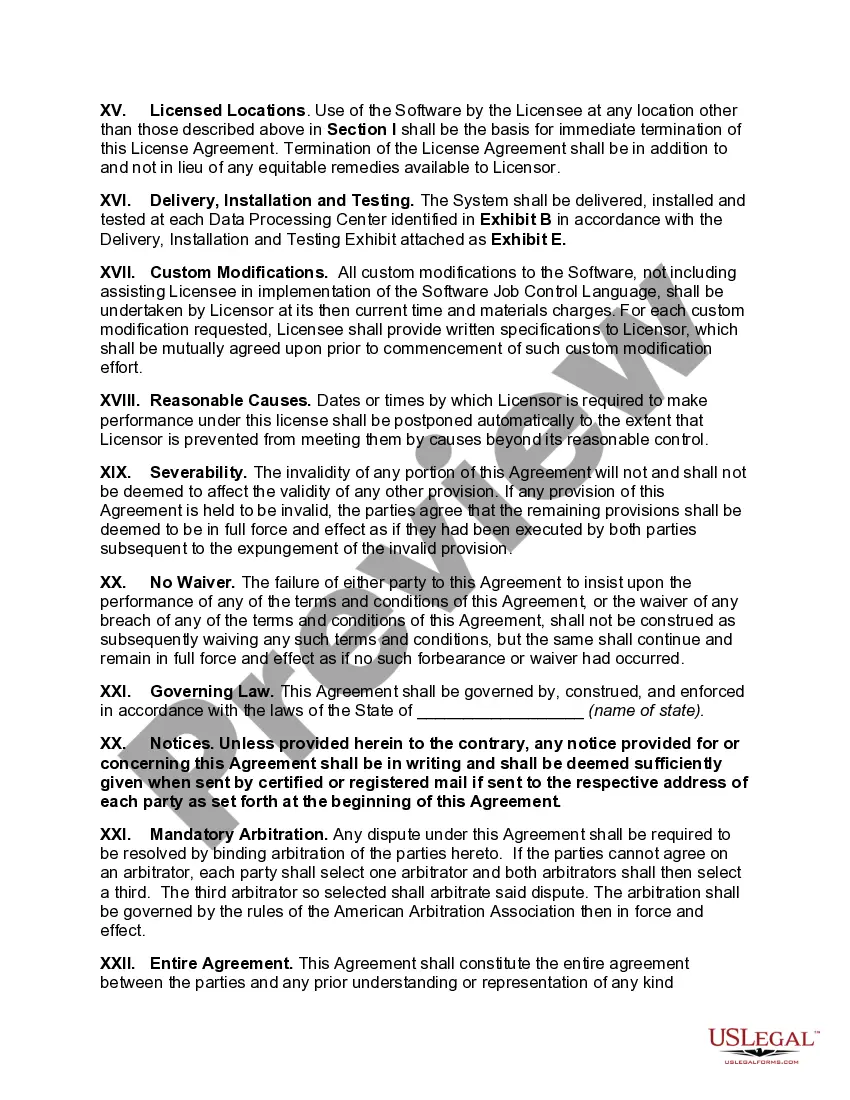
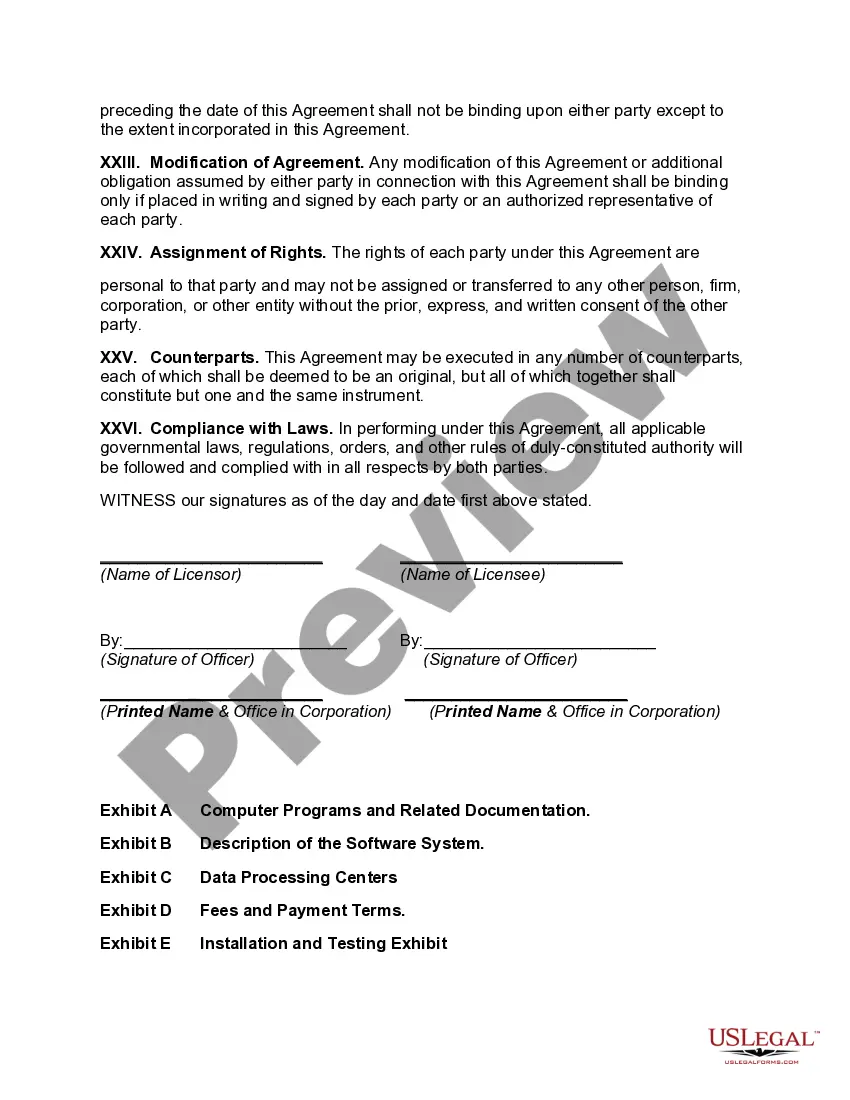
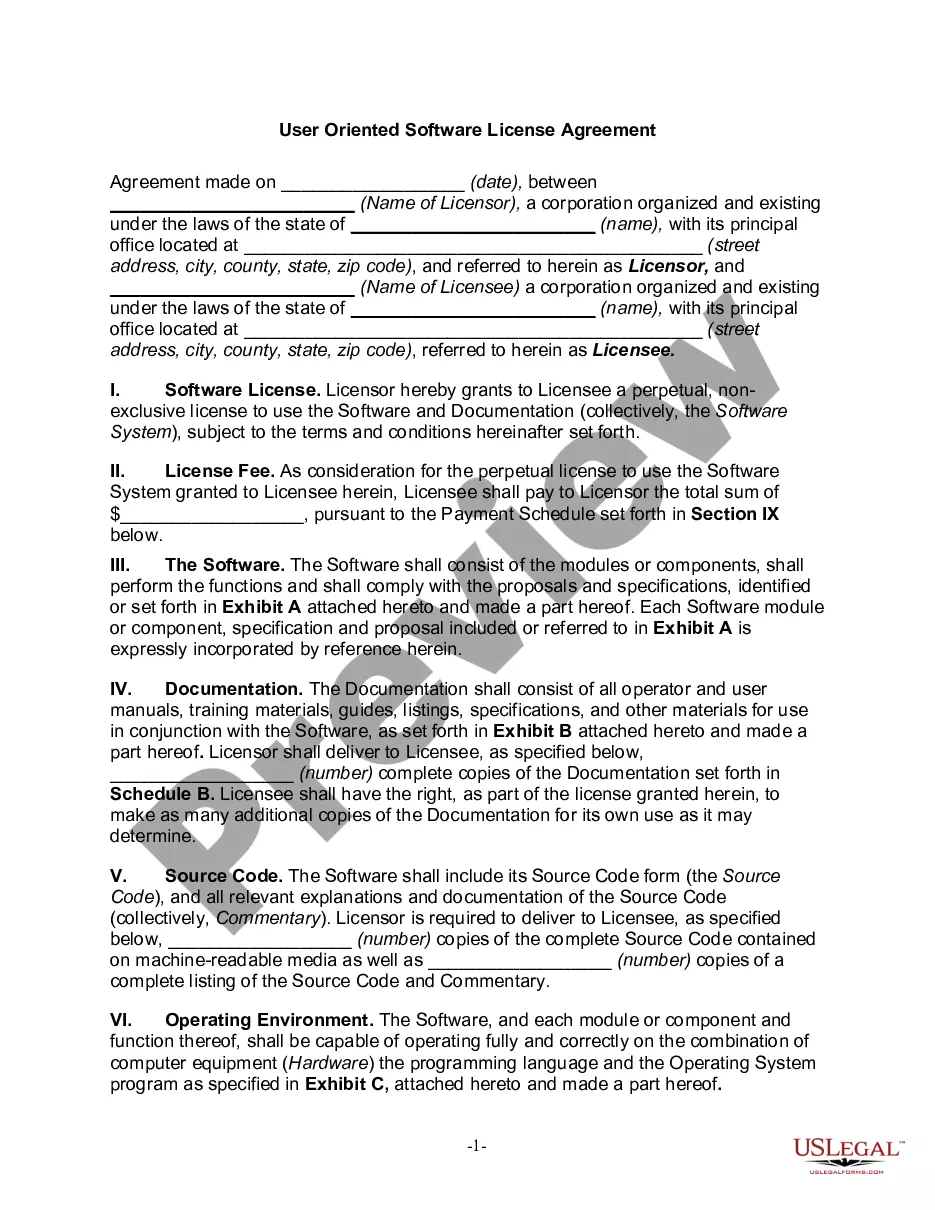
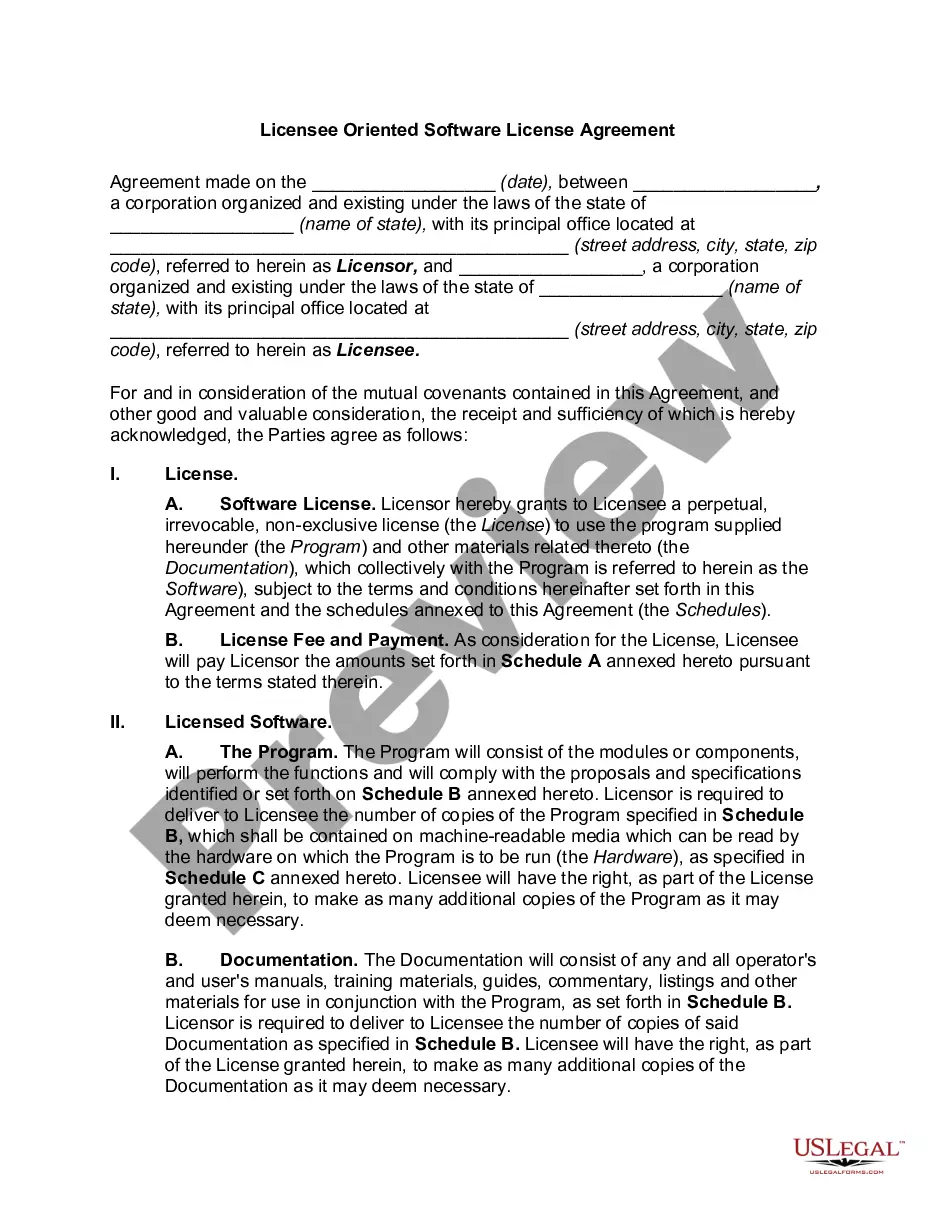
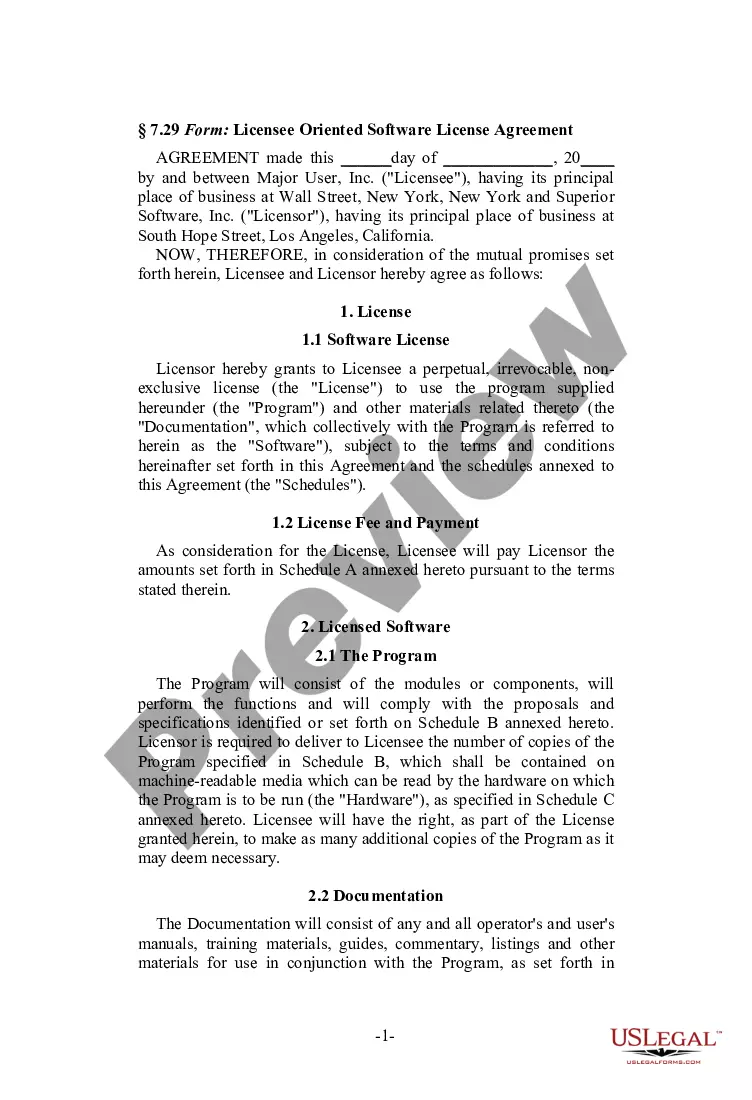
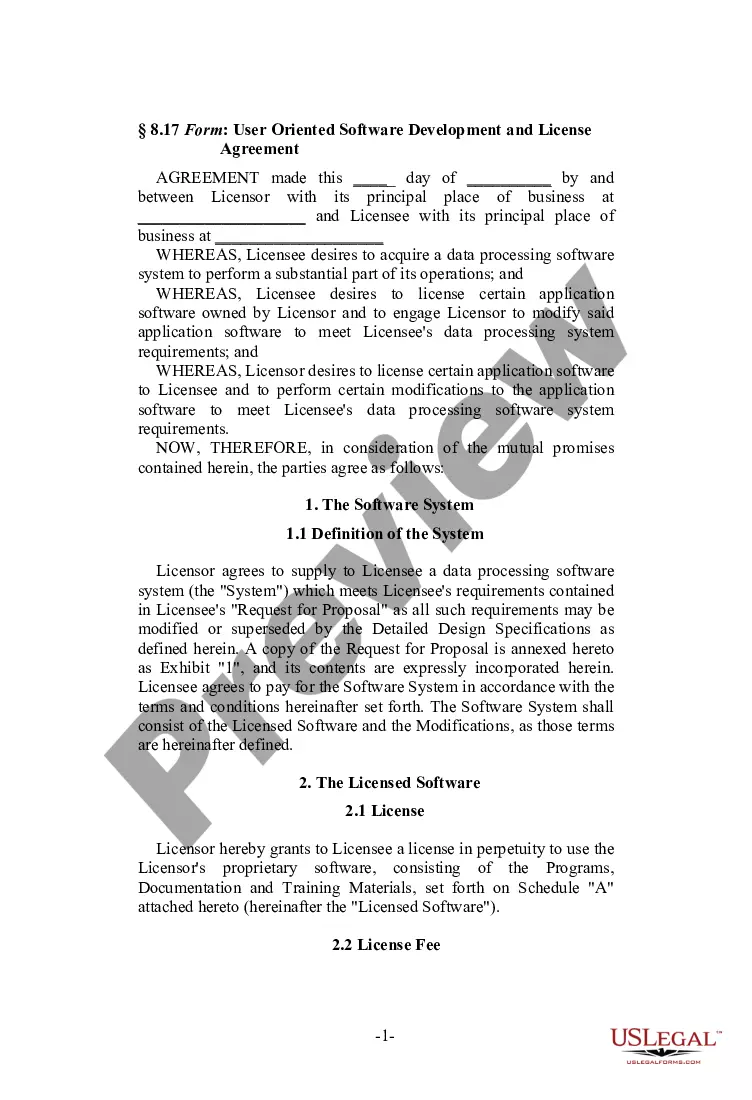
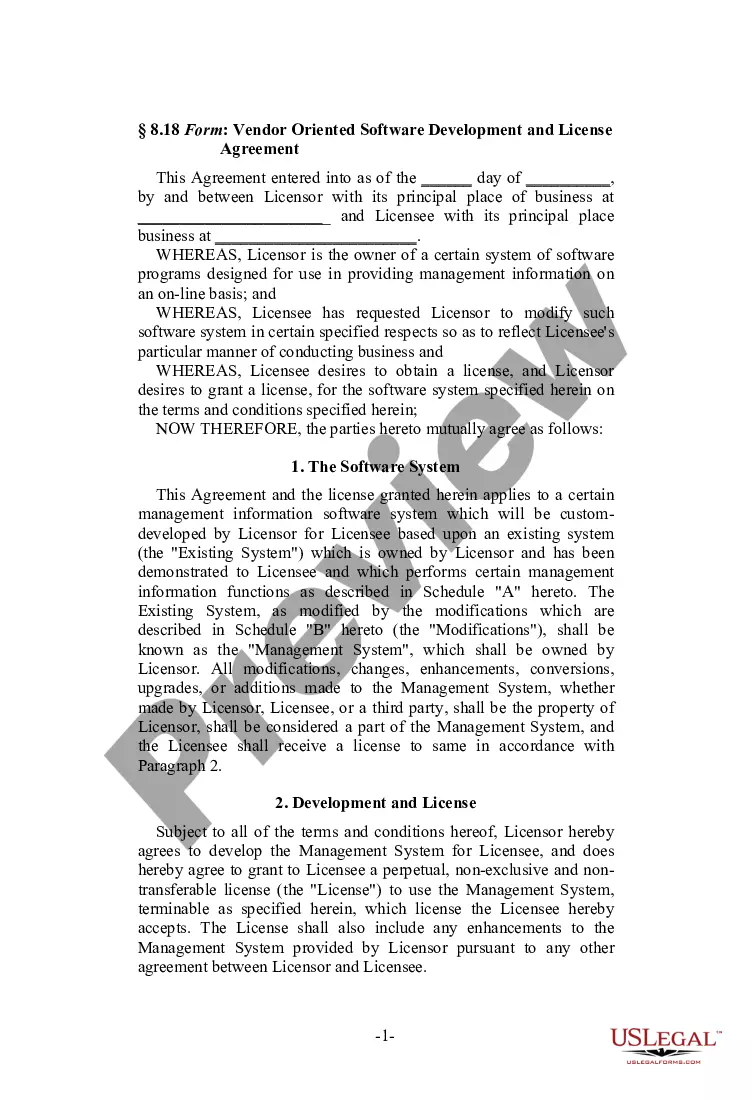
Get your form ready online
Our built-in tools help you complete, sign, share, and store your documents in one place.
Make edits, fill in missing information, and update formatting in US Legal Forms—just like you would in MS Word.
Download a copy, print it, send it by email, or mail it via USPS—whatever works best for your next step.
Sign and collect signatures with our SignNow integration. Send to multiple recipients, set reminders, and more. Go Premium to unlock E-Sign.
If this form requires notarization, complete it online through a secure video call—no need to meet a notary in person or wait for an appointment.
We protect your documents and personal data by following strict security and privacy standards.

Make edits, fill in missing information, and update formatting in US Legal Forms—just like you would in MS Word.

Download a copy, print it, send it by email, or mail it via USPS—whatever works best for your next step.

Sign and collect signatures with our SignNow integration. Send to multiple recipients, set reminders, and more. Go Premium to unlock E-Sign.

If this form requires notarization, complete it online through a secure video call—no need to meet a notary in person or wait for an appointment.

We protect your documents and personal data by following strict security and privacy standards.
Looking for another form?



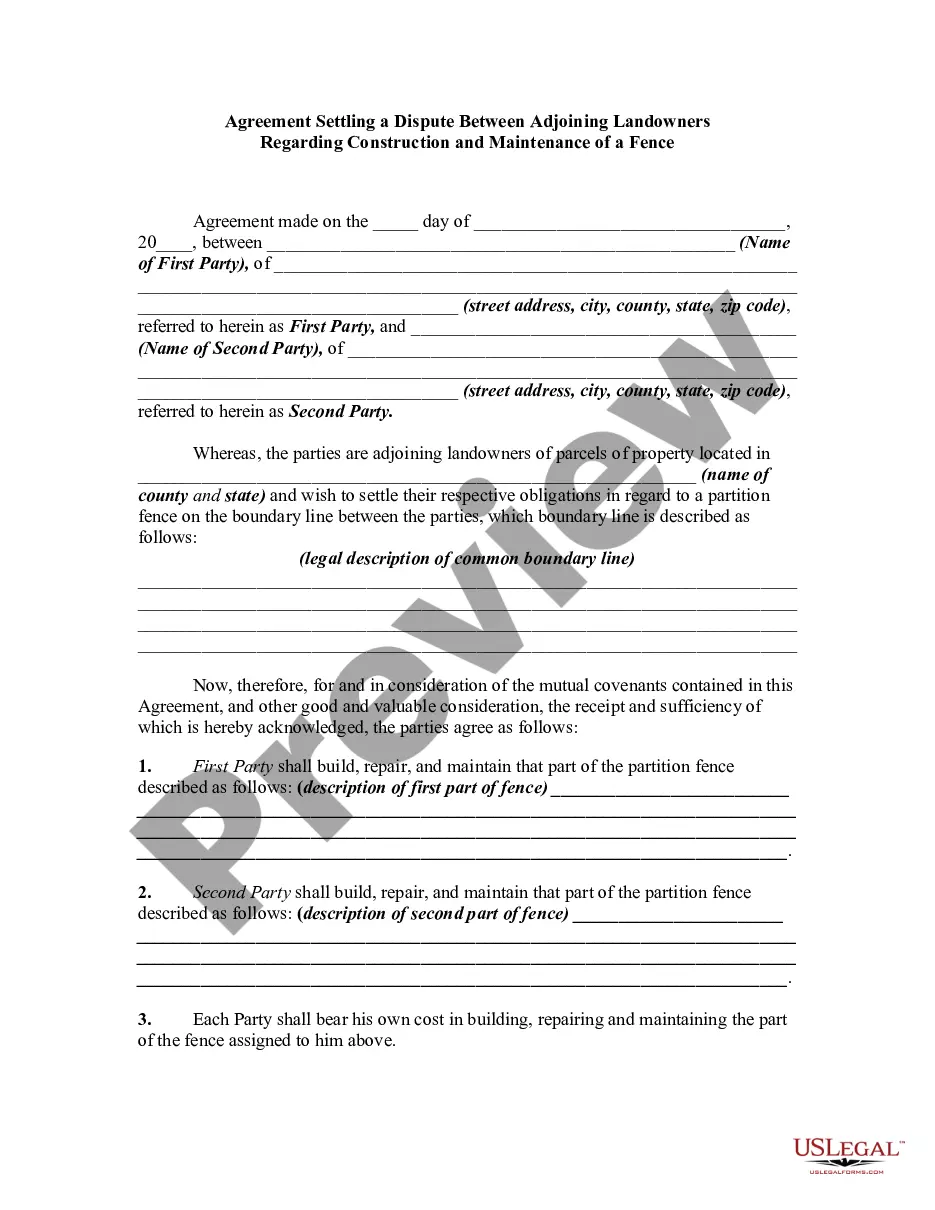
How to fill out Vendor Oriented Software License Agreement?
In case you require detailed, acquire, or producing legal document templates, utilize US Legal Forms, the largest assortment of legal formats available online.
Utilize the website's straightforward and user-friendly search to find the documents you need.
Various templates for business and personal purposes are categorized by type and jurisdiction, or keywords.
Step 4. Once you have found the form you need, click the Obtain now button. Choose the payment plan that suits you and enter your credentials to create an account.
Step 5. Complete the transaction. You can use your credit card or PayPal account to finish the payment.
- Utilize US Legal Forms to obtain the Wisconsin Vendor Oriented Software License Agreement with just a few clicks.
- If you are already a US Legal Forms user, Log In to your account and click the Download button to retrieve the Wisconsin Vendor Oriented Software License Agreement.
- You can also access forms you previously obtained from the My documents tab of your account.
- If you are using US Legal Forms for the first time, follow the steps below.
- Step 1. Ensure you have selected the form for the appropriate state/region.
- Step 2. Use the Preview option to browse through the contents of the form. Be sure to check the details.
- Step 3. If you are not satisfied with the form, use the Search box at the top of the screen to find other versions of the legal document format.
Form popularity
FAQ
An enterprise account offers numerous benefits, including priority support, tailored services, and easier account management. Organizations can expect personalized assistance in navigating software solutions, particularly when integrating a Wisconsin Vendor Oriented Software License Agreement. This type of account also streamlines communication with vendors, enabling better service and software experiences.
Licensing agreements are found in many different industries. An example of a licensing agreement is a contract between the copyright holders of software and another company, allowing the latter to use the computer software for their daily business operations.
The important difference is the fact that a software license provides a product that is tangible, whereas a SaaS agreement is based on a service. For those who draft software contracts, confusing SaaS agreements and software licenses are a common occurrence.
Many software-as-a-service (SaaS) contracts grant a license to use the vendor's software. That's a mistake. Licenses are for on-premise software. SaaS is a service, as the name implies, and it doesn't need a license.
Simply put, a SaaS agreement is a software provider's service agreement according to their delivery model. For SaaS software products, the provider will deliver the software and related data via the internet instead of a physical product.
Types of licensing agreement The unique feature of this type of agreement is that even the licensor is excluded to use or exploit the licensed property during the term of the agreement. Copyright, trademark and patent licenses are the best examples of an exclusive license agreement.
What are the different types of software licenses?Public domain. This is the most permissive type of software license.Permissive. Permissive licenses are also known as Apache style or BSD style. They contain minimal requirements about how the software can be modified or redistributed.LGPL.Copyleft.Proprietary.
A licensing agreement is a contract between two parties (the licensor and licensee) in which the licensor grants the licensee the right to use the brand name, trademark, patented technology, or ability to produce and sell goods owned by the licensor.
A software license agreement should include the licensor's reservation of all its rights not specifically granted to the licensee and the licensee's acknowledgment of the licensor's ownership of the licensed software. Payment terms.
A software license agreement details how and when the software can be used, and provides any restrictions that are imposed on the software. A software license agreement also defines and protects the rights of the parties involved in a clear and concise manner.