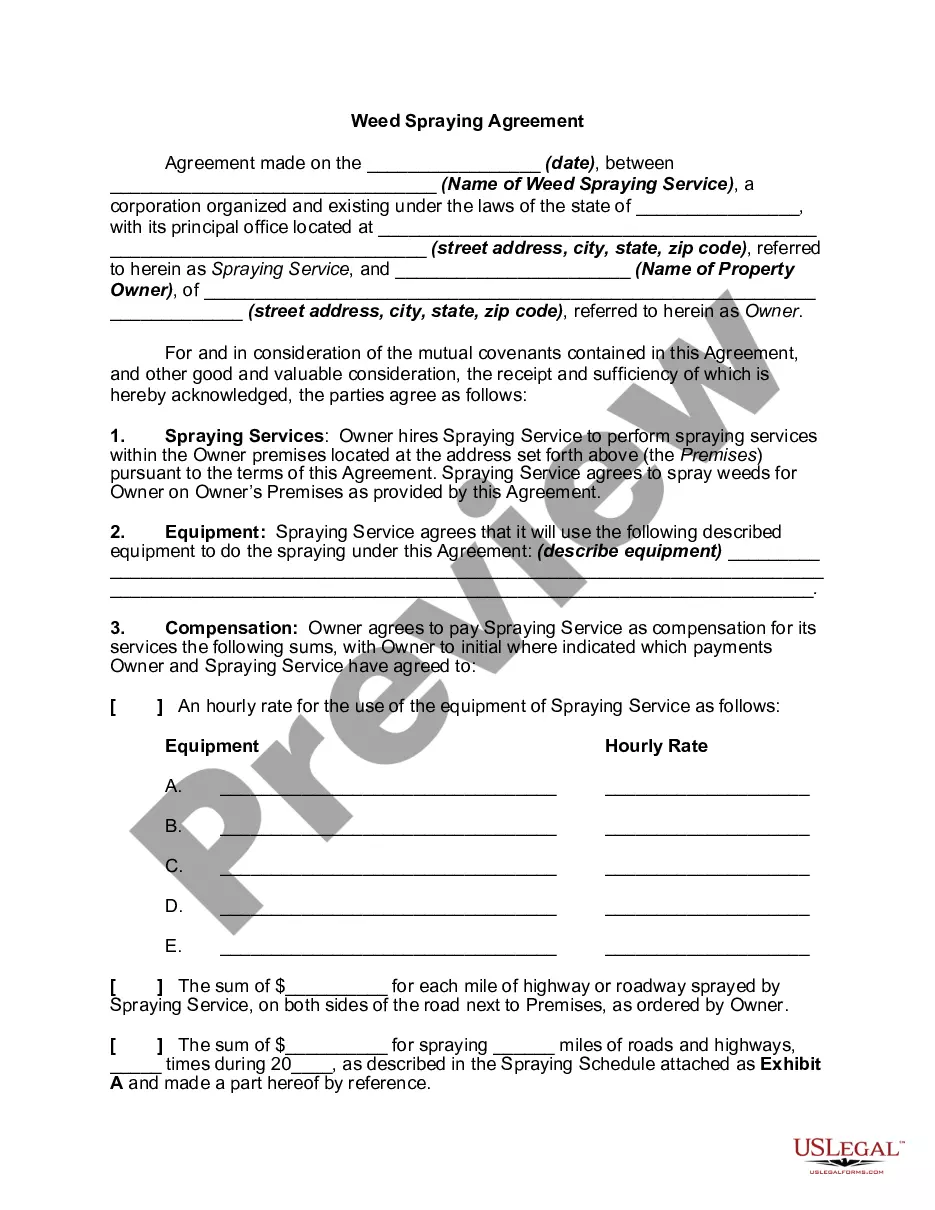
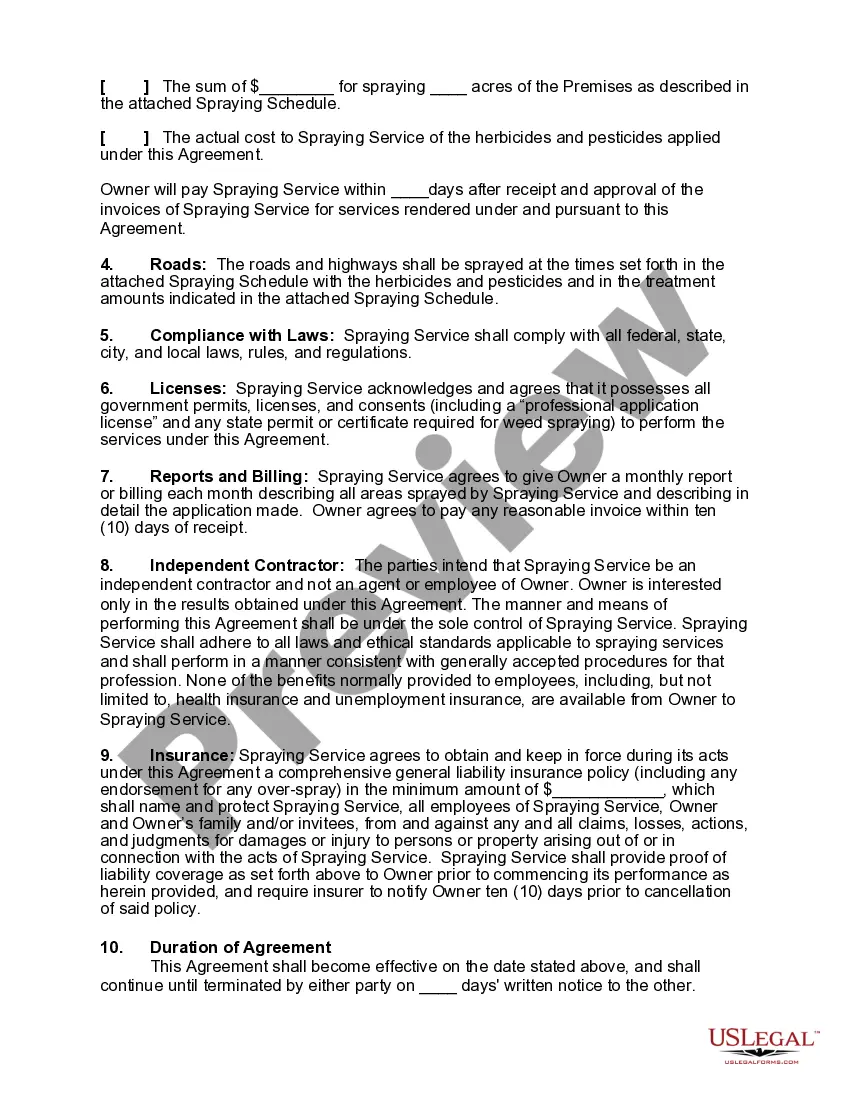
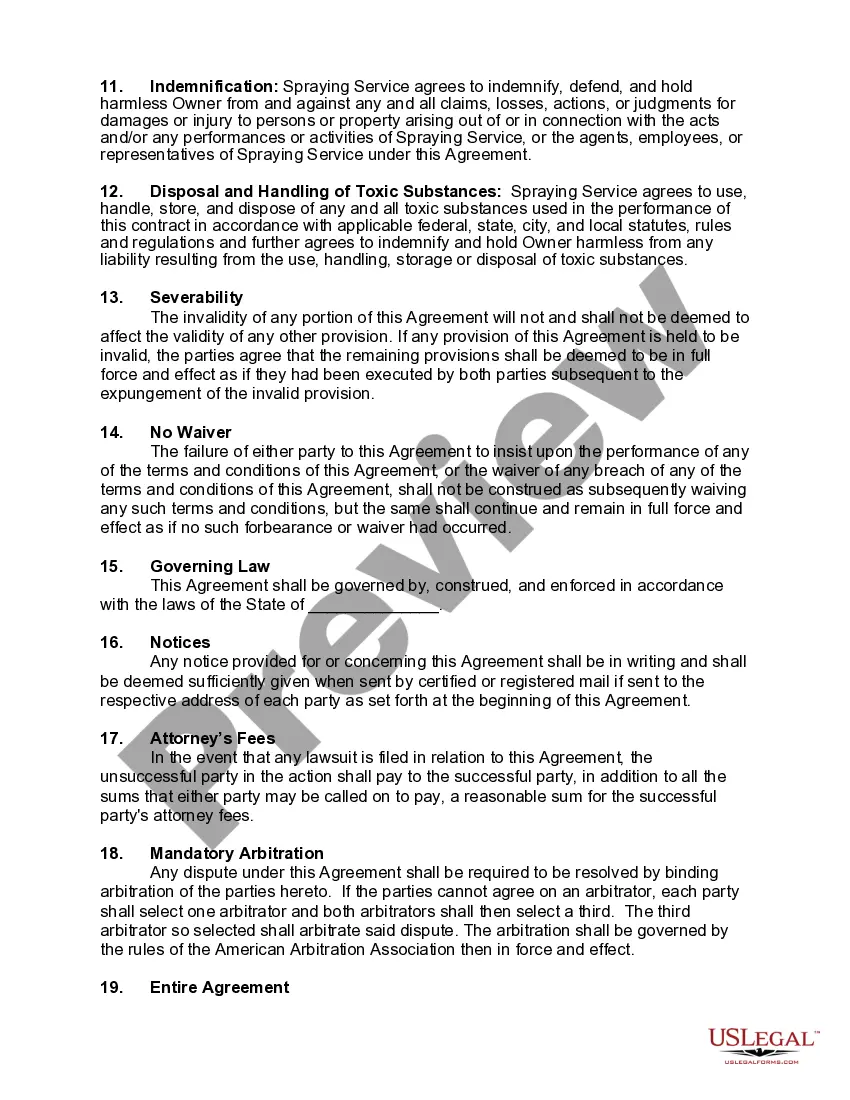
Wisconsin Weed Spraying Agreement
Description
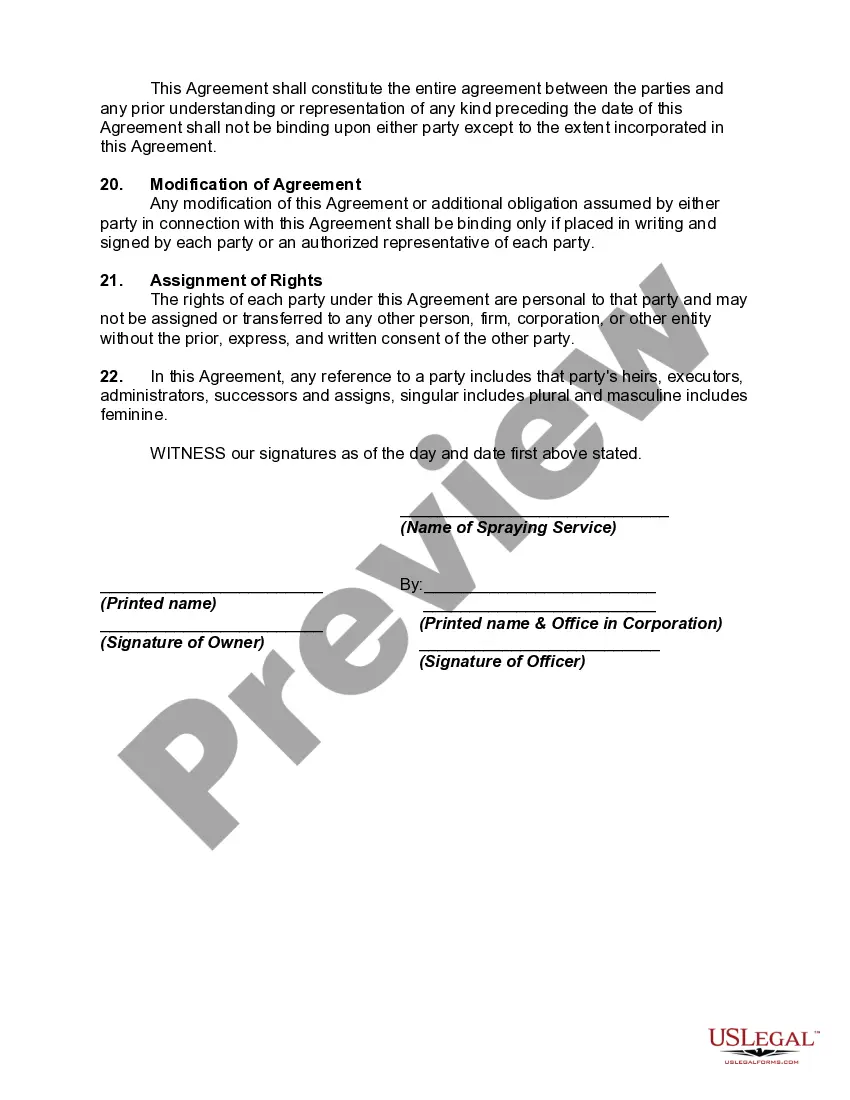
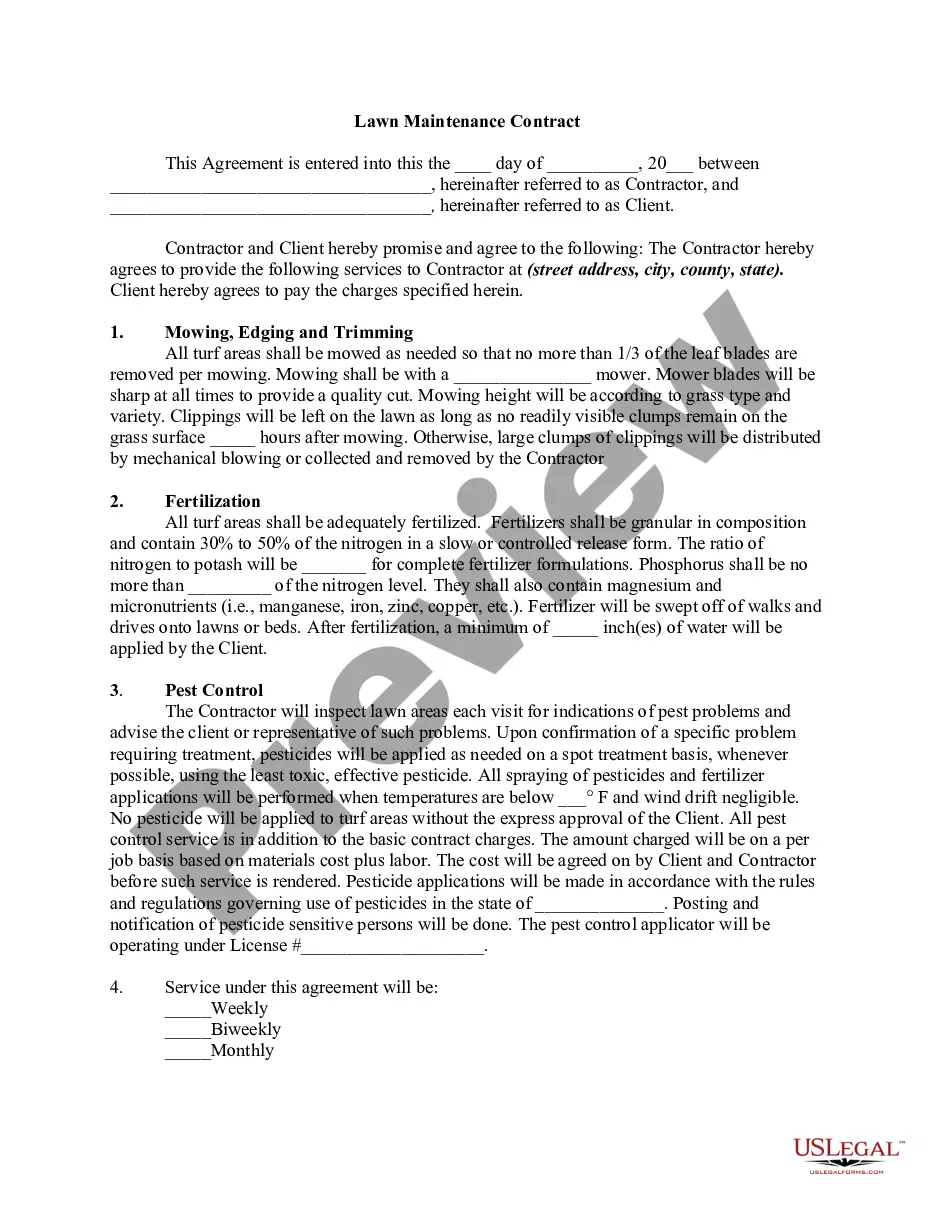
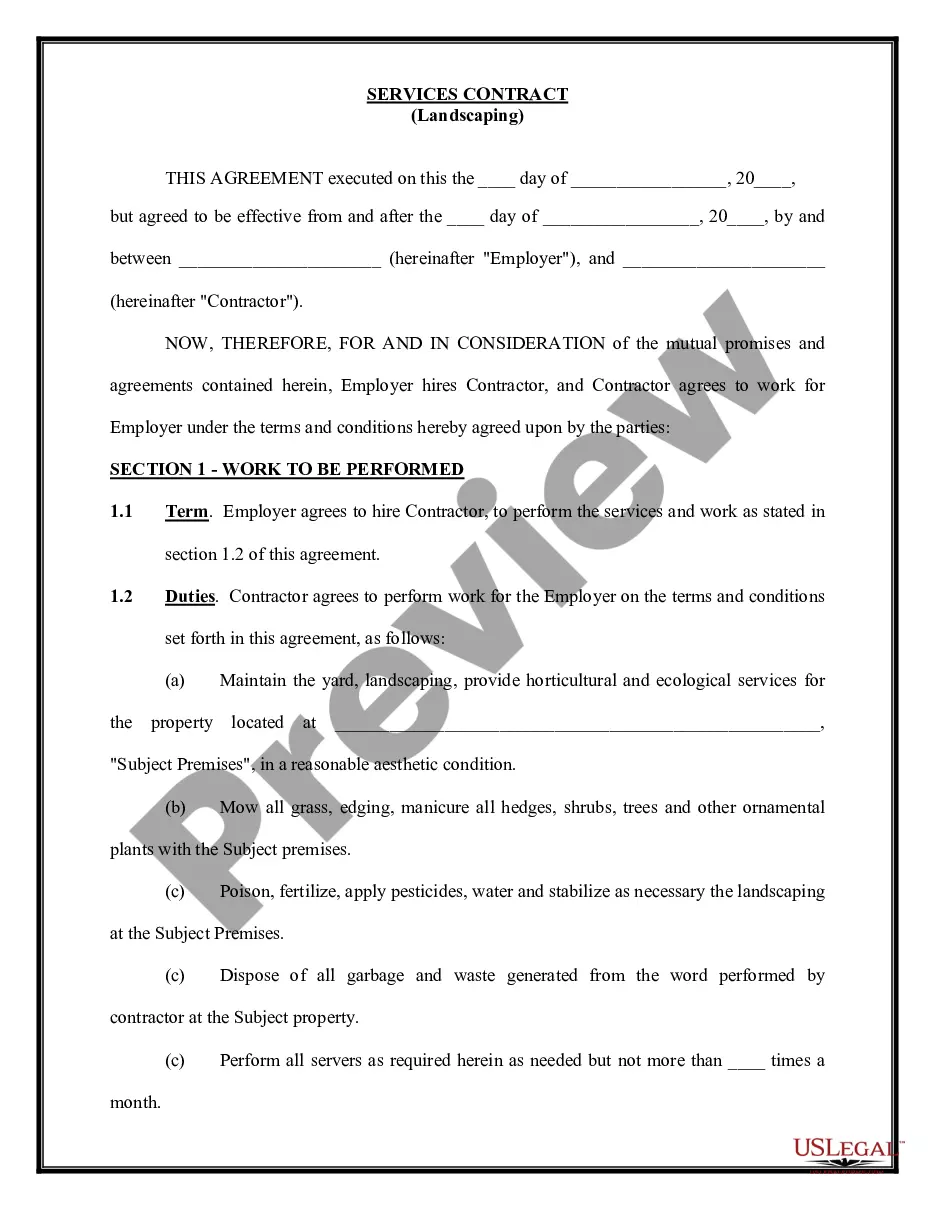
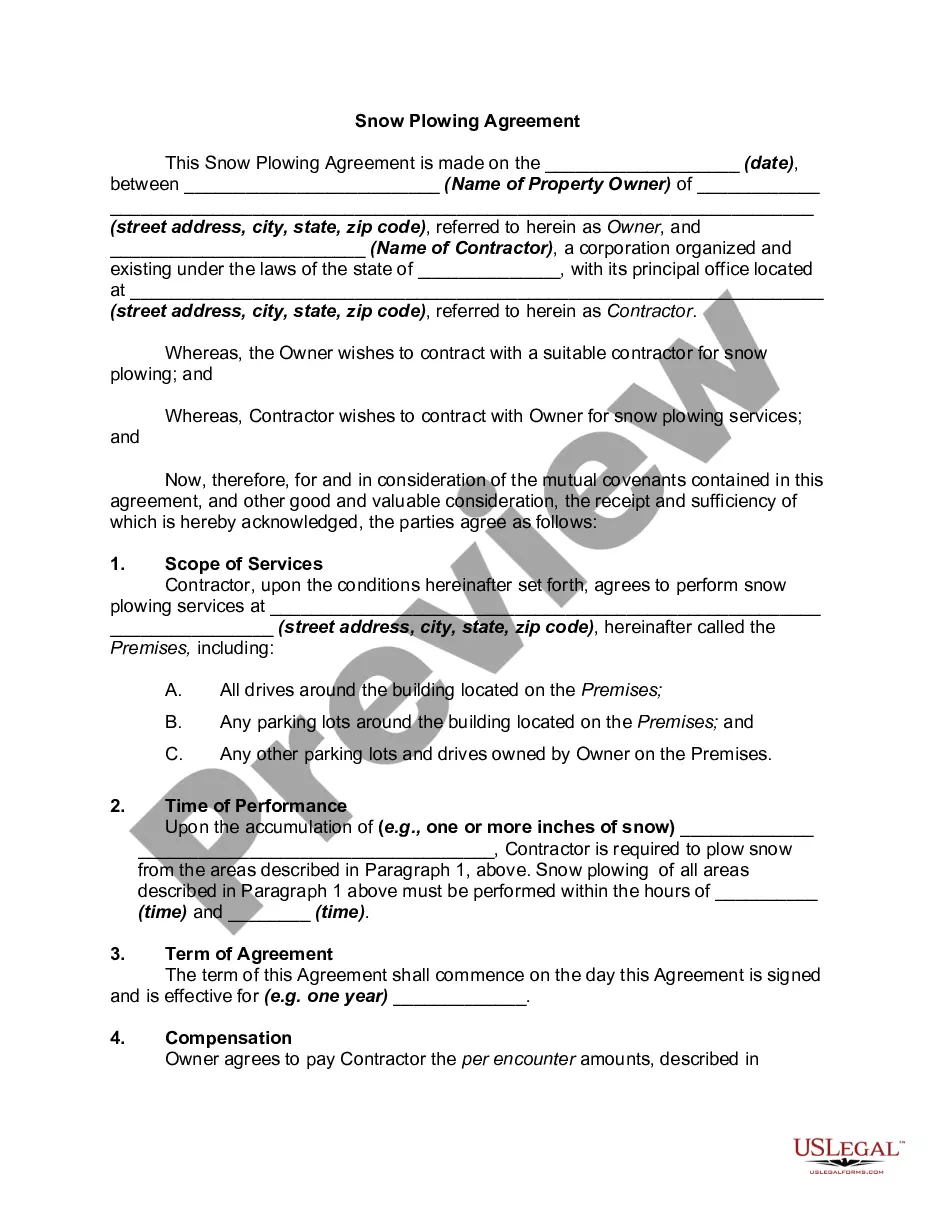

Get your form ready online
Our built-in tools help you complete, sign, share, and store your documents in one place.
Make edits, fill in missing information, and update formatting in US Legal Forms—just like you would in MS Word.
Download a copy, print it, send it by email, or mail it via USPS—whatever works best for your next step.
Sign and collect signatures with our SignNow integration. Send to multiple recipients, set reminders, and more. Go Premium to unlock E-Sign.
If this form requires notarization, complete it online through a secure video call—no need to meet a notary in person or wait for an appointment.
We protect your documents and personal data by following strict security and privacy standards.

Make edits, fill in missing information, and update formatting in US Legal Forms—just like you would in MS Word.

Download a copy, print it, send it by email, or mail it via USPS—whatever works best for your next step.

Sign and collect signatures with our SignNow integration. Send to multiple recipients, set reminders, and more. Go Premium to unlock E-Sign.

If this form requires notarization, complete it online through a secure video call—no need to meet a notary in person or wait for an appointment.

We protect your documents and personal data by following strict security and privacy standards.
Looking for another form?





How to fill out Weed Spraying Agreement?
You can spend hours online looking for the legal document template that meets the state and federal requirements you need.
US Legal Forms provides a multitude of legal forms that can be examined by professionals.
It is easy to acquire or print the Wisconsin Weed Spraying Agreement from my service.
To locate another version of the form, use the Search field to find the template that meets your needs and specifications.
- If you already have a US Legal Forms account, you can Log In and then click the Obtain button.
- Next, you can complete, modify, print, or sign the Wisconsin Weed Spraying Agreement.
- Every legal document template you acquire is yours indefinitely.
- To obtain another copy of a purchased form, visit the My documents tab and click the corresponding button.
- If you are using the US Legal Forms site for the first time, follow the simple instructions below.
- First, ensure that you have selected the correct document template for the state/region of your choice.
- Read the form description to confirm you have selected the appropriate one.
Form popularity
FAQ
In Wisconsin, a license is generally required to spray for mosquitoes, especially for commercial applications. Adhering to the Wisconsin Weed Spraying Agreement will help you navigate the licensing requirements and ensure you are compliant with state laws. If you plan to manage mosquito populations professionally, obtaining a license safeguards your work and the health of your community.
You can spray your own yard for mosquitoes, but it is essential to follow local guidelines and regulations. While homeowners often have the right to control pests on their property, understanding the Wisconsin Weed Spraying Agreement can provide insights into best practices and safe application methods. Make sure to use products safely and effectively for the best results in managing your mosquito population.
Yes, to spray herbicides in Wisconsin, you typically need a license. This requirement applies to both commercial applicators and individuals applying certain pesticides and herbicides on their property. Understanding the Wisconsin Weed Spraying Agreement will help clarify these requirements and ensure compliance with state regulations. By obtaining the proper licensing, you protect not only your environment but also your investment in maintaining your property.
To obtain a pest control charter in Tennessee, you need to apply through the Tennessee Department of Agriculture. This process involves providing documentation of your business, adhering to safety standards, and potentially passing an examination. Utilizing a Wisconsin Weed Spraying Agreement can support your application by demonstrating knowledge of best practices in pest control and compliance with state regulations.
Roundup, which contains glyphosate, is not classified as a restricted use herbicide; however, its application is subject to local regulations and guidelines. This means you still need to ensure that you meet any requirements before use. A Wisconsin Weed Spraying Agreement can help clarify the proper application methods and any relevant restrictions in your area.
Yes, a license is usually required for applying chemicals that feed plants or control pests. This regulation aims to ensure safe handling and effectiveness of substances used in landscape management. Keep in mind that a Wisconsin Weed Spraying Agreement provides guidelines that can help streamline your processes and maintain compliance.
A category 7 license in Tennessee relates specifically to the application of pesticides for non-agricultural uses, including industrial and commercial environments. Obtaining this license demonstrates your commitment to responsible usage practices. Through a Wisconsin Weed Spraying Agreement, you can reinforce legal compliance when applying herbicides or pesticides without exposing yourself to unnecessary risks.
In Tennessee, you typically need a license to apply herbicides and pesticides. This ensures that you comply with state regulations while protecting the environment and public health. If you encounter a Wisconsin Weed Spraying Agreement, you might find it useful as a legal framework for such applications, especially if you operate within multiple states.
The two main classifications of pesticide applicators are certified applicators and non-certified applicators. Certified applicators have completed the necessary training and tests to apply pesticides commercially, while non-certified applicators can only apply pesticides under the supervision of a certified applicator. Understanding these classifications is crucial, and the Wisconsin Weed Spraying Agreement can provide further clarity.
The most important law for pesticide applicators in Wisconsin is the Wisconsin Pesticide Law, which mandates safe usage and application of pesticides. This law outlines the responsibilities of applicators to protect both human health and the environment. The Wisconsin Weed Spraying Agreement serves as a valuable resource for understanding these legal requirements.