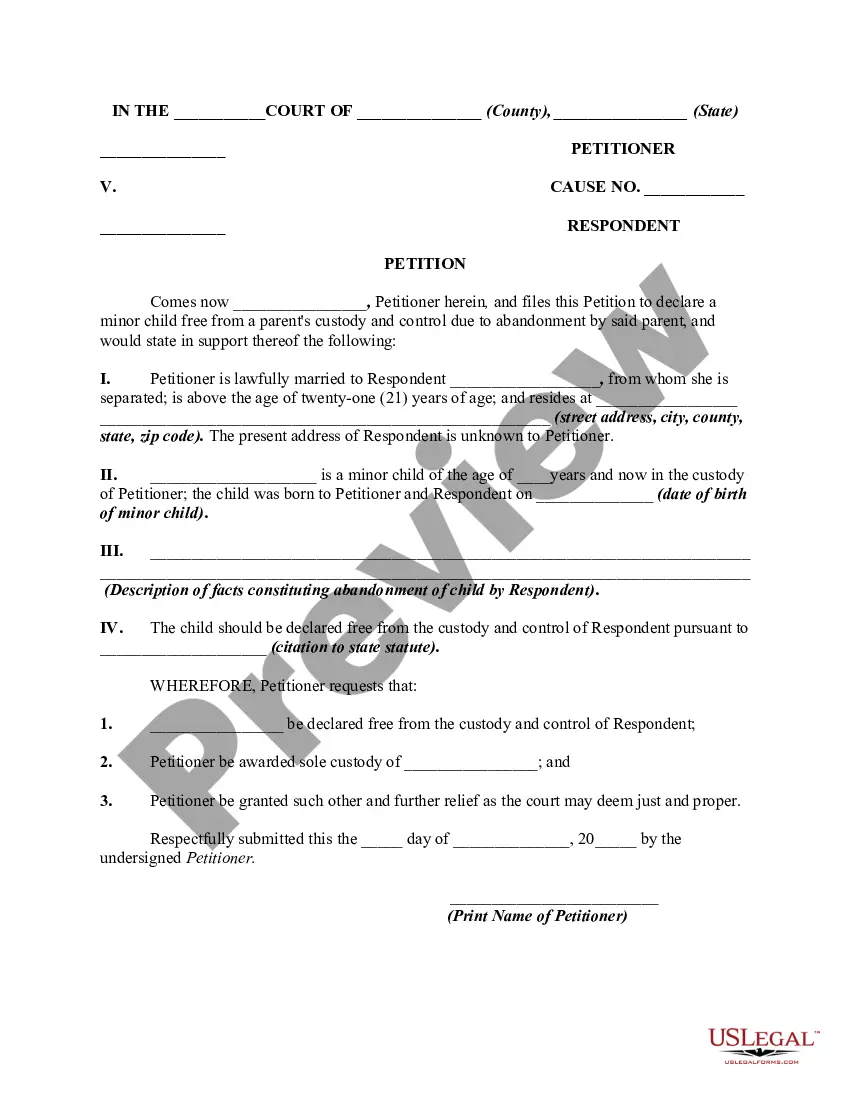
Wisconsin Petition to Declare Child Free from Parent's Custody and Control for Abandonment - Release of Parental Rights
Description
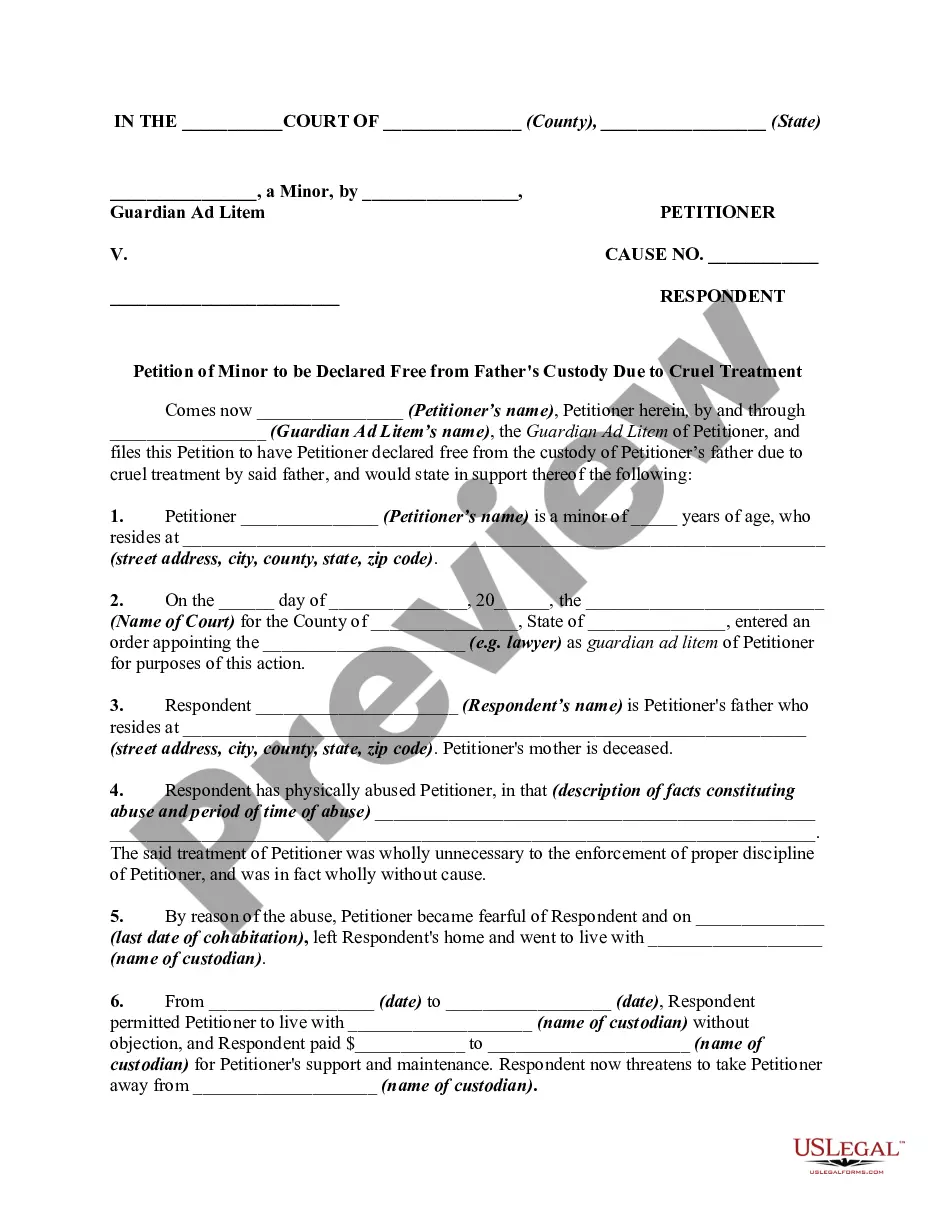
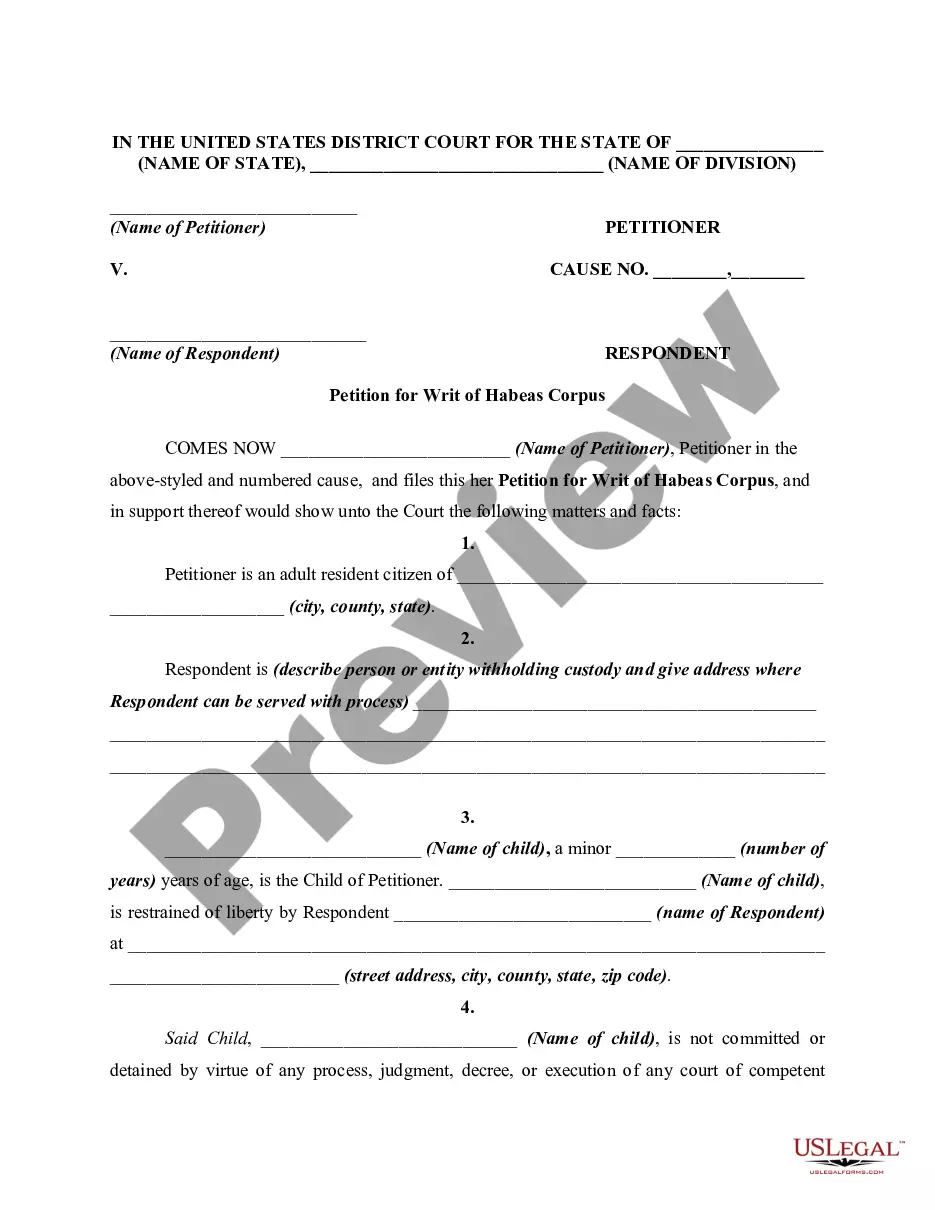
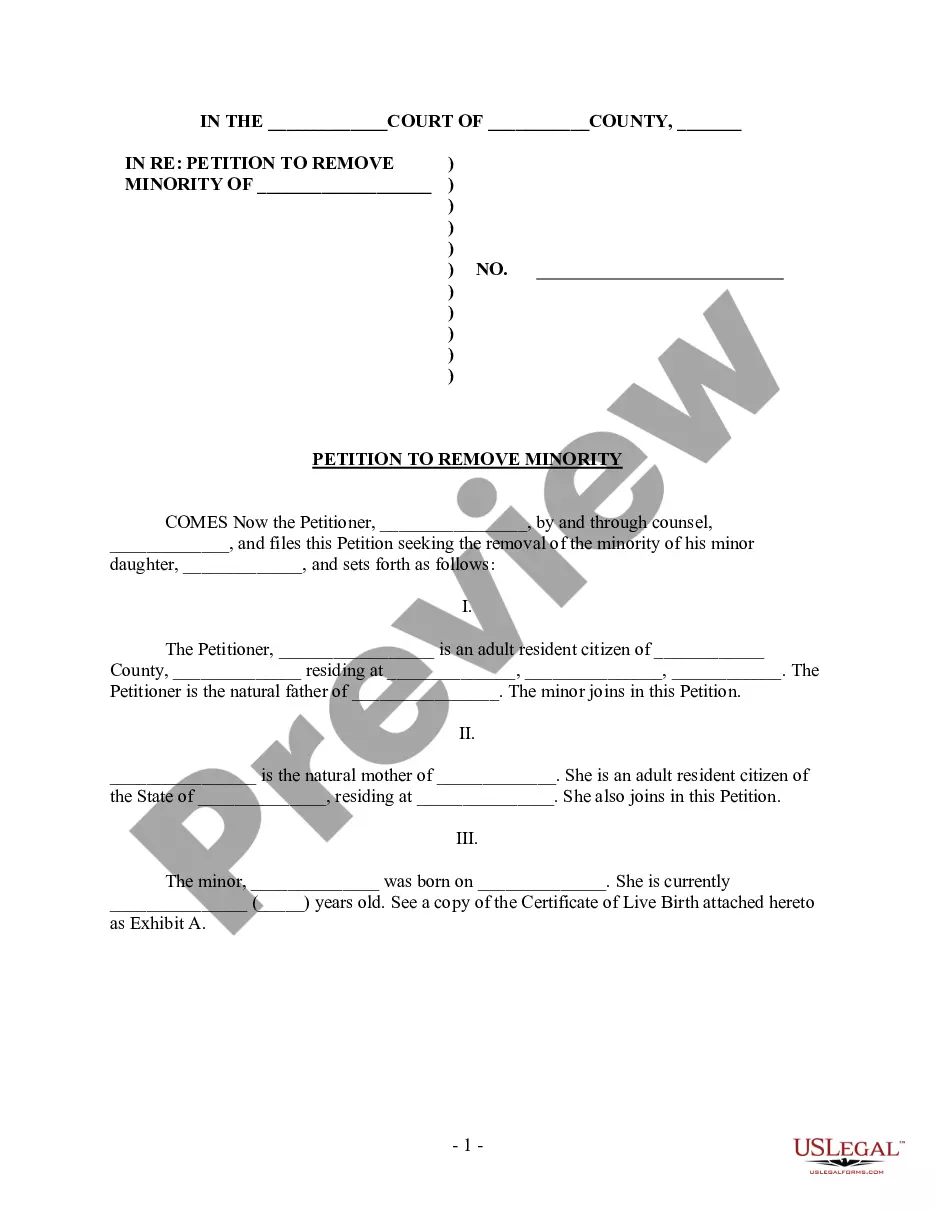
Get your form ready online
Our built-in tools help you complete, sign, share, and store your documents in one place.
Make edits, fill in missing information, and update formatting in US Legal Forms—just like you would in MS Word.
Download a copy, print it, send it by email, or mail it via USPS—whatever works best for your next step.
Sign and collect signatures with our SignNow integration. Send to multiple recipients, set reminders, and more. Go Premium to unlock E-Sign.
If this form requires notarization, complete it online through a secure video call—no need to meet a notary in person or wait for an appointment.
We protect your documents and personal data by following strict security and privacy standards.

Make edits, fill in missing information, and update formatting in US Legal Forms—just like you would in MS Word.

Download a copy, print it, send it by email, or mail it via USPS—whatever works best for your next step.

Sign and collect signatures with our SignNow integration. Send to multiple recipients, set reminders, and more. Go Premium to unlock E-Sign.

If this form requires notarization, complete it online through a secure video call—no need to meet a notary in person or wait for an appointment.

We protect your documents and personal data by following strict security and privacy standards.
Looking for another form?
How to fill out Petition To Declare Child Free From Parent's Custody And Control For Abandonment - Release Of Parental Rights?
Have you found yourself in a situation where you need documents for both business or personal purposes almost every day.
There are numerous legal document templates available online, but finding ones you can trust is not easy.
US Legal Forms provides thousands of form templates, including the Wisconsin Petition to Declare Child Free from Parent's Custody and Control for Abandonment - Release of Parental Rights, that are designed to meet state and federal standards.
Access all the document templates you have purchased in the My documents menu.
You can retrieve another copy of the Wisconsin Petition to Declare Child Free from Parent's Custody and Control for Abandonment - Release of Parental Rights at any time, if needed. Just select the required form to download or print the template. Utilize US Legal Forms, the largest collection of legal forms, to save time and avoid errors. The service offers professionally crafted legal document templates that you can use for various purposes. Create an account on US Legal Forms and start simplifying your life.
- If you are already familiar with the US Legal Forms website and have an account, simply Log In.
- Then, you can download the Wisconsin Petition to Declare Child Free from Parent's Custody and Control for Abandonment - Release of Parental Rights template.
- If you do not have an account and wish to start using US Legal Forms, follow these instructions.
- Obtain the form you need and ensure it is for the correct area/region.
- Utilize the Review button to examine the form.
- Read the description to ensure you have selected the right form.
- If the form is not what you are looking for, use the Search field to find the form that meets your needs and specifications.
- Once you find the appropriate form, click on Get now.
- Select the pricing plan you desire, fill in the required information to create your account, and pay for the order using your PayPal or Credit Card.
- Choose a convenient file format and download your copy.
Form popularity
FAQ
The easiest way to do so is to appear before the court at a hearing and acknowledge consent to termination in person. A judge will likely question the consenting parent to make sure that they fully understand the ramifications of voluntary termination and are consenting in an informed manner.
Wisconsin Statute 948.31 defines interference with custody, either by a parent or a third party: ?Whoever causes a child to leave, takes away or withholds a child for more than 12 hours from the child's parent(s) is guilty of a Class I felony.?
948.20 Abandonment of a child. Whoever, with intent to abandon the child, leaves any child in a place where the child may suffer because of neglect is guilty of a Class G felony.
The child has been left by the parent with any person, the parent knows or could discover the whereabouts of the child and the parent has failed to visit or communicate with the child for a period of 6 months or longer.
The legal definition of an unfit parent is when the parent through their conduct fails to provide proper guidance, care, or support. Also, if there is abuse, neglect, or substance abuse issues, that parent will be deemed unfit.
Examples of Unfit Parenting Child abandonment. Alcoholism. Drug addiction. Mental Disturbance. Criminal History. Refusing to assume responsibility for the care of a child.
Under Wisconsin law, there are several valid grounds for involuntary termination of another parent's rights. These include abandonment, parental disability, failure to assume parental responsibilities or child abuse.
In Wisconsin, the assumption is that both parents will have custody and placement of the child. The only way that custody and placement is not split 50/50 is if you can prove that doing so would not be in the best interest of the child.