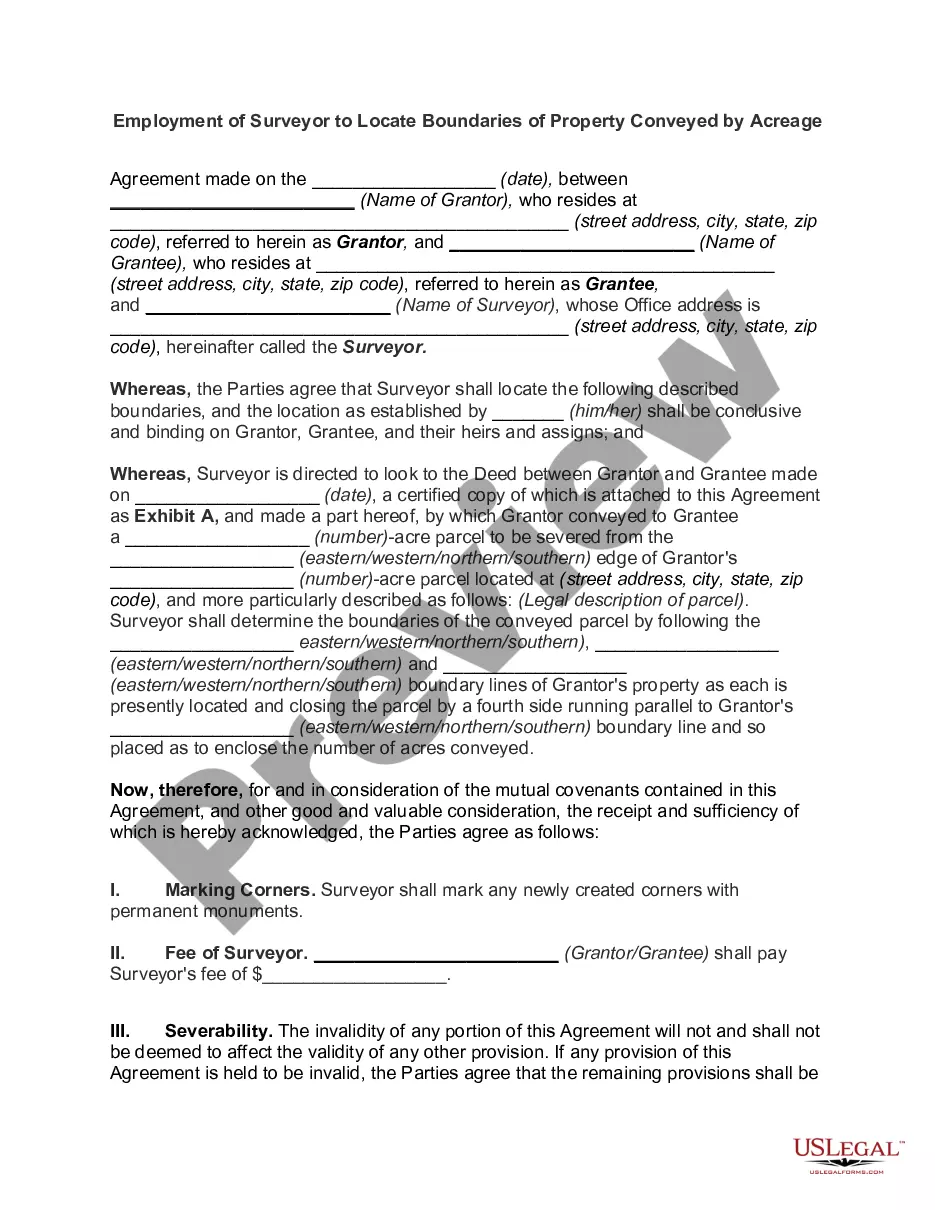
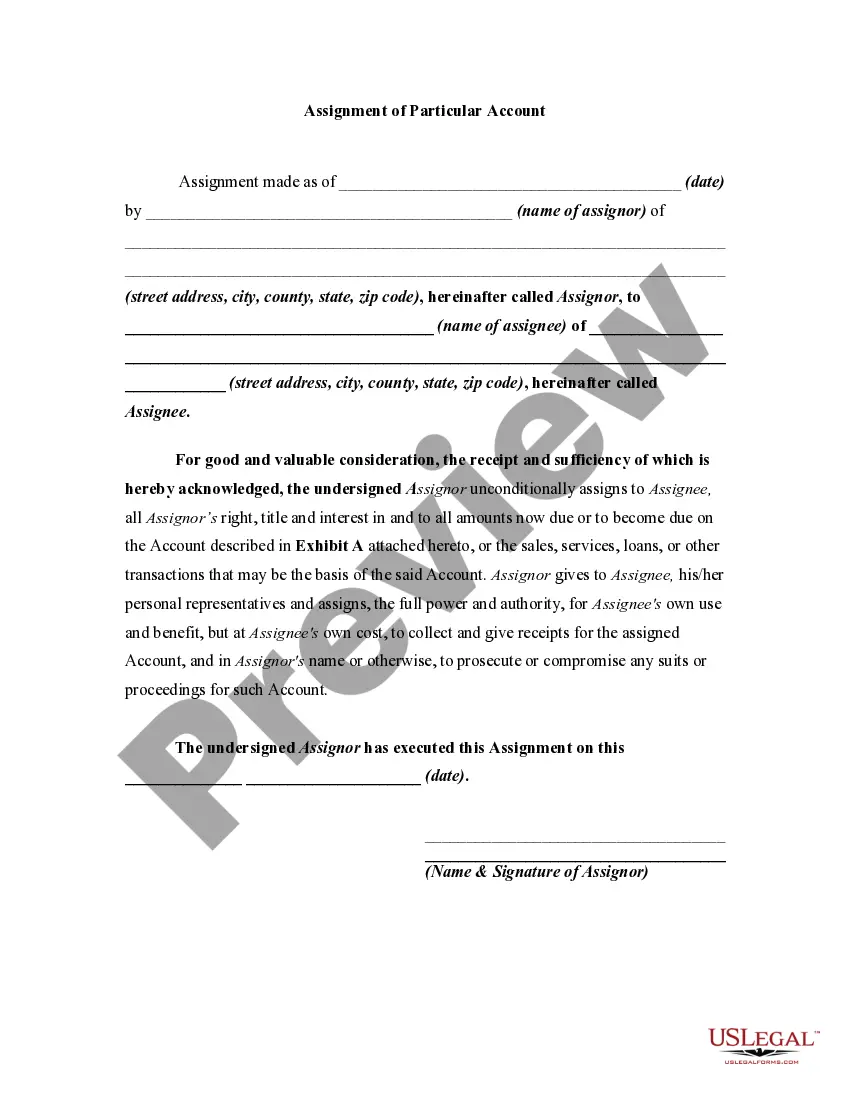
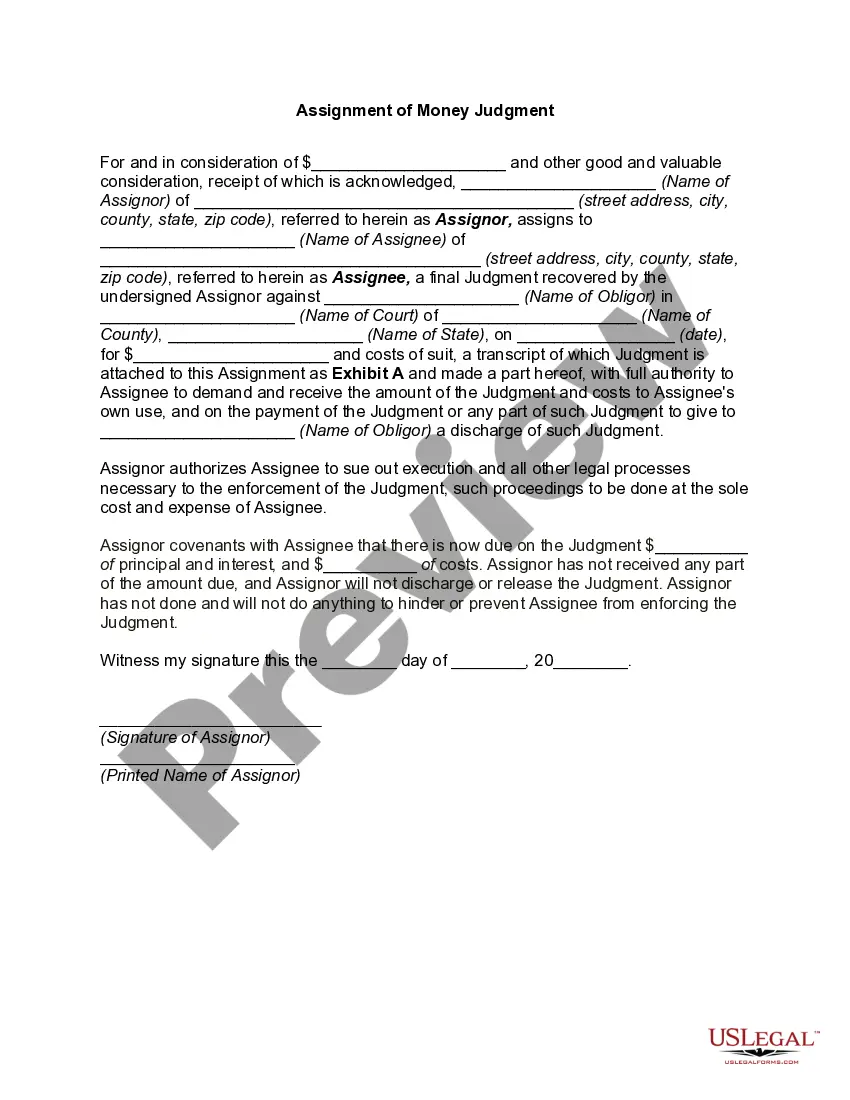
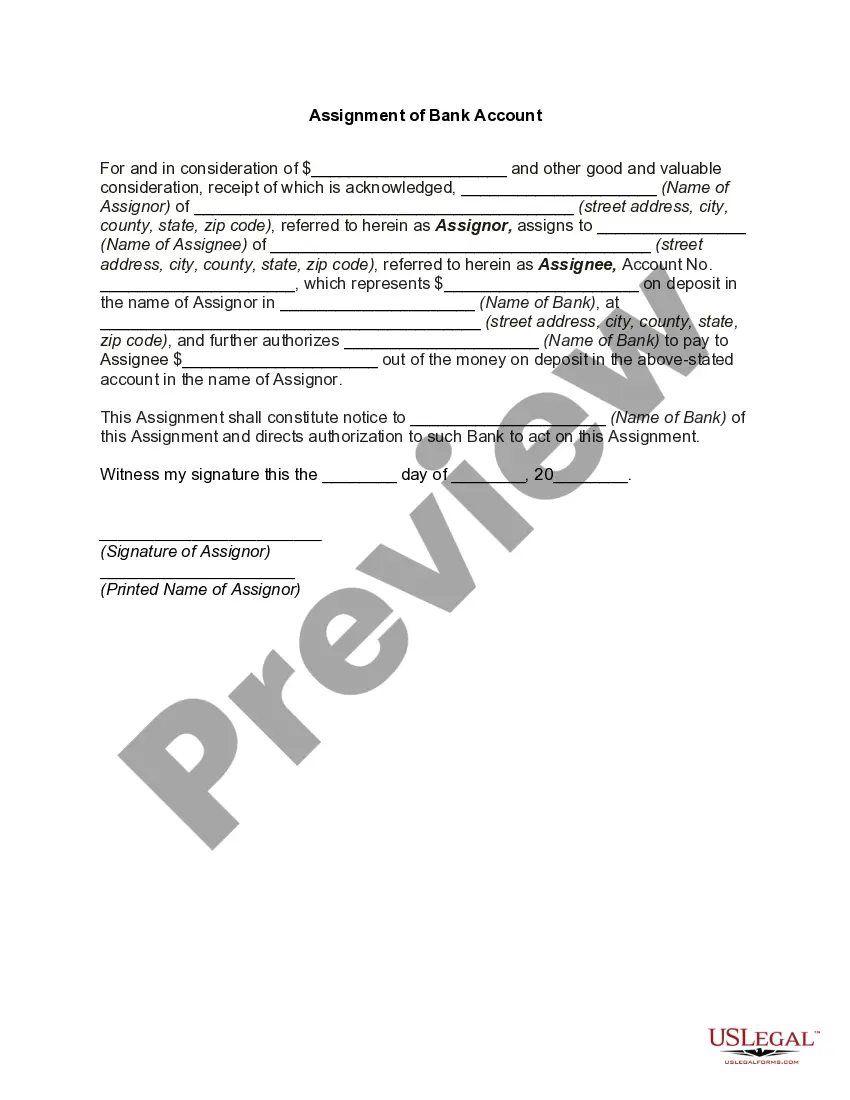
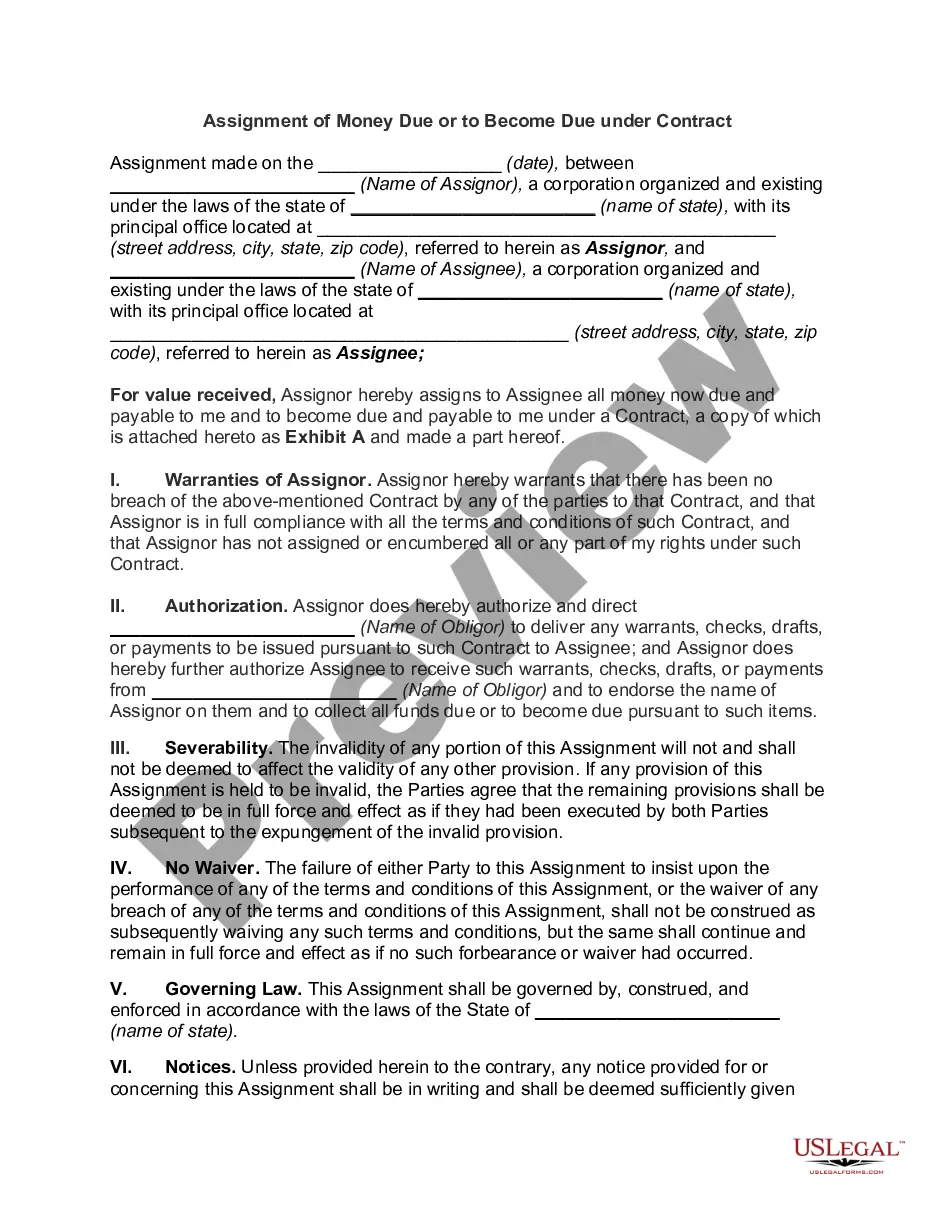
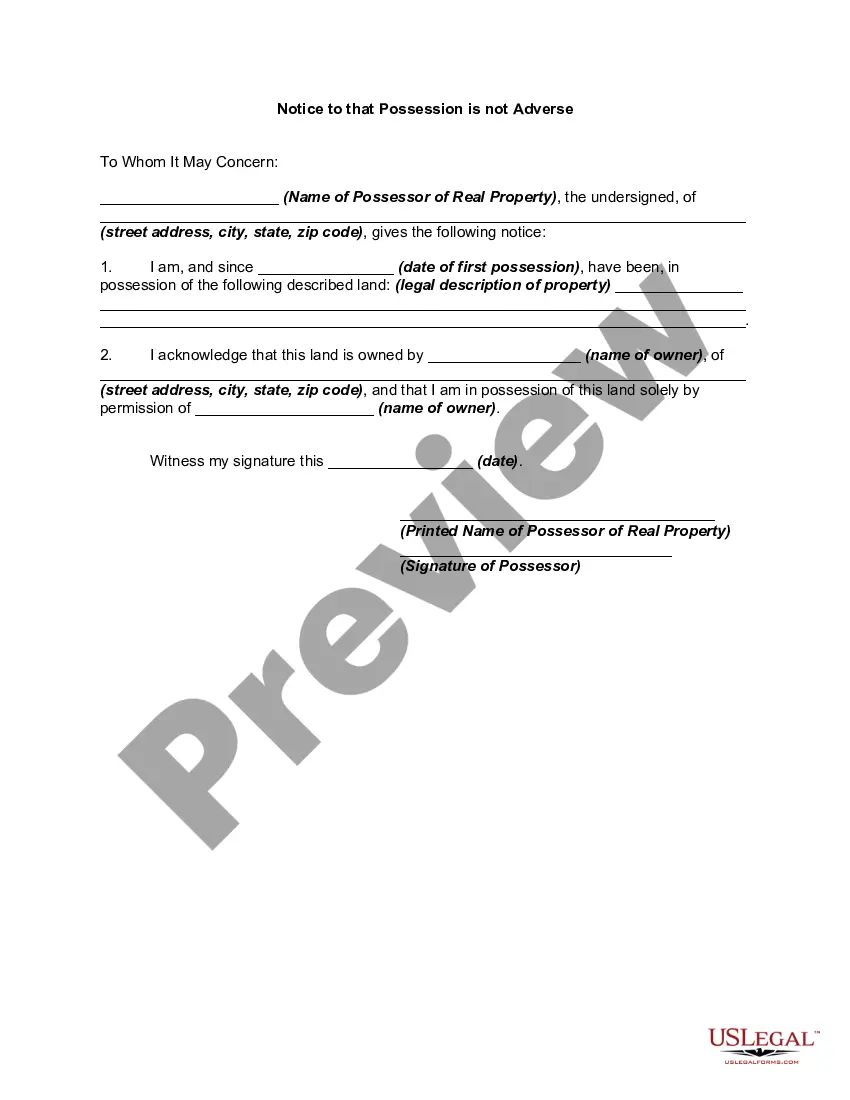
This form is an Assignment of Money Due. The assignor agrees to grant to the assignee all title and interest in a certain debt or money due as described in the agreement. The form also provides that it is the responsibility of the assignor to collect the debt.
Wisconsin Assignment of Money Due
Category:
State:
Multi-State
Control #:
US-00422
Format:
Word;
Rich Text
Instant download
Description
Get your form ready online
Our built-in tools help you complete, sign, share, and store your documents in one place.
Built-in online Word editor
Make edits, fill in missing information, and update formatting in US Legal Forms—just like you would in MS Word.
Export easily
Download a copy, print it, send it by email, or mail it via USPS—whatever works best for your next step.
E-sign your document
Sign and collect signatures with our SignNow integration. Send to multiple recipients, set reminders, and more. Go Premium to unlock E-Sign.
Notarize online 24/7
If this form requires notarization, complete it online through a secure video call—no need to meet a notary in person or wait for an appointment.
Store your document securely
We protect your documents and personal data by following strict security and privacy standards.

Make edits, fill in missing information, and update formatting in US Legal Forms—just like you would in MS Word.

Download a copy, print it, send it by email, or mail it via USPS—whatever works best for your next step.

Sign and collect signatures with our SignNow integration. Send to multiple recipients, set reminders, and more. Go Premium to unlock E-Sign.

If this form requires notarization, complete it online through a secure video call—no need to meet a notary in person or wait for an appointment.

We protect your documents and personal data by following strict security and privacy standards.
Looking for another form?



How to fill out Assignment Of Money Due?
You can spend hours online searching for the legal document format that meets the federal and state requirements you need. US Legal Forms offers thousands of legal templates that can be reviewed by professionals. You can download or create the Wisconsin Assignment of Money Due from my support.
If you already have a US Legal Forms account, you may Log In and click the Obtain button. After that, you can complete, modify, print, or sign the Wisconsin Assignment of Money Due. Every legal document format you purchase is yours permanently. To obtain another copy of any purchased form, visit the My documents tab and click the appropriate button.
If you are using the US Legal Forms website for the first time, follow the simple instructions below: First, ensure that you have selected the correct document format for the county/area of your choice. Review the form description to confirm you have chosen the right form. If available, utilize the Preview button to check the document format as well. If you wish to obtain another version of the form, use the Search area to find the format that suits your needs and requirements.
- Once you have found the format you desire, click Purchase now to proceed.
- Select the pricing plan you want, enter your details, and register for an account on US Legal Forms.
- Complete the payment. You can use your credit card or PayPal account to purchase the legal form.
- Choose the format of the document and download it to your device.
- Make edits to your document if possible. You can complete, modify, and sign and print Wisconsin Assignment of Money Due.
- Download and print thousands of document templates using the US Legal Forms website, which provides the largest collection of legal forms.
- Utilize professional and state-specific templates to address your business or personal needs.
Form popularity
FAQ
To docket a judgment in Wisconsin, you must file a judgment with the circuit court clerk in the county where the judgment was obtained. Include all necessary information, such as the case number and names of the parties involved. If your judgment involves a Wisconsin Assignment of Money Due, it is crucial to provide accurate details to ensure proper recording.
Filing a claim against an estate in Wisconsin requires you to submit your claim to the personal representative of the estate. Ensure you include all necessary documentation to support your claim, such as bills or contracts. Utilizing resources like US Legal Forms can simplify this process by providing you with the appropriate forms and guidance specific to Wisconsin Assignment of Money Due.
To increase your chances of winning in small claims court, gather all relevant evidence, such as contracts, photographs, and correspondence. Present your case clearly and confidently, focusing on the facts. Using a Wisconsin Assignment of Money Due can help you organize your claim effectively, ensuring you have the necessary documentation to support your position.
A debt becomes uncollectible when it surpasses the statute of limitations, which is six years in Wisconsin. After this period, creditors cannot legally pursue the debt, making it uncollectible. Additionally, debts may become uncollectible if the debtor files for bankruptcy or if the creditor fails to locate the debtor. Understanding these factors can help you make informed decisions, and the Wisconsin Assignment of Money Due can assist in managing your financial obligations.
The 7 7 7 rule for collections refers to the guideline that suggests contacting a debtor seven times over seven weeks. This method aims to create a balance between persistence and respect for the debtor's space. By following this rule, creditors can improve their chances of recovering debts without overwhelming the debtor. Using the Wisconsin Assignment of Money Due can streamline your collection efforts.
To claim unclaimed money in Wisconsin, you should start by searching the Wisconsin Department of Revenue's unclaimed property database. If you find money that belongs to you, you will need to complete a claim form and provide proof of identity. The process is straightforward, and claiming your funds can provide financial relief. The Wisconsin Assignment of Money Due can also help you navigate financial matters efficiently.
Creditors can pursue a debt in Wisconsin for up to six years, as defined by the statute of limitations. This timeframe begins when the debtor last made a payment or acknowledged the debt. After this period, the creditor may lose the ability to enforce the debt through legal means. Utilizing the Wisconsin Assignment of Money Due can help you understand your rights in these situations.
In Wisconsin, a debt typically becomes uncollectible after six years from the date of the last payment or acknowledgement. This period is known as the statute of limitations. It means that creditors cannot take legal action to collect the debt after this timeframe. To protect your rights, consider using the Wisconsin Assignment of Money Due to manage your debts effectively.
In Wisconsin, creditors generally have six years to collect a debt through legal action. This time frame begins from the date of the last payment or the last acknowledgment of the debt. However, certain debts may have different limitations based on specific circumstances. Understanding these timelines is essential, and a Wisconsin Assignment of Money Due can assist you in managing your financial obligations effectively.
To stop a garnishment in Wisconsin, you need to take action quickly. You can file a motion with the court to contest the garnishment or demonstrate that it causes undue hardship. Additionally, negotiating with the creditor for a payment plan may be effective. Resources like the Wisconsin Assignment of Money Due can provide insights and help you navigate the process.