Wisconsin New State Resident Package
Understanding this form package
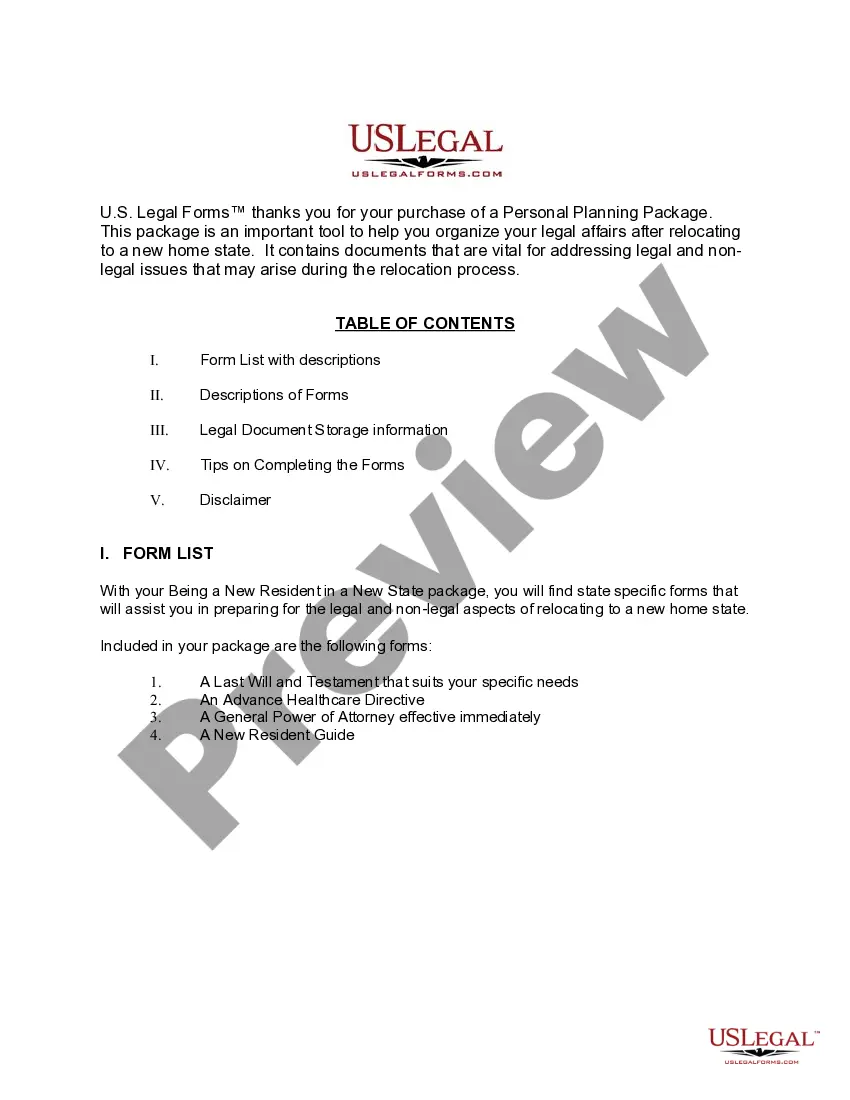
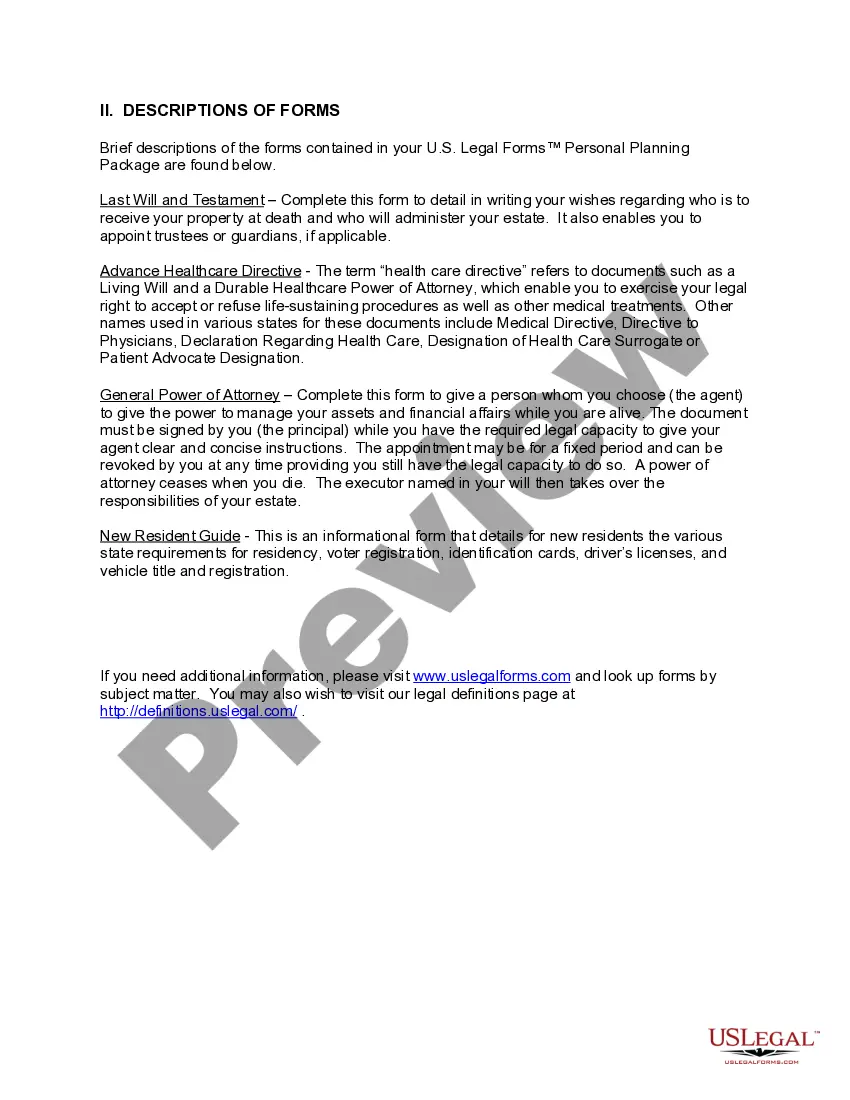
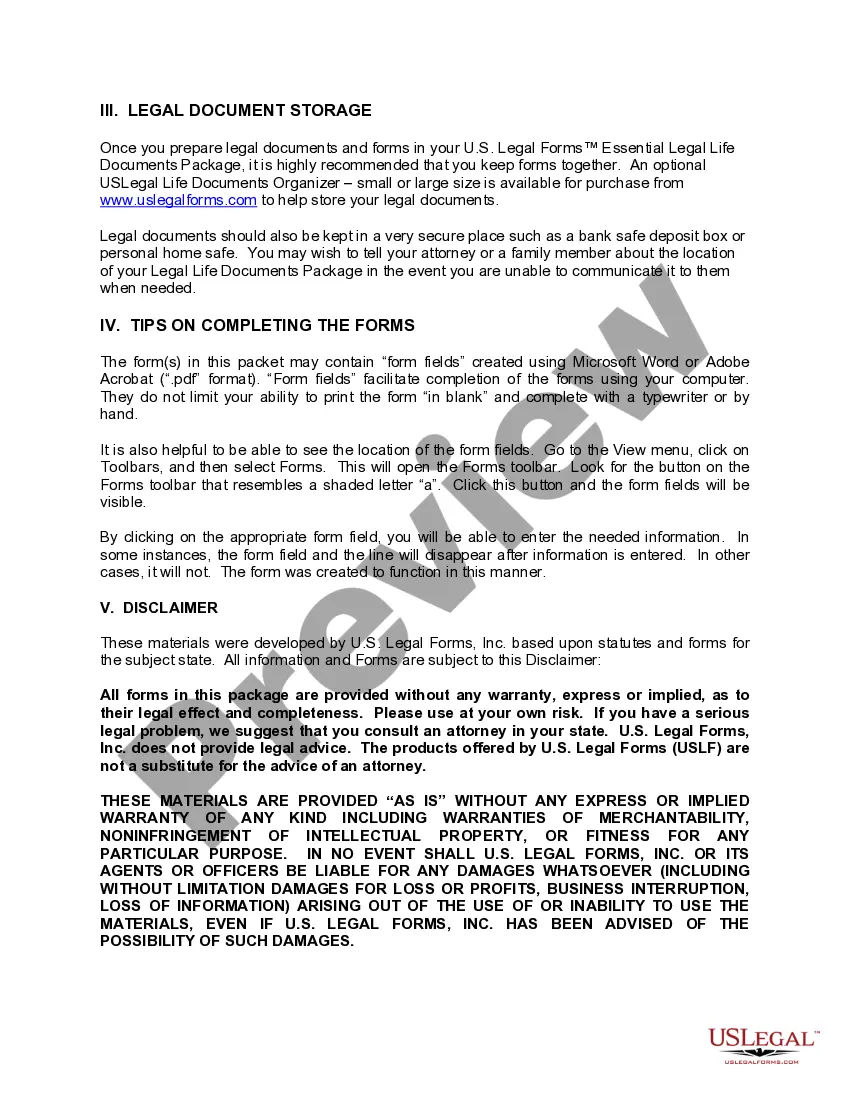
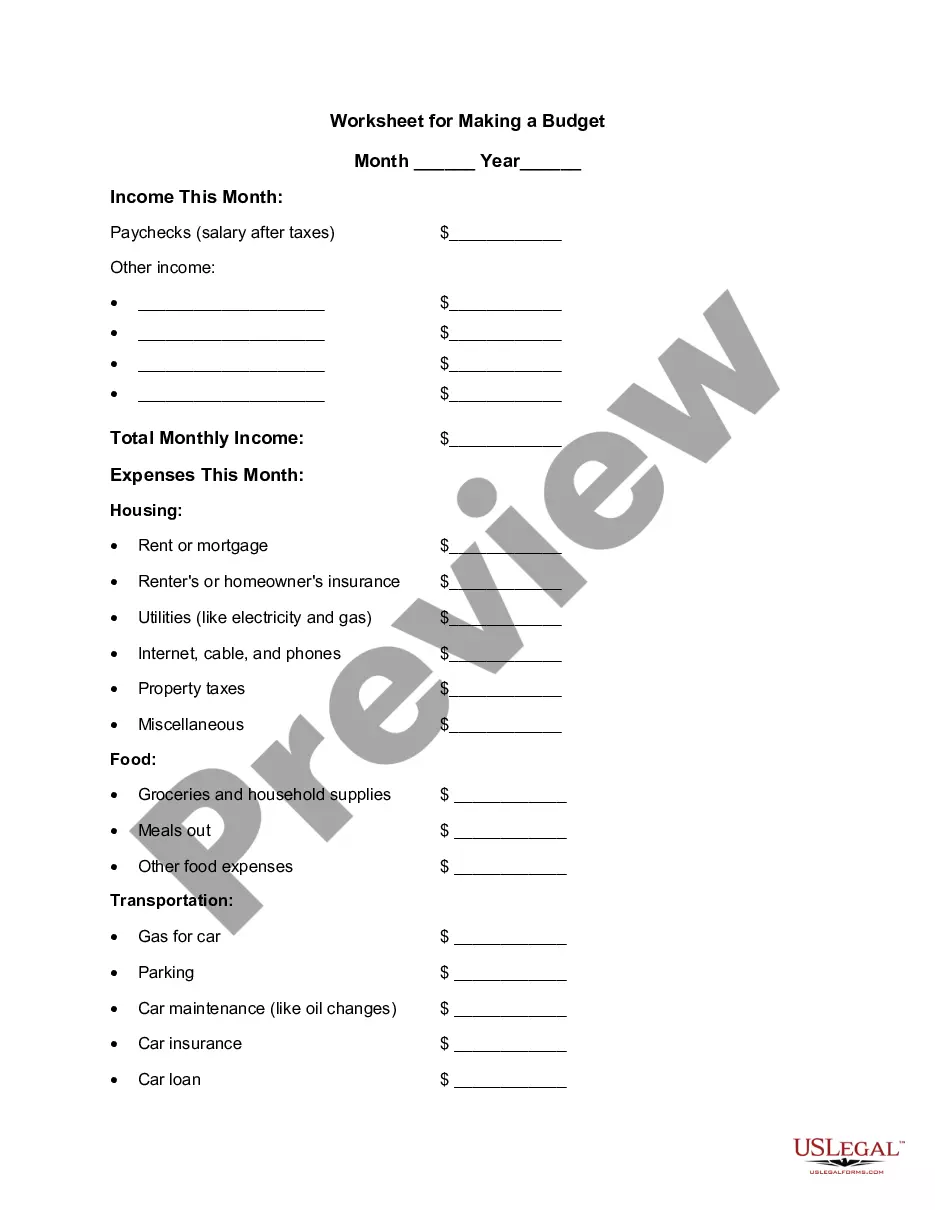
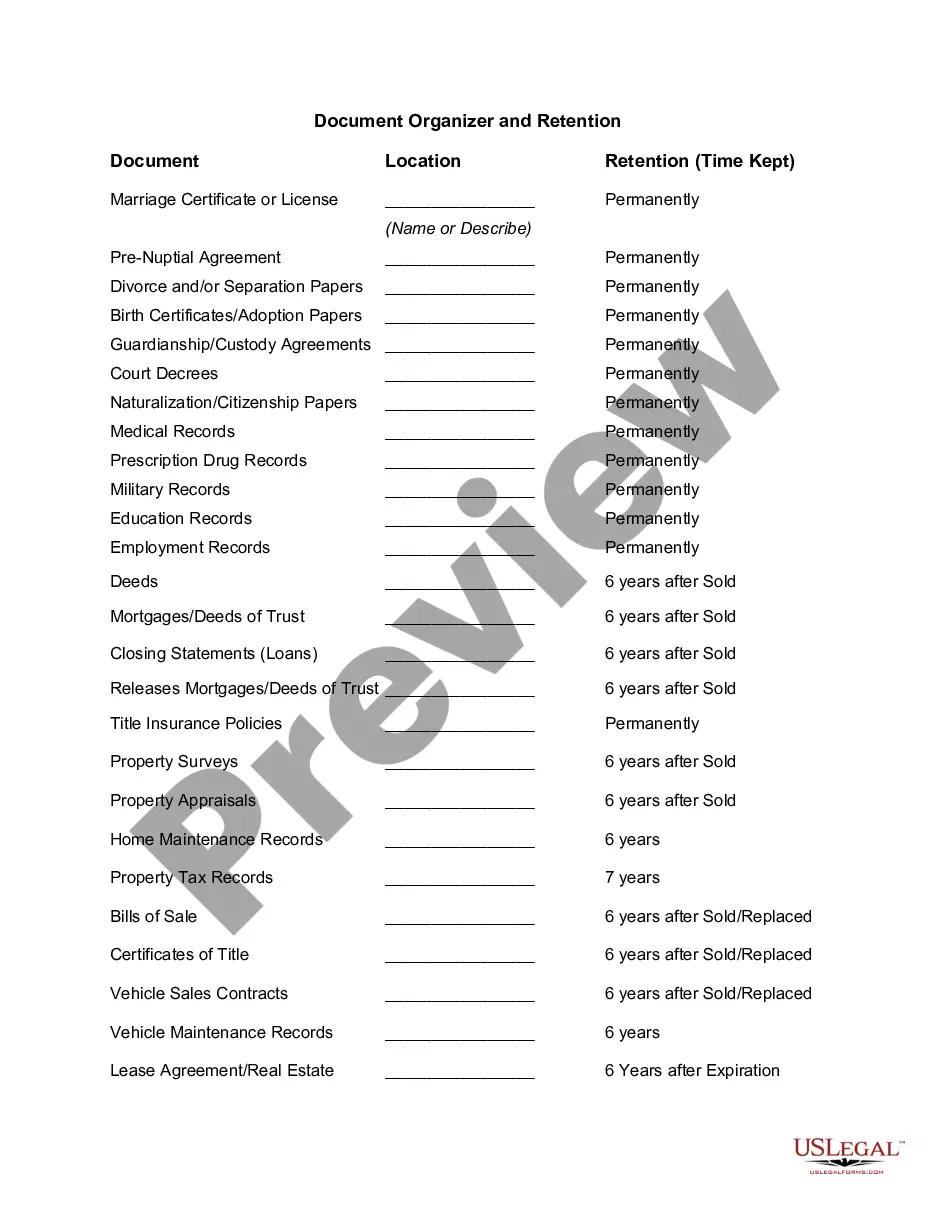
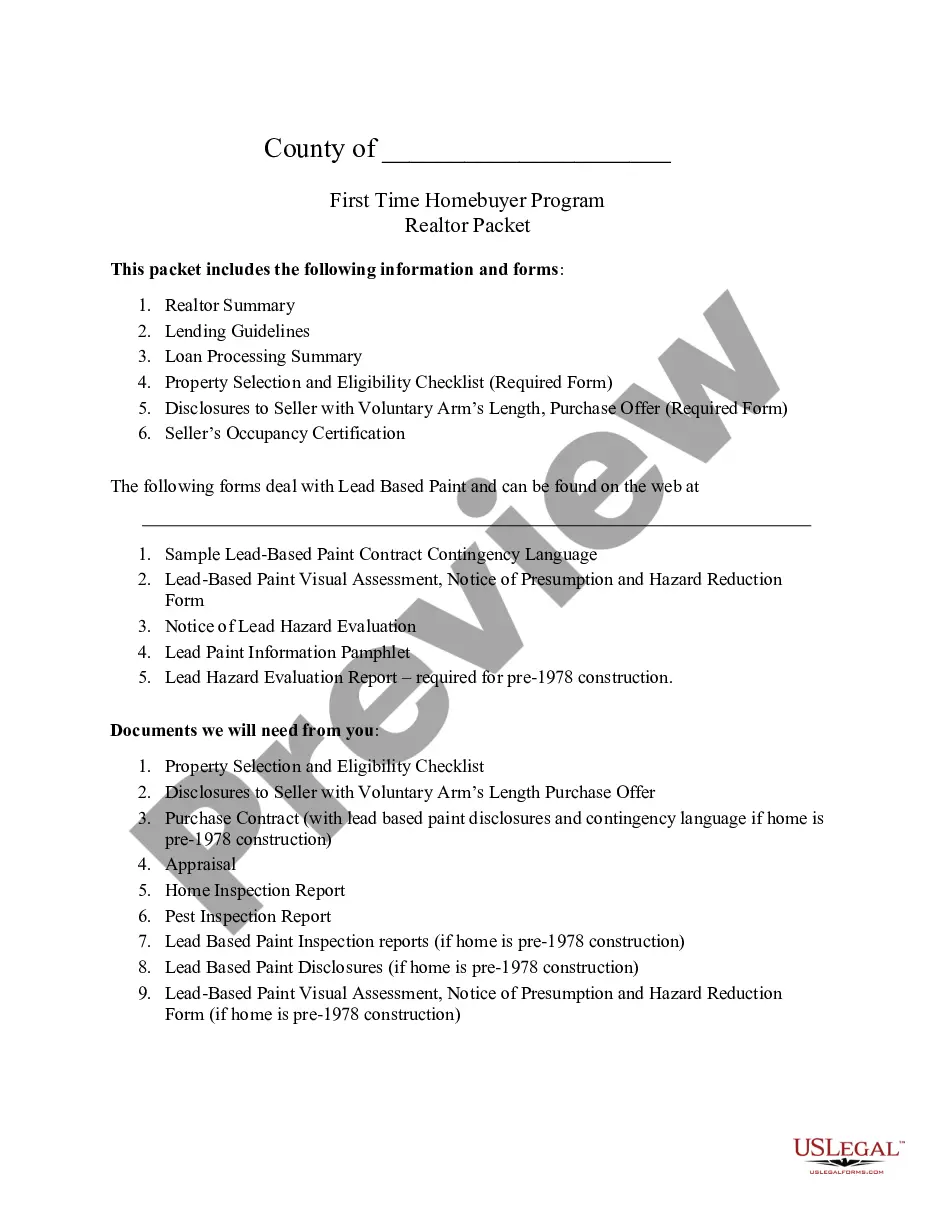
The Wisconsin New State Resident Package provides essential legal forms designed to help individuals manage their legal affairs after moving to Wisconsin. This package contains state-specific documents tailored to meet the needs of new residents and includes a Last Will and Testament, an Advance Healthcare Directive, a General Power of Attorney, and a New Resident Guide. These documents are vital for protecting your health care preferences and managing your financial decisions, making this package a comprehensive solution for your legal needs as a newcomer to Wisconsin.
Documents contained in this package

Common use cases
This form package is useful when you have recently relocated to Wisconsin and need to establish your legal documents. It is beneficial in scenarios such as:
- When you want to ensure your health care wishes are honored through an Advance Healthcare Directive.
- If you need to grant someone authority over your financial matters via a General Power of Attorney.
- When you wish to formalize your last will to manage your estate after your passing.
- If you require guidance on local residency requirements, voter registration, and vehicle registration as a new resident.
Who needs this form package
- Individuals and families who have recently moved to Wisconsin.
- New residents seeking to establish a legal will and directives.
- Those who require legal authorization for someone to manage financial matters.
- Anyone needing a guide on state residency requirements and processes.
Instructions for completing these forms
- Review all included forms to understand each document's purpose and requirements.
- Gather necessary personal information and details to complete each form accurately.
- Fill out the Last Will and Testament, Advance Healthcare Directive, and General Power of Attorney forms with the required information.
- Consult the New Resident Guide for relevant state information and complete any mandatory registrations.
- Store completed forms in a secure location, such as a safe or safe deposit box, and inform a trusted individual about their location.
Notarization guidance for this package
Notarization is required for one or more forms in this package. US Legal Forms provides secure online notarization powered by Notarize, allowing you to complete the process through a verified video call.
Get your form ready online
Our built-in tools help you complete, sign, share, and store your documents in one place.
Make edits, fill in missing information, and update formatting in US Legal Forms—just like you would in MS Word.
Download a copy, print it, send it by email, or mail it via USPS—whatever works best for your next step.
Sign and collect signatures with our SignNow integration. Send to multiple recipients, set reminders, and more. Go Premium to unlock E-Sign.
If this form requires notarization, complete it online through a secure video call—no need to meet a notary in person or wait for an appointment.
We protect your documents and personal data by following strict security and privacy standards.

Make edits, fill in missing information, and update formatting in US Legal Forms—just like you would in MS Word.

Download a copy, print it, send it by email, or mail it via USPS—whatever works best for your next step.

Sign and collect signatures with our SignNow integration. Send to multiple recipients, set reminders, and more. Go Premium to unlock E-Sign.

If this form requires notarization, complete it online through a secure video call—no need to meet a notary in person or wait for an appointment.

We protect your documents and personal data by following strict security and privacy standards.
Common mistakes to avoid
- Failing to sign or date the documents correctly.
- Not having the required witnesses for the Last Will and Testament.
- Overlooking specific instructions for completing the Advance Healthcare Directive.
- Neglecting to review state-specific residency requirements in the New Resident Guide.
Benefits of completing this package online
- Convenience of downloading documents anytime, anywhere.
- Edit the forms digitally for accuracy and ease of use.
- Save money compared to purchasing each form separately.
- Access to documents created by licensed attorneys tailored for Wisconsin laws.
Looking for another form?

Form popularity
FAQ
New residents of Wisconsin must apply for a Wisconsin driver license. 200bIf you have a regular Class D and or Class M license (autos and motorcycles), you must apply for a Wisconsin driver license within 60 days of establishing Wisconsin residency.
In general, you must be a bona fide resident of Wisconsin for at least 12 months prior to enrollment to be eligible for in-state tuition. If you do not qualify as a Wisconsin resident, you will be assessed nonresident tuition.
One of your parents is a bona fide resident of Wisconsin for at least the twelve months prior to the beginning of any semester, and. you are claimed as a tax dependent for Federal income tax purposes by one of your parents, and.
Rental or lease agreement with the signature of the owner/landlord and the tenant/resident. Deed or title to residential real property. Mortgage bill. Home utility bills (including cellular phone) Medical documents. Employee documents.
Find a new place to live in the new state. Establish domicile. Change your mailing address and forward your mail. Change your address with utility providers. Change IRS address. Register to vote. Get a new driver's license. File taxes in your new state.
A current and valid (unexpired and not suspended or revoked) Wisconsin driver license or Wisconsin state ID card with the voter's current name and address qualifies as Proof of Residence.
All documents presented for proof of Wisconsin residency must contain your name and current Wisconsin address.Valid Wisconsin hunting or fishing license. Medical billing statement from doctor or hospital. Service welcome letters: includes bank, credit card, utility and others.
Paycheck, stub or earning statement with your employer's name and address. Utility bill for water, gas, electricity or land-line telephone service. Mobile phone bill.
Electronic utility bills showing an Alberta address. Telephone bill. Gas bill. Cable TV bill. Other non-utility statements or correspondence mailed to your Alberta address. Bank / Credit Card statement. Alberta Social Benefit Statements. Income tax assessment summary (Notice of Assessment)