Wisconsin Distribution Easement Underground
Understanding this form
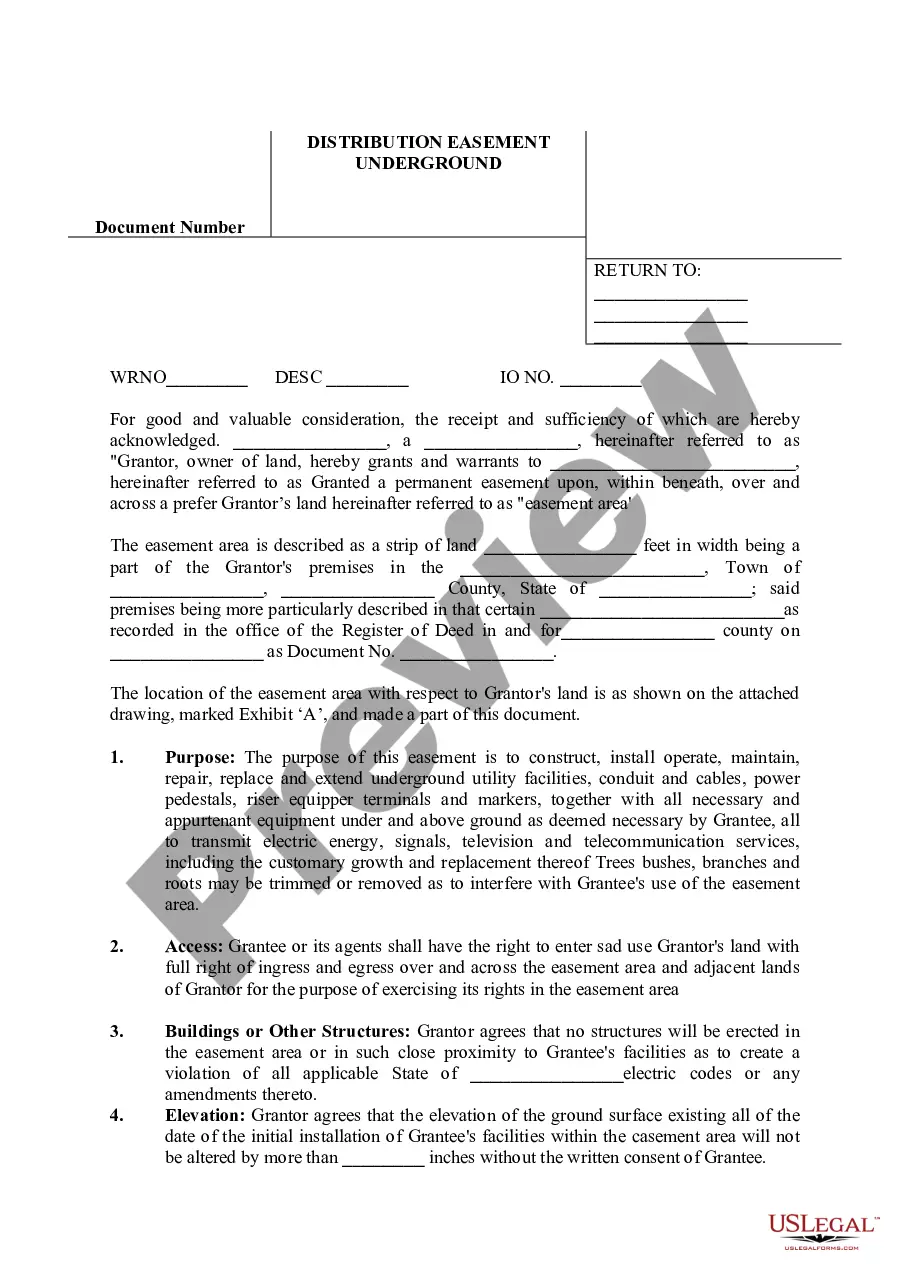
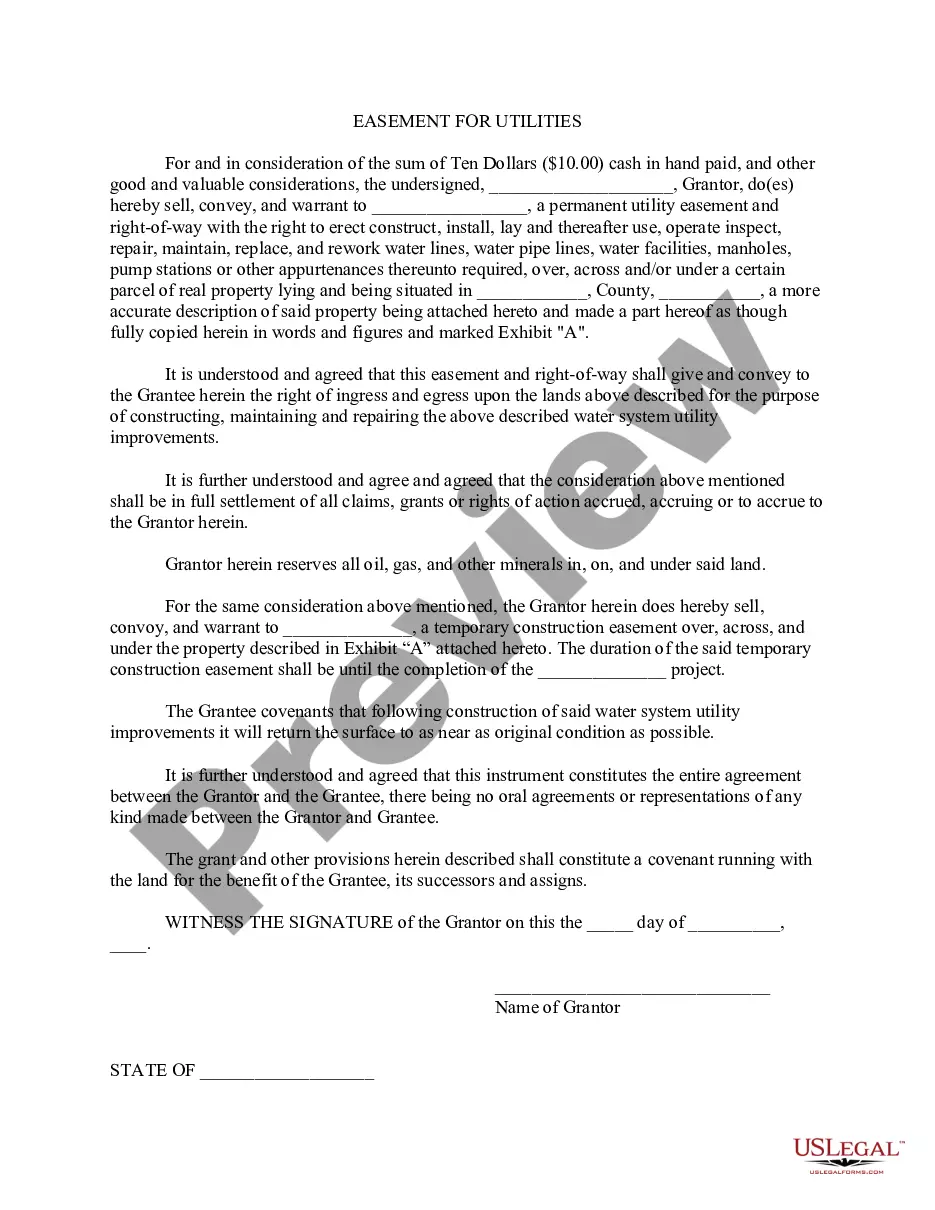
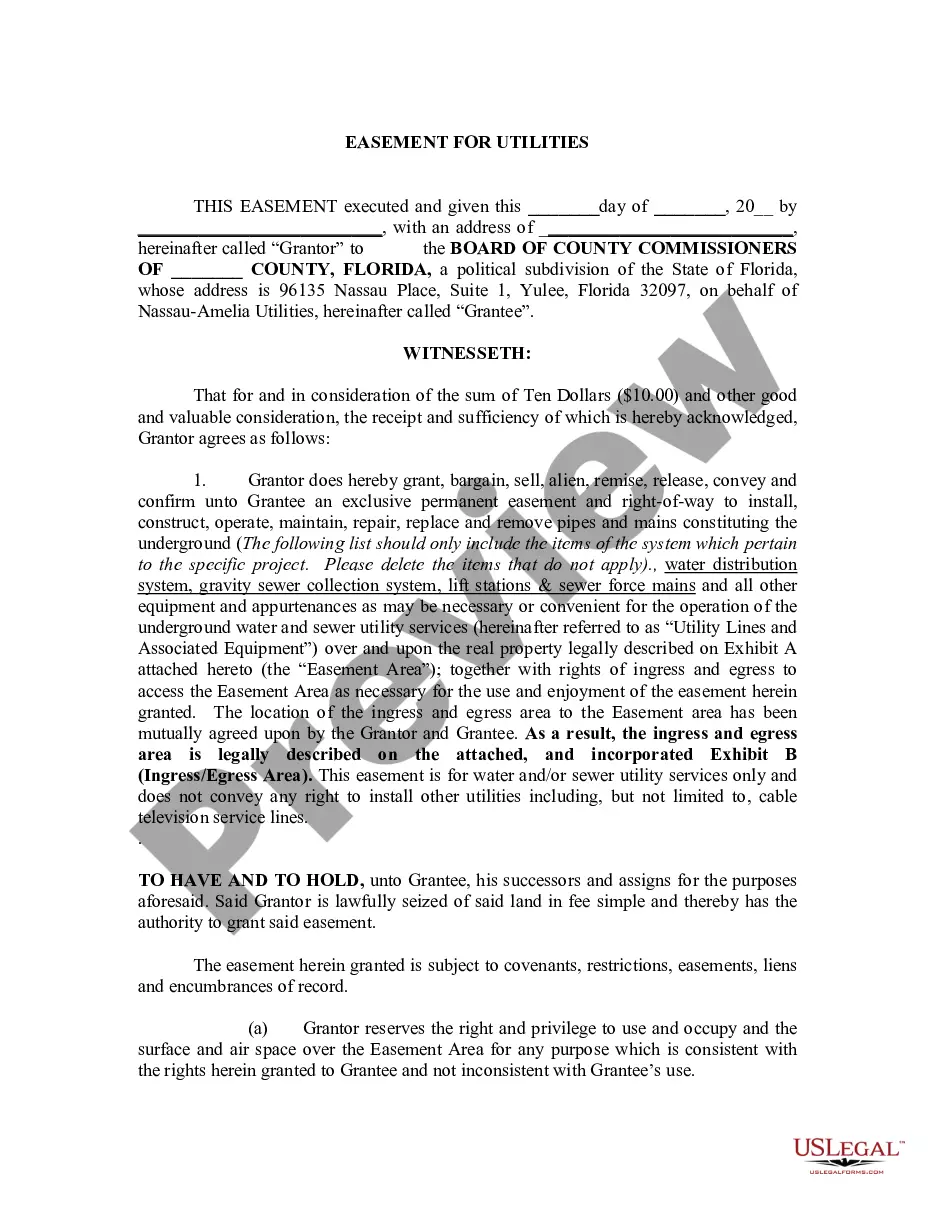
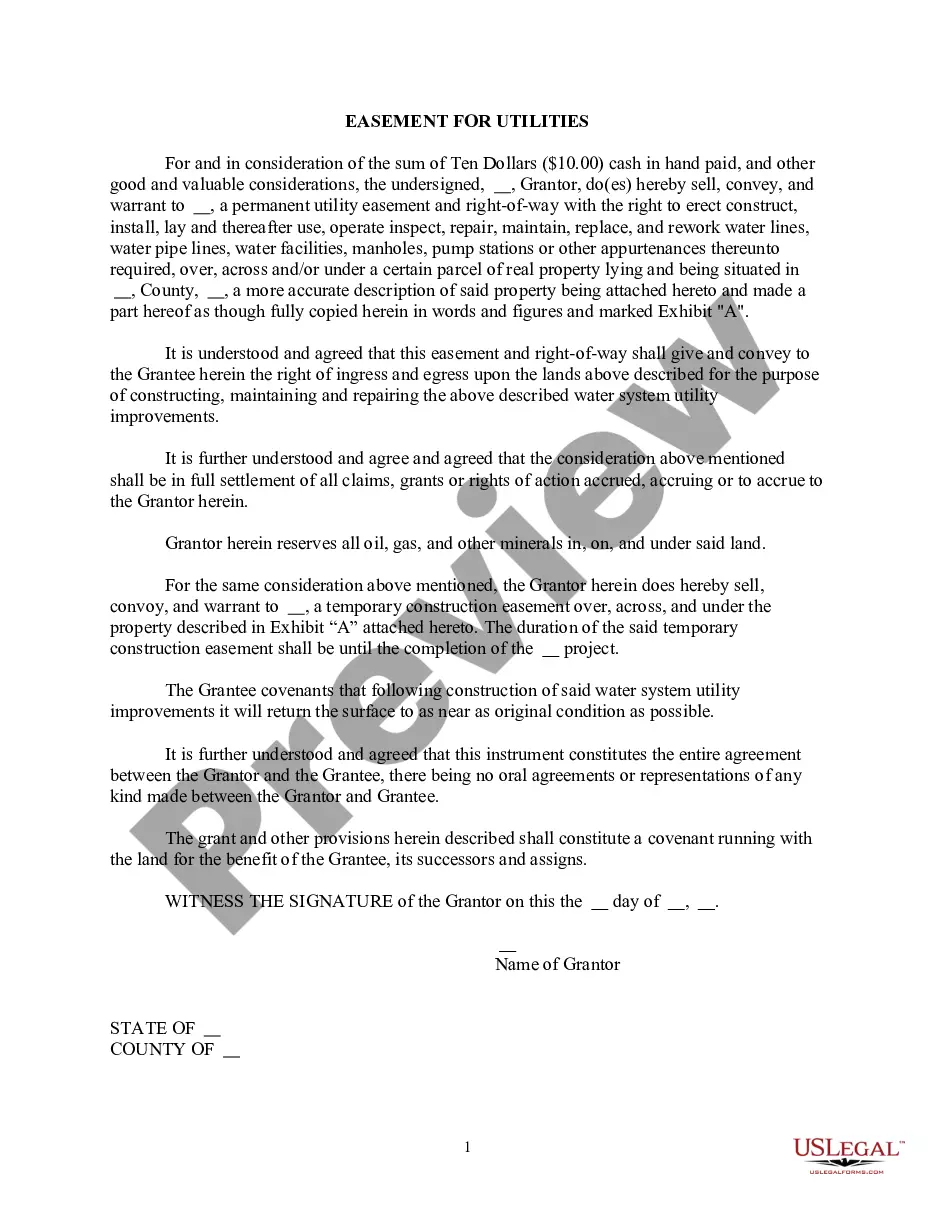
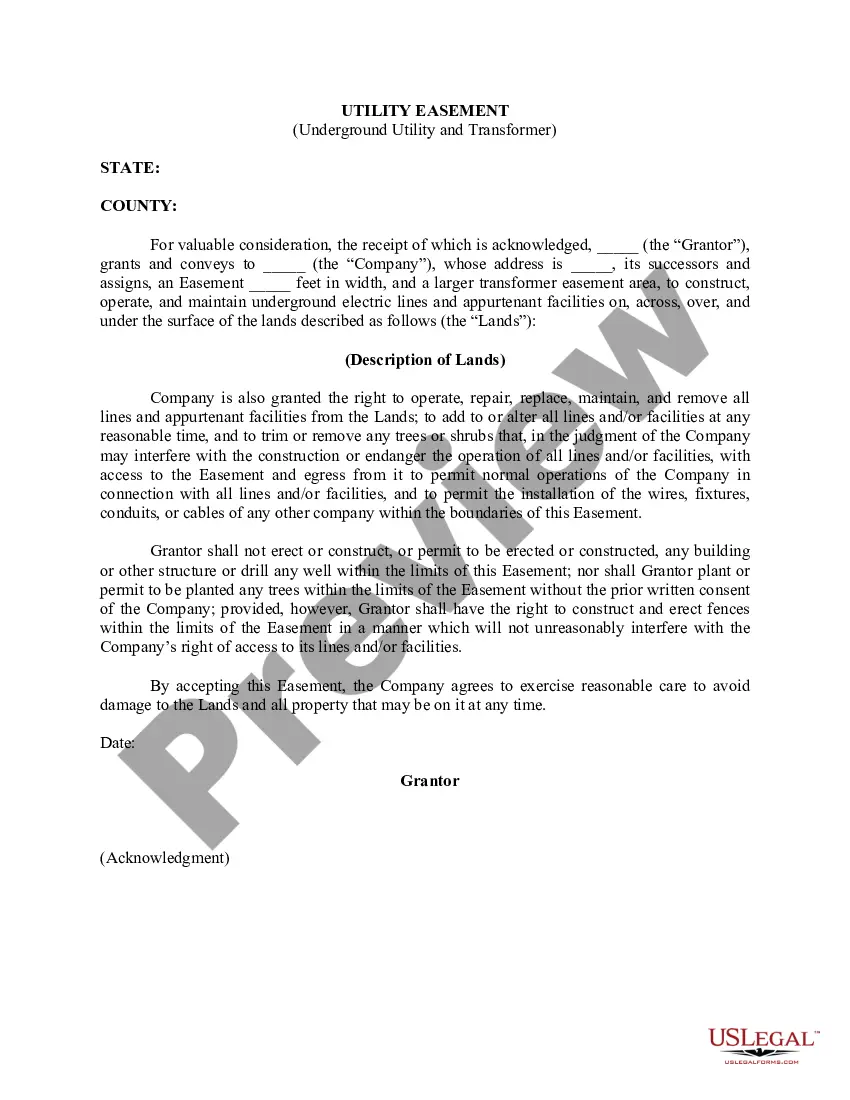
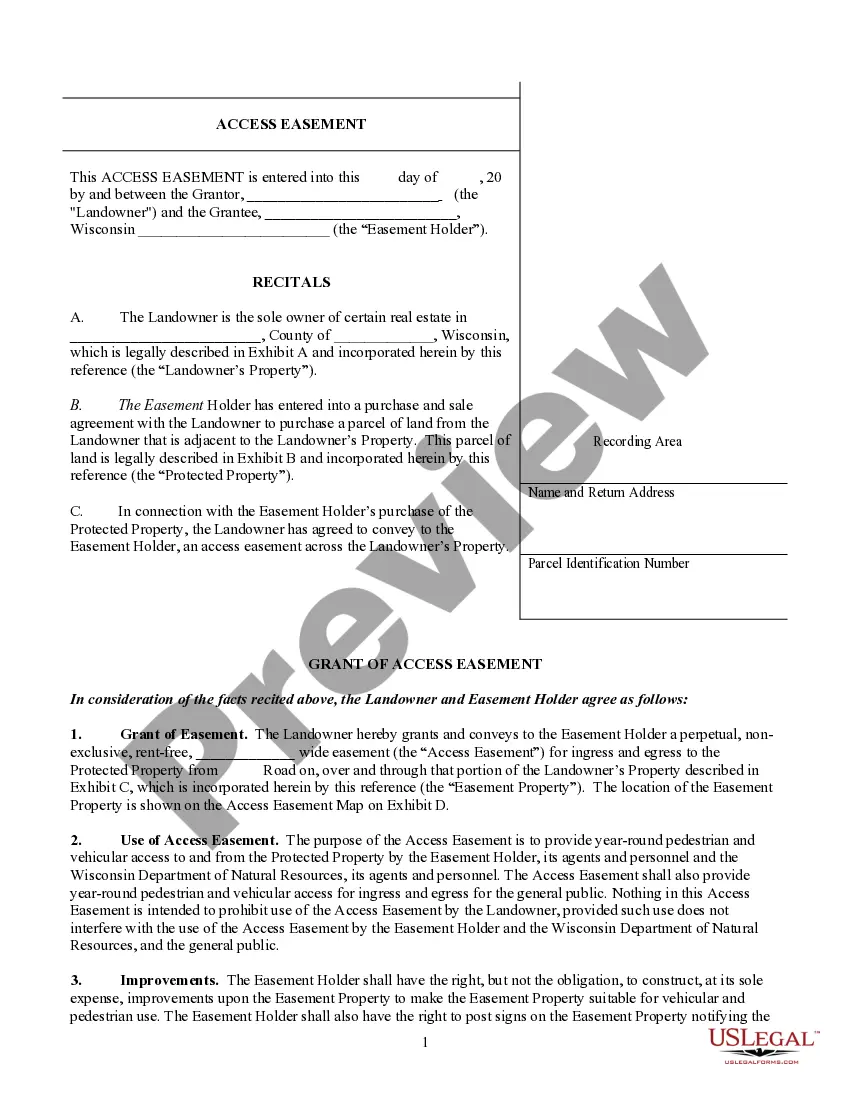
The Distribution Easement Underground form is a legal document that grants a specific party the permanent right to access and utilize a designated area of land for the installation, operation, maintenance, and replacement of underground utility facilities. Unlike other easements, this form explicitly focuses on underground utilities and related equipment, ensuring that necessary access is secured for uninterrupted service delivery such as electricity and telecommunications.
Key components of this form
- Description of the easement area and its dimensions.
- Purpose clauses specifying the rights granted for utility installation and maintenance.
- Access rights for the grantee and their agents.
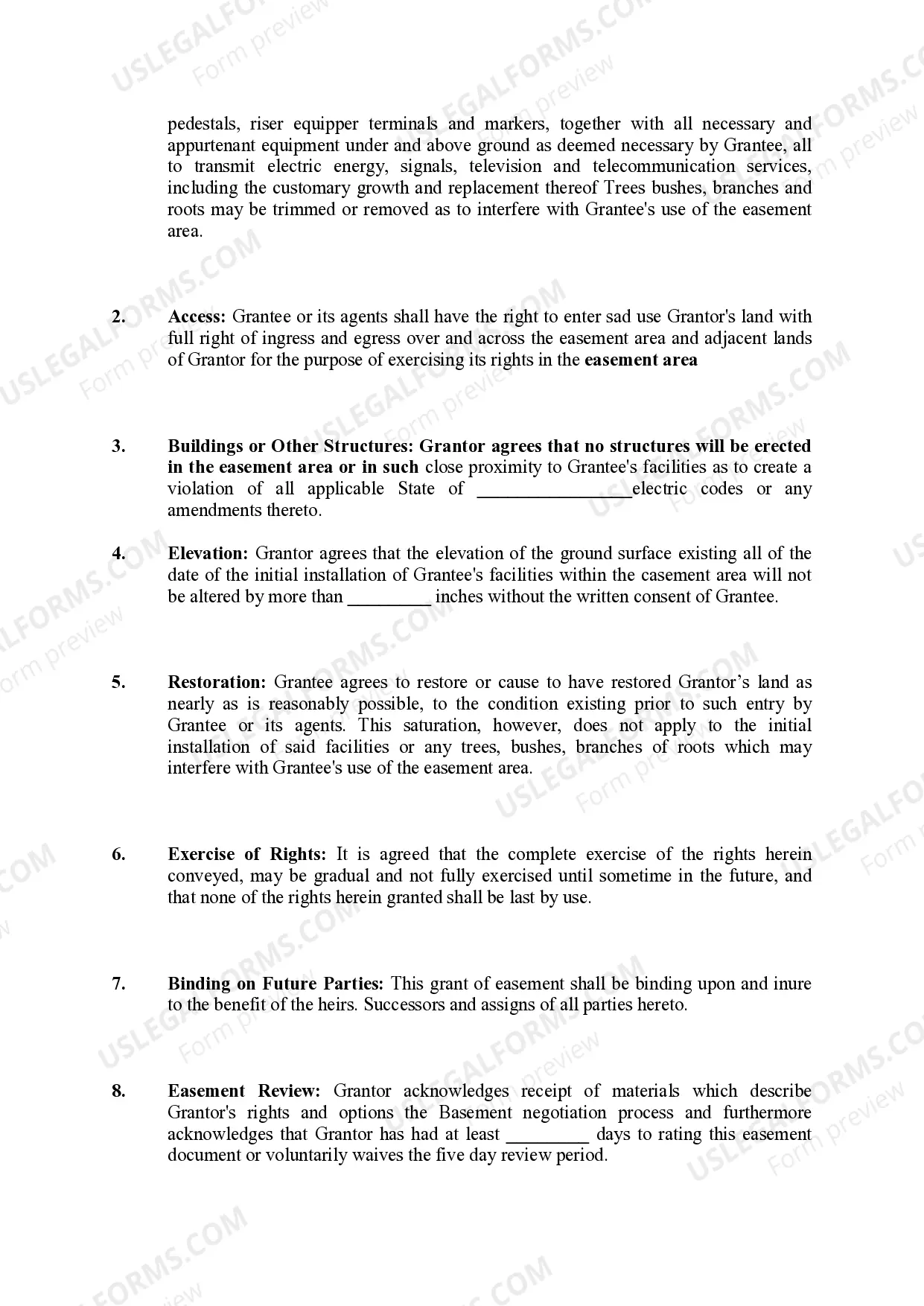
- Restrictions on erecting structures within the easement area.
- Obligations for restoring the land after easement use.
- Binding terms concerning future parties involved with the easement.
When this form is needed
This form should be used when a property owner (the grantor) wants to allow a utility company (the grantee) to access their land for underground utility projects. Typical scenarios include expanding or installing electrical, telecommunication, or other utility services where digging or laying cables is required. It is also useful in situations where maintenance or upgrades to existing underground facilities are anticipated.
Who can use this document
- Property owners who need to grant easement rights to utility companies.
- Utility companies seeking access for underground installations.
- Real estate professionals managing property transactions involving easements.
- Legal representatives assisting clients with easement agreements.
Completing this form step by step
- Identify the parties involved: the grantor and the grantee.
- Clearly describe the easement area, including dimensions and location.
- Specify the purpose of the easement and any conditions on its use.
- Include access rights and any restrictions on nearby structures.
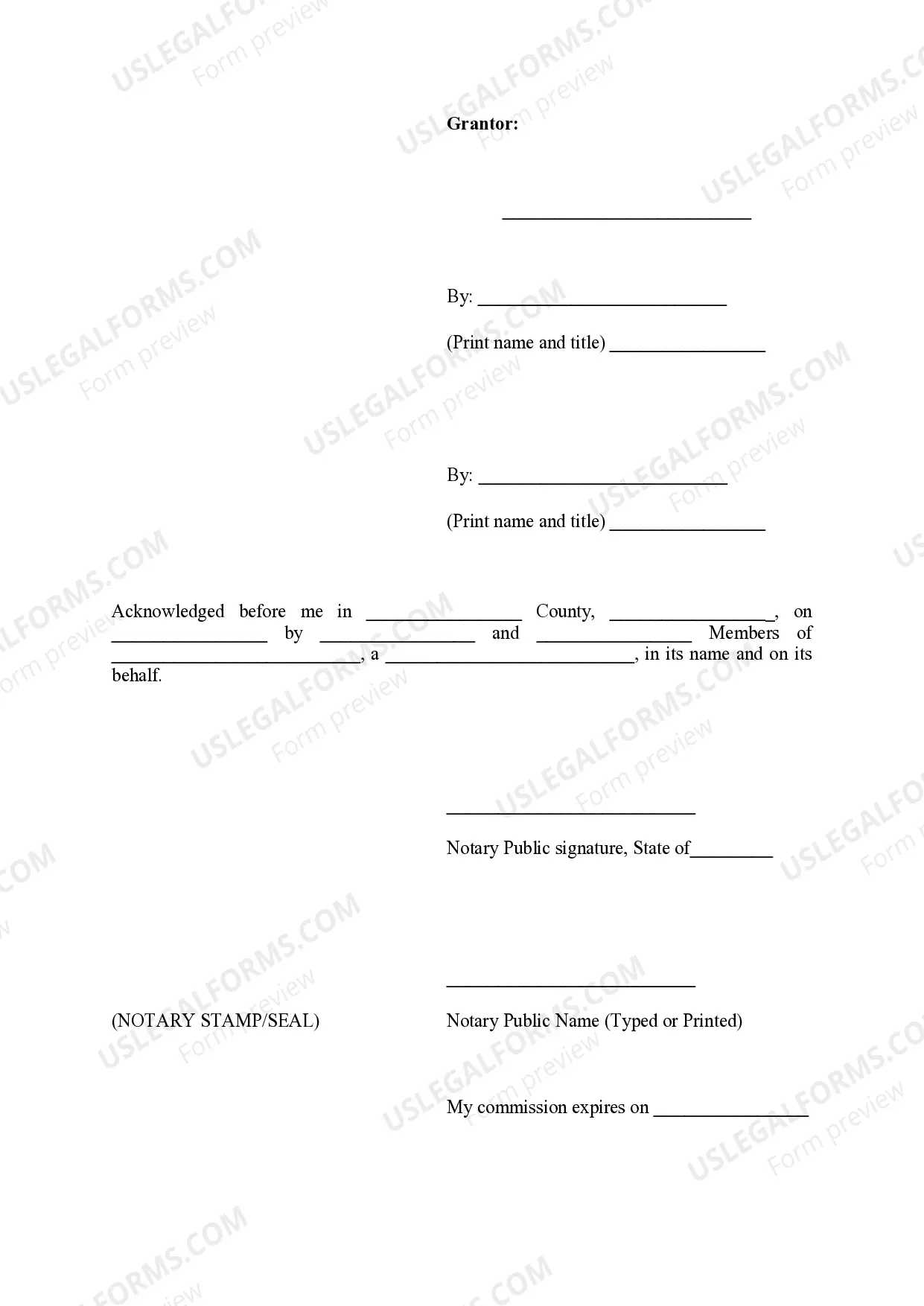
- Ensure all parties sign the document and obtain notarization if required.
Does this document require notarization?
This form must be notarized to be legally valid. US Legal Forms offers integrated online notarization services available 24/7, ensuring secure video calls and legal equivalence without the need for travel.
Get your form ready online
Our built-in tools help you complete, sign, share, and store your documents in one place.
Make edits, fill in missing information, and update formatting in US Legal Forms—just like you would in MS Word.
Download a copy, print it, send it by email, or mail it via USPS—whatever works best for your next step.
Sign and collect signatures with our SignNow integration. Send to multiple recipients, set reminders, and more. Go Premium to unlock E-Sign.
If this form requires notarization, complete it online through a secure video call—no need to meet a notary in person or wait for an appointment.
We protect your documents and personal data by following strict security and privacy standards.

Make edits, fill in missing information, and update formatting in US Legal Forms—just like you would in MS Word.

Download a copy, print it, send it by email, or mail it via USPS—whatever works best for your next step.

Sign and collect signatures with our SignNow integration. Send to multiple recipients, set reminders, and more. Go Premium to unlock E-Sign.

If this form requires notarization, complete it online through a secure video call—no need to meet a notary in person or wait for an appointment.

We protect your documents and personal data by following strict security and privacy standards.
Avoid these common issues
- Failing to provide a clear description of the easement area.
- Not including specific access rights or conditions for use.
- Omitting signatures from all relevant parties.
- Neglecting to ensure compliance with local regulations and easement requirements.
Benefits of using this form online
- Convenient access to professionally designed legal templates.
- Easy to edit and customize according to specific circumstances.
- Reliable format drafted by licensed attorneys.
- Quick download for immediate use.
Looking for another form?
Form popularity
FAQ
If an authority has an easement registered over your land, they have the right to access the easement to maintain or repair the easement land or their equipment on the land.
You can expressly terminate an easement just like you can expressly create one. The dominant owner can release the easement by deed, thereby extinguishing it. Or the dominant owner can transfer the easement by deed to the servient owner.
An easement is said to "run with the land", i.e. it cannot be sold separately from the land but must be passed on with the land whenever the land is transferred to a new owner.
Easement holders have the right to use the land to their enjoyment as long as it does not place an unreasonable burden on the servient estate. Landowners have the right to make whatever use of the land as long as it doesn't unduly affect the easement.
An easement is a "nonpossessory" property interest that allows the holder of the easement to have a right of way or use property that they do not own or possess. An easement doesn't allow the easement holder to occupy the land or to exclude others from the land unless they interfere with the easement holder's use.
Exclusive means that only one party or perhaps a limited number of parties can use that easement. Non-exclusive means that a number of different parties can use the easement. Non-exclusive can also mean that additional parties could be granted the right to use that same easement in the future.
You can plant gardens and bushes, landscape and construct fences. However, anything that is in the easement when a Utility has to perform maintenance on their facilities may have to be removed. Don't place anything in the easement that will make it hard for a Utility company to maintain or replace their system.
An easement which passes (or runs) with land so as to benefit successors can only exist where a number of requirements are satisfied: The right must be one which is capable of being an easement (examples include rights of way, rights of light and a right to the passage of water).
The Exclusive Easement Explained Most easements are non-exclusive where the person benefitting cannot exclude others from these benefits. Someone with an exclusive easement may stop others from obtaining the benefits even though this individual is not the owner of the land.