Wisconsin Acknowledgment for witness or attesting a signature
Understanding this form
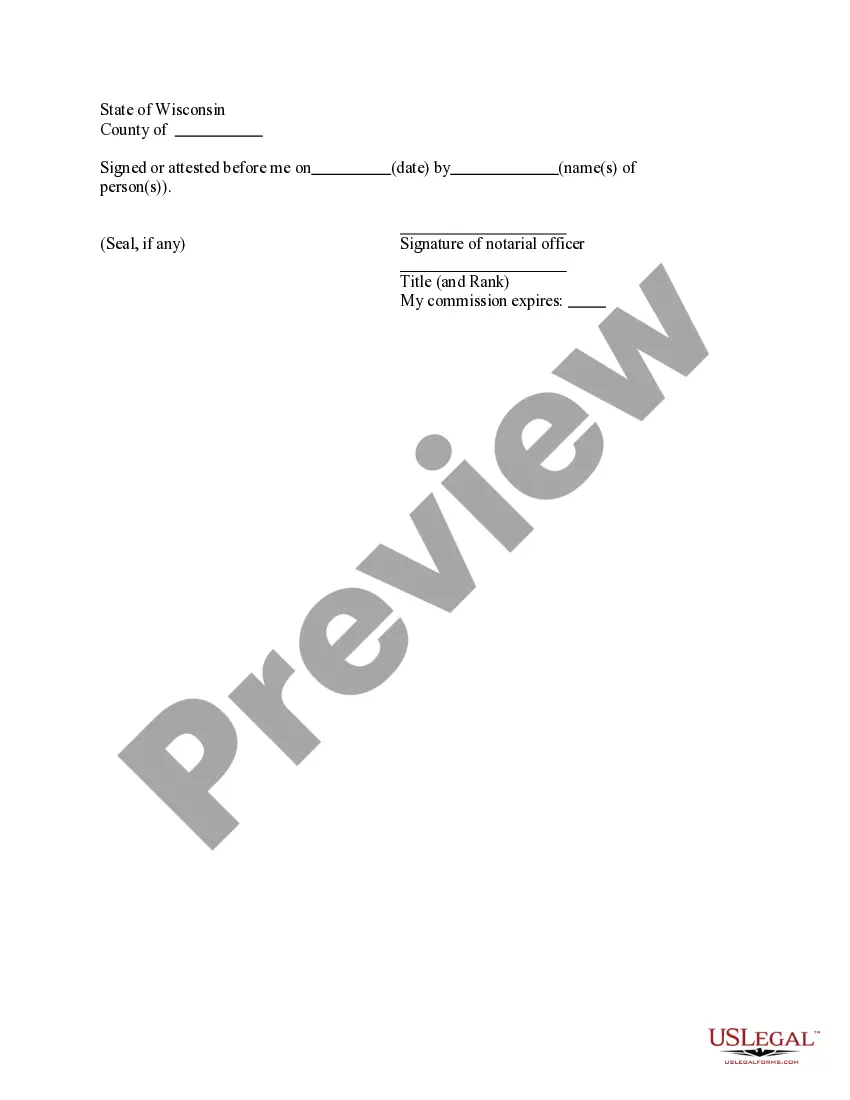
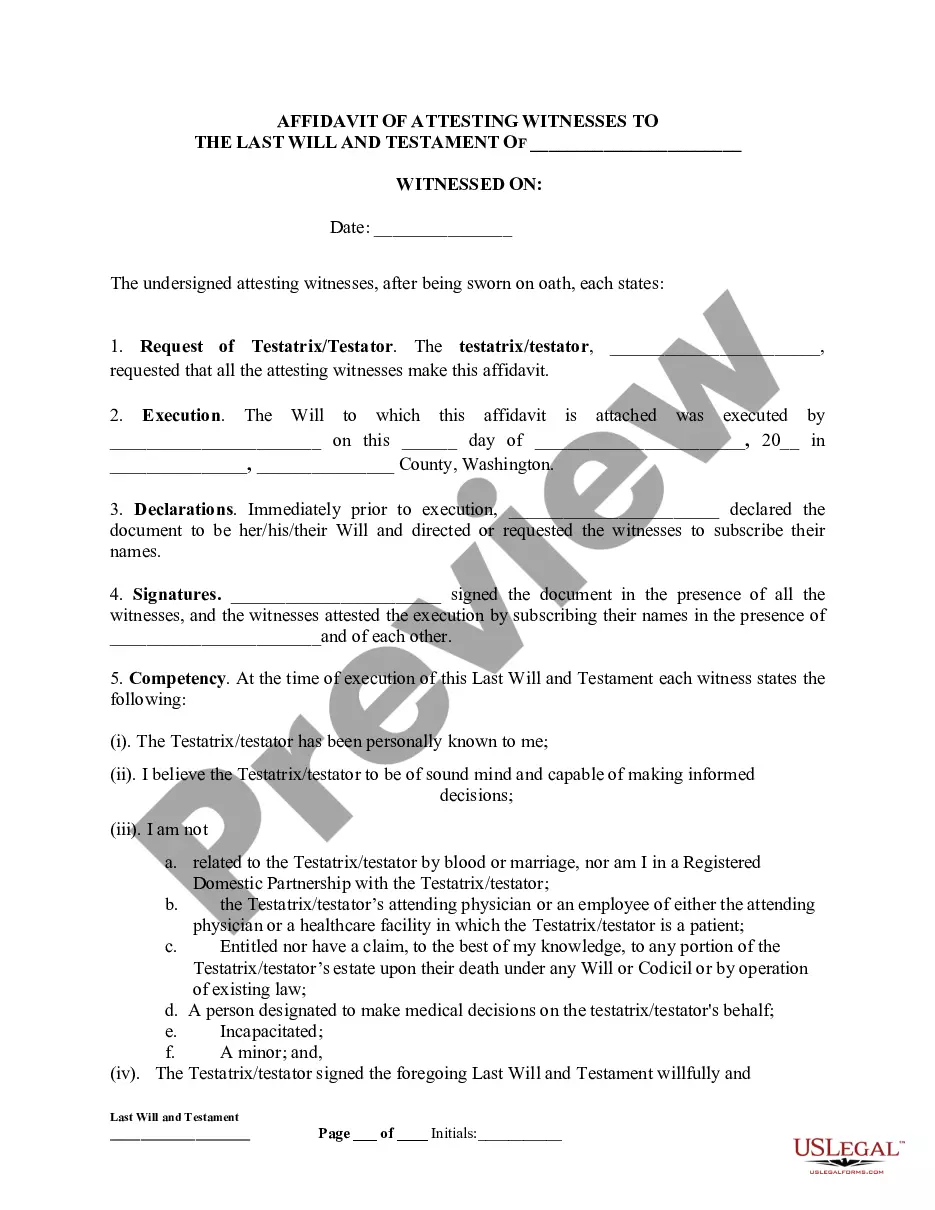
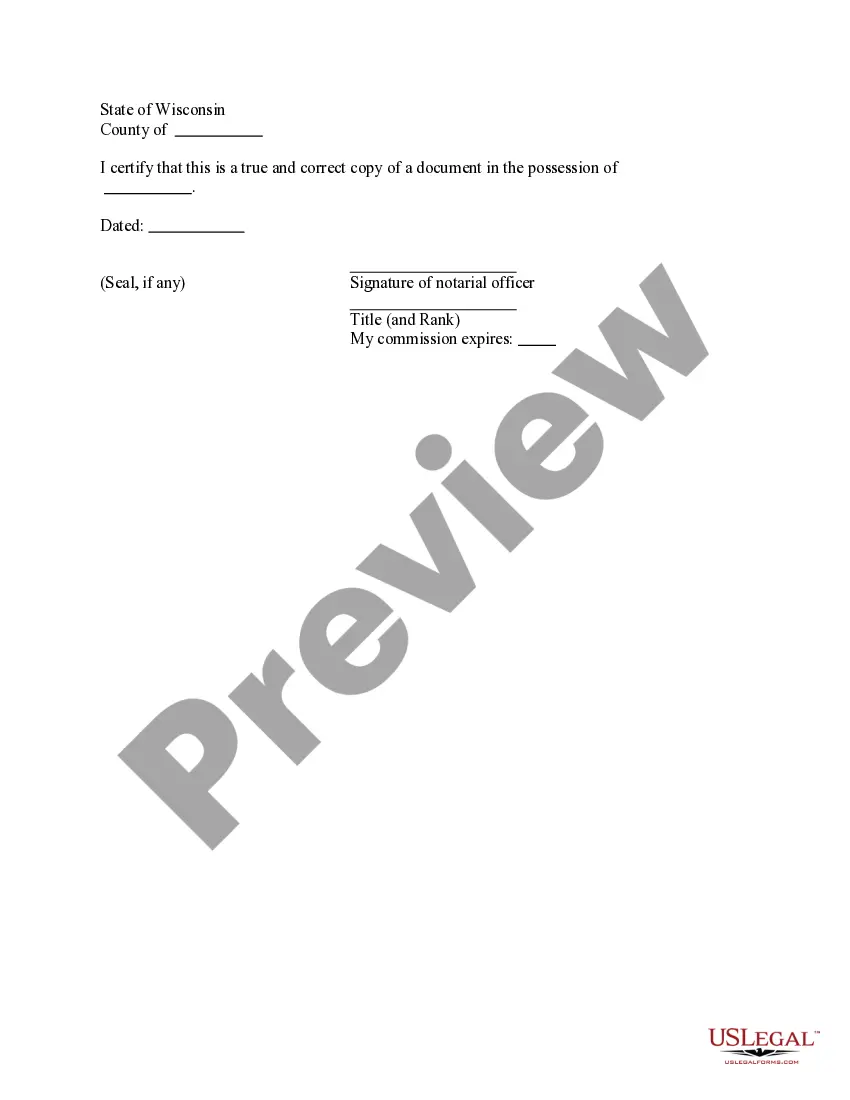
The Acknowledgment for Witness or Attesting a Signature is a legal document used to confirm that a signature on a document was made in the presence of an authorized individual, such as a notary public or another witness. This form serves as an essential tool in verifying signatures, helping to ensure the authenticity of legal documents. It is distinct from other acknowledgment forms by focusing specifically on witnessing signatures rather than simply attesting to facts or identities.
Key components of this form
- Details of the signing event, including date and names of the signers.
- Signature area for the witness or notarial officer to affirm they witnessed the signing.
- Space for a seal or stamp if required.
- Provision for disclosure of commission expiration for notarial officers.

Situations where this form applies
This form is used when a document requires a formal acknowledgment of a signature. Situations may include real estate transactions, legal agreements, or any situation where a party's signature needs to be verified to prevent fraud and ensure enforceability.
Intended users of this form
- Individuals who need to verify the signatures on legal documents.
- Notaries public or authorized witnesses responsible for signing the acknowledgment.
- Parties involved in legal transactions or agreements requiring documentation of signatures.
Instructions for completing this form
- Identify the parties involved, including their names and roles in the document.
- Enter the date of the acknowledgment.
- Provide space for the signature of the witness or notarial officer.
- If applicable, include a seal or stamp to validate the acknowledgment.
- Verify any requirements regarding the expiration date of the notarial commission.
Notarization guidance
Notarization is required for this form to take effect. Our online notarization service, powered by Notarize, lets you verify and sign documents remotely through an encrypted video session, available 24/7.
Get your form ready online
Our built-in tools help you complete, sign, share, and store your documents in one place.
Make edits, fill in missing information, and update formatting in US Legal Forms—just like you would in MS Word.
Download a copy, print it, send it by email, or mail it via USPS—whatever works best for your next step.
Sign and collect signatures with our SignNow integration. Send to multiple recipients, set reminders, and more. Go Premium to unlock E-Sign.
If this form requires notarization, complete it online through a secure video call—no need to meet a notary in person or wait for an appointment.
We protect your documents and personal data by following strict security and privacy standards.

Make edits, fill in missing information, and update formatting in US Legal Forms—just like you would in MS Word.

Download a copy, print it, send it by email, or mail it via USPS—whatever works best for your next step.

Sign and collect signatures with our SignNow integration. Send to multiple recipients, set reminders, and more. Go Premium to unlock E-Sign.

If this form requires notarization, complete it online through a secure video call—no need to meet a notary in person or wait for an appointment.

We protect your documents and personal data by following strict security and privacy standards.
Common mistakes
- Failing to ensure that the witness or notary is present during the signing.
- Omitting the date of the acknowledgment.
- Neglecting to include required signature and seal from the witness or notary.
Advantages of online completion
- Convenience of accessing and downloading the form any time.
- Instant availability of templates compliant with current legal standards.
- Editability allows for easy customization to suit specific needs.
Looking for another form?

Form popularity
FAQ
When witnesses appear in front of a Notary, the Notary must ask the witnesses and/or the signers, if the witnesses' signature(s) need to be notarized or not, as the Notary may never make such a determination.The Notary may only charge for the witnesses if they need their signature(s) notarized.
For an acknowledgment, the signer must always: Be positively identified by the Notary. The Notary must always identify the signer for an acknowledgement; whether the signer personally knows the Notary, presents an ID document, or is identified by a credible witness depends on the circumstances.
Step 1: Require Personal Appearance. Step 2: Check Over The Document. Step 3: Carefully Identify The Signer. Step 4: Record Your Journal Entry. Step 5: Complete The Notarial Certificate. A Last Note: Never Give Advice.
They key difference is that for a signature witnessing, the signer must always sign the document in the Notary's presence.An acknowledgment, on the other hand, does not require the Notary to witness the signature in most states (one exception is Maryland).
Bring any witnesses with you who may also be required to sign the document so that they may do so in the presence of the notary. Meet with the notary at his office or another mutually agreeable location and present the document to him for notarization.
When you see (here insert the name and character of the officer) next to a blank as shown below, it means you should insert Your name, Notary Public in the blank.
Require Personal Appearance. Review The Document. Screen The Signer And Verify The Facts. Record The Notarization. Complete The Notarization.
Notaries must complete a notarial certificate for the signature witnessing. Notaries must sign the notarial certificate for the signature witnessing with their official signature and authenticate it with their Notary seal (in most states). Notaries may be required to record a journal entry for the act.
The certificate of a notary public, justice of the peace, or other authorized officer, attached to a deed, mortgage, or other instrument, setting forth that the parties thereto personally appeared before him on such a date and acknowledged the instrument to be their free and voluntary act and deed. Read v.