Wisconsin Gift Deed - Individual to Individual
Overview of this form
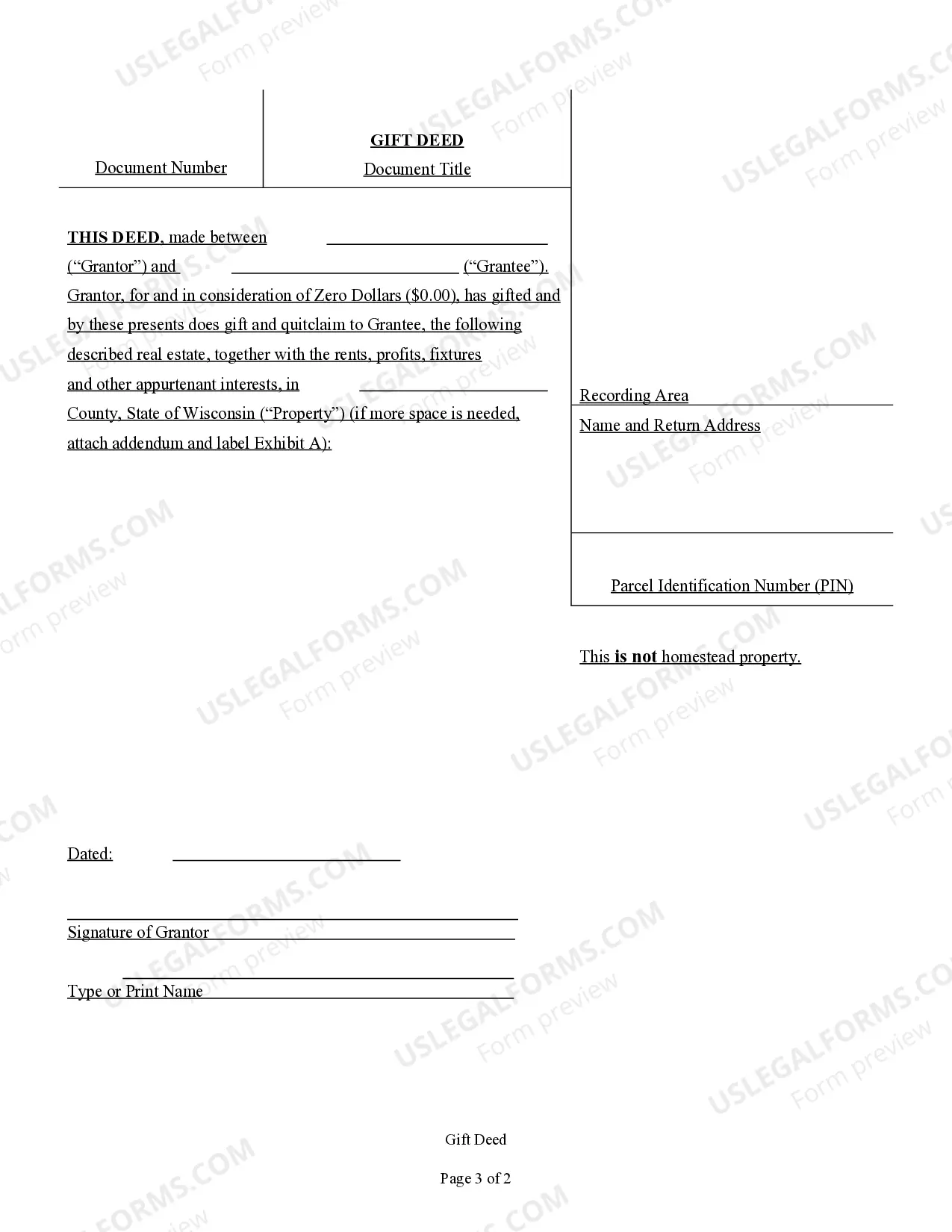
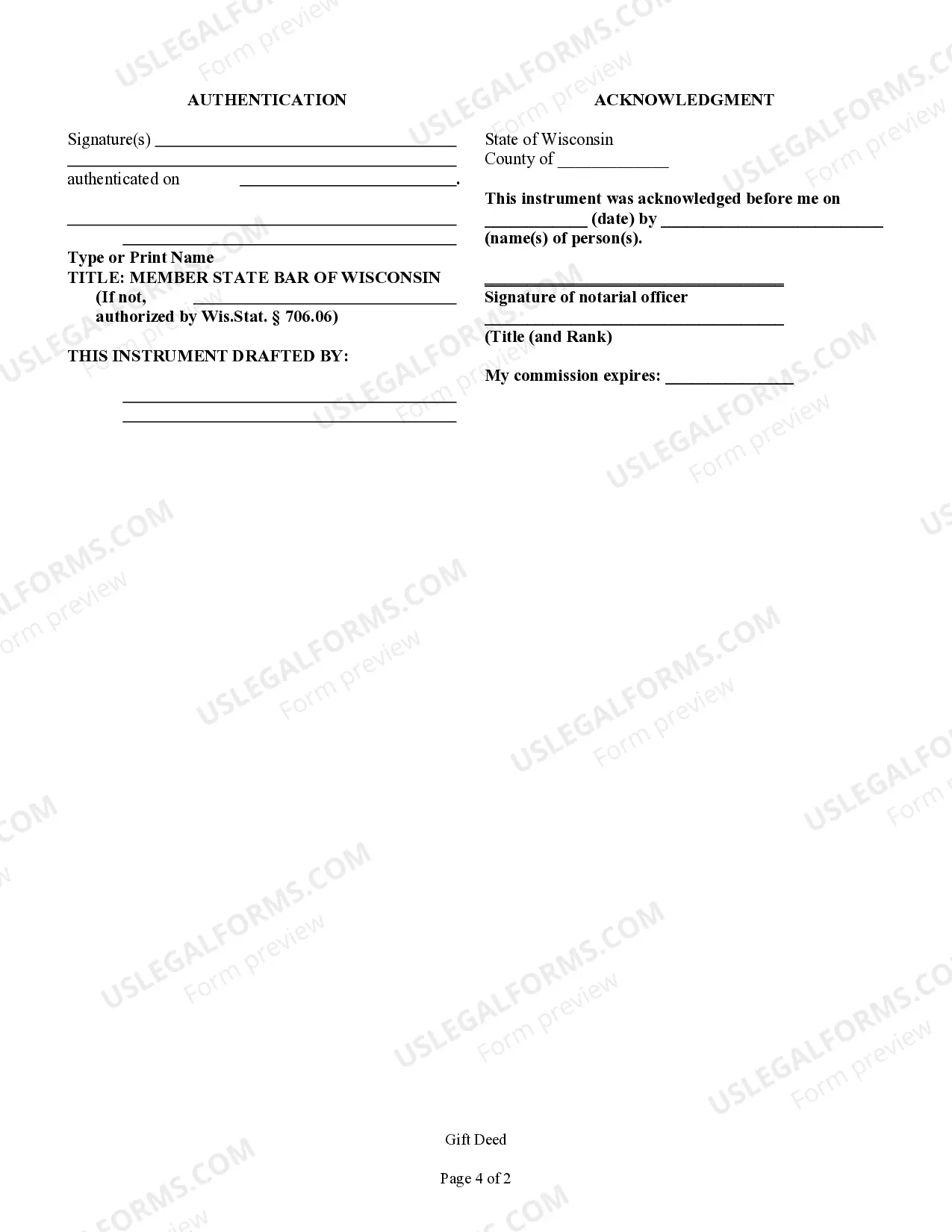
The Gift Deed is a legal document in which an individual, known as the Grantor, transfers ownership of specific property to another individual, the Grantee, without expecting anything in return. This form ensures compliance with state laws and provides a clear record of the transfer, differentiating it from other types of transfer documents, like sales deeds or leases.
Key parts of this document
- Identifying information for both the Grantor and the Grantee
- A clear description of the property being conveyed
- Language that indicates the transfer is a gift without consideration
- Specific signatures from the Grantor and relevant witnesses
- Date of the transaction



Situations where this form applies
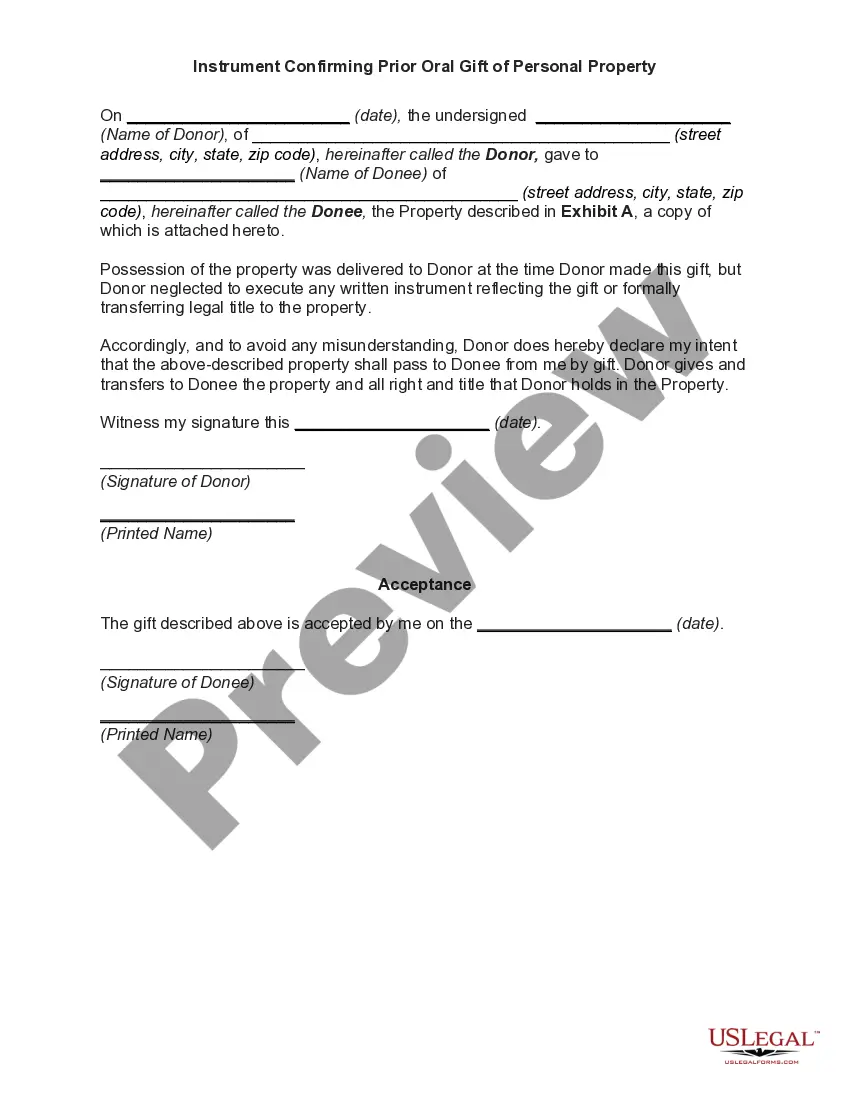
This form is useful when an individual wishes to gift property, such as real estate or personal items, to another individual. Scenarios might include transferring ownership of a family home to a child, gifting a piece of land, or conveying other types of personal property. It is essential to use this form to formalize the transfer and provide legal proof of the gift.
Intended users of this form
This Gift Deed is intended for:
- Individuals looking to transfer property ownership as a gift
- Family members who want to pass on assets without financial exchange
- Anyone who wishes to create a permanent record of a gift transaction
How to prepare this document
- Identify the parties involved: clearly state the names of the Grantor and the Grantee.
- Specify the property: provide a detailed description of the property being conveyed.
- Indicate the nature of the transfer: specify that the property is being given as a gift without consideration.
- Collect signatures: ensure the Grantor signs the deed and that any required witnesses are present to sign.
- Fill in the date: record the date when the Gift Deed is executed.
Notarization guidance
This document requires notarization to meet legal standards. US Legal Forms provides secure online notarization powered by Notarize, allowing you to complete the process through a verified video call, available 24/7.
Get your form ready online
Our built-in tools help you complete, sign, share, and store your documents in one place.
Make edits, fill in missing information, and update formatting in US Legal Forms—just like you would in MS Word.
Download a copy, print it, send it by email, or mail it via USPS—whatever works best for your next step.
Sign and collect signatures with our SignNow integration. Send to multiple recipients, set reminders, and more. Go Premium to unlock E-Sign.
If this form requires notarization, complete it online through a secure video call—no need to meet a notary in person or wait for an appointment.
We protect your documents and personal data by following strict security and privacy standards.

Make edits, fill in missing information, and update formatting in US Legal Forms—just like you would in MS Word.

Download a copy, print it, send it by email, or mail it via USPS—whatever works best for your next step.

Sign and collect signatures with our SignNow integration. Send to multiple recipients, set reminders, and more. Go Premium to unlock E-Sign.

If this form requires notarization, complete it online through a secure video call—no need to meet a notary in person or wait for an appointment.

We protect your documents and personal data by following strict security and privacy standards.
Avoid these common issues
- Incorrectly identifying the property or parties involved.
- Failing to have the deed signed by all necessary parties.
- Not specifying the nature of the transfer as a gift.
- Omitting the date of the transaction.
Benefits of completing this form online
- Convenient access to a professional template tailored to legal requirements.
- Edit and customize the form quickly from the comfort of home.
- Downloadable in multiple formats (Word or PDF) for easy completion.
- Helps ensure reliability and compliance with state laws.
Looking for another form?


Form popularity
FAQ
Think about IHT implications potentially exempt transfer Be aware of the rules on gifts with reservation of benefit You will no longer be the legal owner of the property. Risk from outside parties. Don't forget capital gains tax.
Outright gift First, offset the amount of the gift by using your $15,000 annual gift-tax exclusion. Remember it is $15,000 per donor per donee (gift recipient). So if you and your spouse make a joint gift to both your child and his spouse, you can offset $60,000 of the home's value (4 x $15,000) for gift tax purposes.
You may be able to transfer your interest in the property through a quitclaim deed, where you relinquish all ownership of the property to someone else. Your lender may also agree to add another name to the mortgage. In this case, someone else would be able to legally make payments on the mortgage.
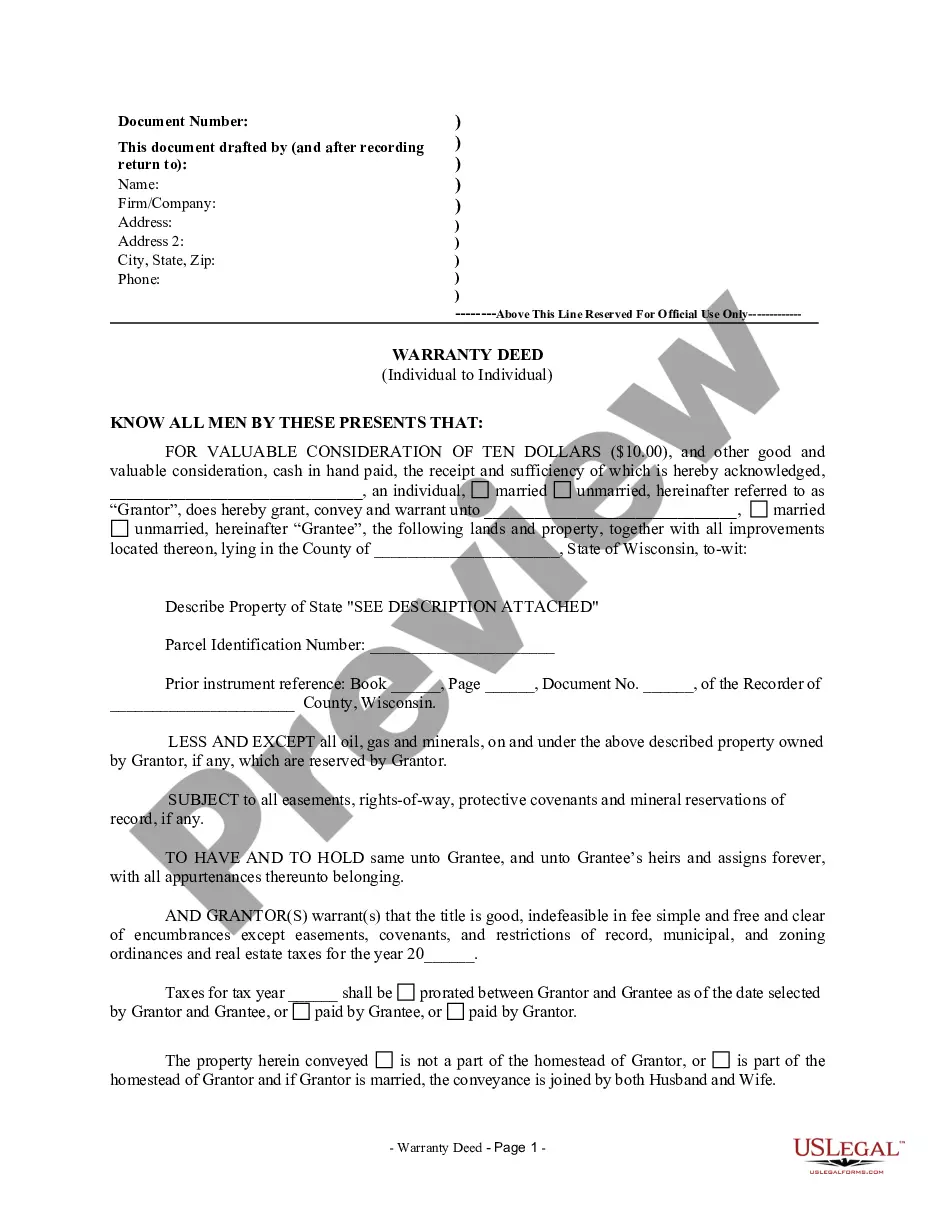
To sign over property ownership to another person, you'll use one of two deeds: a quitclaim deed or a warranty deed.
To transfer a property as a gift, you need to fill in a TR1 form and send it to the Land Registry, along with an AP1 form. If either side is not using a Solicitor or Conveyancer, an ID1 form will also be needed.
The Takeaway. California doesn't enforce a gift tax, but you may owe a federal one. However, you can give up to $15,000 in cash or property during the 2019 and 2020 tax years without triggering a gift tax return.
Put your full name, as shown on your original deed, and your current address. Fill in the grantee section of the deed. The grantee is the recipient, so enter your full name and the name of your spouse, followed by your addresses. Put "as husband and wife" after your names.
Identify the donee or recipient. Discuss terms and conditions with that person. Complete a change of ownership form. Change the title on the deed. Hire a real estate attorney to prepare the deed. Notarize and file the deed.
Living in the House Moving into the house is one way to avoid capital gains. Tax law exempts $250,000 on the sale of your personal home, or $500,000 if you're married and file jointly. You must own the house for two of the five years before you sell and live in it for two of the five years.