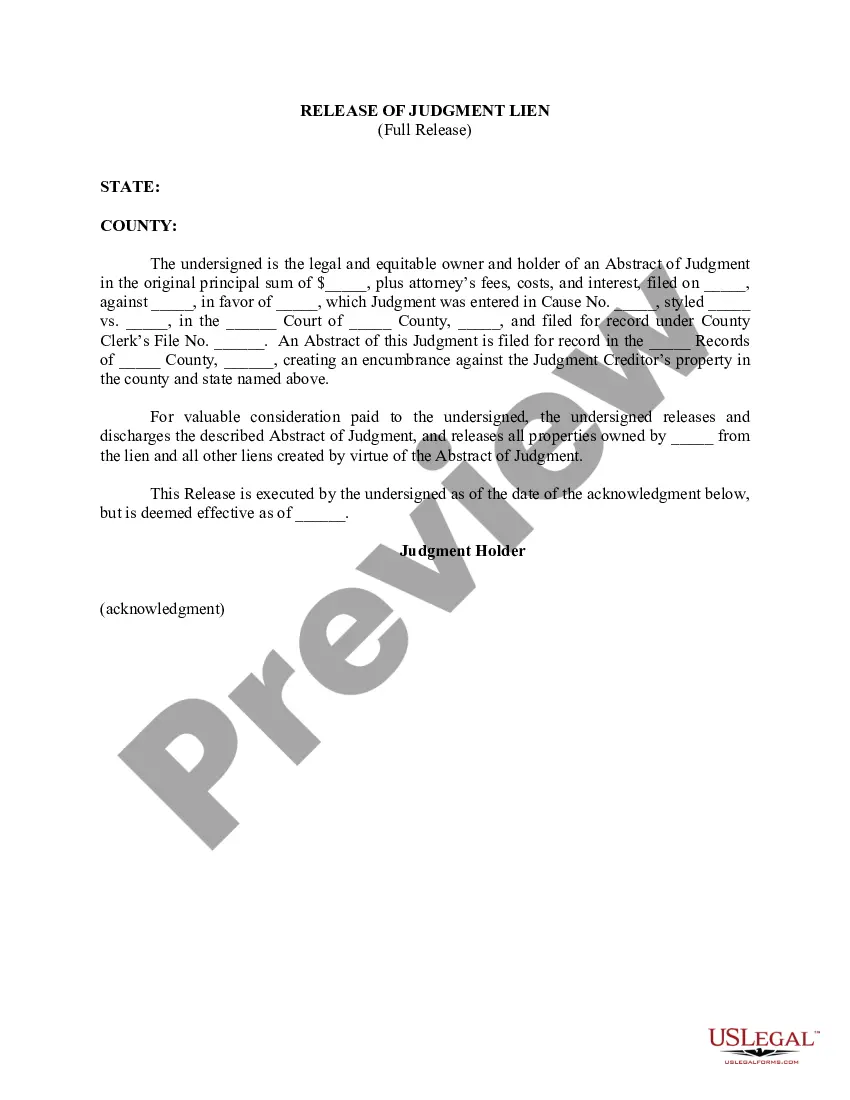
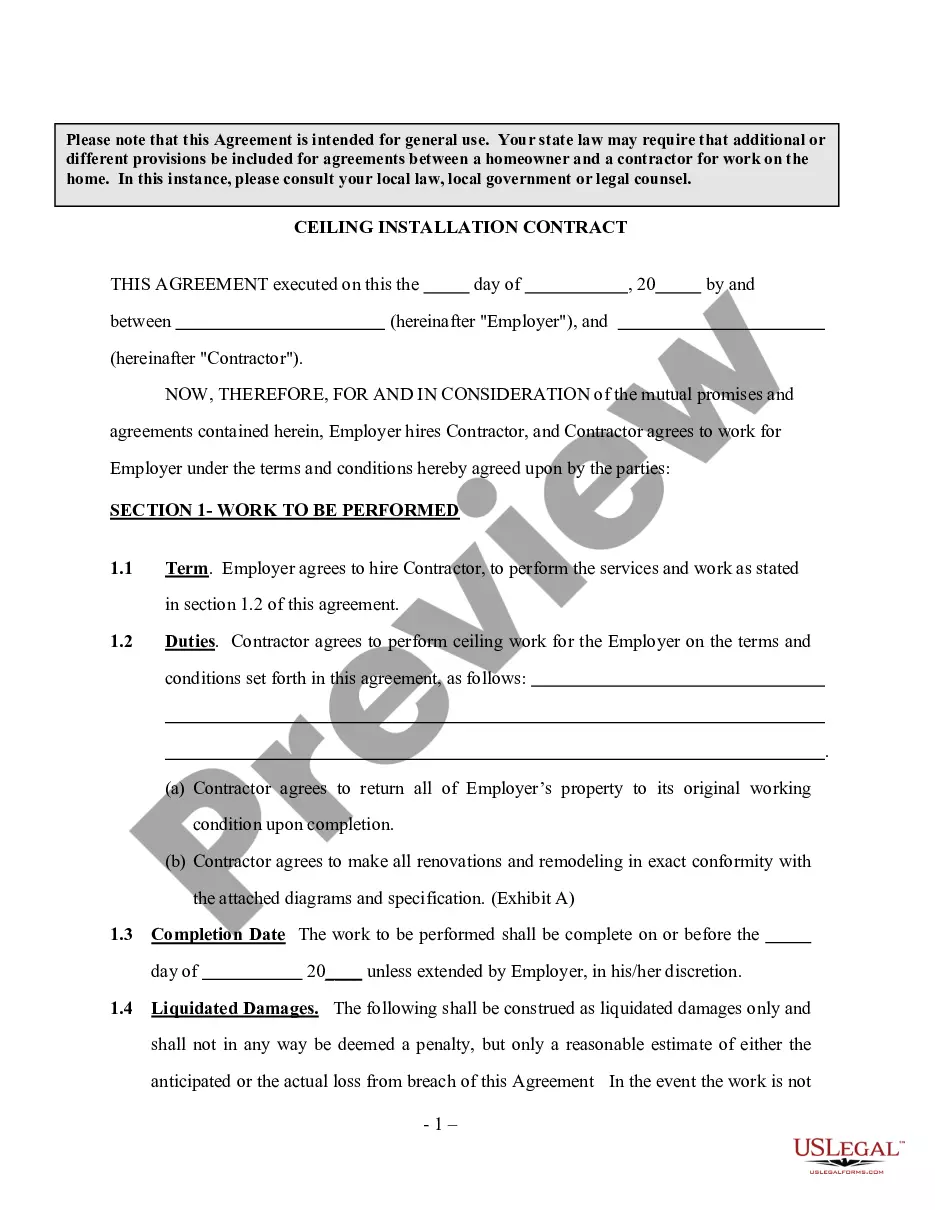
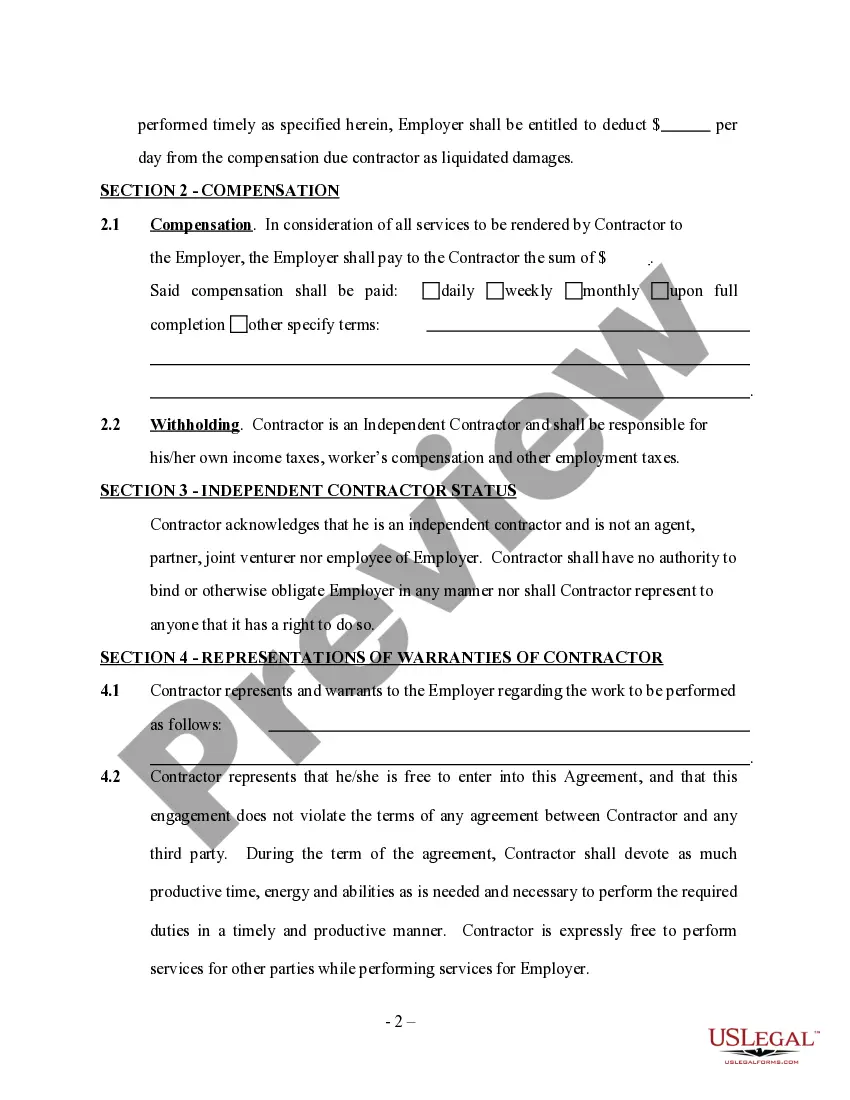
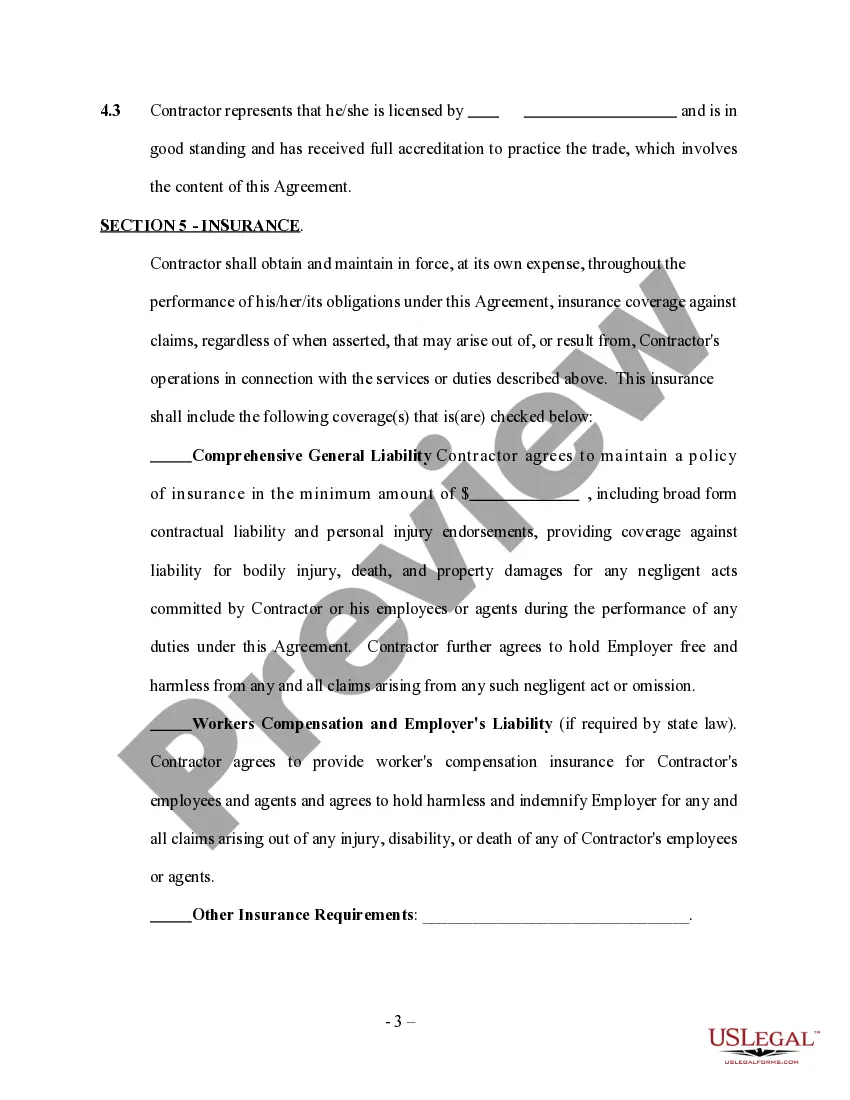
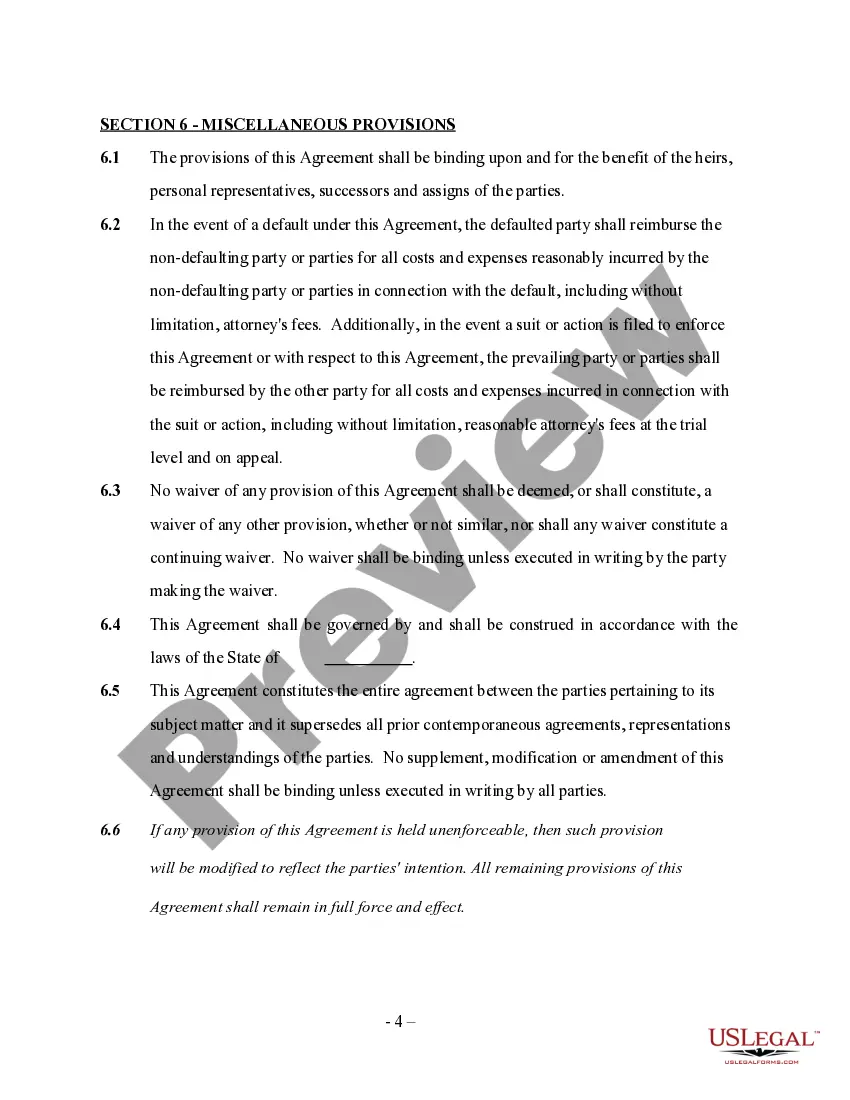
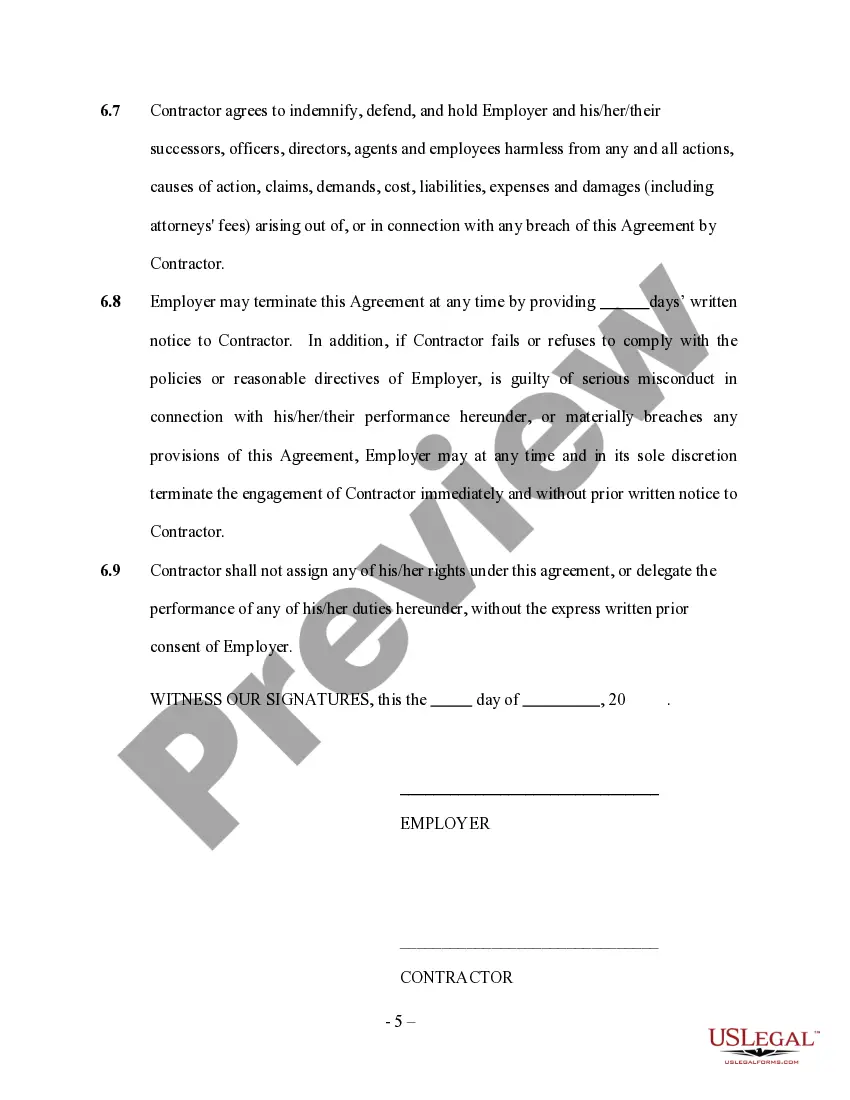
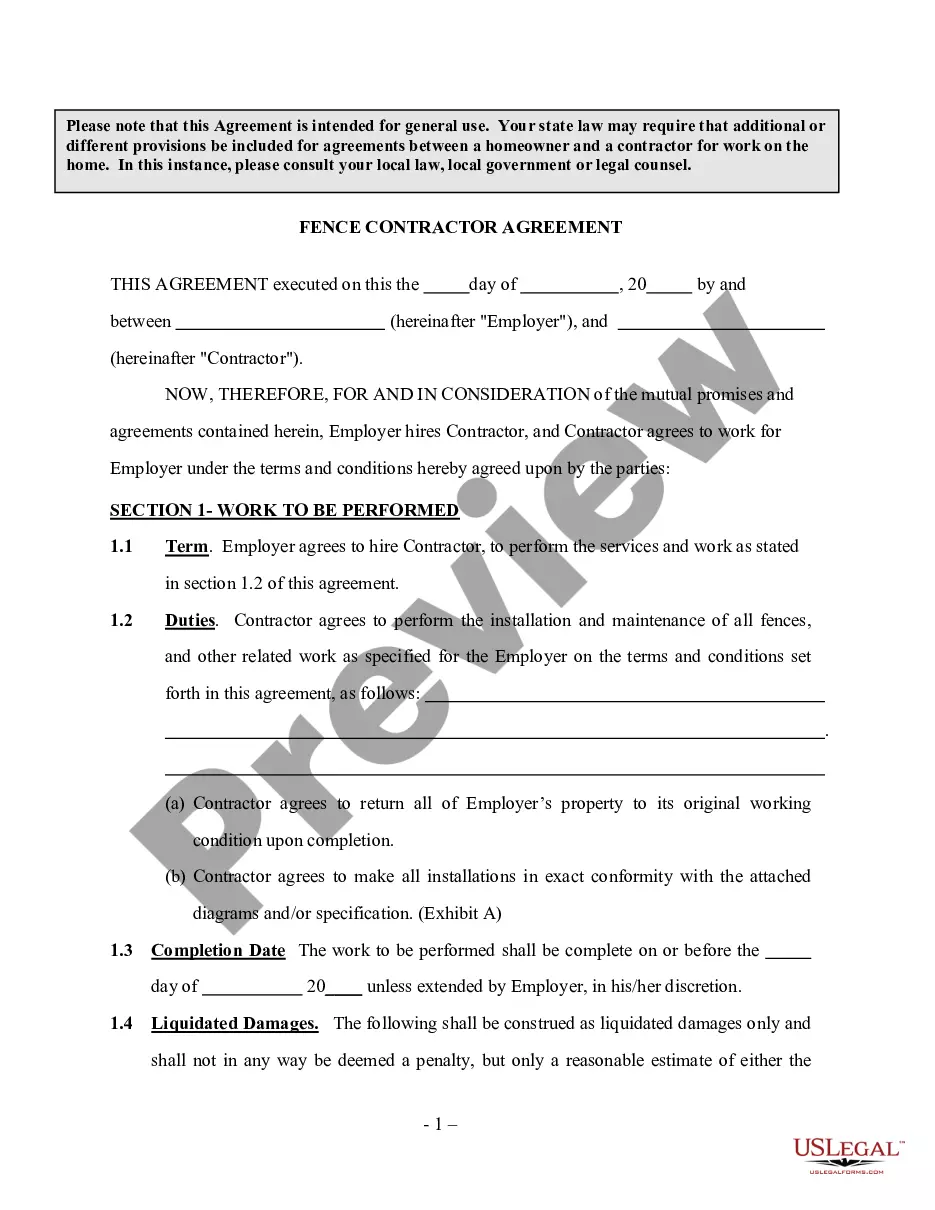
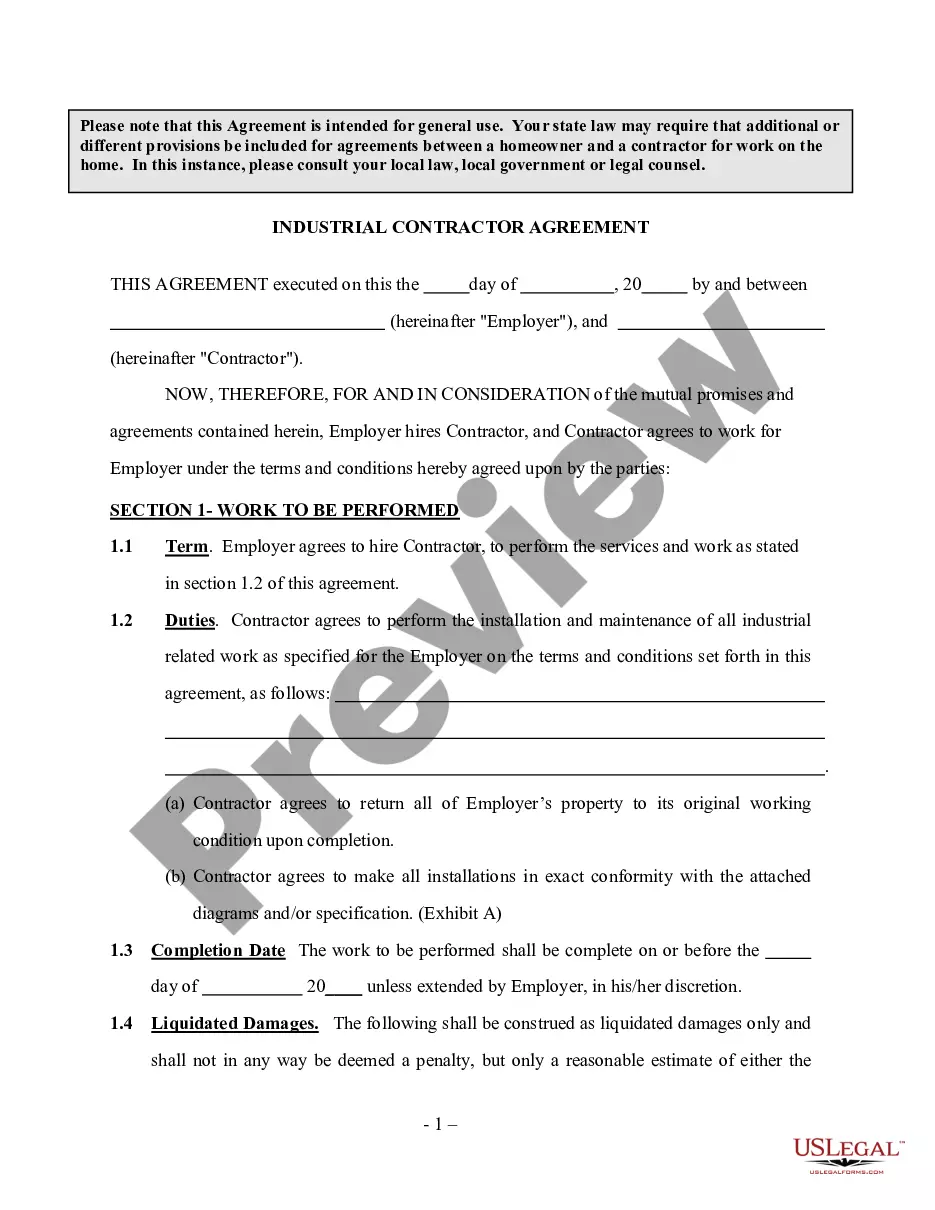
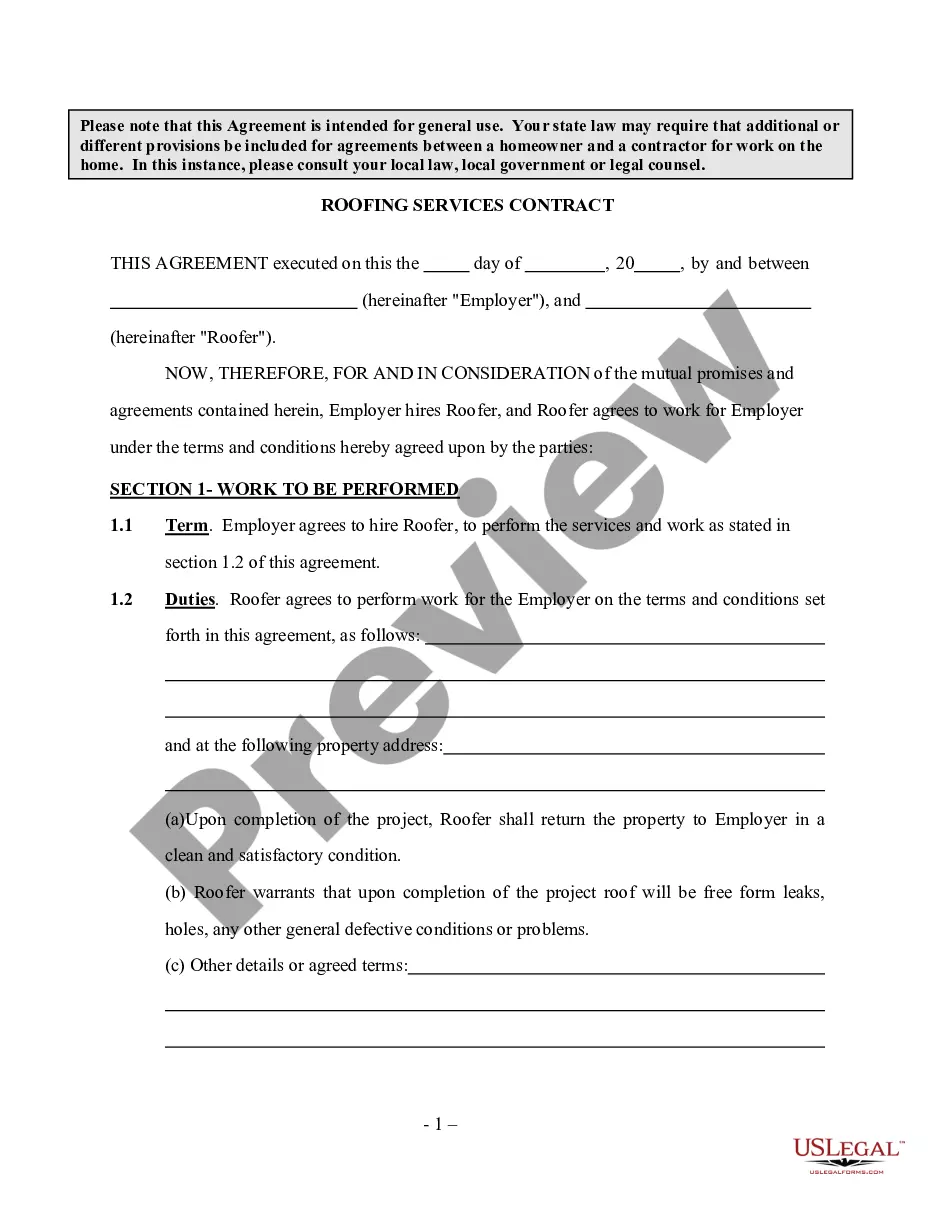
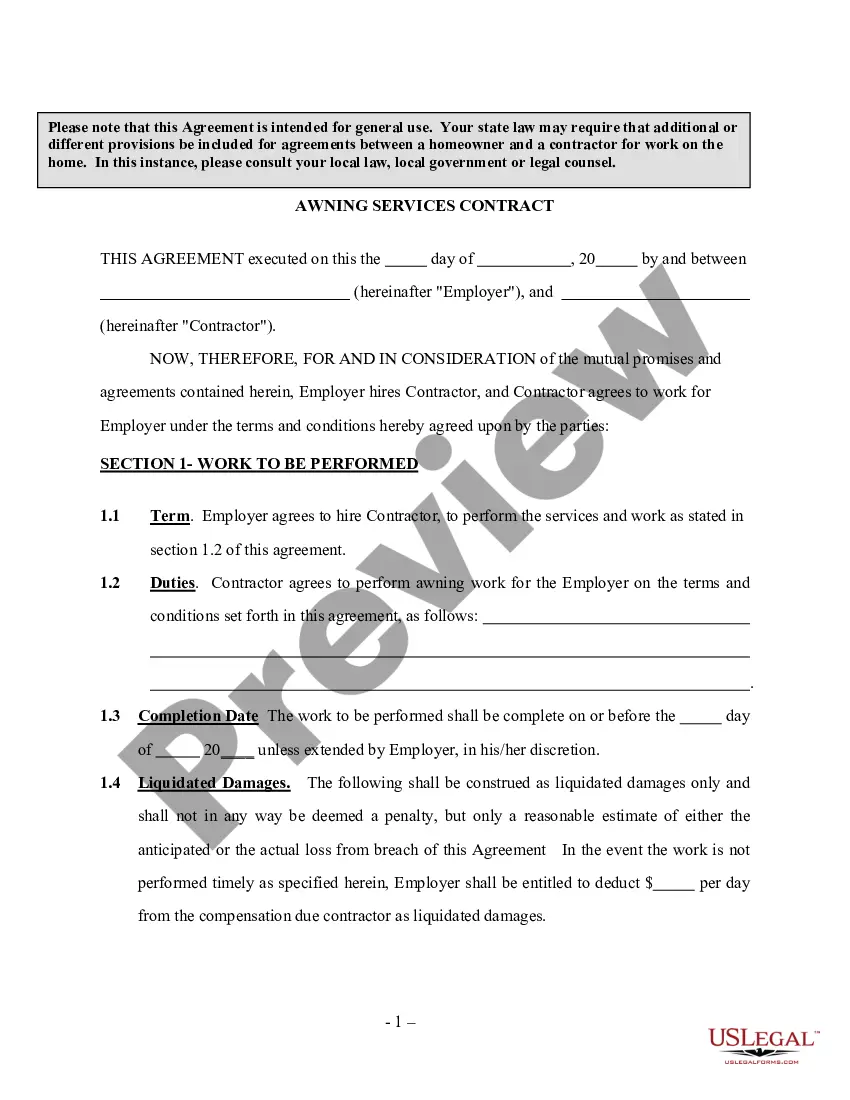
Employer contracts with an independent contractor to install or construct a ceiling as specified and agreed upon in the contract. Please note that this Agreement is intended for general use. Your state law may require that additional or different provisions be included for agreements between a homeowner and a contractor for work on the home. In this instance, please consult your local law, local government or legal counsel.
Washington Self-Employed Ceiling Installation Contract
State:
Multi-State
Control #:
US-INDC-90
Format:
Word;
Rich Text
Instant download
Description
Free preview
Get your form ready online
Our built-in tools help you complete, sign, share, and store your documents in one place.
Built-in online Word editor
Make edits, fill in missing information, and update formatting in US Legal Forms—just like you would in MS Word.
Export easily
Download a copy, print it, send it by email, or mail it via USPS—whatever works best for your next step.
E-sign your document
Sign and collect signatures with our SignNow integration. Send to multiple recipients, set reminders, and more. Go Premium to unlock E-Sign.
Notarize online 24/7
If this form requires notarization, complete it online through a secure video call—no need to meet a notary in person or wait for an appointment.
Store your document securely
We protect your documents and personal data by following strict security and privacy standards.

Make edits, fill in missing information, and update formatting in US Legal Forms—just like you would in MS Word.

Download a copy, print it, send it by email, or mail it via USPS—whatever works best for your next step.

Sign and collect signatures with our SignNow integration. Send to multiple recipients, set reminders, and more. Go Premium to unlock E-Sign.

If this form requires notarization, complete it online through a secure video call—no need to meet a notary in person or wait for an appointment.

We protect your documents and personal data by following strict security and privacy standards.
Looking for another form?






How to fill out Self-Employed Ceiling Installation Contract?
Locating the appropriate authorized document template can be quite a challenge. Clearly, there are numerous formats available online, but how do you find the legal form you need? Utilize the US Legal Forms website. The service offers a vast collection of templates, including the Washington Self-Employed Ceiling Installation Agreement, that you can utilize for business and personal purposes. All of the documents are reviewed by experts and comply with state and federal standards.
If you are already registered, Log In to your account and click the Download button to obtain the Washington Self-Employed Ceiling Installation Agreement. Use your account to search for the legal documents you have previously acquired. Navigate to the My documents section of your account and retrieve another copy of the document you need.
If you are a new user of US Legal Forms, here are some simple instructions for you to follow: First, ensure you have selected the correct form for your city/county. You can preview the document using the Preview option and review the document details to ensure it is suitable for you. If the form does not meet your requirements, make use of the Search box to find the appropriate form. Once you are confident that the form is correct, click the Get now button to obtain the form. Choose the pricing plan you prefer and enter the required information. Create your account and complete your purchase using your PayPal account or credit card. Select the file format and download the authorized document template to your device. Complete, modify, print, and sign the received Washington Self-Employed Ceiling Installation Agreement.
Make sure to take full advantage of the resources offered by US Legal Forms to simplify your document needs.
- US Legal Forms is the largest repository of legal forms where you can find various document templates.
- Utilize the service to download professionally crafted documents that comply with state regulations.
- Access a wide array of legal documents for personal and business use.
- All templates are vetted by professionals to ensure they meet legal standards.
- Easily manage your forms and retrieve copies of previously purchased documents.
- User-friendly interface for both new and returning users.
Form popularity
FAQ
In Washington, you can perform certain tasks without a contractor's license, including minor repairs, maintenance, and handyman services. However, if you plan to undertake projects that exceed a specific monetary threshold or involve structural changes, you will need a license. It's essential to familiarize yourself with the regulations to avoid potential fines. For clarity, refer to a Washington Self-Employed Ceiling Installation Contract for guidance on permissible work.
To establish yourself as an independent contractor in Washington, start by choosing a business structure that fits your needs, such as a sole proprietorship or LLC. Next, obtain any necessary permits and licenses to operate legally. Consider drafting a Washington Self-Employed Ceiling Installation Contract to outline your services and protect your interests. Lastly, register for taxes to ensure compliance with local regulations.
In Washington state, general contractors can indeed perform roofing work, provided they hold the appropriate licenses and permits. However, they must adhere to state regulations and building codes specific to roofing projects. If you're considering a Washington Self-Employed Ceiling Installation Contract, it’s essential to ensure that the contractor you choose has the qualifications necessary for both ceiling and roofing installations. For added peace of mind, you can utilize the US Legal Forms platform to find the right contracts and forms that suit your needs.
To become an independent contractor in Washington state, start by registering your business with the Washington Secretary of State. Next, obtain any necessary licenses and permits for your specific work, which may include a Washington Self-Employed Ceiling Installation Contract. Additionally, you should consider setting up a business bank account and keeping accurate financial records to manage your income and expenses effectively.
If you are an independent contractor, then you are self-employed. The earnings of a person who is working as an independent contractor are subject to self-employment tax. To find out what your tax obligations are, visit the Self-Employed Individuals Tax Center.
Independent contractors are self-employed workers who provide services for an organisation under a contract for services. Independent contractors are not employees and are typically highly skilled, providing their clients with specialist skills or additional capacity on an as needed basis.
Becoming an independent contractor is one of the many ways to be classified as self-employed. By definition, an independent contractor provides work or services on a contractual basis, whereas, self-employment is simply the act of earning money without operating within an employee-employer relationship.
Here is a list of some of the things you can write off on your 1099 if you are self-employed:Mileage and Car Expenses.Home Office Deductions.Internet and Phone Bills.Health Insurance.Travel Expenses.Meals.Interest on Loans.Subscriptions.More items...?
Independent contractors generally report their earnings to the IRS quarterly using Form 1040-ES, Estimated Tax for Individuals. This covers both their federal income tax and self-employment tax liabilities. They may also have to pay state and local taxes according to their state and local government guidelines.
Washington State requires all construction contractors to register with L&I. State law also requires construction contractors to be bonded and insured to protect the public. Once registered, contractors can bid, advertise, and perform construction work.