Washington Stockholder derivative actions
Description
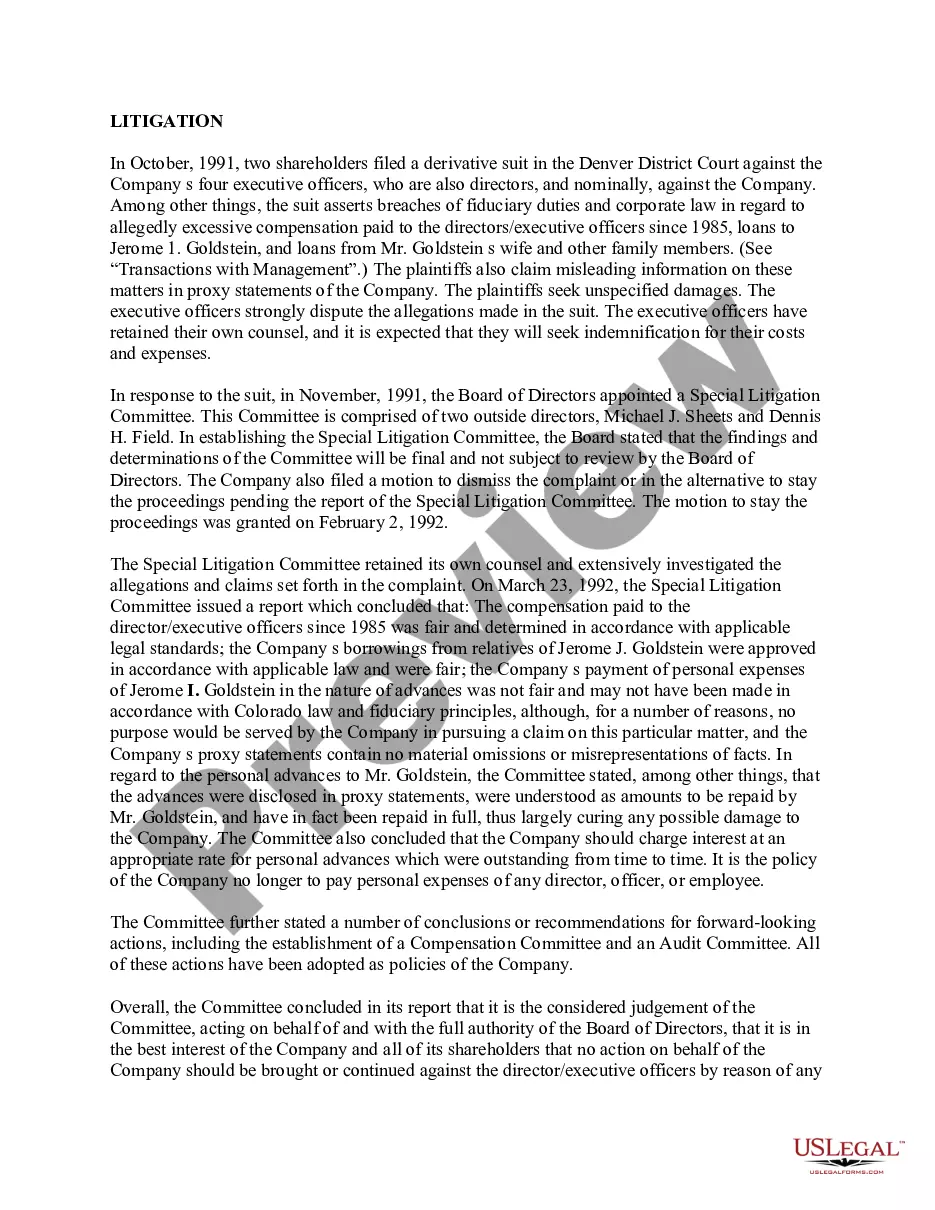
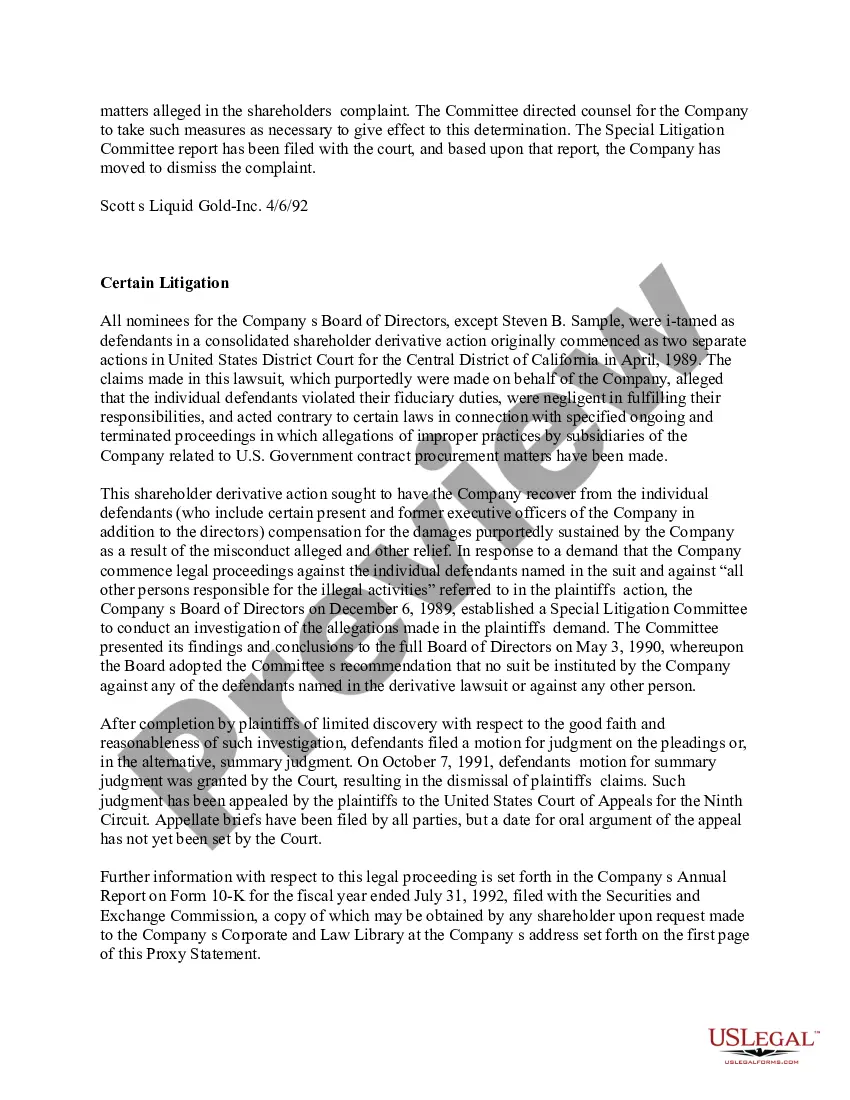
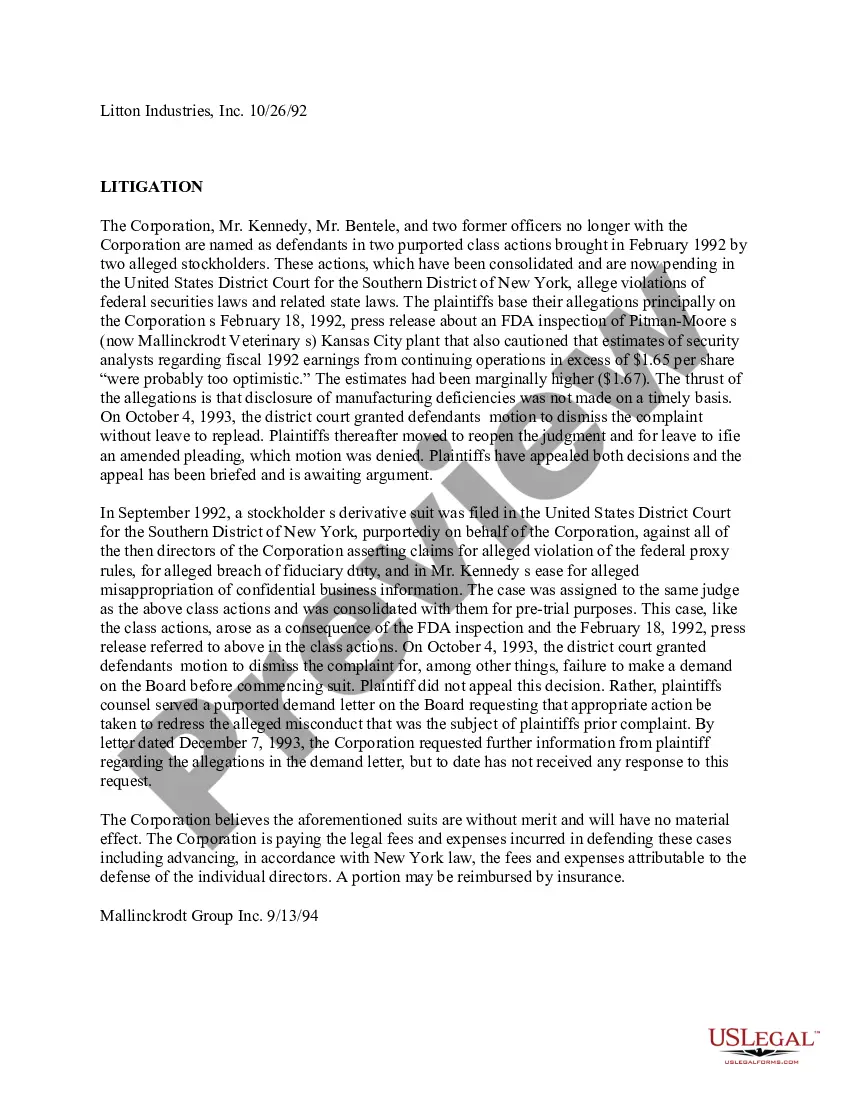
How to fill out Stockholder Derivative Actions?
Choosing the right lawful file format can be quite a battle. Naturally, there are plenty of web templates available on the Internet, but how would you discover the lawful develop you want? Use the US Legal Forms internet site. The service delivers a huge number of web templates, like the Washington Stockholder derivative actions, that you can use for business and private requires. All of the kinds are checked by professionals and meet up with state and federal demands.
In case you are currently authorized, log in for your profile and click the Download key to get the Washington Stockholder derivative actions. Make use of your profile to check with the lawful kinds you have purchased in the past. Proceed to the My Forms tab of your respective profile and have yet another copy of your file you want.
In case you are a brand new customer of US Legal Forms, here are basic directions that you should follow:
- First, make sure you have chosen the proper develop for your personal town/county. You can examine the form while using Preview key and study the form explanation to ensure it will be the right one for you.
- If the develop is not going to meet up with your preferences, use the Seach area to obtain the right develop.
- When you are positive that the form is acceptable, select the Buy now key to get the develop.
- Select the rates strategy you would like and enter the needed info. Design your profile and purchase an order with your PayPal profile or charge card.
- Pick the submit format and obtain the lawful file format for your product.
- Total, change and printing and sign the received Washington Stockholder derivative actions.
US Legal Forms is definitely the most significant catalogue of lawful kinds for which you can discover a variety of file web templates. Use the service to obtain appropriately-produced documents that follow express demands.
Form popularity
FAQ
A shareholder (stockholder) derivative suit is a lawsuit brought by a shareholder or group of shareholders on behalf of the corporation against the corporation's directors, officers, or other third parties who breach their duties. The claim of the suit is not personal but belongs to the corporation.
What is the difference between a stockholder's derivative suit and a class action? A derivative lawsuit is brought by a shareholder of a corporation for the benefit of the corporation. A shareholder's class action lawsuit is brought by a shareholder for the benefit of themselves and the other shareholders.
Remedies commonly sought in derivative actions include corporate governance reforms designed to prevent future fiduciary misconduct, the removal of officers or directors whose misconduct injured the corporation, monetary payments to remedy damages incurred by the company, and repayment of funds obtained illegally.
Examples of successful derivative actions may include lawsuits against directors or officers for mismanagement of funds, failure to divulge material information, or breach of fiduciary duty.
If a derivative plaintiff or derivative counsel fails to adequately represent the interests of the entity in pursuing the derivative action, then the Court may dismiss the derivative action without prejudice, replace the derivative plaintiff or derivative counsel, or make further orders as warranted.
A shareholder (stockholder) derivative suit is a lawsuit brought by a shareholder or group of shareholders on behalf of the corporation against the corporation's directors, officers, or other third parties who breach their duties. The claim of the suit is not personal but belongs to the corporation.
The derivative action is the route by which shareholders, usually minority shareholders, are able to enforce the company's rights where directors have breached their duties (since in these circumstances it is unlikely that the directors, who usually act on behalf of the company, will want to take action).
DERIVATIVE ACTIONS BY SHAREHOLDERS The action shall not be dismissed or compromised without the approval of the court, and notice of the proposed dismissal or compromise shall be given to shareholders or members in such manner as the court directs.
A shareholder (stockholder) derivative suit is a lawsuit brought by a shareholder or group of shareholders on behalf of the corporation against the corporation's directors, officers, or other third parties who breach their duties. The claim of the suit is not personal but belongs to the corporation.