Washington Living Trust with Provisions for Disability
Description
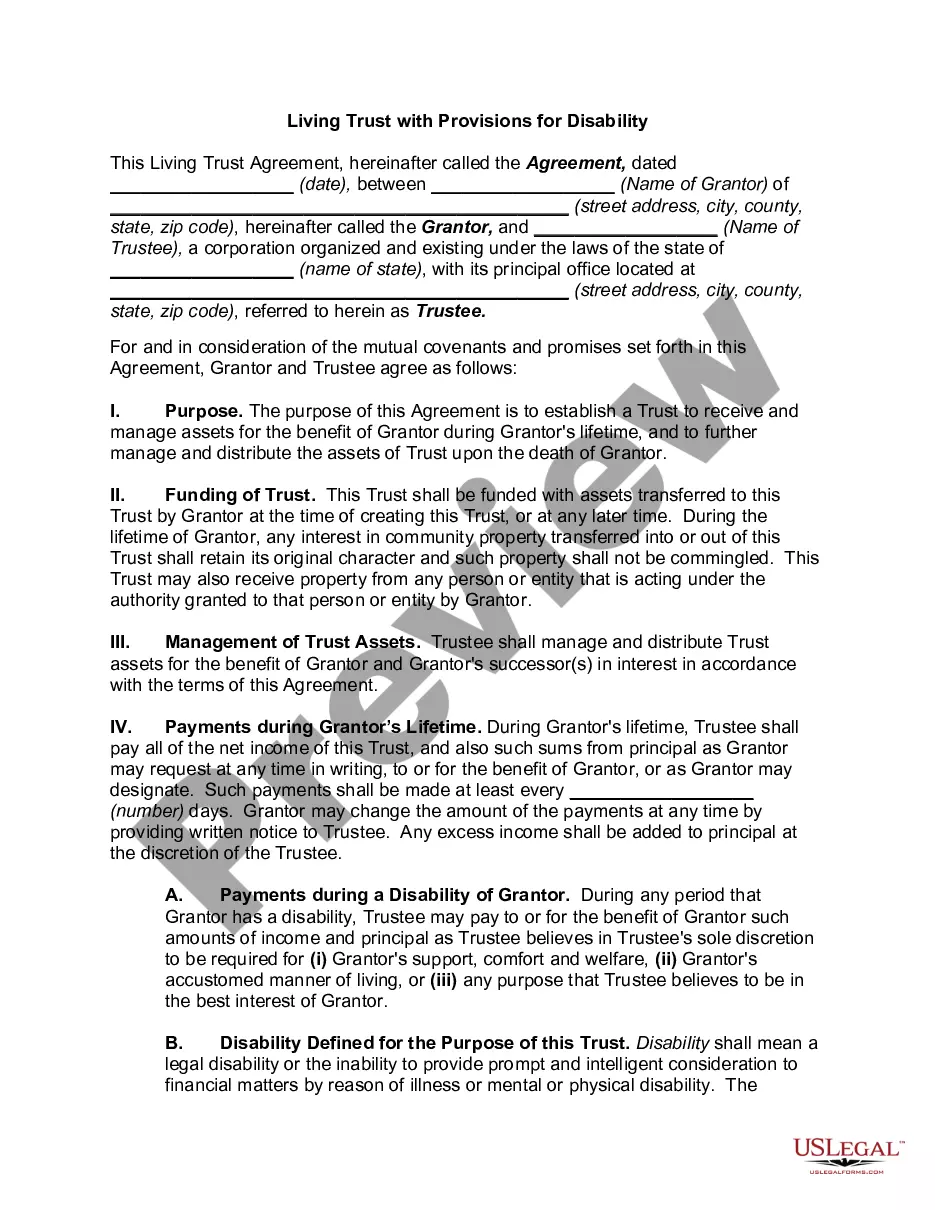
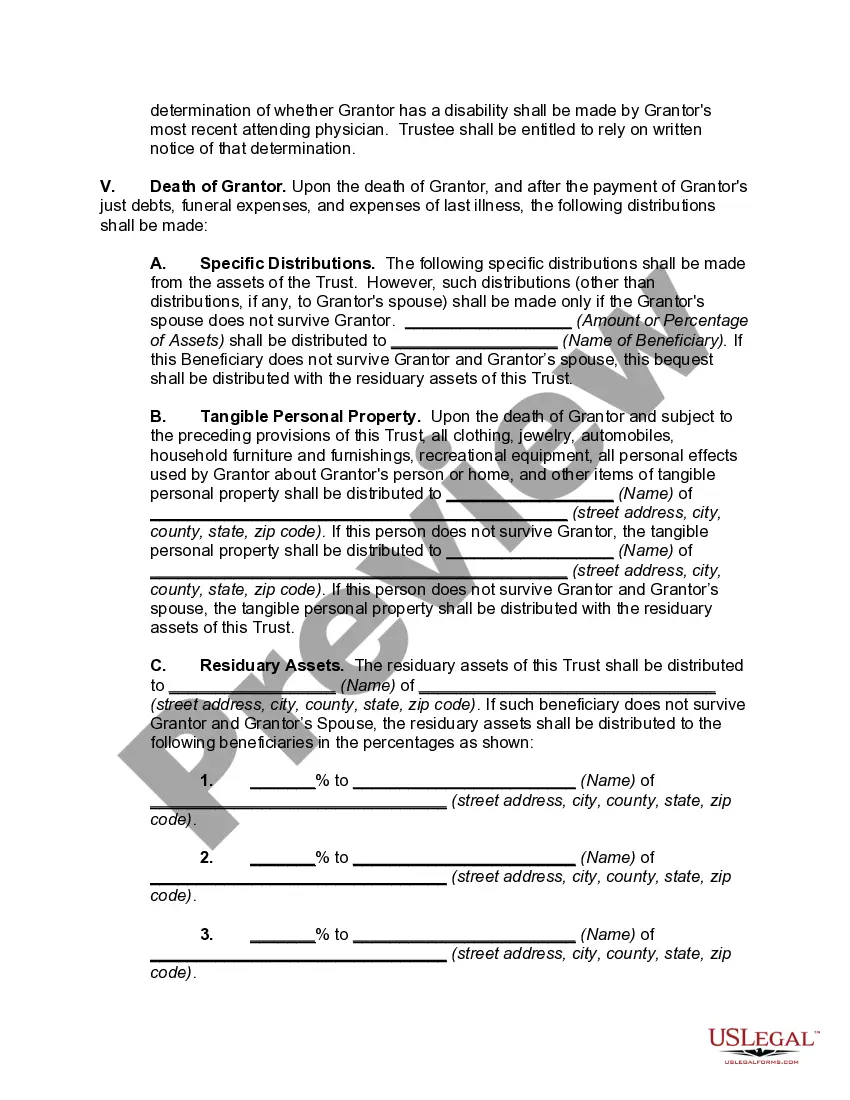
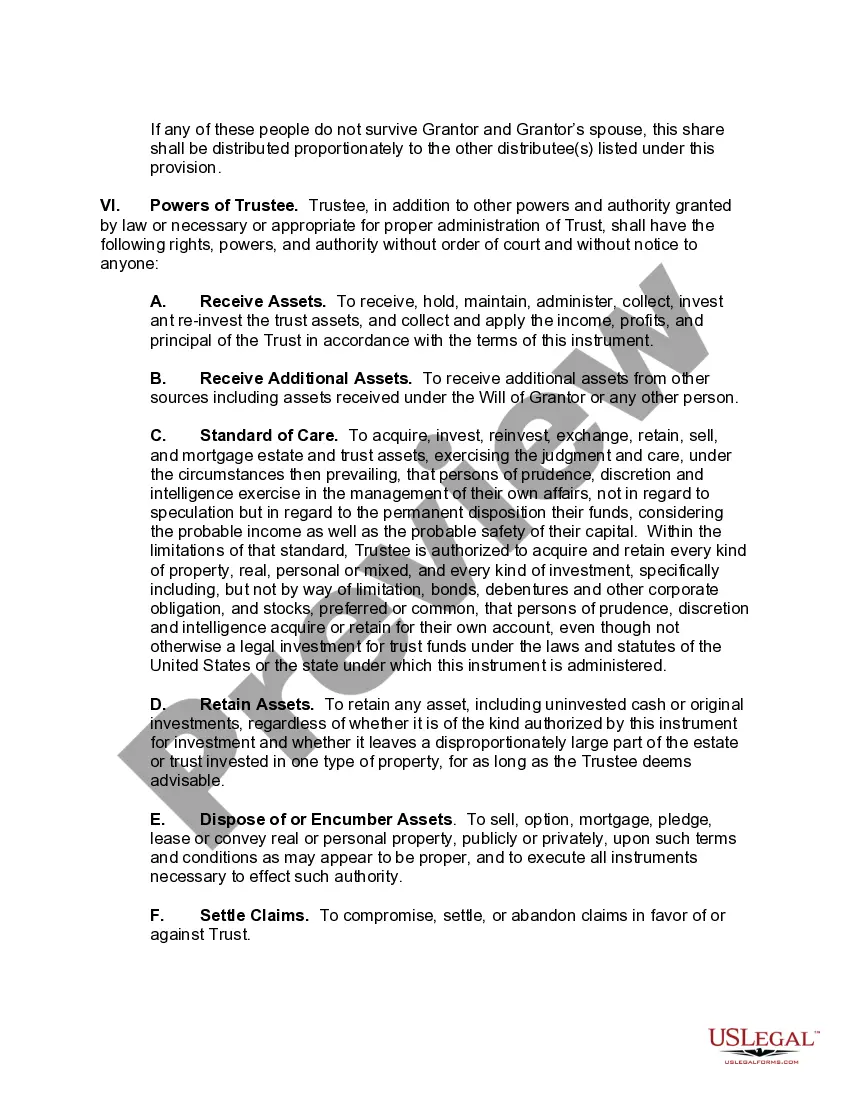
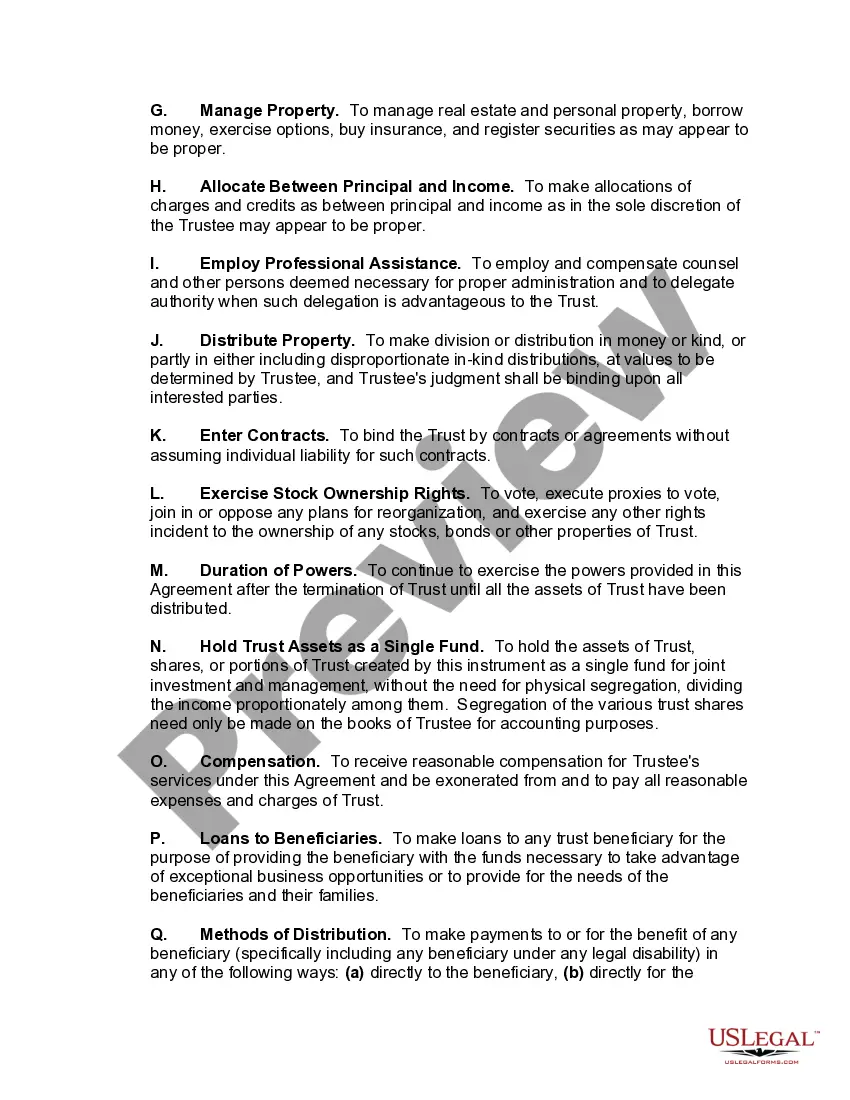
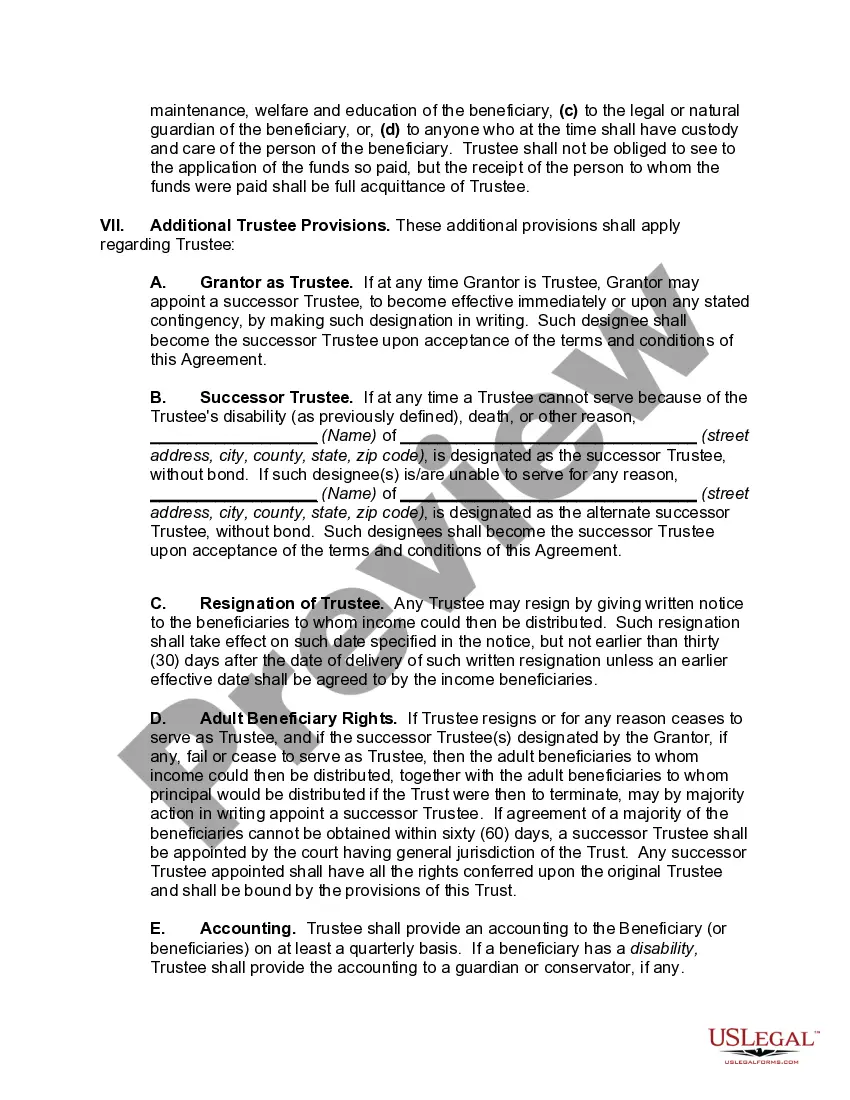
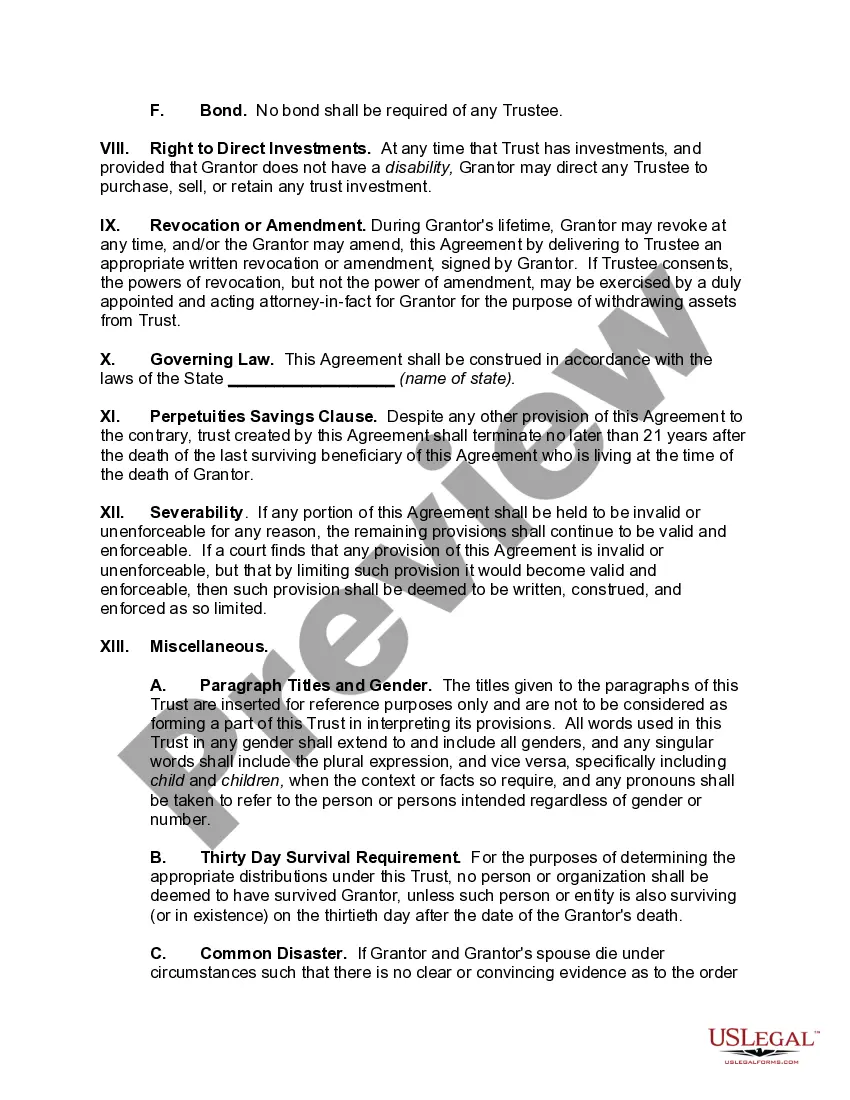
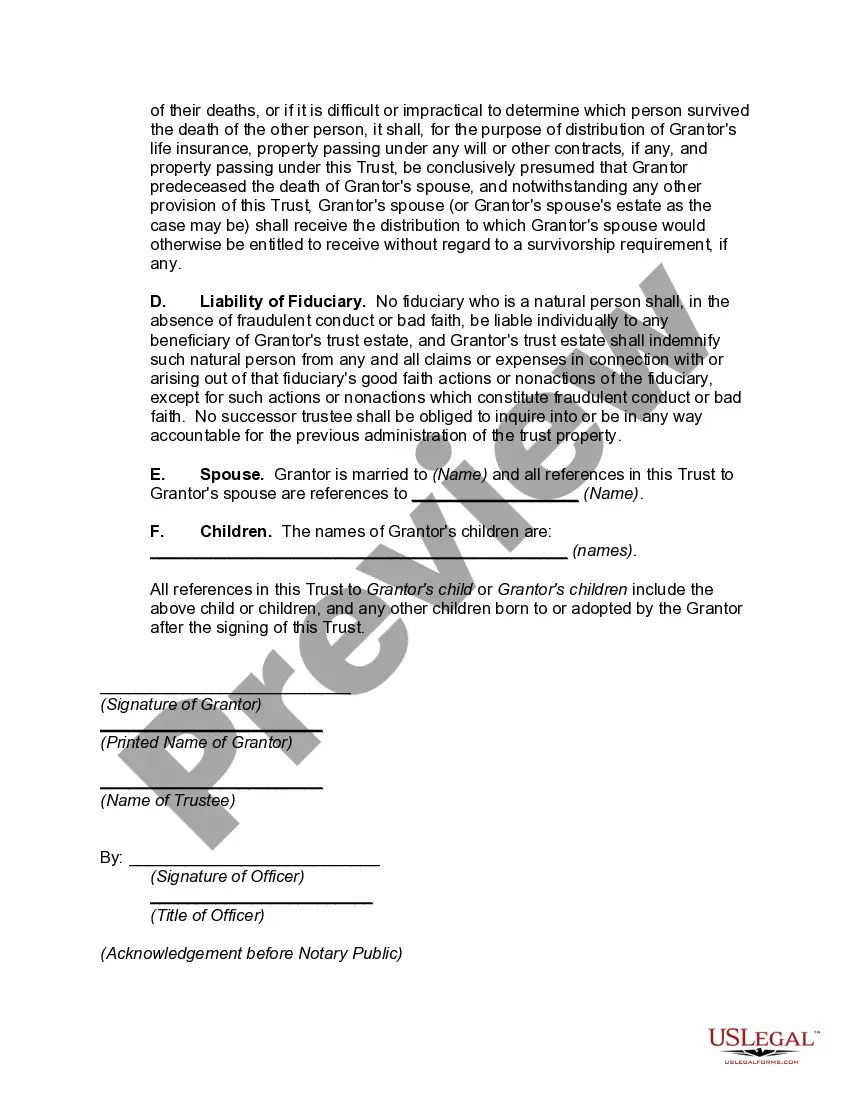
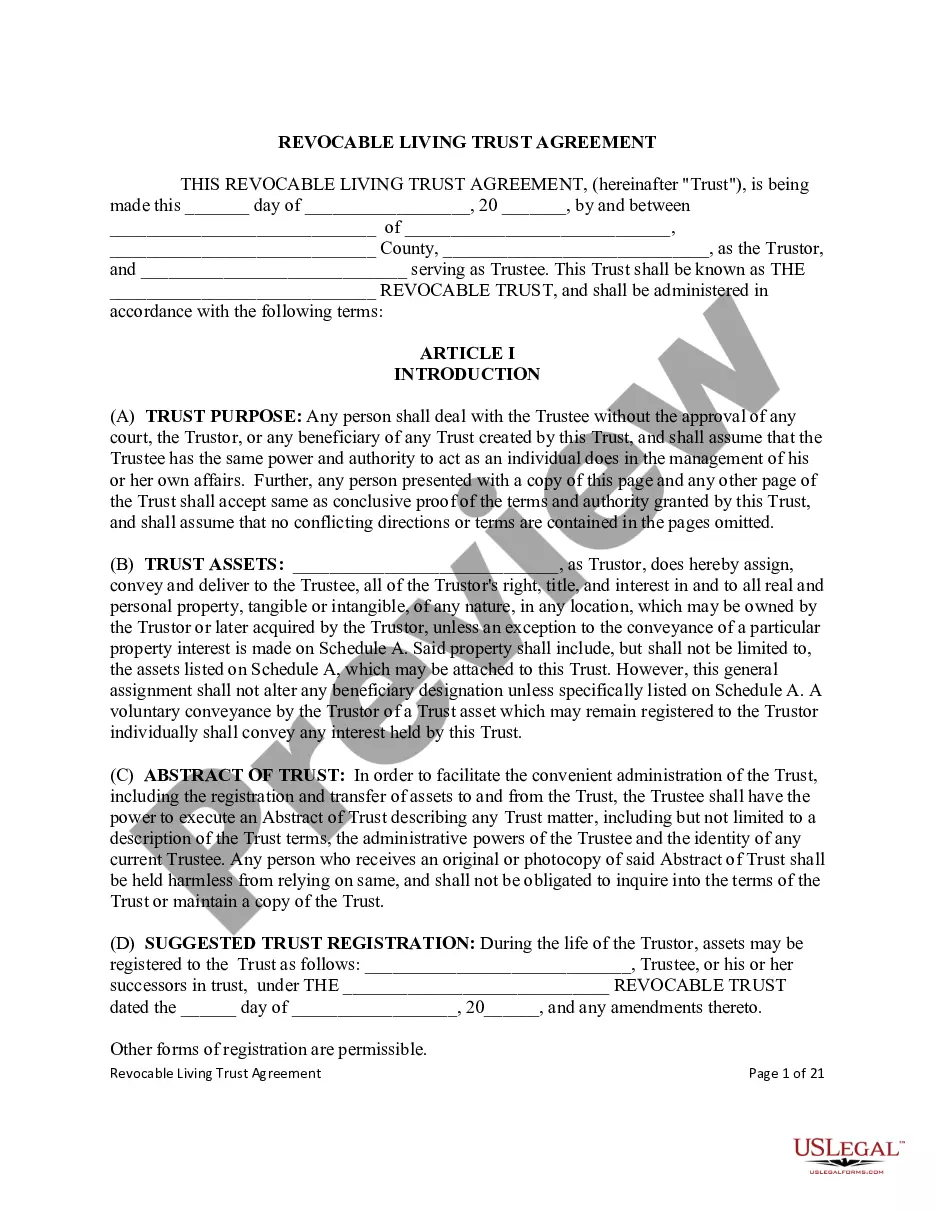
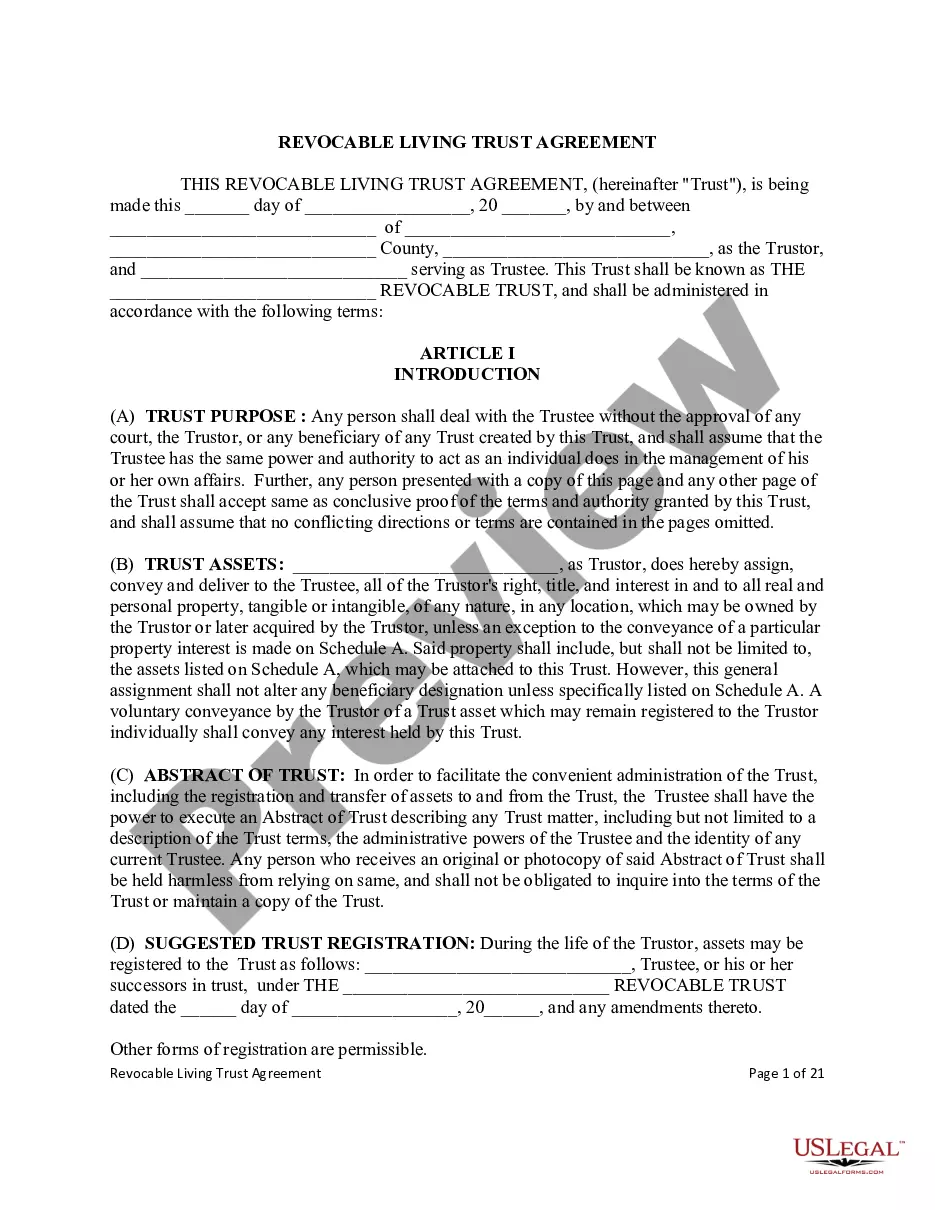
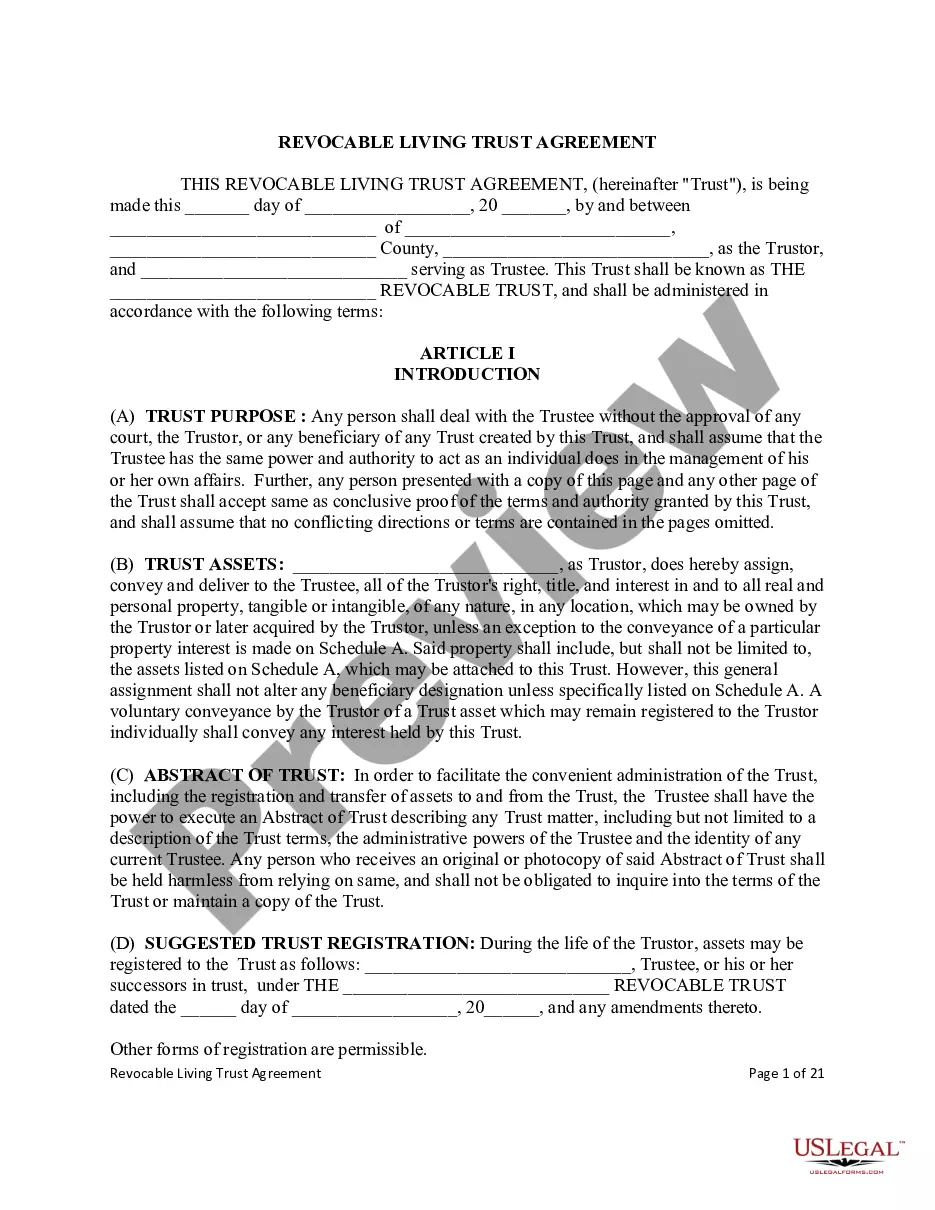
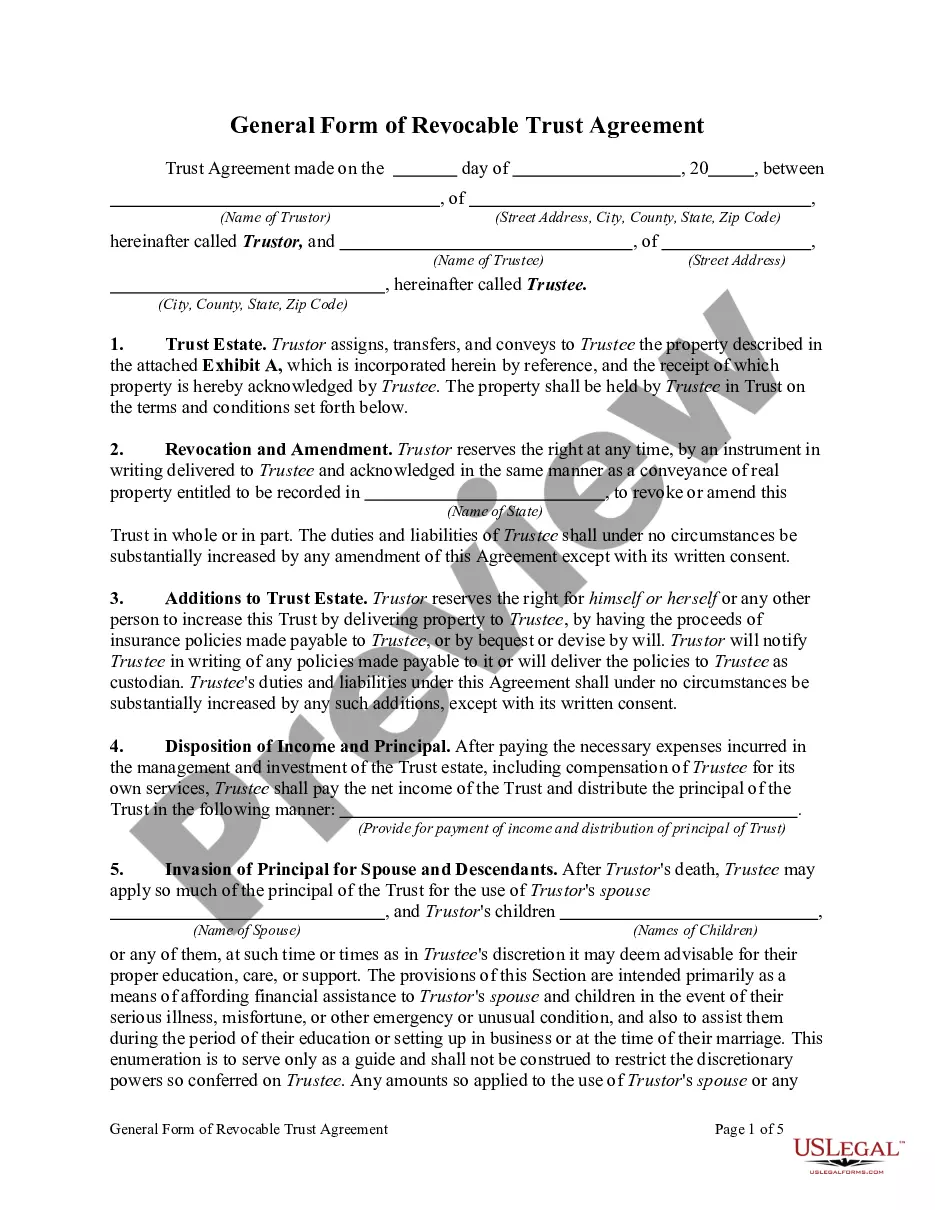


How to fill out Living Trust With Provisions For Disability?
Finding the appropriate legal document design can be quite challenging.
Clearly, there is an array of templates accessible online, but how can you acquire the legal form you desire? Utilize the US Legal Forms website.
The platform provides numerous templates, including the Washington Living Trust with Provisions for Disability, which can be utilized for both business and personal purposes.
First, ensure you have chosen the correct form for your city/region. You can view the form using the Review option and read the form details to confirm it suits your needs.
- All documents are reviewed by professionals and comply with state and federal regulations.
- If you are currently registered, Log In to your account and click on the Download button to obtain the Washington Living Trust with Provisions for Disability.
- Use your account to browse the legal documents you have previously acquired.
- Navigate to the My documents section of your account and obtain another copy of the document you need.
- If you are a new user of US Legal Forms, here are simple steps for you to follow.
Form popularity
FAQ
Assets That Can And Cannot Go Into Revocable TrustsReal estate.Financial accounts.Retirement accounts.Medical savings accounts.Life insurance.Questionable assets.
HOW DOES MONEY FROM A TRUST THAT IS NOT MY RESOURCE AFFECT MY SSI BENEFITS? Money paid directly to you from the trust reduces your SSI benefit. Money paid directly to someone to provide you with food or shelter reduces your SSI benefit but only up to a certain limit.
A Special Disability Trust (SDT) is a special type of trust that allows parents and immediate family members to plan for current and future needs of a person with severe disability. The trust can pay for reasonable care, accommodation and other discretionary needs of the beneficiary during their lifetime.
Retirement accounts definitely do not belong in your revocable trust for example your IRA, Roth IRA, 401K, 403b, 457 and the like. Placing any of these assets in your trust would mean that you are taking them out of your name to retitle them in the name of your trust. The tax ramifications can be disastrous.
If you use your assets to establish a trust on or after January 1, 2000, generally, the trust will count as your resource for SSI. In the case of a revocable trust, the whole trust is your resource.
Some of your financial assets need to be owned by your trust and others need to name your trust as the beneficiary. With your day-to-day checking and savings accounts, I always recommend that you own those accounts in the name of your trust.
The first $20 of income received each month is not counted. In addition, with respect to earned income, the first $65 each month is not counted, and one-half of the earnings over $65 in any given month is not counted.
No Asset Protection A revocable living trust does not protect assets from the reach of creditors. Administrative Work is Needed It takes time and effort to re-title all your assets from individual ownership over to a trust. All assets that are not formally transferred to the trust will have to go through probate.
SSDI is not a needs-based benefit. If you are on that program for two years, you will also qualify for Medicare. Because SSDI is not needs-based, a special needs trust is not necessary to qualify for it.
What Assets Should Go Into a Trust?Bank Accounts. You should always check with your bank before attempting to transfer an account or saving certificate.Corporate Stocks.Bonds.Tangible Investment Assets.Partnership Assets.Real Estate.Life Insurance.