Washington Blind Trust Agreement
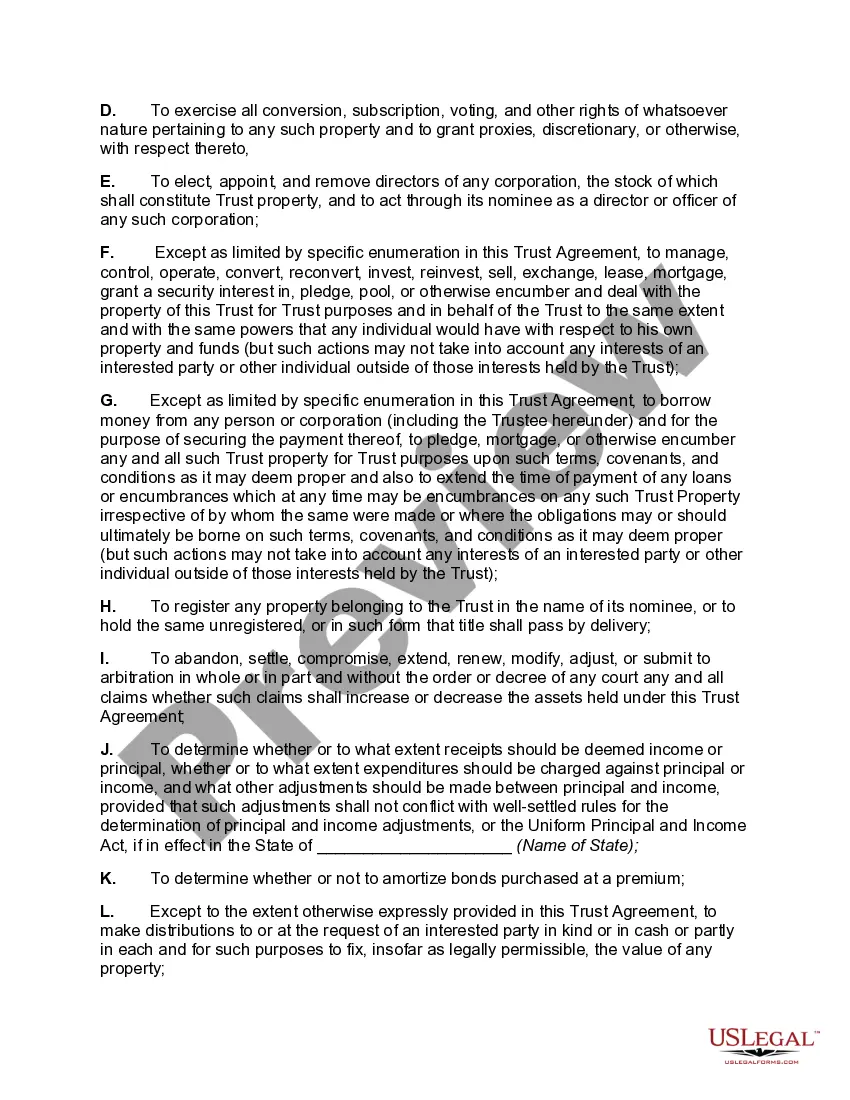
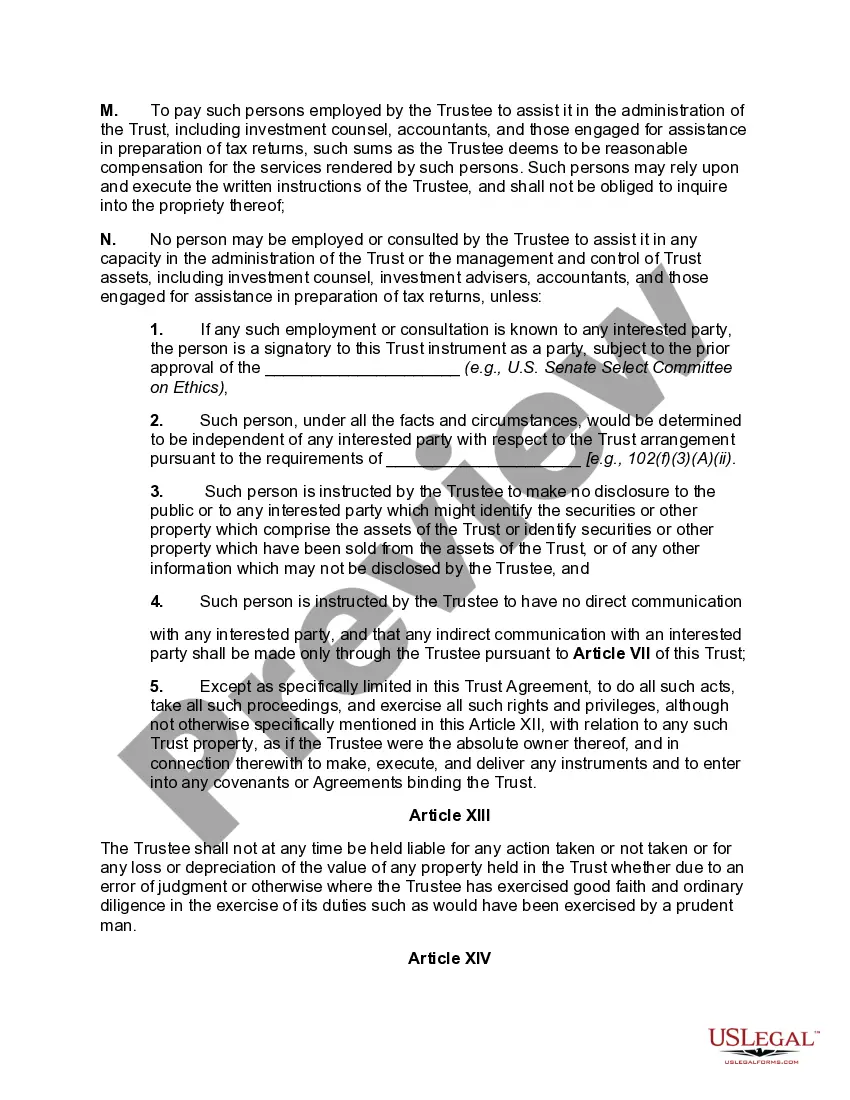
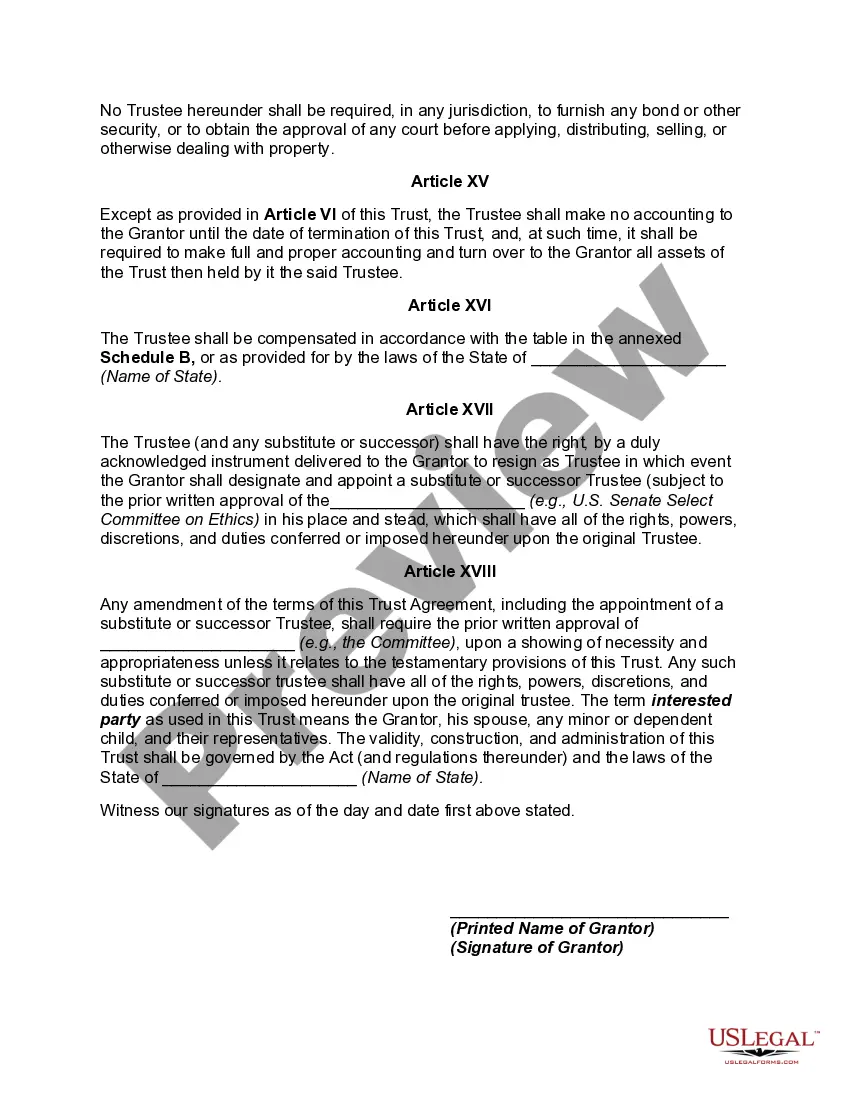
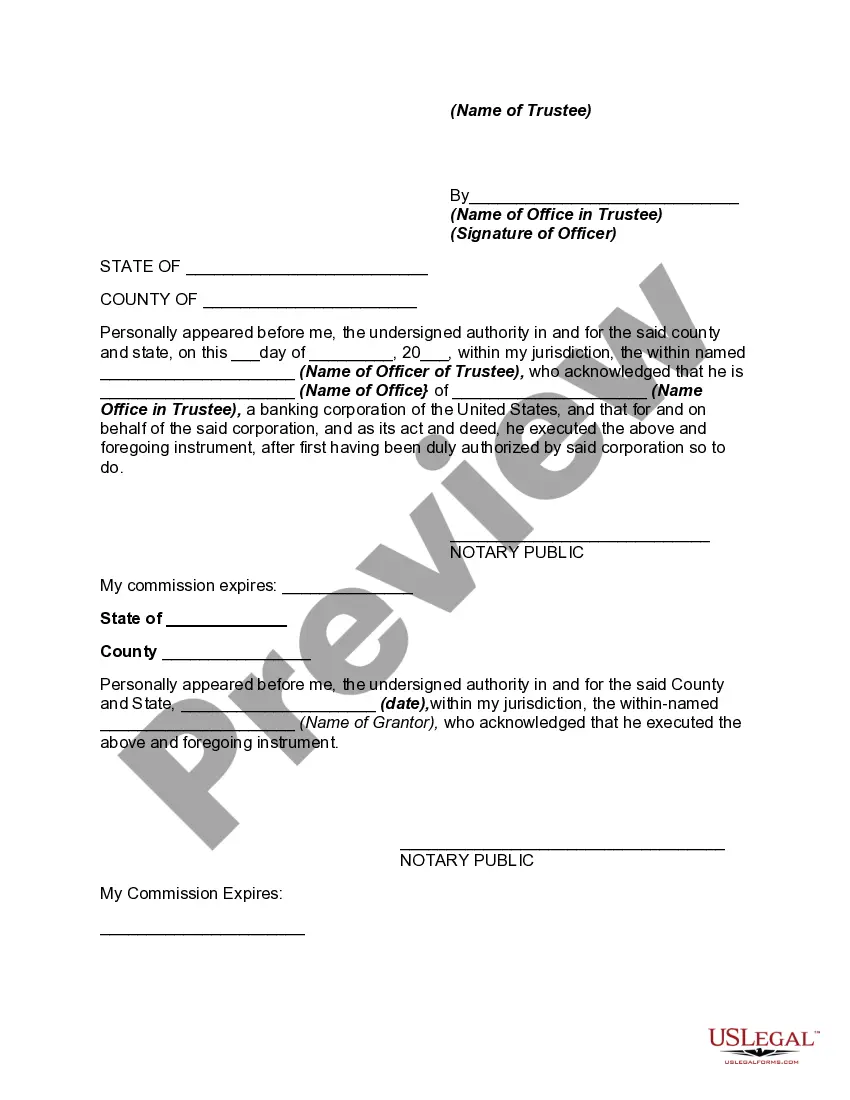
Description
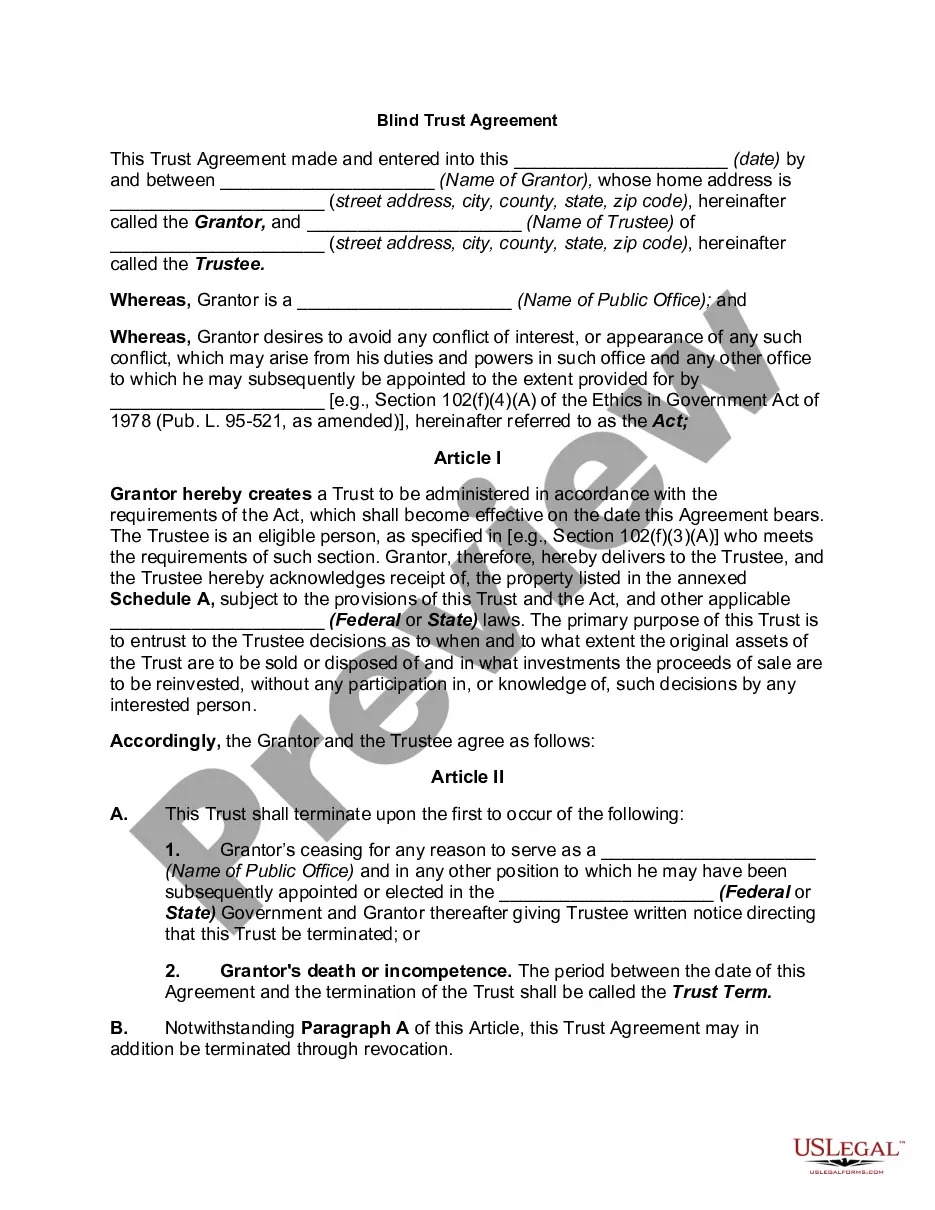
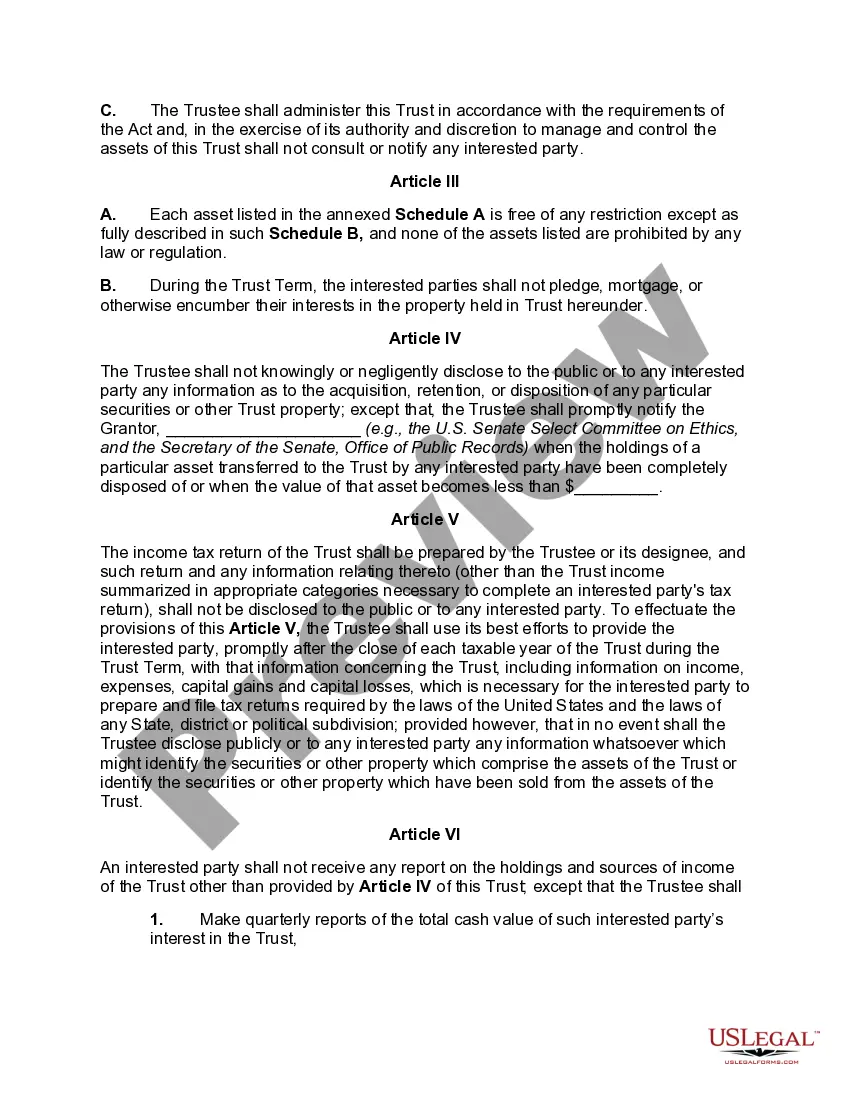
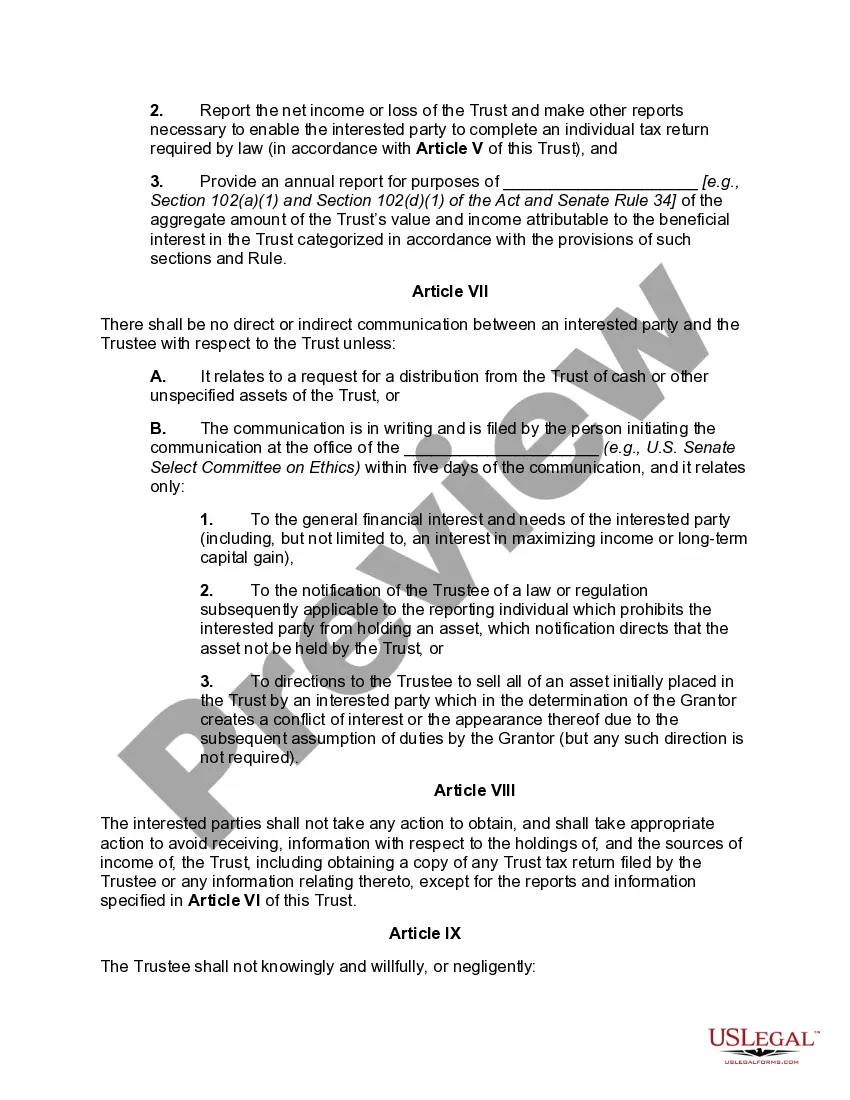
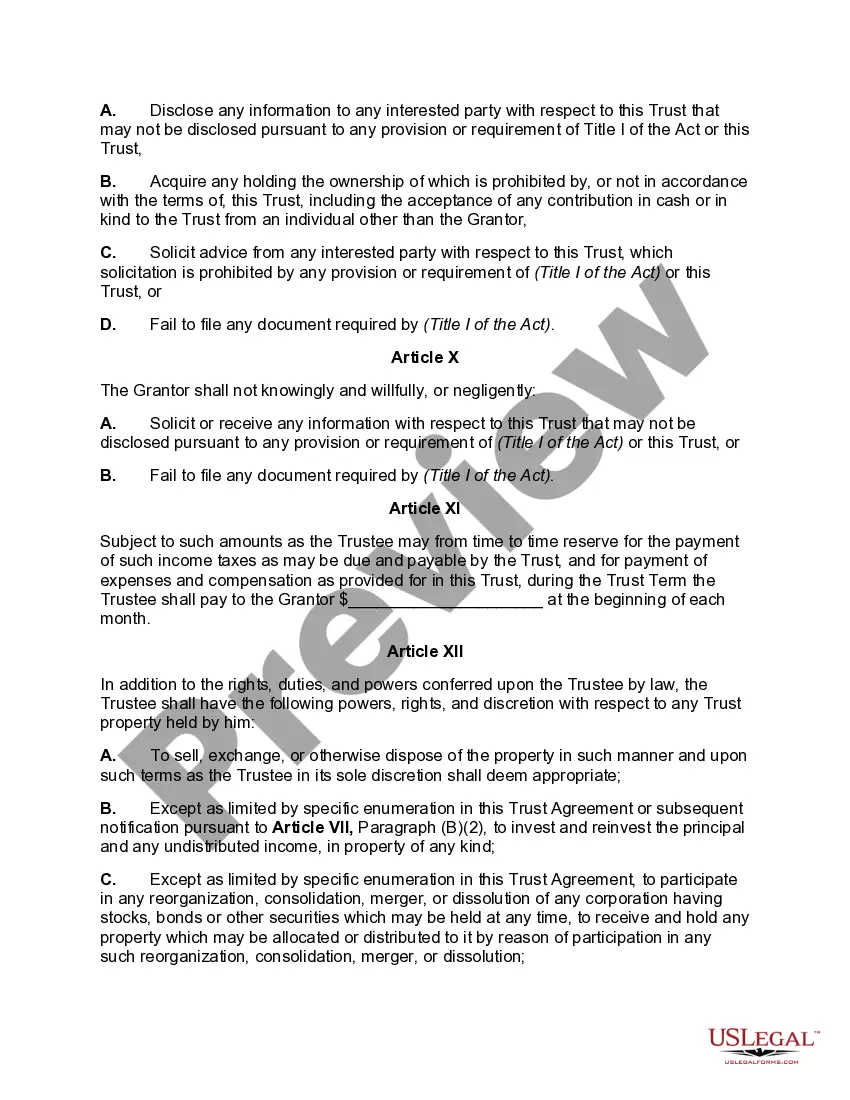
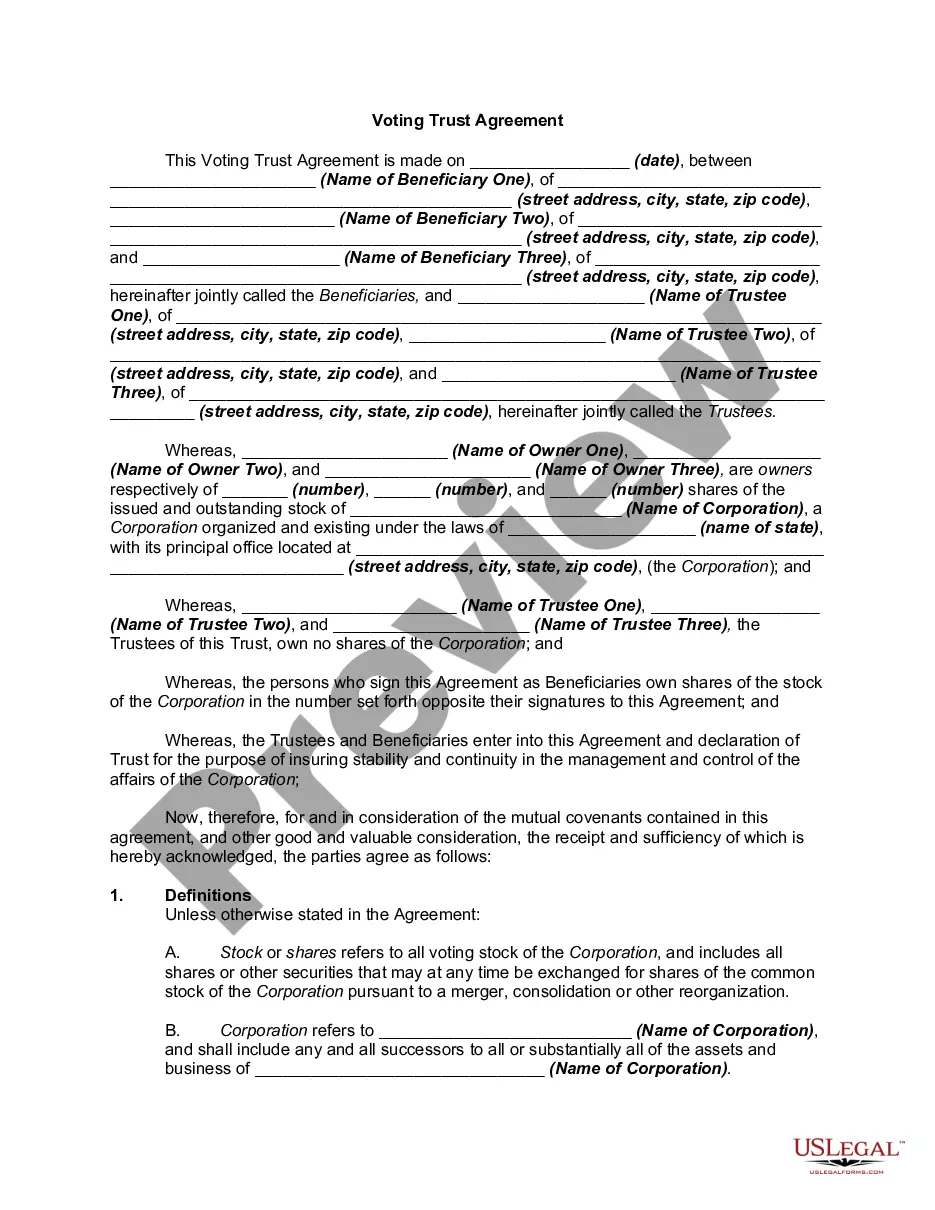
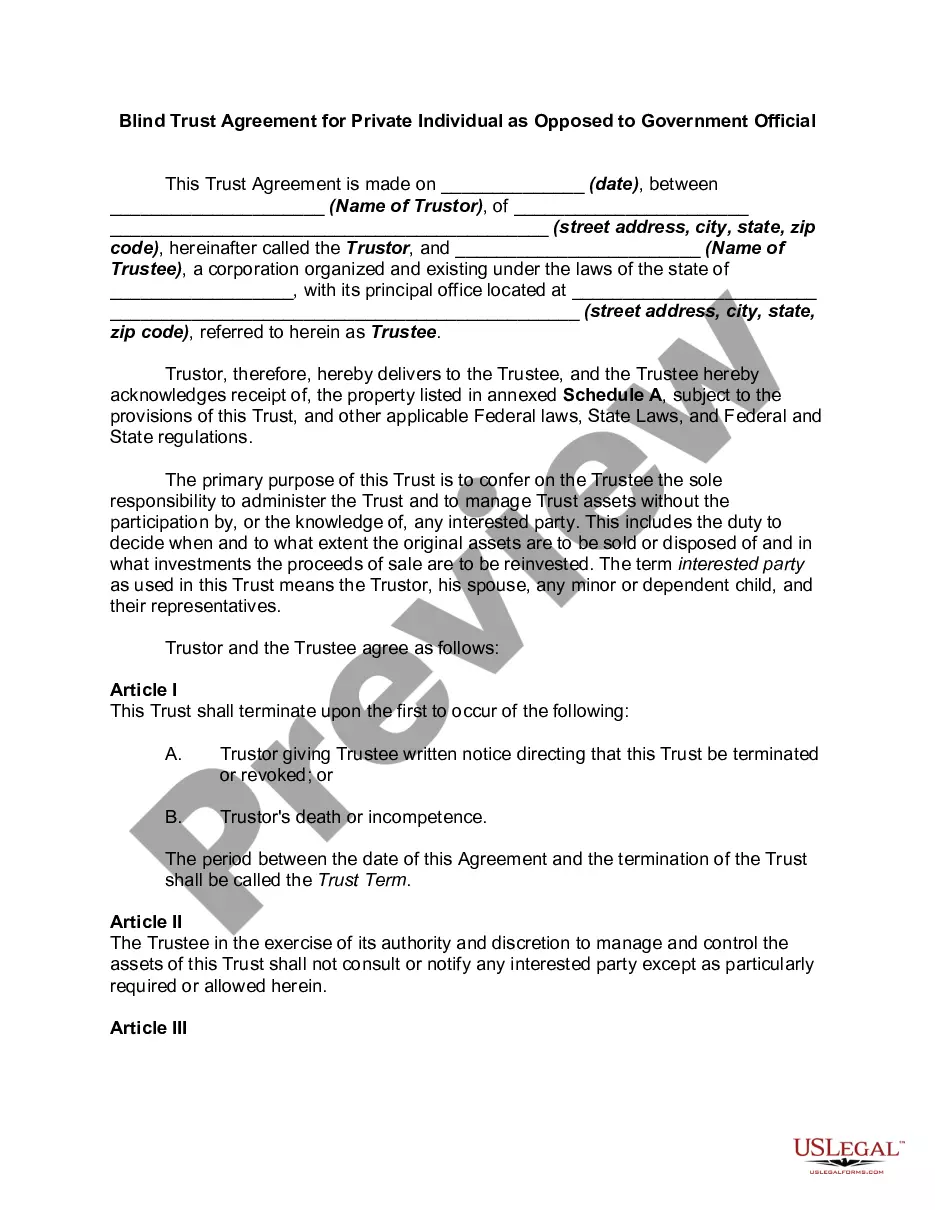
Get your form ready online
Our built-in tools help you complete, sign, share, and store your documents in one place.
Make edits, fill in missing information, and update formatting in US Legal Forms—just like you would in MS Word.
Download a copy, print it, send it by email, or mail it via USPS—whatever works best for your next step.
Sign and collect signatures with our SignNow integration. Send to multiple recipients, set reminders, and more. Go Premium to unlock E-Sign.
If this form requires notarization, complete it online through a secure video call—no need to meet a notary in person or wait for an appointment.
We protect your documents and personal data by following strict security and privacy standards.

Make edits, fill in missing information, and update formatting in US Legal Forms—just like you would in MS Word.

Download a copy, print it, send it by email, or mail it via USPS—whatever works best for your next step.

Sign and collect signatures with our SignNow integration. Send to multiple recipients, set reminders, and more. Go Premium to unlock E-Sign.

If this form requires notarization, complete it online through a secure video call—no need to meet a notary in person or wait for an appointment.

We protect your documents and personal data by following strict security and privacy standards.
Looking for another form?



How to fill out Blind Trust Agreement?
If you intend to finalize, obtain, or produce official document templates, utilize US Legal Forms, the largest selection of legal forms, which can be accessed online.
Take advantage of the site's straightforward and user-friendly search to find the documents you require.
Various templates for corporate and personal purposes are organized by categories and states, or keywords.
- Explore US Legal Forms to locate the Washington Blind Trust Agreement with just a few clicks.
- If you are already a US Legal Forms user, sign in to your account and click the Download button to retrieve the Washington Blind Trust Agreement.
- You can also access forms you previously downloaded in the My documents section of your account.
- If this is your first time using US Legal Forms, refer to the steps below.
- Step 1. Ensure you have selected the form for the correct state/country.
- Step 2. Utilize the Preview option to review the form’s details. Don’t forget to read the information.
Form popularity
FAQ
The main types of trusts include revocable trusts, irrevocable trusts, charitable trusts, and blind trusts. Revocable trusts allow changes to be made by the grantor during their lifetime, while irrevocable trusts cannot be altered once established. Charitable trusts are intended for philanthropic goals, and blind trusts ensure a separation between asset management and beneficiary involvement. If you are considering a Washington Blind Trust Agreement, understanding these types will help you make informed decisions.
Withdrawing from a blind trust can be complicated because the beneficiary generally has no control over the trust's assets or their management. Unlike other trusts, which may allow for withdrawals, blind trusts are designed to keep beneficiaries uninformed. However, terms set forth in the Washington Blind Trust Agreement can define specific circumstances under which funds may be accessed. Consulting a legal expert can clarify these options.
Blind trusts typically have several key properties: they are managed by a trustee who makes all financial decisions, they provide confidentiality about the assets, and they limit the beneficiary's involvement in the trust's management. This arrangement ensures that the beneficiary cannot influence the asset management, thereby reducing the risk of conflicts of interest. When creating a Washington Blind Trust Agreement, these properties are important to ensure compliance with your goals.
A trust is a legal arrangement where a person, known as the trustee, holds property and assets for the benefit of another person, the beneficiary. In contrast, a blind trust is a specific type of trust where the trustee manages the assets without the beneficiary's direct knowledge or involvement. This arrangement helps to prevent any conflicts of interest, especially for individuals in positions of power, such as politicians. Understanding the distinctions can help when creating a Washington Blind Trust Agreement.
The cons of a blind trust include loss of direct oversight and potential administrative fees. With a Washington Blind Trust Agreement, you delegate management to a trustee, which may lead to decisions you do not agree with. Furthermore, the setup process can be complex and may require professional help, adding to the overall expense.
Forming a blind trust typically involves drafting a trust agreement that outlines the terms and appoints a trustee. You can use a Washington Blind Trust Agreement template from UsLegalForms, which provides a clear structure for your document. After creating the agreement, you need to fund the trust by transferring your assets, which solidifies the arrangement.
To place your assets in a trust, you generally need to create a trust document and then transfer ownership of the assets. In the case of a Washington Blind Trust Agreement, assets are moved into the trust managed independently by a trustee. Consulting with a legal expert can help ensure that all of your assets are properly transferred and your intentions are clearly outlined.
Filling out a trust form involves providing necessary details about the assets you want to include, the trustee’s information, and the beneficiaries’ details. Using a Washington Blind Trust Agreement template can simplify this process, ensuring that you include all required information accurately. Make sure to review the form carefully before submission to avoid any errors.
A blind trust is a financial arrangement where the trust owner transfers assets to a trustee, who manages them without the owner's input. For example, a business executive might create a Washington Blind Trust Agreement to separate personal interests from their professional responsibilities. This helps prevent any conflict of interest while they serve in an influential position.
For lottery winners, a Washington Blind Trust Agreement can provide financial privacy and aid in managing newfound wealth. The trust allows the winner to appoint a trustee who handles the funds, removing the winner's personal connection to the finances. This structure can also help protect the winner from unsolicited requests and potential financial mismanagement.