Washington Counter Offer to Purchase 3 - Residential
Description
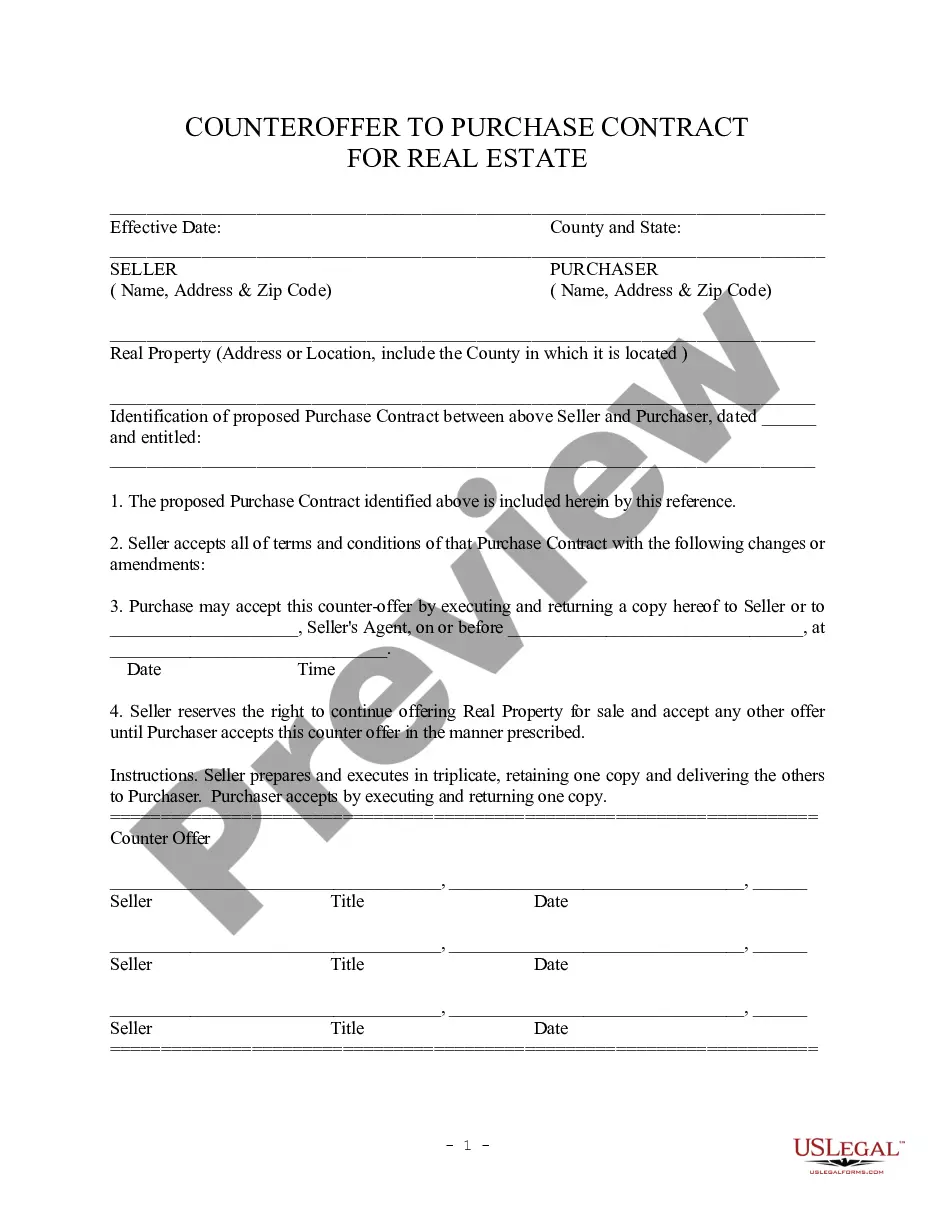
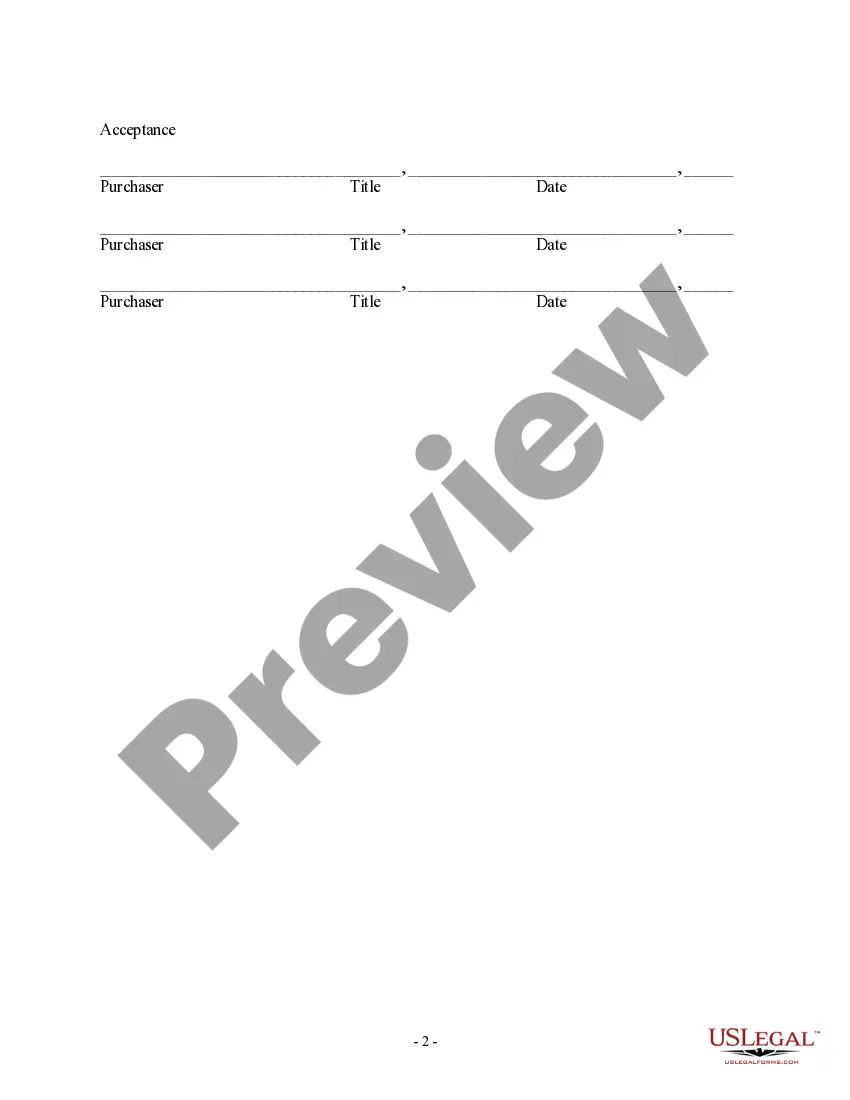
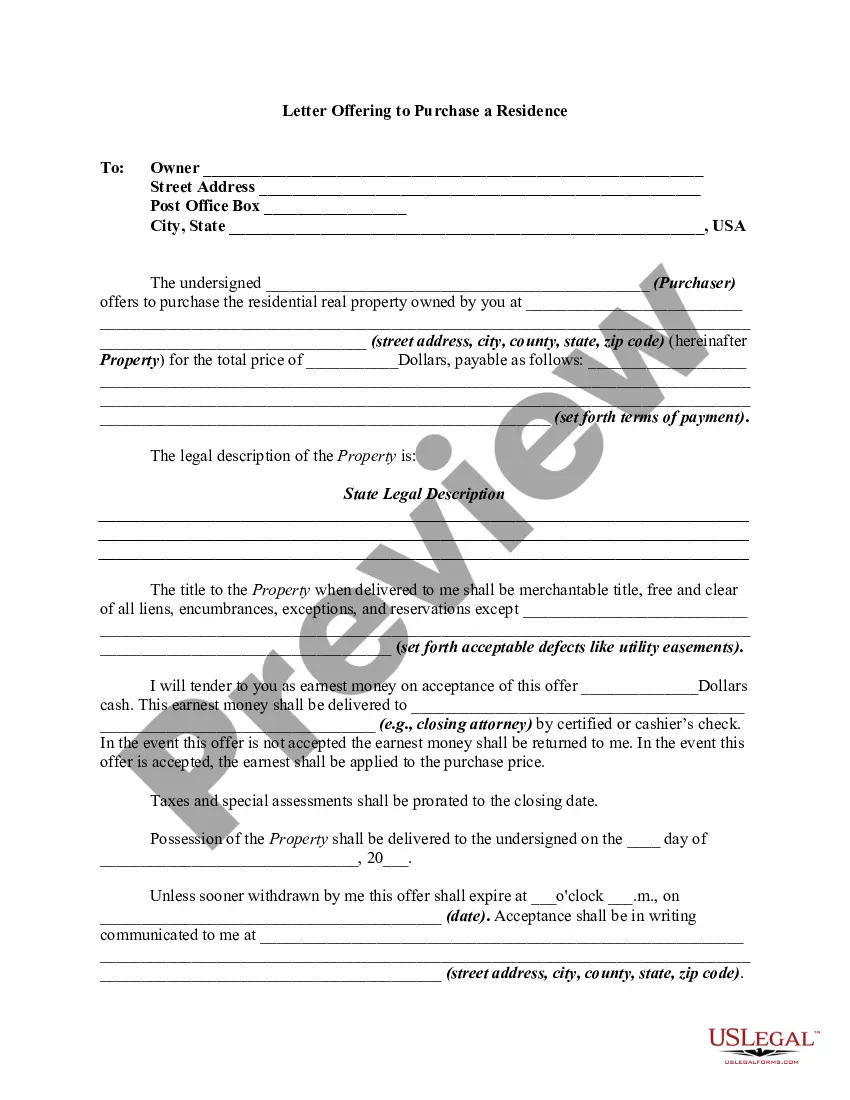
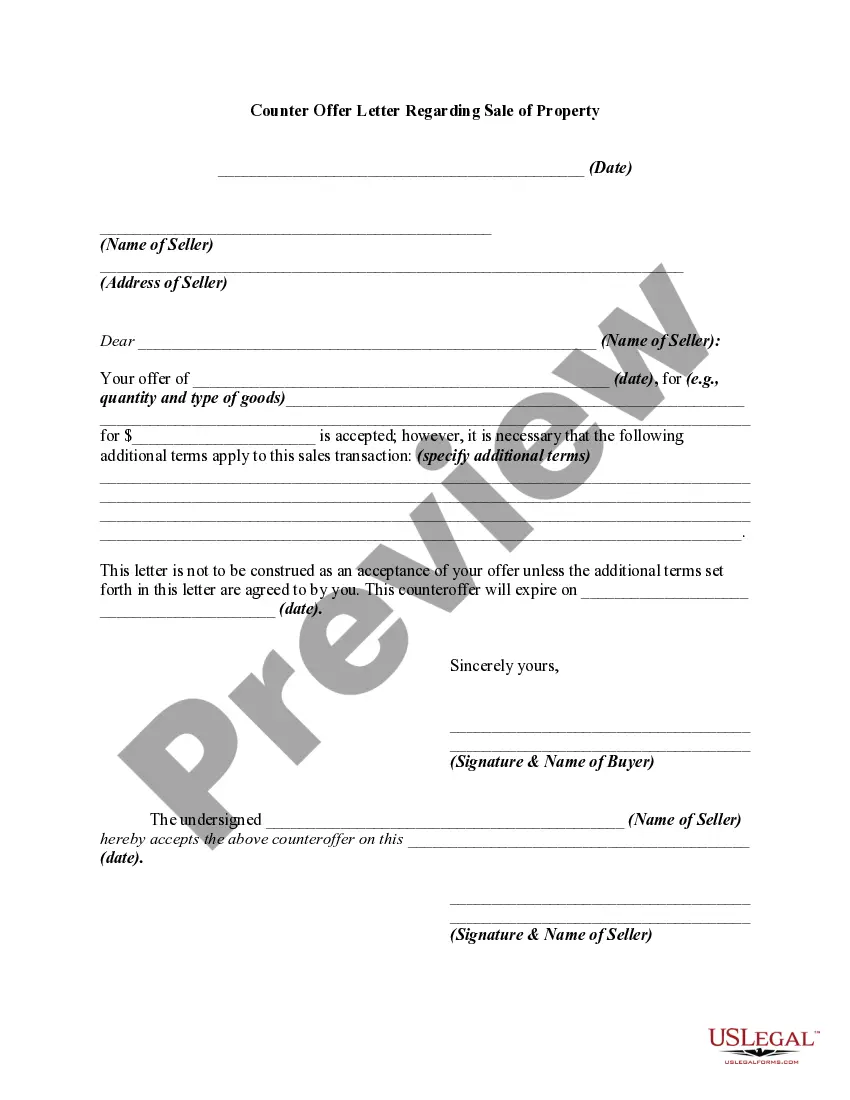
Get your form ready online
Our built-in tools help you complete, sign, share, and store your documents in one place.
Make edits, fill in missing information, and update formatting in US Legal Forms—just like you would in MS Word.
Download a copy, print it, send it by email, or mail it via USPS—whatever works best for your next step.
Sign and collect signatures with our SignNow integration. Send to multiple recipients, set reminders, and more. Go Premium to unlock E-Sign.
If this form requires notarization, complete it online through a secure video call—no need to meet a notary in person or wait for an appointment.
We protect your documents and personal data by following strict security and privacy standards.

Make edits, fill in missing information, and update formatting in US Legal Forms—just like you would in MS Word.

Download a copy, print it, send it by email, or mail it via USPS—whatever works best for your next step.

Sign and collect signatures with our SignNow integration. Send to multiple recipients, set reminders, and more. Go Premium to unlock E-Sign.

If this form requires notarization, complete it online through a secure video call—no need to meet a notary in person or wait for an appointment.

We protect your documents and personal data by following strict security and privacy standards.
Looking for another form?
How to fill out Counter Offer To Purchase 3 - Residential?
If you desire to thorough, obtain, or create legal document templates, utilize US Legal Forms, the largest collection of legal forms, available online.
Utilize the site’s simple and convenient search to find the documents you require. Numerous templates for business and personal uses are categorized by classes and regions, or keywords.
Use US Legal Forms to find the Washington Counter Offer to Purchase 3 - Residential in just a few clicks.
Every legal document template you obtain is yours permanently. You will have access to every form you purchased in your account. Click on the My documents section and select a form to print or download again.
Be proactive and acquire, and print the Washington Counter Offer to Purchase 3 - Residential with US Legal Forms. There are numerous professional and state-specific forms you can utilize for your business or personal needs.
- If you are already a US Legal Forms customer, Log In to your account and click the Download button to find the Washington Counter Offer to Purchase 3 - Residential.
- You can also access forms you previously obtained from the My documents tab of your account.
- If you are using US Legal Forms for the first time, follow the instructions below.
- Step 1. Ensure you have selected the form for the correct city/state.
- Step 2. Use the Preview option to review the form's content. Be sure to read the details.
- Step 3. If you are dissatisfied with the document, use the Search box at the top of the screen to find other versions of the legal document format.
- Step 4. Once you have located the form you need, click the Purchase now button. Choose the payment plan you prefer and enter your information to register for the account.
- Step 5. Complete the transaction. You can use your credit card or PayPal account to finalize the purchase.
- Step 6. Select the format of the legal document and download it to your device.
- Step 7. Complete, modify, and print or sign the Washington Counter Offer to Purchase 3 - Residential.
Form popularity
FAQ
A counteroffer in the home buying process refers to a return offer given by the seller in response to the original bid. When a seller gets an offer, they can choose to accept, reject or counter. In return, if the seller makes a counteroffer, a buyer can choose to accept, reject or counter it.
The first step to maximizing your salary is to make a counter that pushes the company higher into the range of salaries that they're willing to pay you while not pushing too hard. So how do you do that? A good range for a counter is between 10% and 20% above their initial offer.
If they like two or more offers and want to counter them, they have an option to issue a Multiple Counter Offer. With the multiple counter offer process, the seller decides after one or more of the buyers accepts (or if they counter back and forth, or if one buyer improves his or her offer).
Many people put their first offer in at 5% to 10% below the asking price as a lot of sellers will price their houses above the actual valuation, to make room for negotiations. Don't go in too low or too high for your opening bid. If you make an offer that's way below the asking price, you won't be taken seriously.
Buyers can also counter a seller's counteroffer, as we mentioned in the previous example. There are no limits to the number of counteroffers that you can submit as a buyer. Home buyers first create an offer that may be below the asking price when they want to negotiate the house price presented by the home seller.
The seller can counter more than one buyer's offer at a time IF they use appropriate language when doing so with the separate parties to let them know the situation. This language would need to include that all offers are subject to final written approval of the seller.
Information for Buyers Sellers can accept the best offer; they can inform all potential purchasers that other offers are on the table; they can counter one offer while putting the other offers to the side awaiting a decision on the counter-offer; or they can counter one offer and reject the others.
If your offer is contingent on bank approval, you could lose your offer to the buyer who overbid you. This is rare, but it can happen. Another buyer can also send an offer directly to the bank and bypass the listing agent and the seller altogether. Again, it's rare, but a buyer could do it.
When it comes to counter offers in real estate, there's no set number that constitutes the norm. A buyer and seller could go back and forth with one or many. But in most cases, there are only so many counter offers a potential buyer and seller will make before a real estate transaction just falls through.
You can increase your asking price by enough to still get as high as your list price after paying the buyer's closing costs. If your list price is $200,000, and the buyer offers $190,000 with $6,000 toward closing, you would counter with something between $196,000 and $206,000, with $6,000 for closing costs.