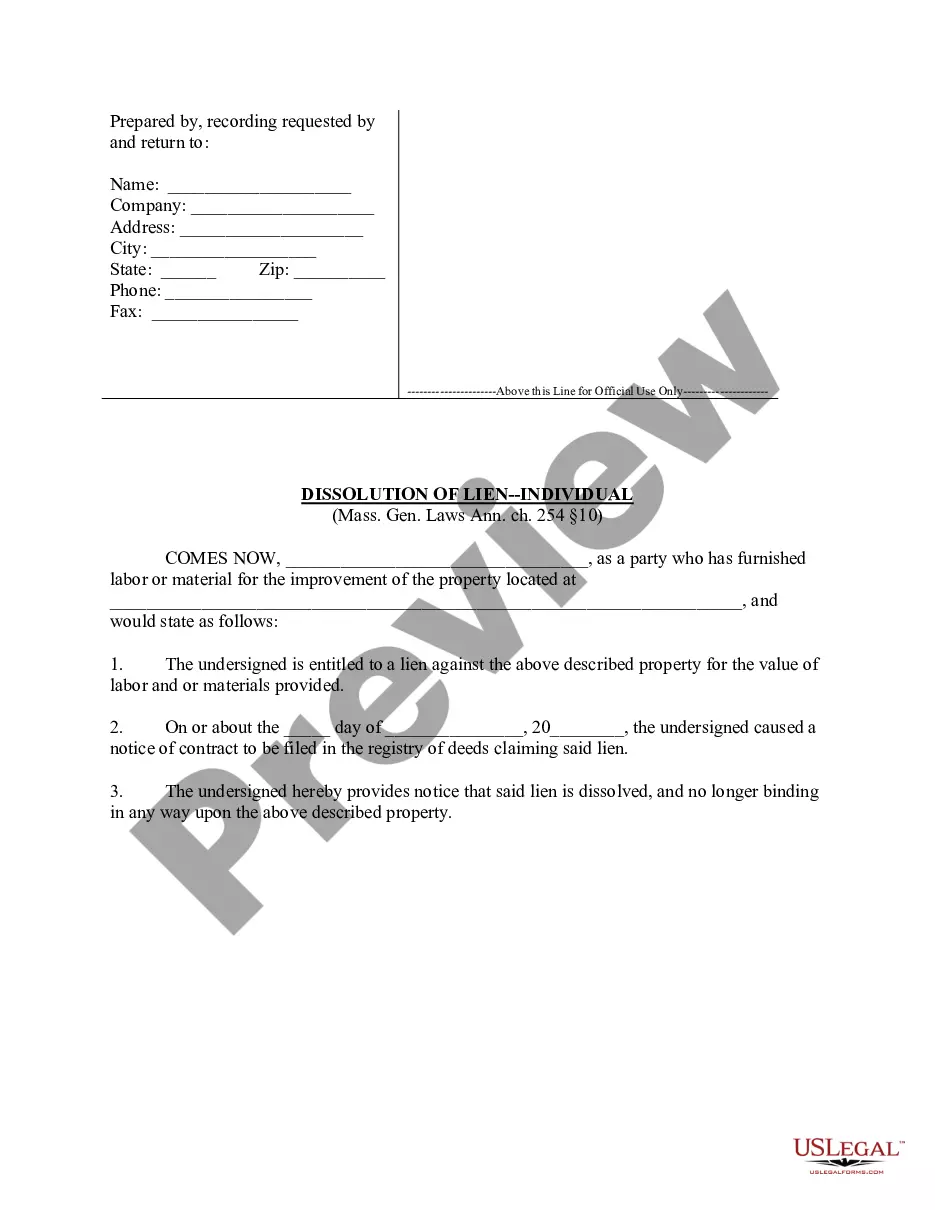
Washington Note For Motion Docket
Understanding this form
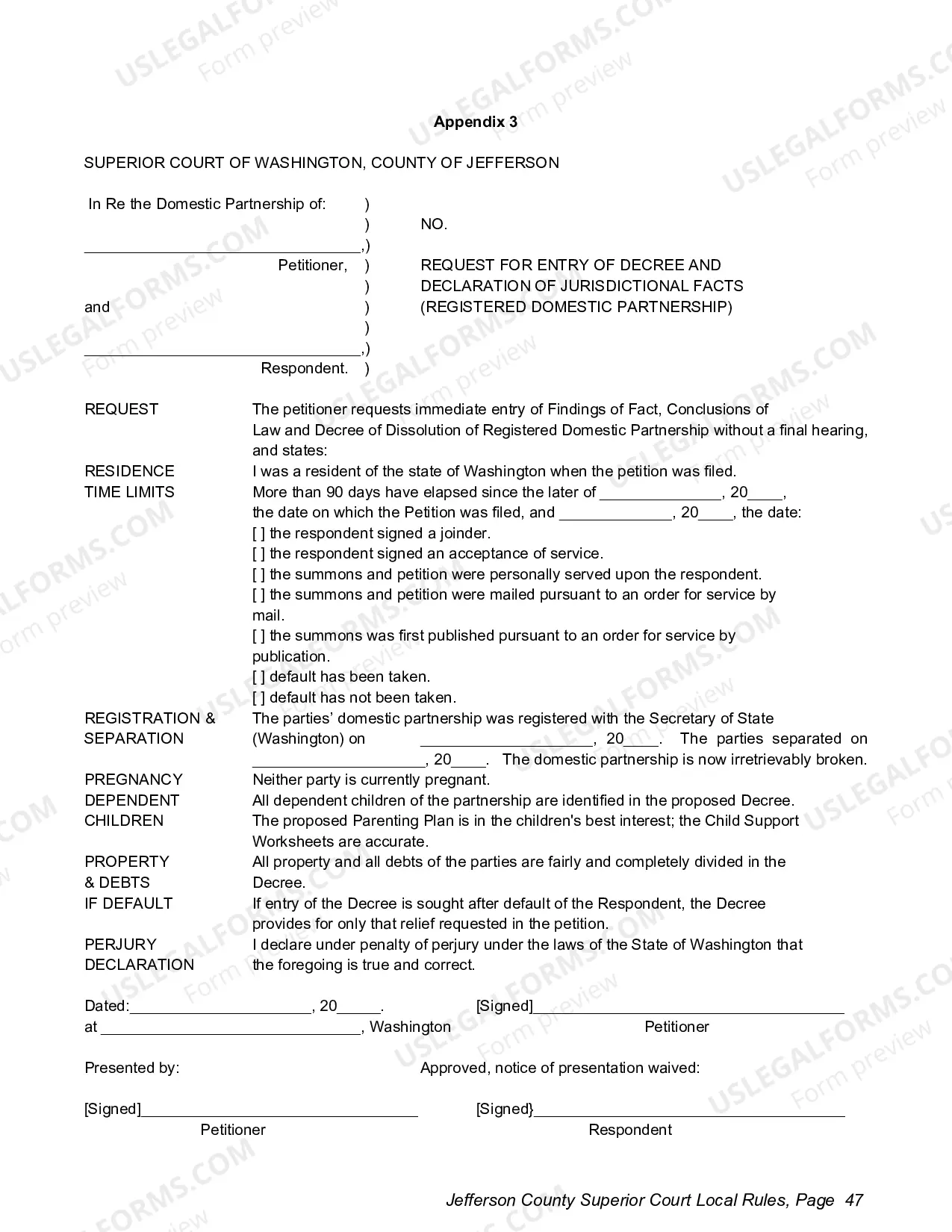
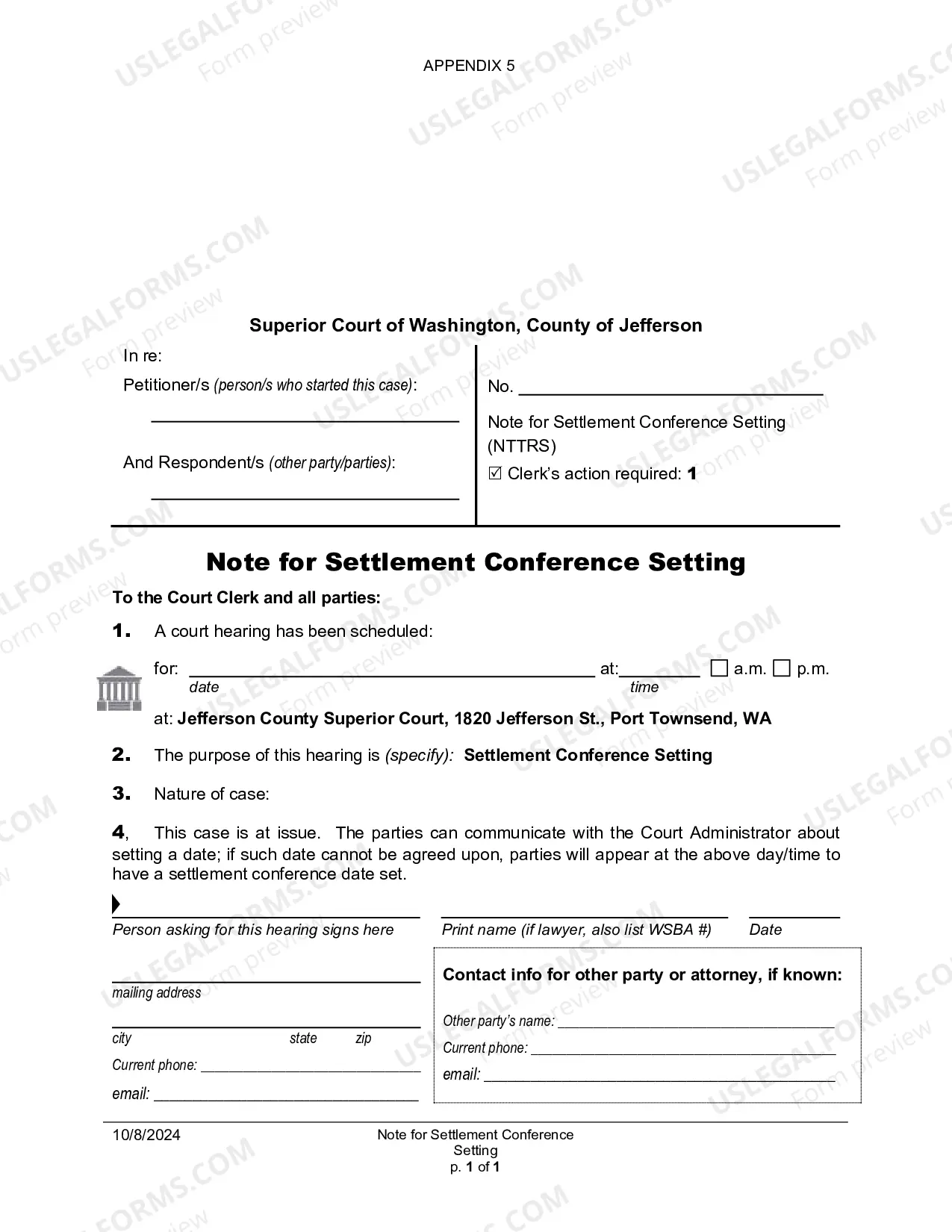
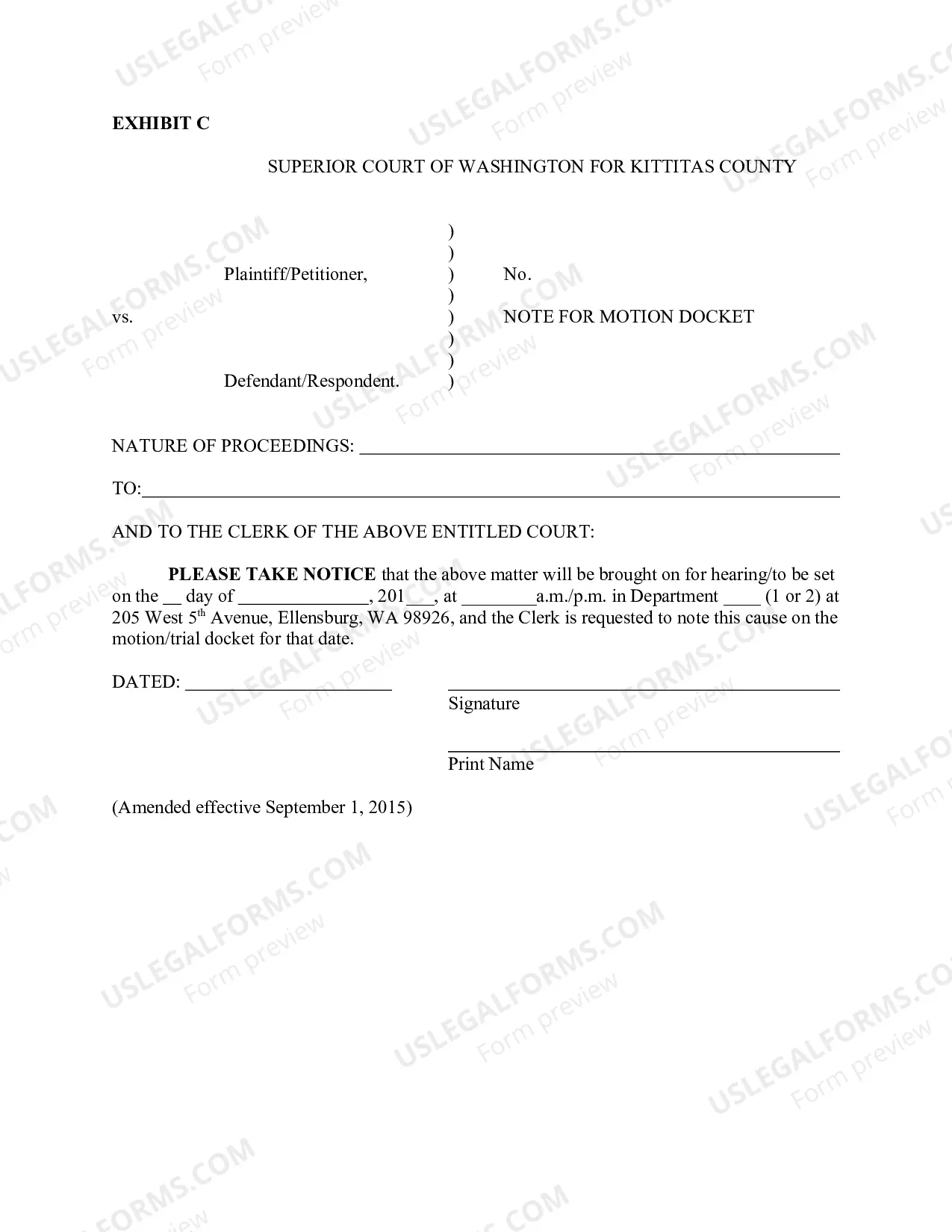
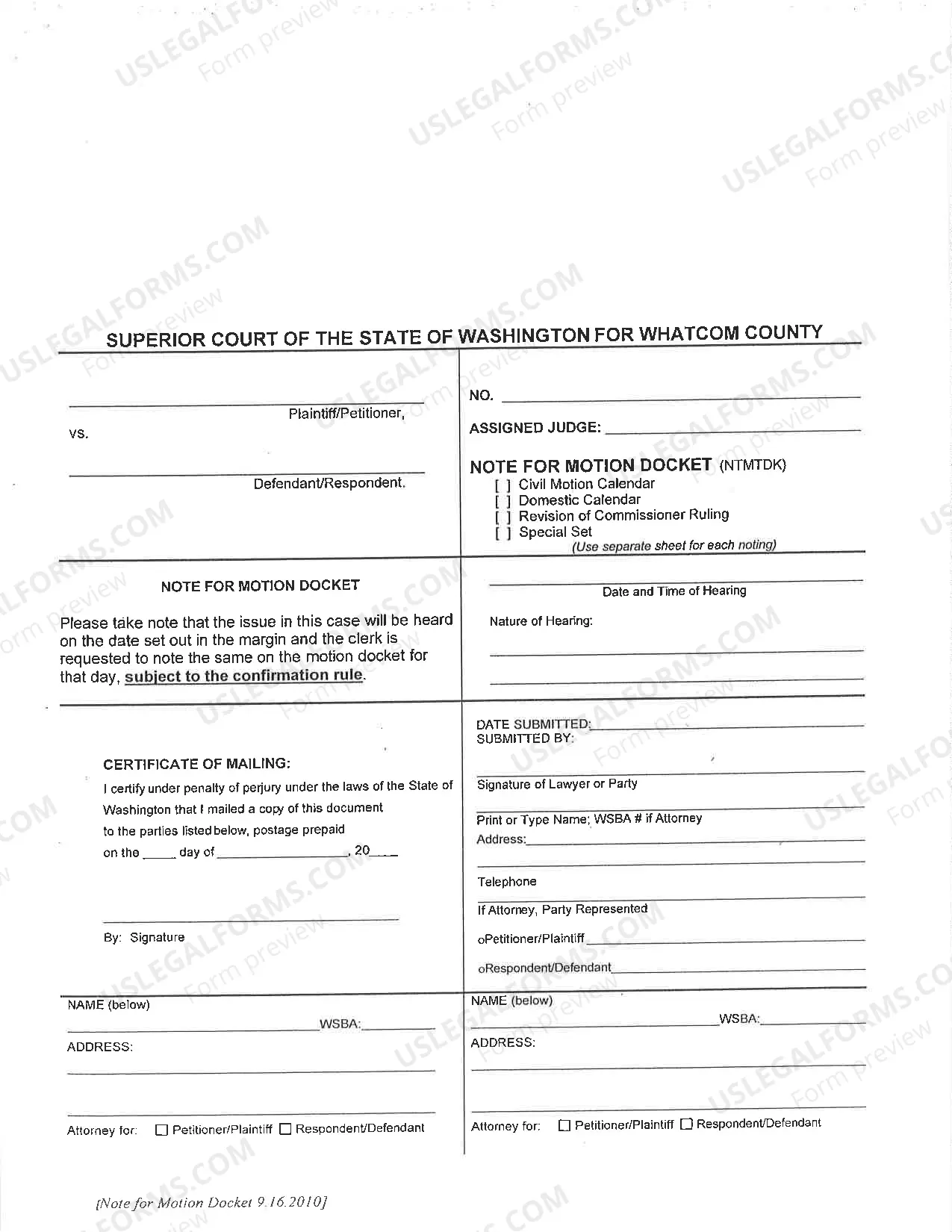
The Note for Motion Docket is a legal document used in Washington State to request the entry of a decree without a final hearing in matters related to the dissolution of a registered domestic partnership. This form is distinctive as it outlines specific declarations and requirements pertinent to domestic partnerships, setting it apart from other dissolution forms, such as those for marriage.
Form components explained
- Petitioner details including their current residence.
- Time limits indicating key dates related to service notifications.
- Registration and separation dates of the domestic partnership.
- Pregnancy status of either party.
- Information about dependent children and related parenting plans.
- Division of property and debts between the parties.
- Declaration under penalty of perjury affirming the truthfulness of the information provided.
When this form is needed
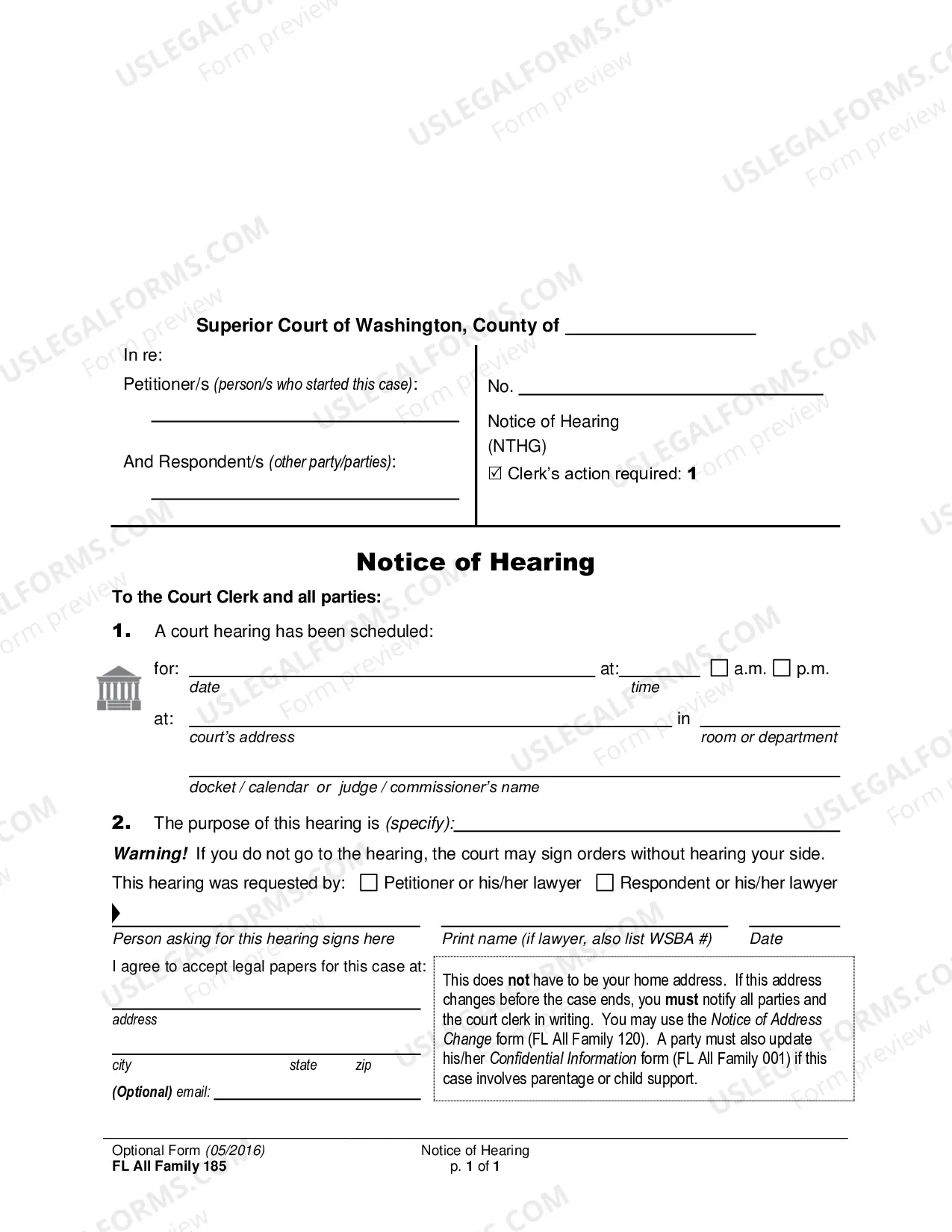
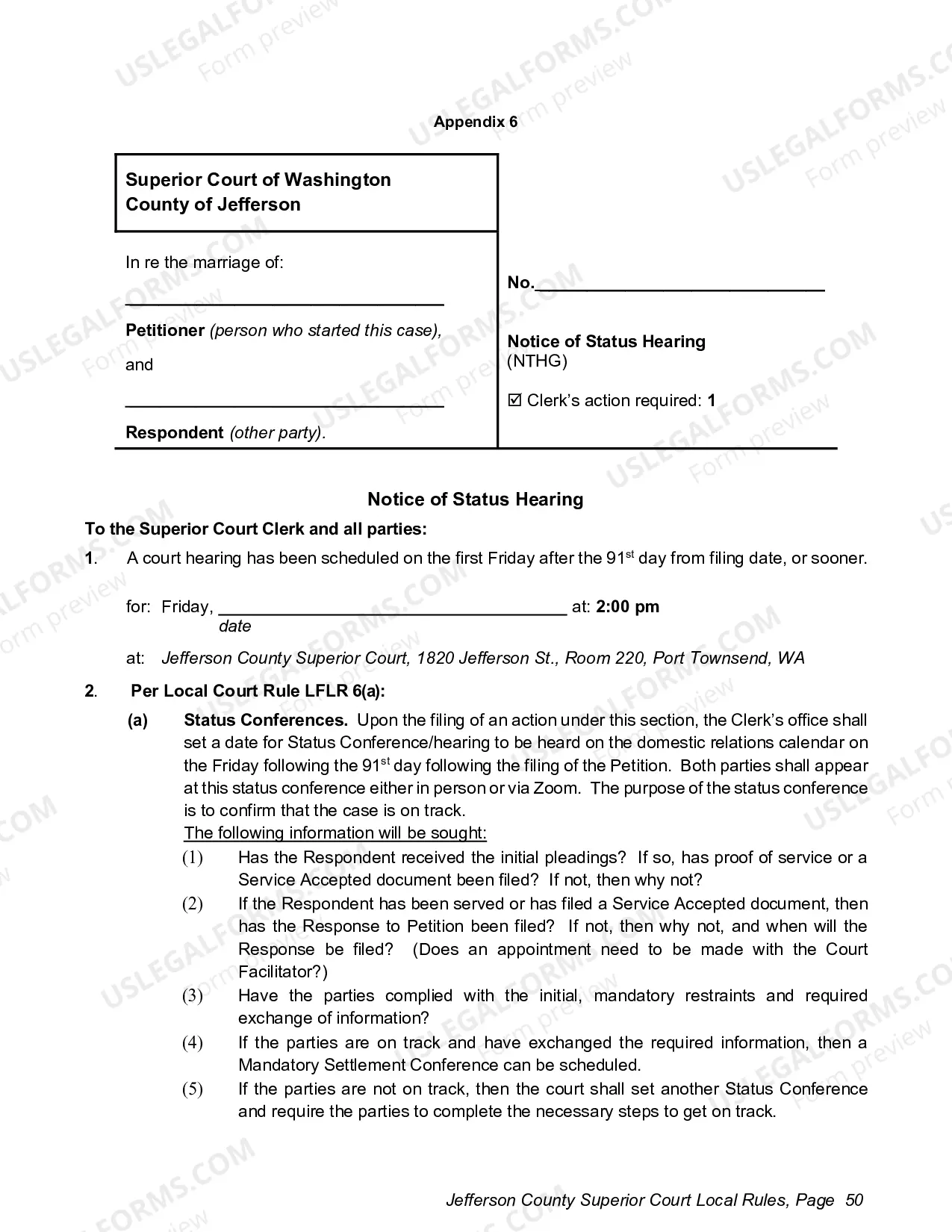
This form should be used when a petitioner wishes to obtain a decree of dissolution for a registered domestic partnership in Washington without a final hearing. It is appropriate when at least 90 days have passed since the petition was filed, and all necessary conditions regarding service and separation have been met.
Intended users of this form
- Individuals who are registered domestic partners in Washington State seeking dissolution.
- Petitioners who have met the filing and service requirements.
- Anyone who wishes to resolve their domestic partnership without the need for a hearing.
How to prepare this document
- Identify the petitioner by entering their details at the top of the form.
- Fill in the relevant dates concerning the filing of the petition and service of documents.
- Indicate the registration date of the domestic partnership and the date of separation.
- Affirm the status regarding pregnancy and the presence of dependent children.
- Sign and date the form, ensuring it is completed accurately before submission.
Notarization guidance
This form does not typically require notarization to be legally valid. However, some jurisdictions or document types may still require it. US Legal Forms provides secure online notarization powered by Notarize, available 24/7 for added convenience.
Get your form ready online
Our built-in tools help you complete, sign, share, and store your documents in one place.
Make edits, fill in missing information, and update formatting in US Legal Forms—just like you would in MS Word.
Download a copy, print it, send it by email, or mail it via USPS—whatever works best for your next step.
Sign and collect signatures with our SignNow integration. Send to multiple recipients, set reminders, and more. Go Premium to unlock E-Sign.
If this form requires notarization, complete it online through a secure video call—no need to meet a notary in person or wait for an appointment.
We protect your documents and personal data by following strict security and privacy standards.

Make edits, fill in missing information, and update formatting in US Legal Forms—just like you would in MS Word.

Download a copy, print it, send it by email, or mail it via USPS—whatever works best for your next step.

Sign and collect signatures with our SignNow integration. Send to multiple recipients, set reminders, and more. Go Premium to unlock E-Sign.

If this form requires notarization, complete it online through a secure video call—no need to meet a notary in person or wait for an appointment.

We protect your documents and personal data by following strict security and privacy standards.
Common mistakes
- Failing to meet the 90-day waiting period before requesting a decree.
- Omitting necessary signatures or dates.
- Providing incomplete or inaccurate information about dependent children.
- Not properly documenting the division of property and debts.
Why complete this form online
- Convenience of accessing and downloading the form from anywhere.
- Ease of filling out the form with editable fields.
- Reliable access to professionally drafted legal documents.
- Time-saving as forms can be completed at your pace.
Looking for another form?
Form popularity
FAQ
A motion or order to show cause can be used for many reasons, like: Making one side do what he or she agreed to do; Asking for more time to do what you agreed to do; Fixing mistakes in a Stipulation; Explaining why you missed your court date or didn't file an Answer; Changing the terms of a court order;
Darling, Bellevue Divorce Lawyer. This article explains how to file a motion in a Washington State divorce or family law case. A motion is how you ask the court to make a small decision (as opposed to a petition, which is how you ask the court to make a large decision).
1. What is a Motion? A motion is the method used to speak to the judge about a matter in your case. For example, a motion may be brought to ask the court to set aside a default or vacate a default judgment, or it may be brought to ask the court to order a judgment to be paid in installments.
File a declaration with the court asking for a continuance. It should say why you need the continuance. Explain how you can better present evidence in your case if you have more time. Explain some of what you want to tell the court, in case you do not get a continuance.
Show cause orders instruct parties to ?show cause? why the court should decide in their favor on a motion. More accurately, a show cause order instructs a party to appear at a hearing and show cause why the court should not grant a motion another party filed.
On a motion for a new trial in an action tried without a jury, the court may open the judgment if one has been entered, take additional testimony, amend findings of fact and conclusions of law or make new findings and conclusions, and direct the entry of a new judgment.
If the respondent doesn't submit the document by the deadline, the petitioner can file a motion for default. At the hearing on the motion, the court will enter a default order prohibiting the respondent from doing anything else in the divorce case ? no presenting evidence, witnesses, or arguments.
You typically need to respond in writing a week before the hearing. The exact timeframe varies depending the kind of motion and the county's local rules.