Louisiana Codicil to Will Form for Amending Your Will - Testamentary Pet Trust
What this document covers
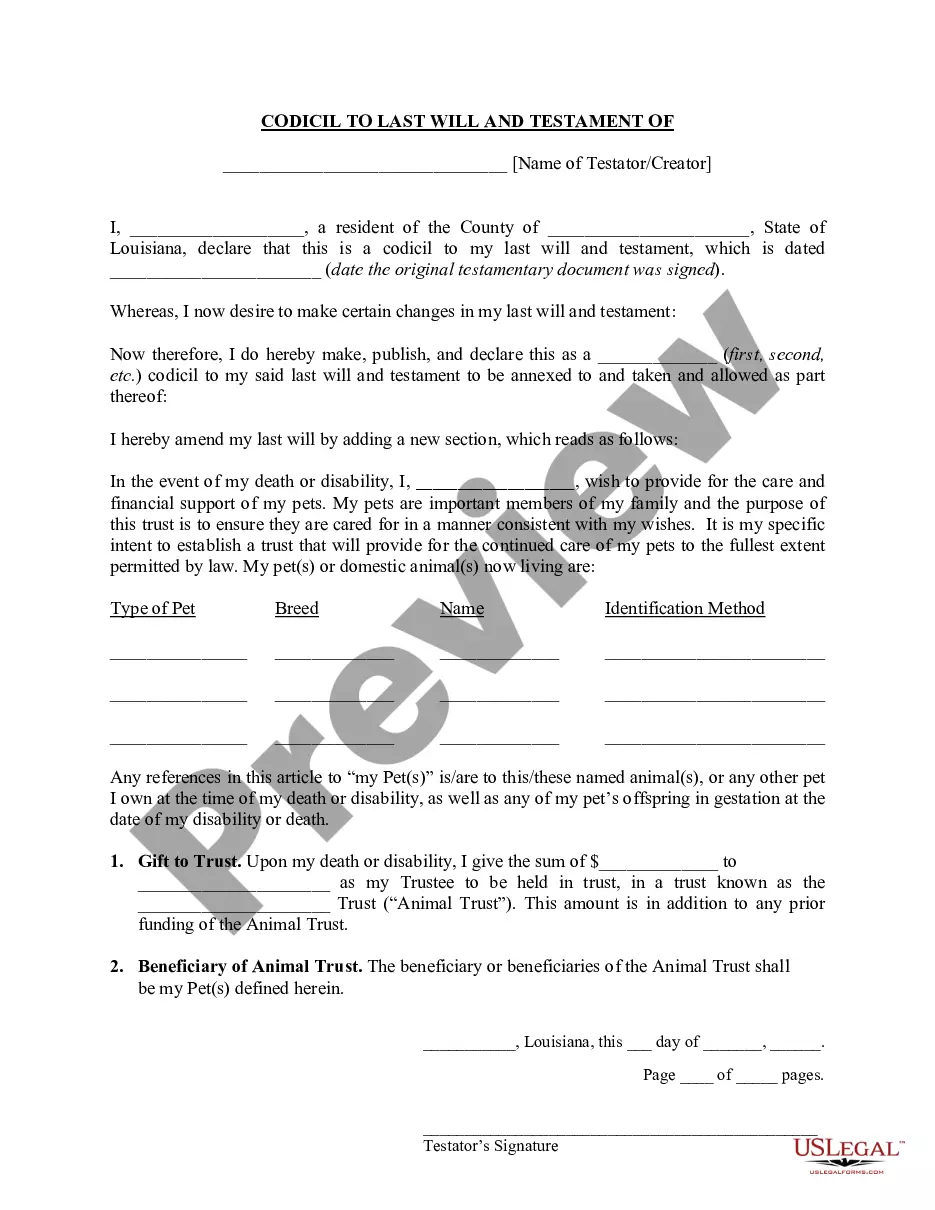
The Codicil to Will Form for Amending Your Will - Testamentary Pet Trust is a legal document that allows you to modify your last will and testament specifically to create a trust for the care of your pets. This form provides clear instructions on how to ensure your pets are cared for according to your wishes after your death or disability. Unlike a standard will, this codicil focuses on establishing a dedicated financial arrangement to support your pets, ensuring they remain a part of your family, even in your absence.
Form components explained
- Identification of the Testator/Creator and the original will date.
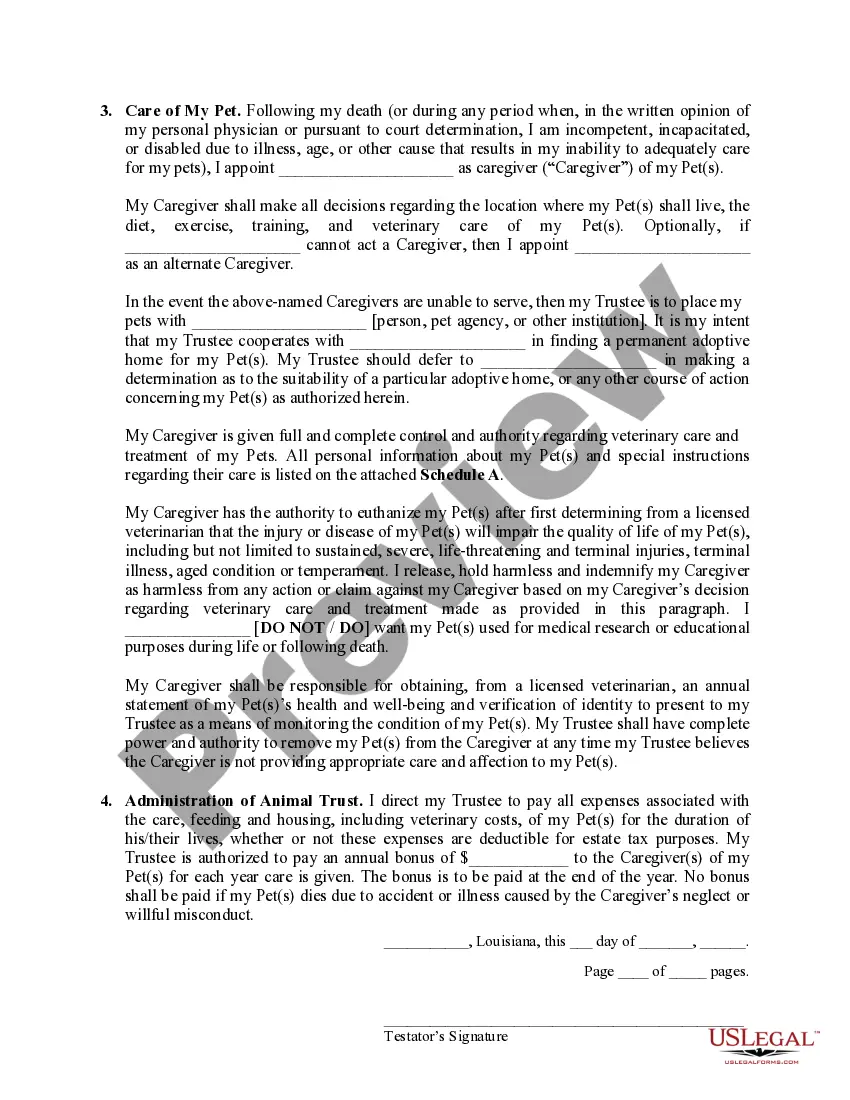
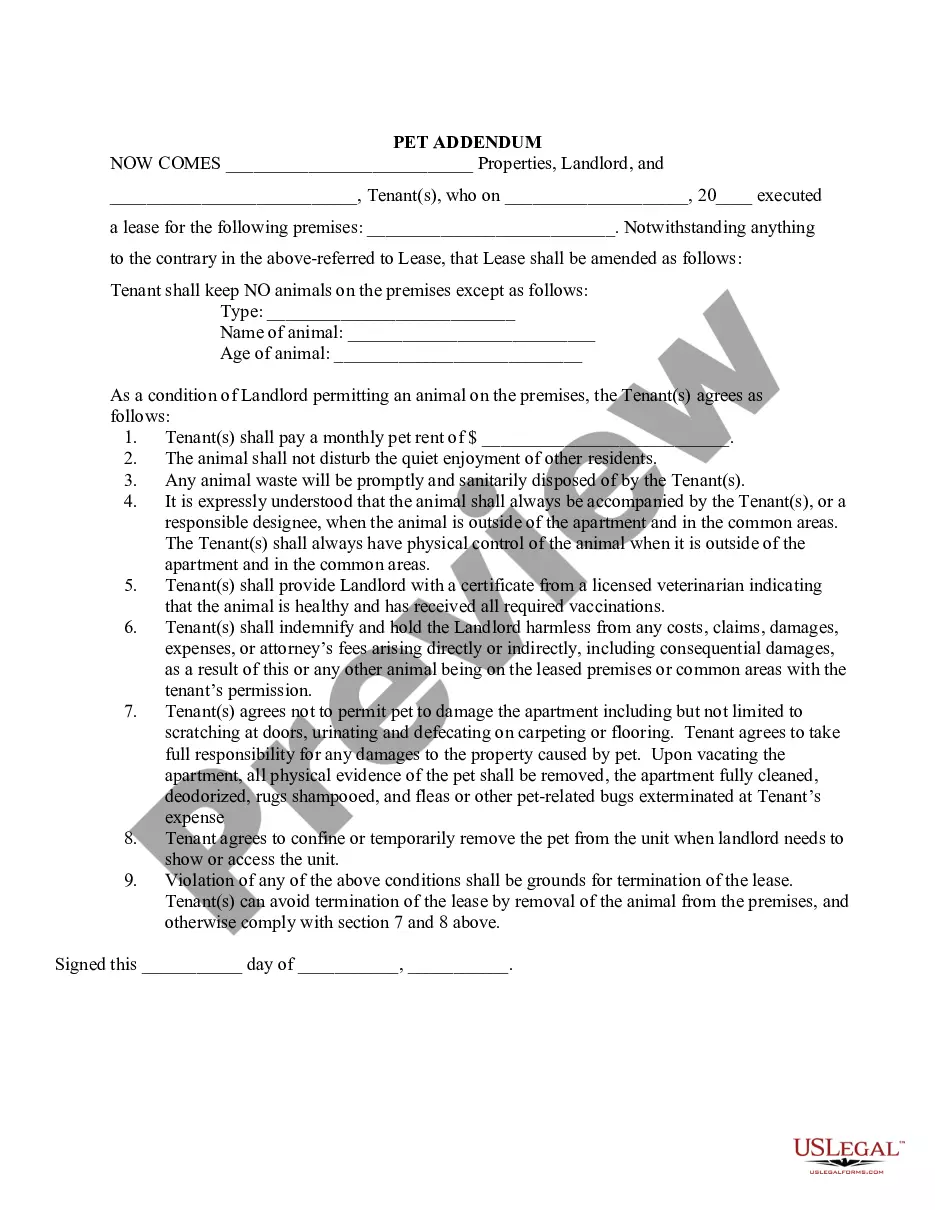
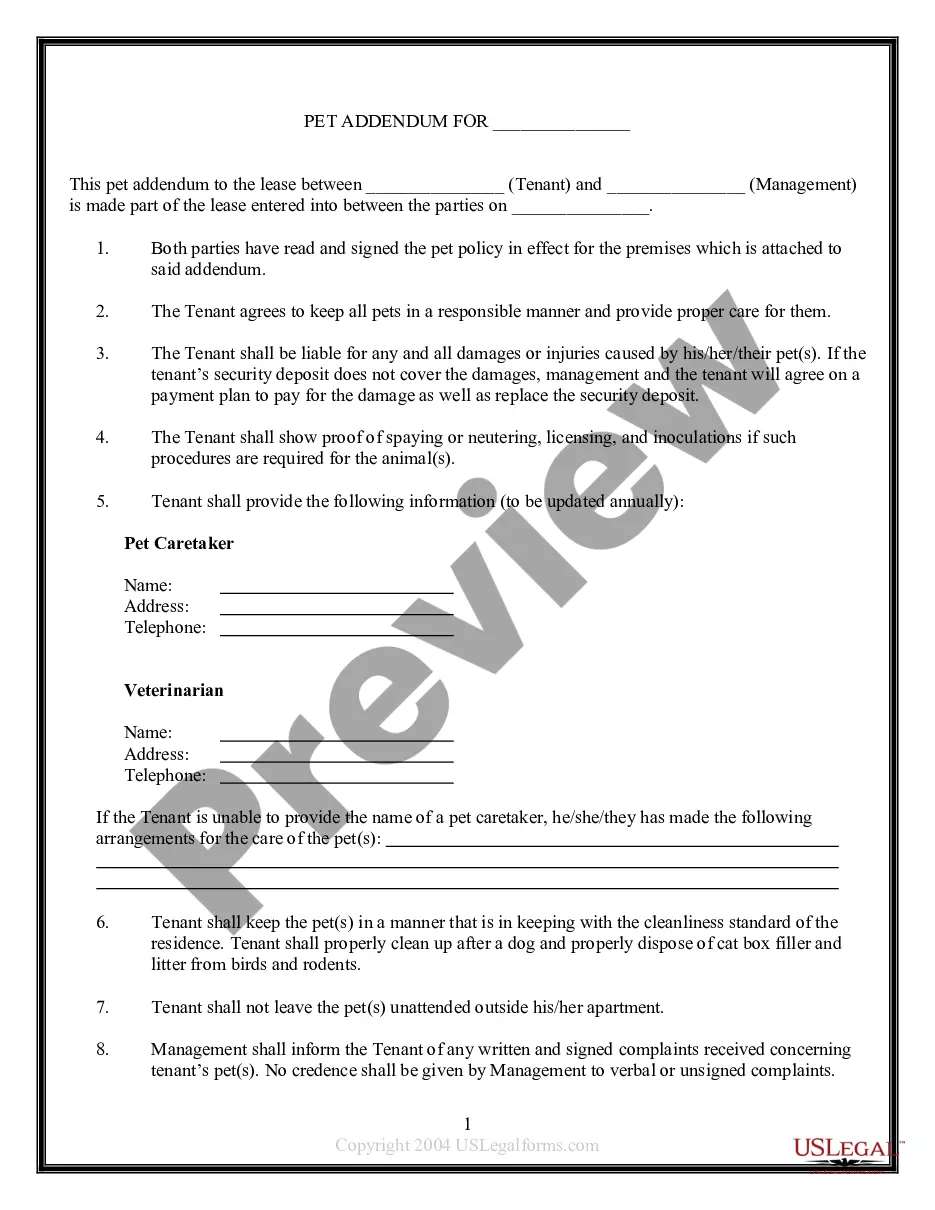
- Detailed provision for the care of your pets, including a description of each pet.
- Instructions for appointing a caregiver and alternate caregiver for your pets.
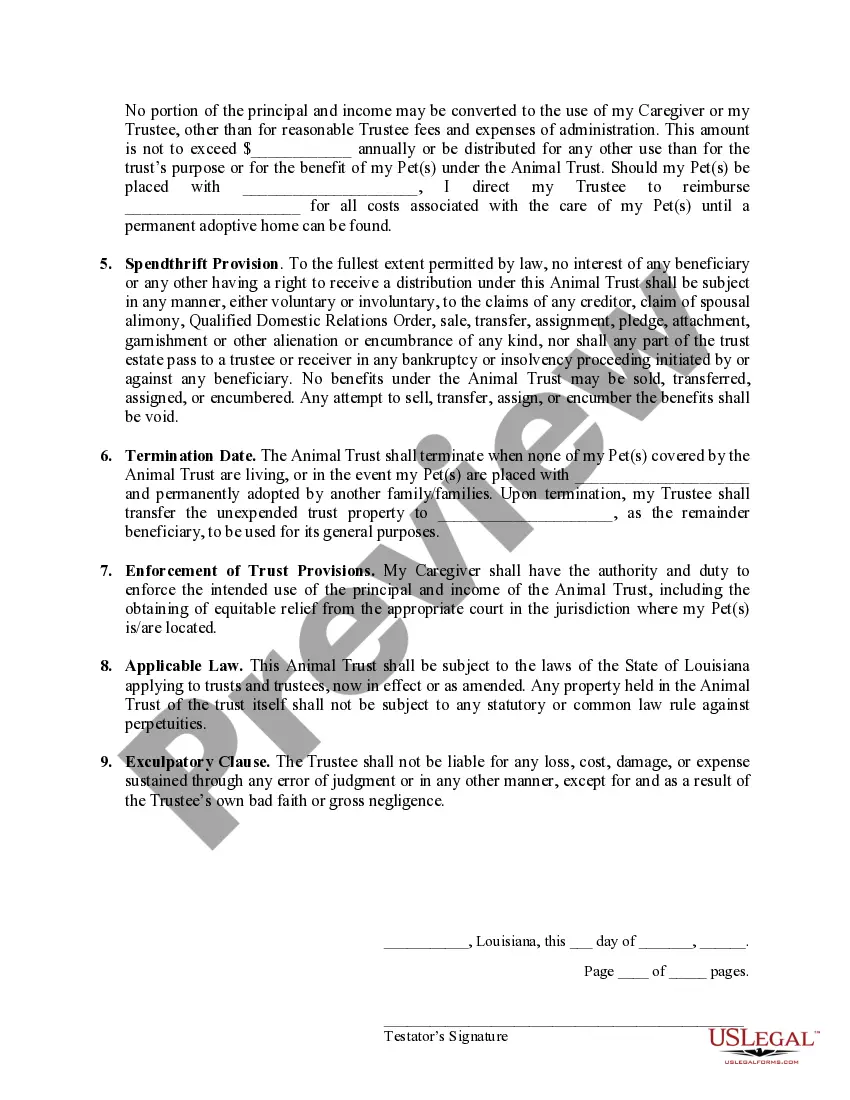
- Establishment of a trust fund for your pets with clear monetary gifts and spending guidelines.
- Legal safeguards preventing creditors from accessing trust assets.
- Requirements for the termination of the trust and distribution of remaining funds.



When this form is needed
This form is essential for pet owners who want to ensure their beloved pets are cared for after their passing or incapacitation. Use this codicil if you wish to amend your will to include provisions that financially support your pets and designate caregivers who will make decisions regarding their care in accordance with your instructions.
Who should use this form
- Pet owners who already have a will but want to add a provision for the care of their pets.
- Individuals looking to establish a clear plan for their petsâ needs, ensuring they receive proper care.
- Anyone who wants to leave financial support specifically earmarked for their pets.
Instructions for completing this form
- Begin by entering your name and the date of your original will.
- List your pets, including their type, breed, name, and identification method.
- Specify the amount of money to be placed in the trust and the name of your chosen trustee.
- Designate a caregiver and an alternate caregiver for your pets.
- Include any conditions or instructions regarding veterinary care and other specific needs.
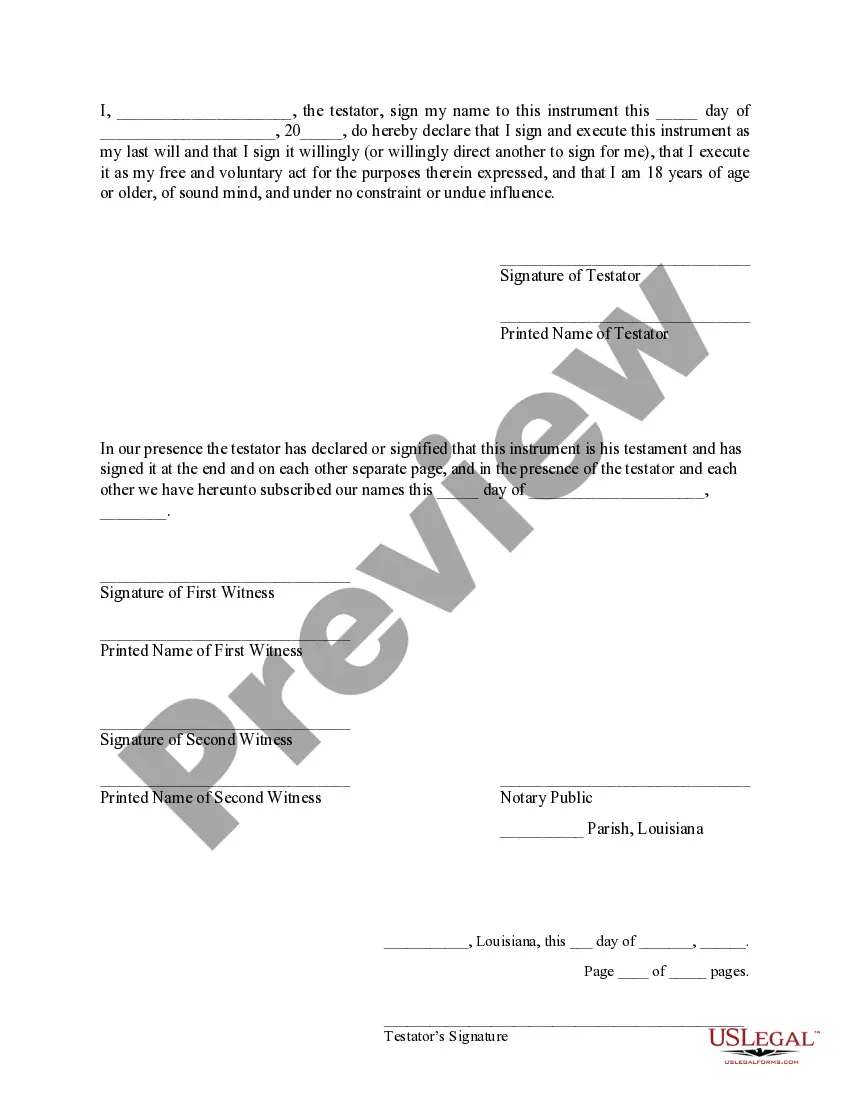
- Ensure to sign the codicil in the presence of witnesses as required by Louisiana law.
Notarization requirements for this form
This form does not typically require notarization unless specified by local law. However, it is essential to have the document signed in the presence of witnesses to ensure its legal enforceability, particularly in Louisiana.
Get your form ready online
Our built-in tools help you complete, sign, share, and store your documents in one place.
Make edits, fill in missing information, and update formatting in US Legal Forms—just like you would in MS Word.
Download a copy, print it, send it by email, or mail it via USPS—whatever works best for your next step.
Sign and collect signatures with our SignNow integration. Send to multiple recipients, set reminders, and more. Go Premium to unlock E-Sign.
If this form requires notarization, complete it online through a secure video call—no need to meet a notary in person or wait for an appointment.
We protect your documents and personal data by following strict security and privacy standards.

Make edits, fill in missing information, and update formatting in US Legal Forms—just like you would in MS Word.

Download a copy, print it, send it by email, or mail it via USPS—whatever works best for your next step.

Sign and collect signatures with our SignNow integration. Send to multiple recipients, set reminders, and more. Go Premium to unlock E-Sign.

If this form requires notarization, complete it online through a secure video call—no need to meet a notary in person or wait for an appointment.

We protect your documents and personal data by following strict security and privacy standards.
Common mistakes
- Failing to update the original will with the codicil properly.
- Not accurately listing all pets to be covered by the trust.
- Neglecting to appoint an alternate caregiver in case the primary caregiver cannot fulfill their duties.
- Omitting details about the care and financial support that should be provided for the pets.
Benefits of using this form online
- Immediate access to a professionally drafted codicil, ensuring accuracy and legal compliance.
- Easy editing options that allow you to customize the document to your specific circumstances.
- Convenience of downloading and printing the document from home, saving time and resources.
Looking for another form?






Form popularity
FAQ
Of course you can, however, "Codicil" is an amendment to a will. Amending a trust called "Amendment" to the trust, even if it is just amending a trustee's name. It needs to be notarized and some specific language to be sufficient.
You cannot amend your will after it's been signed and witnessed. The only way you can change a will is by making an official alteration called a codicil. You must sign a codicil and get it witnessed in the same way as witnessing a will. There's no limit on how many codicils you can add to a will.
Just about any writing will suffice to make a valid Trust amendment. Having the writing typed is not legally required. That's really the point of Trust amendments, to allow a Settlor to express his or her intent as easily as possible. As long as the Trust terms are followed, any writing will do.
You can change your living trust, usually without incurring lawyer bills.Because you and your spouse made the trust together, you should both sign the amendment, and when you sign it, get your signatures notarized, just like the original. Another way to go is to create a "restatement" of your trust.
The Codicil cross-refers to the original Will and gives details of the amendments or additions you want to make to it. The Codicil must then be executed in the same way as for the Will i.e. signed with two witnesses (although the witnesses do not need to be the same people as the witnesses on the Will).
You can either make a codicil to your existing will or make a new will. Both require your signature and the signatures of two witnesses.You can have a lawyer write your codicil for you, or you can make one yourself. However, in most cases it makes more sense just to make a new will.
Identify the section and content you want to change. The first step in amending your will is to review it. Type up the changes. Take the time to type up the codicil. Sign and date the codicil. Store your codicil in a safe place.