Washington Notice to Terminate Tenancy
Overview of this form
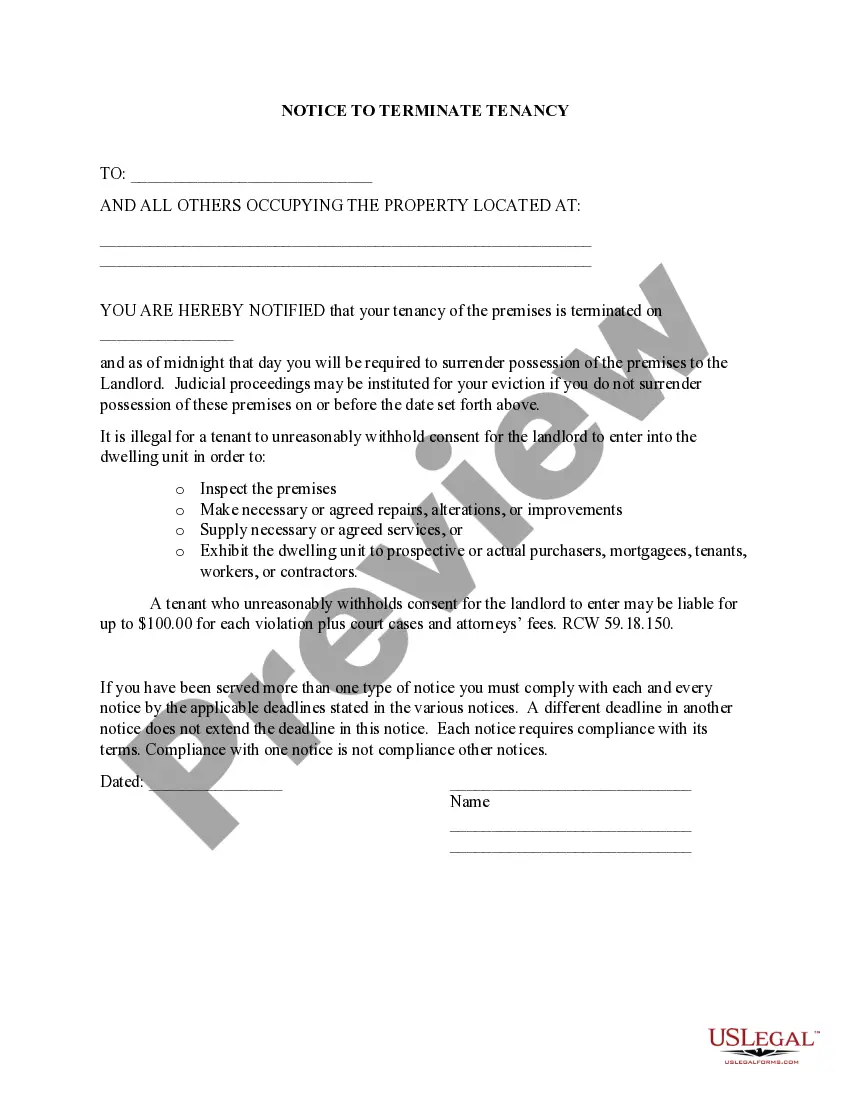
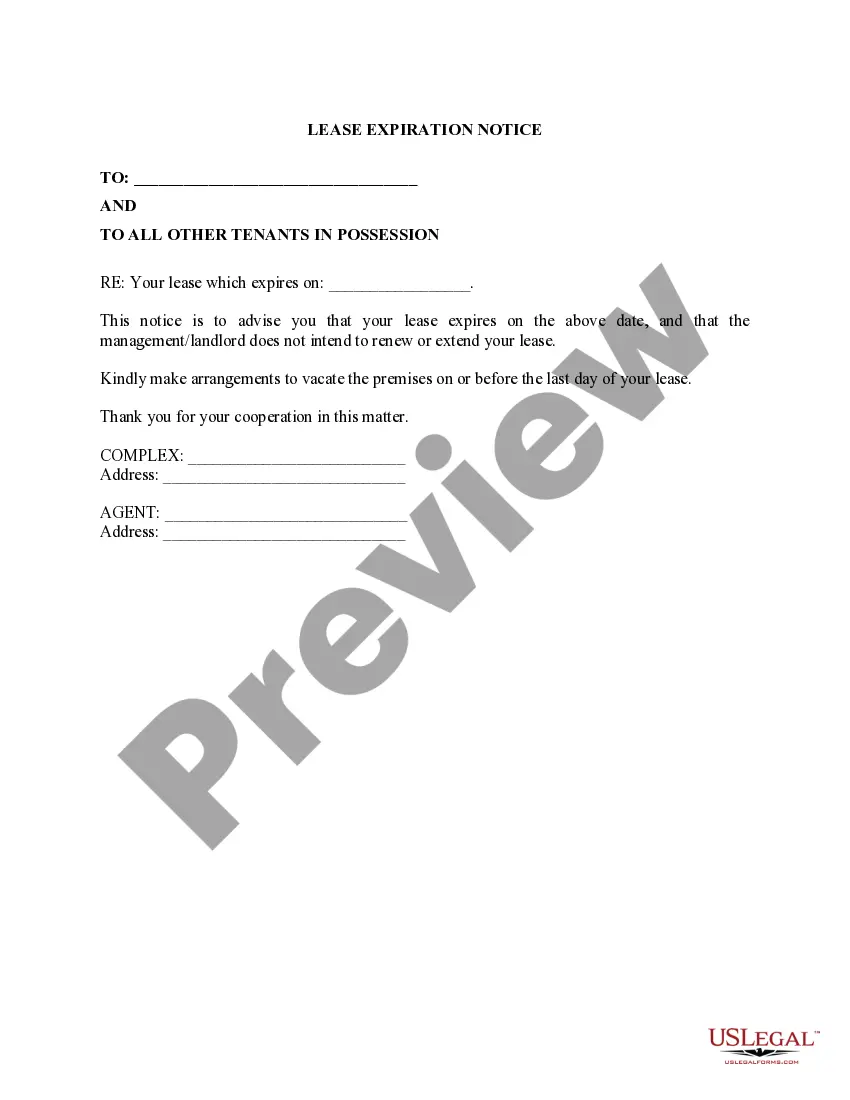
The Notice to Terminate Tenancy is a legal document used by landlords to formally notify tenants that their lease will end on a specified date. This notice serves multiple purposes: it informs tenants to vacate the property, handle their personal belongings, and return keys while also outlining the landlordâs rights to enter the premises for specific reasons. Unlike other eviction notices, this form emphasizes the deadline for relinquishing possession of the property.
Key components of this form
- Parties involved: Names of the landlord and tenant(s).
- Property address: Specific location of the rental agreement.
- Termination date: Clearly states when the tenancy ends.
- Entry rights: Outlines conditions under which the landlord may enter the property.
- Potential penalties: Describes consequences of unreasonably withholding consent for entry.
- Signatures: Requires signatures from the landlord and date of issuance.

Situations where this form applies
This form should be used when a landlord intends to end a tenant's lease agreement for reasons such as the expiration of the lease term, breach of lease terms, or a decision to terminate occupancy. It is essential to provide this notice in advance of the termination date to comply with local laws and ensure the tenant is adequately informed.
Who this form is for
This form is intended for:
- Landlords or property managers who wish to terminate a tenancy.
- Real estate professionals handling rental agreements.
- Individuals renting properties who need to formally notify occupants of termination.
Steps to complete this form
- Identify the parties: Fill in the names of the landlord and tenant(s).
- Specify the property: Enter the complete address of the rental property.
- Enter the termination date: Clearly indicate the last day of the tenancy.
- Detail landlordâs entry rights: Include the specific reasons for landlord access.
- Sign and date: The landlord should sign and include the date for legal validity.
Does this document require notarization?
This form does not typically require notarization unless specified by local law. However, confirming any local regulations regarding notarization requirements is advised.
Get your form ready online
Our built-in tools help you complete, sign, share, and store your documents in one place.
Make edits, fill in missing information, and update formatting in US Legal Forms—just like you would in MS Word.
Download a copy, print it, send it by email, or mail it via USPS—whatever works best for your next step.
Sign and collect signatures with our SignNow integration. Send to multiple recipients, set reminders, and more. Go Premium to unlock E-Sign.
If this form requires notarization, complete it online through a secure video call—no need to meet a notary in person or wait for an appointment.
We protect your documents and personal data by following strict security and privacy standards.

Make edits, fill in missing information, and update formatting in US Legal Forms—just like you would in MS Word.

Download a copy, print it, send it by email, or mail it via USPS—whatever works best for your next step.

Sign and collect signatures with our SignNow integration. Send to multiple recipients, set reminders, and more. Go Premium to unlock E-Sign.

If this form requires notarization, complete it online through a secure video call—no need to meet a notary in person or wait for an appointment.

We protect your documents and personal data by following strict security and privacy standards.
Common mistakes to avoid
- Failing to specify the correct termination date.
- Not including all tenant names when there are multiple occupants.
- Omitting the property address details.
- Neglecting to sign and date the notice.
- Assuming verbal notice is sufficient without providing this written form.
Why use this form online
- Convenience: Easily accessible and downloadable from any device.
- Editability: Customize the form to fit your specific rental situation.
- Reliability: Forms drafted by licensed attorneys ensure legal compliance and accuracy.
Looking for another form?
Form popularity
FAQ
What is a 20-Day Notice? It is a warning from your landlord that they want you to move out. Tenants will usually get this notice on the 10th of the month before your rental agreement ends (expires).
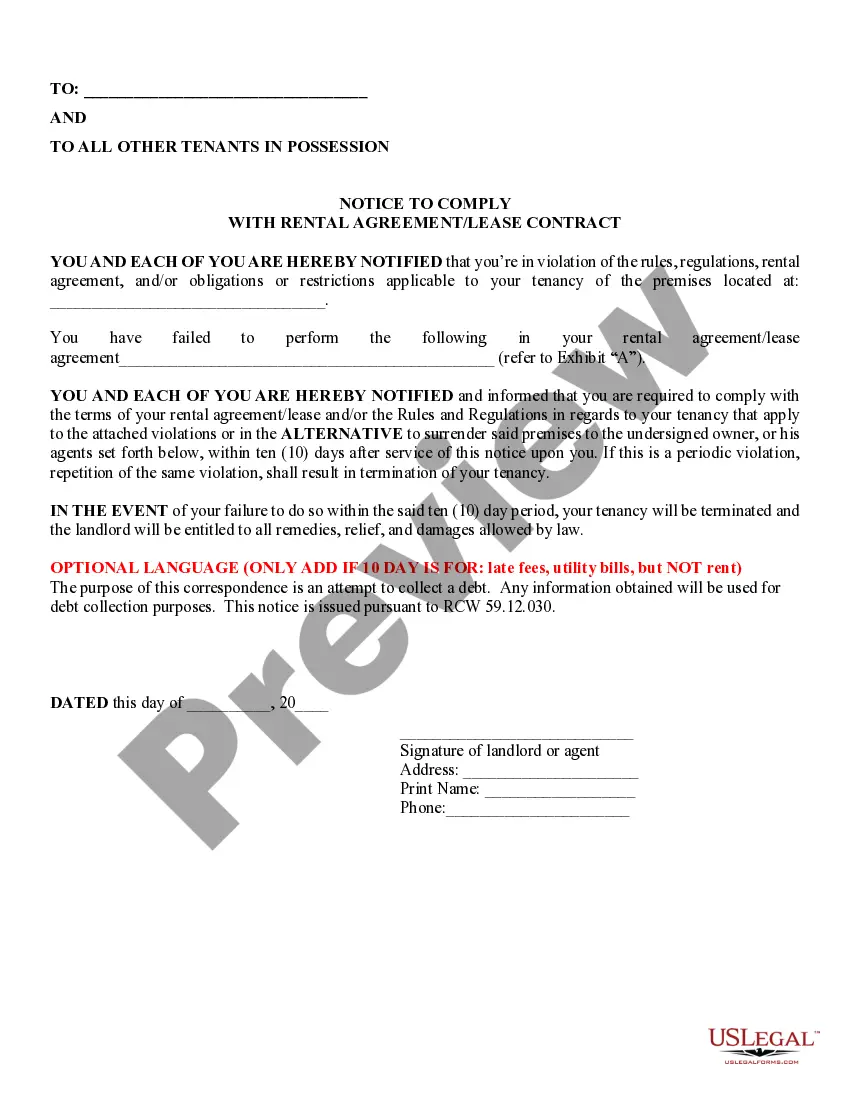
A 10-day notice to comply or vacate is appropriate for any breach of the rental agreement. It can also be used to collect late fees or notice fees.
When a tenant fails to pay rent when the same is due, and the landlord notifies him or her to pay said rent or quit the premises within ten days, unless the rent is paid within said ten days, the tenancy shall be forfeited at the end of said ten days.
What is a Notice to Comply or Vacate? Under Washington state law, a landlord must provide a tenant with a written ten day notice to comply or vacate before starting a court proceeding for eviction based upon a tenant not following the rental agreement, lease, or other rules and regulations applying to the tenancy.
What is a 3-Day Notice to Quit? It is a written demand from your landlord. A landlord can give you this type of notice for "creating a waste or nuisance." A landlord will give you this notice if the landlord believes you are: Severely damaging or destroying the property or letting someone else do this.
The best protection for tenants breaking their leases is to get something in writing and signed by the landlord agreeing upon a mutual termination of the lease that releases the tenant from any further financial obligation and guarantees a return of the deposit ing to the terms set out in the lease.
1) Give your landlord at least 20 days written notice. The law requires that month-to-month tenants give landlords at least 20 days written notice before vacating their units.
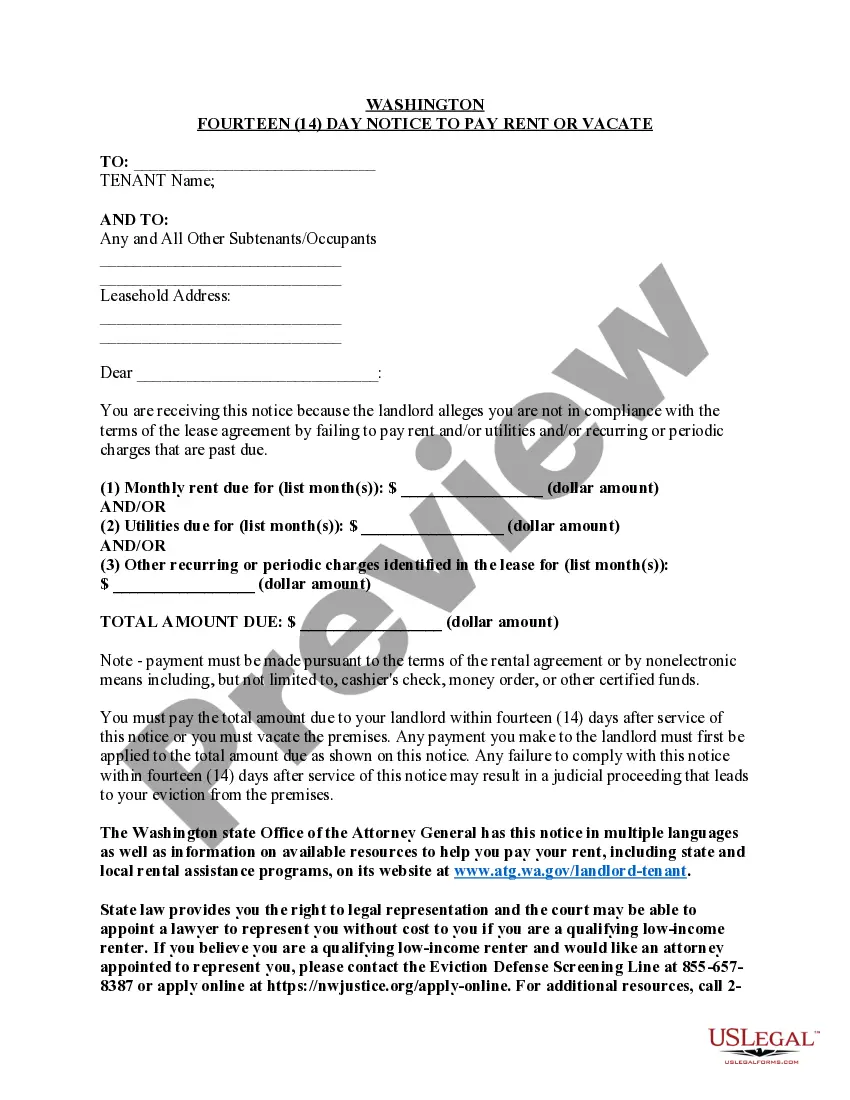
FOURTEEN-DAY NOTICE TO PAY RENT OR VACATE THE PREMISES. You are receiving this notice because the landlord alleges you are not in compliance with the terms of the lease agreement by failing to pay rent and/or utilities and/or recurring or periodic charges that are past due.