Washington Marital Domestic Separation and Property Settlement Agreement Minor Children no Joint Property or Debts where Divorce Action Filed
Understanding this form
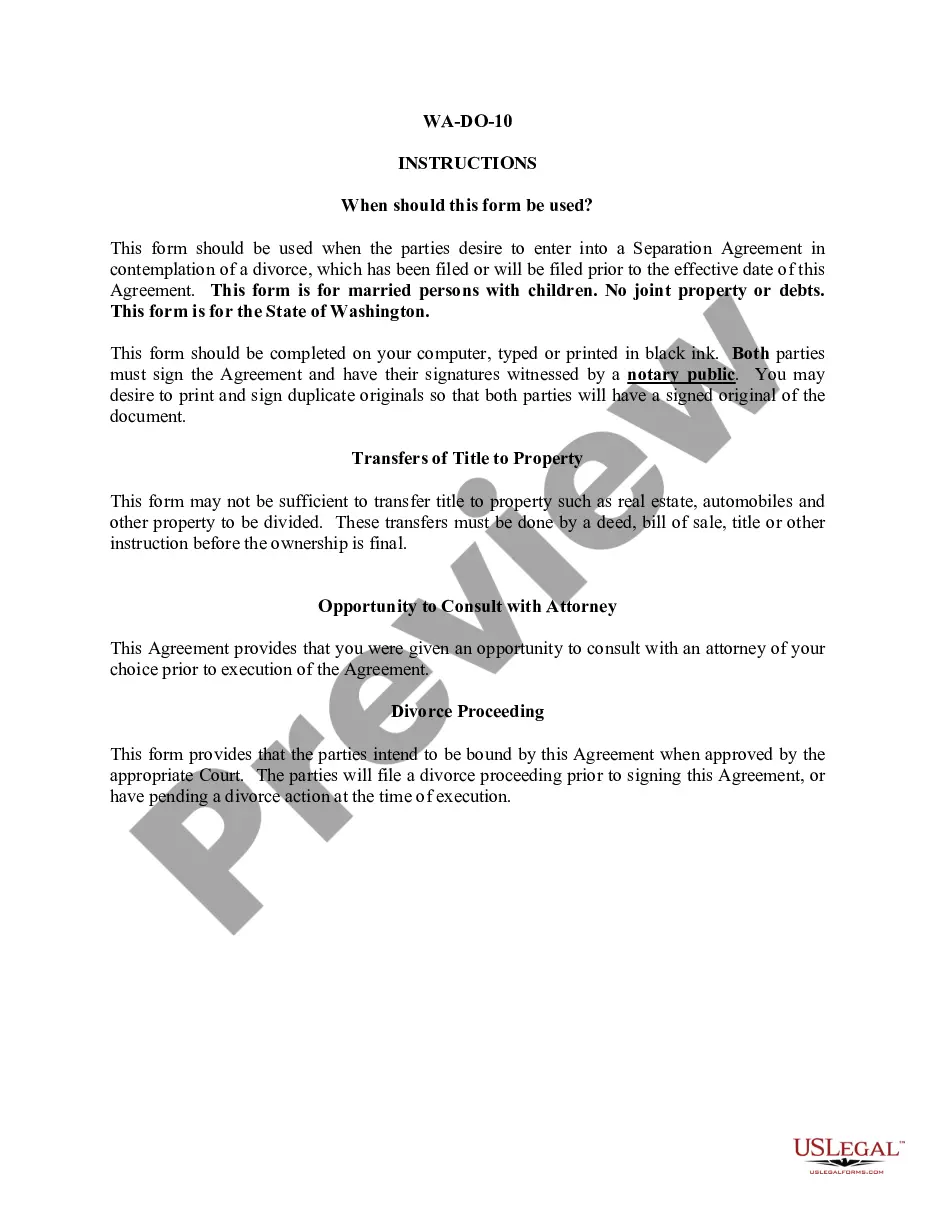
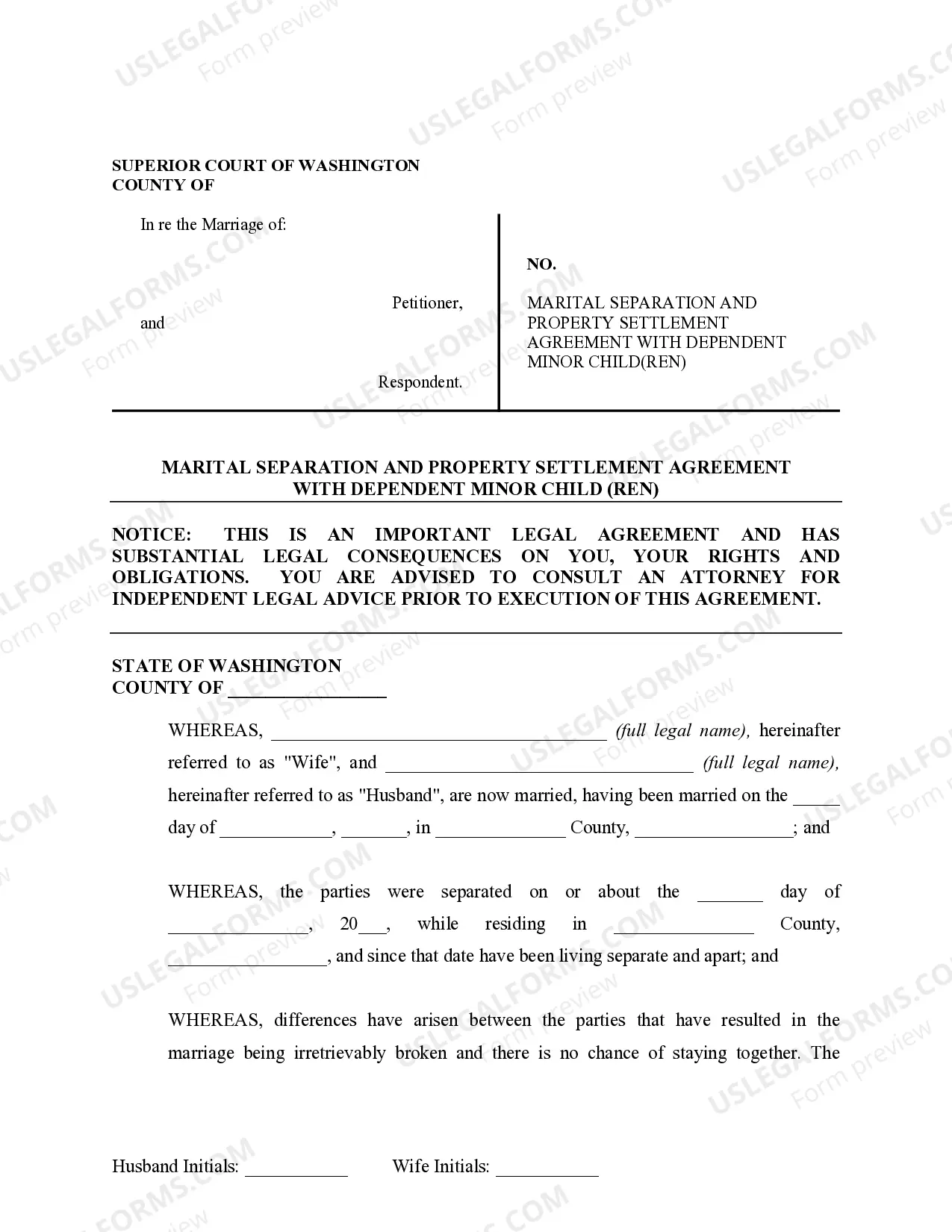
The Marital Domestic Separation and Property Settlement Agreement is a legal document designed for couples with minor children who wish to formalize their separation while going through a divorce. This agreement is distinct because it is specifically for couples without joint property or debts, helping them address issues such as child custody, visitation rights, child support, and potential alimony. This document provides an organized approach to ensure both parties understand their rights and obligations during the divorce process.
What’s included in this form
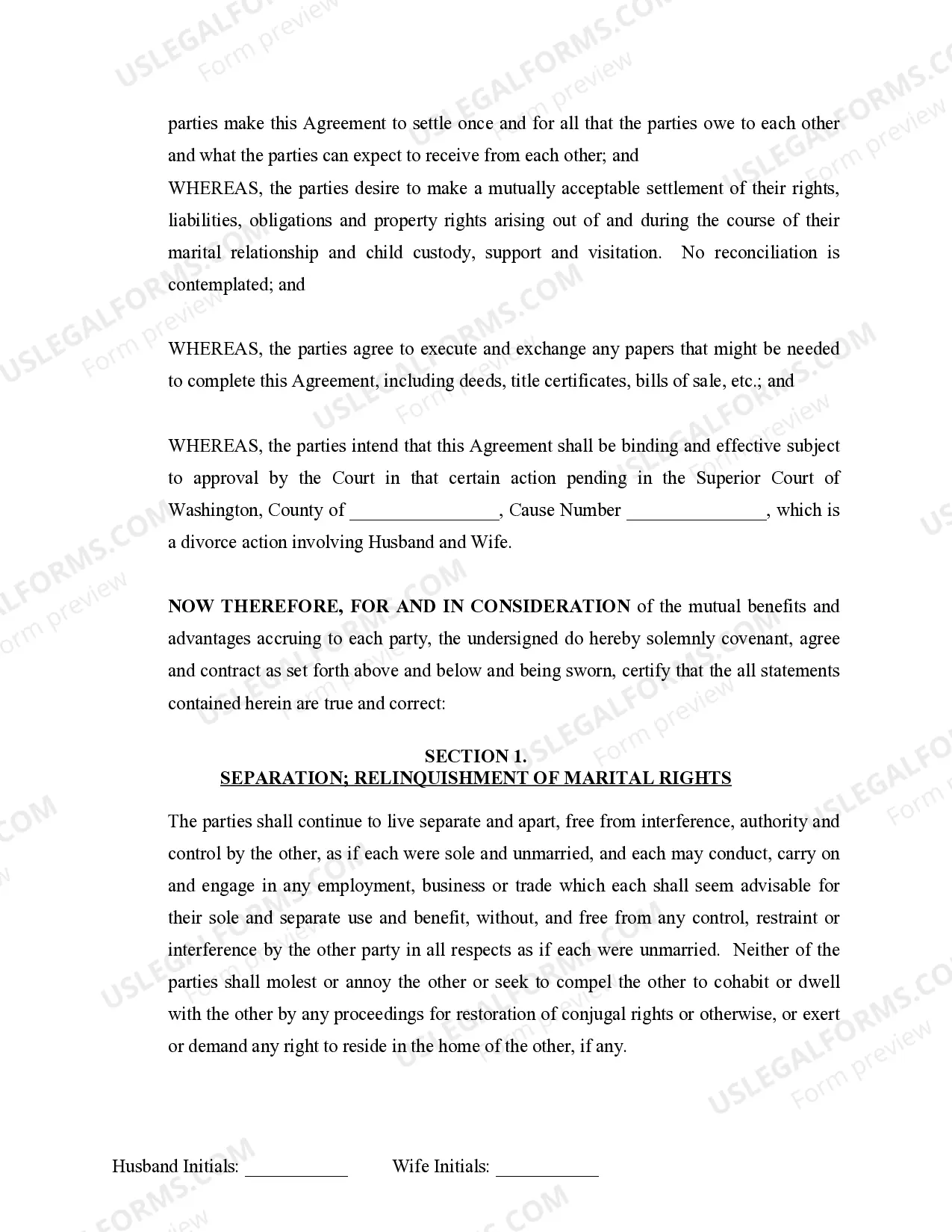
- Identification of the parties involved, including full legal names and details of the marriage.
- Sections regarding the separation and relinquishment of marital rights.
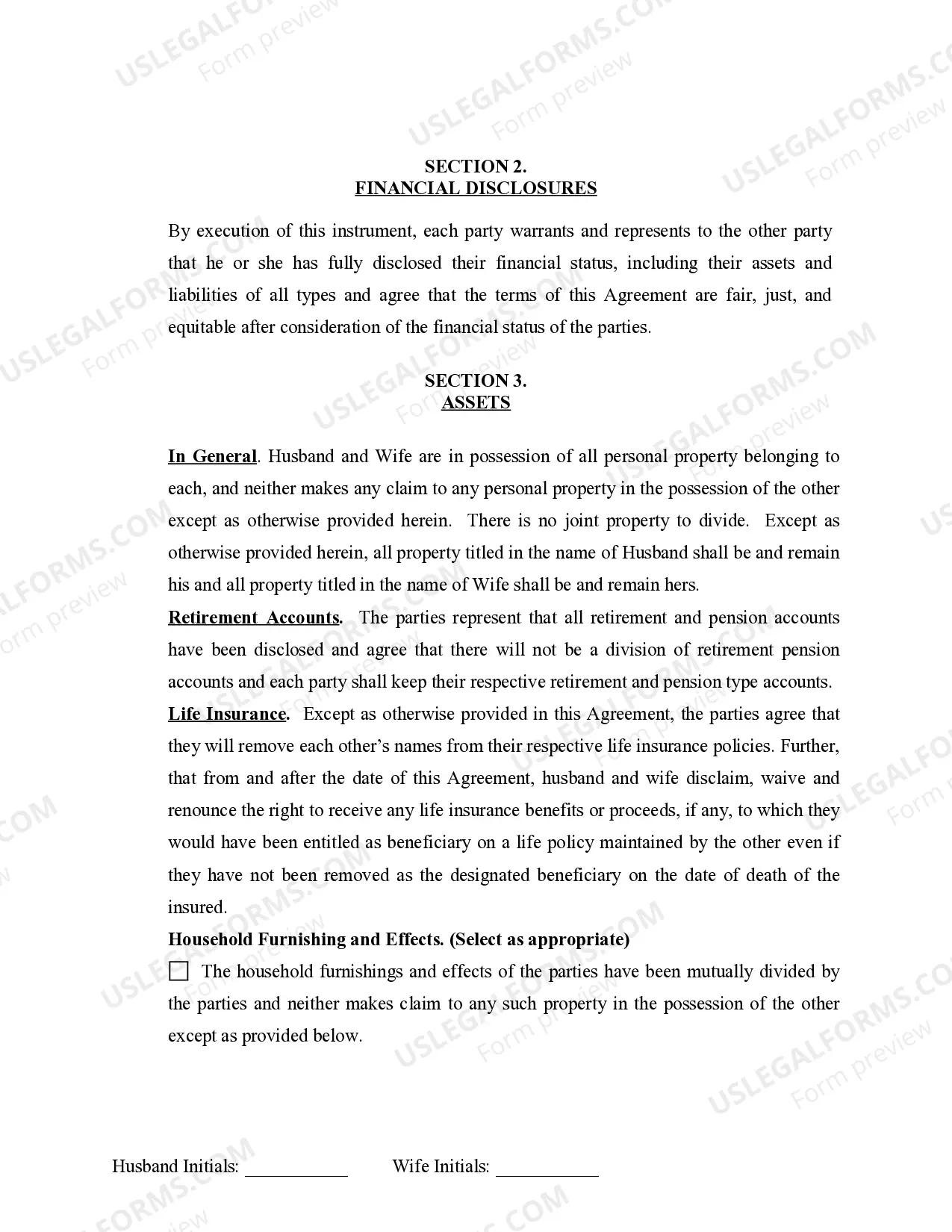
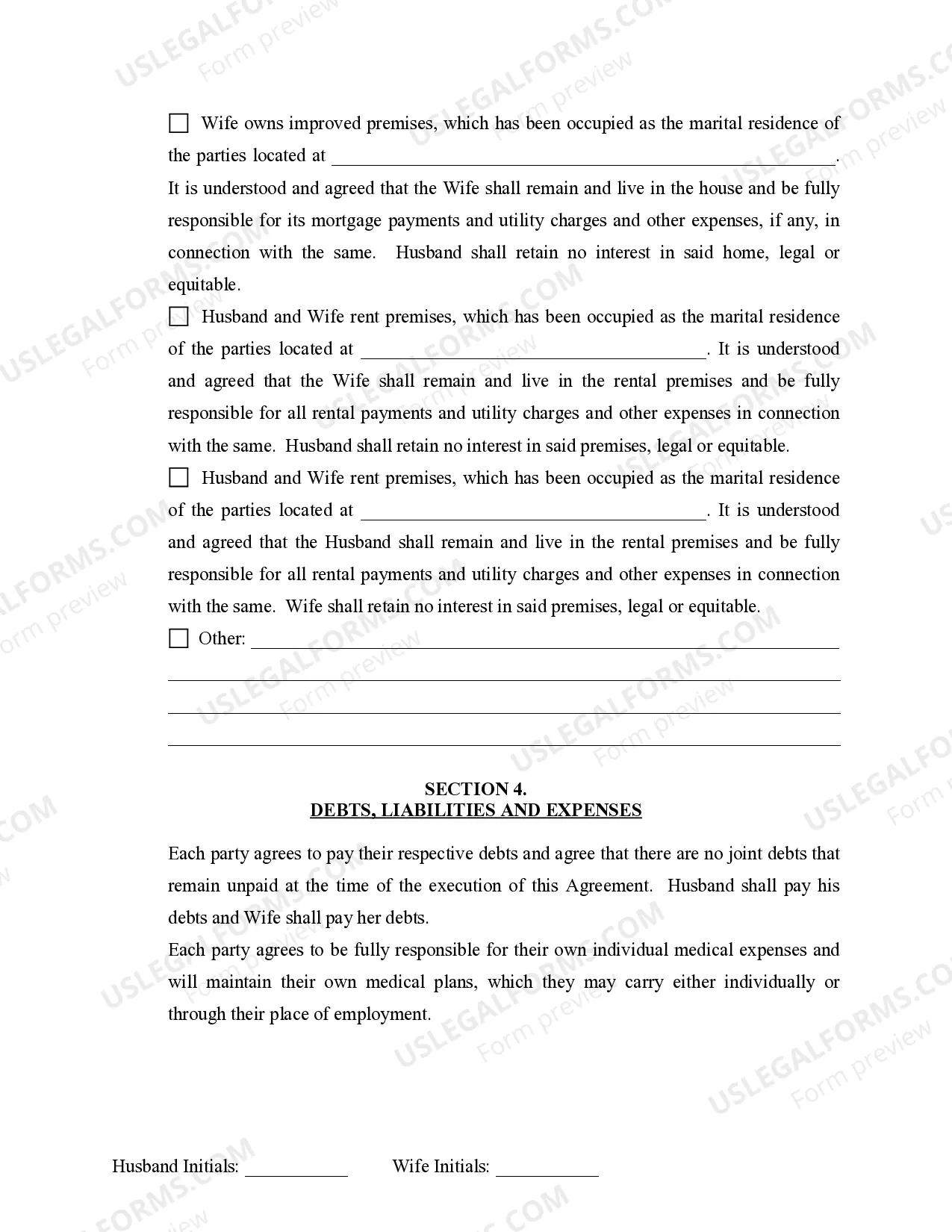
- Financial disclosures from both parties, ensuring transparency of assets and liabilities.
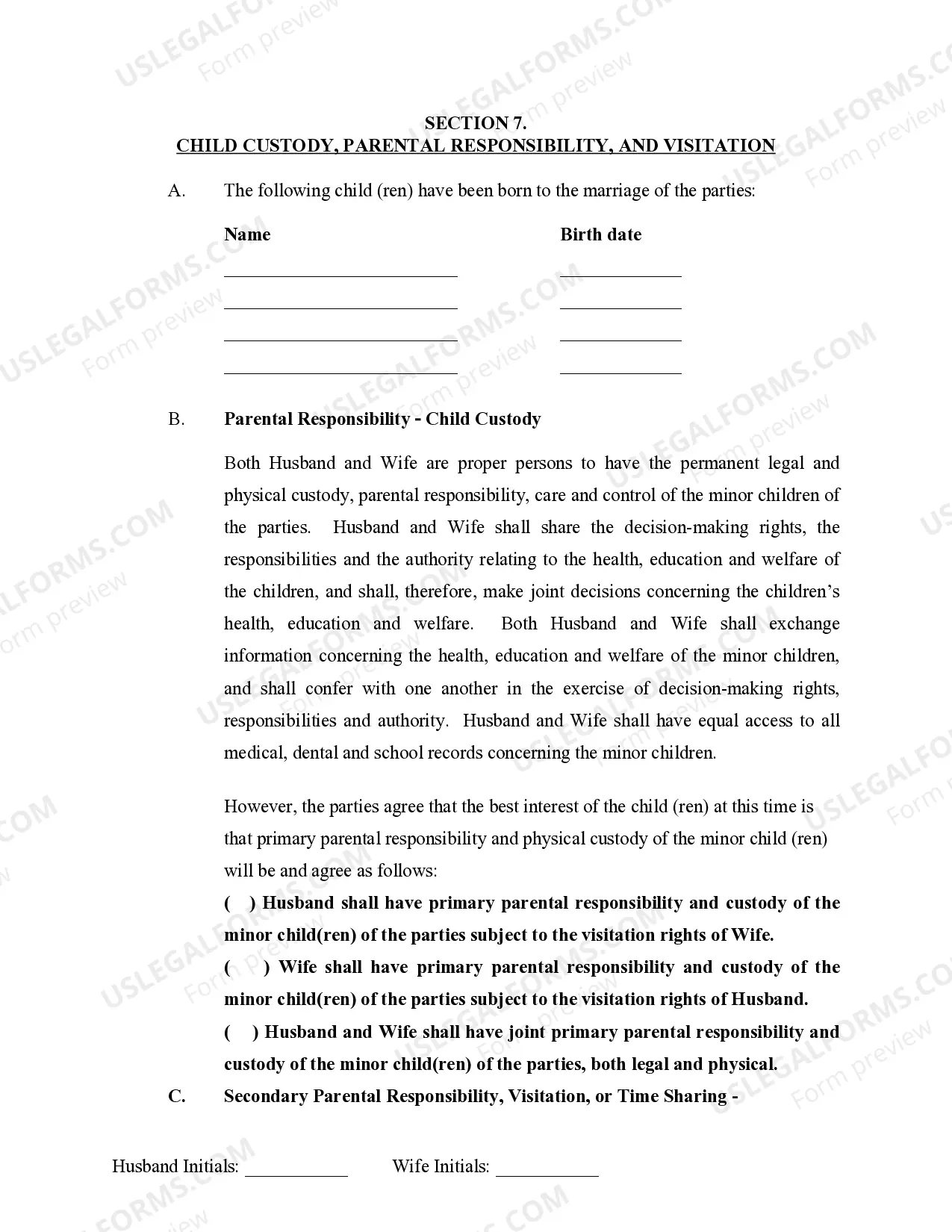
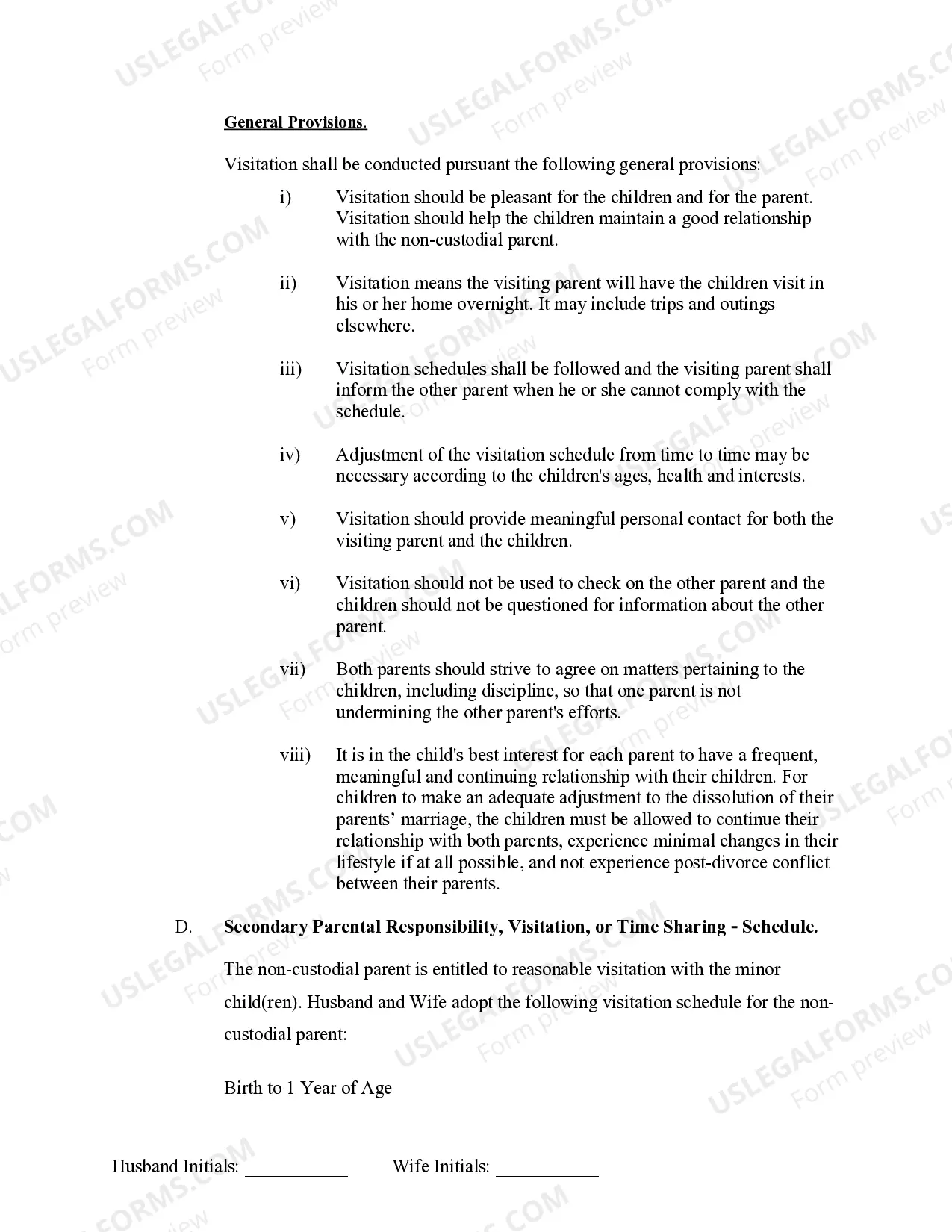
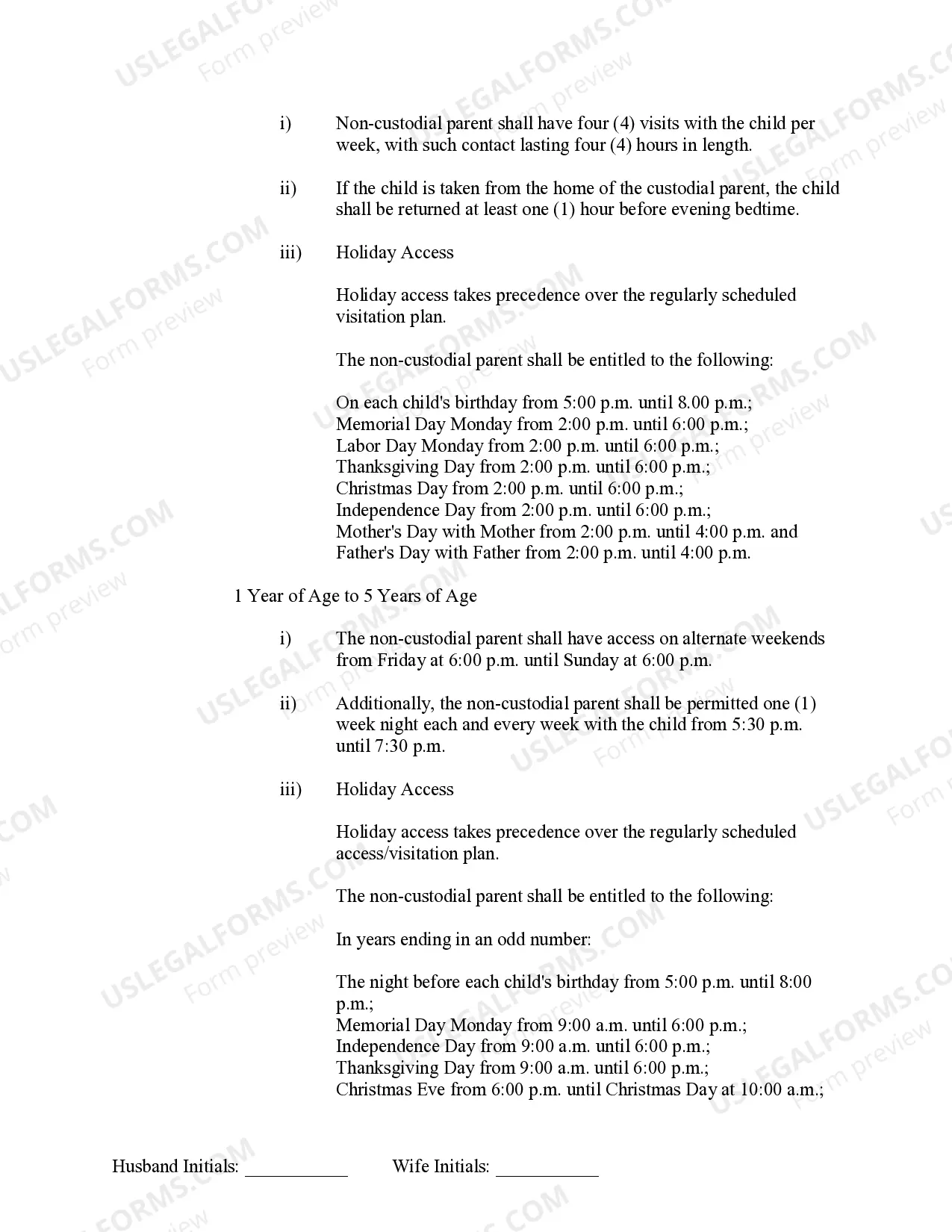
- Provisions for child custody, visitation schedules, and parental responsibilities.
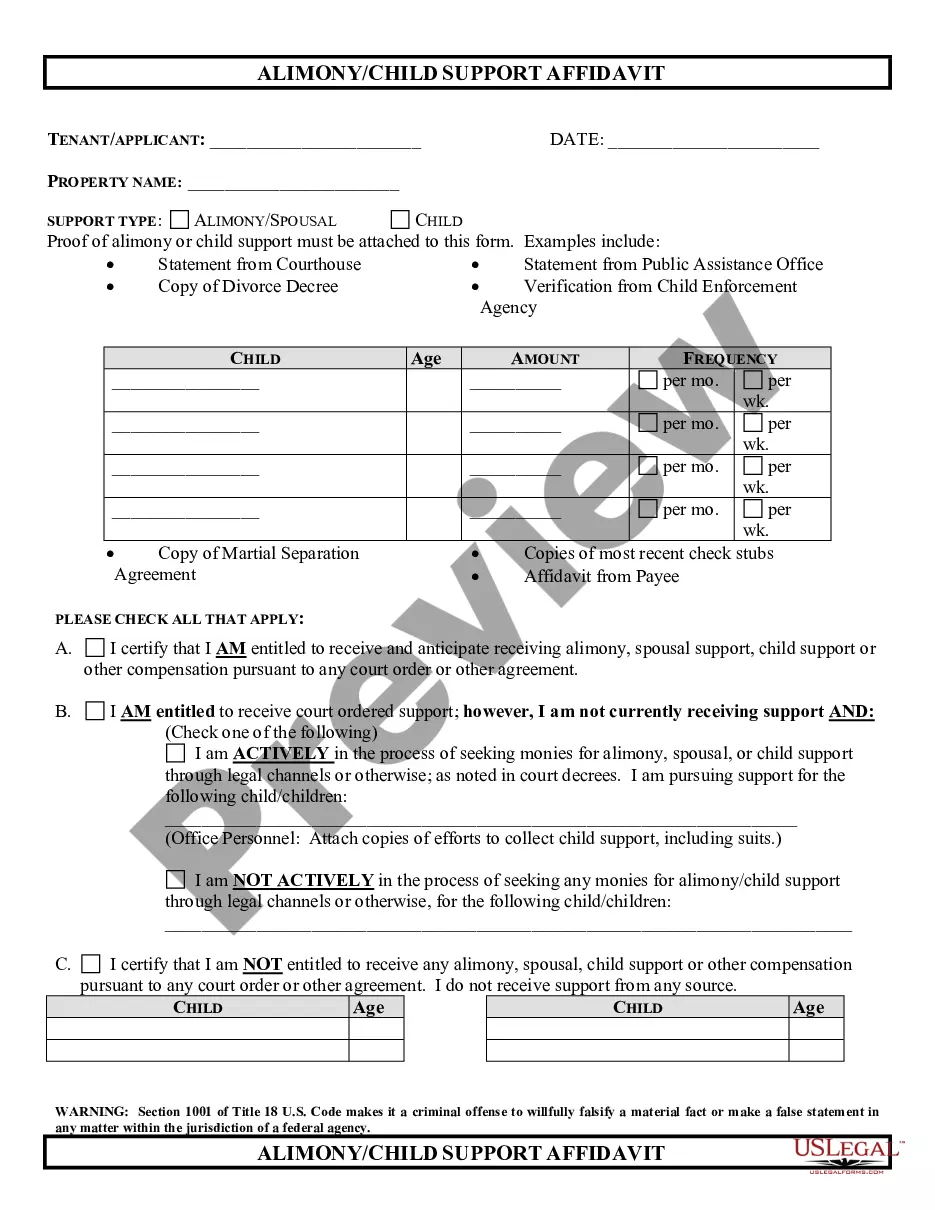
- Details regarding child support, including payment amounts and responsibilities for health and dental insurance.
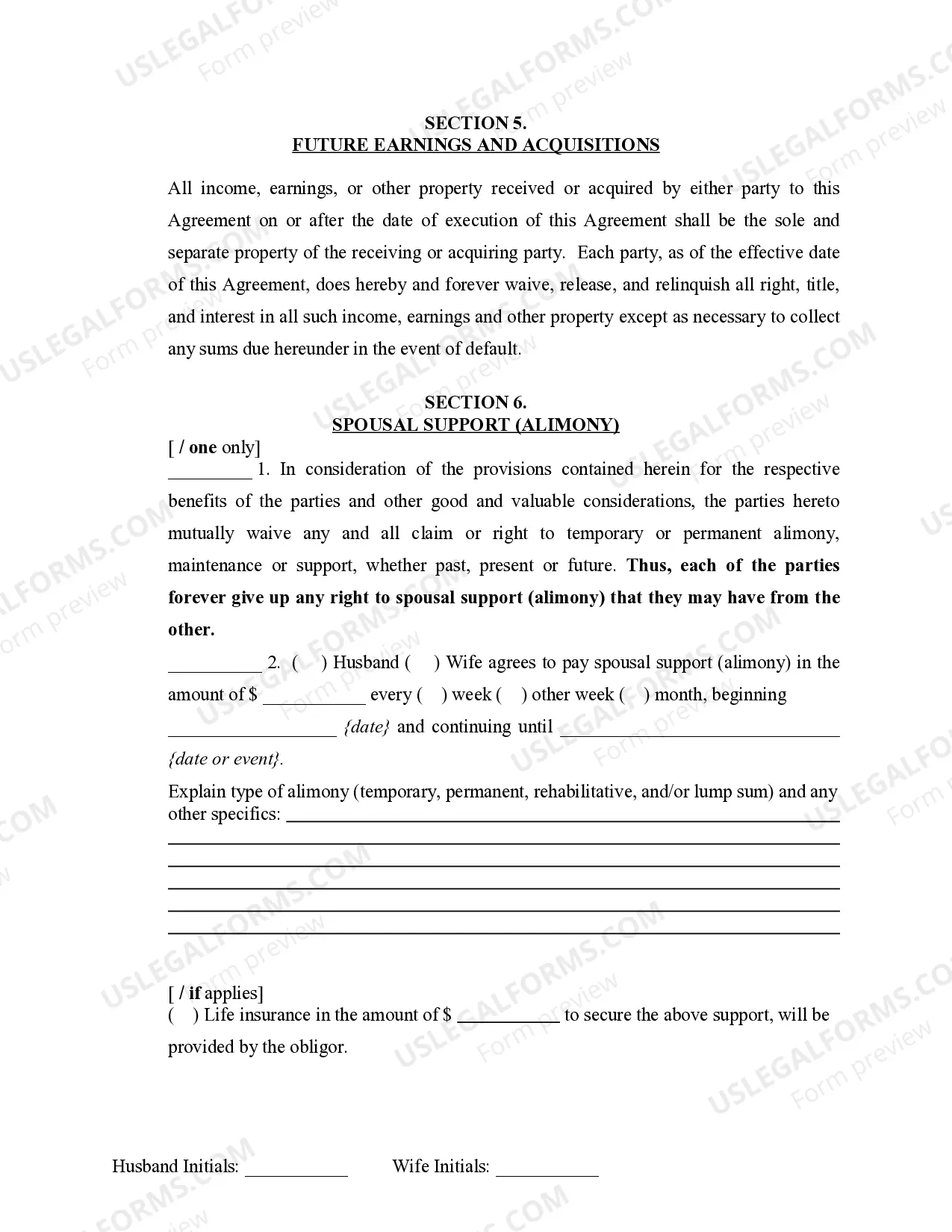
- Clauses surrounding future earnings, tax implications, and the mutual release of claims.

When this form is needed
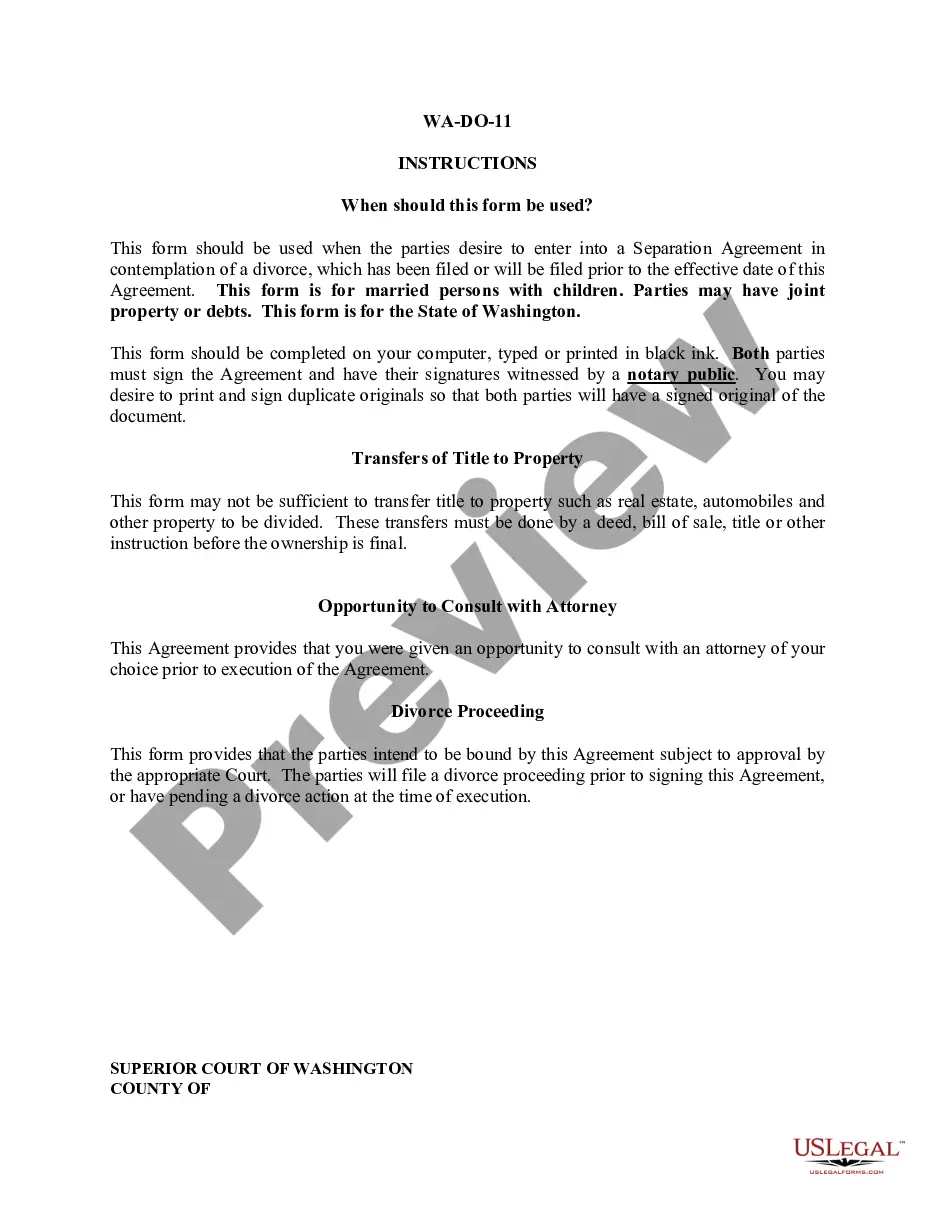
This form should be used when married couples with minor children are separating without any shared property or debts. It is particularly useful during an ongoing divorce action, as it helps to outline custody arrangements, child support obligations, and visitation rights, thereby minimizing disputes and clarifying the terms of separation.
Who this form is for
- Couples who are filing for divorce in Washington State.
- Parents with dependent minor children who wish to clarify custody and support arrangements.
- Individuals who do not have any joint property or outstanding debts with their spouse.
- Those seeking a structured agreement to facilitate their separation during the divorce process.
How to prepare this document
- Begin by identifying the parties involved, including their full legal names and addresses.
- Complete the financial disclosure section, ensuring all assets and liabilities are accurately listed.
- Outline the custody arrangements and visitation schedule for your minor children.
- Specify the amount of child support and any agreements regarding health and dental insurance provisions.
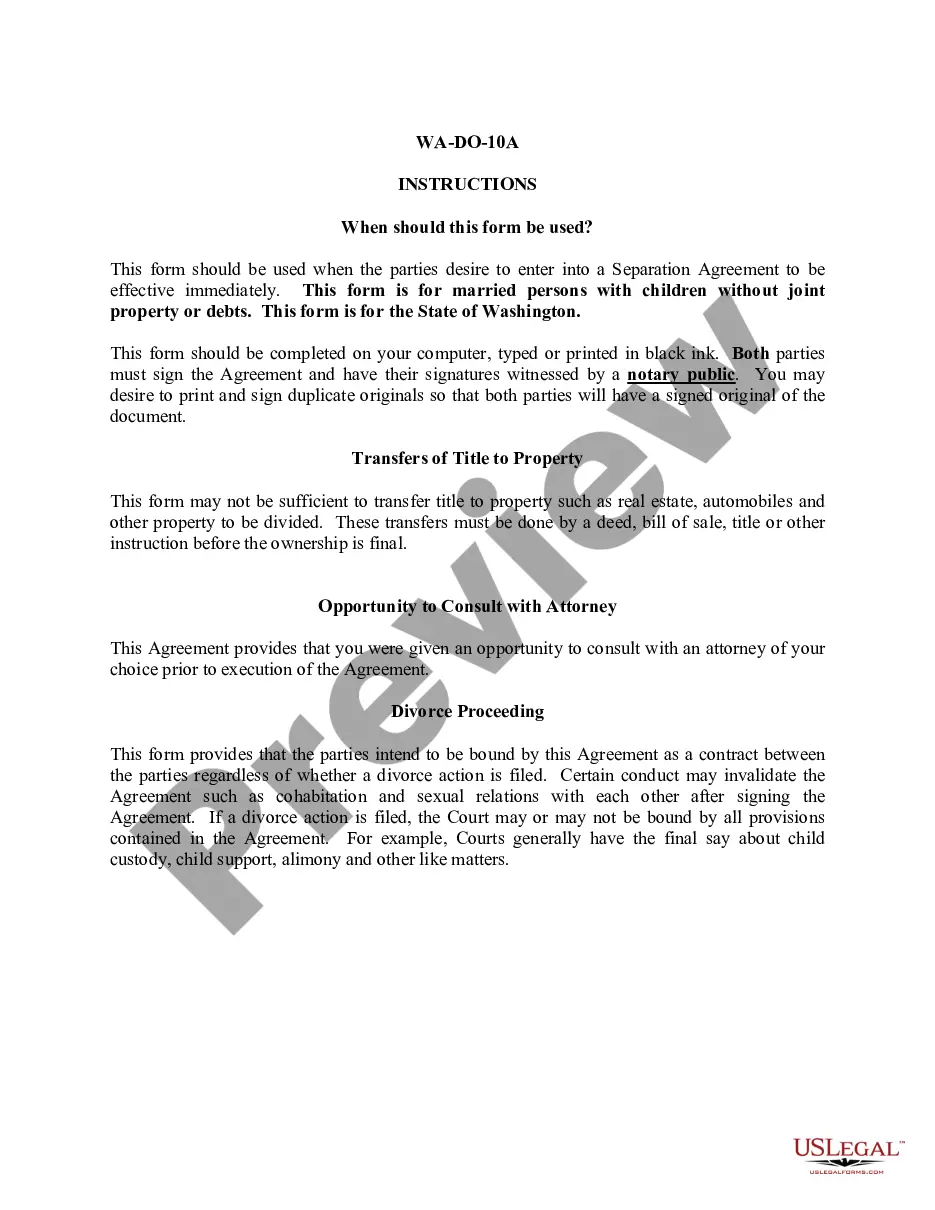
- Ensure both parties sign the agreement in front of a notary public for legal validation.
Notarization requirements for this form
Notarization is required for this form to take effect. Our online notarization service, powered by Notarize, lets you verify and sign documents remotely through an encrypted video session, available 24/7.
Get your form ready online
Our built-in tools help you complete, sign, share, and store your documents in one place.
Make edits, fill in missing information, and update formatting in US Legal Forms—just like you would in MS Word.
Download a copy, print it, send it by email, or mail it via USPS—whatever works best for your next step.
Sign and collect signatures with our SignNow integration. Send to multiple recipients, set reminders, and more. Go Premium to unlock E-Sign.
If this form requires notarization, complete it online through a secure video call—no need to meet a notary in person or wait for an appointment.
We protect your documents and personal data by following strict security and privacy standards.

Make edits, fill in missing information, and update formatting in US Legal Forms—just like you would in MS Word.

Download a copy, print it, send it by email, or mail it via USPS—whatever works best for your next step.

Sign and collect signatures with our SignNow integration. Send to multiple recipients, set reminders, and more. Go Premium to unlock E-Sign.

If this form requires notarization, complete it online through a secure video call—no need to meet a notary in person or wait for an appointment.

We protect your documents and personal data by following strict security and privacy standards.
Common mistakes
- Failing to fully disclose all financial information, which can lead to future disputes.
- Not having the agreement notarized, which may impact its enforceability.
- Overlooking details regarding child custody and visitation, leading to misunderstandings later.
- Assuming verbal agreements are sufficient; all terms should be documented in writing.
Advantages of online completion
- Convenient access to legally drafted documents tailored to your situation.
- Easy editing features allow for personalization to meet specific needs.
- Secure download ensures your information remains confidential.
- Availability of additional resources to guide you through the completion process.
Looking for another form?

Form popularity
FAQ
Most state courts will automatically enter a divorce decree if the parties have been legally separated for a period of time, often one to two years, and meet the basic eligibility requirements.
Legal Separation in Washington State. Washington State law does allow married couples to enter into a binding legal separation instead of an actual Dissolution of Marriage (divorce). Legal separation in Washington State allows you and your spouse to obtain a court approved Decree of Legal Separation.
During your Washington divorce, all your property and all of your debts, even those you have separate from your spouse will be divided and awarded to one party or the other, sometimes with the assistance of the court.
The process for legal separation in Washington is virtually the same as divorce, meaning if you can meet the state's divorce requirements, and both spouses agree to the legal separation, the court will honor your wishes. The process begins when either spouse files a petition (request) with the local court.
In the state of Washington, all property in a divorce is subject to division. That being said, your property will likely not be divided 50/50 in a divorce.Instead, Washington divorces focus on equitable divisionthat is, a division that is fair and just, not necessarily equal.
Equitable distribution is a method of dividing property at the time of divorce. All states except for Arizona, California, Idaho, Louisiana, Nevada, New Mexico, Texas, Washington and Wisconsin follow the principles of equitable distribution.
Specifically, to determine the amount of alimony, a spousal support award should be calculated by taking 30% of the payor's gross income minus 20% of the payee's gross income.
Courts usually award each spouse his or her separate property and divide community property 50/50. Consequently, if the house is entirely one spouse's separate property, he or she almost always receives it unless the parties agree otherwise.