Washington Variable Day Notice of Breach Other Than Nonpayment of Rent - Residential
About this form
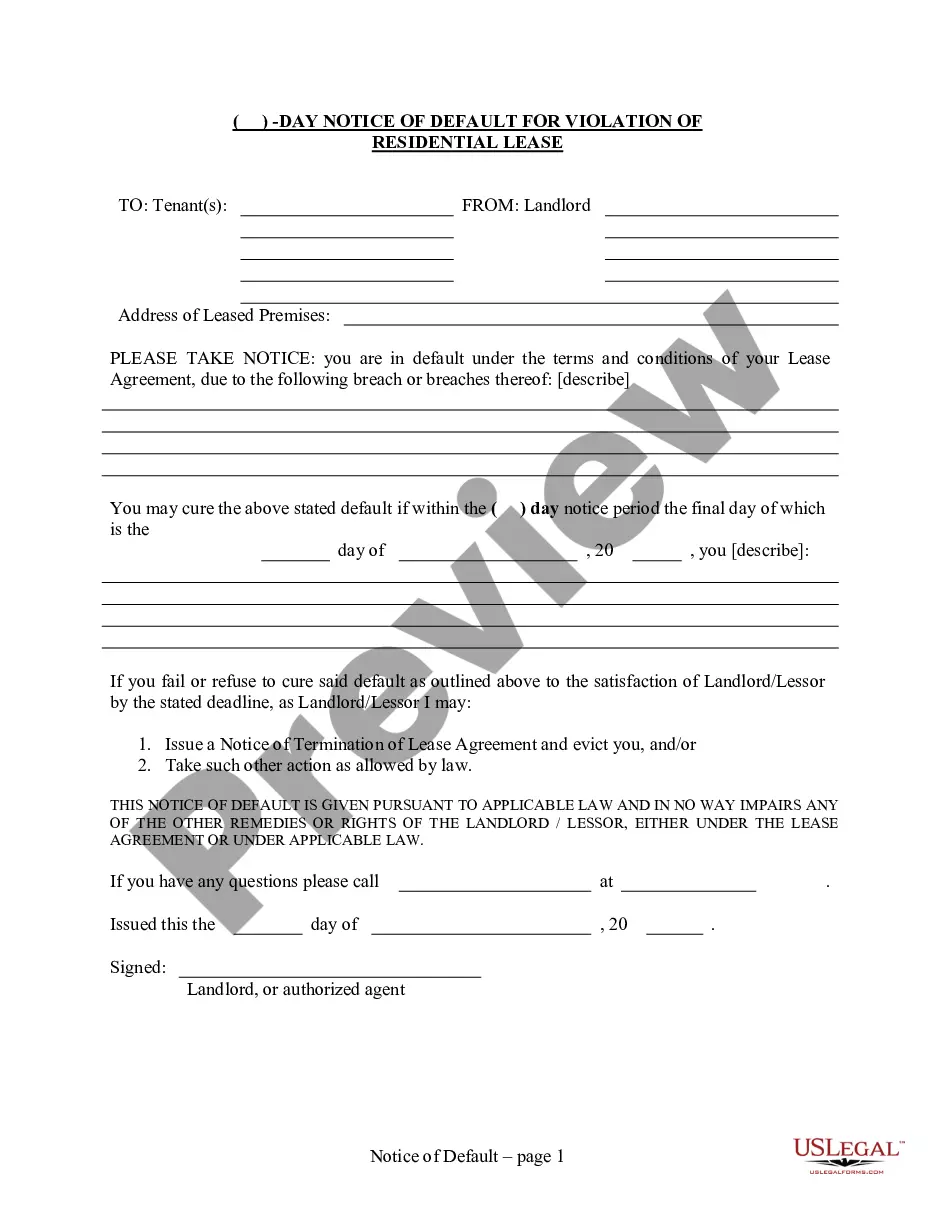
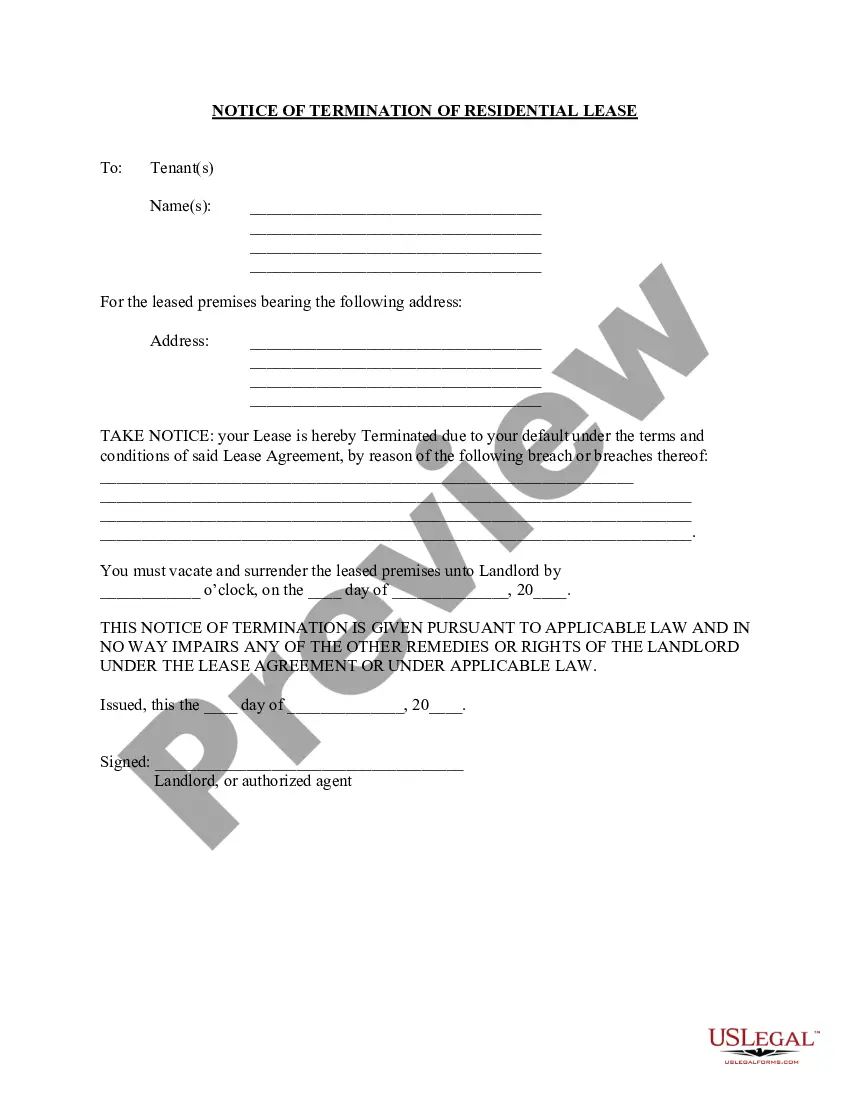
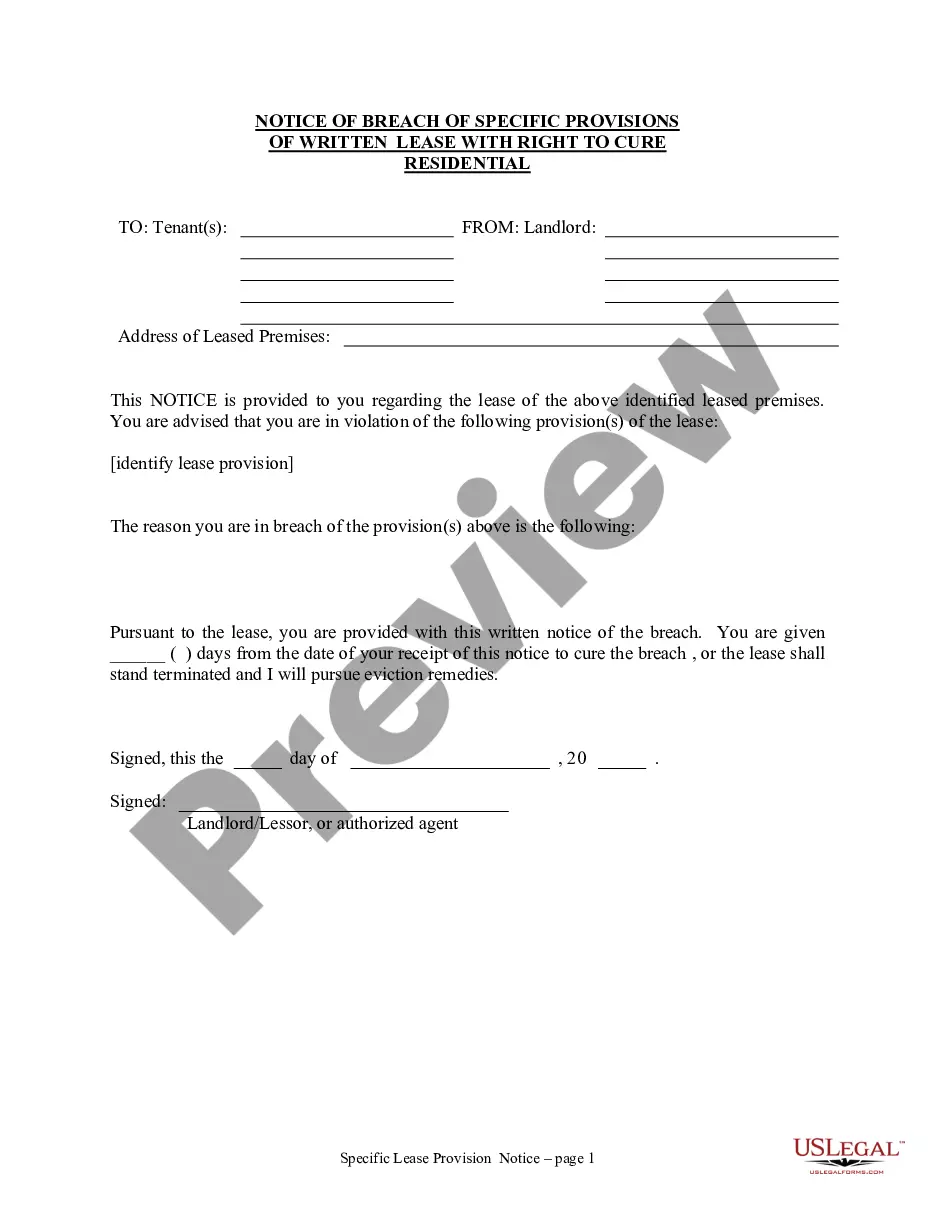
The Variable Day Notice of Breach Other Than Nonpayment of Rent - Residential is a legal document used by landlords to inform residential tenants of a breach of the lease agreement that does not involve non-payment of rent. This notice specifies the breach, gives the tenant a designated number of days to remedy the issue, and warns that failure to do so may lead to lease termination. This form is critical for landlords needing to address non-monetary violations within the lease terms effectively.
Form components explained
- Identification of the parties involved: landlord and tenant names and addresses.
- Details of the breach, clearly describing what violation has occurred.
- Designation of a specific timeframe for the tenant to remedy the breach.
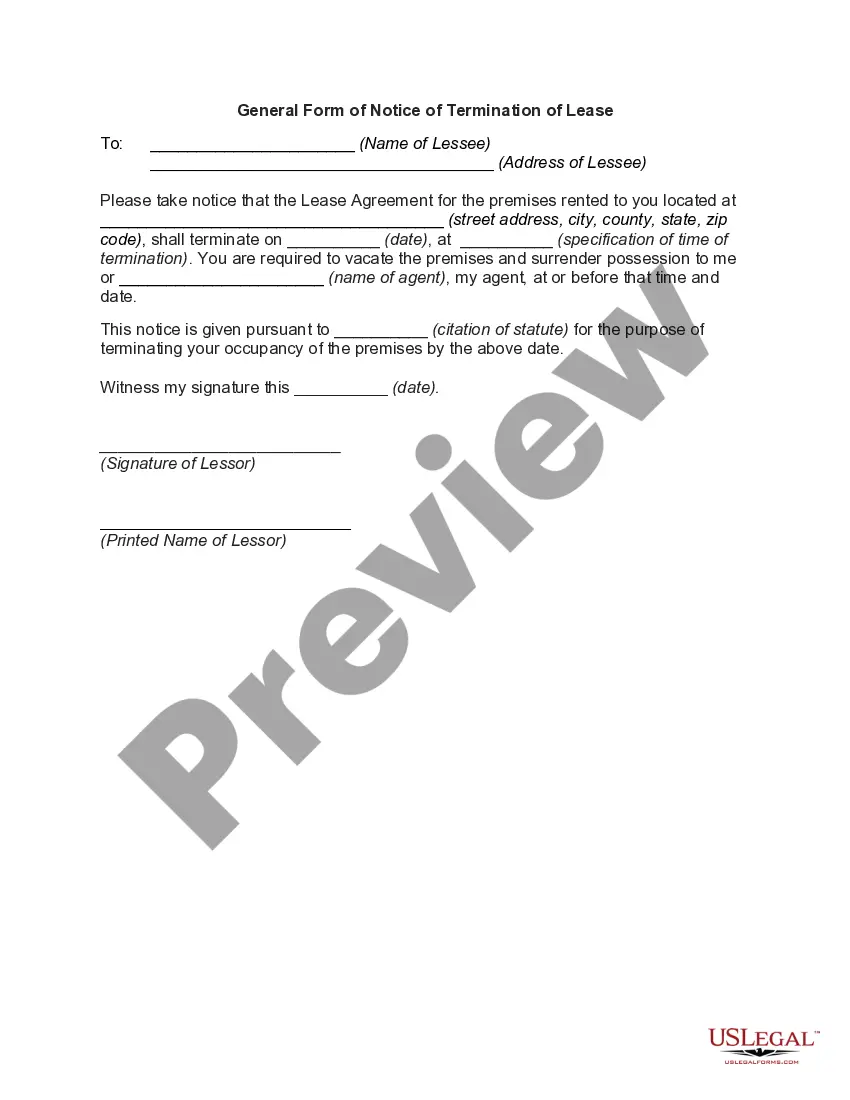
- Consequences of failing to address the breach, including potential lease termination.
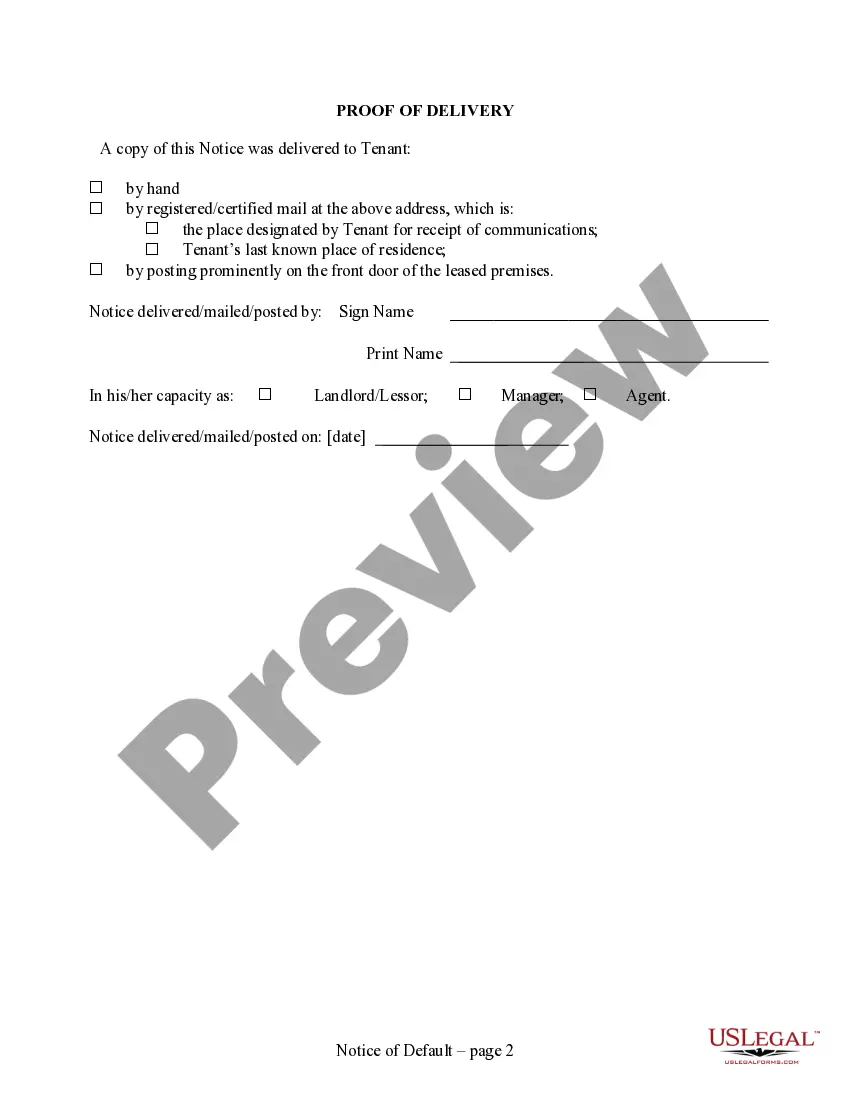
- Proof of delivery section to confirm the tenant received the notice.

Situations where this form applies
This form should be used when a landlord identifies a breach of the lease conditions by a tenant that is not related to rent payment. Common scenarios for issuing this notice include violations such as unauthorized pets, exceeding the number of occupants, or property damage. Providing this notice allows the tenant an opportunity to correct the breach before more severe actions, such as eviction, are taken.
Who this form is for
- Landlords who have residential tenants.
- Property managers acting on behalf of landlords.
- Real estate professionals overseeing rental agreements.
Completing this form step by step
- Identify the parties involved by entering the names and addresses of the landlord and tenant.
- Describe the specific breach of the lease agreement in clear terms.
- Specify the number of days the tenant has to remedy the breach.
- Detail the consequences if the tenant fails to address the issue before the deadline.
- Complete the proof of delivery section to confirm the notice is given to the tenant.
- Sign and date the document to finalize the notice.
Notarization guidance
This form usually doesn’t need to be notarized. However, local laws or specific transactions may require it. Our online notarization service, powered by Notarize, lets you complete it remotely through a secure video session, available 24/7.
Get your form ready online
Our built-in tools help you complete, sign, share, and store your documents in one place.
Make edits, fill in missing information, and update formatting in US Legal Forms—just like you would in MS Word.
Download a copy, print it, send it by email, or mail it via USPS—whatever works best for your next step.
Sign and collect signatures with our SignNow integration. Send to multiple recipients, set reminders, and more. Go Premium to unlock E-Sign.
If this form requires notarization, complete it online through a secure video call—no need to meet a notary in person or wait for an appointment.
We protect your documents and personal data by following strict security and privacy standards.

Make edits, fill in missing information, and update formatting in US Legal Forms—just like you would in MS Word.

Download a copy, print it, send it by email, or mail it via USPS—whatever works best for your next step.

Sign and collect signatures with our SignNow integration. Send to multiple recipients, set reminders, and more. Go Premium to unlock E-Sign.

If this form requires notarization, complete it online through a secure video call—no need to meet a notary in person or wait for an appointment.

We protect your documents and personal data by following strict security and privacy standards.
Common mistakes
- Failing to clearly specify the breach can lead to confusion.
- Not providing an adequate time frame for remedying the breach.
- Missing the proof of delivery, which is essential for validity.
- Using generic language that does not address the specific lease agreement can weaken the notice.
Benefits of using this form online
- Instant access to customized legal forms tailored to specific needs.
- The ability to edit and personalize the form easily to suit particular situations.
- Reliable and up-to-date legal documentation provided by licensed attorneys.
Legal use & context
- The form serves as a formal notice to tenants regarding lease violations.
- It is an important tool for landlords to document breaches and enforce lease terms.
- Failure to use this form properly may weaken a landlord's ability to pursue eviction or other legal actions.
Key takeaways
- The form is essential for notifying tenants about lease breaches.
- Clear documentation and proper delivery are crucial for legal enforcement.
- Understanding specific state requirements is necessary for compliance.
Looking for another form?


Form popularity
FAQ
1) Stay calm and respectful. While dealing with these cases can be extremely stressful, it's important to approach the situation as calmly as possible. 2) Have an in-person meeting with your tenant. 3) Act quickly. 4) Keep proper documentation. 5) Do not accept partial payments if you plan to evict.
A breach of lease occurs when one of the party breaks one of the agreements in the lease document. A breach of lease does not mean that the tenant and landlord waive their respective rights. Tenants enjoy the rights of safety, privacy, binding terms, and in some cases the right to withhold rent.
1) Give your landlord at least 20 days written notice. The landlord must receive written notice of your move-out date 20 days before the end of the rental period.
If a tenant breaches a tenancy agreement it is possible that their landlord will try and evict them from the property. The sort of breaches of tenancy which result in a landlord seeking a court order for possession include:Damage to the property (eg broken windows)
If a tenant breaches a tenancy agreement it is possible that their landlord will try and evict them from the property. The sort of breaches of tenancy which result in a landlord seeking a court order for possession include:Damage to the property (eg broken windows)
Step 1: Check Your Lease Documents and Payment Records. Step 2: Send a Late Rent Notice. Step 3: Make a Phone Call. Step 4: Send a Pay or Quit Notice. Step 5: Take Legal Action.
Using a Section 8 notice By failing to pay their rent, your tenant has broken the terms of their tenancy agreement, meaning you can serve them a Section 8 notice at any point in the tenancy. Your tenant may dispute the eviction, so you need to be ready with evidence of unpaid rent and your efforts to resolve the issue.
Under normal circumstances, when tenants don't pay rent, landlords have the option of terminating the tenancy (by serving the tenant with either a pay rent or quit notice or an unconditional quit notice, depending on the applicable laws).