Washington Framing Contract for Contractor
What this document covers
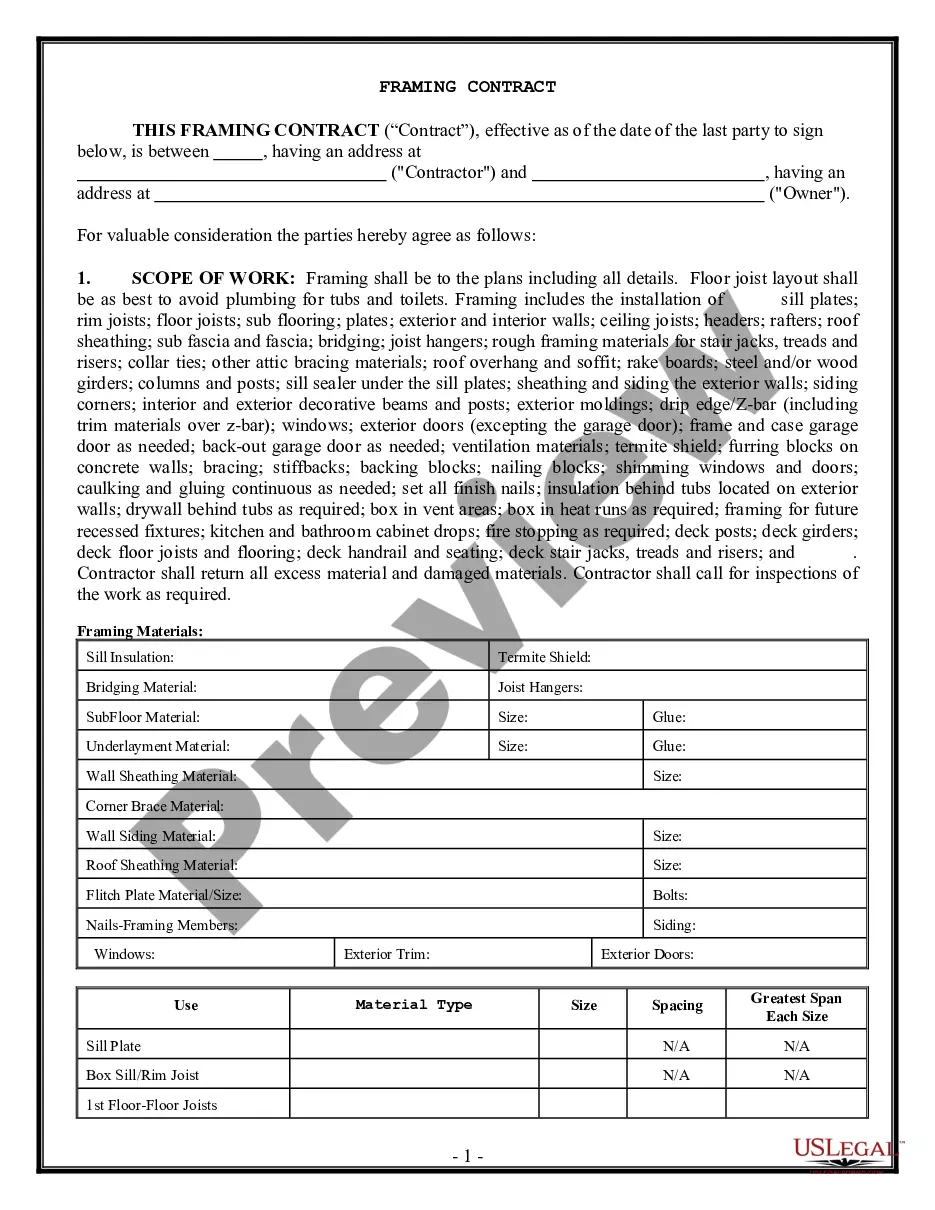
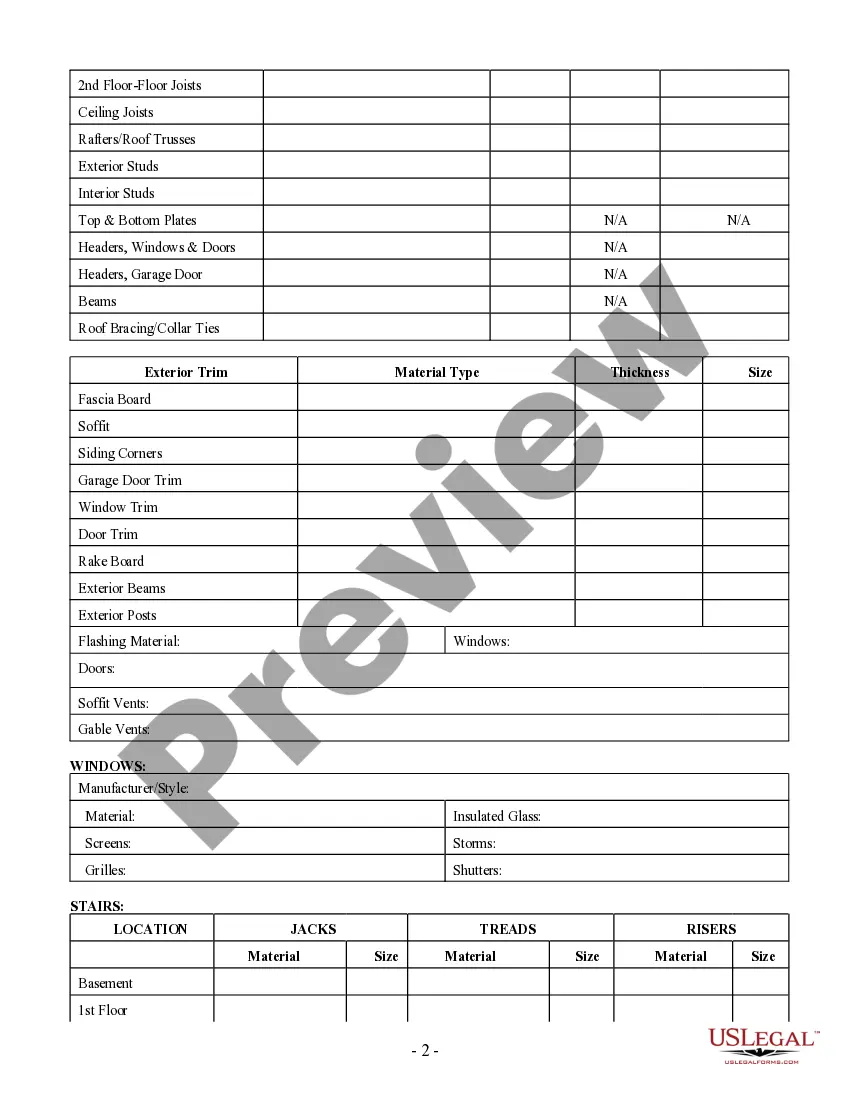
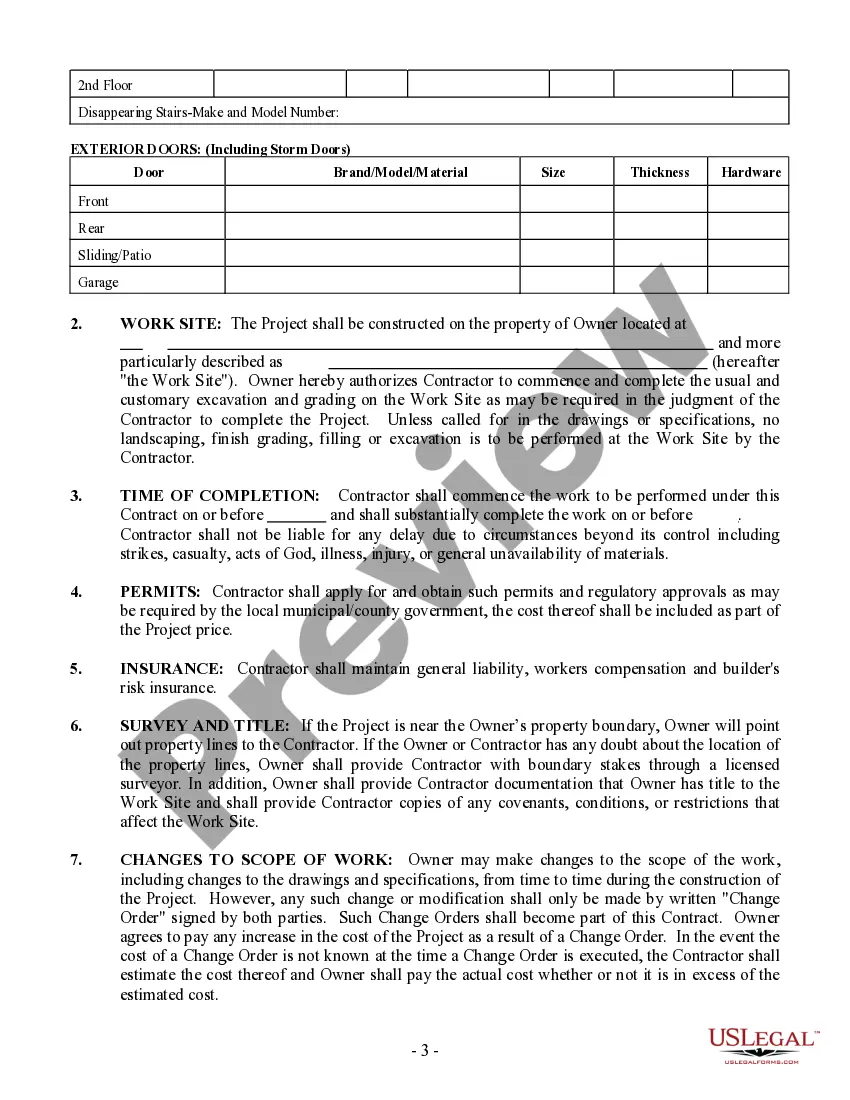
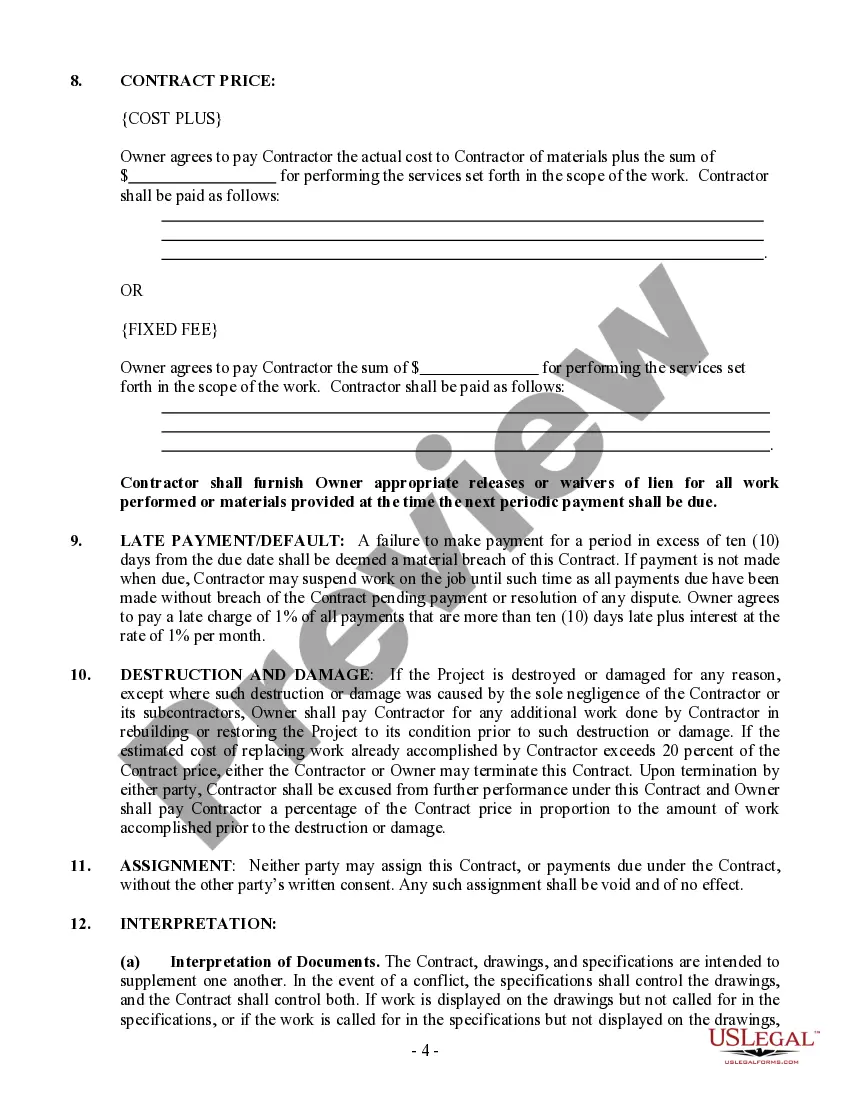
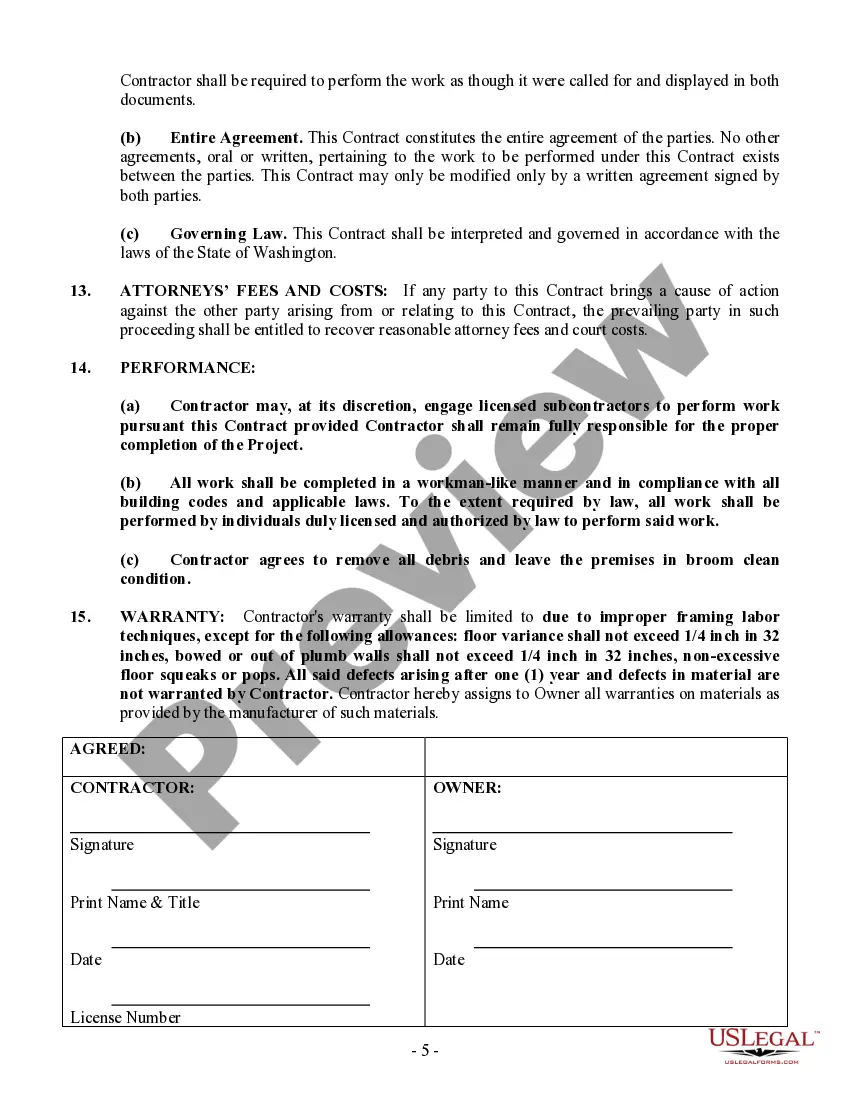
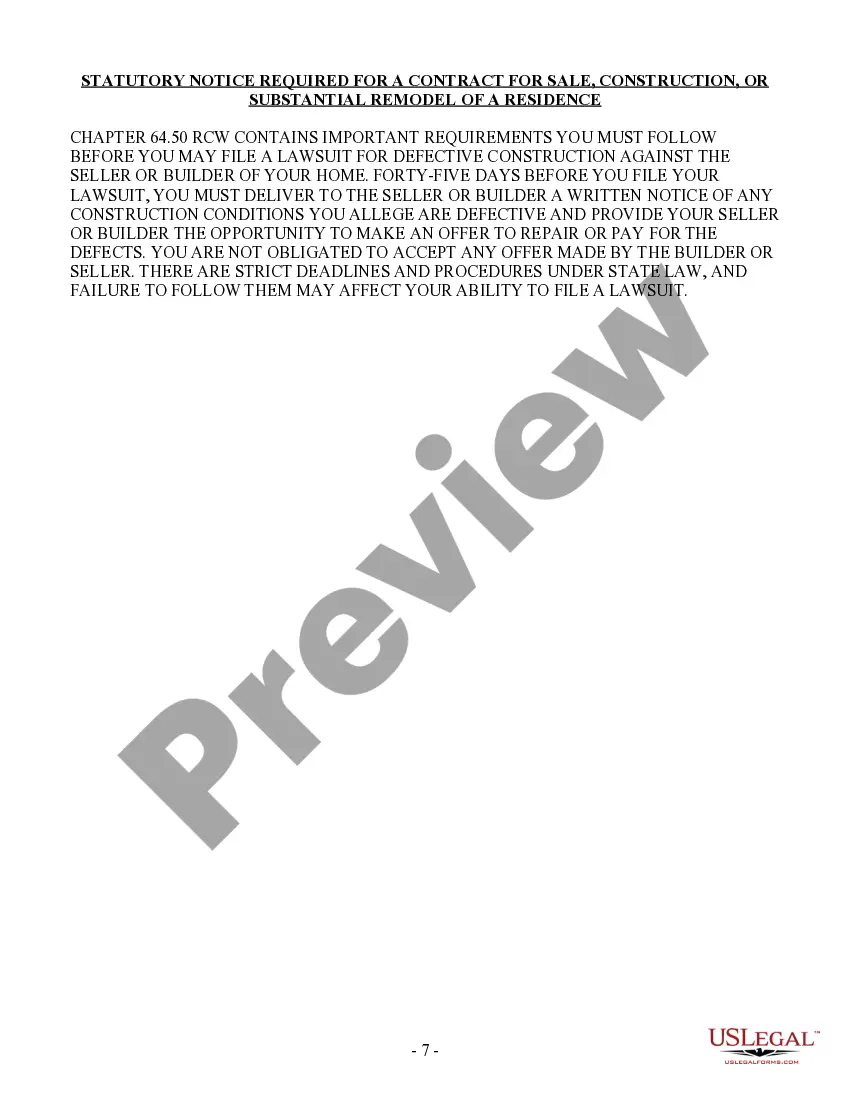
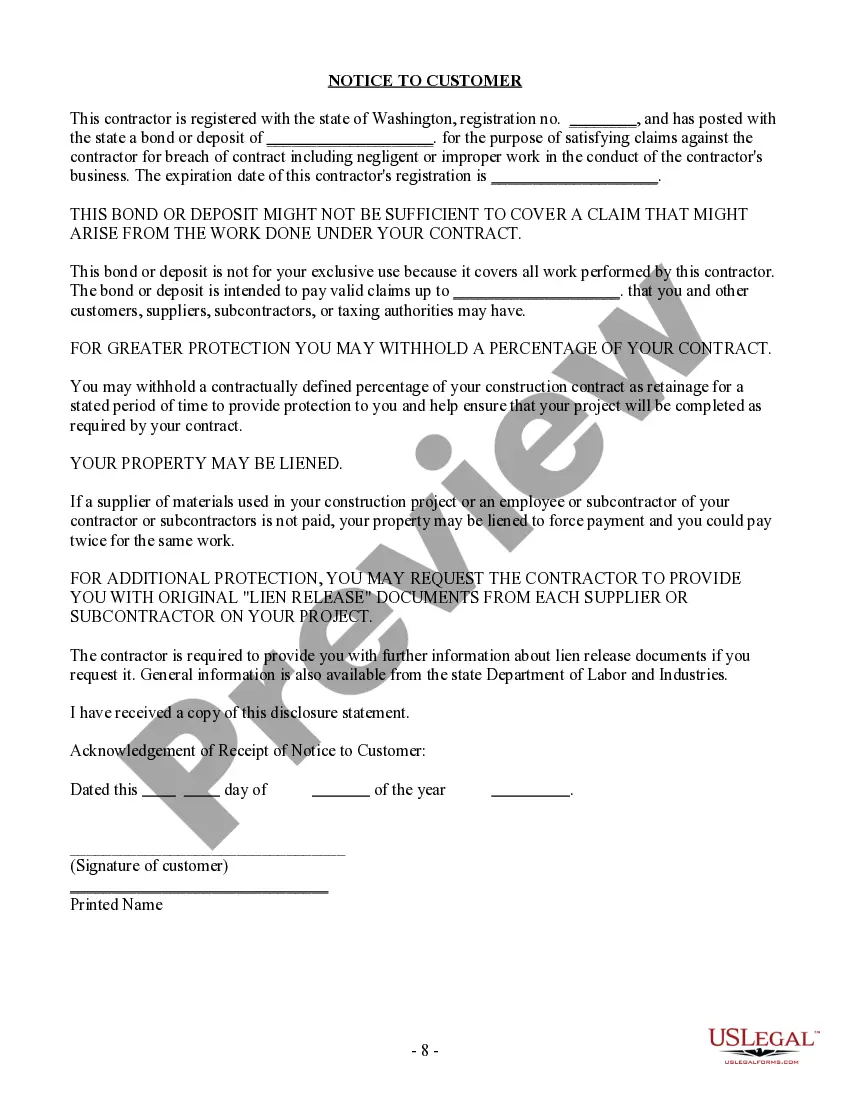
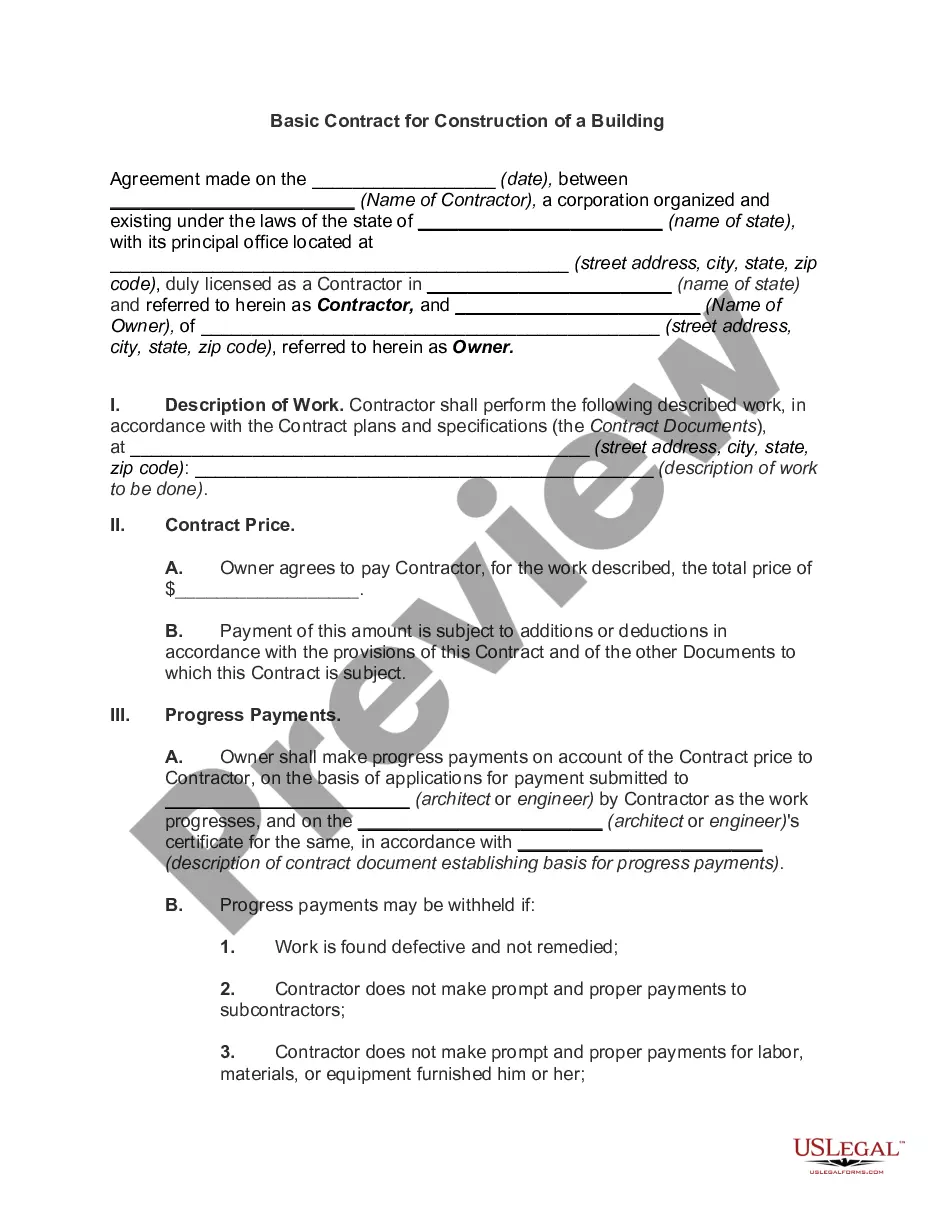
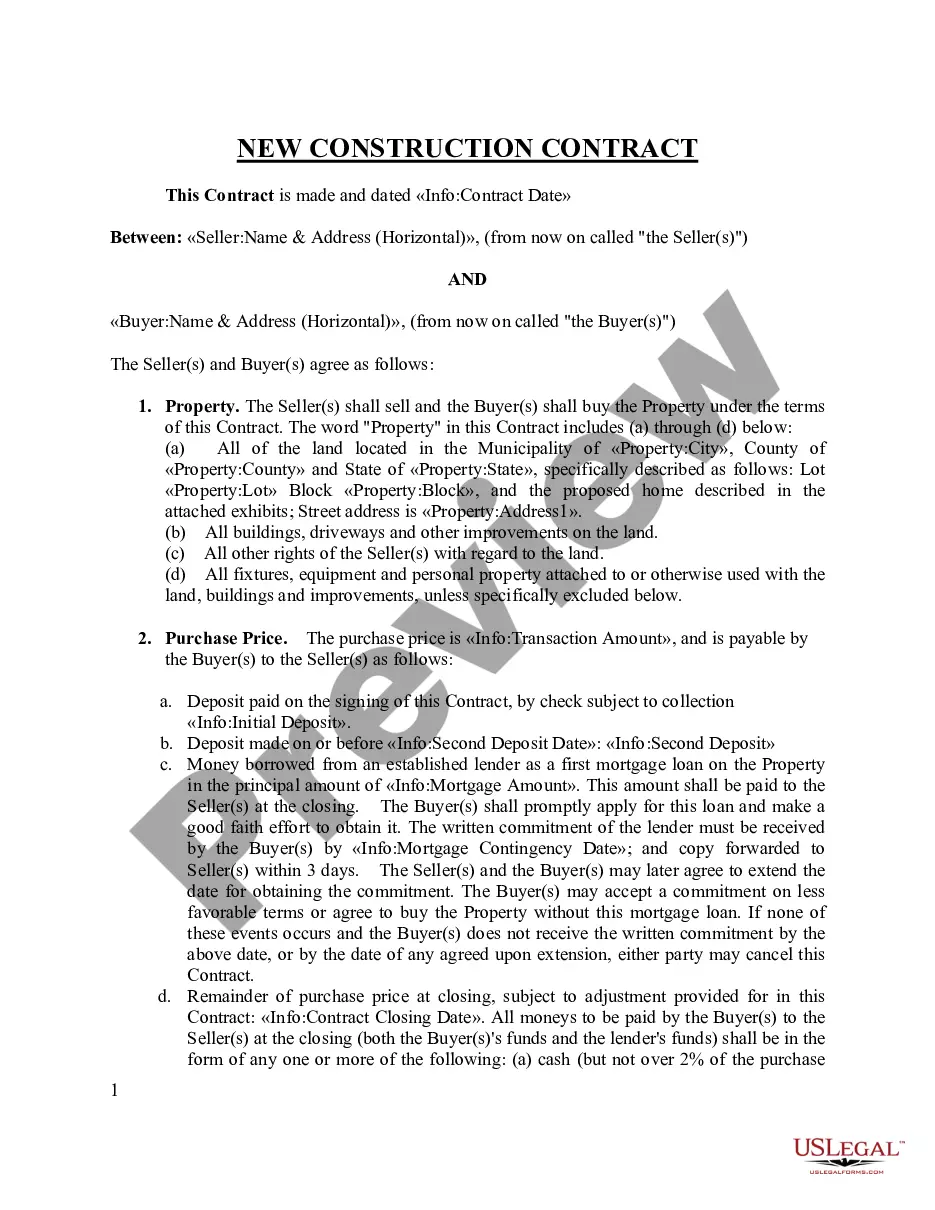
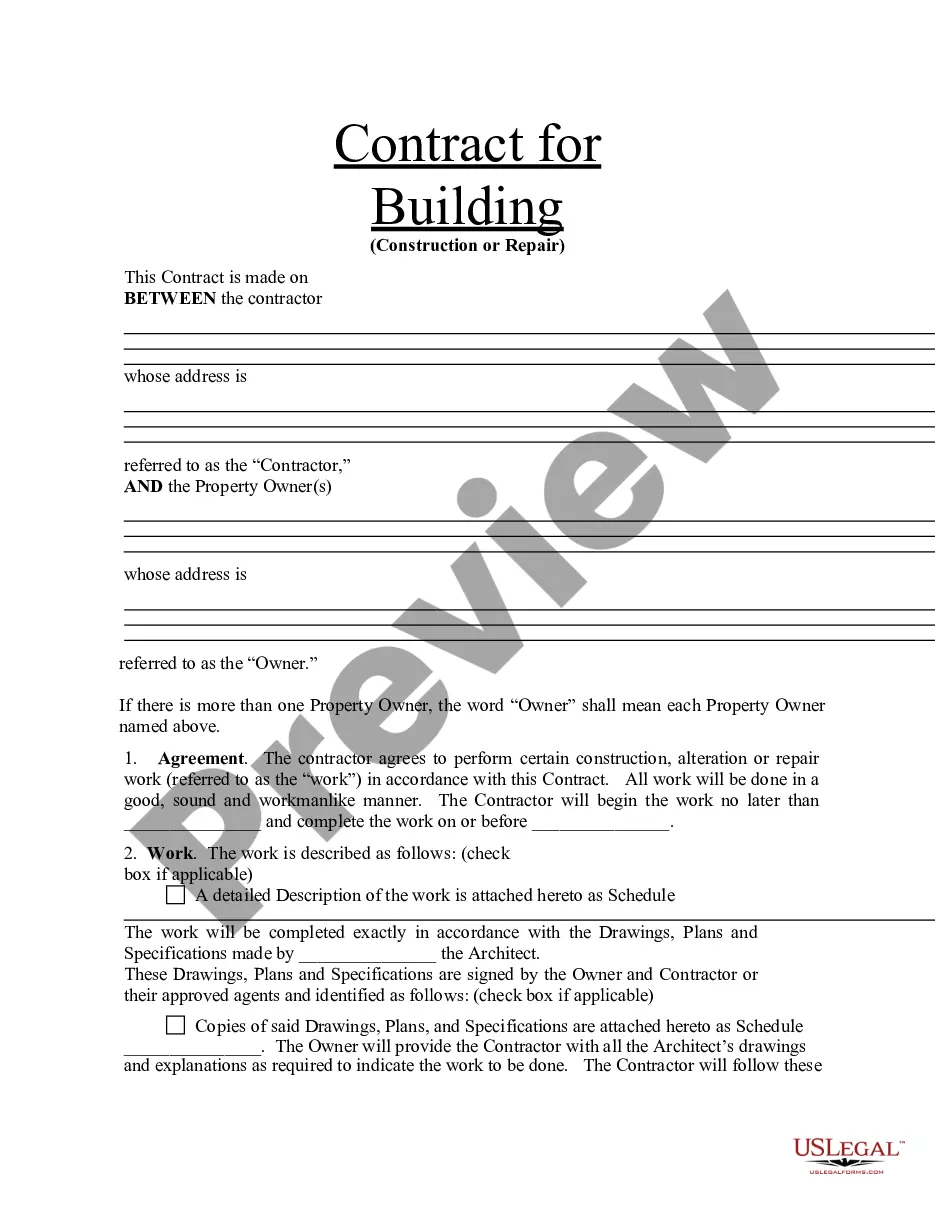
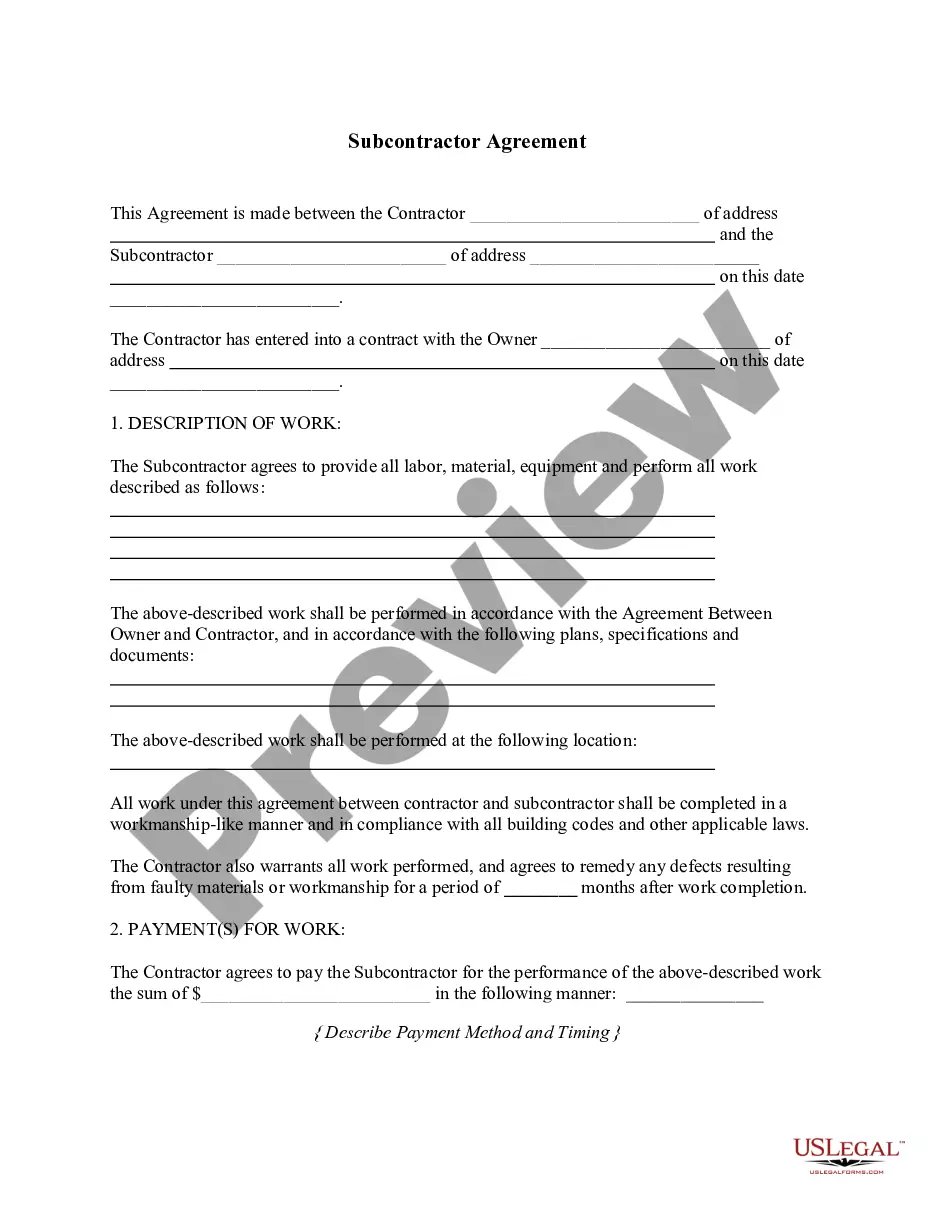
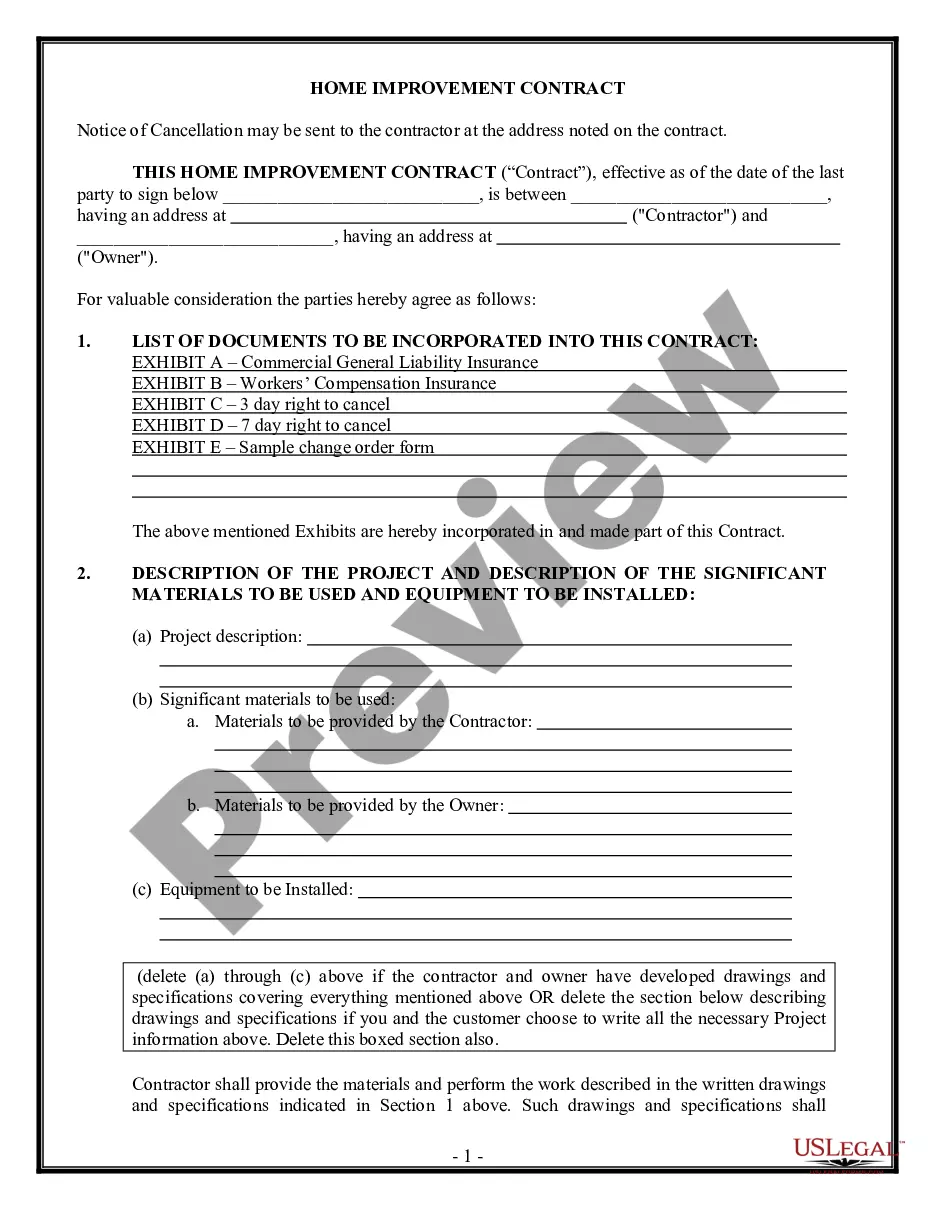
The Framing Contract for Contractor is a legal document used between framing contractors and property owners. It outlines the terms of the project, including payment arrangementsâeither cost plus or fixed fee. This form addresses key aspects like change orders, permits, insurance, and project specifications, ensuring compliance with Washington state laws. It serves as a vital tool for establishing a clear agreement and protecting the interests of both parties involved in a framing project.
Key parts of this document
- Permits: Specifies that the contractor is responsible for obtaining necessary permits and regulatory approvals.
- Insurance: Outlines the types of insurance the contractor must maintain, including general liability and workers' compensation.
- Changes to Scope of Work: Describes the process for making amendments to the project via written change orders.
- Destruction and Damage: Details the responsibilities of both parties in case of damage to the project.
- Performance: Stipulates that work must be completed in a workman-like manner and in compliance with applicable laws.

Common use cases
This form should be used when a property owner hires a framing contractor for construction projects. It is particularly useful in situations where work orders or project specifications may change during the course of construction. Property owners can have peace of mind knowing that the contractor is insured and that all legal obligations are clearly defined.
Intended users of this form
This form is intended for:
- Property owners looking to hire a framing contractor for their construction project.
- Framing contractors who require a clear agreement and legal protection when entering into contracts with property owners.
- Individuals or businesses involved in residential or commercial construction projects in Washington state.
Completing this form step by step
- Identify the parties: Clearly state the names and contact information of both the contractor and the property owner.
- Specify the project details: Provide a detailed description of the work to be performed and any associated payment terms.
- Outline permit responsibilities: Ensure that the contractor agrees to obtain all necessary permits.
- Address insurance requirements: Confirm that the contractor will maintain required insurance coverage.
- Include change order processes: Define how any project changes will be managed, including the process for change orders.
Notarization requirements for this form
This form does not typically require notarization unless specified by local law. Always check local regulations to confirm requirements for your specific project.
Get your form ready online
Our built-in tools help you complete, sign, share, and store your documents in one place.
Make edits, fill in missing information, and update formatting in US Legal Forms—just like you would in MS Word.
Download a copy, print it, send it by email, or mail it via USPS—whatever works best for your next step.
Sign and collect signatures with our SignNow integration. Send to multiple recipients, set reminders, and more. Go Premium to unlock E-Sign.
If this form requires notarization, complete it online through a secure video call—no need to meet a notary in person or wait for an appointment.
We protect your documents and personal data by following strict security and privacy standards.

Make edits, fill in missing information, and update formatting in US Legal Forms—just like you would in MS Word.

Download a copy, print it, send it by email, or mail it via USPS—whatever works best for your next step.

Sign and collect signatures with our SignNow integration. Send to multiple recipients, set reminders, and more. Go Premium to unlock E-Sign.

If this form requires notarization, complete it online through a secure video call—no need to meet a notary in person or wait for an appointment.

We protect your documents and personal data by following strict security and privacy standards.
Avoid these common issues
- Not specifying the scope of work clearly, leading to confusion later.
- Failing to obtain necessary permits before starting construction.
- Neglecting to detail the change order process, which can result in disputes.
- Overlooking insurance requirements that protect both parties.
Advantages of online completion
- Convenient access: Download and complete the form at your convenience.
- Editability: Easily modify the form to meet specific project or legal needs.
- Reliability: Ensure that the form is drafted based on current legal standards and reviewed by licensed attorneys.
Looking for another form?
Form popularity
FAQ
If the contractor requests a large sum of money before work has begun, Mozen says you should ask specifically what types of work or materials those payments are covering.Contractors sometimes have other motives, other than purchasing materials, when they ask for large amounts of money in advance, Fowler says.
Step 1: File Suit. Unfortunately, there is no simple claim process. Step 2: Serve L&I. Under RCW 18.27. Step 3: Show the Surety. This step is not mandatory, but extremely helpful. Step 4: Obtain Judgment. Step 5: Collect Disbursed Funds.
Excise tax reporting: Gross receipts from prime contracting on a custom construction job are taxable under the Retailing B&O tax classification and are subject to retail sales tax unless a specific exemption applies.
Avoid companies that require an upfront deposit of more than 10 percent. Try to include language in the contract that holds back a percentage of the total price, called a retainage, until you're sure the work was done well. A 10 percent retainage is common for residential remodeling work.
A: It's not uncommon for contractors to ask for a down payment up front to secure your spot on their schedule or purchase some of the job materials in advance. Asking for more than half of the project cost up front, though, is a big red flag.I recommend tying payments to progress made during the job.
You shouldn't pay more than 10 percent of the estimated contract price upfront, according to the Contractors State License Board.
Estimates, generally, must be professionally reasonable. A 10-20% overage might be considered reasonable, especially if the contractor discovered issues along the way that he couldn't have been aware of initially (for example, mold or flooding).
Independent contractors must register with the Department of Revenue unless they: Make less than $12,000 a year before expenses; Do not make retail sales; Are not required to pay or collect any taxes administered by the Department of Revenue.
You need a license if you meet one or more of the following criteria: Your business requires city and state endorsements. You are doing business using a name other than your full name legal name. You plan to hire employees within the next 90 days.