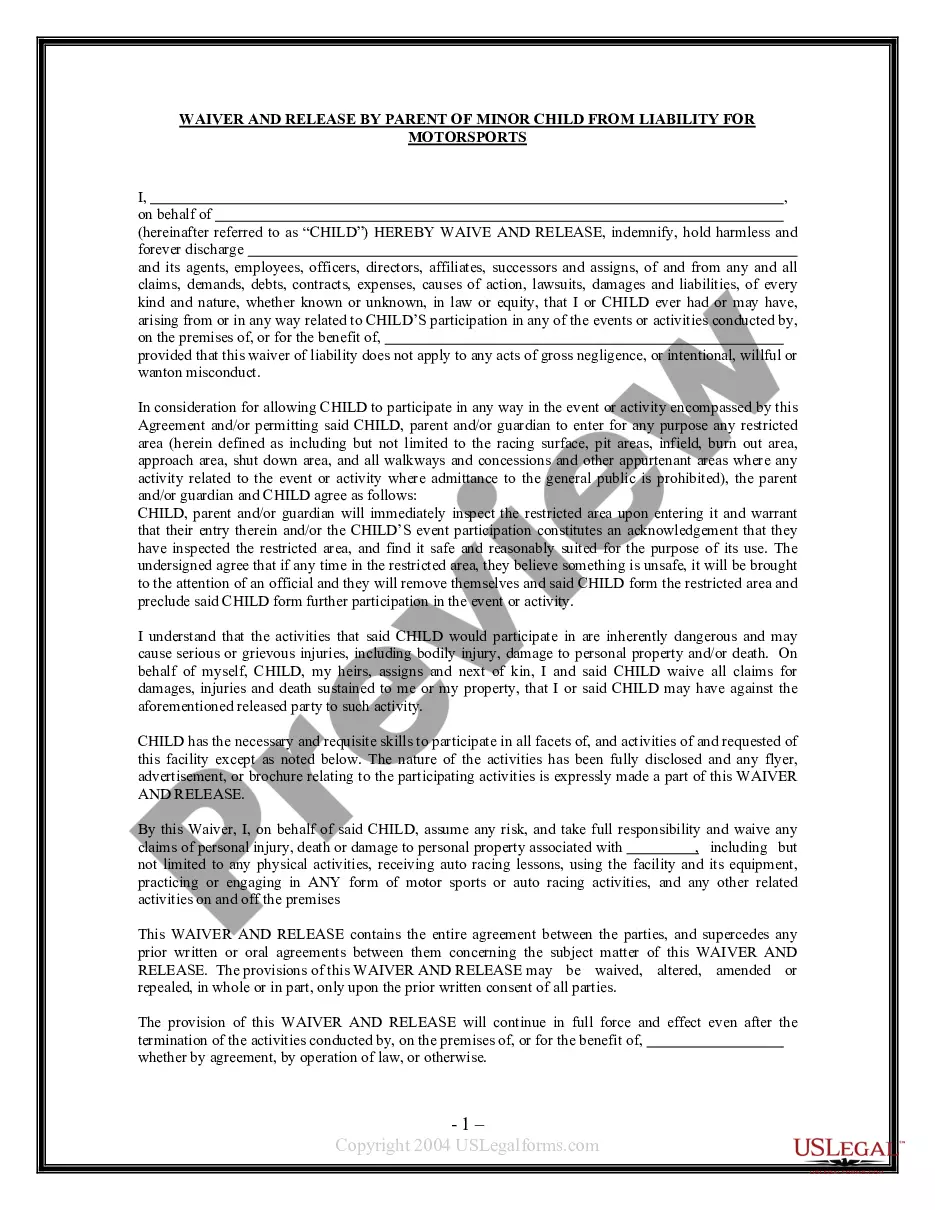
This form allows a parent or guardian to release a four-wheeling facility from liability for injuries which may be incurred by a minor child while on the premises, taking part in activities, etc.
Vermont Waiver and Release From Liability For Minor Child for Four-Wheeling
Category:
State:
Multi-State
Control #:
US-WAV-34M
Format:
Word;
Rich Text
Instant download
Description
Free preview
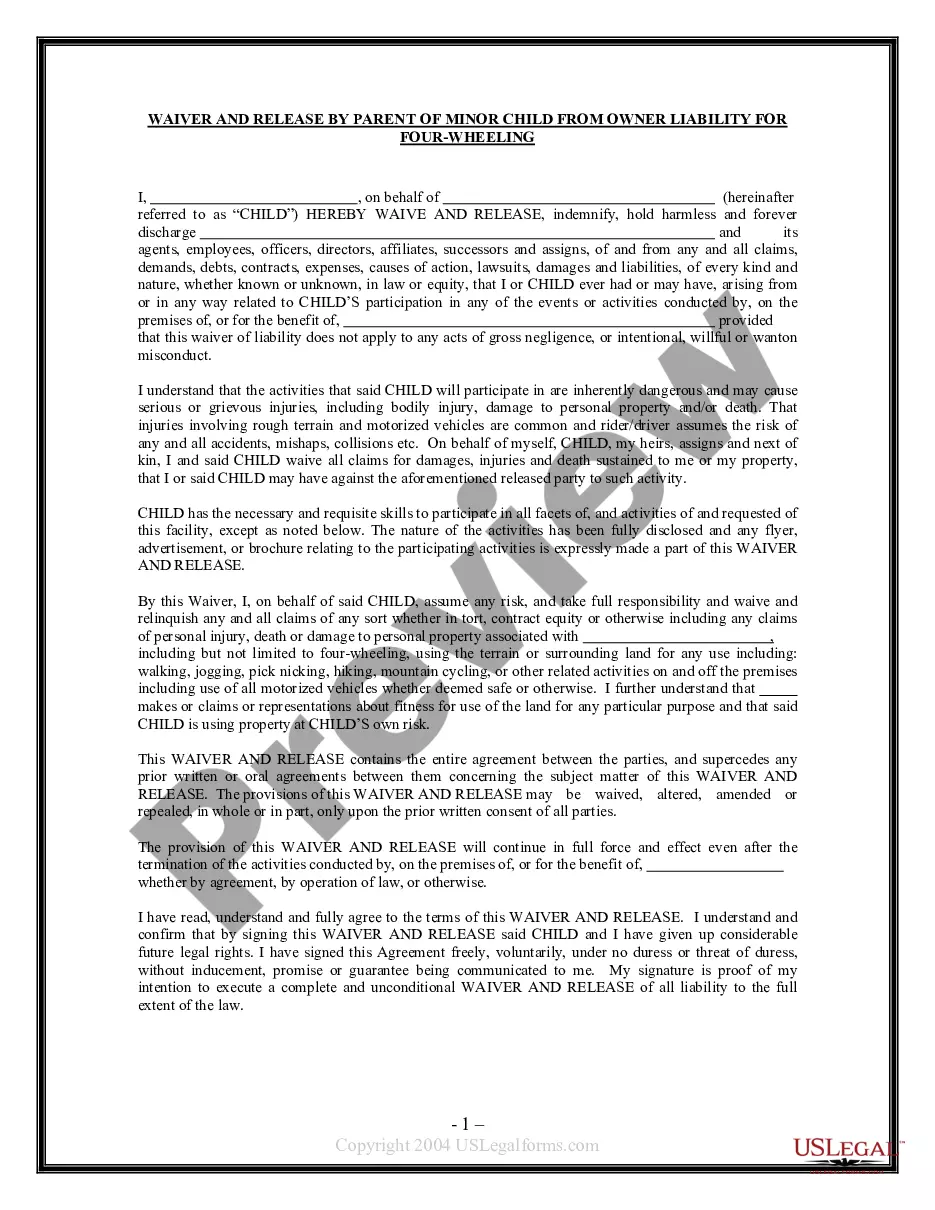
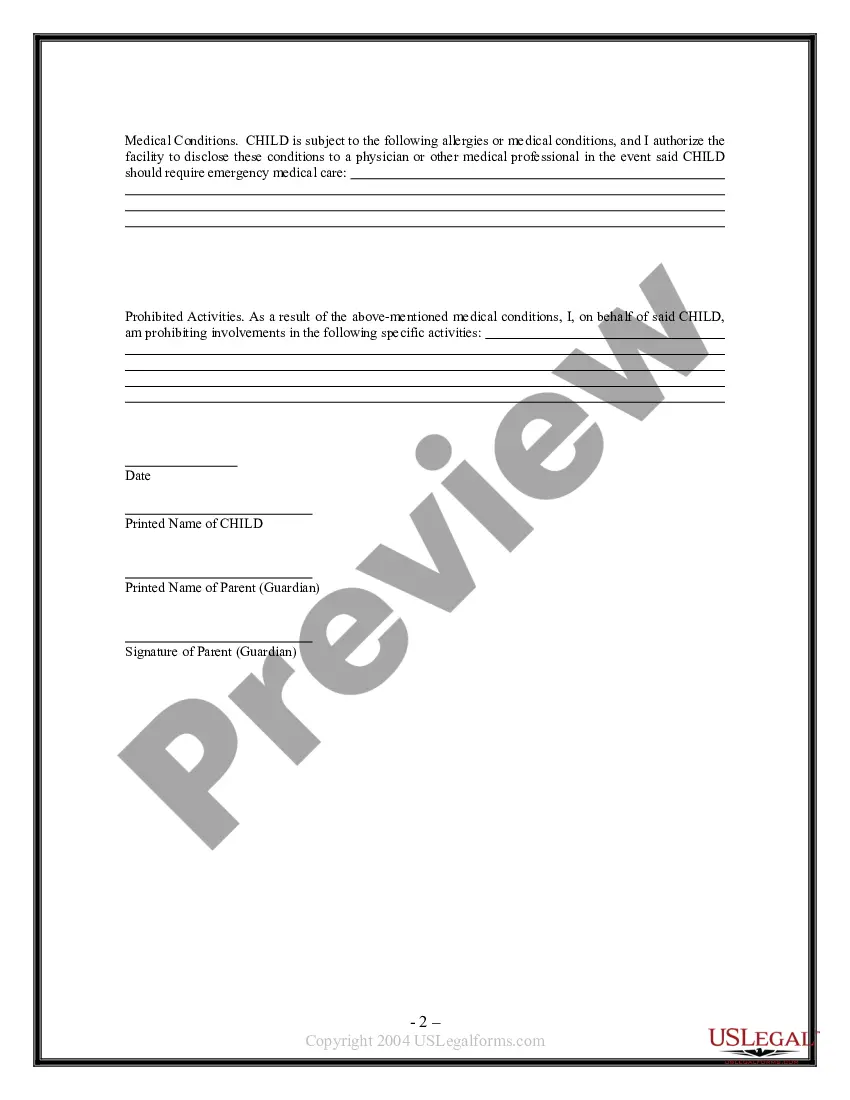
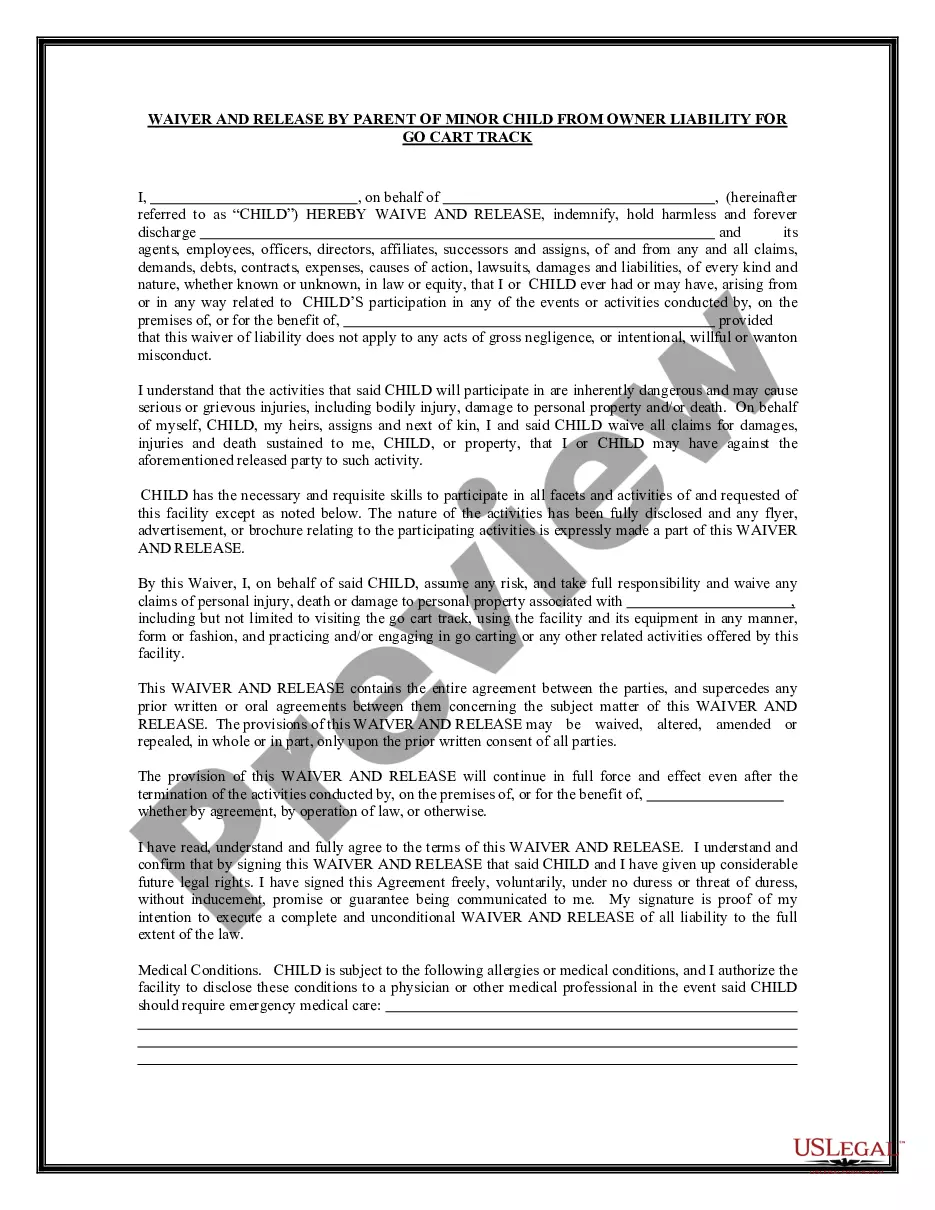
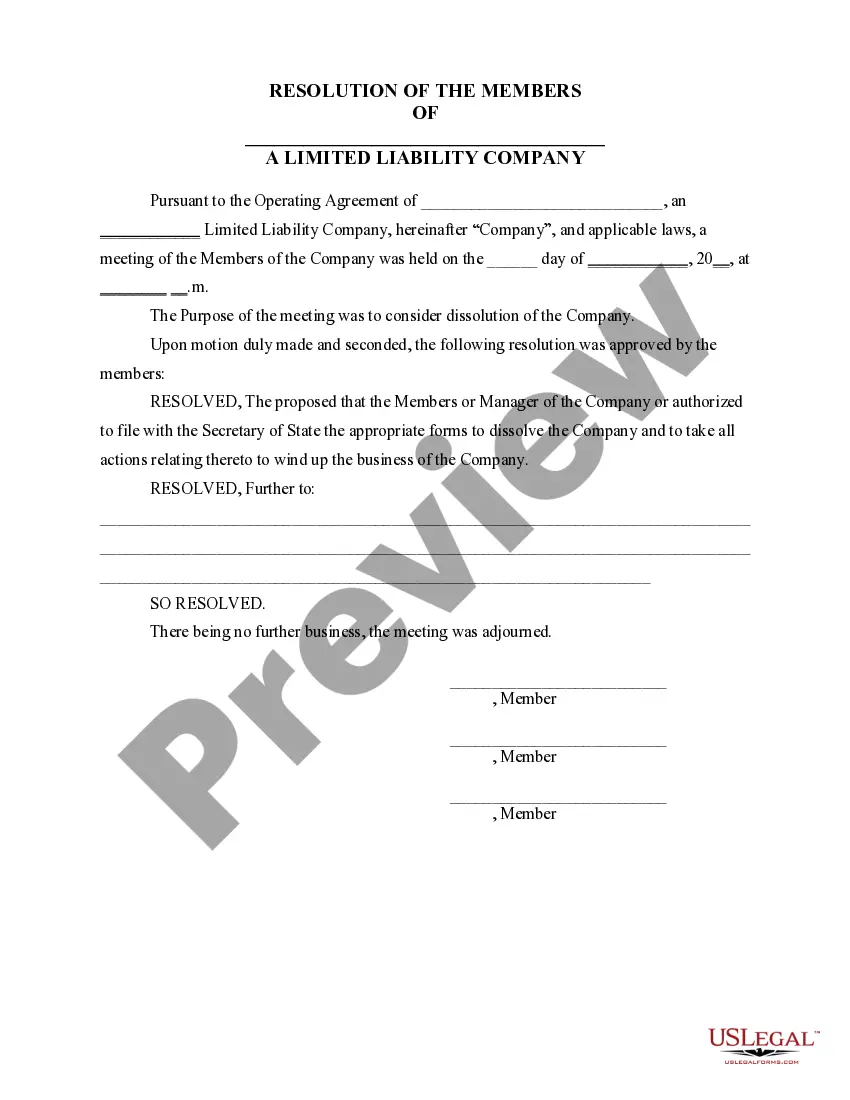
How to fill out Waiver And Release From Liability For Minor Child For Four-Wheeling?
You can spend several hours online searching for the legal document template that meets the state and federal requirements you will need.
US Legal Forms offers thousands of legal forms that are reviewed by professionals.
You can download or print the Vermont Waiver and Release From Liability For Minor Child for Four-Wheeling from their service.
Check the form description to confirm you have chosen the right form. If available, use the Preview button to review the document template as well.
- If you already possess a US Legal Forms account, you can Log In and click the Download button.
- After that, you can complete, modify, print, or sign the Vermont Waiver and Release From Liability For Minor Child for Four-Wheeling.
- Every legal document template you obtain is yours permanently.
- To acquire another copy of any purchased form, navigate to the My documents tab and click the relevant button.
- If you are using the US Legal Forms website for the first time, follow the simple instructions below.
- First, ensure that you have selected the correct document template for the county/region of your choice.
Form popularity
FAQ
An effective waiver of liability typically includes three key elements: it must be clearly written, it must specifically address the risks associated with the activity, and it must be voluntarily signed by the participant or their guardian. For a Vermont Waiver and Release From Liability For Minor Child for Four-Wheeling, it’s crucial to ensure that the language is understandable and that the risks are explicitly outlined. Additionally, using a reliable source like US Legal Forms can provide templates that meet these requirements, making the process smoother for you.
To write a release of liability waiver, start by clearly stating the purpose of the document, which in this case is the Vermont Waiver and Release From Liability For Minor Child for Four-Wheeling. Include sections detailing the activities involved, the inherent risks, and a clear statement of the participant’s agreement to waive liability. Using resources from US Legal Forms can guide you through the necessary legal language and format, ensuring your waiver is comprehensive and compliant with Vermont law.
Yes, you can write your own liability waiver, but it’s important to ensure that it meets legal standards. When creating a Vermont Waiver and Release From Liability For Minor Child for Four-Wheeling, you should include specific language that clearly outlines the risks associated with the activity. Additionally, consider using templates available on platforms like US Legal Forms to help structure your waiver appropriately. This approach reduces the risk of ambiguity and strengthens the enforceability of your document.
To write a Vermont Waiver and Release From Liability For Minor Child for Four-Wheeling, start by clearly stating the purpose of the waiver. Include the names of the parties involved, the activity being undertaken, and a detailed explanation of the risks associated with four-wheeling. Make sure to include a clause where the parent or guardian acknowledges these risks and agrees to release the provider from liability. Utilizing platforms like US Legal Forms can simplify this process, offering templates that ensure all necessary components are included for legal protection.
Liability waivers are enforceable in California solely to the extent they shift to the customer the risk of ordinary negligence. Under California law, a liability waiver cannot excuse an injury caused by a defendant's gross negligence, recklessness or intentionally wrongful act.
As tempting as it may be, you should never write your own liability waiver. Unless you're a fully qualified lawyer with experience in this area, it's likely that you'll omit critical language that puts your business at risk for lawsuits.
Generally, a liability waiver document is a legally binding agreement that relinquishes the right of one party to pursue legal remedy for injuries accrued on the property, regardless of fault involved.
Liability waivers are enforceable in California solely to the extent they shift to the customer the risk of ordinary negligence. Under California law, a liability waiver cannot excuse an injury caused by a defendant's gross negligence, recklessness or intentionally wrongful act.
A liability waiver, or release waiver, is a legal document that a company or organization requires members of the public to sign in order to protect their organization from being sued if you sustain an injury.
Ambiguous language or missing information can invalidate a waiver. The waiver contains errors that make it invalid. The language of the waiver must obey relevant state laws. An improperly worded or drafted waiver, as well as one that violates the law or public policy, may not hold up in court.