This is a multi-state form covering the subject matter of the title.
Vermont Federal Consumer Leasing Act Disclosure Form
State:
Multi-State
Control #:
US-FED-0099-L
Format:
Word;
Rich Text
Instant download
Description
Free preview
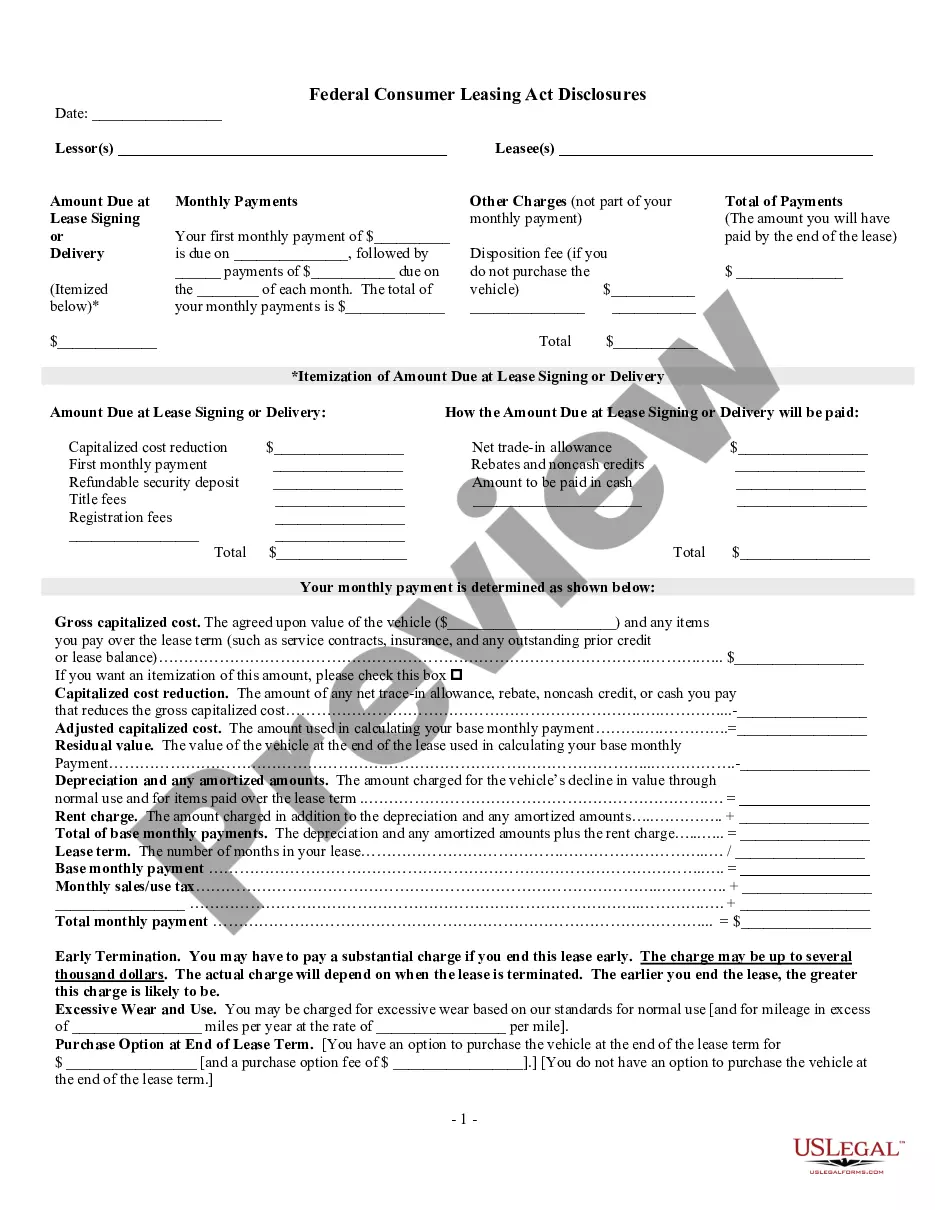
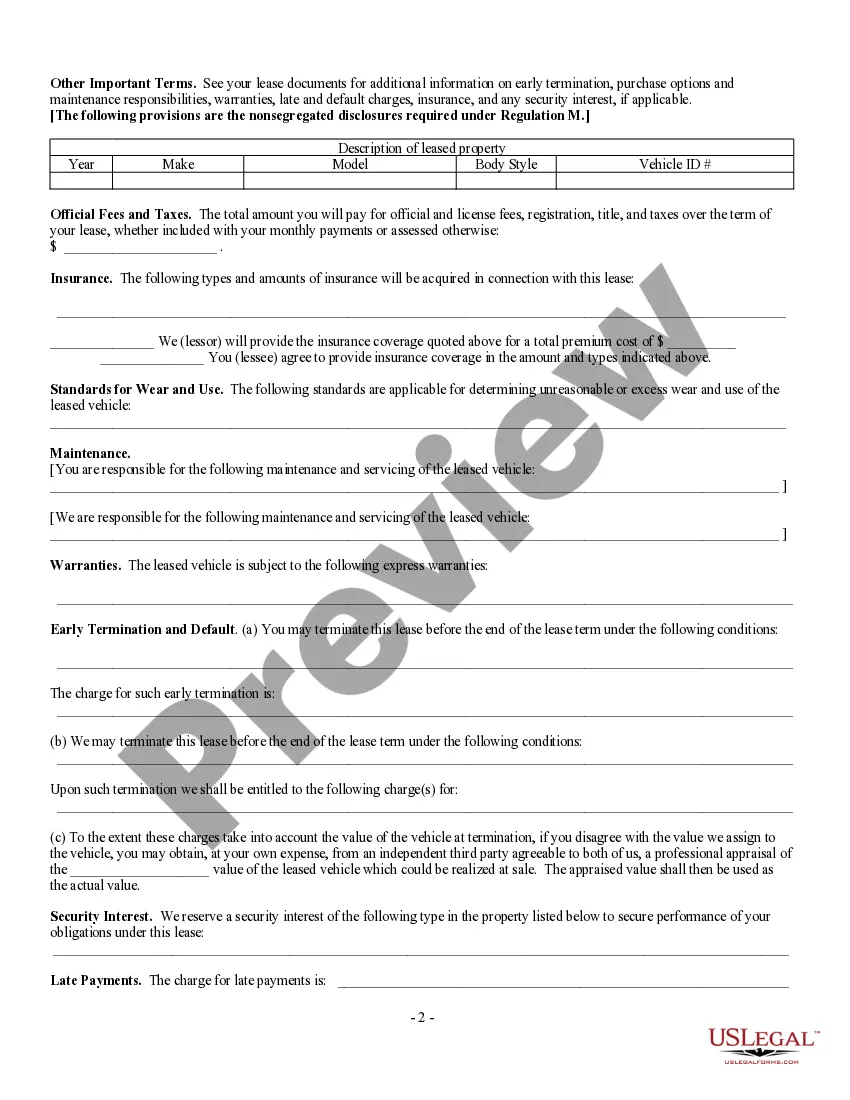
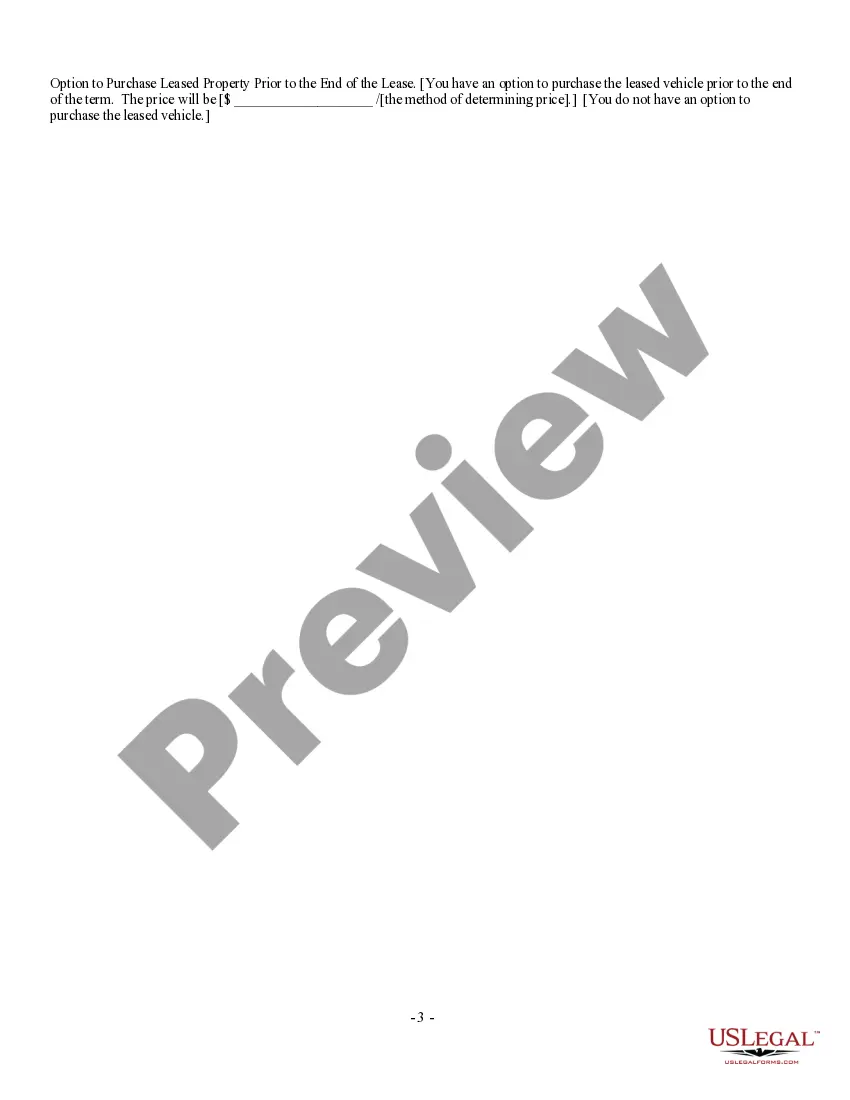
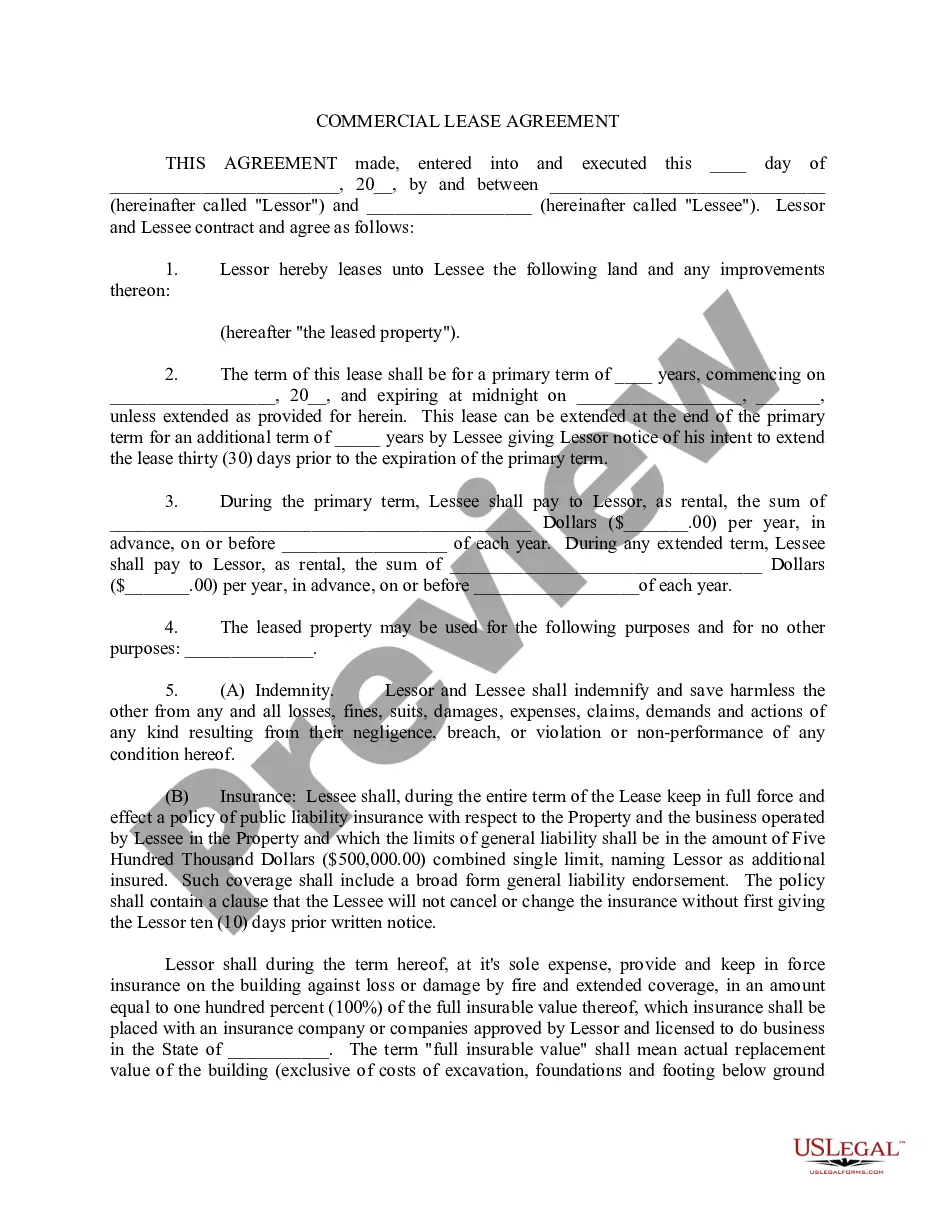
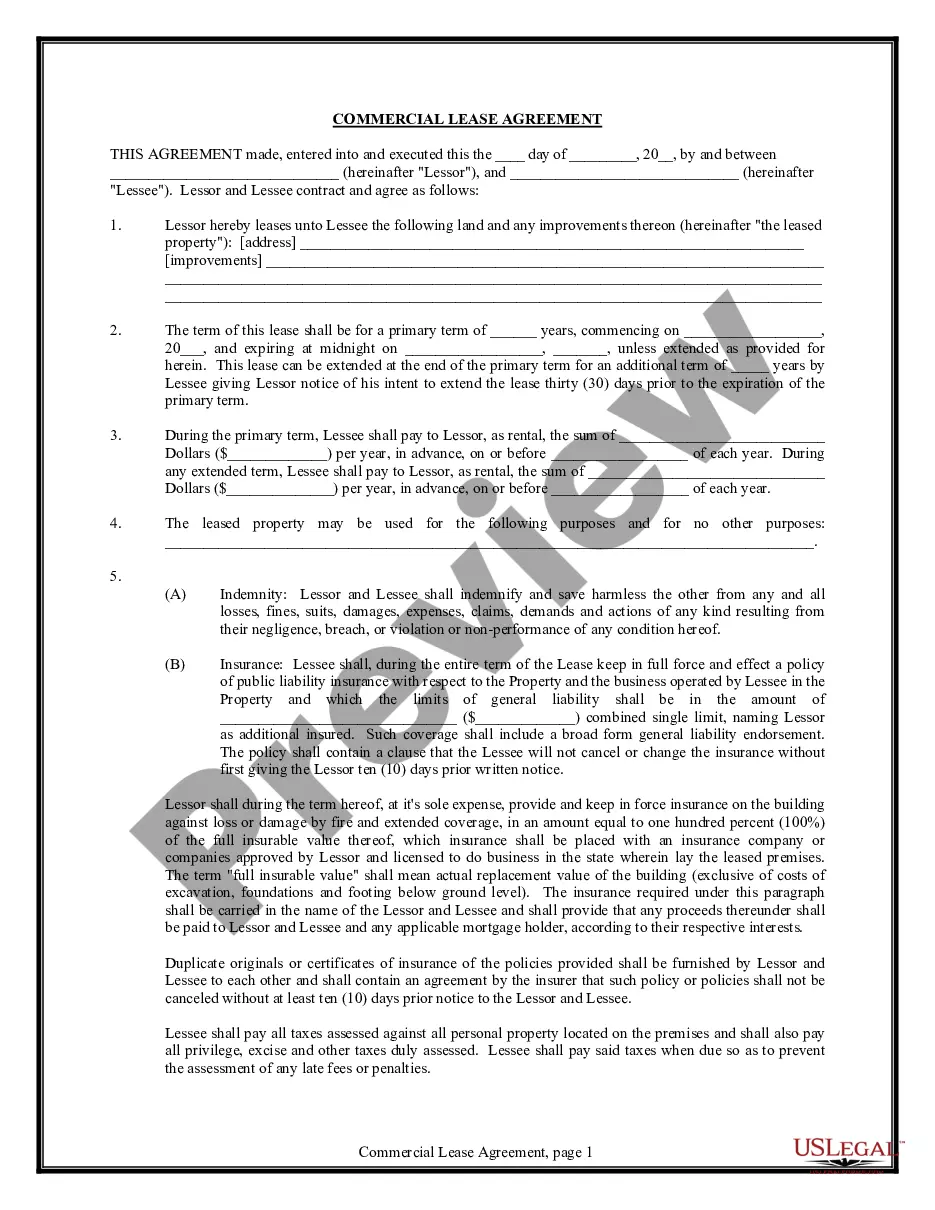
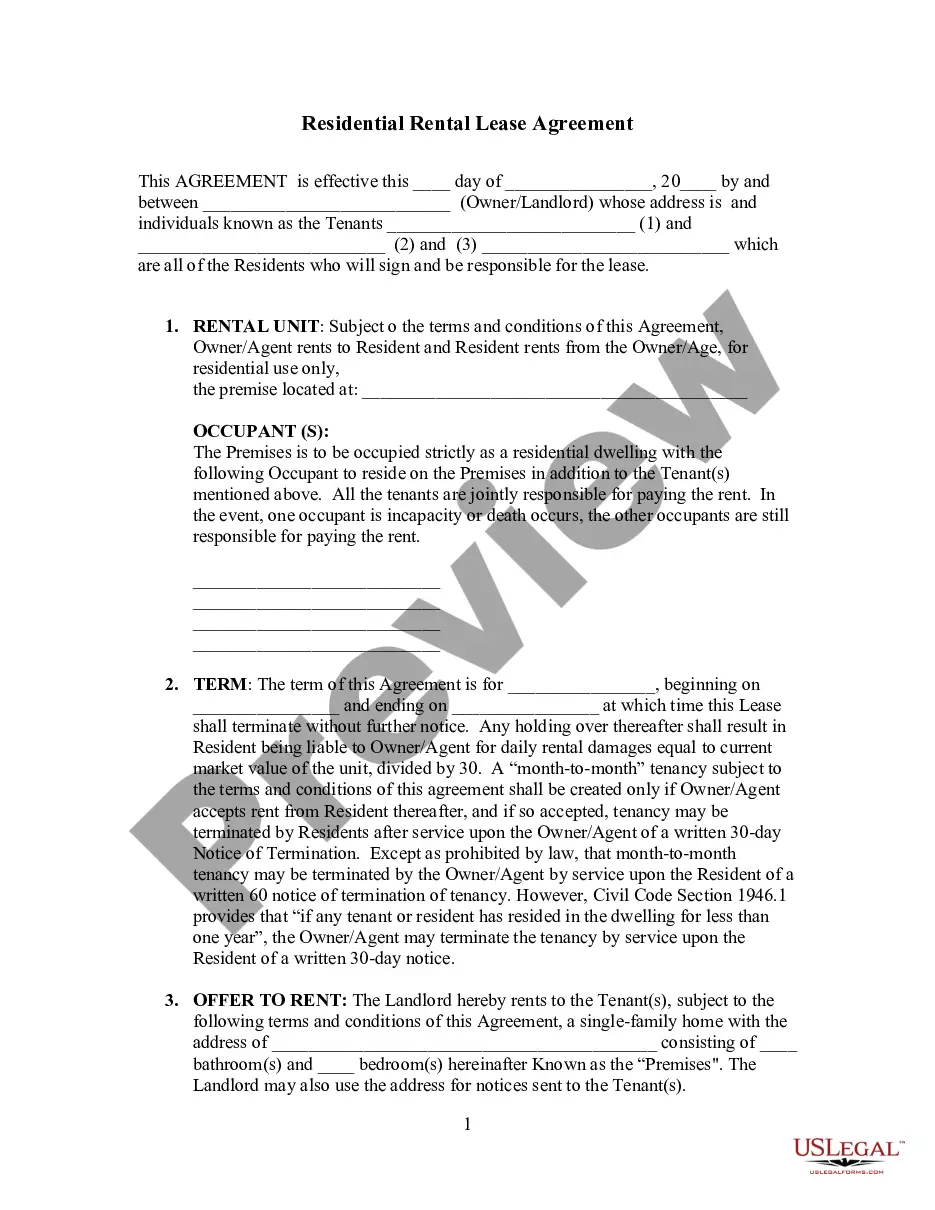
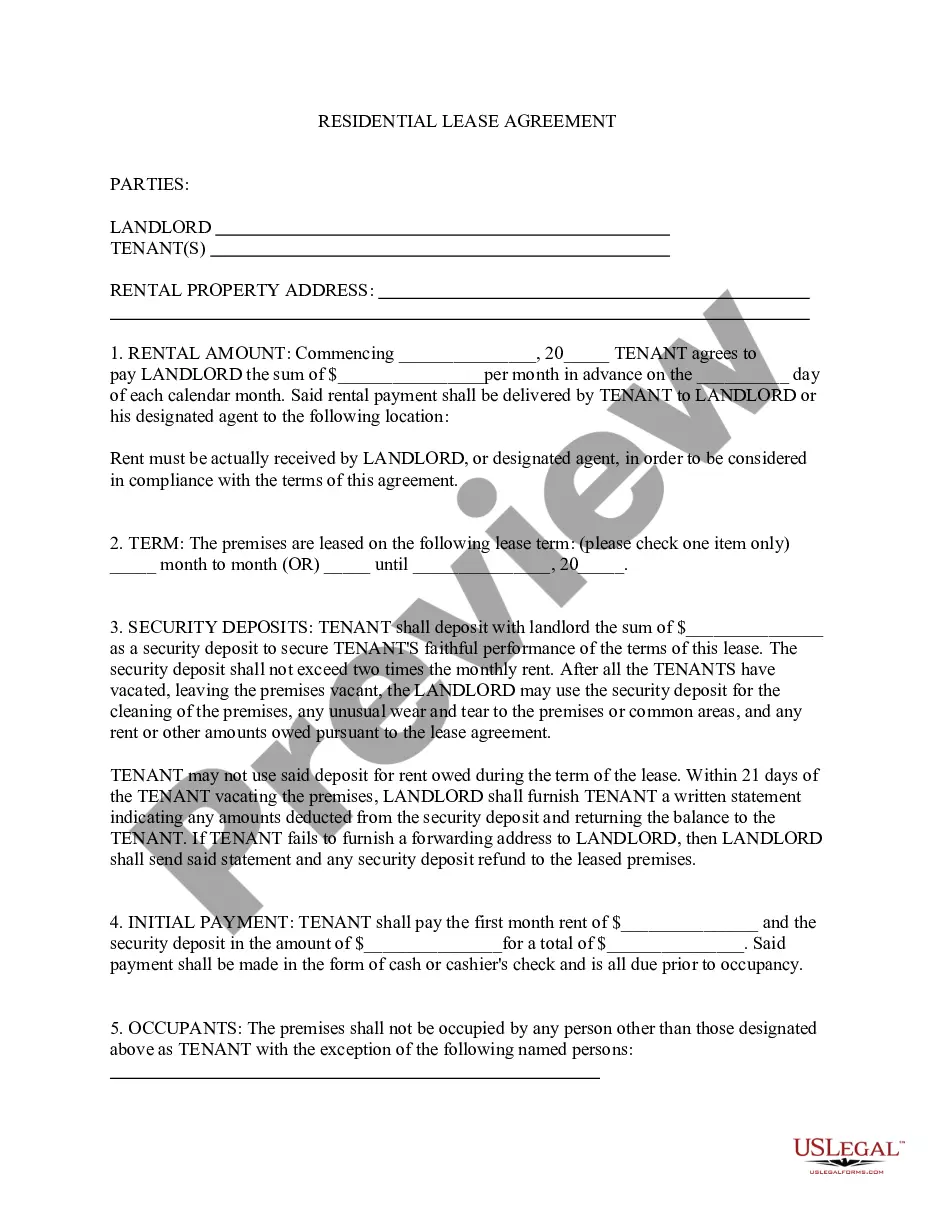
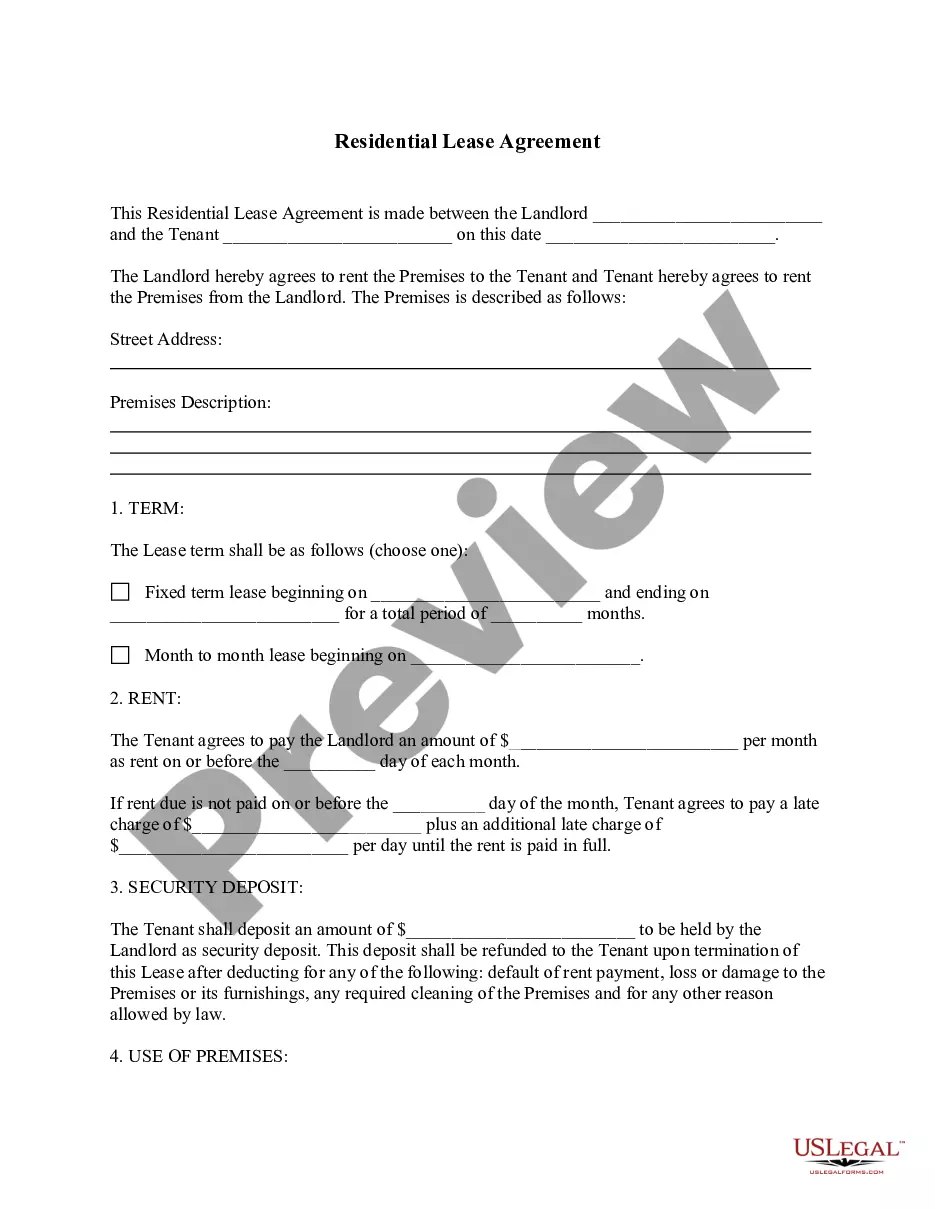
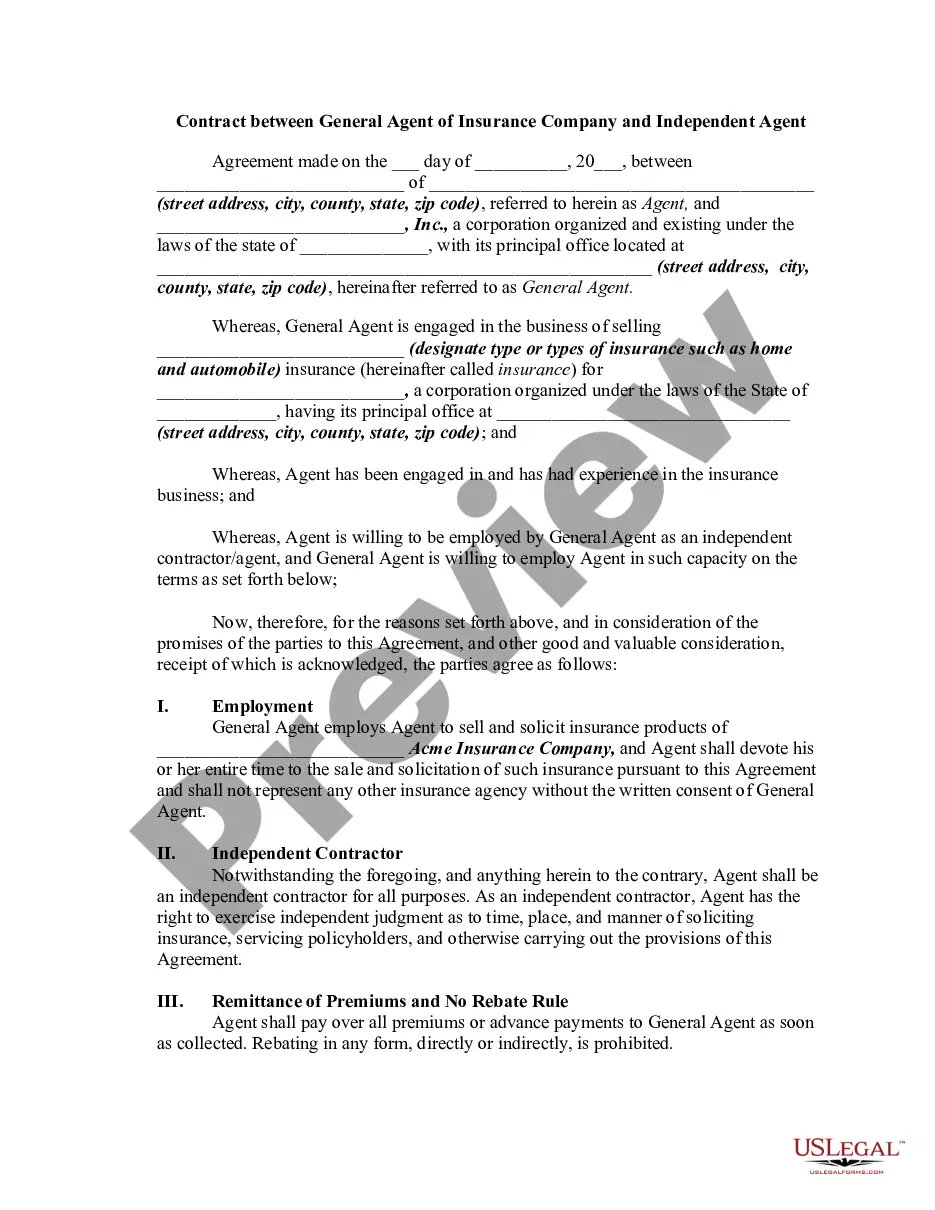



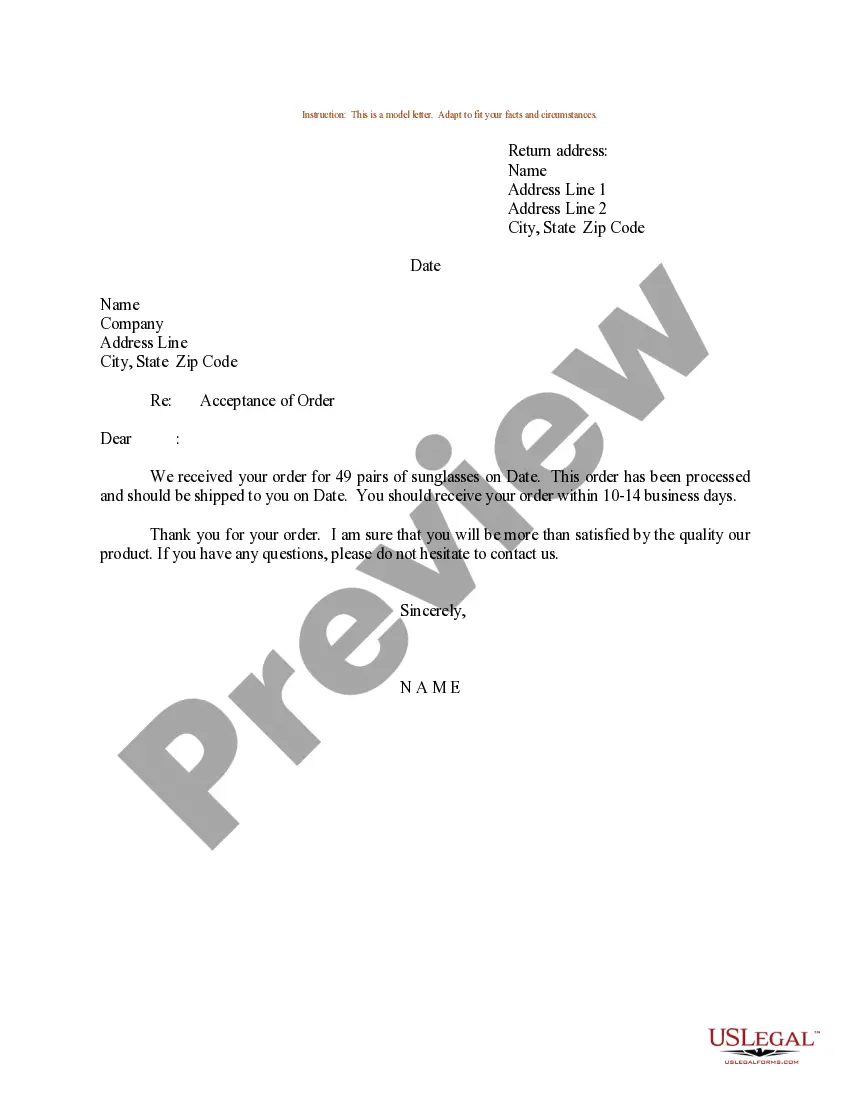

How to fill out Federal Consumer Leasing Act Disclosure Form?
Finding the correct legal document format can be a challenge.
Certainly, there are numerous templates available online, but how can you find the legal form you need.
Use the US Legal Forms website. This service offers a plethora of templates, including the Vermont Federal Consumer Leasing Act Disclosure Form, suitable for both business and personal purposes.
Firstly, ensure you have selected the correct form for your area. You may review the form using the Review button and examine the form details to confirm it is the right one for you.
- All forms are verified by experts and comply with federal and state regulations.
- If you are already registered, Log In to your account and click on the Acquire button to obtain the Vermont Federal Consumer Leasing Act Disclosure Form.
- Use your account to search through the legal forms you have previously purchased.
- Visit the My documents tab in your account and download another copy of the document you need.
- If you are a new user of US Legal Forms, here are some simple steps you can follow.
Form popularity
FAQ
The 3 acre rule in Vermont stipulates that any development on three or more acres of land generally requires an Act 250 permit. This rule aims to manage land use efficiently and protect the environment. It ensures that significant developments are subject to careful scrutiny. To better comprehend your obligations under this rule, consider reviewing the Vermont Federal Consumer Leasing Act Disclosure Form through USLegalForms.
Act 250 is triggered by various factors, primarily related to the scale and impact of a proposed project. Specifically, it applies to developments that exceed certain size thresholds, such as size or number of units for housing. Additionally, projects affecting natural resources may also initiate the review process. Understanding these triggers is essential to avoid legal complications, and the Vermont Federal Consumer Leasing Act Disclosure Form can aid in navigating these regulations.
The Act 250 disclosure in Vermont refers to regulations concerning land development and environmental protection. This process requires developers to obtain a permit before initiating any large-scale projects. It helps ensure that land use aligns with community standards and environmental guidelines. For more detailed information and assistance, you can explore the Vermont Federal Consumer Leasing Act Disclosure Form available on the USLegalForms platform.
The rules of the Consumer Leasing Act mandate that lessors provide specific disclosures about lease agreements and uphold consumer rights. These rules aim to prevent deceptive practices and ensure fairness in leasing transactions. By following them and using the Vermont Federal Consumer Leasing Act Disclosure Form, both consumers and lessors can foster a transparent leasing experience.
A lease that allows a consumer to receive a refund at the end of the term, based on the property's realized value, is known as a 'open-end lease.' This type of lease can be beneficial for consumers who want flexibility at the end of their leasing term. Navigating these options can be easier with the Vermont Federal Consumer Leasing Act Disclosure Form as your guide.
The Federal Consumer Leasing Act disclosure ensures that consumers receive clear information about the terms and costs of leasing. It is designed to assist consumers in comparing lease offers and understanding their rights and obligations. Filling out the Vermont Federal Consumer Leasing Act Disclosure Form helps clarify these terms for consumers.
Consumer Leasing Act Reg. M required disclosures include key information about the lease term, total amount due at signing, monthly payment amounts, and mileage restrictions. These disclosures help consumers understand the financial implications and obligations of their lease. When filling out the Vermont Federal Consumer Leasing Act Disclosure Form, it’s crucial to include all these details for compliance.
The disclosure of the Consumer Leasing Act provides essential information to consumers entering lease agreements. It ensures transparency by detailing the terms, costs, and obligations involved in leasing a vehicle or property. By understanding this disclosure, consumers can make informed decisions before signing a Vermont Federal Consumer Leasing Act Disclosure Form.
The Vermont Federal Consumer Leasing Act Disclosure Form aims to promote transparency in lease agreements. This act ensures that consumers receive essential details about the lease terms, helping them make informed decisions. By understanding the costs and responsibilities involved, individuals can avoid unexpected charges and pitfalls. Ultimately, the act protects consumers while encouraging fair leasing practices.