Vermont Letter Informing Debt Collector of Unfair Practices in Collection Activities - Taking, or Threatening to Take, any Nonjudicial Action Where there is no Present Right or Intent to Exercise such Rights

State:
Multi-State
Control #:
US-DCPA-20.4BG
Format:
Word; 
Rich Text
Instant download

Description

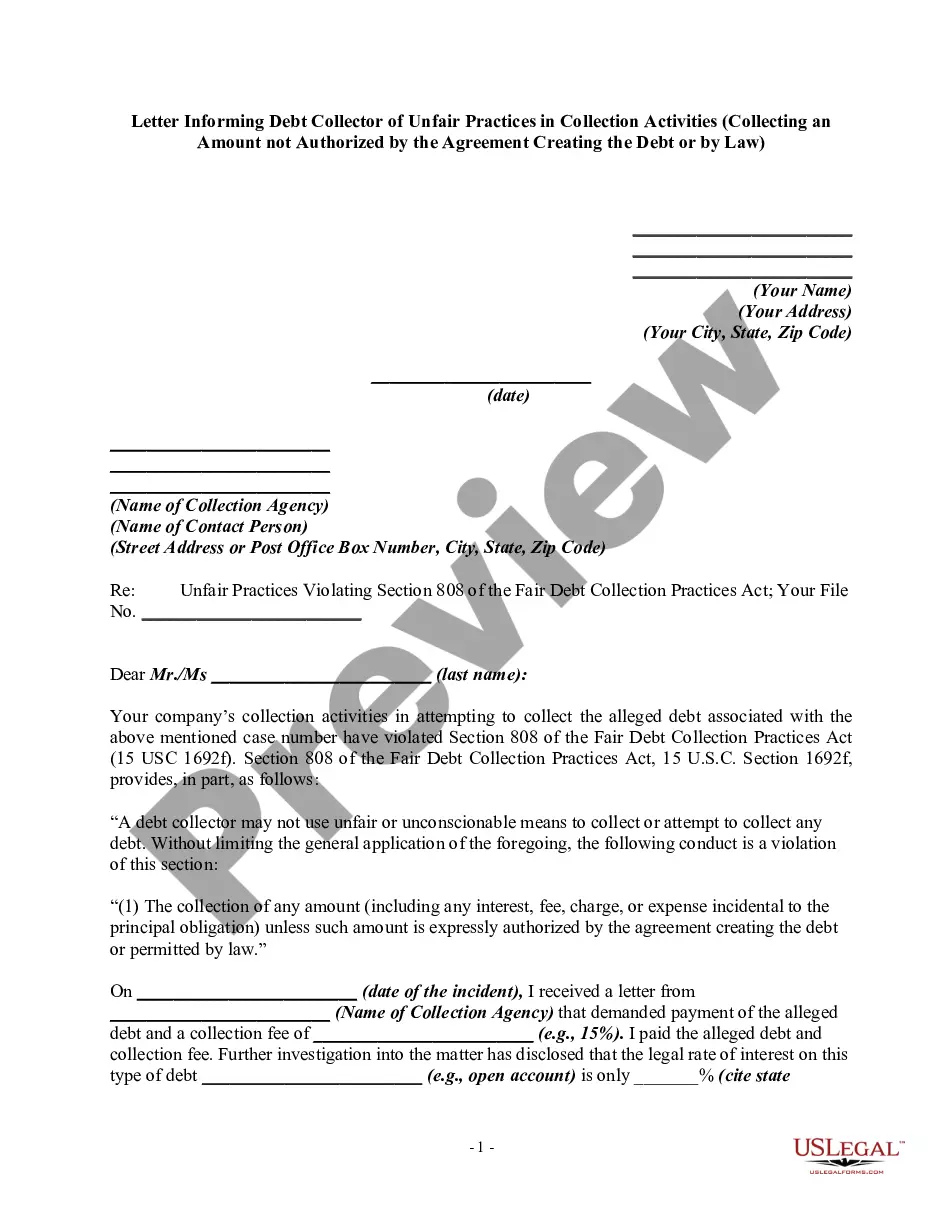
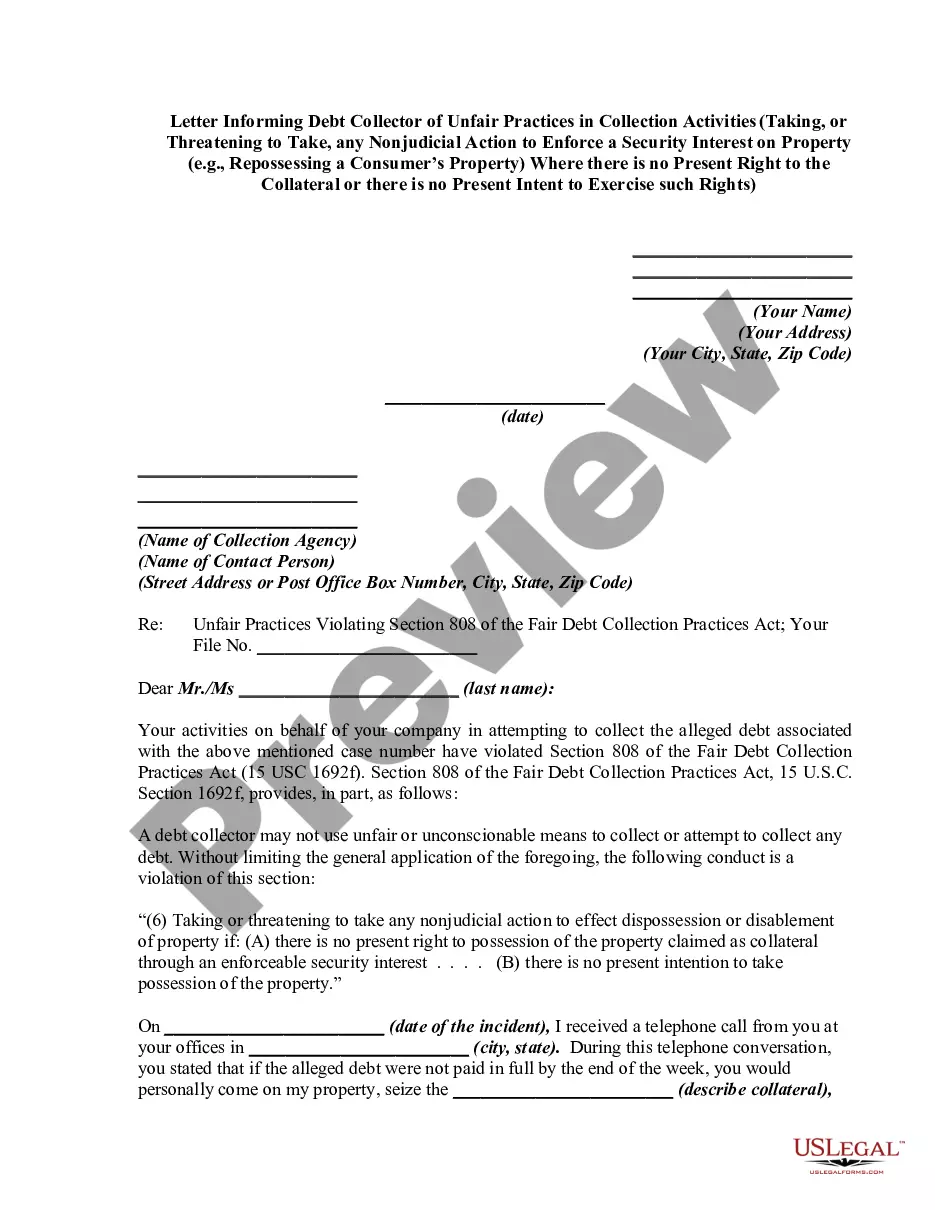
A debt collector may not use unfair or unconscionable means to collect or attempt to collect any debt. Without limiting the general application of the foregoing, the following conduct is a violation of this section:


"(6) Taking or threatening to take any nonjudicial action to effect dispossession or disablement of property if: (A) there is no present right to possession of the property claimed as collateral through an enforceable security interest . . . . (B) there is no present intention to take possession of the property."
Free preview
  • Preview Letter Informing Debt Collector of Unfair Practices in Collection Activities - Taking, or Threatening to Take, any Nonjudicial Action Where there is no Present Right or Intent to Exercise such Rights
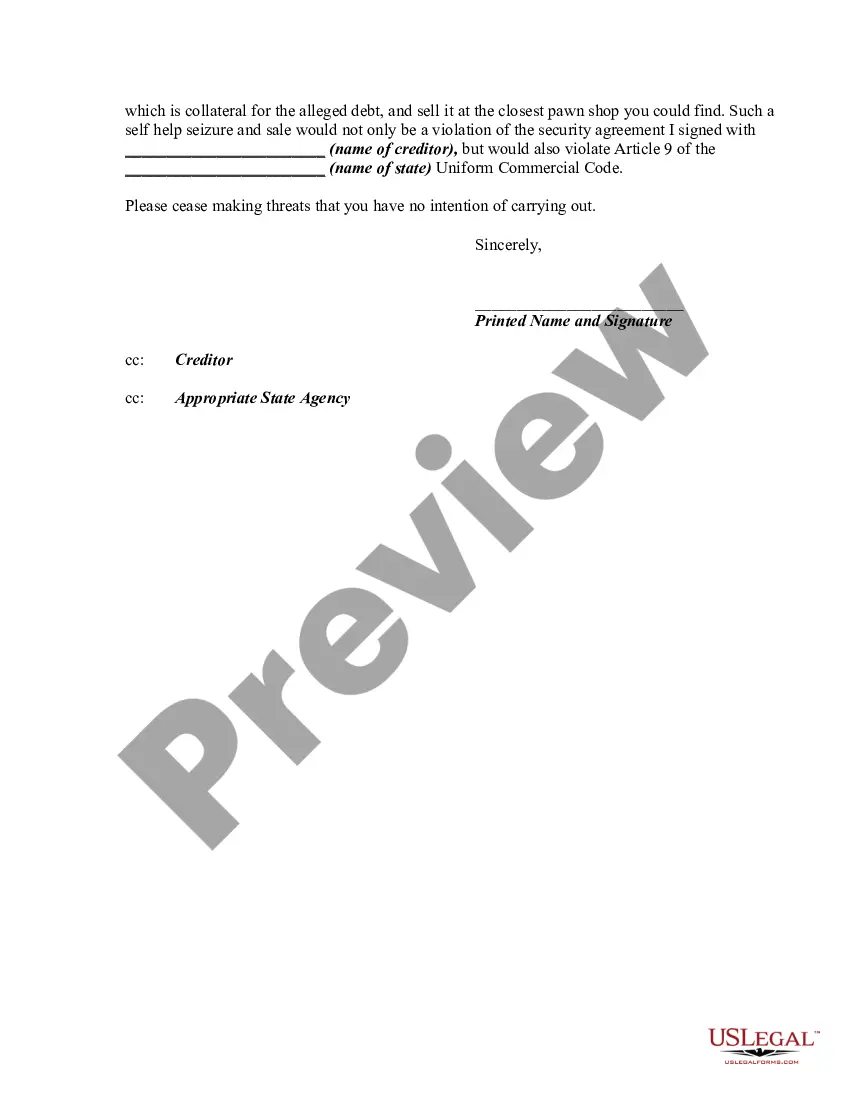
  • Preview Letter Informing Debt Collector of Unfair Practices in Collection Activities - Taking, or Threatening to Take, any Nonjudicial Action Where there is no Present Right or Intent to Exercise such Rights

Related forms

form-preview
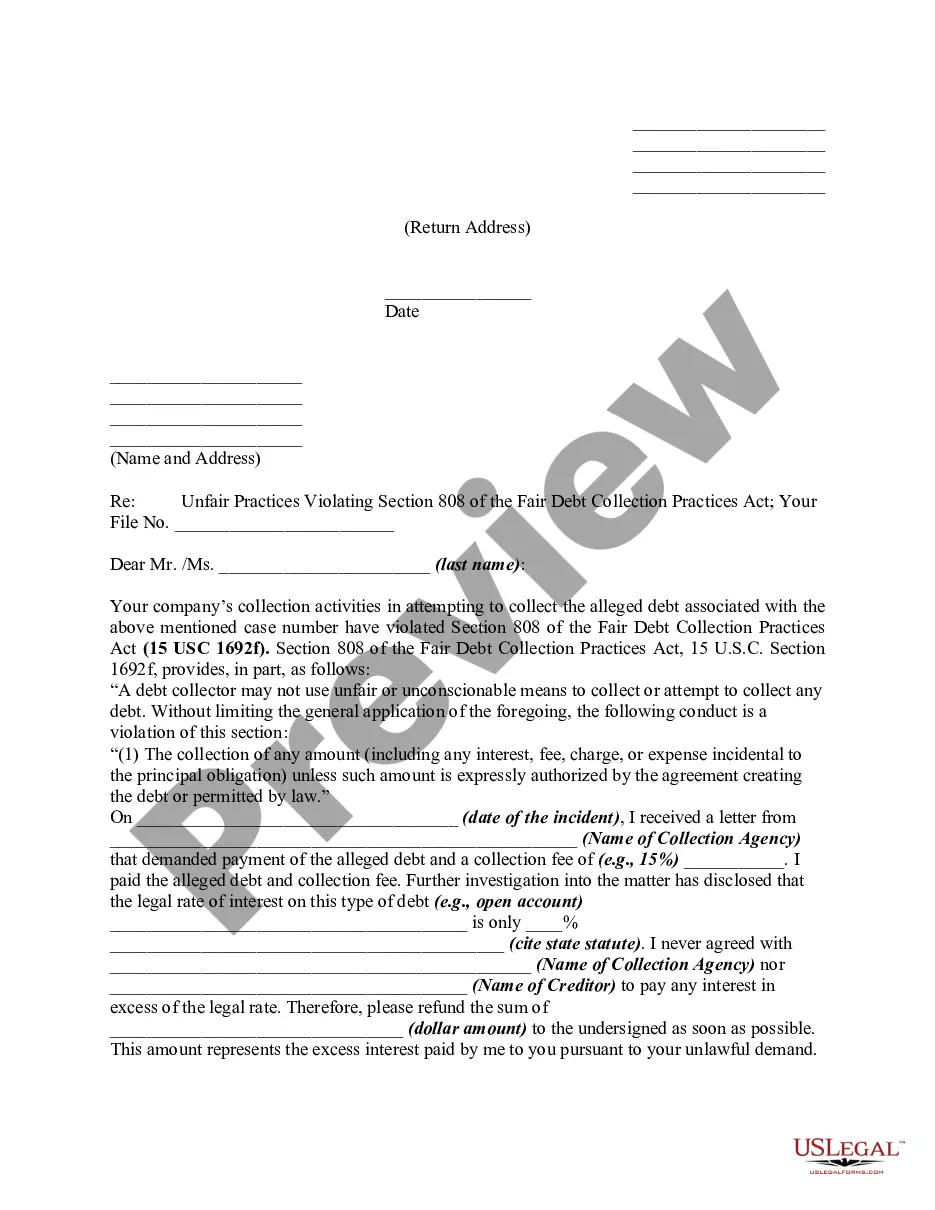
Vermont Letter Informing Debt Collector of Unfair Practices in Collection Activities

Vermont Letter Informing Debt Collector of Unfair Practices in Collection Activities

View this form
form-preview
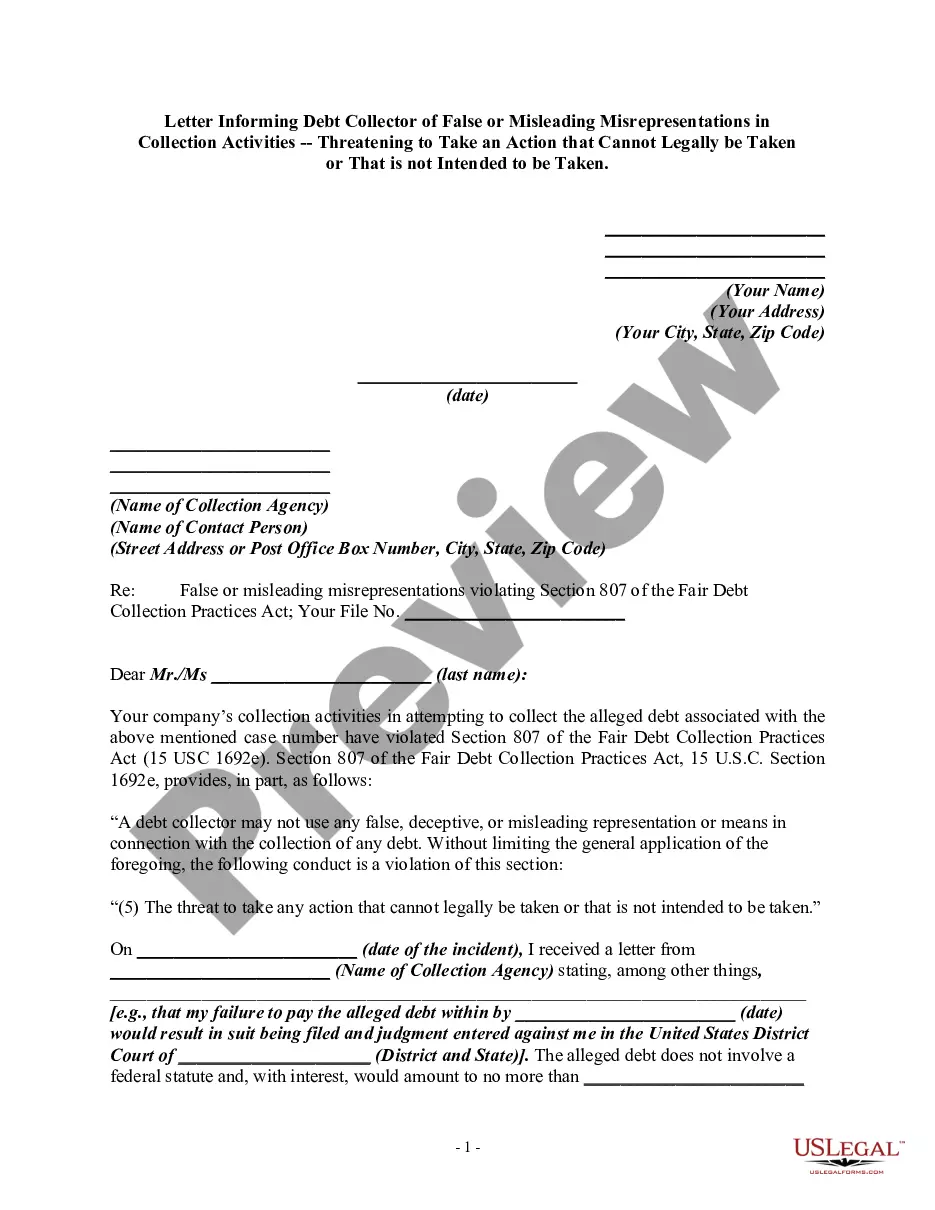
Vermont Letter Informing Debt Collector of False or Misleading Misrepresentations in Collection Activities - Threatening to Take an Action that Cannot Legally be Taken or That is not Intended to be Taken

Vermont Letter Informing Debt Collector of False or Misleading Misrepresentations in Collection Activities - Threatening to Take an Action that Cannot Legally be Taken or That is not Intended to be Taken

View this form
form-preview
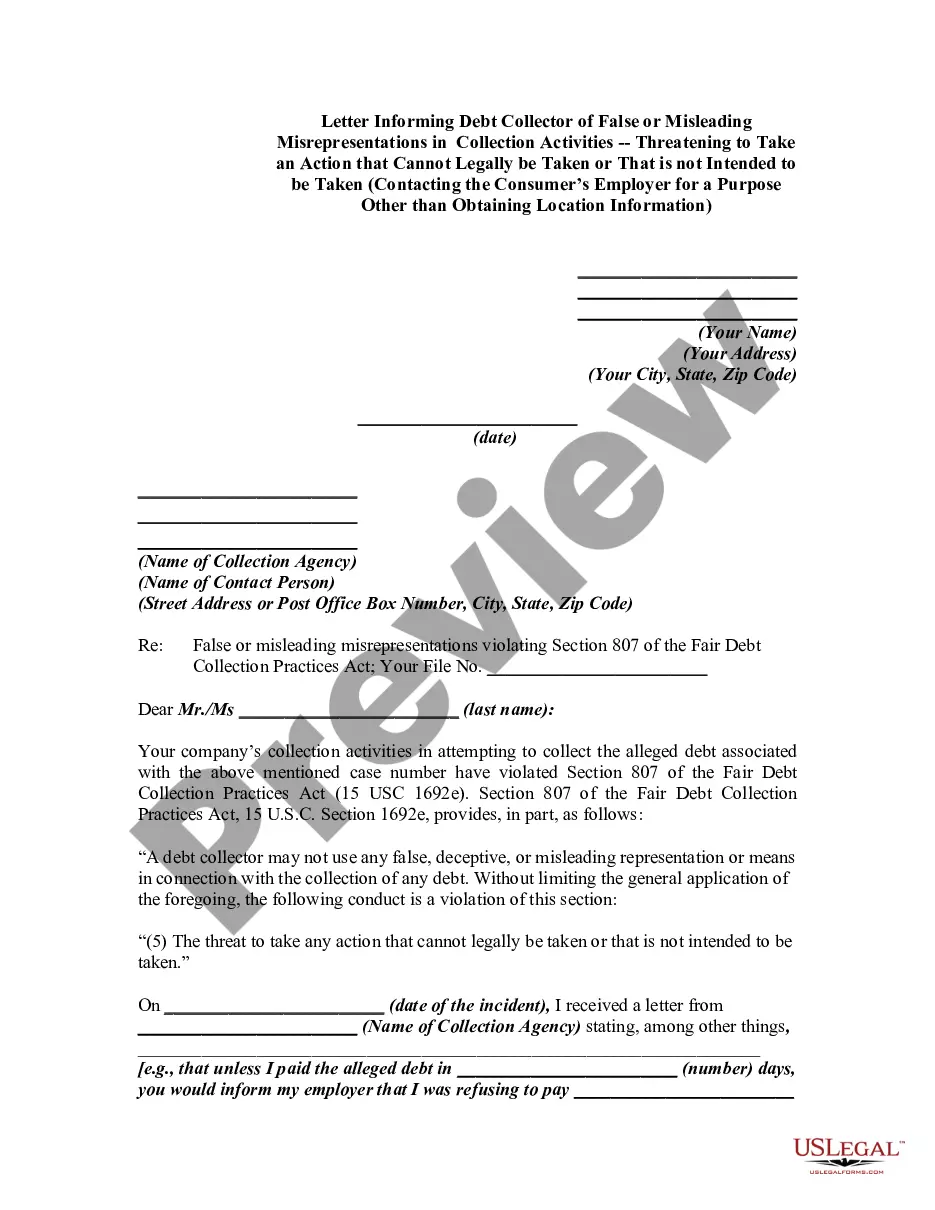
Vermont Letter Informing Debt Collector of False or Misleading Misrepresentations in Collection Activities - Threatening to Take an Action that Cannot Legally be Taken or That is not Intended to be Taken - Contacting the Consumer’s Employer

Vermont Letter Informing Debt Collector of False or Misleading Misrepresentations in Collection Activities - Threatening to Take an Action that Cannot Legally be Taken or That is not Intended to be Taken - Contacting the Consumer’s Employer

View this form
form-preview
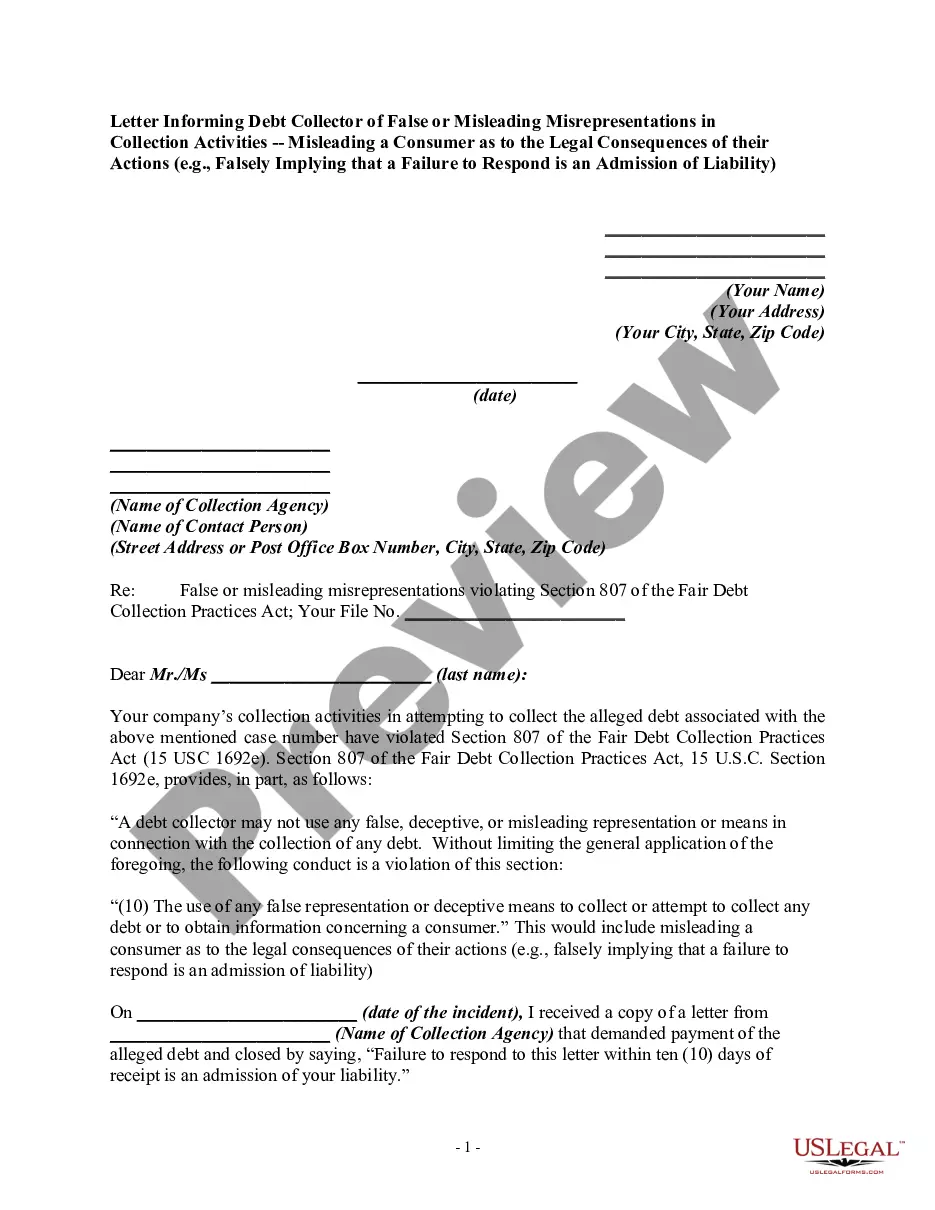
Vermont Letter Informing Debt Collector of False or Misleading Misrepresentations in Collection Activities - Misleading a Consumer as to the Legal Consequences of their Actions - e.g., Falsely Implying that a Failure to Respond is an Admission of Liability

Vermont Letter Informing Debt Collector of False or Misleading Misrepresentations in Collection Activities - Misleading a Consumer as to the Legal Consequences of their Actions - e.g., Falsely Implying that a Failure to Respond is an Admission of Liability

View this form
form-preview
Vermont Letter Informing Debt Collector of Unfair Practices in Collection Activities - Collecting an Amount not Authorized by the Agreement Creating the Debt or by Law

Vermont Letter Informing Debt Collector of Unfair Practices in Collection Activities - Collecting an Amount not Authorized by the Agreement Creating the Debt or by Law

View this form

How to fill out Letter Informing Debt Collector Of Unfair Practices In Collection Activities - Taking, Or Threatening To Take, Any Nonjudicial Action Where There Is No Present Right Or Intent To Exercise Such Rights?

Locating the appropriate sanctioned document template can be quite a challenge.

Of course, there are numerous designs accessible online, but how do you discover the sanctioned form you need.

Utilize the US Legal Forms website. The service offers a vast array of templates, including the Vermont Letter Informing Debt Collector of Unfair Practices in Collection Activities - Taking, or Threatening to Take, any Nonjudicial Action When there is no Current Right or Intent to Exercise such Rights, available for both business and personal needs.

First, confirm that you have selected the appropriate document for your location/region. You can review the document using the Review option and examine the document outline to ensure it is suitable for you.

  1. All forms are vetted by experts and satisfy federal and state requirements.
  2. If you are already authorized, Log Into your account and click the Download button to retrieve the Vermont Letter Informing Debt Collector of Unfair Practices in Collection Activities - Taking, or Threatening to Take, any Nonjudicial Action When there is no Current Right or Intent to Exercise such Rights.
  3. Use your account to search for the sanctioned forms you have previously purchased.
  4. Navigate to the My documents tab in your account and obtain another copy of the document you require.
  5. If you are a new user of US Legal Forms, here are simple steps to follow.

Form popularity

FAQ

No harassment The Fair Debt Collection Practices Act (FDCPA) says debt collectors can't harass, oppress, or abuse you or anyone else they contact. Some examples of harassment are: Repetitious phone calls that are intended to annoy, abuse, or harass you or any person answering the phone. Obscene or profane language.

Debt Collectors Can't Call You Repeatedly to Harass You This means that while the FDCPA doesn't place a specific limit on the number of calls debt collectors can make, it prohibits them from calling you multiple times just to harass you. (15 U.S. Code §? 1692d).

Here's what to do:Get a copy of your credit report from each major credit bureauEquifax, Experian and TransUnion.List all the erroneous collection accounts on your credit reports and write down as much information as possible about each item.Write a dispute letter and send it to each credit bureau.More items...?

The Fair Debt Collection Practices Act (FDCPA) The FDCPA prohibits debt collection companies from using abusive, unfair or deceptive practices to collect debts from you.

Your dispute should be made in writing to ensure that the debt collector has to send you verification of the debt. If you're having trouble with debt collection, you can submit a complaint with the CFPB online or by calling (855) 411-CFPB (2372).

If you're wondering how to win a debt collection lawsuit against you, here are six steps you can take.Respond to the Lawsuit.Challenge the Collection Agency's Right to Sue You.Hire an Attorney.File a Countersuit.Attempt to Settle the Debt.File for Bankruptcy.The Bottom Line.

Here are a few suggestions that might work in your favor:Write a letter disputing the debt. You have 30 days after receiving a collection notice to dispute a debt in writing.Dispute the debt on your credit report.Lodge a complaint.Respond to a lawsuit.Hire an attorney.

The definition of debt collection harassment is to intimidate, abuse, coerce, bully or browbeat consumers into paying off debt. This happens most often over the phone, but harassment could come in the form of emails, texts, direct mail or talking to friends or neighbors about your debt.

Fortunately, there are legal actions you can take to stop this harassment:Write a Letter Requesting To Cease Communications.Document All Contact and Harassment.File a Complaint With the FTC.File a Complaint With Your State's Agency.Consider Suing the Debt Collection Agency for Harassment.16-Apr-2021

Trusted and secure by over 3 million people of the world’s leading companies

Vermont Letter Informing Debt Collector of Unfair Practices in Collection Activities - Taking, or Threatening to Take, any Nonjudicial Action Where there is no Present Right or Intent to Exercise such Rights