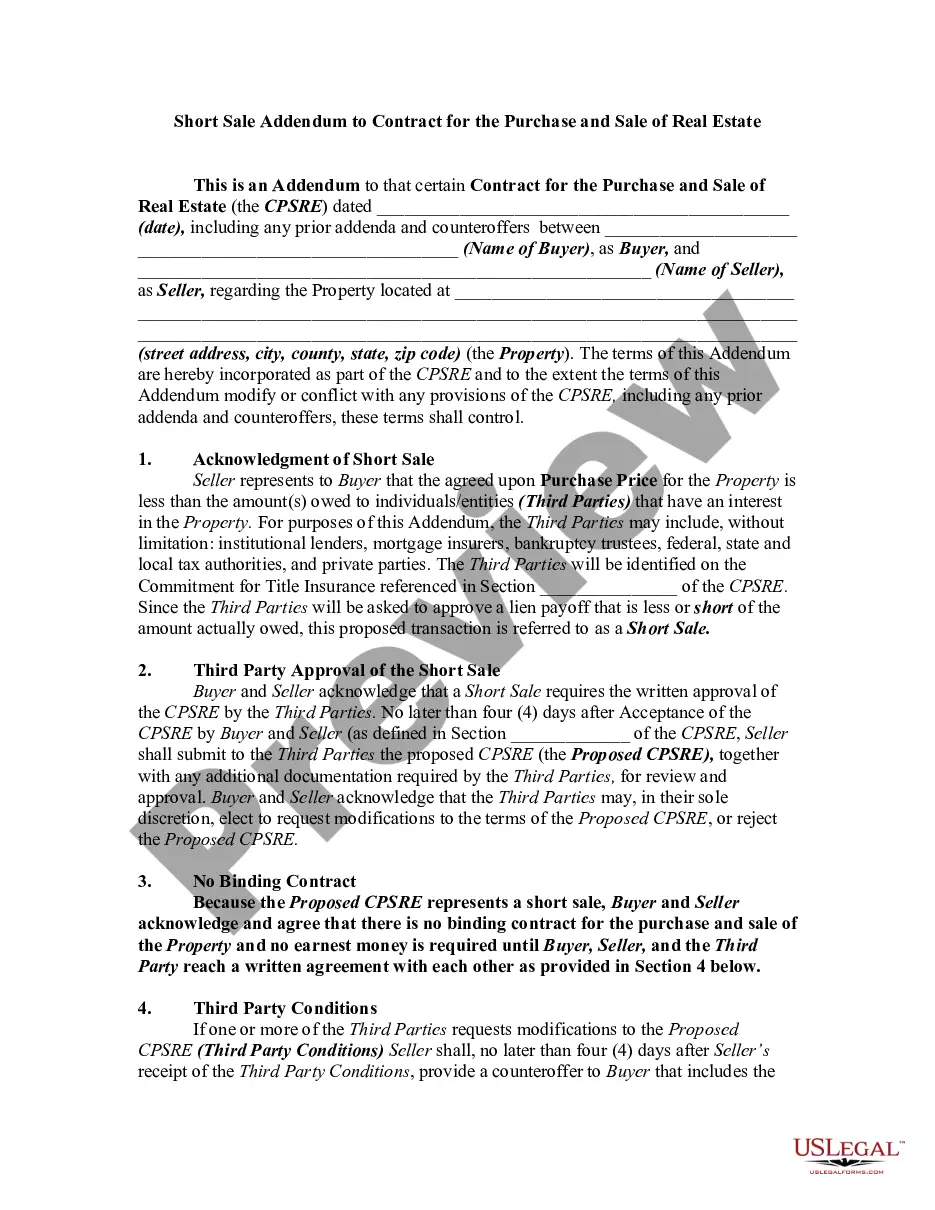
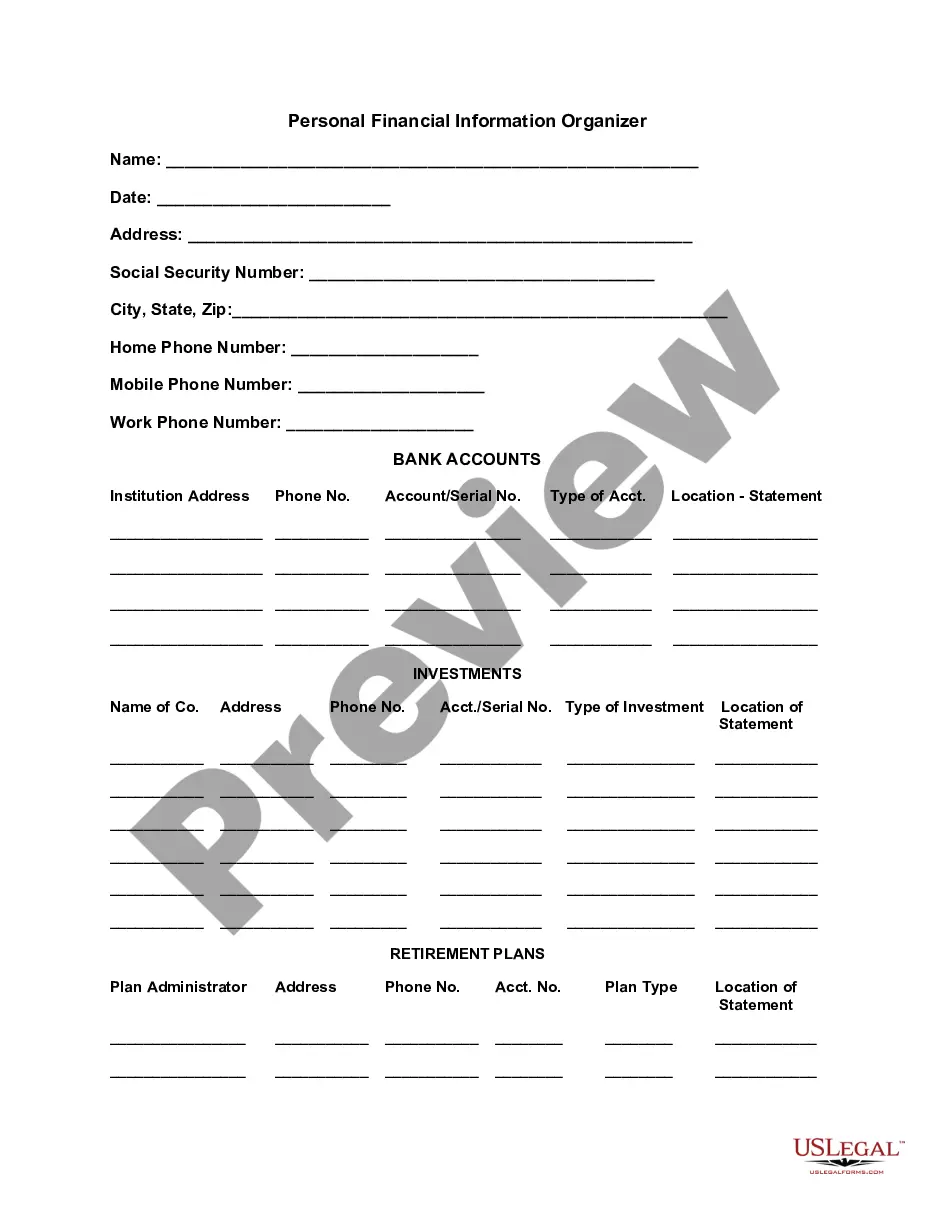
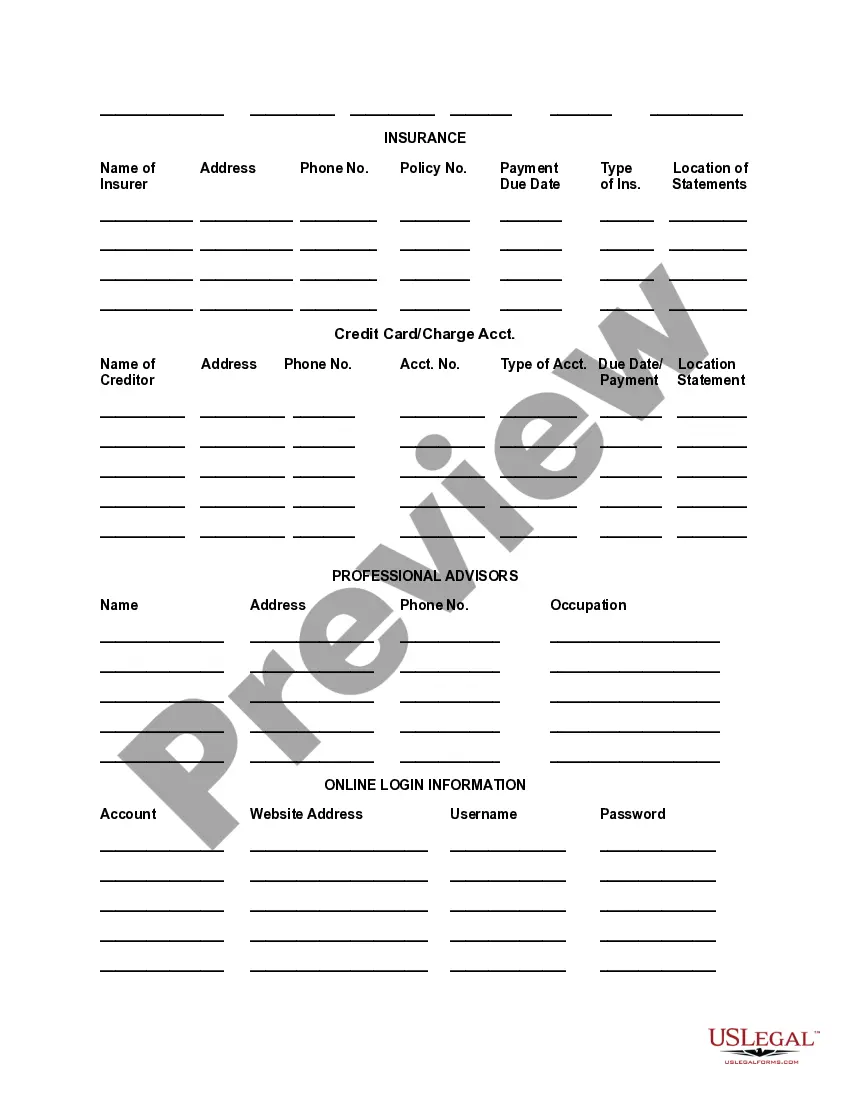
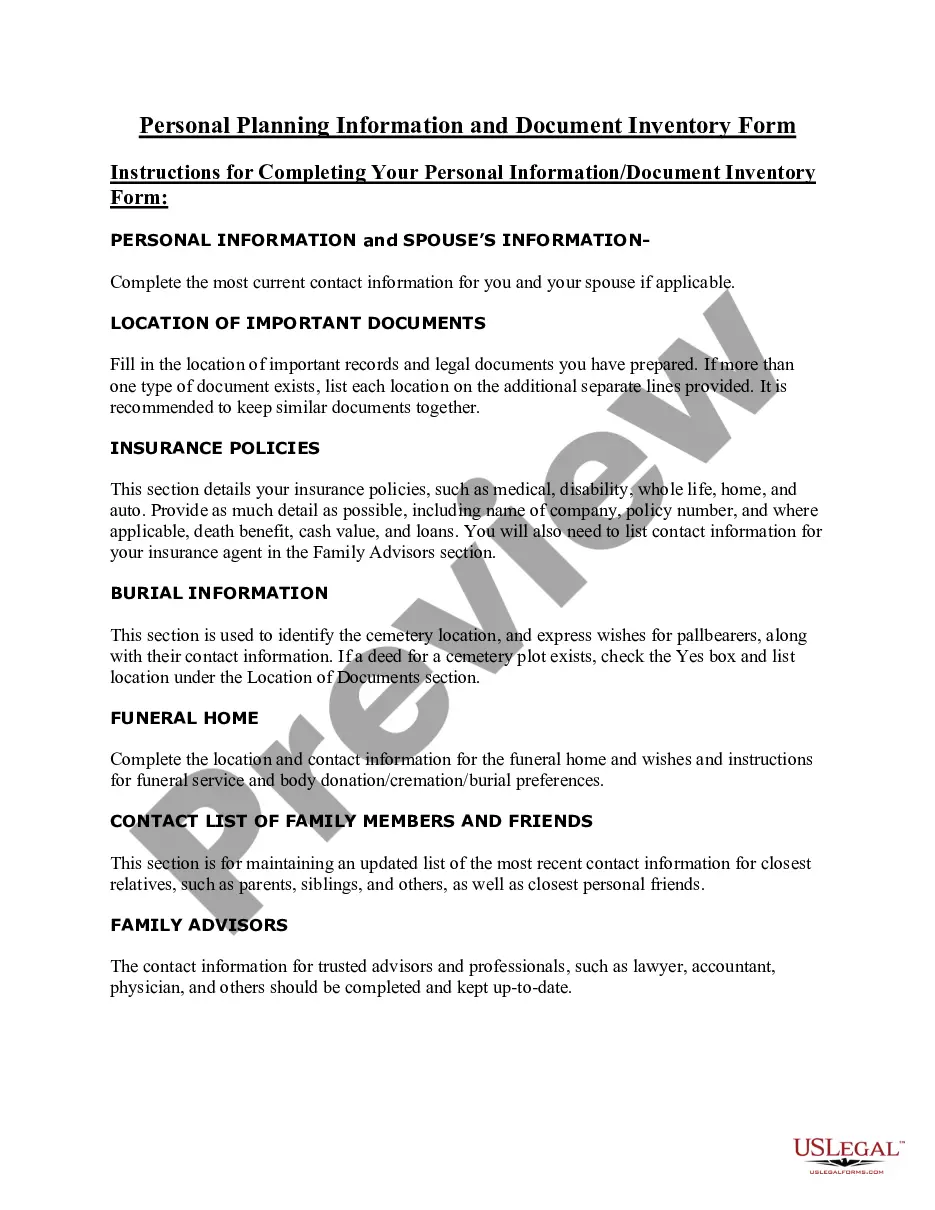
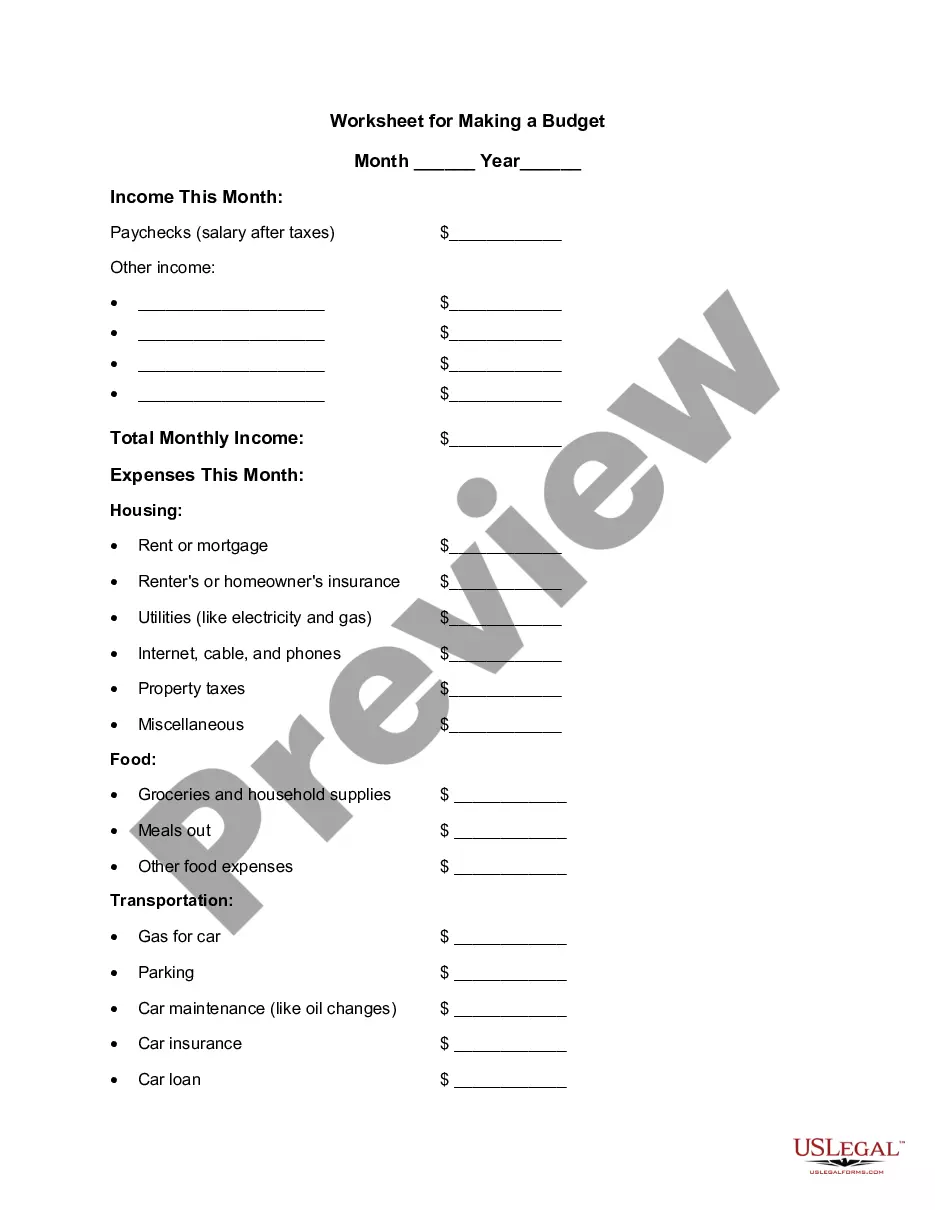
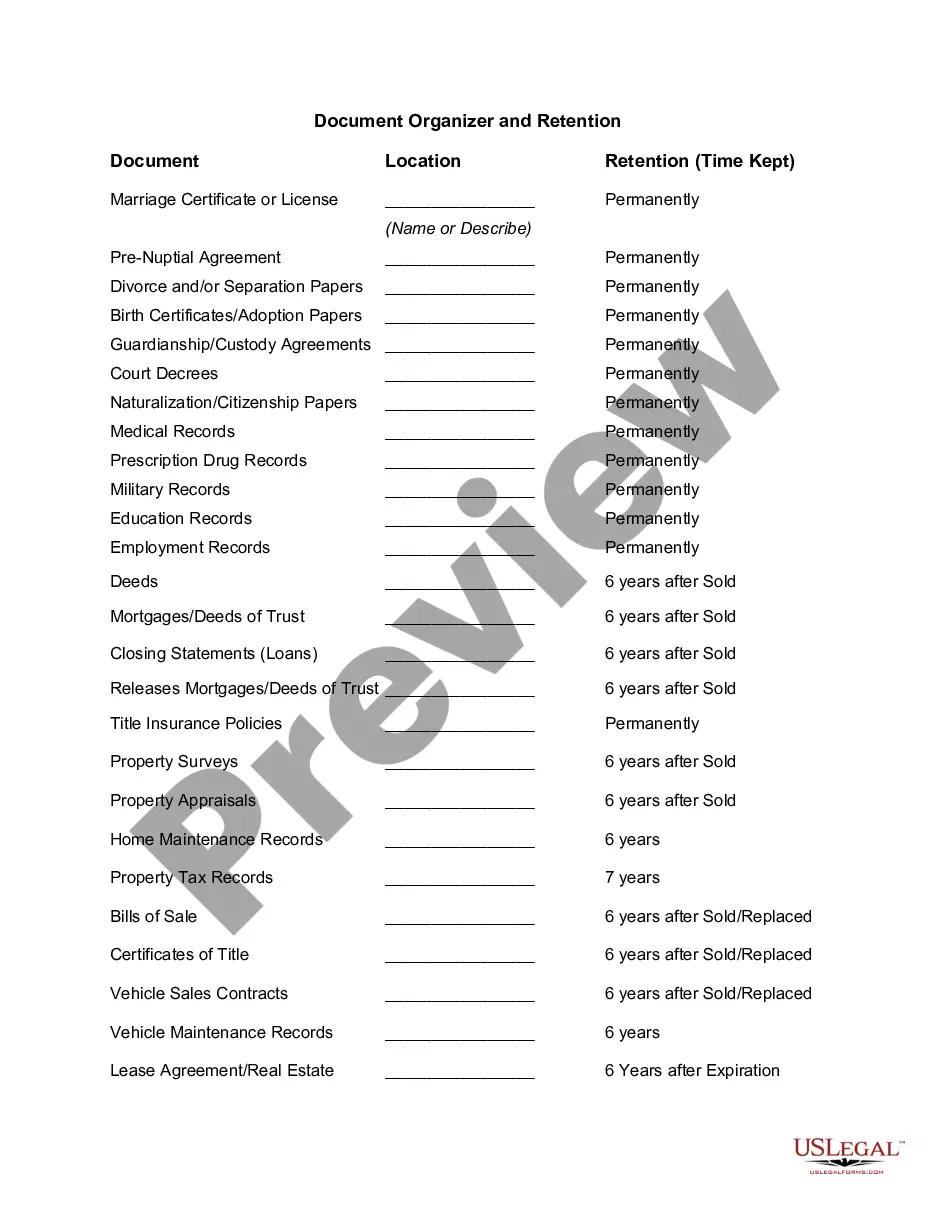
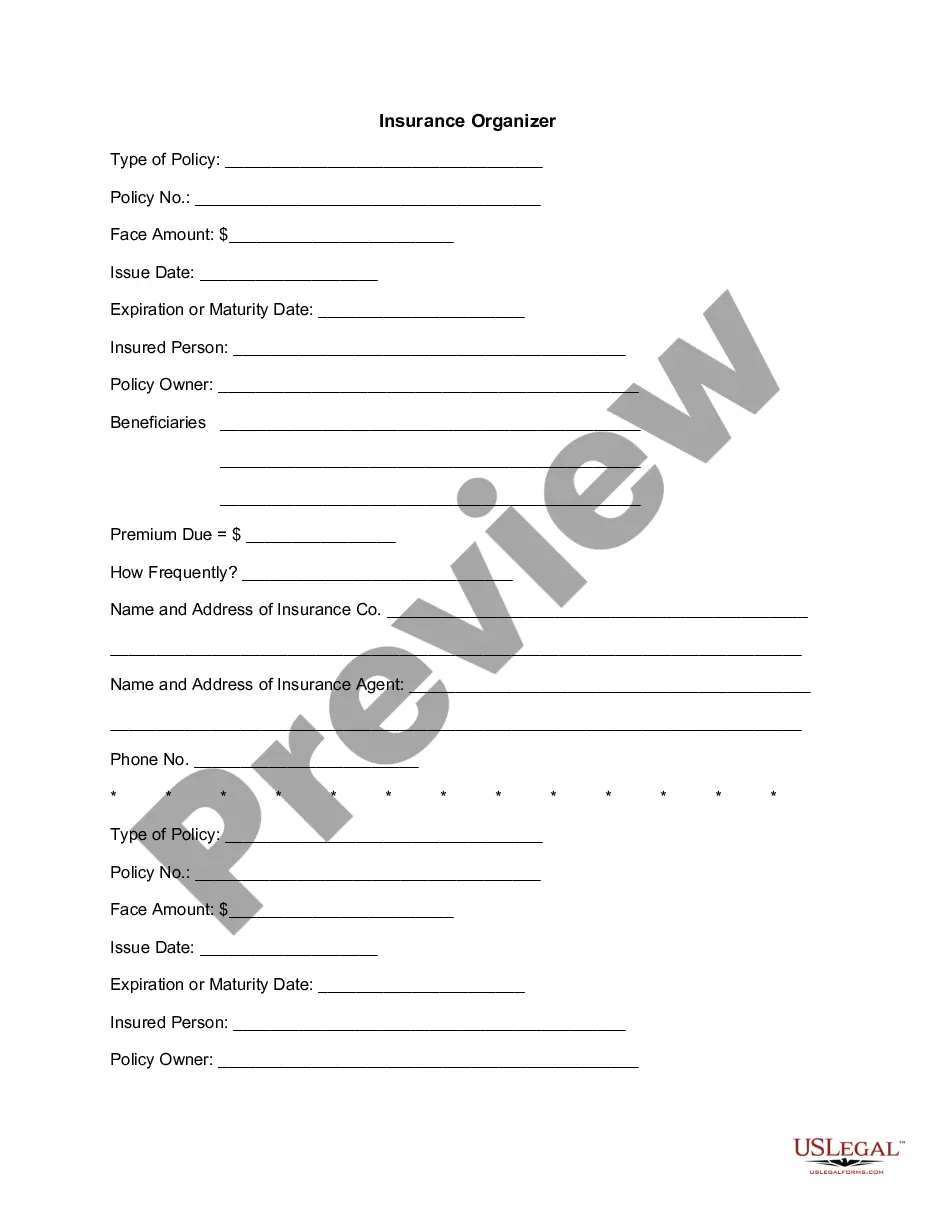
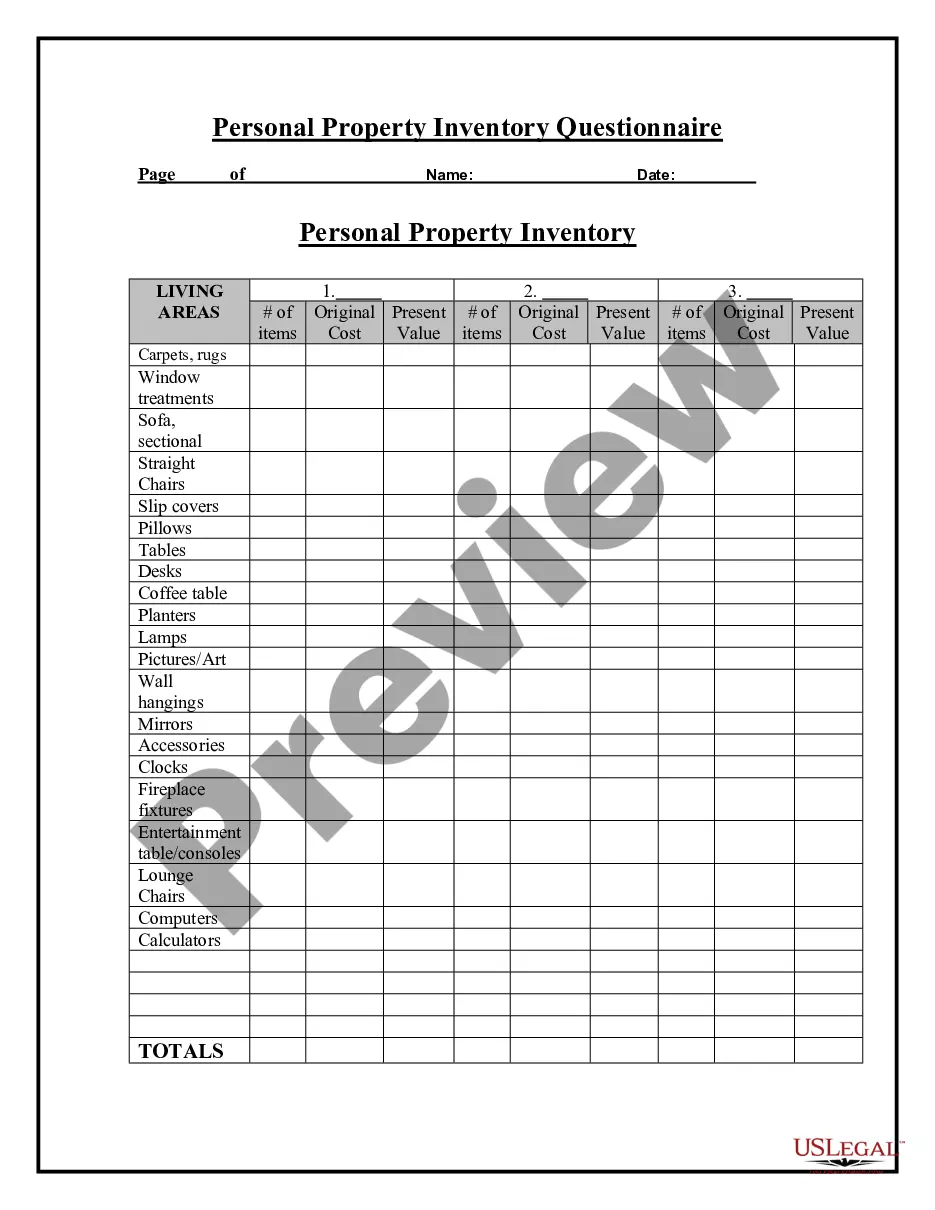
Vermont Personal Financial Information Organizer
Description

Get your form ready online
Our built-in tools help you complete, sign, share, and store your documents in one place.
Make edits, fill in missing information, and update formatting in US Legal Forms—just like you would in MS Word.
Download a copy, print it, send it by email, or mail it via USPS—whatever works best for your next step.
Sign and collect signatures with our SignNow integration. Send to multiple recipients, set reminders, and more. Go Premium to unlock E-Sign.
If this form requires notarization, complete it online through a secure video call—no need to meet a notary in person or wait for an appointment.
We protect your documents and personal data by following strict security and privacy standards.

Make edits, fill in missing information, and update formatting in US Legal Forms—just like you would in MS Word.

Download a copy, print it, send it by email, or mail it via USPS—whatever works best for your next step.

Sign and collect signatures with our SignNow integration. Send to multiple recipients, set reminders, and more. Go Premium to unlock E-Sign.

If this form requires notarization, complete it online through a secure video call—no need to meet a notary in person or wait for an appointment.

We protect your documents and personal data by following strict security and privacy standards.
Looking for another form?


How to fill out Personal Financial Information Organizer?
You can allocate time on the web searching for the legal document template that satisfies the state and federal requirements you need.
US Legal Forms offers thousands of legal templates that can be reviewed by experts.
You can indeed download or print the Vermont Personal Financial Information Organizer with my help.
You can take advantage of the Preview button to view the document template as well.
- If you possess a US Legal Forms account, you can Log In and click on the Obtain button.
- After that, you can fill out, alter, print, or sign the Vermont Personal Financial Information Organizer.
- Every legal document template you obtain is yours forever.
- To obtain another copy of a purchased form, visit the My documents tab and click on the relevant button.
- If you are using the US Legal Forms website for the first time, follow the simple instructions below.
- First, ensure you have selected the correct document template for the state/city of your choice.
- Review the form description to confirm that you have picked the right template.
Form popularity
FAQ
Organize Your Small Business Finances With These 6 StepsTrack Your Income. It's important to know how much you make.Track and Audit Your Expenses.Keep a Separate Bank Account.Protect Your Business.Consider How You'll Receive Payments.Sort Hard Copies and Digitize Them.Schedule Regular Money Meetings.
You should store these hard copies in a fireproof safe or bank safe deposit box. But it's still a good idea to make digital copies of those records. There are other documents that you can keep solely in digital form.
You could go the traditional route and use a simple set of labeled folders in a file drawer. More important documents should be kept in a fire-resistant file cabinet, safe, or safe-deposit box. If space is tight and you need to reduce clutter, you might consider electronic storage for some of your financial records.
Organize Your Financial Documents With These 10 Helpful...Financial Management bank statements, credit card information, loans records.Investments stocks and bonds, IRAs, savings bonds.Income Tax Information tax returns, supporting documents including charitable gifts.More items...?
Organize Your Financial RecordsDesignate a Record-Keeping Location - Use a two-drawer filing cabinet or deep desk drawers.Purchase Filing Materials - Use plain manila folders, hanging file folders, and/or accordion files.More items...
Organize regular bills and financial statements by the month or by the account (your preference). It is usually easiest to stick with either hanging files or an expanding file. When organizing by account, be sure to arrange documents in chronological order within each file so they are easier to find later on.
5 Steps to Organize Your Loved One's Financial RecordsStep 1: Get access. You or the person holding durable power of attorney will need access to computer accounts and financial records.Step 2: Find and sort.Step 3: Store for safekeeping.Step 4: Create a binder.Step 5: Keep track of receipts and money.
Put hard-to-replace documents in a water-tight container and/or fire-safe box. Place these records in a lockable cabinet. Create a folder for receipts and place in an easy-to-reach spot. At the end of every day, organize your receipts, either by date or type of purchase.
Let's get started:Step 1: Ditch the Shoebox Method.Step 2: Track Your Expenses.Step 3: Establish a Bill-Paying System.Step 4: Read Your Bills and Account Statements.Step 5: Shred Old Financial Records.Step 6: Stop the Clutter at the Source.
Find the following and designate a place to keep and work with them.Bank records and statements.Tax returns.Keys and combinations for safes or safe deposit boxes.Passwords for computers, online accounts and social media.Titles and deeds for any property.Stock certificates.Bonds.Receipts.More items...?