Vermont Nonexclusive License Agreement for Process Patent, Know How and Trademark
Description
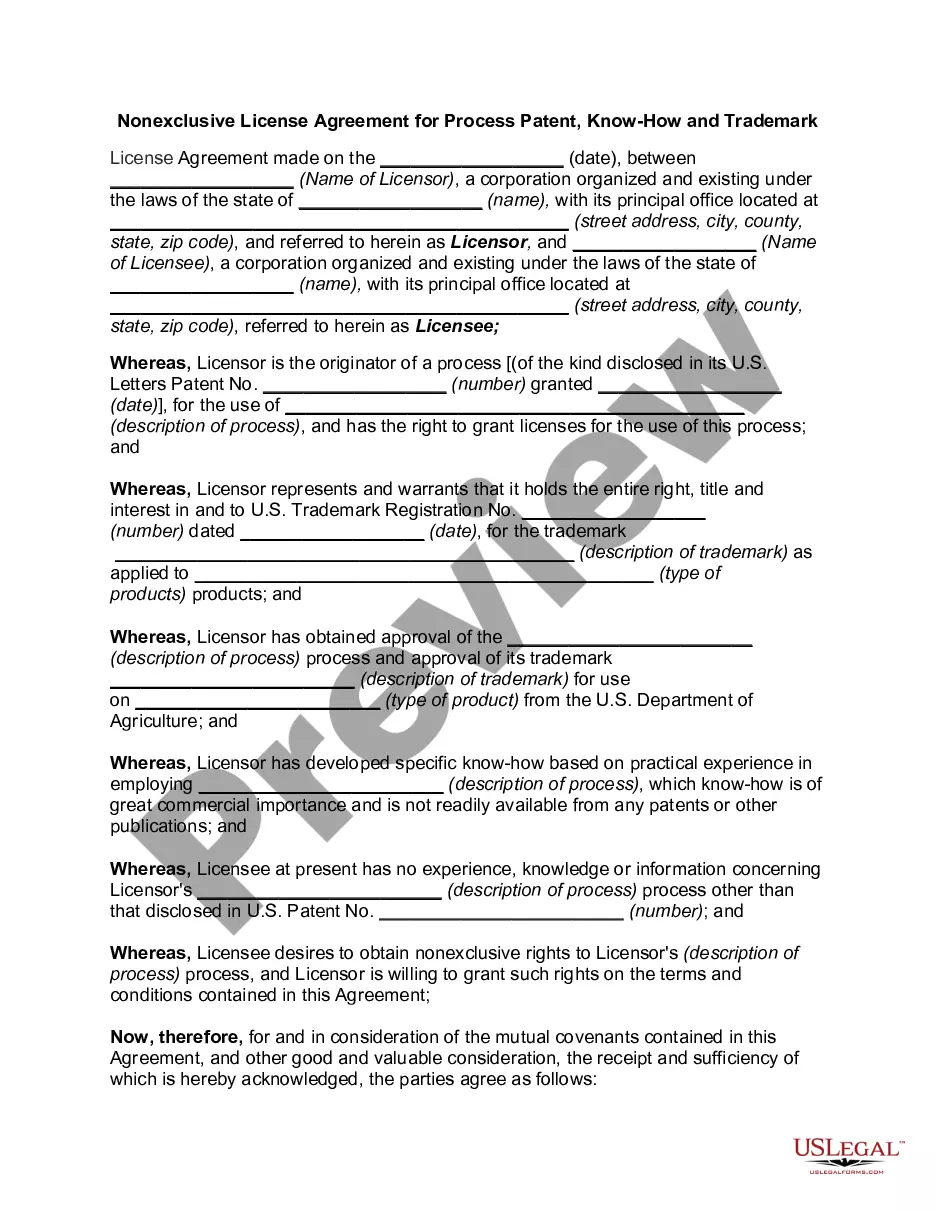
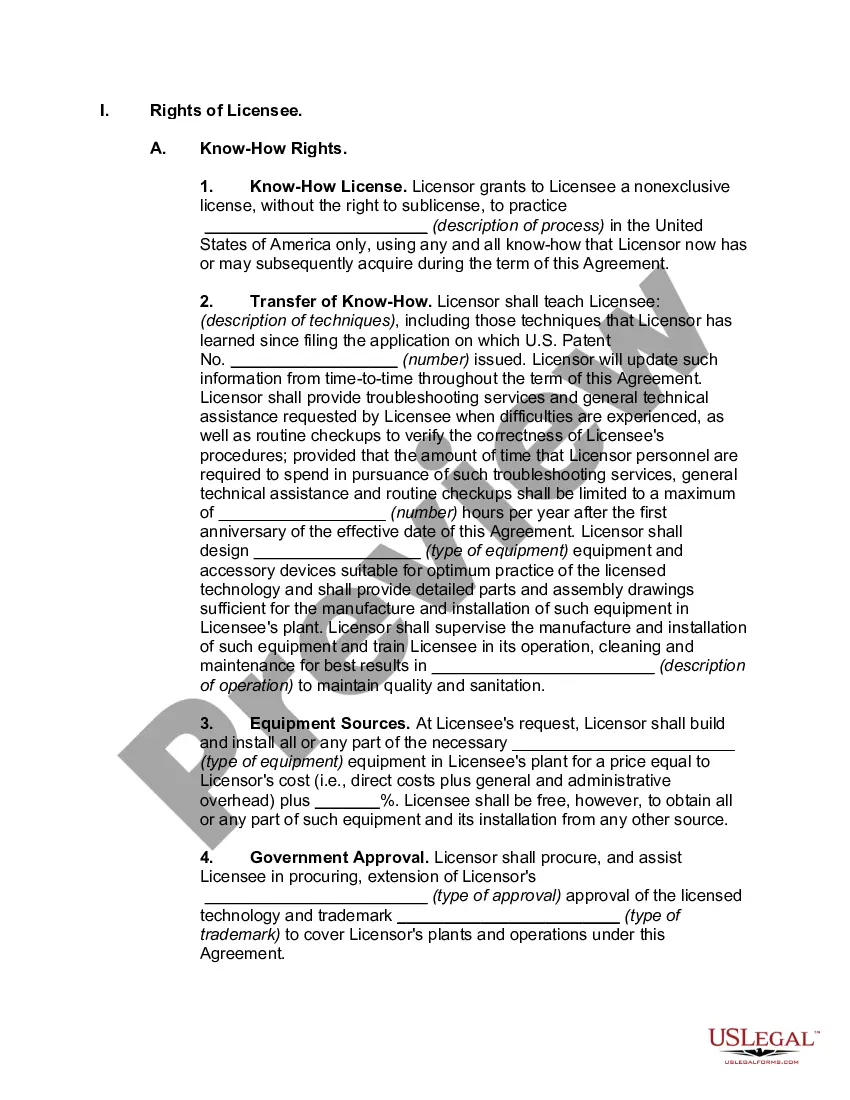
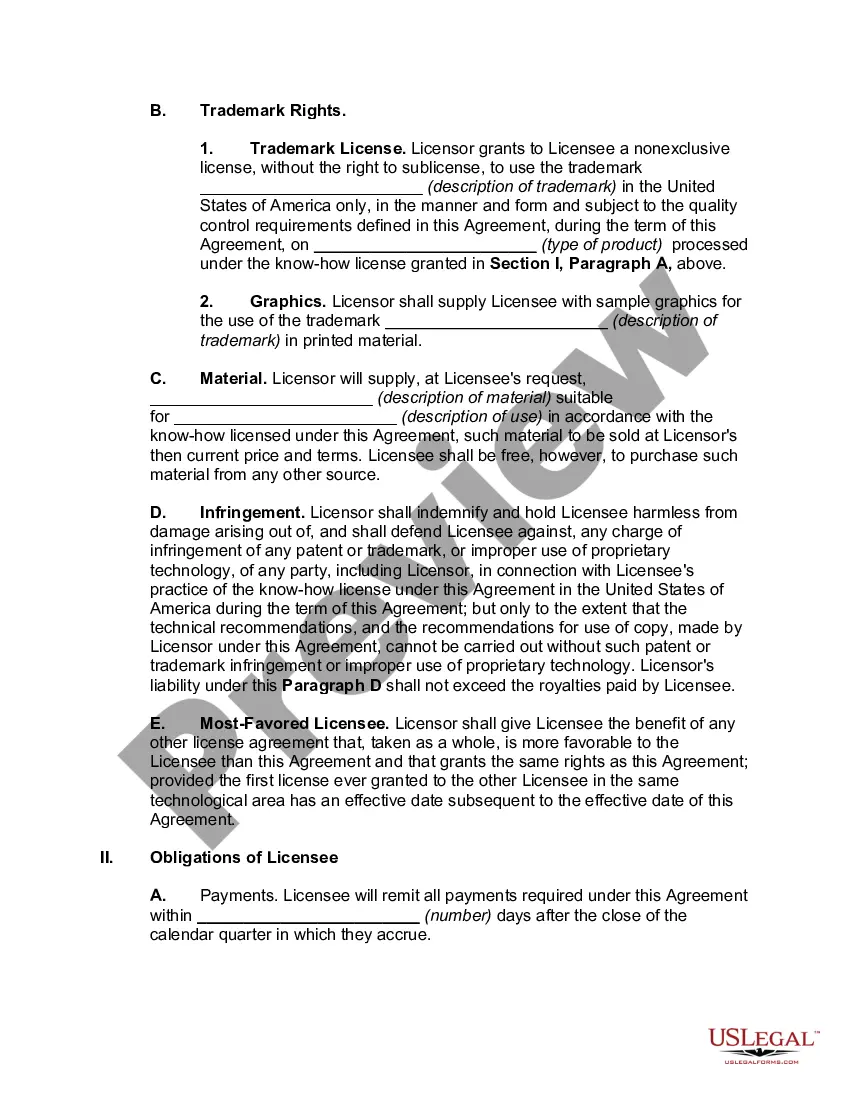
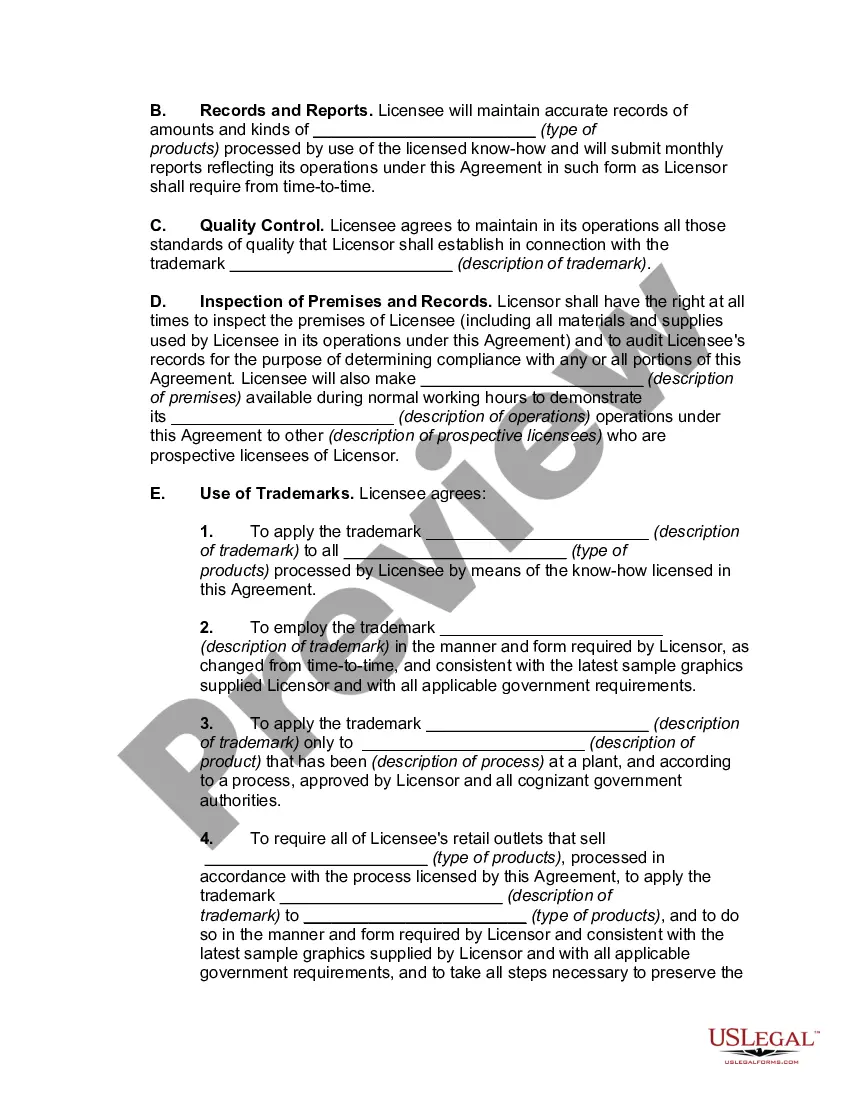
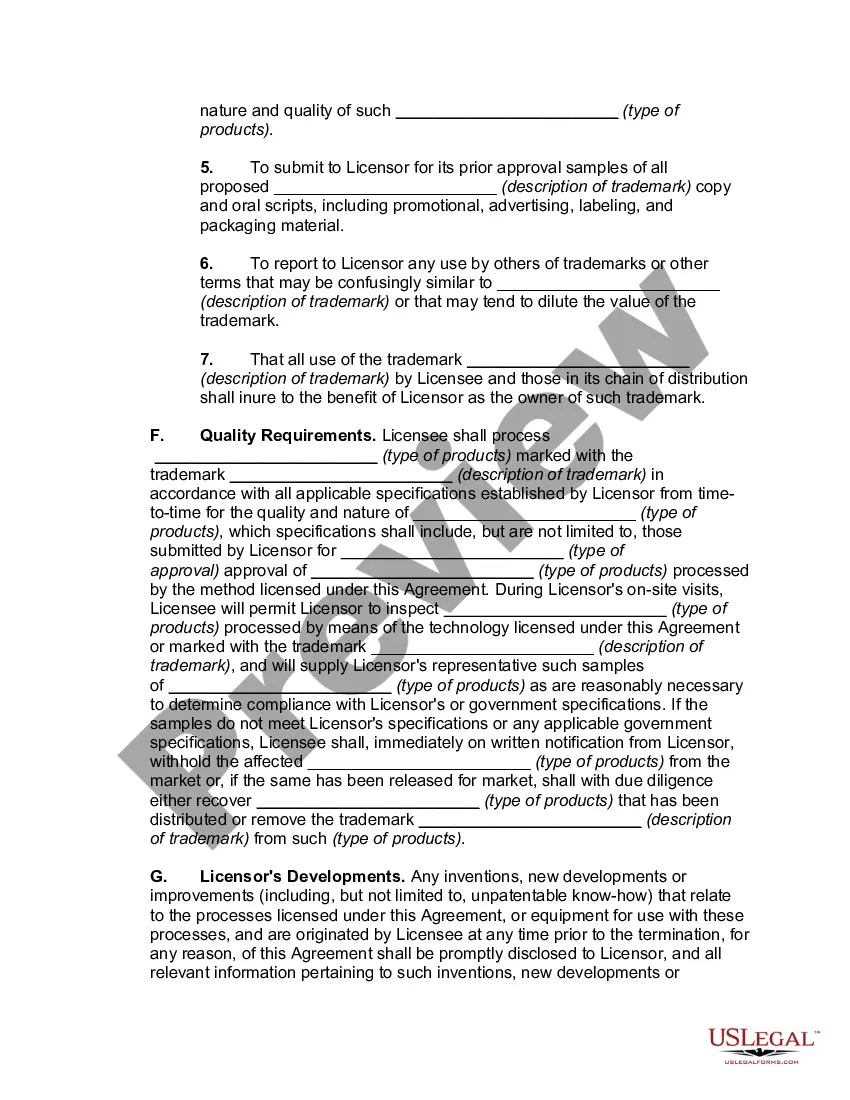
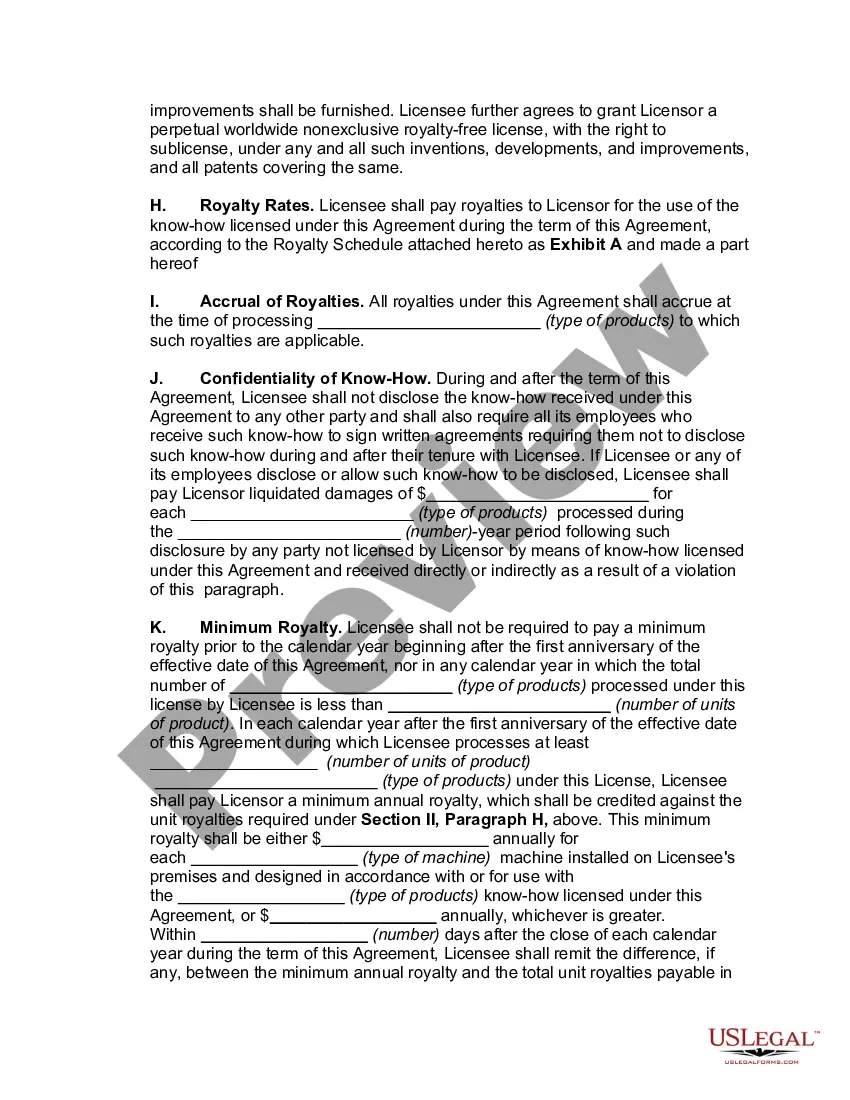
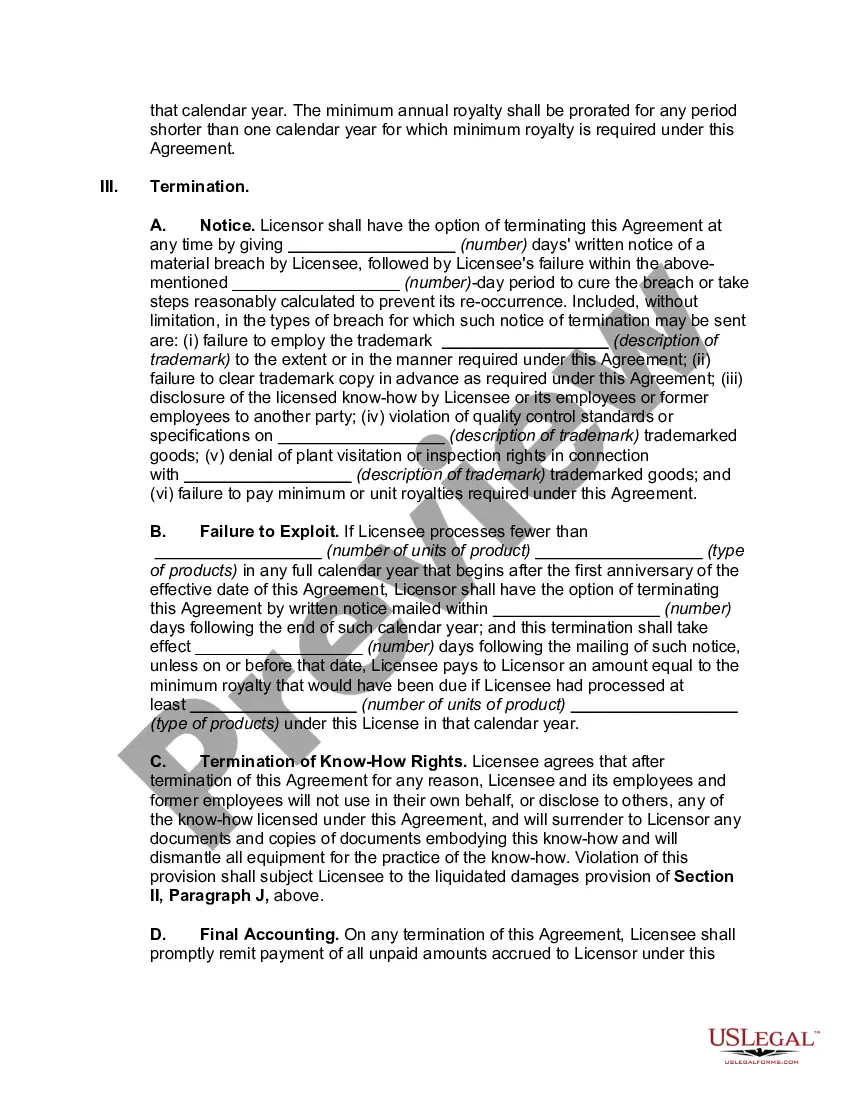
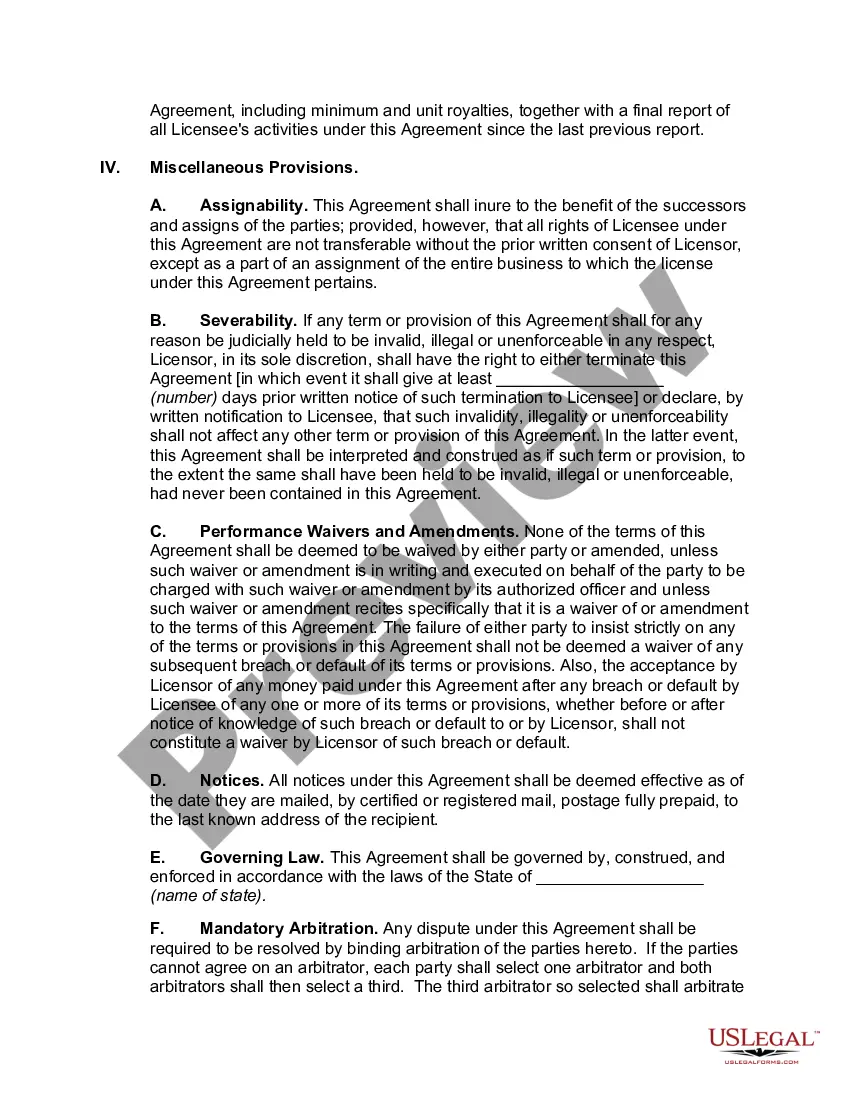
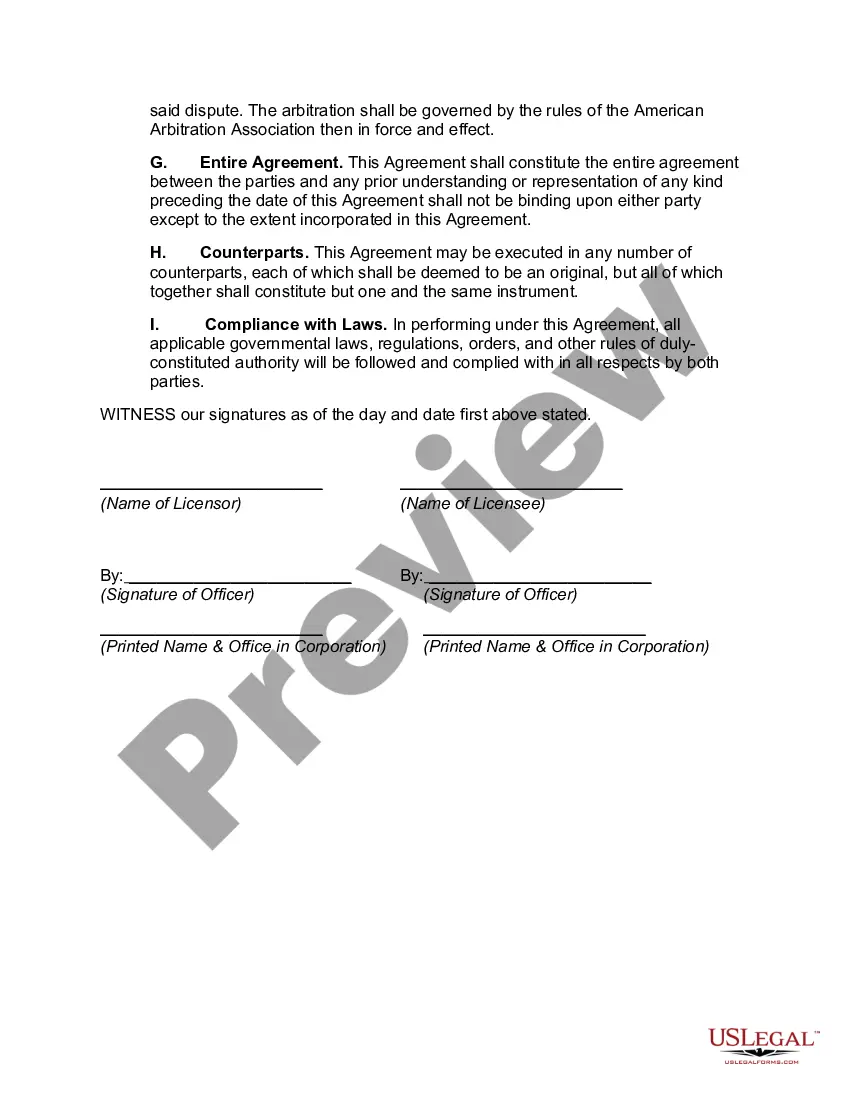
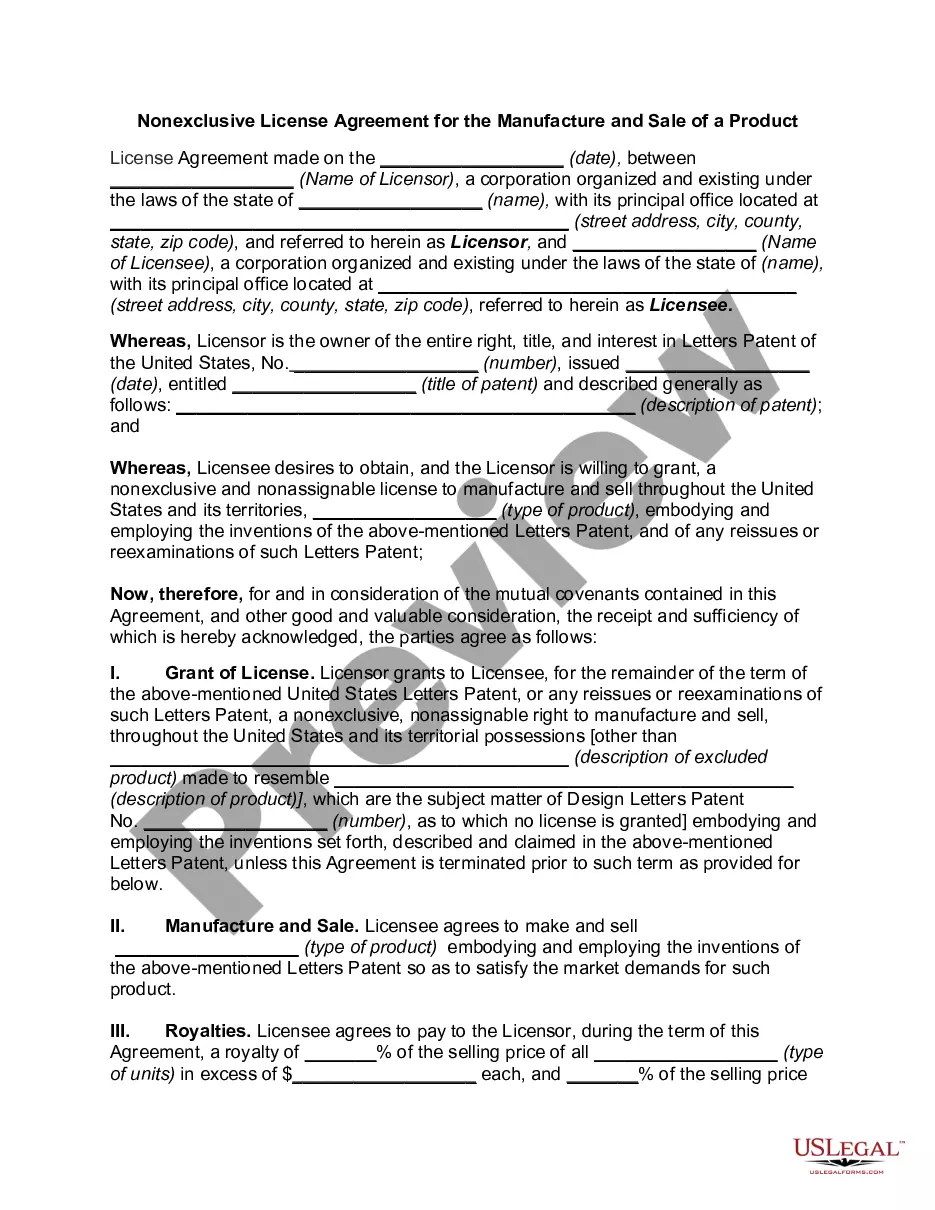
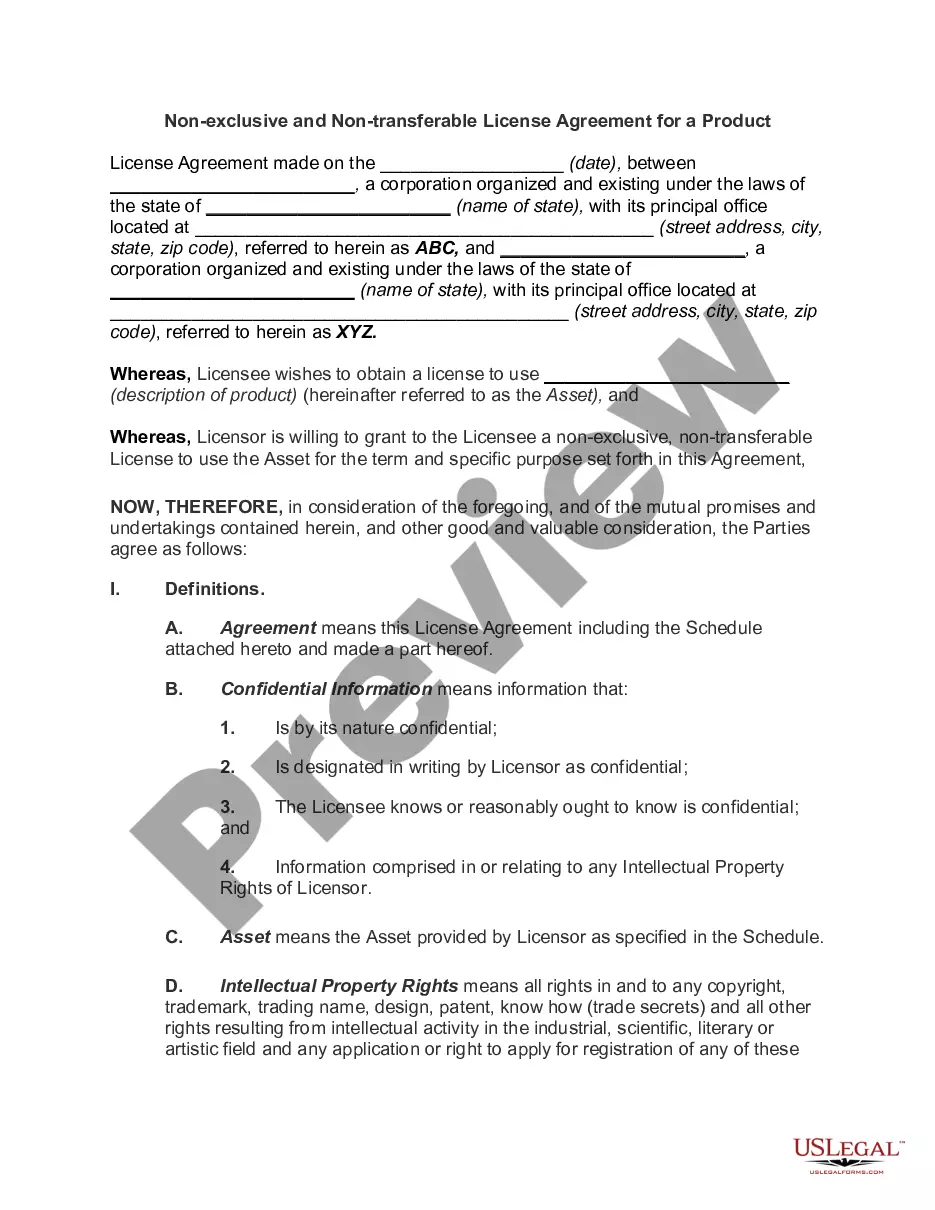




How to fill out Nonexclusive License Agreement For Process Patent, Know How And Trademark?
Are you currently in a situation where you frequently require documents for either professional or personal matters.
There are numerous legal document templates available online, but locating reliable ones isn't easy.
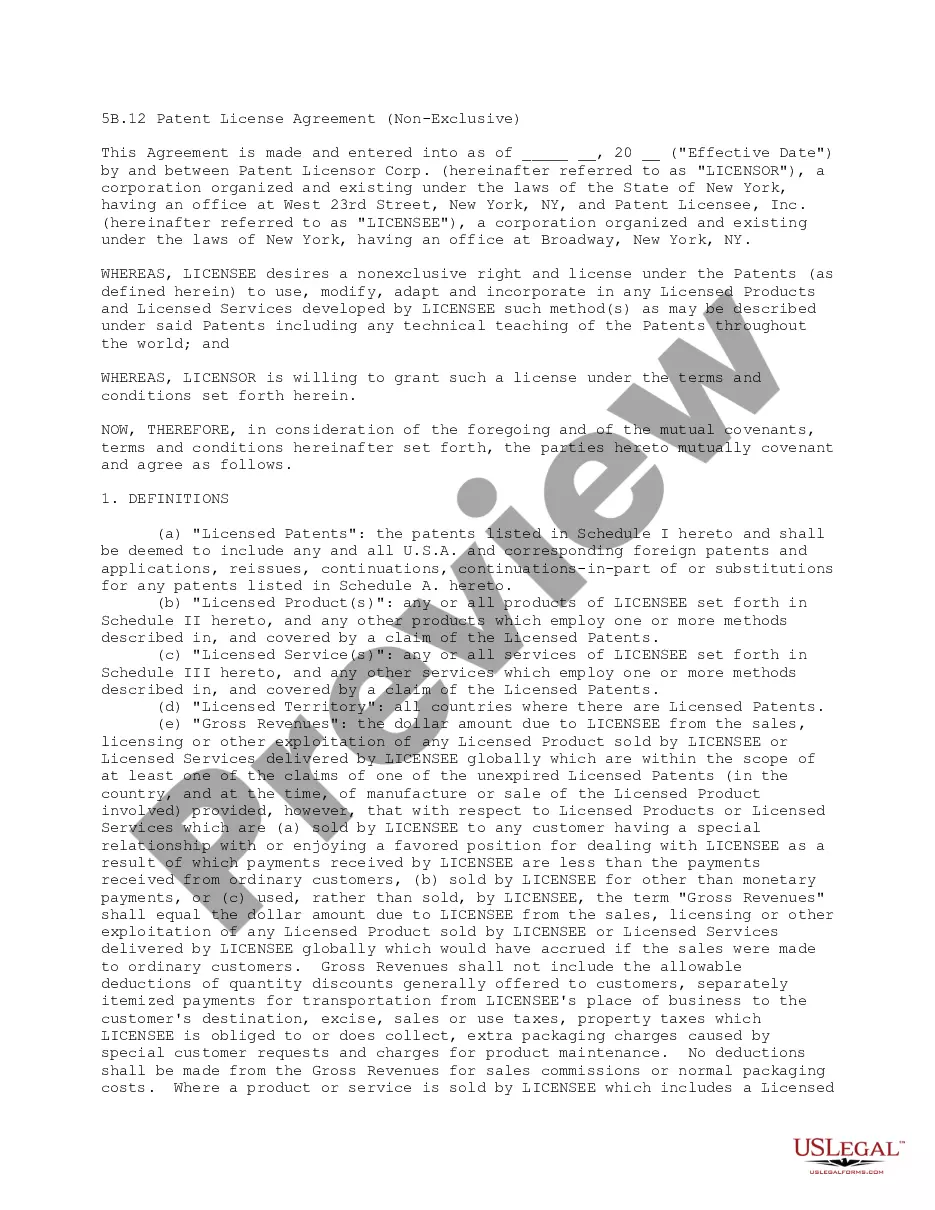
US Legal Forms offers a vast array of document templates, like the Vermont Nonexclusive License Agreement for Process Patent, Know How, and Trademark, which can be generated to meet federal and state requirements.
Once you find the suitable form, simply click Get now.
Choose the payment plan you prefer, fill in the required details to create your account, and submit payment using PayPal or a credit card.
- If you are already familiar with the US Legal Forms website and possess an account, simply Log In.
- Then, you can download the Vermont Nonexclusive License Agreement for Process Patent, Know How, and Trademark template.
- If you don't have an account and wish to start using US Legal Forms, follow these steps.
- Find the form you need and ensure it is for the correct jurisdiction/area.
- Use the Review button to inspect the form.
- Read the description to confirm you have selected the right form.
- If the form does not meet your requirements, make use of the Lookup section to find the form that matches your needs.
Form popularity
FAQ
A common example of a licensing business model involves a company using a Vermont Nonexclusive License Agreement for Process Patent, Know How and Trademark to allow other businesses to utilize their patented technologies. This approach not only generates revenue through licensing fees but also expands market reach without the need for large investments. By capitalizing on their intellectual property, companies can create mutually beneficial relationships while driving innovation in their industry.
Practitioners and licensing executives often refer to three basic types of voluntary licenses: non-exclusive, sole, and exclusive. A non-exclusive licence allows the licensor to retain the right to use the licensed property and the right to grant additional licenses to third parties.
The term licensing agreement refers to a legal, written contract between two parties wherein the property owner gives permission to another party to use their brand, patent, or trademark.
A patent license is an agreement that lets someone else commercially make, use, and sell your invention for a specified period. The owner of the invention (patent) is the 'licensor,' and the person who is receiving the license is the 'licensee. ' Licensing deals involve payment for the license.
The license of know-how is the information necessary or beneficial to the commercialization of the patented invention. A patent license combines matters of federal and state law, whereas a know-how license is subject only to state law since it is not subject to federal statutory protection.
The license of know-how is the information necessary or beneficial to the commercialization of the patented invention. A patent license combines matters of federal and state law, whereas a know-how license is subject only to state law since it is not subject to federal statutory protection.
Historically, most know-how has been licensed in tandem with patents and on a non-exclusive basis; the university retains a non-exclusive right to utilize that know-how either for internal research purposes or for commercial utilization, Nag says.
Types of licensing agreement The unique feature of this type of agreement is that even the licensor is excluded to use or exploit the licensed property during the term of the agreement. Copyright, trademark and patent licenses are the best examples of an exclusive license agreement.
A patent license agreement usually gives a licensee, subject to certain restrictions, exclusive rights to produce, sell, and use a proprietary invention. The amount of royalty due by the licensee to the licensor would also be specified by a patent licence agreement.
The term 'assignment' and 'license' cannot be interchanged. A license is different from an agreement. Generally, in absence of any provision to the contrary, the assignee becomes the owner of the assigned work, whereas in case of a license the licensee gets the right to exercise particular rights only.